Privacy updates from Apple's ATT framework, Google's cookie deprecation plans, and evolving regulations have fundamentally changed how marketers track ad performance. The old playbook of relying on third-party cookies and pixel-based tracking no longer delivers accurate data. Yet understanding which ads drive revenue remains essential for scaling campaigns profitably.
This guide presents seven battle-tested strategies that forward-thinking marketers are using to maintain visibility into their ad performance despite these privacy changes. Each approach addresses specific tracking gaps while respecting user privacy—helping you make confident budget decisions based on reliable data rather than guesswork.
1. Implement Server-Side Tracking as Your Foundation
The Challenge It Solves
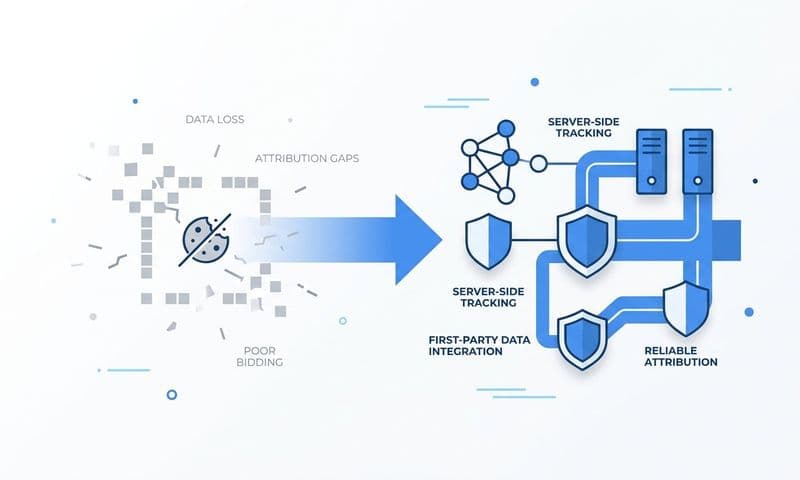
Browser-based tracking pixels face multiple obstacles in the current landscape. Ad blockers remove tracking scripts before they load. Safari's Intelligent Tracking Prevention limits cookie lifespans. iOS restrictions prevent cross-app tracking without explicit consent. These browser-level restrictions create blind spots in your conversion data, making it nearly impossible to accurately measure which campaigns drive results.
When your tracking relies entirely on what happens in the user's browser, you're building on unstable ground. Any browser update, extension, or privacy setting can instantly compromise your data accuracy.
The Strategy Explained
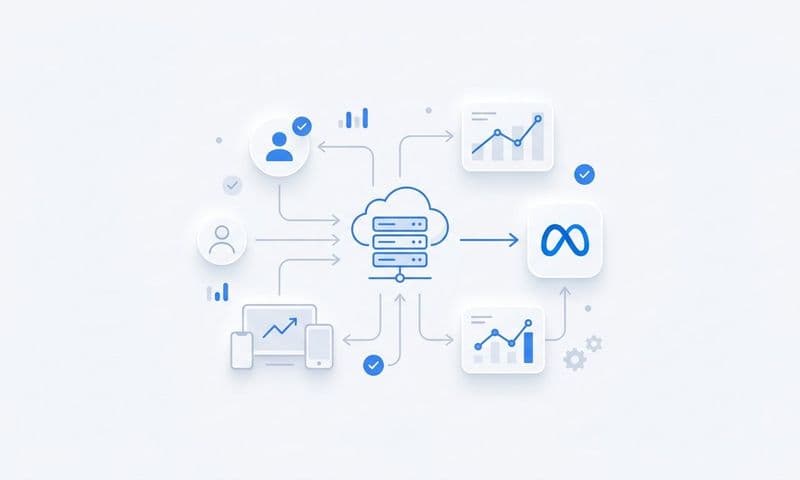
Server-side tracking shifts data collection from the browser to your server infrastructure. When a user takes an action on your site, your server directly sends that conversion event to ad platforms and analytics tools. This server-to-server communication bypasses browser restrictions entirely.
Think of it like this: instead of asking the user's browser to report what happened, your server reports directly. The user's browser settings, ad blockers, and privacy tools can't interfere with server-level communication. This approach captures conversion data that browser-based pixels would miss entirely.
The result is more complete data flowing into your ad platforms, giving their algorithms better signals to optimize against. You're no longer flying blind when users have ad blockers enabled or restrictive privacy settings.
Implementation Steps
1. Choose a server-side tracking infrastructure that integrates with your ad platforms. Many attribution platforms offer server-side tracking as a core feature, handling the technical complexity for you.
2. Set up server-side event forwarding for key conversion actions. Map your critical events like purchases, signups, and qualified leads to fire from your server rather than relying on browser pixels.
3. Maintain browser-based tracking as a backup layer. Run both systems in parallel initially to validate data accuracy and ensure you're capturing conversions that each method might miss.
4. Monitor data discrepancies between server-side and client-side tracking. Understanding where gaps exist helps you refine your implementation and trust your server-side data as the primary source.
Pro Tips
Start with your highest-value conversion events first. Get accurate tracking on revenue-generating actions before expanding to top-of-funnel metrics. Test your implementation thoroughly using different browsers, devices, and privacy settings to ensure events fire consistently across all scenarios.
2. Build First-Party Data Collection Systems
The Challenge It Solves
Third-party data sources that marketers relied on for years are disappearing. Cookie-based tracking across websites no longer works consistently. Purchased data lists deliver questionable quality and compliance risk. Without direct relationships with your audience, you're left guessing about who your customers are and how they behave.
The shift away from third-party tracking means you need direct data relationships. You can't borrow someone else's data anymore—you need to collect it yourself through transparent, value-driven exchanges with your audience.
The Strategy Explained
First-party data is information users voluntarily share directly with your business. This includes email addresses, preferences, purchase history, and behavioral data from your owned properties. Because users provide this information willingly in exchange for value, it's both more accurate and more privacy-compliant than third-party alternatives.
The key is creating genuine value exchanges. Users share information when they trust you and receive something meaningful in return. This might be personalized content, exclusive offers, useful tools, or enhanced experiences. The relationship is direct and transparent.
First-party data becomes your competitive advantage. While competitors lose visibility as third-party sources disappear, you maintain rich customer insights through direct relationships. This data also integrates seamlessly with privacy-compliant tracking systems.
Implementation Steps
1. Audit your current data collection touchpoints. Identify every place users interact with your brand—website forms, checkout processes, account creation, email subscriptions, surveys, and customer service interactions.
2. Create compelling value exchanges that encourage voluntary data sharing. Develop gated content, personalization features, loyalty programs, or exclusive communities that give users clear reasons to share information.
3. Implement progressive profiling to gather data over time. Don't ask for everything upfront. Collect basic information initially, then request additional details as the relationship develops and trust builds.
4. Ensure compliance with privacy regulations in every market you operate. Build transparent consent mechanisms, clear privacy policies, and easy opt-out processes that respect user preferences.
Pro Tips
Focus on data quality over quantity. A smaller list of engaged users who've willingly shared accurate information is far more valuable than a massive list of questionable contacts. Make your privacy policy genuinely readable and transparent—trust is the foundation of first-party data collection.
3. Deploy Conversion APIs Across All Ad Platforms
The Challenge It Solves
Standard pixel-based tracking misses conversions when browsers block scripts or users have restrictive privacy settings. Ad platforms receive incomplete conversion data, which limits their ability to optimize delivery and target effectively. When Facebook, Google, or TikTok can't see which conversions your ads actually drive, their algorithms struggle to find more customers like your best ones.
This incomplete feedback loop means you're paying for ads while the platforms operate partially blind. They optimize based on the conversions they can see, not the full picture of what's actually working.
The Strategy Explained
Conversion APIs enable server-to-server communication between your infrastructure and ad platforms. Instead of relying on browser pixels to report conversions, your server sends conversion events directly to Meta, Google, TikTok, and other platforms through their APIs.
This direct communication captures conversion data that browser-based tracking would miss. When someone converts after clicking your ad, your server reports that conversion regardless of their browser settings or ad blockers. The ad platform receives complete data about which campaigns drive results.
Better data feeds better optimization. When platforms see the full picture of your conversions, their machine learning algorithms can identify patterns and optimize delivery more effectively. You're giving the AI the signals it needs to find more high-value customers.
Implementation Steps
1. Set up Conversion API integrations for each ad platform you use. Meta offers the Conversions API, Google provides Enhanced Conversions, and most major platforms have similar server-side solutions.
2. Match conversion events between your server-side and client-side tracking. Use consistent event names and parameters so platforms can deduplicate events they receive from both sources.
3. Include customer information parameters that help platforms match conversions to ad clicks. Send hashed email addresses, phone numbers, and other identifiers that platforms can use for attribution without compromising privacy.
4. Monitor your Event Match Quality scores in each platform. These metrics show how well your server-side events match to ad interactions, helping you refine your implementation for better attribution accuracy.
Pro Tips
Don't abandon pixel tracking entirely—run both pixel and Conversion API in parallel. This redundancy ensures maximum data capture and allows platforms to deduplicate events they receive from both sources. Test your API setup thoroughly before scaling spend to ensure conversions are reporting accurately.
4. Adopt Multi-Touch Attribution Modeling
The Challenge It Solves
Last-click attribution gives all credit to the final touchpoint before conversion, completely ignoring the earlier interactions that built awareness and consideration. This creates a distorted view of channel performance. Your top-of-funnel campaigns that introduce new prospects might appear ineffective, while bottom-funnel retargeting gets all the credit for conversions it simply closed rather than created.
When you optimize based on last-click data, you systematically underinvest in awareness-building channels and over-allocate budget to channels that capture demand rather than generate it. You're rewarding the finish line without acknowledging the entire race.
The Strategy Explained
Multi-touch attribution distributes conversion credit across all touchpoints in the customer journey. Instead of giving 100% credit to the last click, these models recognize that awareness campaigns, consideration content, and retargeting all play roles in driving conversions.
Different attribution models weight touchpoints differently. Linear attribution spreads credit equally across all interactions. Time-decay models give more weight to touchpoints closer to conversion. Position-based models emphasize both the first touch that created awareness and the last touch that drove conversion.
The right model depends on your business and sales cycle. Companies with longer consideration periods benefit from models that credit early touchpoints. Businesses with shorter sales cycles might use simpler approaches. The key is moving beyond last-click to understand the full journey.
Implementation Steps
1. Map your typical customer journey to understand how many touchpoints occur before conversion. Analyze your data to identify common paths and the average number of interactions across different customer segments.
2. Choose attribution models that match your business reality. Start with position-based or time-decay models if you're transitioning from last-click, as these provide more nuanced insights without overwhelming complexity.
3. Compare results across multiple attribution models simultaneously. No single model tells the complete truth, but comparing different perspectives reveals which channels consistently contribute value regardless of the model used.
4. Adjust budget allocation based on multi-touch insights. Gradually shift spending toward channels that contribute throughout the journey, not just those that capture the final click.
Pro Tips
Don't get paralyzed choosing the perfect attribution model. Start with any multi-touch approach and refine over time based on what you learn. The biggest gain comes from moving beyond last-click, not from selecting the theoretically optimal model on day one.
5. Leverage Probabilistic Modeling and AI Analysis
The Challenge It Solves
Even with server-side tracking and Conversion APIs, data gaps remain. Some users will always be untrackable due to privacy settings, cross-device behavior, or offline conversions. These gaps create uncertainty about true campaign performance. Traditional reporting shows what you can definitively track, but the invisible conversions might tell a different story.
Making decisions based solely on deterministic data means ignoring a significant portion of your actual results. You need ways to account for conversions that happen outside your tracking visibility while maintaining analytical rigor.
The Strategy Explained
Probabilistic modeling uses statistical methods and machine learning to estimate likely conversion patterns where direct tracking isn't possible. These models analyze trackable conversions to identify patterns, then apply those patterns to estimate conversions in tracking blind spots.
Think of it like weather forecasting. Meteorologists can't measure every molecule of air, but they use models based on observable data to predict conditions in areas without sensors. Similarly, probabilistic models use known conversion patterns to estimate the full picture.
AI-powered analysis takes this further by identifying optimization opportunities across fragmented data. Machine learning algorithms can spot performance patterns that humans would miss, suggesting budget adjustments and targeting refinements based on comprehensive data analysis rather than incomplete reporting.
Implementation Steps
1. Implement attribution platforms that include probabilistic modeling capabilities. Modern marketing analytics tools use machine learning to fill tracking gaps and provide more complete performance estimates.
2. Establish baseline accuracy by comparing modeled estimates against deterministic data during controlled periods. This validation helps you understand the confidence level of probabilistic insights.
3. Use AI-powered recommendations to identify optimization opportunities. Let machine learning analyze your data to surface insights about which audiences, creatives, or placements show strong performance indicators.
4. Combine probabilistic insights with deterministic data for decision-making. Don't rely exclusively on either approach—use modeled estimates to inform strategy while validating major decisions against trackable results.
Pro Tips
Be transparent with stakeholders about which metrics are directly measured versus modeled. Probabilistic insights are valuable, but everyone should understand the methodology behind the numbers. Start with conservative confidence intervals and tighten them as your models prove accurate over time.
6. Create Unified Customer Journey Tracking
The Challenge It Solves
Most marketing teams operate with fragmented data across disconnected platforms. Facebook Ads Manager shows one set of conversions. Google Analytics reports different numbers. Your CRM records yet another version of reality. Each platform uses its own attribution window, tracking methodology, and conversion definitions.
This fragmentation makes it impossible to understand true ROI. You can't confidently answer which campaigns drive actual revenue when every platform claims credit using different rules. Budget decisions become guesswork when you lack a single source of truth.
The Strategy Explained
Unified customer journey tracking connects all your marketing touchpoints—ad platforms, website analytics, CRM, and revenue systems—into one cohesive view. Instead of reconciling conflicting reports from different tools, you track the complete path from first ad impression through final revenue.
This unified approach captures every interaction: the Facebook ad that created awareness, the Google search that showed consideration, the email that prompted a demo request, and the sales conversation that closed the deal. All these touchpoints connect to the same customer record, showing the true journey.
When everything connects, you can measure what actually matters: revenue attribution, not just conversion tracking. You see which campaigns drive customers who pay, stay, and deliver long-term value—not just which campaigns drive form submissions that may or may not convert to revenue.
Implementation Steps
1. Implement a marketing attribution platform that integrates with all your data sources. Choose solutions that connect ad platforms, analytics tools, and CRM systems to track the complete customer journey.
2. Establish consistent customer identification across platforms. Use email addresses, customer IDs, or other identifiers to connect touchpoints to the same person as they move through your funnel.
3. Map your conversion events to revenue outcomes. Connect form submissions to CRM opportunities, opportunities to closed deals, and deals to actual revenue. This creates end-to-end visibility from ad click to revenue.
4. Build dashboards that show unified metrics across all channels. Create reporting that answers critical questions: Which campaigns drive revenue? What's the true customer acquisition cost? Which channels contribute to high-value customer journeys?
Pro Tips
Start by connecting your highest-value conversion events to revenue first. Get accurate tracking on bottom-funnel conversions before expanding to earlier touchpoints. This prioritization ensures you're measuring what matters most while building toward comprehensive journey tracking.
7. Establish Privacy-Compliant Testing Frameworks
The Challenge It Solves
Even with sophisticated attribution and tracking, correlation doesn't prove causation. Your analytics might show that Instagram drives conversions, but would those customers have converted anyway through other channels? Without proper testing methodology, you can't separate true incremental impact from baseline demand you would have captured regardless.
Traditional user-level tracking enabled precise measurement, but privacy restrictions now limit that approach. You need testing frameworks that measure channel effectiveness without requiring granular user-level data or violating privacy regulations.
The Strategy Explained
Privacy-compliant testing uses aggregated measurement approaches to determine true incremental impact. Incrementality tests compare results between groups exposed to your marketing versus control groups that aren't, measuring the lift your campaigns actually create beyond baseline conversions.
Media mix modeling analyzes historical performance data to understand how different marketing inputs drive business outcomes. These statistical models identify relationships between spending levels across channels and revenue results without requiring user-level tracking.
Geo-based experiments test campaigns in specific geographic markets while holding out others as controls. By comparing performance between test and control regions, you can measure true incremental impact at an aggregated level that respects privacy while delivering rigorous insights.
Implementation Steps
1. Design incrementality tests for your major campaigns. Create matched test and control groups, expose only the test group to specific campaigns, then measure the performance difference to calculate true incremental impact.
2. Implement geo-holdout testing for brand campaigns and channels where direct attribution is challenging. Compare conversion rates in markets with active campaigns versus holdout markets to measure incremental lift.
3. Build or implement media mix models that analyze your historical marketing data. These models identify optimal budget allocation across channels based on statistical relationships between spending and outcomes.
4. Run regular lift studies with major ad platforms. Facebook, Google, and other platforms offer conversion lift studies that use their own methodologies to measure incremental impact of your campaigns.
Pro Tips
Combine testing approaches for comprehensive insights. Use incrementality tests for tactical campaign decisions, media mix modeling for strategic budget allocation, and attribution data for day-to-day optimization. Each methodology has strengths and limitations—using multiple approaches provides more robust guidance.
Putting These Strategies Into Action
Privacy updates have permanently changed the tracking landscape, but they haven't eliminated the ability to measure marketing effectiveness. The strategies outlined above provide a comprehensive framework for maintaining visibility into ad performance while respecting user privacy and complying with evolving regulations.
Start with your foundation: implement server-side tracking and Conversion APIs to capture more accurate data despite browser restrictions. These technical upgrades immediately improve data quality flowing into your decision-making systems.
Build from there with first-party data collection and unified customer journey tracking. These approaches create direct relationships and comprehensive visibility that third-party tracking never provided. You'll gain deeper insights into customer behavior while establishing data ownership that competitors can't replicate.
Layer in sophisticated analysis through multi-touch attribution, probabilistic modeling, and privacy-compliant testing. These methodologies help you understand true campaign impact and optimize with confidence even when perfect tracking isn't possible.
The marketers who thrive in this new environment are those who adapt their measurement approach rather than clinging to outdated methods. Privacy-focused tracking isn't a limitation to work around—it's an opportunity to build more sustainable, accurate, and trustworthy marketing systems.
Ready to elevate your marketing game with precision and confidence? Discover how Cometly's AI-driven recommendations can transform your ad strategy—Get your free demo today and start capturing every touchpoint to maximize your conversions.