The marketing director refreshed her dashboard for the third time that morning. Meta Ads Manager showed 47 conversions. Google Analytics reported 31. The CRM logged 52 actual sales. Three platforms, three different stories about the same campaigns.
This isn't a technical glitch—it's the daily reality for marketers managing paid advertising without proper attribution infrastructure. iOS privacy updates have decimated cookie-based tracking. Cross-device customer journeys fragment data across platforms. Ad networks optimize for their own conversion definitions, not your actual revenue.
The gap between ad platform reporting and business reality has never been wider. Basic analytics tools weren't built for this complexity—they track website behavior but can't connect ad clicks to CRM revenue or see the full customer journey.
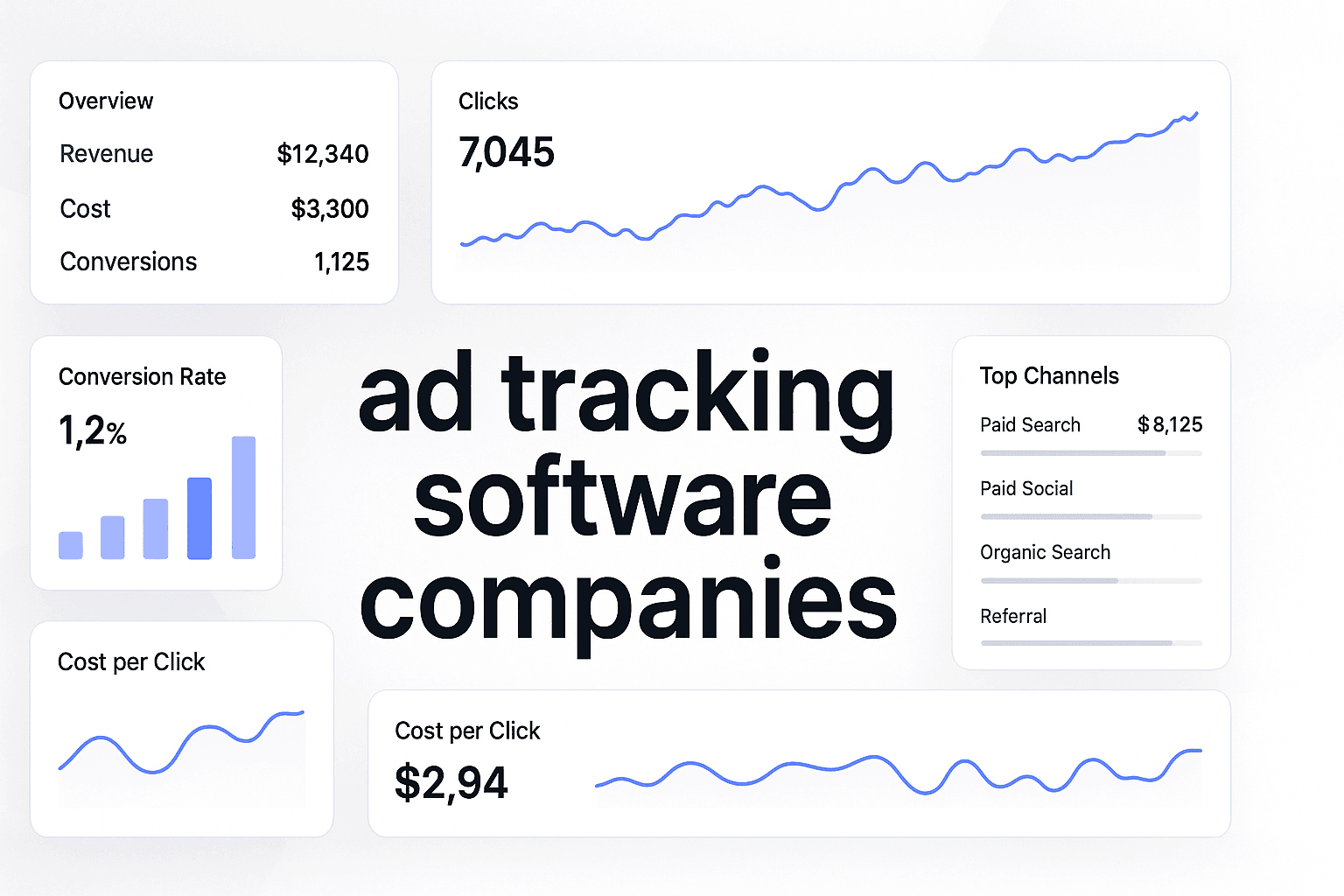
Modern ad tracking software solves this by creating a unified source of truth. These platforms capture every customer touchpoint from first ad impression through final purchase, connect advertising data to actual revenue, and send enriched conversion data back to ad platforms to improve their targeting algorithms.
The tools below represent the leading ad tracking platforms for 2025, each with distinct strengths for different business models and marketing strategies.
1. Cometly
Best for: Performance marketers and agencies who need AI-powered attribution connecting ad platforms to actual CRM revenue
Cometly is a marketing attribution platform built specifically for performance marketers who need to track the complete customer journey from ad click through CRM conversion, with AI recommendations that identify which campaigns actually drive revenue.
 Top 6 Ad Tracking Software Companies To Connect Ad Spend To Revenue
Where This Tool Shines
Cometly's core strength lies in its ability to create a complete picture of campaign performance by connecting advertising data to business outcomes. The platform captures every customer touchpoint from initial ad impression through final purchase and beyond, then uses AI to analyze patterns and recommend scaling opportunities.
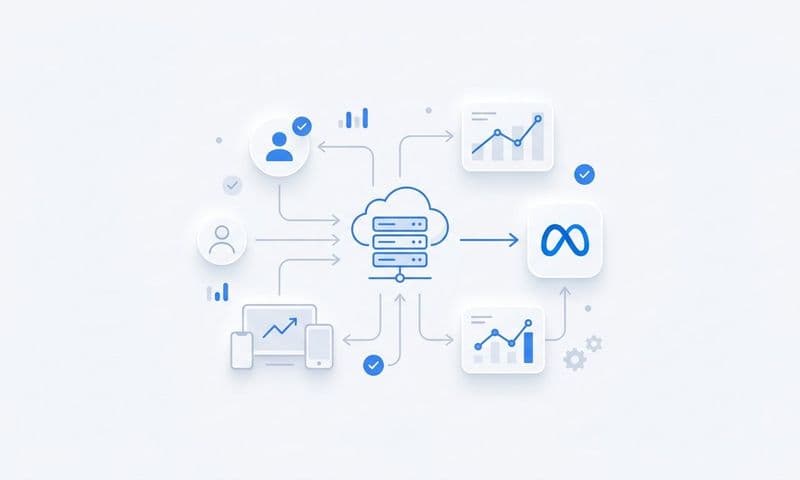
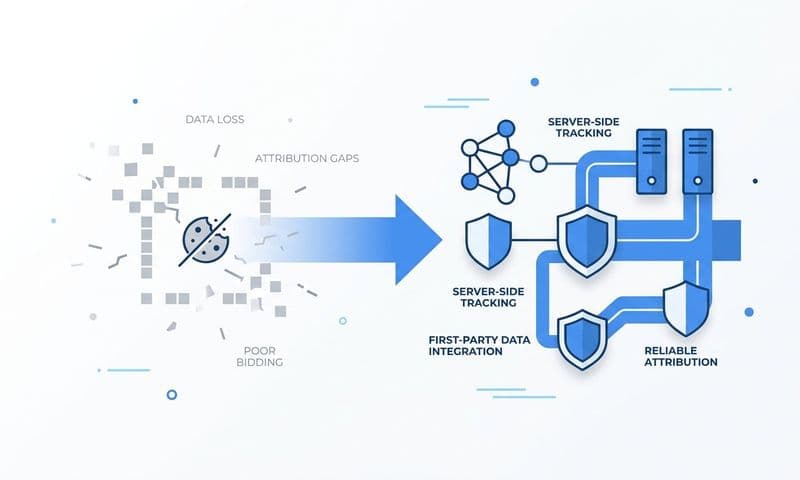
The server-side tracking architecture bypasses browser-based limitations that plague cookie-dependent systems. When iOS users block tracking or ad blockers interfere with pixels, Cometly's server-side tracking continues capturing accurate conversion data. This becomes critical for businesses where mobile traffic represents a significant portion of conversions.
The platform's conversion API integration sends enriched conversion data back to ad platforms like Meta and Google, improving their machine learning algorithms. Instead of just telling Facebook "a conversion happened," Cometly sends customer value data, purchase history, and attribution confidence scores that help ad platforms optimize for your most valuable customers.
Key Features & Capabilities
✅ Complete Journey Tracking: Captures every touchpoint from ad impression through CRM events, including email opens, page visits, and sales calls.
✅ AI-Powered Insights: Automatically identifies high-performing ads and campaigns across all channels, with specific recommendations for budget reallocation.
✅ Multi-Touch Attribution: Compare first-click, last-click, linear, time-decay, and custom multi-touch attribution models to understand the full customer journey.
✅ Server-Side Tracking: Accurate data collection unaffected by browser restrictions, ad blockers, or iOS privacy limitations.
✅ Ad Platform Integration: Direct connections to Meta, Google, TikTok, LinkedIn, and 50+ advertising platforms.
✅ CRM Revenue Tracking: Links ad spend to actual closed deals and lifetime customer value, not just form submissions.
✅ Real-Time Dashboards: Live performance data updated as conversions happen, with customizable views for different stakeholders.
✅ Conversion API Enhancement: Sends enriched conversion data back to ad platforms to improve their machine learning algorithms.
2. Hyros
Best for: High-spend advertisers who need call tracking integration and phone attribution alongside digital tracking
Hyros is an ad tracking platform that specializes in multi-channel attribution with strong call tracking capabilities, making it particularly valuable for businesses where phone conversions are a significant revenue driver.
 Top 6 Ad Tracking Software Companies To Connect Ad Spend To Revenue
Where This Tool Shines
Hyros excels at tracking complex customer journeys that include phone calls, consultations, and offline interactions. The platform's call tracking system doesn't just log that a phone call happened—it attributes that call back to the specific ad, keyword, or campaign that drove it, then tracks whether that call converted to a sale.
The AI attribution engine learns from your conversion patterns over time, becoming more accurate as it processes more data. For businesses with longer consideration periods, this learning capability helps identify which early-stage touchpoints most reliably lead to eventual conversions, even when weeks pass between first click and final purchase.
Print tracking capabilities extend attribution beyond digital channels. Businesses running integrated campaigns can track QR codes, unique URLs, and offline campaign performance alongside their digital advertising, creating a complete view of marketing effectiveness across all channels.
Key Features & Capabilities
✅ Call Tracking Attribution: Links phone calls back to the exact ad, keyword, or campaign that drove them, with conversation recording and outcome tracking
✅ Print & Offline Tracking: Track QR codes, unique URLs, and offline campaign performance integrated with digital attribution
✅ AI Learning Models: Attribution accuracy improves over time as the system learns your specific customer patterns and conversion behaviors
✅ Sales Integration: Connects to CRMs to track deal values and lifetime customer revenue, not just initial conversions
✅ Multi-Device Tracking: Follows customers across desktop, mobile, and tablet using probabilistic matching when deterministic tracking isn't available
✅ Custom Attribution Windows: Set different attribution windows for different conversion types based on your actual sales cycle length
✅ Fraud Detection: Identifies and filters out bot traffic and fraudulent clicks before they distort campaign performance data
✅ Lifetime Value Tracking: Measures long-term customer value including repeat purchases and upsells, not just initial transaction
Best For / Ideal Users
Service businesses where phone calls drive most conversions, including legal practices, medical providers, and home service companies. High-ticket B2B companies with consultative sales processes requiring multiple touchpoints before conversion.
Businesses running integrated online and offline marketing campaigns who need unified attribution. Advertisers spending significant budgets who need precise attribution to optimize campaign performance.
3. Wicked Reports
Best for: E-commerce brands and subscription businesses that need to track customer lifetime value and repeat purchase attribution
Wicked Reports is a multi-touch attribution platform built specifically for e-commerce businesses, with specialized capabilities for tracking subscription revenue and repeat customer behavior over extended timeframes.
 Top 6 Ad Tracking Software Companies To Connect Ad Spend To Revenue
Where This Tool Shines
Wicked Reports addresses a fundamental challenge that e-commerce marketers face daily: distinguishing between campaigns that acquire one-time buyers versus those that bring customers who purchase repeatedly. The platform's lifetime value attribution shows which marketing sources acquire customers with the highest long-term value, even when their initial purchase amount appears modest.
The subscription tracking functionality attributes recurring revenue back to the original acquisition campaign. When a customer acquired through a Facebook ad in January generates subscription revenue for the next twelve months, Wicked Reports ensures that ongoing revenue gets credited to the campaign that acquired them. This provides accurate long-term ROI calculations that reflect true campaign profitability rather than just initial conversion metrics.
Key Features & Capabilities
✅ Lifetime Value Attribution: Tracks which campaigns bring customers with highest long-term value, including repeat purchases and subscription renewals.
✅ Subscription Revenue Tracking: Attributes recurring subscription revenue to original acquisition source, showing true campaign ROI over time.
✅ Multi-Touch Models: Compare different attribution models to understand the full customer journey from awareness through purchase.
✅ E-commerce Platform Integration: Direct connections to Shopify, WooCommerce, BigCommerce, and major e-commerce platforms.
✅ Cohort Analysis: Compare customer acquisition cohorts by channel and campaign to identify quality differences.
✅ Repeat Purchase Attribution: See which channels drive customers who buy multiple times versus one-time purchasers.
✅ Product-Level Tracking: Understand which ads drive sales of specific products or product categories.
✅ Email Marketing Attribution: Track how email campaigns contribute to the conversion path alongside paid advertising.
Best For / Ideal Users
E-commerce brands with repeat purchase business models where customer lifetime value matters more than initial acquisition cost. Subscription box companies and membership sites tracking recurring revenue attribution.
DTC brands spending $20K+ monthly on paid advertising who need to optimize for long-term profitability. Businesses managing multiple product lines who need product-specific attribution to guide inventory and marketing decisions.
Marketing teams focused on customer retention and repeat purchase rates as key performance indicators.
4. SegMetrics
Best for: Course creators, coaches, and digital product businesses with complex funnel sequences and upsell paths
SegMetrics is a funnel attribution platform built specifically for digital product businesses, tracking how customers move through multi-step sales sequences from initial ad click through upsells and recurring payments.
 Top 6 Ad Tracking Software Companies To Connect Ad Spend To Revenue
Where This Tool Shines
SegMetrics excels at tracking the complex funnel sequences that define digital product businesses. When a customer clicks an ad, watches a webinar, downloads a lead magnet, receives email sequences, purchases a low-ticket product, then upgrades to a high-ticket coaching program months later, SegMetrics tracks the entire journey and attributes revenue appropriately.
The platform's lead scoring capabilities automatically identify which prospects are most likely to convert based on engagement patterns. The system learns which combinations of behaviors—email opens, page visits, video consumption, webinar attendance—correlate with eventual purchases. This helps marketers focus follow-up efforts on the highest-probability leads rather than treating all prospects equally.
Integration with course platforms and membership software provides engagement tracking beyond just purchase behavior. Marketers can see which traffic sources bring students who actually complete courses, engage with content, and buy additional products—not just those who make an initial purchase then disappear. This distinction becomes critical for businesses where customer success and engagement drive long-term profitability.
Key Features & Capabilities
✅ Funnel Attribution: Track customer movement through complex multi-step sales sequences including webinars, challenges, and launch campaigns with proper revenue attribution at each stage.
✅ Lead Scoring: Automatically score leads based on engagement and conversion likelihood using behavioral pattern analysis that learns from your specific customer data.
✅ Course Platform Integration: Connects to Teachable, Kajabi, Thinkific, and major course platforms to track student engagement and completion rates by acquisition source.
✅ Engagement Tracking: Monitor which traffic sources bring the most engaged students who complete courses and consume content, not just those who purchase.
✅ Upsell Attribution: See which initial campaigns drive customers who buy additional products and higher-ticket offers, revealing true customer lifetime value by source.
✅ Cohort Analysis: Compare customer groups by acquisition source and behavior patterns to identify quality differences between traffic sources and campaigns.
✅ Email Sequence Tracking: Understand how email automation contributes to conversions alongside paid advertising touchpoints throughout the customer journey.
✅ Lifetime Value Forecasting: Predict future customer value based on early behavior signals and engagement patterns to identify high-potential customers early.
5. Ruler Analytics
Best for: B2B companies and lead generation businesses that need to connect marketing attribution to CRM opportunity value and track closed revenue by channel
Ruler Analytics bridges the gap between marketing analytics and sales CRM data, providing closed-loop attribution that shows which marketing channels drive actual closed deals and revenue.
 Top 6 Ad Tracking Software Companies To Connect Ad Spend To Revenue
Where This Tool Shines
Ruler Analytics solves the attribution challenge for B2B companies with longer sales cycles. The platform tracks the complete journey from initial ad click through multiple touchpoints, then connects to your CRM to attribute closed revenue back to the marketing channels that influenced the deal.
The closed-loop attribution system updates as opportunities move through your sales pipeline. When a lead generated from a LinkedIn ad closes as a $50K deal three months later, that revenue gets attributed back to the original campaign. This provides accurate ROI calculations based on actual business outcomes, not just lead generation volume.
Key Features & Capabilities
✅ Closed-Loop Attribution: Connects marketing touchpoints to CRM opportunities and closed deals, showing actual revenue by channel.
✅ CRM Integration: Direct connections to Salesforce, HubSpot, Pipedrive, and major CRM platforms with automatic data synchronization.
✅ Revenue Attribution: Shows actual deal values by marketing channel and campaign, not just lead counts.
✅ Form Tracking: Captures lead source data from all website forms automatically without manual UTM parameter management.
✅ Call Tracking: Dynamic number insertion and call recording with source attribution for phone-based lead generation.
✅ Marketing Mix Modeling: Understand how different channels work together to drive conversions in multi-touch journeys.
✅ Opportunity Stage Tracking: See which marketing sources drive leads that progress furthest through your sales pipeline.
Best For / Ideal Users
B2B companies with sales cycles longer than 30 days who need to connect marketing investment to closed revenue. Lead generation businesses where phone calls and form submissions feed a sales team.
Marketing teams that need to prove ROI to executives using actual revenue data, not just lead volume. Businesses using Salesforce, HubSpot, or similar CRMs as their source of truth for revenue.
Companies with complex buying processes involving multiple decision-makers and touchpoints before conversion.
Pricing
Pricing starts around $300/month for basic plans with limited call tracking minutes, scaling based on website traffic volume and call tracking needs. Enterprise plans available for high-traffic websites and large sales teams.
6. Rockerbox
Best for: Multi-channel retailers and omnichannel brands that need to track online and offline conversion attribution
Rockerbox is a marketing attribution platform built specifically for retailers operating both digital storefronts and physical locations, tracking how online advertising influences in-store purchases and connecting the complete customer journey across channels.
 Top 6 Ad Tracking Software Companies To Connect Ad Spend To Revenue
Where This Tool Shines
Rockerbox solves the omnichannel attribution puzzle that traditional analytics tools can't handle. When a customer sees your Instagram ad on Monday, visits your website on Wednesday, then walks into your physical store on Saturday to make a purchase, Rockerbox connects those dots. The platform attributes that in-store sale back to the digital marketing that influenced it, giving retailers accurate ROI on campaigns that drive foot traffic.
The incrementality testing capabilities separate correlation from causation. Many attribution platforms tell you which channels touched customers who converted, but Rockerbox goes further by measuring which channels actually caused incremental conversions. For brands with strong organic presence or high brand awareness, this distinction becomes critical—you need to know whether your paid ads are creating new demand or simply getting credit for sales that would have happened anyway.
Key Features & Capabilities
✅ Omnichannel Attribution: Track how online advertising drives in-store purchases and physical location visits with point-of-sale integration.
✅ Incrementality Testing: Measure which channels drive truly incremental revenue versus capturing existing demand through geo-holdout tests and controlled experiments.
✅ Media Mix Modeling: Analyze how different channels work together to drive overall business results rather than just attributing individual conversions.
✅ Retail Platform Integration: Direct connections to Shopify, Square, Lightspeed, and major retail POS systems for unified online and offline data.
✅ Cross-Device Tracking: Follow customers across mobile, desktop, and in-store interactions using deterministic and probabilistic matching.
✅ Marketing Mix Optimization: Receive budget allocation recommendations based on marginal return analysis across all channels.
✅ Store-Level Attribution: See which marketing channels drive traffic to specific physical locations for multi-location retailers.
✅ Brand Lift Measurement: Understand how upper-funnel campaigns impact brand awareness and consideration before driving direct conversions.
Best For / Ideal Users
Multi-location retailers with both e-commerce and brick-and-mortar stores who need unified attribution across channels. DTC brands expanding into wholesale or physical retail locations who must track how digital marketing drives in-store sales. Fashion and apparel brands with significant offline retail presence.
Making the Right Choice
The right ad tracking platform depends entirely on your business model and what you're actually trying to measure. If you're running performance campaigns where connecting ad spend to CRM revenue matters most, Cometly's AI-powered attribution provides the clearest path from campaign to closed deal. High-spend advertisers who rely heavily on phone conversions will find Hyros' call tracking integration invaluable for attribution accuracy.
E-commerce brands focused on customer lifetime value should prioritize Wicked Reports' subscription and repeat purchase tracking, while course creators and digital product businesses benefit from SegMetrics' funnel attribution capabilities. B2B companies with longer sales cycles need Ruler Analytics' closed-loop CRM integration to prove marketing ROI with actual revenue data.
The common thread across all these platforms? They move beyond surface-level metrics to show what's actually driving business results. Your ad platforms will always show optimistic numbers—they're designed to. What you need is a system that tells you the truth about which campaigns justify their budget and which ones are just burning cash.
Start by identifying your biggest attribution blind spot. Is it connecting ads to revenue? Tracking phone calls? Understanding lifetime value? Pick the tool that solves your specific problem, not the one with the most features. Most platforms offer trials or demos—use them to test against your current data before committing.
Ready to see which campaigns actually drive revenue? Get your free demo of Cometly and discover where your best customers really come from.