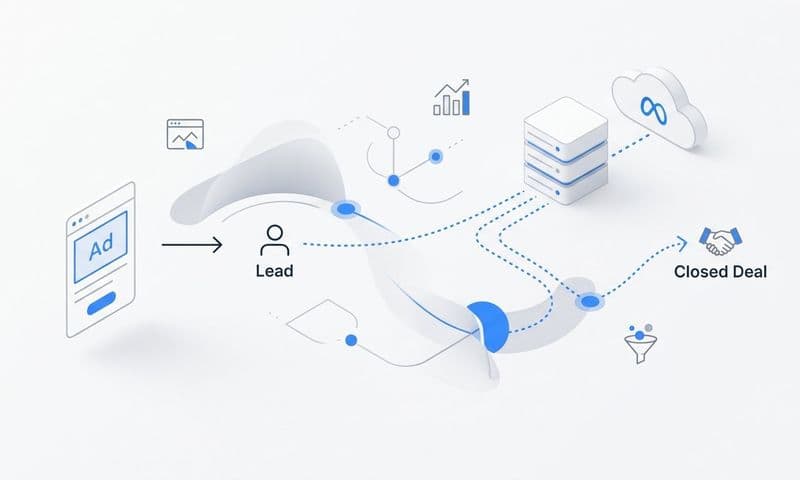


Let's be honest, figuring out what's actually working in your marketing can feel like a guessing game. You're running ads, sending emails, posting on social, and maybe, just maybe, sales are going up. But which part made the difference? That’s the million-dollar question, and marketing attribution is the answer.
Think of it as the process of assigning credit to the different touchpoints that guide a customer to a sale. It helps you connect the dots between all your marketing efforts—the ads, the clicks, the content—and the final conversion.
Why Marketing Attribution Is Your New Superpower
Imagine your marketing channels are a soccer team. The striker who scores the goal gets all the glory, but what about the midfielder’s perfect pass or the defender who started the whole play? A sale rarely happens because of one single ad or email. It's usually the result of a whole series of interactions that happen over days, weeks, or even months.
Just giving credit to the final click before a purchase is like only celebrating the striker—it ignores the entire team effort that made the goal possible. This is exactly why marketing attribution is so critical. It pulls you out of that simplistic, last-click mindset and gives you a complete view of the customer’s journey.
Seeing the Full Picture
Without a solid attribution strategy, you’re flying blind. You might see revenue climbing, but you won't know why. Was it that clever social media campaign from last week? The blog post they read a month ago? Or was it the retargeting ad that finally sealed the deal?
Marketing attribution transforms raw data into a clear story. It reveals how different touchpoints work together to move someone from a curious visitor to a paying customer.
Once you understand this journey, you can answer critical business questions with real confidence. It’s no longer about gut feelings; it’s about making decisions backed by data.
The Payoff of a Solid Attribution Framework
Putting a proper marketing attribution system in place isn't just an analytics project; it’s a strategic move that directly grows your bottom line. It gives your team the power to make smarter choices and prove the value of their work.
Here are the key advantages:
- Smarter Budget Allocation: You can finally see which channels are your true MVPs. This allows you to shift money away from underperforming campaigns and double down on what’s actually delivering the highest ROI.
- Proving Marketing’s Value: Attribution gives you the hard numbers to show how marketing directly drives revenue. The conversation shifts from "marketing is a cost center" to "marketing is a revenue driver."
- Better Decision-Making: When you have deep insights into customer behavior, you can refine your messaging, sharpen your targeting, and create a much more effective customer experience from start to finish.
- Next-Level Personalization: By understanding the unique paths different customer segments take, you can tailor your messaging and offers for maximum impact at every single stage of the funnel.
At the end of the day, attribution is about clarity and accountability. It’s the tool that lets you stop guessing and start knowing what fuels your growth. Next, we'll get into the specific models that make this all possible, from the simple single-touch methods to more advanced frameworks.
Exploring the Core Marketing Attribution Models
Deciding how to give credit for a conversion is a lot like figuring out how to split a commission on a big sale. Who really earned it? The person who made the first cold call? The one who closed the deal? What about everyone who nurtured the relationship in between?
Every attribution model tells a different story, and each one has its own logic.
The simplest approach is called single-touch attribution. True to its name, this method gives 100% of the credit for a sale to just one marketing interaction. While these models are a breeze to set up, they often paint an incomplete—and sometimes totally misleading—picture of the real customer journey.
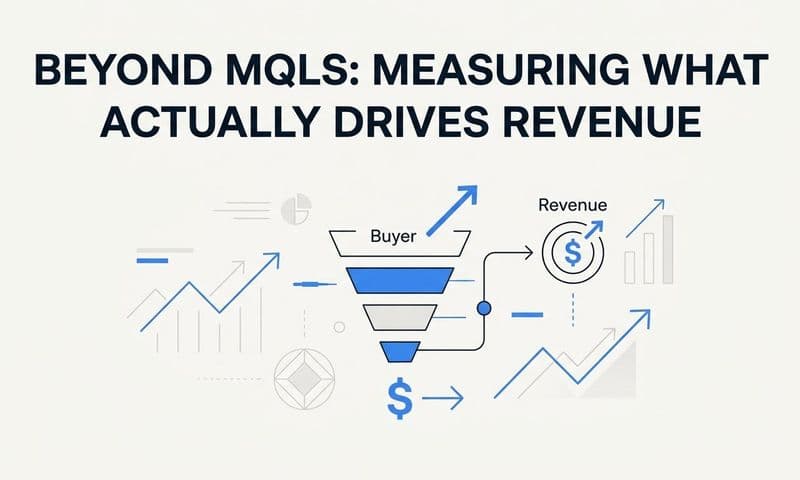
This visual breaks down how proper attribution helps marketers optimize budgets, prove their value, and just flat-out make better decisions.
 Decoding Attribution in Marketing for Better ROI
At its heart, attribution is all about giving marketers the proof they need to justify their spending and steer the ship in the right direction.
First-Touch Attribution
The First-Touch model is as straightforward as it gets: it gives all the credit to the very first touchpoint a customer ever had with your brand. Think of it as rewarding the channel that brought a new face to the party.
For instance, say a user discovers your company by clicking a LinkedIn ad. Days later, they see a retargeting ad on Instagram and finally make a purchase after getting an email. With this model, that first LinkedIn ad gets 100% of the credit. Everything else gets zero.
This model is a go-to for marketers who are laser-focused on top-of-funnel goals like brand awareness. It’s perfect for answering the question, "Which channels are best at filling our pipeline with fresh leads?"
Last-Touch Attribution
At the other end of the spectrum is the Last-Touch model. This one gives 100% of the credit to the final interaction a customer has right before they convert. It’s the marketing equivalent of celebrating the final shot that wins the game while ignoring all the passes and plays that led up to it.
Imagine a customer reads your blog, follows you on social media for weeks, and then finally clicks a Google search ad and buys something. In this world, the Google ad gets all the glory. The blog post and all that social media engagement? Completely ignored.
While simple, Last-Touch attribution often overvalues bottom-of-the-funnel channels (like branded search) and completely undervalues the top- and mid-funnel content that actually built awareness and trust in the first place.
The Rise of Multi-Touch Attribution
Relying on single-touch models is like watching a single frame of a movie and trying to guess the entire plot. To get the full story, savvy marketers turn to multi-touch attribution.
These more sophisticated models distribute credit across multiple touchpoints in the customer's journey, acknowledging that modern buyers rarely move in a straight line. People bounce between channels, and multi-touch models are built to honor that complexity.
To give you a better sense of how this works in the real world, here’s a look at the most common multi-touch models and where they shine.
A Practical Comparison of Marketing Attribution Models
Attribution Model | How It Works | Pros | Cons | Best For |
|---|---|---|---|---|
Linear | Splits credit equally among all touchpoints. Five touchpoints means each gets 20 percent | Simple and provides a baseline view of all contributing channels | Treats all interactions as equally important even though they rarely are | Teams with long sales cycles that want a general overview of the entire funnel |
Time Decay | Gives more credit to touchpoints that occurred closer to the conversion | Emphasizes the final interactions that pushed the customer to convert | Can undervalue crucial early touchpoints that initiated the journey | B2B companies with extended consideration phases where recent interactions matter most |
U Shaped (Position Based) | Assigns 40 percent to the first touch, 40 percent to the last, and splits the remaining 20 percent across middle interactions | Values both initial discovery and final conversion drivers | Middle funnel interactions can get lost in the shuffle | Businesses that care about both lead generation and conversion focused activities |
Choosing the right model really boils down to your business goals. Are you focused on generating brand new leads, nurturing them through the middle of the funnel, or just closing deals? Your answer will point you toward the model that delivers the most relevant insights for your team.
For a deeper dive, this comparison of attribution models for marketers is a great resource. And to see how this fits into the bigger picture, it's worth understanding the broader world of analytics in advertising, where these models are put to work every day.
The Shift to Smarter Algorithmic Attribution
Rule-based models like Linear and U-shaped are a solid place to start your journey into attribution in marketing. They give you a clear, logical framework for spreading credit across the customer journey. The problem? They all share one major weakness: they’re based on assumptions. You’re the one telling the model which touchpoints matter.
But what if the data could tell you instead? What if a system could analyze thousands of unique conversion paths—on its own—and figure out the true influence of each channel without you setting any rules? This is the big idea behind the next step in measurement: algorithmic attribution.
It’s the difference between following a generic recipe and having a master chef create a dish perfectly suited to your tastes. Rule-based models are the recipe—they work, but they’re rigid. Algorithmic attribution is the chef, using experience (in this case, data) to make nuanced decisions that lead to a far better result.
 Decoding Attribution in Marketing for Better ROI
This smarter approach, often called data-driven attribution, puts machine learning in the driver's seat. It crunches the numbers on both converting and non-converting user paths to determine the real probability of a conversion happening at each step. By comparing these journeys, it assigns credit with a precision that rule-based models just can't touch.
How Algorithmic Attribution Works
Instead of just applying a fixed formula, an algorithmic model builds a custom framework from your own historical data. It looks at every single touchpoint—from blog post views and social clicks to email opens and ad interactions—to learn what’s actually moving the needle. It's a data-first mentality, and it’s why the industry is quickly moving in this direction.
By 2025, multi-touch attribution (MTA) has become the dominant method for measuring marketing performance, with 75% of companies globally adopting this approach to better understand the complex customer journey. The modern consumer interacts with brands across countless channels before converting, making older single-touch models inadequate for capturing the full picture.
This powerful approach gives you a much more accurate view of performance. It empowers you to stop guessing and start putting your budget to work with surgical precision.
The Power of Data-Driven Insights
The real win with algorithmic attribution is its knack for uncovering hidden patterns and opportunities you'd otherwise miss. A U-shaped model might confirm your first and last touchpoints are important—no surprise there. But an algorithmic model might reveal that a specific mid-funnel webinar is actually the single most influential factor driving your highest-value conversions.
Algorithmic attribution doesn't just tell you what happened; it starts to explain why. It assigns credit based on incremental impact, revealing the touchpoints that genuinely changed a customer's behavior.
This shifts your analysis from a simple report card to a strategic roadmap. You can finally make smarter decisions based on real-world influence, not static rules.
- Campaign Optimization: You can confidently shift budget to the channels and campaigns that the data proves are most effective, not just the ones that show up at the beginning or end of the journey.
- Creative Insights: The model can reveal which ad creatives or messaging themes are hitting home with your audience at different stages of the funnel.
- Full-Funnel Visibility: It properly values the assist players—the blog posts, case studies, and nurture emails that build trust over time but are often ignored by simpler models.
By embracing this level of detail, you can unlock a much deeper understanding of your marketing engine. For those interested in the tech that makes this possible, you can learn more about the impact of machine learning on marketing analytics in our related guide. Ultimately, this shift represents a move from broad strokes to a fine-tuned strategy, giving you the clarity needed to grow efficiently.
Navigating Common Attribution Implementation Hurdles
Let’s be honest: adopting a new attribution model is never as simple as flipping a switch. The theory sounds great, but putting it into practice often feels like untangling a massive knot. Moving from data chaos to clarity means you have to tackle a few frustrating—but solvable—roadblocks head-on.
 Decoding Attribution in Marketing for Better ROI
For most marketers, the biggest obstacle isn't the model itself; it's the state of their data. It’s often messy, siloed across a dozen different platforms, and full of gaps. This shaky foundation makes any analysis unreliable right from the start.
The Challenge of Fragmented Data
Think of your customer data like puzzle pieces scattered across a table. You’ve got a piece from your CRM, another from your email platform, a handful from ad networks like Google and Facebook, and a few more from your website analytics. If those pieces don't fit together, you can't see the whole picture.
This fragmentation is a huge source of pain for marketers. In fact, a recent study found that 80% of marketers are unhappy with their ability to connect the dots between their various measurement tools. The problem is simple: as we add more channels, unifying all that data gets harder.
To fix this, your top priority should be creating a single source of truth. This means integrating your marketing and sales platforms so all your data flows into one central hub where it can be cleaned up, standardized, and actually used.
Tracking Customers Across Devices
Another major headache is cross-device tracking. Let's face it, a typical customer journey is rarely linear or confined to one screen. Someone might see your ad on their phone during their morning commute, do some research on their work laptop, and finally pull the trigger on their tablet at home that evening.
If you can't connect those interactions, your attribution model will see three separate "users" instead of one person on a single, cohesive journey. This leads to wildly inaccurate credit and flawed insights.
The goal is to stitch together a user's identity across their various devices. This often requires sophisticated identity resolution techniques that move beyond traditional cookie-based tracking, especially as privacy regulations become stricter.
Bridging the Online and Offline Gap
For a lot of businesses, the customer journey isn't just a digital experience. It might start with an online ad click but then lead to an in-store visit, a phone call with a sales rep, or even a chat at a trade show. These offline touchpoints are incredibly valuable, but they’re notoriously difficult to track.
Forgetting to include them in your attribution in marketing framework is a critical mistake. It creates massive blind spots that can lead you to undervalue the very channels driving real-world results.
Here’s how you can start closing that gap:
- Unique Promo Codes: Assign specific codes to your digital campaigns that customers can redeem in-store or over the phone.
- Call Tracking: Use dynamic phone numbers on your website and landing pages to link inbound calls directly back to their original marketing source.
- CRM Integration: Make sure your sales team is meticulously logging every offline interaction in your CRM and linking it to the correct contact record.
Gaining Team-Wide Buy-In
Finally, implementing a new attribution model isn't just a technical challenge—it's a cultural one. If your sales, marketing, and leadership teams don't understand or trust the new model, it’s dead on arrival. Different departments often have their favorite metrics and will naturally resist any change that challenges their view of "what's working."
Success here depends on clear communication and a bit of internal education. You need to explain why the shift is happening, how the new model works, and what the benefits are for everyone involved. For a deeper look at common roadblocks and how to solve them, check out our guide on common attribution challenges in marketing.
By tackling these implementation hurdles proactively, you can build a reliable measurement foundation that actually delivers the clarity you’re looking for.
How to Choose Your Ideal Attribution Strategy
There’s no magic bullet when it comes to attribution models. The “best” one is simply the one that’s right for your business, right now. The model a B2B SaaS company needs for a six-month sales cycle is worlds apart from what a DTC brand selling t-shirts through impulse social media ads requires.
Picking your strategy isn't about finding a perfect, one-size-fits-all solution. It's about matching your measurement to your unique business context. To do that, you just need to look inward at your goals, your sales cycle, and how mature your marketing operation is. This isn't just a technical choice—it's a strategic one that will define how you see and steer your entire marketing engine.
Align Your Model with Your Business Goals
First thing's first: what are you trying to achieve? Your main marketing objective should be the North Star guiding your choice. Different models are built to answer different questions, so you need to make sure you’re asking the right one.
- Goal: Brand Awareness & Lead Generation: If your top priority is filling the funnel with fresh prospects, First-Touch is your best friend. It’s brilliant at showing you which channels are bringing new people into your world for the very first time.
- Goal: Sales & Conversions: For teams laser-focused on closing deals, a Last-Touch model cuts straight to the chase. It highlights the channels that seal the deal, telling you what’s most effective at pushing customers across the finish line.
- Goal: Understanding the Full Journey: If you want a more holistic view that gives credit to both the first touch and the final close, a U-Shaped or Linear model provides a much more complete picture. These multi-touch approaches recognize that multiple channels played a part along the way.
Consider Your Sales Cycle and Customer Journey
The length and complexity of your sales cycle are huge factors here. A short, simple path to purchase has completely different measurement needs than a long, considered one.
Take an e-commerce brand selling a $20 product. The sales cycle is probably measured in minutes or hours. In that scenario, a simple Last-Touch model often works just fine because the journey is so direct. That final click really is one of the most important moments.
On the flip side, a B2B software company selling a $50,000 annual contract has a sales cycle that spans months and involves multiple decision-makers. A Last-Touch model would be incredibly misleading here, ignoring all the webinars, case studies, and sales calls that built the relationship.
For these longer, more complex journeys, a multi-touch model like Time-Decay or a custom data-driven approach is essential. These models are designed to properly value all the early and mid-funnel interactions that are critical for building trust over the long haul.
Assess Your Team's Attribution Maturity
Finally, be honest about what your team can handle right now. Your budget, tools, and technical know-how all play a role. Your attribution in marketing strategy should grow with you. There's zero shame in starting simple and getting more sophisticated over time.
- Beginner Level: Just getting started? Don't overcomplicate it. Stick with the basic models available for free in tools like Google Analytics. Your main job is to nail down consistent UTM tracking across all your campaigns. That simple, foundational step will deliver immediate value without costing you a dime.
- Intermediate Level: As you grow, you can start exploring more advanced multi-touch models or investing in a platform that pulls all your data into one place. This is where you start connecting your marketing efforts directly to real revenue.
- Advanced Level: Mature marketing teams with a bigger budget might invest in a dedicated attribution platform that offers algorithmic, data-driven modeling. These powerful tools deliver the most accurate insights, but they require a serious investment in both cost and expertise to manage.
By taking a hard look at these three areas—your goals, your sales cycle, and your team's maturity—you can make a smart choice. For a complete walkthrough on building out your plan, our guide to developing a marketing attribution strategy offers a deeper dive into these concepts. The goal is to pick a path that gives you clarity today while setting you up for even better insights tomorrow.
The Future of Attribution in a Privacy-First World
Let's be honest: the ground is shifting beneath our feet. The era of third-party cookies is officially over, and a massive focus on user privacy is forcing every marketer to rethink how we track and measure campaign performance.
The old methods of attribution in marketing—the ones that relied on following individual users across the web—are becoming obsolete fast. This doesn't mean measurement is dead; it just means it's time for an evolution. The future is less about invasive individual tracking and more about smart, privacy-friendly analysis.
Adapting to New Measurement Realities
The entire industry is moving toward methods that respect user consent while still giving us the insights we need to make good decisions. This means we have to get much better at using the information we collect directly from our audience.
For a deeper dive, you can explore our complete guide on how to effectively use first-party data.
Two key trends are really defining this new chapter for marketers:
- Marketing Mix Modeling (MMM): This top-down statistical analysis is making a huge comeback. MMM helps us understand how different channels contribute to sales without needing individual user data, making it a perfect fit for a privacy-first world.
- Data Clean Rooms: Think of these as secure environments where multiple companies can pool anonymized data for measurement. Neither party can see the other's raw data, but they can analyze the combined dataset to get bigger-picture insights while protecting user information.
The core shift is from granular, individual-level tracking to aggregated, modeled, and privacy-safe measurement. It's about seeing the forest without having to tag every single tree.
The demand for smarter, more adaptable attribution isn't slowing down. The global multi-touch attribution market was valued at USD 2.43 billion in 2025 and is projected to hit USD 4.61 billion by 2030.
That's a clear signal that businesses are hungry for better tools. You can find more insights about this market's rapid growth on mordorintelligence.com. This evolution isn't just about compliance; it's about making sure our strategies stay effective for years to come.
Some Lingering Questions About Marketing Attribution
Even after you get the hang of the models and strategies, a few common questions always seem to pop up once you start putting attribution in marketing into practice. Let's clear up some of the most frequent points of confusion for marketers.
Attribution vs. Marketing Mix Modeling
One of the first hurdles is understanding how attribution differs from Marketing Mix Modeling (MMM). The easiest way to think about it is through two different lenses. Marketing attribution is a bottom-up approach. It zooms in on individual customer journeys and gives credit to specific touchpoints like ad clicks, email opens, and content downloads.
MMM, on the other hand, is a top-down analysis. It takes a big-picture view over time, measuring how broad factors—like your TV ad spend, seasonality, and even economic trends—impact overall sales. They aren't competing methods; they're complementary. Using both gives you the most complete picture of your performance.
Attribution tells you which specific ads are converting individual users, while MMM tells you how your entire TV budget is impacting quarterly revenue.
How to Get Started on a Small Budget
You don't need an enterprise-level budget to get started with attribution. The best place to begin is with the free tools you're probably already using, like Google Analytics. It offers several basic models like First-Click, Last-Click, and Linear right out of the box.
The most important first step, though, is making sure your data is clean and organized. That means getting serious about a consistent UTM parameter strategy for every single campaign link you create. This simple discipline costs nothing but delivers huge insights, building a solid foundation for when you’re ready for more advanced tools.
The Impact of Losing Third-Party Cookies
The end of third-party cookies is a big deal. It fundamentally changes how we track users across different websites, which throws a wrench in many multi-touch attribution setups. This shift is forcing the entire industry toward more privacy-friendly methods.
To adapt, marketers are now focusing on:
- First-party data: This is the information you collect directly from your audience on your own properties. It's gold.
- Conversion APIs: These are server-side tools that send conversion data directly to ad platforms, bypassing browser-based tracking issues.
- Broader measurement: This means relying more on aggregate models like MMM to understand performance without granular user-level tracking.
This evolution is all about learning to measure campaign effectiveness without having to follow individual users across the web.
Ready to move beyond guesswork and see your full marketing picture with total clarity? Cometly provides the unified attribution platform you need to track every touchpoint, optimize every dollar, and prove your ROI with confidence. Get started with Cometly today.