B2B SaaS companies are drowning in data and starving for insight. You have numbers coming in from Google Ads, Meta, LinkedIn, your CRM, your product, and your website, but connecting all of that into a clear picture of what actually drives pipeline and revenue? That's where things get messy.
Choosing the right analytics platform changes everything. The difference between scaling confidently and burning budget on channels that look good on paper but never close deals often comes down to how well your tools connect the dots. For B2B teams specifically, this means handling long sales cycles, multi-stakeholder buying journeys, and the increasing complexity of privacy-driven tracking changes.
The platforms below were selected based on multi-touch attribution capabilities, integration depth, real-time reporting quality, ease of use for marketing teams, and how well they serve B2B-specific use cases. Whether you're trying to understand which marketing touchpoints drive revenue or simply need a cleaner view of your ad performance across channels, there's a tool on this list built for your situation.
1. Cometly
Best for: AI-powered marketing attribution connecting ads, CRM, and website data to revenue
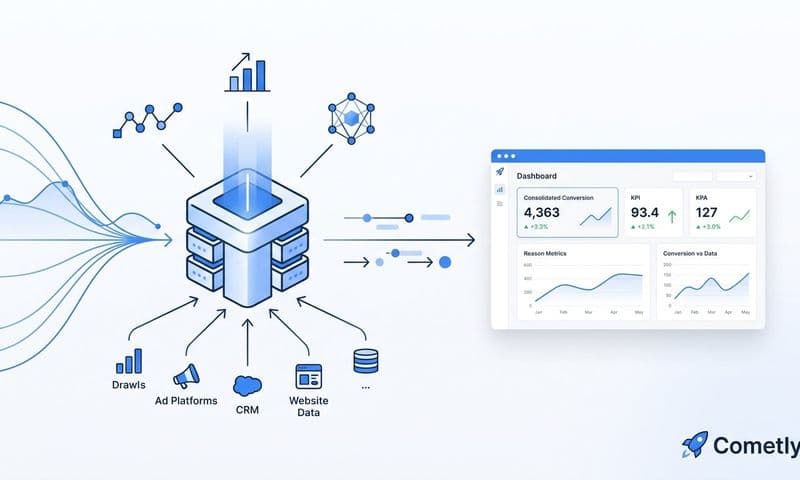
Cometly is an AI-driven marketing attribution platform that shows exactly which ads and channels drive leads and revenue across the full customer journey.
 9 Best B2B SaaS Analytics Platforms to Scale Smarter in 2026
Where This Tool Shines
Cometly is built for marketing teams that are tired of guessing. It connects your ad platforms, CRM, and website into a single attribution layer, so you can see which campaigns actually influence pipeline, not just which ones generated clicks. For B2B teams with long sales cycles, this is critical: last-click attribution will always mislead you, and Cometly's multi-touch models give you a far more accurate picture of what's working.
One of its standout capabilities is server-side tracking, which addresses the accuracy problems that browser privacy changes and iOS restrictions have created for most marketers. Combined with conversion sync, Cometly sends enriched event data back to Meta, Google, and other ad platforms, helping their algorithms optimize more effectively. The result is better targeting, better spend efficiency, and more confidence in every budget decision you make.
Key Features
AI-Powered Ad Optimization: Surfaces recommendations across all channels to identify high-performing ads and flag underperformers before budget is wasted.
Server-Side Tracking: Captures accurate conversion data despite browser privacy changes, ad blockers, and cookie limitations.
Multi-Touch Attribution: Connects every touchpoint in the customer journey to closed revenue, not just the first or last click.
Conversion Sync: Sends enriched, conversion-ready events back to Meta, Google, and other platforms to improve their targeting and bidding algorithms.
AI Chat for Data Analysis: Lets you ask questions about your marketing data in plain language and get instant, actionable answers without building custom reports.
Best For
Marketing teams and agencies running paid campaigns across multiple platforms who need accurate attribution and AI-driven recommendations to scale with confidence. Particularly valuable for B2B SaaS companies where long sales cycles make simple attribution models unreliable.
Pricing
Custom pricing based on ad spend and business needs. A demo is available on request directly through the Cometly website.
2. HubSpot Marketing Analytics
Best for: Full-funnel reporting within the HubSpot CRM ecosystem
HubSpot Marketing Analytics is a CRM-native analytics suite that ties marketing activity to contacts, deals, and closed revenue inside HubSpot's platform.
 10 Best Marketing Analytics Software Packages in 2026
Where This Tool Shines
If your team already lives in HubSpot, the analytics layer is genuinely powerful. Because it's native to the CRM, you get full-funnel visibility from first touch through closed deal without stitching together third-party integrations. Marketing and sales data live in the same system, which means your attribution reports actually reflect what happened in the real buying journey.
The custom report builder is drag-and-drop and accessible to non-technical marketers. Campaign performance is tied directly to contacts and deals, so you're not just tracking traffic metrics. You're tracking pipeline influence, which matters far more for B2B teams.
Key Features
Native CRM Integration: Marketing data connects directly to contacts, deals, and revenue without manual data stitching.
Multi-Touch Revenue Attribution: Distributes credit across touchpoints within the HubSpot ecosystem using several attribution models.
Custom Report Builder: Drag-and-drop interface lets marketers build tailored reports without SQL or developer support.
Campaign Performance Tracking: Ties email, ads, landing pages, and social activity to deal outcomes and closed revenue.
Best For
B2B SaaS teams already using HubSpot as their CRM who want native full-funnel reporting without adding another tool. Less useful if your CRM lives outside the HubSpot ecosystem.
Pricing
Marketing Hub Professional starts at $800/month; Enterprise at $3,600/month. Attribution features are available on Professional and above.
3. Mixpanel
Best for: Product analytics and user behavior tracking inside SaaS applications
Mixpanel is an event-based product analytics platform that helps SaaS teams understand how users engage with their product through funnel analysis, cohort tracking, and retention reporting.
 9 Best AI Marketing Analytics Tools in 2026
Where This Tool Shines
Mixpanel is the go-to choice for product-led growth teams that need granular visibility into what users actually do inside the application. Its event-based model gives you flexibility to track exactly the interactions that matter, and the funnel analysis makes it easy to identify where users drop off before converting or activating.
The self-serve query builder is genuinely fast to use, and the cohort comparison feature is particularly useful for understanding how different user segments behave over time. If your product is your primary acquisition channel, Mixpanel gives you the depth you need.
Key Features
Event-Based Tracking: Flexible custom event definitions let you track the specific interactions that matter to your product and business.
Funnel and Retention Analysis: Visualizes where users drop off and how long they stay engaged across different time periods.
Cohort Analysis: Compares user segments over time to identify behavioral patterns tied to retention or churn.
Interactive Reports: Self-serve query building with no SQL required for most common analyses.
Best For
Product and growth teams at SaaS companies focused on improving activation, retention, and in-product conversion. Less suited as a primary marketing attribution tool for multi-channel ad spend analysis.
Pricing
Free plan available for up to 20M events per month. Growth plan starts at $28/month, with Enterprise pricing available for larger teams.
4. Amplitude
Best for: Enterprise-grade behavioral analytics with AI-powered insights and experimentation
Amplitude is an enterprise product analytics platform with advanced behavioral segmentation, predictive analytics, and built-in A/B testing for teams that need deep user engagement intelligence.
 9 Best B2B SaaS Analytics Platforms to Scale Smarter in 2026
Where This Tool Shines
Amplitude goes deeper than most product analytics tools on behavioral segmentation and predictive insights. Its AI-powered anomaly detection can surface unexpected changes in user behavior before they become visible problems, which is particularly useful for teams managing large user bases where manual monitoring isn't realistic.
The built-in experimentation layer is a meaningful differentiator. Rather than running A/B tests in one tool and analyzing results in another, Amplitude keeps the full experimentation workflow in a single platform. For enterprise SaaS teams, this reduces friction and improves the reliability of test conclusions.
Key Features
Behavioral Cohorts: Advanced user segmentation based on specific actions, sequences, and properties within the product.
AI Anomaly Detection: Automatically identifies unusual patterns in engagement or conversion data and surfaces root cause analysis.
Predictive Analytics: Models churn likelihood and conversion probability at the user level to support proactive intervention.
Built-In Experimentation: A/B testing and feature flagging integrated directly into the analytics platform.
Best For
Enterprise SaaS product and data teams that need sophisticated behavioral analytics, predictive modeling, and experimentation in one platform. The free Starter plan works for smaller teams exploring product analytics for the first time.
Pricing
Free Starter plan available. Growth and Enterprise plans are custom-priced based on monthly tracked users and feature requirements.
5. Google Analytics 4
Best for: Free website and app tracking with native Google Ads integration
Google Analytics 4 is Google's event-based analytics platform for tracking website and app activity, with audience building, conversion tracking, and deep integration with the Google ecosystem.
 11 Best Marketing Analytics Tools to Track and Optimize Campaign Performance in 2026
Where This Tool Shines
The most obvious strength of GA4 is the price: free for most use cases, with no meaningful data volume limits for standard implementations. For teams running Google Ads, the native integration for audience building and conversion import is genuinely valuable and difficult to replicate with third-party tools.
GA4's Explorations feature gives non-technical marketers access to custom funnel analysis, pathing reports, and cohort comparisons that used to require a BI tool. It's not perfect, but for a free platform, the depth of analysis available is significant.
Key Features
Free Access: No cost for standard use, making it accessible to teams at any stage of growth.
Event-Based Data Model: More flexible than the old session-based Universal Analytics approach, enabling richer interaction tracking.
Native Google Ads Integration: Audience lists and conversion data flow directly between GA4 and Google Ads without manual setup.
Explorations: Custom funnel, pathing, and cohort analysis tools available within the interface.
Best For
Any B2B SaaS team that needs a solid foundational analytics layer for their website and is running Google Ads. Works well as a baseline tool alongside more specialized attribution or product analytics platforms.
Pricing
Free for standard use. GA4 360 (enterprise version) is available for organizations needing higher data limits and SLAs; pricing is available on request through Google's sales team.
6. Dreamdata
Best for: B2B revenue attribution with account-level journey mapping across long sales cycles
Dreamdata is a B2B-specific revenue attribution platform that maps account-level customer journeys across multiple stakeholders and connects marketing touchpoints to pipeline and closed revenue.
 9 Best B2B SaaS Attribution Platforms Reviewed for 2026
Where This Tool Shines
Dreamdata is purpose-built for the complexity of B2B buying. Most analytics tools are designed around individual user behavior, but B2B deals involve multiple stakeholders from the same account, often over months. Dreamdata maps the full account-level journey, giving you visibility into how different contacts from the same company interact with your marketing before a deal closes.
The B2B-specific attribution models are a meaningful advantage. Rather than forcing B2B data into consumer-oriented attribution frameworks, Dreamdata's models account for the reality of long sales cycles and committee-driven decisions. Content attribution is also built in, so you can see which blog posts, whitepapers, or webinars actually influence deals, not just which ones get traffic.
Key Features
Account-Level Journey Mapping: Tracks interactions from multiple stakeholders within the same account across the full buying cycle.
B2B Attribution Models: Attribution frameworks designed specifically for long sales cycles and multi-stakeholder buying journeys.
CRM and Ad Platform Integrations: Connects pipeline data from your CRM with touchpoint data from ad platforms for revenue-connected reporting.
Content Attribution: Shows which content assets influence deals at different stages of the funnel.
Best For
B2B SaaS marketing teams with sales cycles longer than a few weeks who need account-level attribution and pipeline-connected reporting. Especially valuable for ABM-focused teams tracking multi-stakeholder engagement.
Pricing
Free plan available. Team plan starts at $999/month. Enterprise pricing available for larger organizations with more complex data needs.
7. Heap
Best for: Autocapture analytics with retroactive analysis and no manual event tagging
Heap is an autocapture analytics platform that automatically records all user interactions, enabling retroactive analysis and reducing the engineering resources typically required for event tracking setup.
 9 Best Marketing Analytics SaaS Tools and Their Pricing in 2026
Where This Tool Shines
The core value proposition of Heap is simple: you don't have to decide what to track before you start tracking it. Traditional analytics tools require you to define events in advance, which means any interaction you didn't anticipate is lost forever. Heap captures everything automatically, so you can go back and analyze behavior patterns that you didn't know would matter when you first set things up.
Session replay adds a qualitative layer on top of the quantitative data, letting you watch how real users navigate your product. The data science layer that automatically surfaces friction points is particularly useful for product teams that don't have dedicated analysts reviewing dashboards daily.
Key Features
Autocapture Technology: Records every click, pageview, tap, and form interaction automatically without manual event instrumentation.
Retroactive Analysis: Analyze historical data on interactions that weren't pre-defined as tracked events at setup.
Session Replay: Watch individual user sessions to understand qualitative behavior patterns alongside quantitative metrics.
Automated Friction Detection: Data science layer that proactively surfaces where users are struggling without requiring manual analysis.
Best For
Product and UX teams at SaaS companies that want comprehensive behavioral data without heavy engineering investment in event tracking. Also valuable for teams that frequently need to answer questions about past behavior they didn't anticipate tracking.
Pricing
Free plan available. Growth and Pro plans are custom-priced based on session volume and feature requirements. Contact Heap's sales team for enterprise pricing.
8. Databox
Best for: Consolidating KPIs from 100+ tools into a single dashboard view
Databox is a dashboard and reporting platform that pulls data from over 100 marketing, sales, and analytics tools into a unified view without requiring custom BI infrastructure.
Where This Tool Shines
Databox solves a very specific and very common problem: your team uses a dozen different tools, and no one has time to log into all of them every morning. By centralizing KPIs from across your stack into a single dashboard, Databox makes it easy for marketing teams to stay aligned on performance without building custom data pipelines or hiring a BI engineer.
The benchmark groups feature is a genuinely useful differentiator. It lets you compare your metrics against anonymized data from similar businesses in your industry, giving you context that internal dashboards alone can't provide. For teams that struggle to know whether their numbers are good or just okay, this adds meaningful perspective.
Key Features
100+ Pre-Built Integrations: Connects to marketing, sales, analytics, and CRM platforms without custom development work.
Drag-and-Drop Dashboard Builder: Non-technical marketers can build and customize dashboards with mobile-friendly views.
Automated Goal Tracking and Alerts: Set performance targets and receive notifications when metrics go above or below thresholds.
Benchmark Groups: Compare your KPIs against anonymized industry peer data to add context to your performance metrics.
Best For
Marketing and agency teams that need a unified reporting layer across multiple tools without the cost and complexity of a full BI platform. Works well as a reporting layer on top of more specialized analytics tools rather than as a standalone analytics solution.
Pricing
Free plan available. Professional plan starts at $47/month. Higher tiers available for agencies and larger teams with more data sources and users.
9. Kissmetrics
Best for: SaaS customer journey analytics connecting anonymous visitors to paying customers
Kissmetrics is a customer journey analytics platform for SaaS businesses that ties anonymous visitor activity to identified users and paying customers, tracking the full path from acquisition through retention.
Where This Tool Shines
Kissmetrics takes a person-centric approach to analytics that makes it particularly well-suited for SaaS businesses. Rather than tracking sessions and pageviews, it tracks people, linking anonymous pre-signup activity to identified users and eventually to revenue outcomes. This means you can trace a paying customer all the way back to the ad or channel that first brought them to your site.
The SaaS-specific metrics are built in rather than bolted on. MRR, churn, and LTV broken down by acquisition source give you a direct line between your marketing channels and the revenue quality they produce. If one channel drives high-volume signups but those users churn quickly, Kissmetrics will show you that, and that insight is worth a lot.
Key Features
Person-Level Tracking: Links anonymous visitor sessions to identified users and paying customers across the full lifecycle.
Revenue Reporting by Channel: Ties MRR and customer value to the marketing channels and campaigns that acquired them.
SaaS-Specific Metrics: Built-in MRR, churn, and LTV reporting segmented by acquisition source and campaign.
A/B Test Revenue Impact: Connects experiment results to downstream revenue metrics rather than just surface-level conversion rates.
Best For
SaaS marketing teams that want to understand not just who converts but which channels produce customers with the highest long-term value. Particularly useful for teams that have seen misleading results from volume-focused acquisition metrics.
Pricing
Plans start at $299/month for SaaS businesses. Higher tiers available based on event volume and feature requirements.
Which Platform Is Right for Your Team
The right B2B SaaS analytics platform depends entirely on where your biggest data blind spots are right now. No single tool does everything perfectly, and the best stack usually combines a few complementary platforms rather than relying on one.
Here's a quick breakdown by use case to help you prioritize:
Best for marketing attribution across paid channels: Cometly, especially if you need server-side tracking, AI-driven recommendations, and conversion sync to feed better data back to Meta and Google.
Best for B2B revenue attribution with long sales cycles: Dreamdata, which handles account-level journeys and multi-stakeholder buying in ways that consumer-oriented tools simply can't.
Best for product analytics and user behavior: Mixpanel for teams focused on product-led growth and activation; Amplitude for enterprise teams that need predictive analytics and built-in experimentation.
Best free foundational option: Google Analytics 4, particularly if you're running Google Ads and need a solid baseline without adding cost.
Best for all-in-one CRM analytics: HubSpot Marketing Analytics, if your team already operates within the HubSpot ecosystem.
Best for autocapture without engineering overhead: Heap, for teams that want comprehensive behavioral data without pre-defining every event.
Best for consolidating dashboards across tools: Databox, as a reporting layer that brings your existing stack into a single view.
Best for SaaS customer lifetime value by acquisition source: Kissmetrics, for teams that want to connect marketing channels to long-term revenue quality, not just initial conversion volume.
Start by identifying the area causing the most wasted spend or missed insight for your team today. If you're flying blind on which ads actually drive pipeline, attribution is your gap. If you don't know where users drop off inside your product, behavioral analytics is the priority.
For teams running paid campaigns across multiple channels and struggling to prove which ones actually drive revenue, Cometly is built for exactly that problem. Get your free demo and see how AI-powered attribution can connect every touchpoint to the revenue outcomes that actually matter.