Running an ecommerce brand without proper analytics is like driving blindfolded—you might move forward, but you have no idea where you're going or what's working. The right analytics tools help you understand which marketing channels actually drive revenue, where customers drop off in your funnel, and how to optimize your ad spend for maximum ROI.
But with dozens of options available, choosing the right stack can feel overwhelming. We've evaluated the top analytics platforms based on ease of implementation, data accuracy, attribution capabilities, and value for ecommerce-specific use cases. Here are the best analytics tools that help ecommerce brands turn data into profitable decisions.
1. Cometly
Best for: Ecommerce brands running multi-channel paid advertising campaigns who need accurate attribution
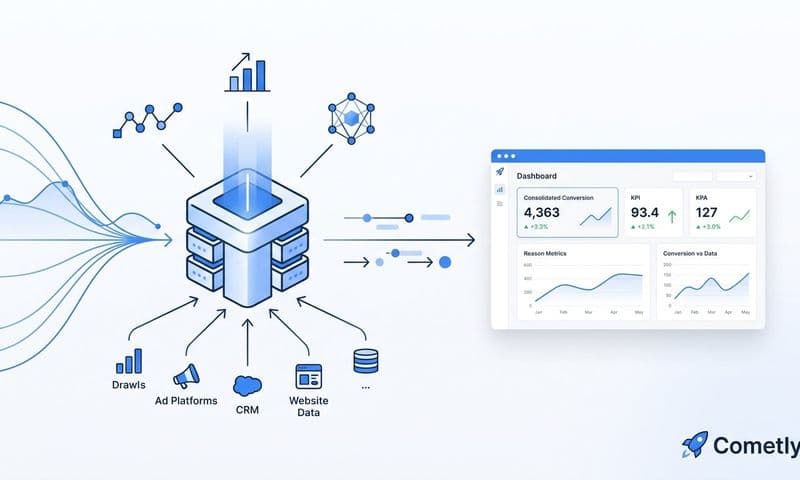
Cometly is a marketing attribution platform that connects your ad platforms, CRM, and website data to show exactly which ads and channels drive actual revenue.
 9 Best Analytics Tools for Ecommerce Brands in 2026
Where This Tool Shines
Cometly solves one of the biggest challenges ecommerce brands face in 2026: accurate tracking in a privacy-first world. With iOS tracking limitations and cookie deprecation making browser-based attribution unreliable, Cometly's server-side tracking captures the complete customer journey from first click to final purchase.
The platform's AI-powered recommendations analyze your attribution data to identify which campaigns, ad sets, and creatives are actually driving revenue—not just clicks. This helps you scale what works and cut what doesn't, with confidence backed by accurate data.
Key Features
Multi-Touch Attribution: Track every customer touchpoint across all marketing channels to understand the complete path to purchase.
AI Ads Manager: Get intelligent optimization recommendations based on real revenue data, not just platform metrics.
Server-Side Tracking: Capture accurate conversion data even with iOS limitations and browser restrictions.
Conversion Sync: Feed enriched conversion data back to Meta, Google, and other ad platforms to improve their AI targeting.
Real-Time Analytics Dashboard: Monitor campaign performance and attribution across all channels in one unified view.
Best For
Cometly is ideal for ecommerce brands spending $10K+ monthly on paid advertising across multiple platforms who need to know which ads actually drive revenue. It's particularly valuable for brands struggling with attribution accuracy after iOS 14.5 changes or those managing complex multi-channel campaigns.
Pricing
Custom pricing based on ad spend volume. The platform is designed for growing ecommerce brands with serious advertising budgets who need enterprise-level attribution without enterprise complexity.
2. Google Analytics 4
Best for: Comprehensive website analytics and cross-platform user journey tracking at no cost
Google Analytics 4 is a free web analytics platform with event-based tracking and machine learning insights built for the modern privacy landscape.
 11 Best Conversion Optimization Tools to Boost Your ROI in 2026
Where This Tool Shines
GA4 represents a fundamental shift from the session-based model of Universal Analytics to an event-based approach that better captures how customers actually interact with your ecommerce site. The platform uses machine learning to fill gaps in data caused by cookie restrictions, providing predictive metrics like purchase probability and churn likelihood.
For ecommerce brands, GA4's enhanced ecommerce tracking captures detailed product performance data, shopping behavior, and checkout funnel analytics. The cross-platform tracking connects web and app interactions, giving you a unified view of customer behavior regardless of where they engage with your brand.
Key Features
Event-Based Data Model: Track any user interaction as an event, giving you flexibility to measure what matters for your business.
Predictive Metrics: Use machine learning to identify customers likely to purchase or churn within the next 7 days.
Cross-Platform Tracking: Connect user journeys across your website, mobile app, and other digital properties.
Native Google Ads Integration: Automatically share audiences and conversion data with Google Ads for better campaign targeting.
Custom Reports and Explorations: Build tailored reports to answer specific business questions without SQL knowledge.
Best For
GA4 is essential for virtually every ecommerce brand as a foundational analytics tool. It's particularly valuable for businesses just starting with analytics or those on tight budgets who need comprehensive website tracking without monthly fees.
Pricing
Free for most ecommerce brands. GA4 360 enterprise version available for high-traffic sites requiring advanced features, SLA guarantees, and dedicated support.
If you're evaluating vendors, our AI ad testing tool breakdown can help.
3. Triple Whale
Best for: Shopify stores needing simplified attribution and creative performance analytics
Triple Whale is an ecommerce analytics platform built specifically for Shopify stores with first-party pixel tracking and blended ROAS calculations.
 11 Best Marketing Attribution Companies to Track Your Ad ROI in 2026
Where This Tool Shines
Triple Whale was designed by ecommerce operators for ecommerce operators, which shows in its intuitive dashboard and Shopify-native integration. The platform's first-party pixel captures attribution data that ad platforms miss, giving you a more complete picture of campaign performance.
The creative analytics feature is particularly valuable for brands running multiple ad variations. You can quickly identify which creative angles, hooks, and formats drive the best results, then feed those insights back into your creative production process.
Key Features
First-Party Pixel Attribution: Capture conversion data directly through your own pixel, bypassing browser restrictions.
Creative Performance Dashboard: Analyze which ad creatives drive revenue, not just engagement metrics.
Blended ROAS Calculations: See true return on ad spend across all channels in one unified metric.
Influencer Tracking: Monitor performance of influencer campaigns with custom UTM tracking and attribution.
Shopify-Native Integration: Connect directly to your Shopify store for automatic data sync without complex setup.
Best For
Triple Whale is ideal for Shopify brands spending $5K-$50K monthly on paid social advertising who want straightforward attribution without technical complexity. It's particularly popular with direct-to-consumer brands focused on Meta and TikTok advertising.
We compare the leading options in our Shopify social ad generator roundup.
Pricing
Plans start at $129/month for stores doing up to $100K in monthly revenue, scaling up based on store size and feature requirements.
4. Mixpanel
Best for: Understanding user behavior patterns, conversion funnels, and retention metrics
Mixpanel is a product analytics platform that helps ecommerce brands understand exactly how customers interact with their site and where they drop off in the purchase journey.
 9 Best Analytics Tools for Ecommerce Brands in 2026
Where This Tool Shines
Mixpanel excels at behavioral analytics—understanding what users actually do on your site, not just which pages they visit. The platform's funnel analysis shows you precisely where customers abandon their journey, whether that's adding to cart, entering shipping info, or completing payment.
The cohort analysis feature is particularly powerful for ecommerce brands. You can group customers by acquisition channel, first purchase date, or any custom property, then track how each cohort's behavior differs over time. This helps you understand which marketing channels bring the most valuable long-term customers.
Key Features
Advanced Funnel Analysis: Visualize conversion paths and identify exactly where customers drop off in your purchase flow.
Cohort Retention Reports: Track how different customer groups behave over time to measure true marketing effectiveness.
Self-Serve Data Exploration: Empower your team to answer their own questions without waiting for data analysts.
A/B Test Analysis: Measure the impact of product changes and optimizations on conversion rates and revenue.
User Flow Visualization: See the most common paths customers take through your site to optimize the experience.
Best For
Mixpanel is ideal for ecommerce brands focused on conversion rate optimization and user experience improvements. It's particularly valuable for stores with complex customer journeys or those running frequent A/B tests on product pages and checkout flows.
Pricing
Free tier available for up to 20 million events per month. Growth plans start at $20/month, scaling based on event volume and feature requirements.
5. Klaviyo
Best for: Email and SMS marketing analytics with revenue attribution and customer lifetime value tracking
Klaviyo is an email and SMS marketing platform with built-in analytics that show exactly how much revenue your messaging campaigns generate.
 9 Best Analytics Tools for Ecommerce Brands in 2026
Where This Tool Shines
While Klaviyo is primarily known as a marketing automation platform, its analytics capabilities are robust enough to warrant inclusion on this list. The platform automatically attributes revenue to specific emails, SMS messages, and automated flows, giving you clear visibility into which messages drive sales.
The predictive analytics features use machine learning to identify customers at risk of churning or likely to make their next purchase soon. This helps you time your marketing messages perfectly and focus retention efforts where they'll have the biggest impact.
Key Features
Revenue Attribution: See exactly how much revenue each email campaign and automated flow generates.
Customer Lifetime Value Tracking: Monitor LTV by segment, acquisition channel, or any custom property.
Predictive Analytics: Identify customers likely to churn or make their next purchase within specific timeframes.
Segment Performance Reporting: Compare how different customer segments respond to your marketing messages.
Flow and Campaign Analytics: Track open rates, click rates, and revenue for every message you send.
Best For
Klaviyo is essential for ecommerce brands that rely on email and SMS marketing as core revenue channels. It's particularly valuable for stores with strong retention strategies or those selling consumable products with predictable repurchase cycles.
Pricing
Free up to 250 contacts and 500 email sends. Paid plans start at $20/month for 251-500 contacts, scaling based on list size and SMS usage.
6. Amplitude
Best for: Enterprise behavioral analytics with advanced experimentation and customer journey mapping
Amplitude is a product analytics platform that helps ecommerce brands understand user behavior at scale with sophisticated cohort analysis and experimentation tools.
 9 Best Analytics Tools for Ecommerce Brands in 2026
Where This Tool Shines
Amplitude takes behavioral analytics to an enterprise level with features designed for data-driven product teams. The platform's journey mapping visualizes the most common paths customers take through your site, highlighting opportunities to streamline the experience and remove friction.
The built-in experimentation platform lets you run A/B tests and measure their impact on key metrics without needing separate testing tools. This integration between analytics and experimentation helps you move faster from insight to action.
Key Features
Behavioral Cohort Analysis: Create sophisticated user segments based on actions they've taken or haven't taken on your site.
Built-In Experimentation: Run A/B tests and measure results directly within the analytics platform.
Customer Journey Mapping: Visualize the most common paths users take and identify drop-off points.
Revenue and LTV Analytics: Track how user behavior correlates with revenue generation and customer lifetime value.
Data Governance Tools: Maintain data quality with taxonomy management and tracking plan validation.
Best For
Amplitude is ideal for mid-market to enterprise ecommerce brands with dedicated product and analytics teams. It's particularly valuable for stores with complex user experiences or those running sophisticated personalization and experimentation programs.
Pricing
Free tier available for up to 10 million actions per month. Growth plans start at $49/month, with enterprise pricing based on scale and feature requirements.
7. Heap
Best for: Automatic event tracking without manual implementation and retroactive analytics
Heap is an analytics platform that automatically captures every user interaction on your site, letting you analyze historical data without having to define events upfront.
 11 Best Marketing Analytics Software to Track What Actually Drives Revenue in 2026
Where This Tool Shines
Heap's autocapture feature is its defining characteristic. Unlike traditional analytics platforms where you need to manually instrument tracking for every button click and form submission, Heap automatically tracks everything. This means you can ask questions about past user behavior even if you didn't set up tracking for those specific events.
The retroactive analytics capability is particularly valuable when you're exploring new optimization opportunities. You can analyze how users interacted with a specific page element over the past six months without having to wait for new data to accumulate.
Key Features
Autocapture for All Interactions: Automatically track every click, page view, form submission, and user action without manual implementation.
Retroactive Analytics: Analyze historical data for events you didn't explicitly define when they occurred.
Session Replay Integration: Watch recordings of actual user sessions to understand behavior qualitatively.
Conversion Funnel Analysis: Build funnels retroactively to understand drop-off points in your customer journey.
Data Science Add-Ons: Access advanced features like predictive modeling and automated insights for deeper analysis.
Best For
Heap is ideal for ecommerce brands that want comprehensive analytics without the overhead of maintaining detailed tracking plans. It's particularly valuable for teams that frequently ask new questions about user behavior and need flexibility to explore data retroactively.
Pricing
Free tier available for up to 10,000 sessions per month. Growth plans use custom pricing based on session volume and feature requirements.
8. Northbeam
Best for: Multi-touch attribution with media mix modeling and incrementality testing
Northbeam is an attribution platform that combines click-based tracking with media mix modeling to show true marketing effectiveness across all channels.
Where This Tool Shines
Northbeam goes beyond traditional attribution by incorporating media mix modeling—a statistical approach that measures the incremental impact of each marketing channel on overall sales. This helps you understand not just which ads get clicked, but which marketing activities actually drive incremental revenue.
The creative analytics dashboard is particularly robust, breaking down performance by creative concept, format, and messaging angle. This helps brands identify winning creative patterns and scale what works across multiple campaigns and platforms.
Key Features
Multi-Touch Attribution Models: Choose from multiple attribution models or create custom models that match your business logic.
Media Mix Modeling: Understand the incremental impact of each marketing channel using statistical modeling.
Creative Analytics Dashboard: Analyze creative performance across concepts, formats, and messaging angles.
Incrementality Testing: Run holdout tests to measure the true incremental impact of your marketing spend.
Cross-Channel Budget Optimization: Get recommendations on how to reallocate budget across channels for maximum ROI.
Best For
Northbeam is ideal for established ecommerce brands spending $50K+ monthly on paid advertising who need sophisticated attribution beyond what ad platforms provide. It's particularly valuable for brands running significant upper-funnel campaigns or those struggling to measure the impact of brand marketing.
Pricing
Custom pricing based on ad spend volume and feature requirements. The platform is positioned for brands with significant advertising budgets who need enterprise-level attribution capabilities.
9. Glew.io
Best for: All-in-one ecommerce business intelligence combining marketing, inventory, and customer analytics
Glew.io is a business intelligence platform that connects your ecommerce store, marketing channels, and inventory systems into unified dashboards and reports.
Where This Tool Shines
Glew.io takes a holistic approach to ecommerce analytics by combining marketing performance, customer behavior, and inventory data in one platform. This unified view helps you understand not just which marketing campaigns drive sales, but also which products are most profitable and which customer segments have the highest lifetime value.
The pre-built dashboards are designed specifically for ecommerce KPIs, so you get valuable insights immediately without spending weeks building custom reports. The platform automatically calculates metrics like customer lifetime value, cohort retention, and product profitability.
Key Features
Pre-Built Ecommerce Dashboards: Access ready-made dashboards for sales, marketing, inventory, and customer analytics.
Product Performance Analytics: Track revenue, profit margins, and inventory turnover for every SKU.
Customer Segmentation and LTV: Analyze customer lifetime value by acquisition channel, product category, or custom segments.
Inventory Analytics: Monitor stock levels, reorder points, and inventory turnover to optimize purchasing.
Multi-Store Reporting: Consolidate data from multiple ecommerce stores into unified reports and dashboards.
Best For
Glew.io is ideal for ecommerce brands that want comprehensive business intelligence without building custom data warehouses. It's particularly valuable for stores with significant inventory complexity or those operating multiple storefronts across different platforms.
Pricing
Plans start at $79/month for stores with basic reporting needs, scaling based on order volume, data sources, and advanced feature requirements.
Building Your Analytics Stack
The most successful ecommerce brands don't rely on a single analytics tool. They build complementary stacks that cover different aspects of their business.
If accurate attribution is your top priority—especially if you're managing campaigns across Meta, Google, TikTok, and other platforms—start with Cometly to understand which ads actually drive revenue. Pair it with GA4 for comprehensive website analytics and Klaviyo for email and SMS attribution.
For brands focused on conversion rate optimization and user experience, Mixpanel or Amplitude provide the behavioral insights you need to identify friction points and improve your funnel. These pair well with Heap's autocapture if you want flexibility to analyze historical data without planning every event upfront.
Budget-conscious brands can start with GA4 as their foundation, then add specialized tools as specific needs emerge. The key is choosing tools that integrate well together and provide complementary rather than overlapping insights.
The privacy landscape in 2026 makes server-side tracking and first-party data collection more important than ever. Tools that rely solely on browser-based tracking will increasingly struggle with accuracy as cookie restrictions expand. Prioritize platforms that offer server-side implementations or first-party pixel tracking.
Ready to elevate your marketing game with precision and confidence? Discover how Cometly's AI-driven recommendations can transform your ad strategy—Get your free demo today and start capturing every touchpoint to maximize your conversions.