Running an ecommerce store without proper analytics is like driving blindfolded—you might move forward, but you have no idea where you're headed or what's working. The right analytics tools reveal which marketing channels actually drive revenue, where customers drop off, and how to optimize your spend for maximum ROI.
But with dozens of options available, choosing the right stack can feel overwhelming.
We've evaluated the leading ecommerce analytics platforms based on attribution accuracy, ease of use, integration capabilities, and value for money. Here are the top analytics tools for ecommerce stores in 2026, starting with solutions built specifically for tracking marketing performance across your entire customer journey.
1. Cometly
Best for: Ecommerce stores running paid ads who need accurate attribution across multiple marketing channels
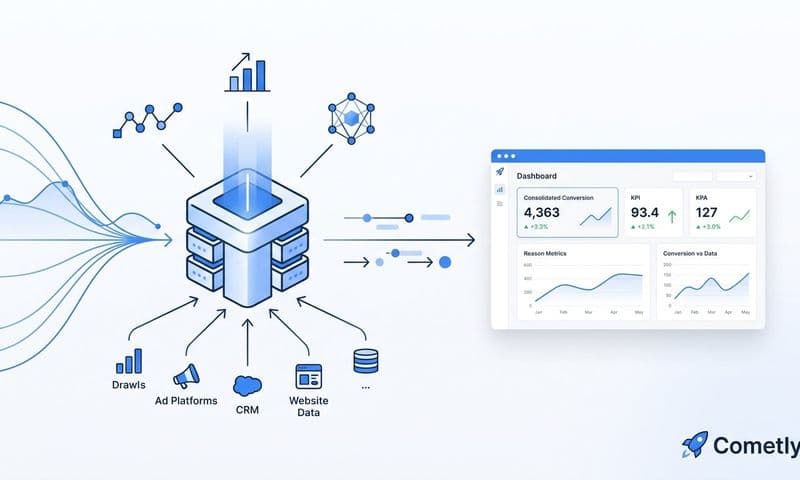
Cometly is a marketing attribution platform that connects your ad platforms, CRM, and website to track the entire customer journey and show which ads actually drive revenue.
 9 Best Analytics Tools for Ecommerce Stores in 2026
Where This Tool Shines
Cometly solves the fundamental problem ecommerce advertisers face in 2026: knowing which marketing efforts actually generate sales. With iOS tracking limitations and cookie restrictions, ad platforms often report inflated or inaccurate conversion data.
The platform uses server-side tracking to capture customer touchpoints that browser-based pixels miss. This gives you a complete view of how customers interact with your marketing before they purchase, from first click to final conversion.
Key Features
Multi-Touch Attribution: Track every touchpoint across all marketing channels to see the full customer journey before conversion.
AI-Powered Recommendations: Get optimization insights and ad performance suggestions based on actual revenue data, not just platform metrics.
Server-Side Tracking: Overcome iOS and browser limitations by sending conversion data directly from your server, ensuring accuracy.
Conversion Sync: Feed enriched conversion data back to Meta, Google, and other ad platforms to improve their targeting algorithms.
Real-Time Analytics Dashboard: View revenue attribution across all channels in one unified interface with live data updates.
Best For
Ecommerce brands spending heavily on paid advertising who need to understand true ROAS across multiple platforms. Particularly valuable for stores running campaigns on Meta, Google, TikTok, and other channels simultaneously where attribution becomes complex.
Pricing
Custom pricing based on ad spend volume. Demo available to explore features and see how the platform fits your specific attribution needs.
2. Google Analytics 4
Best for: Comprehensive web analytics and behavior tracking with deep Google ecosystem integration
Google Analytics 4 is Google's event-based analytics platform offering comprehensive web and app tracking with deep integration into the Google advertising ecosystem.
 11 Best Conversion Optimization Tools to Boost Your ROI in 2026
Where This Tool Shines
GA4 represents Google's response to the privacy-first web, moving from session-based to event-based tracking. This flexibility lets you define custom events that matter to your ecommerce business without being locked into predefined pageview models.
The platform excels at showing user behavior patterns across your website and mobile apps. You can see exactly how customers navigate your store, which products they view, and where they abandon their journey.
Key Features
Event-Based Tracking Model: Flexible data collection that lets you track any user interaction as a custom event.
Cross-Platform Tracking: Unified view of customer behavior across web and mobile apps using a single property.
Built-In Ecommerce Reports: Pre-configured reports for purchase behavior, product performance, and checkout funnel analysis.
BigQuery Integration: Export raw data to Google's data warehouse for advanced analysis and custom reporting.
Predictive Metrics: AI-powered predictions for purchase probability and customer churn risk.
Best For
Ecommerce stores of any size looking for a free, robust analytics foundation. Especially valuable if you're already using Google Ads or need to export data for advanced analysis.
For a deeper dive into this space, see our ecommerce ad automation tool guide.
Pricing
Free for most ecommerce stores with generous data limits. GA4 360 available for enterprise needs with higher data volumes and SLA guarantees.
3. Triple Whale
Best for: Shopify DTC brands focused on profit tracking and ad attribution
Triple Whale is an ecommerce analytics platform built specifically for DTC brands on Shopify, focusing on ad attribution and profit tracking.
We compare the leading options in our ecommerce ad creative generator roundup.
 11 Best Marketing Attribution Companies to Track Your Ad ROI in 2026
Where This Tool Shines
Triple Whale was designed by DTC marketers who got tired of jumping between platforms to understand profitability. The dashboard prioritizes profit over revenue, automatically factoring in your costs to show true ROAS instead of vanity metrics.
We break down the leading options in our ecommerce ad design tool guide.
The platform's first-party pixel helps recover attribution data that iOS tracking limitations would otherwise hide. This gives you a more complete picture of which ads drive purchases, even when customers use Safari or have tracking protections enabled.
Key Features
First-Party Pixel: Proprietary tracking technology designed to capture conversions that standard pixels miss.
Profit-Focused Dashboard: See actual profit and true ROAS after accounting for product costs, shipping, and ad spend.
Creative Analytics: Track performance at the individual ad creative level to identify winning assets.
Customer Journey Mapping: Visualize the path customers take from first touch to purchase.
Shopify-Native Integration: Seamless connection with your Shopify store requiring minimal setup.
Best For
Shopify-based DTC brands running significant ad spend who need profit-level insights. Works best for stores with clear cost structures who want to optimize for profitability rather than just revenue.
Pricing
Starts at $129 per month with pricing tiers that scale based on monthly revenue volume.
4. Klaviyo
Best for: Email and SMS marketing attribution with customer lifecycle analytics
Klaviyo is an email and SMS marketing platform with built-in analytics that tracks revenue attribution for owned marketing channels.
 9 Best Analytics Tools for Ecommerce Stores in 2026
Where This Tool Shines
While Klaviyo is primarily a marketing automation tool, its analytics capabilities make it essential for understanding owned channel performance. You can see exactly how much revenue each email campaign generates, which segments convert best, and how SMS complements your email strategy.
The platform's predictive analytics use machine learning to forecast customer lifetime value and identify customers likely to make their next purchase soon. This helps you prioritize high-value segments in your marketing.
Key Features
Revenue Attribution: Track exactly how much revenue each email and SMS campaign generates with precise attribution.
Customer Segmentation: RFM analysis and behavioral segmentation to target the right customers with relevant messages.
Predictive Analytics: AI-powered predictions for customer lifetime value and next purchase timing.
A/B Testing: Statistical significance testing to validate which email variations perform better.
Ecommerce Platform Integration: Deep connections with Shopify, WooCommerce, BigCommerce, and other platforms for automatic data sync.
Best For
Ecommerce stores that rely heavily on email and SMS marketing. Particularly valuable for brands building customer relationships through owned channels rather than depending solely on paid ads.
Pricing
Free for up to 250 contacts. Paid plans start at $20 per month and scale based on contact count and email volume.
5. Mixpanel
Best for: Product analytics and user behavior analysis through funnel and retention tracking
Mixpanel is a product analytics platform that helps ecommerce teams understand user behavior through funnel analysis, retention tracking, and cohort reports.
 9 Best Analytics Tools for Ecommerce Stores in 2026
Where This Tool Shines
Mixpanel excels at answering "why" questions about user behavior. Instead of just showing that conversion rates dropped, it helps you identify exactly where in the funnel customers abandon and what actions correlate with higher retention.
The self-serve interface lets marketers and product teams explore data without waiting for analysts. You can build custom funnels, segment users by any property, and analyze cohorts in real time without touching SQL.
Key Features
Self-Serve Funnel Analysis: Build conversion funnels instantly to identify drop-off points in your customer journey.
Retention and Cohort Reporting: Track how different customer groups behave over time and which cohorts have the highest lifetime value.
User Flow Visualization: See the actual paths users take through your site, not just the paths you expect.
Real-Time Data: Access live data with no sampling, ensuring accuracy even with high traffic volumes.
Powerful Segmentation: Filter and segment users by any combination of properties to uncover hidden patterns.
Best For
Ecommerce teams focused on optimizing the on-site experience and understanding user behavior patterns. Most valuable when you need to dig deep into why certain segments convert better than others.
Pricing
Free tier includes up to 20 million events per month. Growth plan starts at $20 per month with usage-based pricing.
6. Heap
Best for: Automatic event capture and retroactive analysis without manual tagging
Heap is an analytics platform that automatically captures all user interactions without manual event tagging, enabling retroactive analysis.
 11 Best Marketing Analytics Software to Track What Actually Drives Revenue in 2026
Where This Tool Shines
Heap's automatic capture technology records every click, pageview, form submission, and interaction on your site without requiring developers to manually tag events. This means you can analyze user behavior retroactively—asking questions about past behavior that you didn't think to track at the time.
The platform integrates session replay functionality, letting you watch actual user sessions to understand friction points. You can see exactly what confused customers or caused them to abandon their carts.
Key Features
Automatic Event Capture: Records all user interactions without code, eliminating the need for manual event instrumentation.
Retroactive Analytics: Analyze historical data for events you didn't explicitly track when they occurred.
Session Replay Integration: Watch recordings of actual user sessions to identify usability issues.
Journey Mapping: Visualize common paths users take and identify friction points that cause drop-off.
Data Governance Controls: Privacy-focused features to exclude sensitive data from capture automatically.
Best For
Ecommerce teams that want comprehensive analytics without the overhead of manual event tracking. Especially useful for stores that frequently launch new features and need flexibility in analysis.
Pricing
Free tier available for getting started. Paid plans are custom quoted based on session volume and features needed.
7. Northbeam
Best for: Advanced attribution modeling and media mix optimization for high-spend advertisers
Northbeam is an attribution and media mix modeling platform that helps ecommerce brands understand true channel performance through incrementality testing.
 9 Best Analytics Tools for Ecommerce Stores in 2026
Where This Tool Shines
Northbeam goes beyond standard multi-touch attribution by incorporating media mix modeling and incrementality testing. This approach helps you understand not just which channels get credit for conversions, but which channels actually cause incremental sales.
The platform is built for sophisticated advertisers who need to make strategic budget allocation decisions across multiple channels. It helps answer questions like whether your Meta ads are truly driving new customers or just getting credit for purchases that would have happened anyway.
Key Features
Media Mix Modeling: Statistical modeling to optimize budget allocation across channels based on true incrementality.
Cross-Channel Attribution: Unified attribution view across paid social, search, display, and other channels.
Incrementality Testing: Measure the true lift each channel provides beyond baseline performance.
Creative Performance Analytics: Track which ad creatives drive the best results across platforms.
Custom Attribution Windows: Define attribution windows that match your actual customer journey length.
Best For
Ecommerce brands with substantial ad budgets who need sophisticated attribution modeling. Most valuable for companies spending six figures or more monthly on advertising across multiple channels.
Pricing
Custom pricing based on ad spend volume and features. Typically suited for brands spending $50,000 or more per month on paid advertising.
8. Hotjar
Best for: Behavior visualization through heatmaps, session recordings, and user feedback
Hotjar is a behavior analytics tool that shows how users interact with your store through heatmaps, session recordings, and feedback surveys.
 11 Best Conversion Optimization Tools to Boost Your ROI in 2026
Where This Tool Shines
Hotjar makes user behavior visual and tangible. Instead of interpreting numbers in dashboards, you see actual heatmaps showing where customers click, how far they scroll, and where their attention focuses on each page.
The session recordings feature is particularly valuable for identifying usability issues. You can watch real customers struggle with your checkout process, get confused by navigation, or abandon carts—then fix the specific friction points causing lost revenue.
Key Features
Heatmaps: Visual representations of clicks, scrolls, and mouse movement patterns on your pages.
Session Recordings: Watch actual user sessions to see exactly how customers interact with your store.
Feedback Widgets: Collect direct feedback from users about their experience through on-site surveys.
Funnel and Form Analysis: Identify where users drop off in funnels and which form fields cause friction.
User Interview Recruitment: Find willing participants for user research directly from your site visitors.
Best For
Ecommerce stores focused on conversion rate optimization and user experience improvements. Most valuable when you know you have traffic but need to understand why visitors aren't converting.
Pricing
Free tier available for basic heatmaps and recordings. Plus plan starts at $32 per month with higher session limits and advanced features.
9. Shopify Analytics
Best for: Built-in analytics for Shopify stores without additional setup or integration
Shopify Analytics is the built-in analytics dashboard for Shopify stores offering sales reports, customer insights, and marketing channel performance without additional setup.
Where This Tool Shines
Shopify Analytics provides immediate value the moment you launch your store. There's no installation, no integration work, and no learning curve—you get instant access to sales data, customer acquisition metrics, and product performance.
The platform's marketing channel attribution shows which sources drive sales, though it uses last-click attribution by default. For many smaller stores, this provides sufficient insight without the complexity of advanced attribution models.
Key Features
Sales and Revenue Reports: Track revenue by channel, product, and time period with pre-built reports.
Customer Acquisition Metrics: See where new customers come from and track retention over time.
Product Performance Analytics: Identify top-selling products and inventory trends.
Marketing Channel Attribution: Understand which marketing sources drive sales using last-click attribution.
Live View: Monitor real-time activity on your store including current visitors and recent orders.
Best For
Shopify merchants who want basic analytics without additional tools or complexity. Works well for newer stores or those with straightforward marketing strategies focused on a single primary channel.
Pricing
Included with all Shopify plans at no additional cost. Advanced reports and custom reports available on higher-tier Shopify plans.
Making the Right Choice
The best analytics tool for your ecommerce store depends on where you are in your growth journey and what questions you need answered.
If you're running significant paid advertising across multiple platforms, accurate attribution is your biggest need. Cometly excels here with server-side tracking and AI-powered optimization insights that show true marketing performance. Northbeam offers similar sophistication for brands with six-figure monthly ad budgets who need media mix modeling.
For comprehensive on-site behavior analysis, GA4 provides a solid free foundation that works for stores of any size. Mixpanel and Heap offer more advanced product analytics if you need deeper funnel analysis and user segmentation capabilities.
Shopify merchants benefit from starting with built-in Shopify Analytics, then adding specialized tools as needs grow. Triple Whale integrates seamlessly with Shopify for DTC brands focused on profit tracking.
If email and SMS drive significant revenue, Klaviyo's attribution features help you understand owned channel performance. For conversion rate optimization, Hotjar's heatmaps and session recordings reveal exactly where users struggle.
Most successful ecommerce stores use a combination of tools: one for marketing attribution, one for web analytics, and one for behavior visualization. Start with the tool that addresses your biggest gap, then build your stack as you scale.
Ready to elevate your marketing game with precision and confidence? Discover how Cometly's AI-driven recommendations can transform your ad strategy—Get your free demo today and start capturing every touchpoint to maximize your conversions.