ChartMogul has earned its reputation as a solid subscription analytics platform, but it's not the only player in the game—and depending on your needs, it might not be the best fit. Whether you're hitting limitations with attribution tracking, need deeper ad performance insights, or simply want a platform that connects your entire marketing stack, exploring alternatives makes sense.
The reality is that subscription metrics like MRR and churn tell only part of the story. If you're running paid campaigns across Meta, Google, and other channels, you need to understand which ads actually drive revenue—not just which ones generate clicks. If you're a product-led company, you need to see how feature usage connects to conversions and retention.
This guide breaks down seven powerful ChartMogul alternatives, each solving specific pain points that subscription businesses and marketing teams face. From full-funnel attribution platforms to specialized revenue intelligence tools, you'll find options that go beyond basic MRR tracking to show you exactly what's driving growth.
1. Cometly: Full-Funnel Attribution That Connects Ads to Revenue
 7 Best ChartMogul Alternatives for Smarter Revenue Analytics in 2026
The Challenge It Solves
ChartMogul excels at tracking subscription metrics, but it doesn't show you which marketing channels and specific ads are actually driving those conversions. When you're spending thousands on Meta and Google Ads, you need more than MRR dashboards—you need to know which campaigns justify their budget and which ones are burning cash.
This gap between ad spend and revenue attribution leaves marketers making decisions based on incomplete data, often optimizing for metrics that don't correlate with actual business growth.
The Strategy Explained
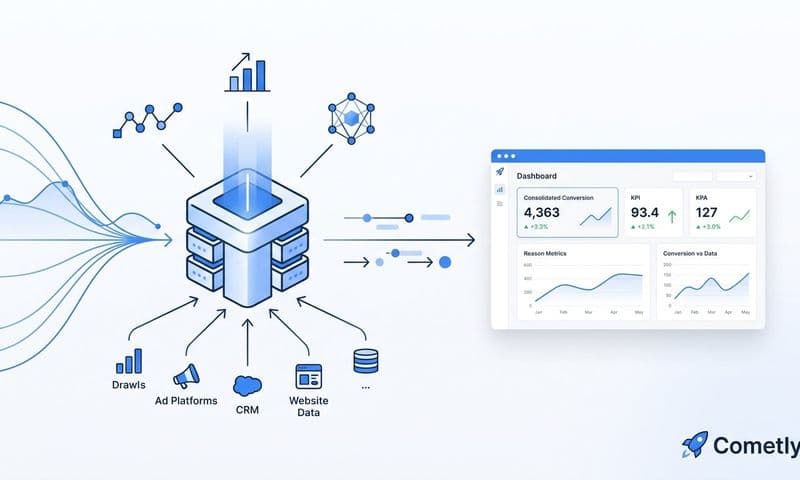
Cometly is a marketing attribution and analytics platform built specifically to connect every touchpoint in your customer journey to actual revenue outcomes. It tracks users from their first ad click through every interaction with your site, CRM events, and final conversion—then attributes revenue back to the specific campaigns and channels that influenced the sale.
What sets Cometly apart is its server-side tracking capability, which captures accurate data even as iOS privacy changes limit traditional pixel-based tracking. The platform's AI analyzes your attribution data to identify high-performing ads and campaigns, then provides specific recommendations for scaling what's working.
Beyond just reporting, Cometly's Conversion Sync feature sends enriched conversion data back to Meta, Google, and other ad platforms. This feeds their algorithms better information, improving targeting and optimization over time.
Implementation Steps
1. Connect your ad platforms (Meta, Google Ads, TikTok, etc.) and your CRM or subscription platform to Cometly's dashboard.
2. Install Cometly's tracking pixel and configure server-side tracking to capture the complete customer journey across all devices and sessions.
3. Set up your attribution model preferences (first-click, last-click, or multi-touch) to analyze which touchpoints contribute most to conversions.
4. Review AI-generated recommendations weekly to identify scaling opportunities and budget reallocation suggestions based on actual revenue attribution.
5. Enable Conversion Sync to send enriched event data back to your ad platforms, improving their targeting algorithms with real conversion insights.
Pro Tips
Start with multi-touch attribution to understand the full journey, then compare it against last-click and first-click models to see how different perspectives change your optimization priorities. Use Cometly's AI Chat feature to ask specific questions about your data—like "Which campaigns drove the highest LTV customers last month?"—and get instant analysis without building custom reports.
2. Baremetrics: Straightforward Subscription Analytics Without the Complexity
The Challenge It Solves
Sometimes you don't need a comprehensive attribution platform—you just need clean, reliable subscription metrics that update in real time. ChartMogul offers robust features, but if your primary need is tracking MRR, churn rate, and customer lifetime value without a steep learning curve, you might be paying for complexity you don't use.
Many SaaS teams simply want a dashboard that shows whether their subscription business is growing or contracting, with forecasting tools to project future revenue based on current trends.
The Strategy Explained
Baremetrics focuses exclusively on subscription analytics, delivering the core metrics SaaS businesses need without feature bloat. It connects directly to your payment processor (Stripe, Braintree, or similar) and automatically calculates MRR, ARR, churn, upgrades, downgrades, and customer segmentation.
The platform emphasizes clarity and simplicity. Its dashboards present metrics in an intuitive format that non-technical team members can understand immediately. Baremetrics also includes forecasting tools that project revenue trends based on your historical data, helping you anticipate growth or identify concerning patterns before they become critical.
For teams that need basic subscription intelligence without investing time in complex setup or interpretation, Baremetrics delivers exactly what's needed and nothing more.
Implementation Steps
1. Connect Baremetrics to your payment processor through its native integration—setup typically takes less than 10 minutes.
2. Review your automatically generated MRR, churn, and LTV metrics to establish your baseline performance.
3. Set up customer segmentation to analyze performance by plan type, acquisition channel, or any custom criteria relevant to your business.
4. Configure forecasting parameters to project revenue trends over the next 3, 6, or 12 months based on current growth rates and churn patterns.
5. Create automated reports that email key metrics to stakeholders weekly or monthly, keeping everyone aligned on subscription health.
Pro Tips
Use Baremetrics' cohort analysis to identify which customer segments have the highest retention rates, then work backward to understand what acquisition channels or onboarding experiences correlate with those high-performing cohorts. The Recover feature can automatically attempt to recover failed payments, directly reducing involuntary churn without additional effort from your team.
3. ProfitWell: Free Subscription Metrics With Industry Benchmarking
The Challenge It Solves
Budget constraints often force early-stage SaaS companies to choose between investing in analytics or other growth initiatives. Additionally, even when you have your own metrics, it's difficult to know whether your churn rate or expansion revenue is actually good compared to similar companies in your industry and stage.
Without context, a 5% monthly churn rate might seem acceptable when it's actually a red flag for your specific business model and market segment.
The Strategy Explained
ProfitWell, now part of Paddle, offers free subscription analytics that rival paid platforms in depth and accuracy. It provides the same core metrics as ChartMogul—MRR, ARR, churn, LTV—but without a subscription fee. The platform supports this free tier by offering premium add-ons like Retain (churn reduction tools) and Recognized (revenue recognition for accounting).
What makes ProfitWell particularly valuable is its industry benchmarking feature. Because thousands of SaaS companies use the platform, ProfitWell can show you how your metrics compare to similar businesses based on your revenue size, industry vertical, and business model. This context transforms raw numbers into actionable intelligence.
The platform also includes Price Intelligently data, which helps you understand whether your pricing strategy aligns with what customers in your market are willing to pay.
Implementation Steps
1. Sign up for ProfitWell's free tier and connect it to your payment processor or billing system.
2. Complete your company profile with details about your industry, business model, and revenue stage to unlock relevant benchmarking data.
3. Review your core subscription metrics and compare them against industry benchmarks to identify areas where you're underperforming.
4. Set up automated metric tracking for your key performance indicators, with alerts when metrics move outside acceptable ranges.
5. Explore premium features like Retain if churn reduction becomes a priority, or Recognized if you need revenue recognition for accounting compliance.
Pro Tips
Don't just look at whether your metrics are above or below benchmark averages—pay attention to the distribution curves ProfitWell shows. If you're in the bottom quartile for expansion revenue but top quartile for new customer acquisition, that suggests a specific strategic focus: improving upsell and cross-sell motions rather than just adding more top-of-funnel leads.
4. Stripe Revenue Recognition: Native Revenue Reporting for Stripe-Only Stacks
The Challenge It Solves
If your entire payment infrastructure runs through Stripe and you primarily need revenue reporting for accounting and financial compliance rather than marketing optimization, adding a third-party analytics platform creates unnecessary complexity. You're essentially paying for a tool to analyze data that already exists in your payment processor.
This becomes especially relevant when you need GAAP or IFRS-compliant revenue recognition for financial reporting, where accuracy and audit trails matter more than marketing attribution.
The Strategy Explained
Stripe Revenue Recognition is built directly into Stripe's platform, providing automated revenue reporting that complies with accounting standards without requiring external integrations. It automatically calculates recognized revenue based on your billing schedule and contract terms, handling complex scenarios like annual prepayments, usage-based billing, and multi-year contracts.
Because it's native to Stripe, the data is always perfectly synchronized with your actual payment processing. There's no risk of discrepancies between what Stripe processed and what your analytics tool reports. The system generates audit-ready reports that your accounting team can use directly for financial statements and compliance requirements.
For companies that don't need sophisticated marketing attribution but do need accurate financial reporting, this native solution eliminates the cost and complexity of additional platforms.
Implementation Steps
1. Enable Revenue Recognition in your Stripe dashboard settings if you're on an eligible Stripe plan.
2. Configure your revenue recognition rules based on your contract terms and accounting standards (GAAP or IFRS).
3. Map your Stripe products and pricing to the appropriate revenue recognition schedules—immediate recognition for one-time charges, deferred recognition for subscriptions.
4. Set up automated report generation that exports recognized revenue data to your accounting system or provides reports directly to your finance team.
5. Review the waterfall reports that show how revenue moves from deferred to recognized over time, ensuring accuracy before closing each accounting period.
Pro Tips
Use Stripe's Revenue Recognition alongside Stripe Sigma (their SQL query tool) to create custom reports that answer specific financial questions your standard reports don't address. This combination gives you both compliance-ready reporting and the flexibility to analyze revenue patterns in ways that inform strategic decisions beyond just accounting requirements.
5. Mixpanel: Behavioral Product Analytics Connecting Usage to Revenue
The Challenge It Solves
Subscription metrics tell you what happened—revenue went up or churn increased—but they don't explain why. For product-led companies, understanding which features drive activation, engagement, and ultimately conversion is essential. ChartMogul can't show you that users who complete your onboarding checklist convert at 3x the rate of those who don't.
Without connecting product behavior to revenue outcomes, you're optimizing blindly, guessing which product improvements will actually impact your bottom line.
The Strategy Explained
Mixpanel is a behavioral analytics platform that tracks every user interaction with your product, then connects those behaviors to conversion events and revenue. It shows you not just that someone subscribed, but which specific actions they took beforehand—which features they used, how frequently they logged in, and what their engagement pattern looked like.
The platform excels at funnel analysis, showing you exactly where users drop off in critical flows like onboarding, feature adoption, or upgrade paths. Its cohort analysis lets you segment users by behavior and track how different usage patterns correlate with retention and expansion revenue over time.
For product teams, this means you can prioritize development based on what actually drives business outcomes rather than what seems like a good idea or what the loudest customers request.
Implementation Steps
1. Implement Mixpanel's tracking SDK in your product to capture user events—start with critical actions like signup, feature usage, and conversion events.
2. Define your key conversion funnels (signup to activation, free to paid, basic to premium) and set up funnel reports to identify drop-off points.
3. Create behavioral cohorts based on product usage patterns—for example, "users who used Feature X in their first week" versus those who didn't.
4. Track these cohorts over time to see which behaviors correlate with higher retention, expansion revenue, or lower churn rates.
5. Set up automated Insights reports that notify you when significant changes occur in key metrics or when specific user segments behave differently than expected.
Pro Tips
Combine Mixpanel's behavioral data with your subscription analytics by passing Mixpanel cohorts to your email marketing or CRM platform. This lets you create targeted campaigns based on product usage—for example, reaching out to users who haven't adopted a key feature that correlates with higher retention, or offering upgrades to power users whose behavior suggests they're ready for premium features.
6. HubSpot Revenue Analytics: CRM-Integrated Attribution and Revenue Reporting
The Challenge It Solves
When your sales and marketing data lives in HubSpot but your revenue analytics lives in a separate platform, you're constantly stitching together reports from multiple sources to understand what's actually working. This fragmentation makes it difficult to connect specific marketing campaigns to closed deals, or to see how lead quality from different channels impacts revenue.
For companies already invested in the HubSpot ecosystem, adding another analytics platform creates integration headaches and duplicate data management.
The Strategy Explained
HubSpot Revenue Analytics provides attribution and revenue reporting directly within the HubSpot platform, connecting marketing activities to deals and revenue without requiring external integrations. It tracks the entire journey from first touch through every marketing interaction, sales engagement, and ultimately closed revenue.
The platform offers multiple attribution models—first touch, last touch, and multi-touch—letting you analyze which channels and campaigns contribute to revenue from different perspectives. Because it's native to HubSpot, it automatically incorporates CRM data like deal stages, sales activities, and contact properties into your attribution analysis.
For teams running their entire go-to-market motion through HubSpot, this eliminates the need to export data to external analytics tools or manually reconcile attribution across platforms.
Implementation Steps
1. Enable Revenue Analytics in your HubSpot portal if you're on a Professional or Enterprise tier that includes this feature.
2. Ensure your HubSpot tracking code is properly installed on your website and that UTM parameters are consistently applied to your marketing campaigns.
3. Configure your attribution models and select which touchpoints you want to include in your analysis—email opens, content downloads, ad clicks, sales calls, etc.
4. Create custom revenue reports that show attribution by channel, campaign, content type, or any other dimension relevant to your marketing strategy.
5. Set up automated dashboards for your marketing and sales teams that show real-time attribution data alongside standard HubSpot metrics like lead volume and conversion rates.
Pro Tips
Use HubSpot's closed-loop reporting to identify which marketing campaigns generate not just the most leads, but the highest-value customers. Filter your attribution reports by deal size or customer LTV to see which channels consistently bring in premium customers versus those that generate high volume but lower value. This insight helps you allocate budget toward channels that drive profitable growth, not just activity.
7. Amplitude: Enterprise Product Intelligence With Cohort and Retention Analysis
The Challenge It Solves
As companies scale, basic product analytics stop providing the depth needed to make sophisticated optimization decisions. You need to understand complex user journeys across multiple touchpoints, analyze how different feature combinations impact outcomes, and run statistical experiments to validate hypotheses before making significant product investments.
ChartMogul and even mid-tier product analytics tools lack the advanced statistical capabilities and scale required for enterprise-level product intelligence.
The Strategy Explained
Amplitude is an enterprise-grade product analytics platform designed for companies that need sophisticated behavioral analysis at scale. It handles billions of events and provides advanced capabilities like predictive analytics, experimentation frameworks, and machine learning-powered insights.
The platform's strength lies in its ability to analyze complex user paths and identify patterns that aren't obvious from standard reports. Its Compass feature uses machine learning to automatically surface insights about which user behaviors correlate with conversion, retention, or churn—essentially doing the exploratory analysis that would take analysts weeks to complete manually.
Amplitude also includes robust experimentation tools that let you run A/B tests on product features and measure their impact on key business metrics, not just engagement vanity metrics.
Implementation Steps
1. Implement Amplitude's SDK across your product to capture comprehensive event data—work with your engineering team to ensure all critical user actions are tracked.
2. Define your north star metric and the key behaviors that lead to it, then use Amplitude's behavioral cohorts to segment users based on these patterns.
3. Set up retention analysis to understand which user actions in the first day, week, or month correlate with long-term retention and revenue.
4. Use Compass to automatically discover which behaviors predict conversion or churn, letting machine learning identify patterns you might miss in manual analysis.
5. Implement Amplitude Experiment to run controlled tests on product changes, measuring their impact on conversion, engagement, and revenue metrics before rolling out broadly.
Pro Tips
Leverage Amplitude's Journeys feature to visualize the most common paths users take through your product, then identify where high-value users diverge from typical users. This reveals which experiences or feature sequences create outsized value, guiding your product roadmap toward changes that will meaningfully impact revenue rather than just improving generic engagement metrics.
Putting It All Together
Choosing the right analytics platform depends on what's actually limiting your growth. If ChartMogul's subscription metrics feel disconnected from your marketing performance, a full-funnel attribution platform like Cometly bridges that gap by showing you exactly which campaigns and channels drive revenue—not just traffic or clicks.
If you need simpler SaaS metrics without complexity, Baremetrics or ProfitWell deliver clean subscription analytics without overwhelming you with features you won't use. For product-led teams, Mixpanel or Amplitude provide behavioral depth that ChartMogul can't match, connecting feature usage to conversion and retention outcomes.
The key is matching the tool to your specific challenge. Are you struggling to justify your ad spend because you can't connect campaigns to actual revenue? That's an attribution problem. Are customers churning and you don't know why? That's a behavioral analytics problem. Is your finance team demanding GAAP-compliant revenue recognition? That's an accounting problem.
Start by identifying your biggest blind spot, then choose the platform that illuminates it. For marketing teams running paid campaigns across multiple channels, the inability to attribute revenue accurately often represents the most expensive gap—you're making budget decisions based on incomplete data, potentially scaling campaigns that don't actually drive profitable growth.
Ready to elevate your marketing game with precision and confidence? Discover how Cometly's AI-driven recommendations can transform your ad strategy—Get your free demo today and start capturing every touchpoint to maximize your conversions.