Every marketing dollar you spend tells a story—but only if you have the right tools to read it. With ad costs rising and attribution becoming more complex due to privacy changes, marketers need analytics tools that go beyond surface-level metrics to reveal what's actually driving revenue. Whether you're managing multi-channel paid campaigns, tracking the full customer journey, or trying to prove marketing ROI to stakeholders, the right analytics platform makes the difference between guessing and knowing.
We evaluated dozens of marketing analytics tools based on attribution accuracy, ease of use, integration capabilities, and value for paid advertising teams. Here are the top tools for 2026.
1. Cometly
Best for: Paid advertising teams tracking multi-channel attribution and optimizing campaign performance with AI.
Cometly is an AI-powered marketing attribution platform built specifically for marketers running paid campaigns across multiple channels.
 11 Best Marketing Analytics Tools to Track and Optimize Campaign Performance in 2026
Where This Tool Shines
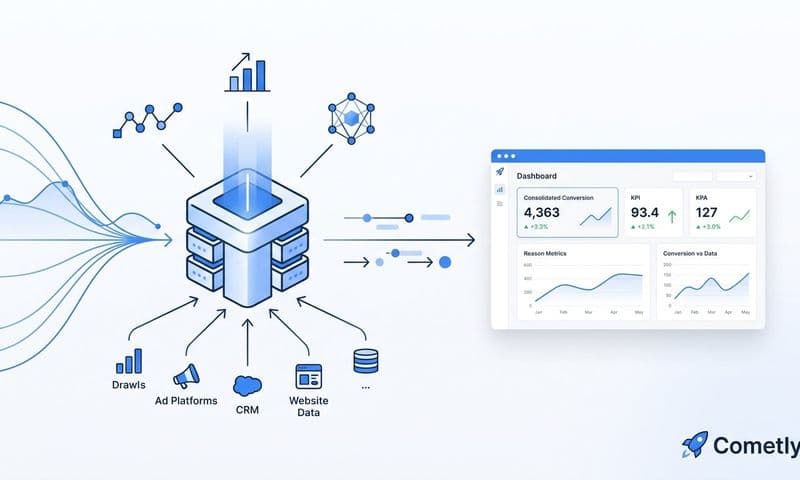
Cometly solves one of the biggest challenges in modern marketing: accurately tracking which ads and channels actually drive revenue. With iOS privacy changes and browser tracking limitations, many marketers struggle to see the complete customer journey. Cometly uses server-side tracking to capture data that browser-based tools miss, giving you a complete view of every touchpoint from initial ad click through conversion.
The platform's AI capabilities go beyond just reporting what happened. It analyzes your data to identify high-performing ads and campaigns, then provides specific recommendations for scaling. This means you're not just looking at dashboards—you're getting actionable insights that tell you exactly where to increase spend and where to cut back.
Key Features
Multi-Touch Attribution: Track every touchpoint across all marketing channels to understand the complete customer journey and see which interactions contribute to conversions.
Server-Side Tracking: Capture accurate data even when browser-based tracking fails due to ad blockers, cookie restrictions, or iOS limitations.
AI-Powered Optimization: Get specific recommendations on which ads and campaigns to scale based on actual revenue data, not just surface-level metrics.
Conversion Sync: Feed enriched conversion data back to Meta, Google Ads, and other platforms to improve their AI targeting and optimization algorithms.
Real-Time Analytics Dashboard: Monitor campaign performance as it happens with dashboards that connect ad spend directly to revenue outcomes.
Best For
Digital marketers and agencies managing significant paid advertising budgets across multiple platforms who need accurate attribution to make confident scaling decisions. Particularly valuable for teams dealing with complex customer journeys or struggling with attribution gaps from iOS tracking limitations.
Pricing
Custom pricing based on ad spend volume. Demo available to explore features and determine fit before committing.
2. Google Analytics 4
Best for: Comprehensive free web and app analytics with strong Google Ads integration.
Google Analytics 4 is Google's event-based analytics platform offering cross-platform tracking for websites and mobile apps.
 11 Best Conversion Optimization Tools to Boost Your ROI in 2026
Where This Tool Shines
GA4 represents a fundamental shift from the session-based model of Universal Analytics to an event-based approach that better reflects how users actually interact with your digital properties. This makes it particularly effective for tracking complex user journeys across web and app environments. The platform's machine learning capabilities predict future user behavior and automatically surface insights without requiring manual analysis.
For teams already using Google Ads, the native integration is seamless. You can import GA4 audiences directly into your ad campaigns and track conversions with minimal setup. The free tier is remarkably generous, making it accessible for businesses of all sizes.
Key Features
Event-Based Data Model: Track any user interaction as an event, giving you flexibility to measure what matters most to your business without being constrained by predefined metrics.
Cross-Platform Tracking: Unify web and app data to see the complete customer journey across devices and platforms in a single interface.
Predictive Metrics: Leverage machine learning to identify users likely to purchase or churn, enabling proactive marketing actions.
Privacy-Centric Design: Built with privacy regulations in mind, offering cookieless measurement options and automated data deletion controls.
Google Ads Integration: Import audiences and conversion events directly into Google Ads for remarketing and optimization without third-party tools.
Best For
Businesses of any size needing comprehensive web analytics, especially those running Google Ads campaigns. The free tier works well for most small to mid-sized businesses, while GA4 360 serves enterprise needs.
Pricing
Free for standard version with generous limits. GA4 360 enterprise version available with custom pricing for high-volume data needs and additional support.
3. Adobe Analytics
Best for: Enterprise organizations requiring advanced segmentation and deep integration with marketing technology stacks.
Adobe Analytics is an enterprise-grade analytics solution offering sophisticated analysis capabilities and seamless integration with Adobe's Marketing Cloud.
For a deeper dive, see our guide to analytics marketing tools for SaaS.
 11 Best Enterprise Marketing Analytics Software Platforms in 2026
Where This Tool Shines
Adobe Analytics excels at handling massive data volumes while maintaining processing speed and analytical flexibility. The platform's segmentation capabilities go far beyond basic filters, allowing you to create complex audience definitions based on behavioral patterns, time-based criteria, and cross-channel interactions. This level of sophistication makes it possible to answer nuanced questions about customer behavior that simpler tools can't address.
For organizations already using Adobe's marketing tools like Adobe Target or Adobe Campaign, the integration creates a powerful unified ecosystem. Data flows seamlessly between platforms, enabling sophisticated cross-channel orchestration and personalization at scale.
Key Features
Advanced Segmentation: Build complex audience segments using behavioral data, time-based criteria, and predictive attributes to analyze specific customer groups with precision.
Predictive Analytics: Apply AI and machine learning to forecast future trends, identify anomalies, and surface insights automatically from your data.
Real-Time Data Processing: Access and analyze data as it streams in, enabling immediate responses to campaign performance or user behavior changes.
Custom Attribution Modeling: Design attribution models that reflect your specific business logic and customer journey complexity beyond standard last-click or linear models.
Adobe Ecosystem Integration: Connect directly with Adobe Target, Campaign, and other Marketing Cloud tools for unified customer experiences across channels.
Best For
Large enterprises with complex analytics needs, significant data volumes, and existing investments in the Adobe Marketing Cloud ecosystem. Best suited for organizations with dedicated analytics teams who can leverage the platform's advanced capabilities.
Pricing
Enterprise pricing model with costs based on server calls and feature requirements. Contact Adobe sales for custom quotes based on your specific needs.
4. Mixpanel
Best for: Product teams tracking user behavior, analyzing funnels, and understanding feature adoption.
Mixpanel is a product analytics platform focused on event-based user tracking and behavioral analysis for digital products.
 11 Best Marketing Analytics Tools to Track and Optimize Campaign Performance in 2026
Where This Tool Shines
Mixpanel was built specifically for product teams who need to understand how users interact with features and where friction points exist in the user experience. Unlike traditional web analytics that focus on page views and sessions, Mixpanel tracks specific actions users take within your product. This makes it particularly valuable for SaaS companies, mobile apps, and any digital product where user engagement directly impacts retention and revenue.
The platform's funnel analysis goes beyond simple conversion tracking. You can identify exactly where users drop off in multi-step processes, compare conversion rates across different user segments, and see how changes to your product impact completion rates over time.
Key Features
Event-Based User Tracking: Track any user action as a distinct event, from button clicks to feature usage, giving you granular insight into product engagement.
Funnel Analysis: Visualize multi-step conversion processes and identify drop-off points with precision to optimize user flows and increase completion rates.
Retention Reports: Measure how often users return to your product and which features drive long-term engagement versus one-time usage.
User Flow Visualization: See the actual paths users take through your product, revealing common patterns and unexpected navigation behaviors.
Cohort Analysis: Compare behavior across different user groups based on acquisition date, user properties, or actions taken to understand what drives success.
Best For
Product managers, growth teams, and SaaS companies focused on understanding user behavior within their applications. Particularly valuable for products with complex user journeys or freemium models where activation and retention are critical.
Pricing
Free tier available with basic features. Growth plan starts at $20 per month based on tracked users. Enterprise plans with advanced features and higher limits require custom pricing.
5. HubSpot Marketing Analytics
Best for: Teams using HubSpot's CRM who want integrated marketing analytics and campaign attribution.
HubSpot Marketing Analytics provides comprehensive marketing reporting within HubSpot's all-in-one marketing platform.
 10 Best Enterprise Channel Analytics Software To Maximize Marketing ROI
Where This Tool Shines
HubSpot's analytics shine when you need marketing data connected directly to your CRM. Because everything lives in one platform, you can see exactly which marketing campaigns influenced specific deals, track the complete lifecycle from first touch to closed customer, and report on marketing's contribution to pipeline and revenue. This integration eliminates the data silos that plague teams using separate marketing and CRM systems.
The platform makes attribution accessible to marketers who aren't data analysts. The interface is intuitive, reports are pre-built for common use cases, and you can customize dashboards without needing SQL knowledge or technical expertise.
Key Features
Native CRM Integration: Connect marketing activities directly to contact records and deals, showing exactly how campaigns influence pipeline and closed revenue.
Campaign Performance Dashboards: Track email, social, paid ads, and content performance in unified dashboards that show cross-channel results.
Contact Attribution Reporting: See which marketing touchpoints contributed to each contact's journey from unknown visitor to customer.
Custom Report Builder: Create reports tailored to your specific metrics and KPIs using drag-and-drop tools without requiring technical skills.
Marketing Automation Insights: Analyze workflow performance, lead nurturing effectiveness, and automation ROI within the same platform.
Best For
Marketing teams already using or planning to adopt HubSpot's CRM and marketing tools. Particularly valuable for B2B companies with longer sales cycles who need to connect marketing activities to closed deals.
Pricing
Analytics included with Marketing Hub subscriptions. Starter tier at $20 per month for basic features. Professional tier at $890 per month includes advanced analytics and custom reporting capabilities.
6. Tableau
Best for: Creating sophisticated data visualizations and interactive dashboards from multiple data sources.
Tableau is an industry-leading data visualization platform that transforms complex datasets into interactive, shareable dashboards.
 11 Best Marketing Analytics Tools to Track and Optimize Campaign Performance in 2026
Where This Tool Shines
Tableau excels at making complex data understandable through visual storytelling. While it's not a marketing analytics platform itself, it connects to virtually any data source—from your ad platforms and CRM to databases and spreadsheets—and lets you build custom visualizations that reveal patterns and insights. The drag-and-drop interface makes it accessible to non-technical users, while advanced users can create sophisticated calculated fields and complex visualizations.
For marketing teams pulling data from multiple sources, Tableau becomes the unified layer where everything comes together. You can combine Google Ads spend data with CRM revenue, overlay website traffic patterns, and add email campaign metrics all in one dashboard that updates automatically.
Key Features
Drag-and-Drop Visualization: Build charts, graphs, and dashboards without coding by simply dragging fields onto the canvas and selecting visualization types.
Hundreds of Data Connectors: Connect directly to databases, cloud services, spreadsheets, and business applications without requiring data exports or manual updates.
Advanced Calculated Fields: Create custom metrics and calculations using Tableau's formula language to analyze data exactly how your business requires.
Interactive Dashboard Sharing: Publish dashboards that stakeholders can interact with, filtering and drilling down into data without needing Tableau installed.
Embedded Analytics: Integrate Tableau visualizations directly into other applications or internal tools for seamless access to insights.
Best For
Marketing teams and analysts who need to combine data from multiple sources into custom dashboards and reports. Best for organizations with dedicated analytics resources who can build and maintain visualizations.
Pricing
Tableau Creator license at $75 per user per month for full dashboard creation capabilities. Viewer license at $15 per user per month for those who only need to view and interact with published dashboards.
7. Amplitude
Best for: Product-led growth companies optimizing user activation, retention, and feature adoption.
Amplitude is a digital analytics platform designed to help product teams understand user behavior and drive product-led growth.
Where This Tool Shines
Amplitude was built specifically for the product-led growth model where user experience and feature adoption drive business outcomes. The platform goes beyond tracking what users do to help you understand why they behave certain ways and predict what they'll do next. The behavioral cohorts feature lets you group users based on actions they've taken, making it easy to see how different user segments engage with your product over time.
The experimentation capabilities are tightly integrated with analytics, so you can run A/B tests and immediately see how changes impact the metrics you care about. This closed loop between testing and measurement accelerates product iteration and reduces the time from hypothesis to validated learning.
Key Features
Behavioral Analytics: Track user actions and properties to understand exactly how different segments interact with your product and which behaviors predict success.
User Journey Mapping: Visualize the paths users take through your product, identifying common flows and unexpected patterns that impact conversion and retention.
Experimentation Platform: Run A/B tests and feature experiments with built-in statistical analysis to validate product changes before full rollout.
Customer Data Platform: Unify user data from multiple sources and sync audiences to marketing and analytics tools for consistent targeting.
Predictive Analytics: Use machine learning to identify users likely to convert, churn, or take specific actions, enabling proactive engagement strategies.
Best For
Product teams at SaaS companies, mobile apps, and digital products focused on activation, engagement, and retention. Particularly valuable for companies with product-led growth strategies where user experience drives revenue.
Pricing
Free Starter plan available with basic features and limited events. Growth and Enterprise tiers with advanced capabilities require custom pricing based on event volume and features needed.
8. Supermetrics
Best for: Aggregating marketing data from multiple platforms into unified reports and dashboards.
Supermetrics is a data pipeline tool that pulls marketing data from over 100 platforms into spreadsheets, dashboards, and data warehouses.
Where This Tool Shines
Supermetrics solves the time-consuming problem of manually exporting data from multiple marketing platforms and combining it for reporting. Instead of logging into Facebook Ads, Google Ads, LinkedIn, and your other platforms separately, Supermetrics automatically pulls data from all of them into a single destination. This makes it possible to create unified reports that show performance across all channels without switching between interfaces.
The tool is particularly valuable for agencies managing multiple clients or brands running campaigns across numerous platforms. You can set up automated data refreshes so your reports always show current data without manual updates, saving hours of repetitive work each week.
Key Features
100+ Platform Connectors: Pull data from major ad platforms, social networks, analytics tools, and marketing software into unified reports automatically.
Automated Data Refresh: Schedule data updates to run automatically so your reports and dashboards always reflect current performance without manual intervention.
Multiple Destinations: Send data to Google Sheets, Excel, Looker Studio, Power BI, Tableau, or data warehouses like BigQuery and Snowflake.
Custom Metrics: Create calculated fields and custom metrics that combine data from multiple sources for unified performance measurement.
Historical Data Storage: Maintain long-term data history even when platforms limit how far back you can access data through their native interfaces.
Best For
Marketing teams and agencies running campaigns across multiple platforms who need unified reporting without building custom integrations. Particularly useful for those who prefer working in spreadsheets or existing BI tools rather than learning new analytics platforms.
Pricing
Single connector plans start at $39 per month. Team plans supporting multiple users and connectors start at $239 per month. Enterprise plans with advanced features and higher limits require custom pricing.
9. Looker Studio
Best for: Creating free customizable dashboards and reports from multiple data sources.
Looker Studio is Google's free dashboard and reporting tool that transforms data from multiple sources into shareable visualizations.
Where This Tool Shines
Looker Studio's biggest advantage is being completely free while offering capabilities that many paid tools charge hundreds of dollars per month to access. You can connect data from Google's own products like Analytics and Ads for free, and access 800+ additional connectors through partner integrations. The drag-and-drop interface makes it accessible to marketers without technical backgrounds, while still offering enough customization for sophisticated reports.
The real-time collaboration features work like Google Docs—multiple team members can edit reports simultaneously, and you can share dashboards with stakeholders who can view and interact with data without needing accounts. This makes it easy to democratize data access across your organization.
Key Features
Free to Use: Access all core features at no cost with no limits on reports, viewers, or data sources for Google-owned platforms.
800+ Data Connectors: Connect to marketing platforms, databases, and business tools through Google's native connectors and third-party partner integrations.
Real-Time Collaboration: Work on reports simultaneously with team members and share dashboards that update automatically as underlying data changes.
Customizable Visualizations: Choose from charts, tables, scorecards, and other visualization types with full control over colors, fonts, and layout.
Embedded Reporting: Embed dashboards directly into websites, intranets, or other applications for seamless access to insights.
Best For
Small to mid-sized marketing teams needing professional dashboards without budget for expensive BI tools. Particularly valuable for teams already using Google's marketing and analytics products who want to combine that data with other sources.
Pricing
Completely free for core features. Pro features and enterprise support available through Google Cloud Platform with usage-based pricing for advanced capabilities.
10. Heap
Best for: Automatic event capture enabling retroactive analysis without manual tracking implementation.
Heap is an analytics platform that automatically captures all user interactions, eliminating the need to manually define events before tracking them.
Where This Tool Shines
Heap's automatic capture approach fundamentally changes how you think about analytics. With traditional tools, you need to decide what to track before users interact with your product, which means you often miss important events or can't answer questions about past behavior. Heap captures everything automatically—every click, form submission, page view, and interaction—so you can define events retroactively and analyze historical data even for events you didn't know you needed to track.
This is particularly powerful when you're exploring new questions or investigating unexpected user behavior. You can create a new event definition and immediately see historical trends without waiting weeks to collect data or requiring engineering resources to implement new tracking.
Key Features
Automatic Event Capture: Track all user interactions automatically without manual event instrumentation, ensuring you never miss important behavioral data.
Retroactive Analytics: Define events after the fact and analyze historical data, enabling you to answer questions about past behavior without prior tracking setup.
Session Replay: Watch recordings of actual user sessions to understand exactly how users interact with your product and where they encounter friction.
Funnel and Path Analysis: Build conversion funnels and analyze user paths through your product using any combination of automatically captured events.
No-Code Event Definition: Create and modify event definitions through a visual interface without requiring engineering resources or code changes.
Best For
Product teams who want comprehensive behavioral analytics without the overhead of manually instrumenting tracking. Particularly valuable for fast-moving teams who need flexibility to analyze user behavior without waiting for engineering implementation.
Pricing
Free tier available with basic features and session limits. Growth and Pro tiers with higher limits and advanced features require custom pricing based on session volume and requirements.
11. Kissmetrics
Best for: Person-based tracking focused on customer lifetime value and revenue attribution.
Kissmetrics is a customer analytics platform that tracks individual users across their entire lifecycle to measure revenue impact and customer value.
Where This Tool Shines
Kissmetrics takes a fundamentally different approach than session-based analytics by focusing on individual people rather than anonymous sessions. The platform tracks users across devices and visits, building a complete profile of each person's interactions with your business over time. This makes it particularly effective for understanding customer lifetime value, identifying your most valuable acquisition channels, and measuring long-term campaign ROI rather than just initial conversions.
The revenue attribution features connect marketing activities directly to actual revenue, not just conversions or leads. You can see which campaigns brought in customers who generated the most revenue over time, helping you optimize for customer value rather than just volume.
Key Features
Person-Based Tracking: Follow individual users across devices and sessions to understand complete customer journeys rather than fragmented anonymous visits.
Revenue Attribution: Connect marketing touchpoints directly to revenue outcomes, showing which campaigns drive the most valuable customers over time.
Customer Lifetime Value: Calculate and track CLV by acquisition source, campaign, or customer segment to optimize for long-term value rather than short-term conversions.
Cohort Reporting: Compare customer groups based on acquisition date, source, or behavior to understand what drives retention and repeat purchases.
Campaign ROI Tracking: Measure the true return on marketing spend by tracking revenue generated over the entire customer lifetime, not just initial conversion value.
Best For
E-commerce businesses and subscription companies focused on customer lifetime value and repeat purchases. Particularly valuable for businesses where initial conversion value doesn't reflect true customer worth.
Pricing
Silver plan at $199 per month for small businesses. Gold plan at $499 per month with higher limits and additional features. Enterprise plans with custom pricing available for larger organizations.
Making the Right Choice
The right marketing analytics tool depends on what you're trying to accomplish and where your biggest data gaps exist. If you're running significant paid advertising budgets and struggling with attribution accuracy, Cometly's AI-powered approach and server-side tracking solve the specific challenges of modern multi-channel marketing. For teams needing comprehensive free analytics with strong Google integration, Google Analytics 4 remains the industry standard.
Enterprise organizations with complex needs and existing Adobe investments will find Adobe Analytics provides the depth and integration they require. Product teams focused on user behavior and feature adoption should look at Mixpanel, Amplitude, or Heap depending on whether they prefer manual event definition or automatic capture. Teams already using HubSpot's CRM benefit from the native integration of HubSpot Marketing Analytics.
For data visualization and custom reporting, Tableau offers unmatched flexibility if you have the resources to build and maintain dashboards. Looker Studio provides similar capabilities for free with a more limited feature set. Supermetrics bridges the gap when you need to aggregate data from multiple platforms without building custom integrations.
Consider your specific situation. Teams running campaigns across Meta, Google, TikTok, and other platforms need tools that can track the complete journey and feed better data back to ad platforms for optimization. This is where attribution-focused solutions like Cometly deliver the most value—connecting ad spend to actual revenue and providing AI recommendations for scaling what works.
The marketing analytics landscape continues to evolve as privacy regulations reshape tracking capabilities and AI transforms how we extract insights from data. The tools that succeed in 2026 are those that adapt to these changes while making complex data accessible and actionable for marketing teams.
Ready to elevate your marketing game with precision and confidence? Discover how Cometly's AI-driven recommendations can transform your ad strategy—Get your free demo today and start capturing every touchpoint to maximize your conversions.