Marketing attribution has become the difference between scaling profitably and burning budget blindly. With privacy changes fragmenting data across platforms and customer journeys spanning dozens of touchpoints, marketers need solutions that connect the dots between ad spend and actual revenue. The right attribution platform doesn't just track clicks—it reveals which channels actually drive conversions, feeds better data back to your ad platforms, and helps you make confident optimization decisions. Here are the top marketing attribution solutions for 2026, covering everything from AI-powered platforms to enterprise-grade systems.
1. Cometly
Best for: Marketers who need AI-powered optimization recommendations and accurate cross-platform tracking
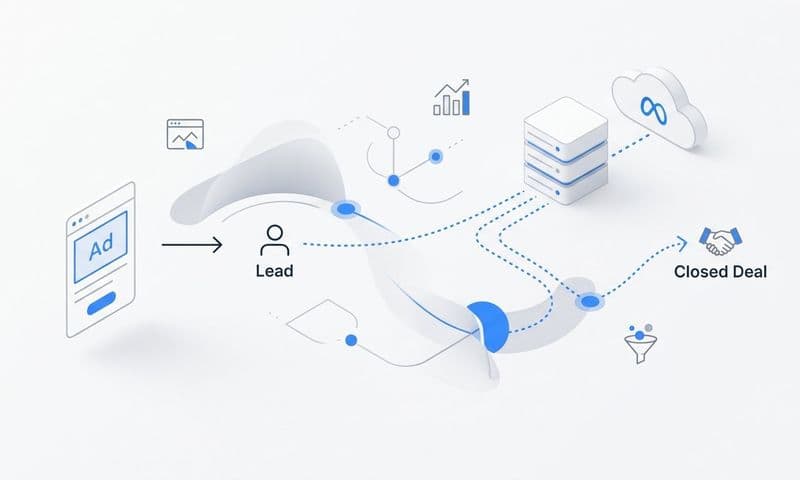
Cometly is a marketing attribution and analytics platform that connects your ad platforms, CRM, and website to track the entire customer journey in real time.
 9 Best Marketing Attribution Solutions to Track ROI in 2026
Where This Tool Shines
Cometly stands out with its AI-driven approach to attribution. Instead of just showing you what happened, it analyzes performance patterns across all your channels and tells you what to do next. The platform's AI Ads Manager identifies high-performing ads and campaigns, then provides specific recommendations for scaling with confidence.
The server-side tracking architecture solves one of the biggest challenges marketers face today: data accuracy in a post-iOS world. By capturing events at the server level rather than relying solely on browser pixels, Cometly maintains tracking accuracy even when third-party cookies fail and users opt out of tracking.
Key Features
AI Ads Manager: Analyzes campaign performance across all channels and provides actionable optimization recommendations based on what's actually driving revenue.
Server-Side Tracking: Captures every touchpoint accurately by tracking events at the server level, eliminating gaps caused by ad blockers and privacy settings.
Conversion Sync: Sends enriched, conversion-ready events back to Meta, Google, and other ad platforms to improve their AI targeting and optimization.
Multi-Touch Attribution: Connects every touchpoint from initial ad click through CRM events to final conversion, showing the complete customer journey.
Real-Time Analytics Dashboard: Provides instant visibility into campaign performance with customizable attribution models and revenue tracking.
Best For
Digital marketers and agencies running multi-channel paid campaigns who need accurate attribution data and want AI-powered recommendations to guide their optimization decisions. Particularly valuable for teams struggling with iOS tracking limitations or those who want to feed better data back to ad platform algorithms.
Pricing
Custom pricing based on ad spend volume and feature requirements. Contact their sales team for a tailored quote based on your specific tracking needs.
2. Triple Whale
Best for: Shopify brands needing iOS-resilient tracking with creative performance insights
Triple Whale is an ecommerce-focused attribution platform built specifically for direct-to-consumer brands running on Shopify.
 11 Best Marketing Attribution Companies to Track Your Ad ROI in 2026
Where This Tool Shines
Triple Whale built its reputation on solving the iOS 14 tracking crisis for DTC brands. Their first-party pixel captures customer data directly on your domain, maintaining tracking accuracy even when users opt out of app tracking. This approach has made it a go-to solution for Shopify brands watching their Facebook attribution crumble after privacy updates.
The platform goes beyond basic attribution with creative analytics that show which ad variations actually drive purchases. You can compare different hooks, formats, and messaging to understand what resonates with your audience—not just what gets clicks.
Key Features
First-Party Pixel: Captures customer behavior data directly on your domain, bypassing iOS limitations and maintaining tracking accuracy.
Creative Analytics: Breaks down performance by creative elements to show which ad variations drive the highest conversion rates and ROAS.
Shopify-Native Integration: Connects seamlessly with Shopify's data structure for accurate revenue tracking and product-level attribution.
Blended ROAS Calculations: Combines data from multiple sources to provide a unified view of advertising efficiency across all channels.
Daily Summaries: Delivers automated performance reports highlighting key metrics and anomalies to keep you informed without constant dashboard checking.
Best For
Shopify-based DTC brands running significant Facebook and Instagram ad spend who need reliable attribution despite iOS privacy changes. Especially valuable for brands testing multiple creative variations and wanting to understand which specific ads drive purchases.
Pricing
Growth plan starts at $129/month with additional tiers based on revenue volume and feature needs.
3. Northbeam
Best for: High-spend ecommerce brands wanting machine learning attribution with incrementality testing
Northbeam combines multi-touch attribution with media mix modeling using machine learning algorithms to predict channel performance.
 9 Best Marketing Attribution Solutions to Track ROI in 2026
Where This Tool Shines
Northbeam takes attribution beyond simple touchpoint tracking by using machine learning models that understand how channels work together. Instead of just crediting the last click or dividing credit equally, their algorithms learn patterns in your customer journeys and assign attribution based on what actually influences conversions.
The incrementality testing capability sets it apart from basic attribution tools. You can run controlled experiments to measure the true lift from each channel—answering the question of what would have happened if you hadn't spent that budget.
Key Features
Machine Learning Attribution: Uses algorithms that learn from your conversion patterns to assign credit more accurately than rule-based models.
Incrementality Testing: Measures the true causal impact of marketing spend through controlled experiments and holdout groups.
Media Mix Modeling: Analyzes historical performance data to understand long-term channel contributions and optimal budget allocation.
Custom Attribution Windows: Lets you define lookback periods that match your actual customer journey length rather than using arbitrary defaults.
Forecasting Models: Predicts future performance based on historical patterns and planned budget changes across channels.
Best For
Ecommerce brands spending $50,000+ per month on paid advertising who want sophisticated attribution modeling and are willing to invest in understanding true channel incrementality. Best suited for teams with the budget and analytical maturity to act on advanced insights.
Pricing
Starts around $1,000/month with pricing scaling based on monthly ad spend and data volume.
4. Rockerbox
Best for: Omnichannel brands tracking TV, podcast, and offline channels alongside digital
Rockerbox is an attribution platform designed for marketers running campaigns across both digital and traditional media channels.
 8 Best Northbeam Alternatives for Marketing Attribution in 2026
Where This Tool Shines
Most attribution platforms focus exclusively on digital channels, but Rockerbox built its platform to handle the complexity of omnichannel marketing. If you're running TV spots, podcast ads, direct mail, or other offline channels alongside your digital campaigns, Rockerbox can connect those touchpoints to online conversions.
The journey-based attribution approach looks at how different channels work together throughout the customer path. You can see how a podcast listener who later clicks a Facebook ad and then searches your brand name converts—understanding the role each touchpoint played rather than crediting just one.
Key Features
TV and Podcast Attribution: Tracks conversions from traditional media channels using promo codes, unique URLs, and time-based correlation analysis.
Direct Mail Tracking: Connects physical mail campaigns to online conversions through custom URLs and household-level matching.
Journey-Based Attribution: Maps complete customer paths across digital and offline touchpoints to understand multi-channel influence.
Cross-Device Identity Resolution: Matches users across devices and channels to maintain accurate attribution even when customers switch between mobile, desktop, and offline.
Deduplication Logic: Prevents double-counting when customers interact with multiple tracking methods from the same campaign.
Best For
Brands with significant omnichannel marketing budgets spanning TV, podcast, direct mail, and digital channels who need unified attribution across all touchpoints. Particularly valuable for companies testing traditional media and wanting to measure its true impact on digital conversions.
Pricing
Custom pricing typically starting around $2,000/month based on channel complexity and data volume requirements.
5. Ruler Analytics
Best for: Lead generation businesses with phone calls and long sales cycles
Ruler Analytics specializes in attribution for businesses where conversions happen through phone calls, forms, and CRM deals rather than immediate online purchases.
 6 Best Attribution Tools For Marketing To Track Real Revenue In 2025
Where This Tool Shines
Ruler Analytics solves the attribution challenge that most ecommerce-focused tools ignore: tracking conversions that happen offline or over extended sales cycles. When a prospect fills out a form, calls your sales team, and closes three months later, Ruler connects all those touchpoints back to the original marketing source.
The call tracking integration is particularly robust, capturing not just which campaign drove the call but also conversation outcomes and revenue attribution. You can see which keywords or ads generate qualified leads versus tire-kickers.
Key Features
Call Tracking Integration: Captures phone call sources and outcomes, attributing revenue back to the campaigns that generated qualified leads.
Form Submission Tracking: Monitors all form fills and connects them to marketing sources while maintaining lead data throughout the sales cycle.
CRM Revenue Attribution: Integrates with CRMs to track deals from initial touchpoint through closed revenue, showing true marketing ROI.
Offline Conversion Tracking: Connects in-person meetings, demos, and other offline interactions to their original marketing sources.
Lead Quality Scoring: Analyzes which sources generate the highest-quality leads based on conversion rates and deal values.
Best For
B2B companies, professional services firms, and lead generation businesses where phone calls and long sales cycles are the norm. Essential for any business that can't measure success by immediate online purchases and needs to connect marketing spend to closed deals.
Pricing
Starts at $199/month for basic plans with pricing increasing based on call volume and CRM integration requirements.
6. Dreamdata
Best for: B2B companies using account-based marketing with complex buying committees
Dreamdata is a revenue attribution platform built specifically for B2B businesses with account-based marketing strategies and multi-stakeholder deals.
 7 Best Customer Journey Tracking Software in 2026
Where This Tool Shines
B2B attribution is fundamentally different from ecommerce because you're not tracking individual buyers—you're tracking accounts with multiple decision-makers. Dreamdata handles this complexity by aggregating all touchpoints across everyone at a target account, showing which campaigns influenced the entire buying committee.
The pipeline influence tracking connects marketing activities to specific deal stages. You can see which content pieces or campaigns moved accounts from awareness to consideration to decision, understanding marketing's role throughout the sales cycle.
Key Features
Account-Based Attribution: Aggregates touchpoints across all contacts within target accounts to show complete account-level journey mapping.
Pipeline Influence Tracking: Measures marketing's impact on deal progression through each stage of your sales pipeline.
Content Attribution: Tracks which blog posts, whitepapers, and resources influence accounts at different stages of the buying journey.
B2B Tech Stack Integration: Connects with Salesforce, HubSpot, LinkedIn, and other B2B platforms for unified account data.
Multi-Touch Models: Offers various attribution models calibrated for longer B2B sales cycles and complex buying processes.
Best For
B2B SaaS companies and enterprise software providers with deal cycles spanning multiple months and involving several stakeholders. Particularly valuable for teams running account-based marketing programs who need to justify marketing spend to sales leadership.
Pricing
Free tier available for basic functionality; paid plans start at $999/month with pricing based on account volume and feature access.
7. Wicked Reports
Best for: Subscription businesses tracking long-term customer value and cohort performance
Wicked Reports focuses on attribution for businesses where customer value accrues over time through subscriptions and repeat purchases.
 11 Best Marketing Attribution Companies to Track Your Ad ROI in 2026
Where This Tool Shines
Most attribution platforms optimize for first purchase, but Wicked Reports understands that subscription businesses need to track lifetime value. Their cohort-based approach shows not just which campaigns acquire customers, but which campaigns acquire customers who stick around and generate long-term revenue.
The email attribution capability is particularly strong for subscription businesses that rely heavily on email marketing for retention and upsells. You can track how email campaigns contribute to LTV beyond just the initial acquisition source.
Key Features
Cohort-Based LTV Attribution: Tracks customer lifetime value by acquisition cohort to show which campaigns generate the most valuable long-term customers.
Subscription Revenue Tracking: Monitors recurring revenue patterns and attributes ongoing subscription value back to original acquisition sources.
Email Attribution: Measures email campaign impact on retention, upsells, and long-term customer value beyond initial conversion.
Long Customer Journey Support: Maintains attribution data over extended timeframes to track value accrual across months or years.
Churn Analysis: Identifies which acquisition sources generate customers with higher retention rates and lower churn risk.
Best For
Subscription-based businesses, membership sites, and SaaS companies where customer value extends far beyond the initial purchase. Essential for businesses that need to optimize for LTV rather than just acquisition cost.
Pricing
Starts at $250/month with pricing tiers based on customer volume and integration requirements.
8. Attribution App
Best for: Small to mid-sized businesses needing straightforward multi-touch attribution without complexity
Attribution App delivers core attribution functionality with a simple implementation process and no enterprise bloat.
Where This Tool Shines
Attribution App takes a deliberately simple approach in a market full of overcomplicated platforms. You get the essential attribution models—first-touch, last-touch, linear, time-decay, and position-based—without the learning curve of enterprise systems.
The implementation is refreshingly straightforward. Add a tracking script to your site, connect your ad platforms, and you're tracking conversions within hours rather than weeks. For teams that just need solid attribution without advanced features, this simplicity is the selling point.
Key Features
Multiple Attribution Models: Supports all standard attribution models with easy switching to compare how different approaches credit your channels.
Simple Implementation: Gets you tracking quickly with minimal technical requirements and straightforward setup process.
Ad Platform Integrations: Connects with Google Ads, Facebook, Instagram, and other major advertising platforms for unified reporting.
Conversion Path Visualization: Shows the sequence of touchpoints leading to conversions so you can understand typical customer journeys.
Custom Event Tracking: Lets you define and track specific conversion events beyond standard ecommerce purchases.
Best For
Small to mid-sized businesses running multi-channel campaigns who need clear attribution insights without the cost or complexity of enterprise platforms. Ideal for teams that want to graduate from basic platform analytics but aren't ready for sophisticated modeling.
Pricing
Starts at $99/month for basic plans with pricing increasing based on conversion volume and integration needs.
9. HubSpot Attribution
Best for: Teams already using HubSpot who want native attribution without additional tools
HubSpot Attribution provides built-in attribution reporting for businesses already using HubSpot Marketing Hub.
Where This Tool Shines
If you're already invested in the HubSpot ecosystem, their native attribution reporting eliminates the need for another platform. The data flows automatically from your HubSpot forms, emails, ads, and CRM into attribution reports without any integration work.
The contact-level attribution is particularly valuable for businesses with longer sales cycles. You can see every interaction a specific contact had with your marketing before they converted, understanding individual journey patterns that inform your strategy.
Key Features
Native CRM Integration: Attribution data flows directly from HubSpot CRM contacts and deals without requiring external tools or data syncing.
Contact-Level Attribution: Tracks every marketing interaction at the individual contact level for detailed journey analysis.
Revenue Attribution Reports: Connects marketing activities to closed deals and revenue generated through native CRM data.
Marketing Automation Connection: Attributes conversions from automated email sequences, workflows, and nurture campaigns.
Multi-Touch Models: Offers standard attribution models including first-touch, last-touch, and linear within the HubSpot interface.
Best For
Companies already using HubSpot Marketing Hub Professional or Enterprise who want attribution reporting without adding another platform to their stack. Makes sense when you're committed to HubSpot and value the convenience of an all-in-one solution.
Pricing
Included with Marketing Hub Professional starting at $800/month; no additional cost for attribution features beyond the base HubSpot subscription.
Making the Right Choice
The best marketing attribution solution depends on your specific business model and tracking needs. Cometly stands out if you want AI-powered optimization recommendations and need accurate cross-platform tracking that feeds better data back to your ad platforms. The combination of server-side tracking and conversion sync addresses the core challenges marketers face in 2026.
For DTC ecommerce brands on Shopify dealing with iOS tracking limitations, Triple Whale or Northbeam provide specialized solutions. Triple Whale's first-party pixel and creative analytics work particularly well for brands testing multiple ad variations, while Northbeam's machine learning models suit higher-spend brands wanting incrementality testing.
B2B companies face different attribution challenges. Choose Dreamdata if you're running account-based marketing with complex buying committees and need to track pipeline influence. Pick Ruler Analytics if phone calls and long sales cycles define your business, and you need to connect offline conversions back to marketing sources.
Rockerbox makes sense when your marketing spans traditional media like TV and podcasts alongside digital channels. Wicked Reports is the clear choice for subscription businesses that need to optimize for lifetime value rather than just acquisition cost.
Budget-conscious teams have solid options too. Attribution App delivers core multi-touch attribution functionality without enterprise complexity or pricing. HubSpot Attribution works well if you're already invested in their ecosystem and want native reporting without another tool.
The key consideration in 2026 isn't just tracking what happened—it's feeding accurate conversion data back to ad platforms so their algorithms can optimize better. Privacy changes have made this bidirectional data flow essential for campaign performance.
Ready to elevate your marketing game with precision and confidence? Discover how Cometly's AI-driven recommendations can transform your ad strategy—Get your free demo today and start capturing every touchpoint to maximize your conversions.