Running campaigns across Meta, Google, TikTok, and LinkedIn simultaneously creates a data puzzle that most marketers struggle to solve. Each platform reports conversions differently, attribution windows vary, and customers rarely follow a linear path from ad click to purchase. Without a unified approach to multi-channel campaign analysis, you're essentially flying blind—making budget decisions based on incomplete or conflicting data.
This guide breaks down the proven best practices that help marketing teams cut through the noise, understand true campaign performance, and allocate spend where it actually drives revenue. Whether you're managing campaigns for an ecommerce brand or a B2B SaaS company, these strategies will transform how you analyze and optimize your multi-channel efforts.
1. Establish a Single Source of Truth for All Campaign Data
The Challenge It Solves
When you're pulling reports from Google Ads, Meta Ads Manager, LinkedIn Campaign Manager, and your CRM separately, you inevitably encounter conflicting conversion counts. One platform claims 50 conversions while another reports 75 for the same period. This happens because each platform tracks differently, uses different attribution windows, and counts conversions based on its own last-click logic.
The result? You can't confidently answer basic questions like "What's my actual cost per acquisition?" or "Which channel is really driving the most revenue?" Without a unified view, you're comparing apples to oranges and making budget decisions on shaky ground.
The Strategy Explained
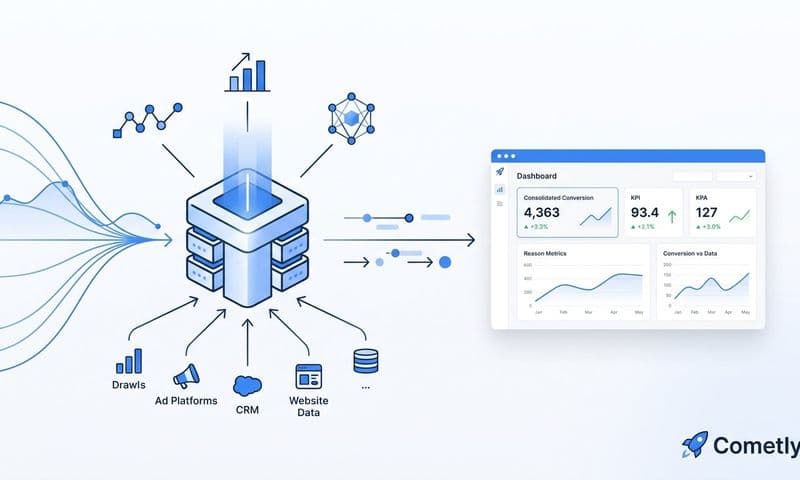
Creating a single source of truth means centralizing all your campaign data—ad spend, clicks, impressions, and conversions—into one platform that applies consistent tracking and attribution logic across every channel. This eliminates the over-counting that happens when multiple platforms claim credit for the same conversion.
Think of it like consolidating bank accounts. Instead of checking five different balances and trying to calculate your total funds, you see everything in one dashboard with accurate totals. Your single source of truth connects directly to each ad platform's API, pulls in CRM data, and tracks website events to create one comprehensive view of performance.
This approach doesn't just aggregate data—it deduplicates conversions and applies your chosen attribution model consistently. When a customer clicks a Google ad, then a Facebook ad, then converts, your single source of truth determines exactly how to credit each touchpoint based on your business rules, not each platform's self-serving attribution.
Implementation Steps
1. Connect all your advertising platforms (Meta, Google, TikTok, LinkedIn) to a unified attribution platform that can pull data via API integrations.
2. Integrate your CRM and any other conversion sources (Shopify, Stripe, HubSpot) so that revenue data flows into the same system where your ad data lives.
3. Set up consistent conversion event tracking across your website and ensure these events are captured by your attribution platform, not just individual ad pixels.
4. Define your deduplication rules—decide how to handle scenarios where multiple platforms claim the same conversion within overlapping windows.
Pro Tips
Start by validating your data integration with a small date range where you know the exact conversion count. Compare your single source of truth against individual platform reports to ensure accuracy. Also, document your attribution logic clearly so your entire team understands how conversions are credited—this prevents confusion when platform dashboards show different numbers than your unified reports.
2. Implement Server-Side Tracking to Capture Complete Customer Journeys
The Challenge It Solves
Browser-based tracking has become increasingly unreliable. iOS privacy changes, cookie blockers, and browser restrictions mean that traditional pixel tracking now misses a significant portion of conversions. Many marketers find that their reported conversions are 20-40% lower than actual sales, creating blind spots in their analysis.
When your tracking is incomplete, you can't accurately assess which campaigns are performing well. You might pause a profitable campaign because the data shows poor performance, when in reality, conversions just aren't being tracked properly. This data gap makes multi-channel analysis nearly impossible.
The Strategy Explained
Server-side tracking bypasses browser limitations by sending conversion data directly from your server to ad platforms and analytics tools. Instead of relying on a browser pixel that can be blocked, your server communicates conversion events the moment they happen in your database or CRM.
Picture this: A customer clicks your Facebook ad on their iPhone, browses your site, then returns later on their laptop to complete a purchase. Traditional pixel tracking might lose that connection because of device switching and browser restrictions. Server-side tracking captures the conversion regardless because it's triggered by the actual transaction in your system, not by a browser cookie.
This approach provides a more complete picture of your customer journey. You see conversions that browser-based tracking misses, which means your campaign analysis reflects reality rather than a filtered, incomplete version of it. When you know the true performance of each channel, you can make confident budget allocation decisions.
Implementation Steps
1. Set up a server-side tracking solution that can receive conversion events from your website backend, CRM, or ecommerce platform.
2. Configure your server to send conversion events to ad platforms (Meta Conversions API, Google Enhanced Conversions) with all relevant customer data and attribution parameters.
3. Implement event matching so that server-side events can be connected to the original ad clicks—use email hashes, phone numbers, and click IDs to maintain attribution accuracy.
4. Run parallel tracking for 2-4 weeks with both browser pixels and server-side events active, then compare the data to validate your implementation before fully transitioning.
Pro Tips
Don't disable your browser pixels completely—use a hybrid approach where both pixel and server-side tracking run simultaneously. This maximizes data capture while providing redundancy. Also, ensure you're sending high-quality customer data (email, phone, address) with server-side events to improve match rates and attribution accuracy across platforms.
3. Choose the Right Attribution Model for Your Business Goals
The Challenge It Solves
Defaulting to last-click attribution is like giving all the credit for a basketball game to whoever made the final shot. It ignores the assists, the defense, and the plays that created the scoring opportunity. In multi-channel campaigns, last-click attribution systematically undervalues top-of-funnel channels that introduce customers to your brand, making those channels appear less effective than they actually are.
This creates a dangerous feedback loop: you see poor ROAS on awareness channels, cut their budgets, then wonder why your bottom-funnel conversions decrease. Without the right attribution model, you're optimizing based on incomplete information about how your channels work together.
The Strategy Explained
Different attribution models distribute conversion credit differently across the customer journey. First-click gives all credit to the initial touchpoint. Linear splits credit equally. Time-decay gives more credit to recent interactions. Data-driven attribution uses machine learning to assign credit based on actual impact.
The key is matching your attribution model to your business reality. If you run a short sales cycle ecommerce business where customers typically convert within days, time-decay or last-click might work well. If you're a B2B SaaS company with a 60-day sales cycle involving multiple touchpoints, you need multi-touch attribution that recognizes how different channels contribute throughout the journey.
The most sophisticated approach is comparing multiple attribution models simultaneously. When you analyze the same campaign data through different attribution lenses, you gain a more complete understanding of channel performance. You might discover that a channel looks weak in last-click but strong in first-click, revealing its role as an effective awareness driver.
Implementation Steps
1. Analyze your typical customer journey length and touchpoint count—use your CRM or analytics data to understand how many interactions happen before conversion.
2. Select 2-3 attribution models that make sense for your business (consider starting with last-click, first-click, and linear or time-decay for comparison).
3. Run reports comparing the same campaigns under different attribution models to see how credit distribution changes and what insights emerge.
4. Make strategic decisions based on the model that best reflects your marketing goals—use last-click for direct response optimization, but reference multi-touch models for budget allocation decisions.
Pro Tips
Don't get paralyzed trying to find the "perfect" attribution model. Start with a multi-touch approach that feels reasonable for your business, then refine over time as you gather more data. Also, document which attribution model you're using for different decisions so your team stays aligned—use last-click for daily optimization but multi-touch for quarterly planning.
4. Standardize Your KPIs and Metrics Across All Channels
The Challenge It Solves
Every ad platform calculates metrics slightly differently. Google's conversion tracking window might be 30 days while Meta's is 7 days. One platform includes view-through conversions by default while another doesn't. Your CRM tracks customer lifetime value one way while your analytics platform uses a different calculation. These inconsistencies make cross-channel comparison meaningless.
When your metrics aren't standardized, you can't answer fundamental questions like "Should I shift budget from Google to Meta?" because you're comparing numbers calculated with different rules. This leads to suboptimal budget allocation and missed opportunities.
The Strategy Explained
Standardizing KPIs means defining exactly how you calculate each metric—CPA, ROAS, CAC, LTV—and applying those definitions consistently across every channel. You decide on one attribution window, one conversion counting method, and one revenue calculation that applies universally.
Let's say you define ROAS as revenue from conversions within 30 days of ad click, excluding view-throughs, divided by ad spend. This becomes your standard across Google, Meta, LinkedIn, and TikTok. Even if each platform's native dashboard shows different numbers, your unified reporting uses your standardized calculation so you're comparing apples to apples.
This also means standardizing naming conventions and UTM parameters. When every campaign follows the same structure—platform_campaign-type_audience_creative-variant—you can easily aggregate and analyze performance across channels. Consistent taxonomy is just as important as consistent calculations.
Implementation Steps
1. Document your KPI definitions in a shared resource—specify exactly how CPA, ROAS, CAC, and LTV are calculated, including attribution windows and which conversion types count.
2. Establish a naming convention for campaigns, ad sets, and ads that works across all platforms—create a template that includes required fields like channel, campaign objective, audience, and date.
3. Implement UTM parameter standards for all campaigns—define which parameters are required and how they should be structured for consistent tracking in analytics.
4. Create a standardized reporting template that pulls data from your single source of truth and calculates KPIs using your defined formulas, ensuring everyone on your team views performance through the same lens.
Pro Tips
Build a simple reference guide that shows how to structure campaign names and UTM parameters with real examples. New team members and agencies will follow standards much more consistently when they have clear templates to copy. Also, audit your existing campaigns quarterly to catch and fix any naming convention violations before they create reporting headaches.
5. Analyze Cross-Channel Customer Paths, Not Just Individual Touchpoints
The Challenge It Solves
Looking at each channel in isolation tells you which ads got clicks and which got conversions, but it doesn't reveal how channels work together to move customers through your funnel. A customer might discover your brand through a TikTok ad, research you via a Google search, engage with your LinkedIn content, then convert after clicking a Meta retargeting ad.
If you only analyze individual channel performance, you might conclude that TikTok, Google, and LinkedIn are underperforming because they didn't drive direct conversions. This leads to cutting budgets on channels that are actually essential to your conversion path, which ultimately decreases overall performance.
The Strategy Explained
Path analysis examines the sequence of touchpoints customers experience before converting. Instead of asking "Which ad drove the conversion?" you ask "What combination of touchpoints led to this conversion?" This reveals which channels excel at introducing customers to your brand, which channels nurture consideration, and which channels close the deal.
When you map these paths, patterns emerge. You might discover that 60% of your high-value conversions involve both a Google search and a Meta retargeting ad. Or that customers who engage with LinkedIn content before seeing your Google ads convert at twice the rate of those who only see Google ads. These insights are invisible when you analyze channels separately.
Understanding cross-channel paths transforms how you allocate budget. You stop thinking in terms of "Google versus Meta" and start thinking in terms of "optimal channel mix." You might increase spend on a channel that rarely gets last-click credit because you see its crucial role in initiating high-value customer journeys.
Implementation Steps
1. Use your attribution platform to generate path analysis reports showing the most common sequences of touchpoints leading to conversions.
2. Segment these paths by conversion value—analyze separately the journeys of high-value customers versus low-value customers to identify patterns.
3. Identify which channels most frequently appear in converting paths versus non-converting paths—this reveals which channels contribute to success even without getting last-click credit.
4. Map out your most valuable customer paths and ensure you're maintaining adequate spend across all channels that appear in those sequences, not just the final touchpoint.
Pro Tips
Start by analyzing your top 20% of conversions by value—these high-value customers often follow different paths than average customers, and understanding their journey is more valuable for growth. Also, look for path patterns that repeat frequently but don't convert well—these might indicate places where your funnel is broken or where you need better messaging consistency across channels.
6. Feed Better Conversion Data Back to Ad Platform Algorithms
The Challenge It Solves
Ad platform algorithms—Meta's Advantage+, Google's Performance Max, TikTok's Smart Performance Campaign—rely heavily on conversion signals to optimize targeting and bidding. When these algorithms receive incomplete or delayed conversion data, they optimize toward the wrong audiences and bid inefficiently. You end up spending more for worse results.
Many marketers don't realize that the quality of data they send back to ad platforms directly impacts campaign performance. If your conversion tracking only captures 60% of actual conversions, the algorithm is making decisions based on a skewed, incomplete picture of what's working.
The Strategy Explained
Conversion sync (also called enhanced conversions or conversions API) sends enriched conversion data from your attribution platform back to ad platforms. This includes conversions that browser pixels missed, higher-value conversion events from your CRM, and additional customer data that improves matching and optimization.
Think of it as closing the feedback loop. Your attribution platform captures the complete conversion picture—including server-side events, CRM data, and offline conversions. Then it sends this enriched data back to Meta, Google, and other platforms so their algorithms can learn from accurate, complete information about what's driving results.
This typically improves campaign performance because the algorithms get better training data. They learn which audience characteristics and behaviors actually lead to conversions, not just which ones correlate with the incomplete conversions that pixels captured. Better data means better targeting, better bidding, and ultimately better ROAS.
Implementation Steps
1. Configure your attribution platform to send conversion events back to ad platforms via their respective APIs (Meta Conversions API, Google Enhanced Conversions, TikTok Events API).
2. Ensure you're sending high-quality customer matching data (hashed email, phone, address) with each conversion event to improve match rates and attribution accuracy.
3. Include conversion value data in your synced events so that algorithms can optimize for revenue or profit, not just conversion volume.
4. Monitor match rates and event acceptance in each ad platform's events manager to ensure your data is being received and matched correctly.
Pro Tips
Prioritize sending your highest-value conversion events first—if you can only sync one event type initially, make it purchases or qualified leads rather than lower-funnel actions. Also, give algorithms at least 2-3 weeks to re-learn after you implement enhanced conversion tracking—performance often dips briefly before improving as the algorithm adjusts to better data.
7. Set Up Regular Cross-Channel Performance Reviews
The Challenge It Solves
Multi-channel campaigns require active management and regular rebalancing. Market conditions change, audience saturation happens, and what worked last month might not work this month. Without a structured review cadence, you either react too slowly to problems or make knee-jerk changes based on short-term noise rather than meaningful trends.
Many marketing teams review performance sporadically or only when something seems wrong. This reactive approach means you miss optimization opportunities and let underperforming spend continue longer than necessary. You need a proactive, systematic approach to performance analysis.
The Strategy Explained
Establishing regular review cadences—weekly tactical reviews and monthly strategic reviews—creates a rhythm for analyzing performance and making data-driven decisions. Weekly reviews focus on immediate optimizations: pausing underperforming ad sets, scaling winners, and addressing technical issues. Monthly reviews take a broader view: evaluating channel mix, testing results, and strategic budget reallocation.
During weekly reviews, you're looking at the past 7-14 days of data with a focus on statistical significance. Has performance on a campaign degraded enough to warrant action? Are there clear winners that deserve more budget? Weekly reviews keep campaigns healthy and prevent small problems from becoming expensive mistakes.
Monthly reviews zoom out to analyze trends, evaluate whether your channel mix is optimal, and make bigger strategic shifts. This is when you compare month-over-month performance, assess the impact of major tests or changes, and decide whether to expand into new channels or consolidate spend on proven performers.
Implementation Steps
1. Schedule recurring weekly meetings (30-45 minutes) to review campaign performance across all channels—create a standard agenda covering key metrics, anomalies, and optimization actions.
2. Build a weekly review dashboard that shows performance trends for each channel, highlights significant changes, and flags campaigns that need attention based on predefined thresholds.
3. Schedule monthly strategic reviews (60-90 minutes) to analyze broader trends, evaluate channel mix, review attribution model insights, and plan budget adjustments for the coming month.
4. Document decisions and actions from each review in a shared log so you can track what changes were made and evaluate their impact over time.
Pro Tips
Create a pre-meeting routine where someone prepares the review dashboard and flags key items for discussion—this keeps meetings focused and productive rather than spending time pulling data live. Also, establish clear decision thresholds for common actions (like "pause any ad set spending over $200 with zero conversions" or "scale any campaign with ROAS above 4x by 20%") so weekly reviews can move quickly.
8. Use AI-Powered Insights to Scale What's Working
The Challenge It Solves
As your campaigns grow across multiple channels with dozens or hundreds of ad sets, manually analyzing performance becomes overwhelming. You can't realistically review every ad set every day to identify optimization opportunities. Important patterns and insights get buried in the noise of data, and you miss chances to scale what's working or cut what's not.
Human analysis also brings bias and blind spots. You might focus on the channels you're most familiar with while overlooking opportunities in others. Or you might miss subtle patterns that span multiple channels—like certain audience characteristics that perform well everywhere, or creative approaches that work across platforms.
The Strategy Explained
AI-powered analysis continuously monitors your multi-channel campaign data and surfaces actionable insights that would be difficult or time-consuming to discover manually. Instead of you hunting through reports for opportunities, AI identifies high-performing patterns, flags underperforming spend, and recommends specific optimization actions.
Modern AI can analyze performance across channels simultaneously and identify cross-channel patterns. It might notice that certain audience segments consistently deliver strong ROAS regardless of platform, suggesting you should expand targeting to those segments everywhere. Or it might detect that specific creative themes perform well on Meta and TikTok but underperform on LinkedIn, informing your creative strategy.
The real value is in scaling what works with confidence. When AI identifies that a particular campaign structure, audience, or creative approach is consistently driving results, you can replicate that success across channels and increase investment knowing you're backing proven performers with data-driven recommendations.
Implementation Steps
1. Implement an attribution platform with AI-powered recommendations that can analyze your multi-channel campaign data and identify optimization opportunities automatically.
2. Configure the AI to focus on your priority metrics—whether that's ROAS, CPA, conversion rate, or custom goals—so recommendations align with your business objectives.
3. Review AI-generated insights weekly alongside your standard performance review, treating them as a starting point for investigation rather than automatic actions.
4. Track which AI recommendations you implement and measure their impact over time to refine which types of insights deliver the most value for your specific campaigns.
Pro Tips
Start by acting on AI recommendations for low-risk optimizations—like pausing clearly underperforming ad sets or scaling obvious winners—while you build confidence in the system. As you see positive results, gradually expand to implementing more strategic recommendations. Also, use AI insights to inform your testing roadmap by identifying patterns worth testing more systematically across channels.
Putting It All Together
Effective multi-channel campaign analysis isn't about collecting more data—it's about connecting the right data in ways that reveal what's actually driving your revenue. The marketers who master these practices gain a significant competitive advantage: they know exactly where to invest their next dollar for maximum return.
Start by establishing your single source of truth and implementing server-side tracking to capture complete customer journeys. These foundational steps ensure you're working with accurate, comprehensive data rather than fragmented platform reports. Without this foundation, every other optimization effort is built on shaky ground.
Then build your analysis framework with consistent metrics, the right attribution model for your business, and regular review cadences. Standardization enables fair comparisons across channels, while structured reviews ensure you're actively managing performance rather than reacting to problems. The combination creates a systematic approach to optimization that compounds over time.
Finally, leverage the advanced strategies that separate good marketers from great ones: analyze cross-channel customer paths to understand how channels work together, feed better data back to ad platform algorithms to improve their optimization, and use AI-powered insights to scale what's working across your entire channel mix.
These practices work together as a system. Your single source of truth enables consistent metrics. Server-side tracking improves both your analysis and the data you feed back to platforms. Path analysis reveals optimization opportunities that individual channel analysis misses. Each element reinforces the others.
Ready to see your multi-channel performance with complete clarity? Cometly's attribution platform unifies your campaign data across every channel, captures complete customer journeys with server-side tracking, and surfaces AI-powered insights that show you exactly where to scale for maximum growth. From ad clicks to CRM events, Cometly tracks it all—providing a complete, enriched view of every customer journey and feeding better conversion data back to your ad platforms to improve targeting and ROI.
Ready to elevate your marketing game with precision and confidence? Discover how Cometly's AI-driven recommendations can transform your ad strategy—Get your free demo today and start capturing every touchpoint to maximize your conversions.