For years, marketing felt like a blend of intuition, creativity, and a whole lot of hope. It was like trying to navigate a vast ocean with nothing more than a blurry, outdated map. Today, that’s all changed. Big data has given us a real-time, high-definition GPS for that journey, completely transforming how brands connect with customers.
This isn't about getting lost in technical jargon. Think of it as upgrading from a single snapshot of a customer to a dynamic, continuous film of your entire market. For marketers, big data is a strategic asset that provides clarity in an otherwise crowded field, turning vast streams of information into a predictable engine for growth.
From Guesswork to Growth: A New Era for Marketers
 Big Data for Marketers A Guide to Driving Growth
The core idea is simple: analyze massive, complex datasets to gain deep insights into customer behavior, personalize experiences, and measure campaign performance with absolute precision. It’s the strategic shift that moves marketing from creative guesswork to a data-driven science.
The business world is already all-in. The global big data and analytics market is projected to hit USD 226.31 billion by 2029, with a staggering 97.2% of businesses now investing in big data and AI. For marketers, this investment pays off in speed and certainty; 80% of enterprise leaders confirm that better data access enables faster, more confident decision-making.
The modern marketing challenge is no longer a lack of data, but the ability to make sense of it. Big data provides the essential compass for navigating the market, eliminating waste, and building a predictable path to revenue.
The Core Components of Marketing Data
So, what exactly is "big data"? It's often broken down by what are known as the "Three V's." Understanding these three dimensions helps demystify how raw information becomes a real competitive advantage.
Component | Description for Marketers | Example |
|---|---|---|
Volume | This is the sheer scale of data coming in every second. Think website clicks, social media interactions, purchase histories, and support tickets from thousands or even millions of customers. | A DTC brand analyzing 10 million website clicks and 500,000 customer purchase records to identify buying patterns. |
Velocity | This is about the speed at which data is created and needs to be analyzed. Velocity means capturing this information in near real time to make swift, informed decisions. | Personalizing a website offer the moment a user lands on your page based on the ad they just clicked. |
Variety | Marketing data comes in all shapes and sizes. It includes structured data like sales figures and unstructured data like social media comments, video views, and customer support chats. | Combining CRM data (structured) with sentiment analysis from Twitter mentions (unstructured) to get a full view of brand health. |
These three components work together to paint a complete picture of your market, your customers, and your performance.
Turning Information Into Impact
Ultimately, the goal is to convert this massive stream of information into measurable results. By analyzing volume, velocity, and variety, marketers can achieve a level of precision that was once impossible. You can pinpoint which channels drive the most valuable customers, personalize messages that resonate deeply, and accurately measure the return on every dollar spent.
This transition from broad assumptions to granular insights is the foundation of modern growth. It’s about replacing "I think this will work" with "the data shows this works." For a deeper dive into making your data useful, check out our guide on creating actionable data from your marketing efforts. This framework turns raw numbers into a powerful tool for growth.
Uncovering Your Customer Data Goldmine
 Big Data for Marketers A Guide to Driving Growth
If you want to make smart marketing decisions, you need the right ingredients. For us, those ingredients are the thousands of data points our customers generate every single day. Every click, every purchase, every interaction—they're all clues. When you piece them together, they tell a complete story about who your customers are and what they actually want.
Don't think of this data as just another spreadsheet. It’s a goldmine. Each piece of information is a valuable nugget that helps you build a more accurate, three-dimensional view of your audience. By sorting this information into a few key categories, you can start to see the customer journey with incredible clarity.
Behavioral Data: What Actions Do They Take?
Behavioral data is the digital footprint your customers leave behind as they move through your world. It tells you what people are doing on your site and in your app, revealing their interests and intentions through their actions. This is arguably the richest source of insight for big data for marketers because it's based on what people do, not what they say they'll do.
A few key examples include:
- Website Path Analysis: Seeing the exact pages a user visits in a session, from a blog post to a product page and straight through to checkout.
- Content Engagement: Tracking how long a visitor spends watching a video or which parts of an article they scroll back to read again.
- App Usage: Monitoring which features get used most inside your mobile app and spotting patterns in how people navigate.
This kind of data is your key to optimizing the user experience, finding friction points in your funnel, and figuring out which content actually connects with your audience.
Transactional Data: What Do They Buy?
Transactional data is the hard proof of a customer’s purchasing habits. It’s the direct line connecting your marketing spend to your revenue, giving you a crystal-clear measure of commercial activity. This data is absolutely essential for calculating core business metrics like customer lifetime value (LTV).
You’re already collecting this stuff through your sales systems.
- Purchase History: The specific products or services a customer has bought over time.
- Average Order Value (AOV): How much a customer typically spends in a single purchase.
- Cart Abandonment: When a user adds items to their cart but bails without completing the purchase.
By analyzing transactional data, you can pinpoint your most valuable customers, create targeted upselling opportunities, and launch effective campaigns to win back those who abandon their carts.
Engagement and Profile Data
Finally, we have two more crucial categories that add color and context to the customer picture. These datasets help fill in the gaps, telling you how customers interact with your marketing and who they are as people.
Engagement Data measures how customers respond to your marketing communications. This includes:
- Email open and click-through rates
- Social media likes, comments, and shares
- Ad clicks and video view completions
Profile Data is the demographic and psychographic info that describes who the customer is. This includes:
- Age, location, and language
- Interests and lifestyle attributes
- Job title or company size (for B2B)
Together, these four data types form a powerful foundation. But here's the kicker: the most valuable data is the information you collect yourself. In an era of tightening privacy rules and the slow death of third-party cookies, mastering your own data collection is no longer optional. Building a solid first-party data strategy isn't just a good idea—it's the bedrock of a resilient and effective marketing operation. This is the gold you can truly own.
Putting Big Data to Work in Your Campaigns
 Big Data for Marketers A Guide to Driving Growth
Knowing the types of marketing data you can collect is one thing. The real magic happens when you stop just hoarding information and start putting it to work. This is where theory gets real, and your campaigns get a whole lot smarter.
When you get it right, big data for marketers isn't just a buzzword—it's a toolkit for driving actual business results. It lets you swap out guesswork for certainty and broad, hopeful campaigns for surgically precise ones. Let's dig into four key ways modern marketers are using data to win.
Achieve Pinpoint Attribution
The path to purchase is almost never a straight line. Someone might see your ad on social media, click a link in your newsletter a week later, and finally buy after searching for your brand on Google. Without a unified view of that journey, figuring out which touchpoint gets the credit is nearly impossible—and that leads to wasted ad spend.
Big data connects every single one of those dots. It allows you to build a complete, chronological map of the customer journey, from the first interaction to the final conversion.
This clarity is non-negotiable, especially when you look at the numbers. Global spending on social media ads has climbed to roughly a quarter of a trillion US dollars. That’s a 15% jump from the previous year and accounts for over 30% of all digital ad spend. You can explore the full report on DataReportal. Without sharp analytics to measure the ROI on that massive investment, you’re just flying blind.
Deliver Hyper-Personalization at Scale
Ever wonder how Netflix knows exactly what show to recommend, or how Amazon suggests products you actually want to buy? They aren't just getting lucky. They’re using massive amounts of data on your past behavior to predict what you’ll love next. That’s hyper-personalization, and big data makes it possible for everyone, not just the giants.
By analyzing browsing history, purchase patterns, and engagement signals, you can craft unique experiences for every single user.
This could look like:
- Showing a returning visitor a homepage banner with the products they last viewed.
- Sending an email with a special offer on an item they left in their shopping cart.
- Customizing website content based on where a user is located or how they found your site.
Personalization today is so much more than just sticking a first name in an email. It’s about creating a relevant, one-to-one conversation that makes every customer feel like you actually get them.
Build Advanced Customer Segments
Traditional segmentation usually stops at basic demographics like age and location. Big data lets you go way deeper, creating dynamic audiences based on what people actually do. Instead of static lists, you get fluid segments that update in real time as customer behavior changes.
This advanced approach helps you identify hyper-specific groups and tailor your messaging perfectly.
- High-Value, At-Risk Customers: Find your top spenders who haven’t bought anything in a while and hit them with a targeted re-engagement campaign.
- Frequent Browsers, No Purchase: Create a segment of users who visit your site all the time but never buy, then give them a nudge with a first-time buyer discount.
- Loyal Brand Advocates: Isolate customers who buy often and leave great reviews, then invite them to an exclusive VIP program.
Use Predictive Analytics to Forecast Trends
Finally, big data allows you to look forward instead of just backward. By analyzing historical data, predictive analytics models can forecast future outcomes with stunning accuracy. This gives marketers a huge strategic advantage, letting them get ahead of market shifts and customer needs.
You can use these forward-looking insights to answer critical business questions:
- Which leads are most likely to convert? This helps your sales team focus their energy where it counts.
- What will a customer's lifetime value (LTV) be? This lets you make smarter decisions about how much you're willing to pay to acquire a new customer.
- Which products will be in high demand next quarter? This allows you to optimize your inventory and plan your marketing campaigns well in advance.
Of course, all of these powerful applications hinge on one thing: clean, reliable data. Tools that offer capabilities like server-side tracking are essential for gathering the high-quality information needed to make any of these strategies actually work.
Focusing on Metrics That Actually Matter
In the world of big data, it’s easy to drown in a sea of numbers. Likes, shares, and website traffic can feel productive, but they often act as ‘vanity metrics’—they look impressive on a report but don’t actually tell you if you’re making money.
The real power of big data for marketers is its ability to cut through the noise and show you the most profitable path forward. This means shifting your focus from metrics that feel good to key performance indicators (KPIs) that directly connect your marketing efforts to revenue.
These are the numbers your CFO cares about, the metrics that prove your department is a growth engine, not just a cost center. Let’s break down the three most critical revenue-focused metrics you absolutely need to be tracking.
Customer Acquisition Cost (CAC)
Customer Acquisition Cost, or CAC, is one of the most fundamental metrics in marketing. It tells you exactly how much you spend, on average, to acquire one new customer. Think of it as the price tag for growth.
To figure it out, just divide your total sales and marketing spend over a set period by the number of new customers you brought in during that same time. For example, if you spent $10,000 on marketing and sales last month and landed 100 new customers, your CAC is $100.
Knowing your CAC is crucial because it gives you a clear benchmark for your spending. It answers the vital question: "Are our marketing efforts efficient?" Without this number, you’re just spending money without knowing if it's a sound investment. A rising CAC can be an early warning that a campaign is becoming less effective or that market competition is heating up.
The goal isn’t just to acquire customers; it’s to acquire them profitably. CAC is the first half of that profitability equation, telling you the cost of your investment before you can measure the return.
Customer Lifetime Value (LTV)
If CAC is the cost, Customer Lifetime Value (LTV) is the return. This metric predicts the total revenue your business can expect from a single customer throughout your entire relationship. It moves way beyond the first purchase to measure long-term value.
Calculating LTV can get complex, but a simple way to start is to multiply the average purchase value by the average purchase frequency, and then multiply that by the average customer lifespan. For instance, if a customer typically spends $50 per purchase, buys 4 times a year, and sticks with you for 3 years, their LTV would be $600 ($50 x 4 x 3).
LTV is the metric that tells you which customers are your most valuable. Understanding it allows you to:
- Justify a higher CAC: If you know a customer is worth $600 over their lifetime, spending $100 to get them is a fantastic deal.
- Segment your audience: You can focus retention efforts on high-LTV customer segments who are most crucial to your bottom line.
- Guide product development: Insights into what high-LTV customers buy can inform future product decisions.
Return on Ad Spend (ROAS)
While CAC and LTV give you a big-picture view of profitability, Return on Ad Spend (ROAS) provides a granular look at how well your ad campaigns are performing. It measures the gross revenue you generate for every single dollar you spend on advertising. It's the ultimate test of whether your ads are actually working.
The formula is straightforward: divide the total revenue from an ad campaign by its total cost. If you spent $1,000 on a Google Ads campaign and it generated $5,000 in revenue, your ROAS is 5x. This means for every dollar you put in, you got five dollars back.
Tracking ROAS helps you optimize your ad budget with confidence. By comparing the ROAS of different channels—like Facebook Ads versus TikTok Ads—you can strategically shift your spend to the platforms delivering the highest returns and maximize the impact of every dollar.
Vanity Metrics vs. Actionable Revenue Metrics
It’s easy to get distracted by numbers that look good but don’t drive the business forward. The table below breaks down the difference between "vanity" metrics and the actionable metrics that truly matter for revenue growth.
Metric Type | Example | Why It Can Be Misleading | What to Track Instead |
|---|---|---|---|
Engagement | Post Likes, Shares | High engagement does not always equal sales. A viral post might attract an audience that never intends to buy. | Conversion Rate, ROAS |
Traffic | Website Visitors, Page Views | Lots of traffic is useless if those visitors do not take action. It can indicate a leaky funnel, not a healthy one. | Leads Generated, CAC |
Social Reach | Follower Count, Impressions | A large following does not guarantee revenue. Many followers could be inactive, bots, or simply not your ideal customer. | LTV, Revenue per Channel |
Consumption | Video Views, Time on Page | Someone might watch a video or read a blog post but never move further down the funnel. It shows interest, not intent. | Demo Requests, Sales Qualified Leads |
Focusing on the right-hand column is what separates high-growth marketers from the rest. These are the metrics that prove your impact on the bottom line.
You can learn more about this and other essential metrics in our guide to marketing KPI examples.
Accurately tracking these complex, cross-channel metrics is nearly impossible when your data is fragmented across different platforms. A unified attribution platform is essential for breaking down these data silos, giving you a single source of truth to make decisions that truly drive growth.
Building Your Data-Driven Marketing Engine
Switching your marketing from a "gut-feel" operation to a data-driven powerhouse isn’t something that happens overnight. It takes a clear plan, the right tools, and a real commitment to building a solid foundation.
Think of it less like a massive, intimidating tech project and more like building a high-performance engine, piece by piece. Every component you add—from your goals to your tech stack—works together to create a reliable system that drives growth. The trick is to be strategic and tackle it in deliberate steps, not all at once.
Define Your Business Goals
Before you even think about collecting data, you have to know why you're doing it. Without clear business goals, you'll just end up drowning in information with no idea what to do with it.
So, start by asking what you actually want to achieve. Your goals will become the blueprint for your entire data strategy, telling you which metrics are important and what information you actually need to collect.
- Goal: Increase customer retention by 15%.
- Data Needed: Purchase history, product usage patterns, and customer support interactions.
- Goal: Improve ad campaign profitability by 20%.
- Data Needed: Ad spend, specific conversion events, and customer journey touchpoints.
When your objectives are this clear, your data collection efforts become purposeful and are directly tied to improving your bottom line.
Consolidate Your Data Sources
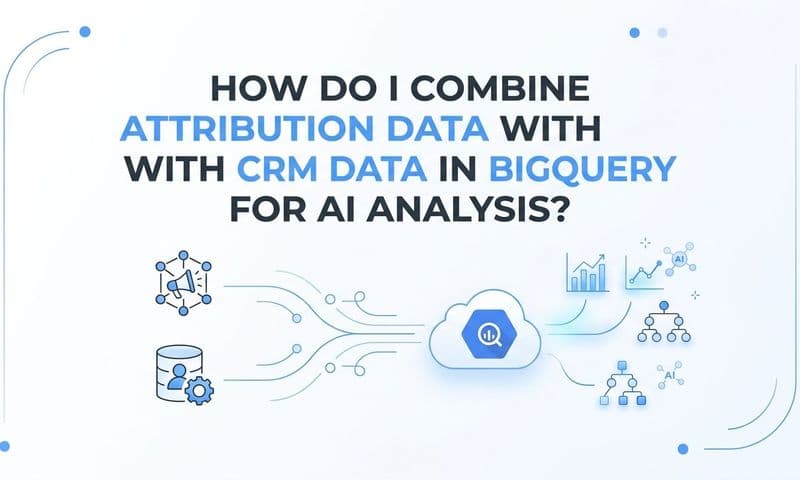
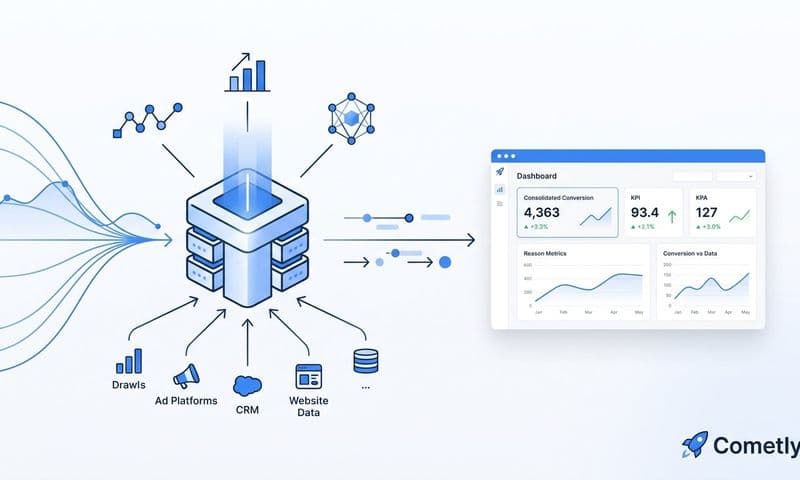
Right now, your customer data is probably scattered all over the place—Google Analytics, your CRM, your e-commerce platform, and a half-dozen ad networks. This fragmentation, known as data silos, makes it impossible to get a clear picture of what’s really going on.
The next critical step is to pull all that information together into a single, unified view.
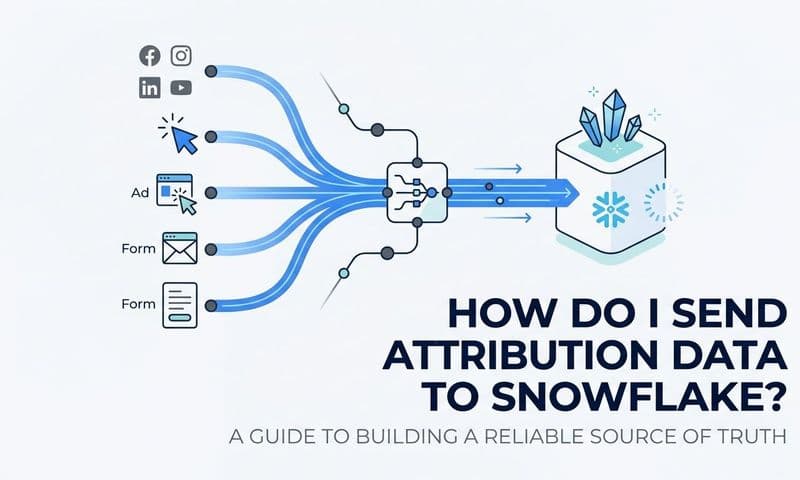
A central attribution platform acts as the hub that connects all these different sources. By bringing everything together, you create a single source of truth that makes accurate, cross-channel analysis possible. You can get a much deeper look into this process in our guide to effective marketing data integration.
This flow chart shows how key metrics should connect to paint a complete picture, from the initial cost of acquiring a customer to their long-term value.
 Big Data for Marketers A Guide to Driving Growth
As you can see, true success isn’t just about driving clicks. It’s about acquiring profitable customers who stick around and contribute to long-term growth.
Implement Robust Tracking and Governance
The quality of your insights is only as good as the quality of your data. Simple as that. In today's privacy-first world, old-school browser-based tracking is becoming less and less reliable because of ad blockers and cookie restrictions.
This is where server-side tracking becomes a necessity. Instead of relying on the user's browser, it sends data directly from your server to your analytics and ad platforms. The result is a much more accurate and complete data stream you can actually trust.
At the same time, you need to establish clear data governance policies. This just means setting rules for how data is collected, stored, and used to make sure it stays consistent, secure, and compliant with regulations like GDPR and CCPA.
The sheer amount of information being generated makes this structured approach non-negotiable. By 2025, the total global data volume is expected to hit a staggering 181 zettabytes. To put that in perspective, 90% of the world's data was created in just the last two years. While over 80% of companies expect to be managing zettabytes of data soon, 36% admit they won't be able to handle it without the right systems in place. This data explosion makes a structured plan and powerful tools more critical than ever.
Overcoming Common Marketing Data Hurdles
Going all-in on data-driven marketing is a huge step, but it’s definitely not a walk in the park. The potential of big data for marketers is massive, but most teams hit the same frustrating roadblocks that can kill momentum before it even starts.
Navigating these hurdles is what separates the companies that just collect data from those that actually use it to build a real competitive edge. Once you know what to look for and how to solve it, you can move from problem to profit much faster.
The Challenge of Data Silos
One of the first walls you’ll run into is data silos. This is what happens when your most important information is scattered across a bunch of disconnected tools. Your website data is in Google Analytics, your ad performance lives on Facebook and Google Ads, and all your sales numbers are tucked away in Shopify. Each platform gives you a tiny piece of the story, but none of them shows you the whole movie.
This fragmentation makes it nearly impossible to get a clear, end-to-end look at attribution. You can’t connect the dots between a customer's first click on a social media ad and their final purchase because the platforms don’t talk to each other. You're left with a broken picture of the customer journey, forcing you to make decisions with incomplete intel.
The fix? Tear down those walls with a unified attribution platform. Think of it as a central hub that plugs into all your different tools, pulling everything together into a single source of truth. It stitches together every touchpoint into one chronological timeline, giving you a complete view of how customers find and interact with your brand.
Inaccurate Tracking and Data Gaps
Another classic problem is inaccurate tracking. You might think your analytics are catching every click and conversion, but browser-level roadblocks are probably creating huge blind spots in your data.
It's not your fault; modern web browsers and user tools are actively working against traditional tracking methods.
- Ad Blockers: These tools flat-out prevent tracking pixels from firing, which means conversions from those users simply vanish into thin air.
- Cookie Restrictions: Browsers like Safari and Firefox have built-in features like Intelligent Tracking Prevention (ITP) that kill third-party cookies, breaking your attribution chains.
- Privacy Settings: More and more users are opting out of tracking, leaving you with even more gaps to fill.
This all leads to underreported conversions and a skewed understanding of which campaigns are actually working. To fight back, smart marketers are moving to server-side tracking. Instead of relying on the user's browser to send data, events are sent directly from your website's server to your analytics and marketing platforms. This approach is way more reliable because it bypasses all the browser-level interference, ensuring you capture a much more accurate and complete dataset.
The Problem of Analysis Paralysis
Finally, you’ve got the all-too-common issue of analysis paralysis. With so much data pouring in, it’s incredibly easy to get overwhelmed. You're staring at endless dashboards and reports, but you have no idea which numbers actually matter or what you should do next. Drowning in data without a clear path forward is just as bad as having no data at all.
The goal isn't just to collect data; it's to find the signal in the noise. When you’re buried in metrics, it becomes incredibly difficult to spot the key insights that can actually drive growth.
This is where AI-powered analytics completely changes the game. Modern attribution platforms use artificial intelligence to do the heavy lifting for you. They sift through your data, identify statistically significant trends, and surface actionable recommendations automatically. Instead of you having to manually dig for insights, the system can alert you to a winning ad that needs more budget or flag a channel that’s starting to show signs of fatigue. It empowers you to move from data to decision without getting lost in the weeds.
Common Questions About Big Data in Marketing
Stepping into the world of big data can feel a bit like drinking from a firehose. So let's break it down. Here are a few straightforward answers to the questions we hear most often from marketers.
What’s the First Step for a Small Business to Start Using Big Data?
For a small business, the best move isn’t to chase massive, complex datasets. It’s to get a handle on your own first-party data first. Start by making sure you’re accurately tracking every single interaction happening on your website and inside your CRM.
The most practical way to nail this is by implementing a unified marketing attribution tool. A platform with server-side tracking built-in helps you sidestep common roadblocks like ad blockers, so you start collecting clean, reliable data from day one.
This approach gives you a solid foundation of trustworthy information you can use immediately for better segmentation, personalization, and ad spend optimization. You get real value right away, without needing a dedicated data science team to make sense of it all.
By focusing on your own customer data first, you’re building a powerful, proprietary asset. It's the most direct path from data collection to real business growth.
How Does Server-Side Tracking Improve Marketing Data Accuracy?
Server-side tracking sends data directly from your website's server to your marketing and analytics platforms, like Meta or Google. This is a massive upgrade from traditional client-side tracking, which depends on the user's browser to send that information—a process that’s notoriously unreliable.
Think of it as a direct, private pipeline for your data. This pipeline is crucial for accuracy because it bypasses the most common things that cause data to get lost.
- Ad Blockers: A huge number of ad blockers stop browser-based tracking pixels from ever firing. When that happens, those conversions become invisible. Server-side tracking is completely unaffected by them.
- Browser Privacy Settings: Features like Apple's Intelligent Tracking Prevention (ITP) are designed to block or limit cookies, which breaks attribution. Server-side methods are far more resilient to these rules.
- Network Issues: A slow internet connection or a user clicking away too fast can prevent a browser from reporting a conversion. A server-to-server connection is much more stable and reliable.
By creating this dependable data connection, server-side tracking ensures you capture a much more complete and accurate picture of your conversions. This leads directly to better attribution and smarter campaign decisions.
Can I Use Big Data Without a Team of Data Scientists?
Absolutely. The idea that you need a team of PhDs to get any value from big data is completely outdated. Modern marketing platforms are now designed to make powerful analytics accessible to marketers, not just data scientists.
Many of these tools use AI and intuitive dashboards to do the heavy lifting for you. They can surface key insights and give you actionable recommendations without you ever needing to write a line of code or build a complex statistical model. For example, AI-powered features can analyze your campaign data and suggest specific budget shifts to optimize your ad spend.
With the right platform, you can tap into the power of big data for marketers to make smarter, faster decisions all on your own.
Ready to stop guessing and start knowing exactly what drives your growth? Cometly unifies your marketing data into a single source of truth, giving you the clarity needed to optimize every dollar you spend. Get started with Cometly today and see the difference accurate attribution makes.