Choosing the right marketing analytics platform can mean the difference between scaling campaigns with confidence and throwing budget at channels that don't convert. With iOS privacy changes, cookie deprecation, and fragmented customer journeys, marketers need tools that go beyond basic metrics to show what's actually driving revenue.
This guide compares leading platforms across attribution accuracy, ease of use, integrations, and pricing. You'll find options for paid ads teams, ecommerce brands, enterprise organizations, and product-focused teams.
Here are the top marketing analytics platforms to consider in 2026.
1. Cometly
Best for: Paid ads teams needing accurate attribution and AI-powered optimization recommendations
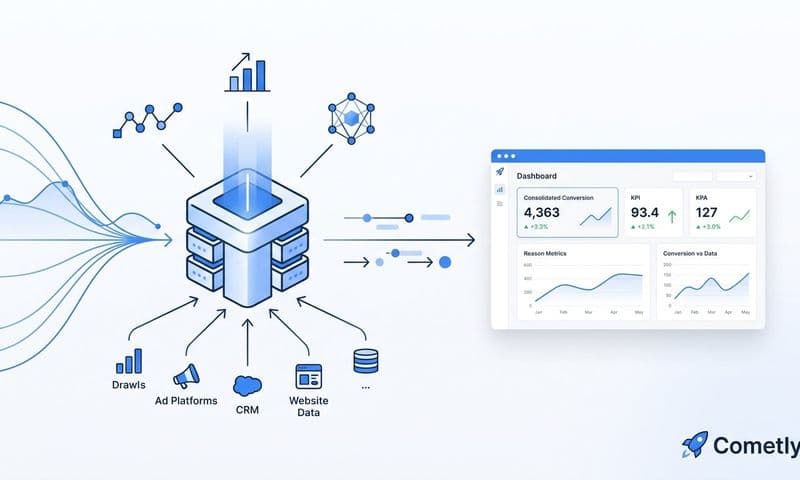
Cometly is an AI-powered marketing attribution platform that tracks the complete customer journey and feeds optimized conversion data back to ad platforms.
 9 Best Marketing Analytics Platforms to Compare in 2026
Where This Tool Shines
Cometly solves one of the biggest challenges in modern marketing: connecting every touchpoint to actual revenue. Its server-side tracking captures data that traditional pixels miss, especially on iOS devices where privacy restrictions have created blind spots for most marketers.
The platform's AI Ads Manager analyzes your campaigns in real time and delivers actionable recommendations. Instead of manually digging through reports to find what's working, you get specific insights on which ads, audiences, and channels deserve more budget.
Key Features
Multi-Touch Attribution: Tracks every touchpoint across all channels to show the complete customer journey from first click to conversion.
AI Ads Manager: Provides optimization recommendations based on performance data, helping you scale winning campaigns with confidence.
Server-Side Tracking: Captures accurate conversion data even with iOS privacy restrictions and cookie limitations.
Conversion Sync: Feeds enriched conversion events back to Meta, Google, TikTok, and other ad platforms to improve their AI targeting and optimization.
Real-Time Analytics Dashboard: Centralizes performance data across all marketing channels in one unified view.
Best For
Digital marketing teams and agencies running significant paid advertising budgets across multiple platforms. Particularly valuable if you're struggling with attribution accuracy post-iOS 14.5 or need to prove marketing ROI to stakeholders. Works well for both B2B and B2C businesses with complex customer journeys.
Pricing
Custom pricing based on monthly ad spend. Demo required to get specific quote. Designed for businesses spending at least mid-four figures monthly on paid advertising.
2. Google Analytics 4
Best for: Teams needing free web analytics with basic cross-platform tracking
Google Analytics 4 is a free web analytics platform with event-based tracking and machine learning insights.
 11 Best Conversion Optimization Tools to Boost Your ROI in 2026
Where This Tool Shines
GA4 represents Google's shift from session-based to event-based tracking. This approach gives you more flexibility in defining what matters for your business, whether that's video plays, scroll depth, or custom conversion events.
The predictive metrics feature uses machine learning to identify users likely to convert or churn. For teams without dedicated data scientists, these built-in predictions add value beyond basic reporting.
Key Features
Event-Based Data Model: Track any user interaction as an event, giving you granular control over what you measure.
Predictive Metrics: Machine learning identifies high-value users and predicts purchase probability without manual analysis.
Cross-Platform Tracking: Connects web and app data to show unified user journeys across devices.
BigQuery Integration: Export raw data to BigQuery for advanced analysis and custom reporting.
Free Tier: Full platform access at no cost for most businesses, with generous data limits.
Best For
Small to mid-sized businesses needing basic analytics without budget constraints. Works well if you're primarily focused on website behavior and Google Ads performance. Less ideal for teams needing sophisticated multi-touch attribution or deep integration with non-Google ad platforms.
For a deeper dive into this space, see our AI ad testing tool guide.
Pricing
Free for standard implementation. GA4 360 starts at $50,000 annually for enterprise features like unsampled data, advanced attribution, and dedicated support.
3. Triple Whale
Best for: Shopify ecommerce brands needing first-party tracking and creative analytics
Triple Whale is an ecommerce-focused analytics platform with first-party data tracking and creative performance insights.
 11 Best Paid Advertising Analytics Tools to Maximize Your Ad ROI in 2026
Where This Tool Shines
Triple Whale built its platform specifically for Shopify stores, which means the integration is seamless and the metrics are tailored to ecommerce KPIs. You can track profit margins, customer lifetime value, and inventory performance alongside your marketing data.
The creative analytics feature helps you understand which ad creatives actually drive purchases, not just clicks. For brands testing dozens of ad variations weekly, this insight accelerates the creative iteration process significantly.
Key Features
Shopify-Native Integration: One-click setup that automatically pulls order data, customer information, and product performance.
First-Party Pixel Tracking: Proprietary tracking pixel captures conversion data that traditional pixels miss due to privacy restrictions.
Creative Analytics: Shows which ad creatives drive the highest ROAS and customer lifetime value.
Customer Journey Mapping: Visualizes the complete path from first touchpoint to purchase and beyond.
Profit Tracking: Calculates true profitability by factoring in COGS, shipping, and ad spend.
Best For
Direct-to-consumer Shopify brands spending heavily on Meta and TikTok ads. Particularly valuable if you run frequent creative tests or need to track profit margins alongside revenue. Less suitable for service businesses or companies on other ecommerce platforms.
Related reading: our complete guide to AI ad generator for TikTok ads.
Pricing
Starts at $129 per month for basic features. Higher tiers unlock advanced attribution models, unlimited users, and deeper integrations. Pricing scales with store revenue and feature needs.
4. Northbeam
Best for: DTC brands needing machine learning attribution with incrementality testing
Northbeam is a machine learning attribution platform with media mix modeling for direct-to-consumer brands.
 9 Best Marketing Analytics Platforms to Compare in 2026
Where This Tool Shines
Northbeam uses machine learning to build attribution models that adapt to your specific business. Instead of forcing you into predefined models like last-click or linear, it analyzes your actual conversion patterns and assigns credit accordingly.
The incrementality testing feature helps you understand which channels truly drive new revenue versus just capturing demand that would have happened anyway. This distinction matters enormously when you're deciding where to allocate budget.
Key Features
ML-Based Attribution Modeling: Custom attribution models built specifically for your business using machine learning algorithms.
Incrementality Testing: Measures the true lift each marketing channel provides beyond baseline conversions.
Media Mix Modeling: Analyzes the optimal budget allocation across all channels based on historical performance.
Cross-Channel Optimization: Identifies opportunities to shift budget between channels for maximum efficiency.
Custom Attribution Windows: Set different lookback windows for different channels based on typical customer behavior.
Best For
Growing DTC brands with monthly ad spend exceeding $50,000 across multiple channels. Most valuable when you have enough conversion volume for machine learning to identify meaningful patterns. Works best for businesses with relatively short sales cycles.
Pricing
Starts around $1,000 per month with pricing scaling based on ad spend volume. Implementation typically requires onboarding support to configure tracking and attribution models properly.
5. Rockerbox
Best for: Enterprise teams tracking both online and offline marketing touchpoints
Rockerbox is an enterprise marketing measurement platform with unified online and offline attribution.
 9 Best AI Marketing Analytics Platforms to Maximize ROI in 2026
Where This Tool Shines
Rockerbox excels at connecting digital and traditional marketing channels into one attribution framework. If you're running TV campaigns, podcast sponsorships, direct mail, and digital ads simultaneously, this platform shows how they work together.
The unified marketing measurement approach combines multi-touch attribution with media mix modeling. You get granular customer journey data where it's available, plus statistical modeling to fill gaps in offline channel performance.
Key Features
Unified Marketing Measurement: Combines online attribution with offline channel modeling in one platform.
Offline Conversion Tracking: Connects in-store purchases, phone calls, and direct mail responses to digital touchpoints.
TV and Podcast Attribution: Measures the impact of broadcast media on website traffic and conversions.
Customer Journey Analysis: Maps complex B2B and B2C journeys spanning weeks or months.
Multi-Touch Attribution: Offers multiple attribution models with the flexibility to create custom weighting.
Best For
Enterprise marketing teams running omnichannel campaigns with significant offline components. Particularly valuable for retailers with both ecommerce and physical stores, or B2B companies with long sales cycles involving multiple touchpoints. Requires substantial marketing budget to justify the investment.
Pricing
Enterprise pricing model requires contact for quote. Typically suited for companies with annual marketing budgets exceeding seven figures. Implementation and onboarding support included.
6. Mixpanel
Best for: Product teams analyzing user behavior and conversion funnel optimization
Mixpanel is a product analytics platform focused on user behavior tracking and conversion optimization.
 9 Best First Party Data Tracking Solutions in 2026
Where This Tool Shines
Mixpanel was built for understanding how users interact with your product, not just how they found it. The event-based tracking captures every action users take, letting you analyze behavior patterns that drive retention and revenue.
The funnel analysis feature shows exactly where users drop off in multi-step processes. Whether you're optimizing a checkout flow or an onboarding sequence, you can pinpoint friction points and measure the impact of changes.
Key Features
Event-Based Tracking: Capture and analyze any user action within your product or website.
Funnel Analysis: Visualize conversion rates through multi-step processes and identify drop-off points.
Cohort Retention Reports: Track how different user segments engage over time to measure product stickiness.
A/B Testing Integration: Connect experiments to behavioral data to understand impact beyond surface metrics.
User Flow Visualization: See the actual paths users take through your product to discover unexpected usage patterns.
Best For
SaaS companies and product teams focused on improving user engagement and retention. Works well when your primary goal is understanding in-product behavior rather than marketing attribution. Less suitable if you need deep integration with advertising platforms.
Pricing
Free tier available for up to 20 million events per month. Growth plan starts at $20 monthly for additional features. Enterprise pricing available for teams needing advanced governance and support.
7. Amplitude
Best for: Product analytics with behavioral cohorts and experimentation capabilities
Amplitude is a digital analytics platform for product teams with behavioral cohorts and experimentation.
 8 Best Enterprise Conversion Tracking Tools & Their Pricing in 2026
Where This Tool Shines
Amplitude's behavioral cohort feature automatically groups users based on actions they take, not just demographics. This reveals patterns you might miss with manual segmentation, like identifying power users based on feature adoption sequences.
The session replay capability lets you watch actual user sessions to understand friction points qualitatively. When your funnel analysis shows a drop-off, you can watch recordings to see why users abandon the flow.
Key Features
Behavioral Cohorts: Automatically segment users based on action patterns and engagement levels.
Product Experimentation: Built-in A/B testing framework connected directly to behavioral analytics.
Session Replay: Record and review actual user sessions to understand qualitative behavior.
Predictive Analytics: Machine learning identifies users likely to convert, churn, or take specific actions.
Data Governance Tools: Enterprise-grade controls for data quality, privacy, and access management.
Best For
Product-led growth companies where user activation and retention drive revenue. Particularly valuable for freemium SaaS products or mobile apps with complex user journeys. Works best when you have dedicated product analytics resources to leverage advanced features.
Pricing
Free tier supports up to 10 million actions per month. Plus plan starts at $49 monthly with increased limits. Growth and Enterprise tiers add advanced features and dedicated support.
8. HubSpot Marketing Analytics
Best for: Teams already using HubSpot who need native CRM-connected reporting
HubSpot Marketing Analytics is native analytics within HubSpot's marketing platform with CRM-connected reporting.
Where This Tool Shines
HubSpot's analytics shine when you need to connect marketing activity directly to CRM data. Every form submission, email click, and website visit automatically links to contact records, giving you complete visibility into individual customer journeys.
The revenue attribution reporting shows which campaigns influence closed deals, not just leads. For B2B teams where marketing's value comes from pipeline contribution, this connection between marketing touches and revenue is essential.
Key Features
Native CRM Integration: Marketing data automatically connects to contact records and deal stages without custom integration work.
Campaign Attribution Reporting: Track which campaigns influence opportunities and closed revenue across the entire sales cycle.
Revenue Attribution: Connect marketing touchpoints to actual revenue with multi-touch attribution models.
Custom Dashboards: Build reporting dashboards combining marketing, sales, and service data in one view.
Contact-Level Tracking: See every marketing interaction for individual contacts from first touch to customer.
Best For
B2B marketing teams already using HubSpot CRM who need integrated reporting without complex data pipelines. Most valuable when sales cycles involve multiple touchpoints and stakeholders. Less ideal if you're running significant paid advertising outside HubSpot's native ad tools.
Pricing
Included with Marketing Hub Professional starting at $800 per month. Enterprise tier at $3,600 monthly adds advanced attribution and custom reporting. Requires CRM subscription for full contact-level tracking capabilities.
9. Hyros
Best for: High-ticket businesses with call tracking and long sales cycle attribution needs
Hyros is an attribution platform specializing in high-ticket sales with call tracking and long journey analysis.
Where This Tool Shines
Hyros was built specifically for businesses where phone calls close deals. The call tracking attribution connects inbound calls back to the specific ads, keywords, or campaigns that generated them, solving a major blind spot for service businesses.
The platform excels at tracking long sales cycles spanning weeks or months. If your customers research extensively before buying, Hyros captures all those touchpoints and shows which marketing efforts initiated the journey versus which closed it.
Key Features
Call Tracking Attribution: Connect phone conversions back to specific marketing sources and campaigns.
Long Sales Cycle Tracking: Track customer journeys spanning weeks or months across multiple sessions and devices.
Ad Platform Integrations: Deep connections with Meta, Google, and YouTube for accurate conversion tracking.
Print Tracking: Measure the impact of direct mail and print advertising on digital behavior.
Custom Attribution Models: Build attribution frameworks specific to your sales process and customer journey.
Best For
Service businesses, coaching programs, and high-ticket ecommerce where phone calls drive significant revenue. Particularly valuable if you run webinars, sales calls, or consultations as part of the conversion process. Works best when average order value justifies detailed attribution tracking.
Pricing
Starts around $99 per month for basic features. Pricing scales with ad spend volume and number of tracked conversions. Higher tiers unlock advanced attribution models and additional integrations.
Finding Your Perfect Match
The right marketing analytics platform depends on what you're actually trying to measure and optimize.
For paid ads teams needing accurate attribution and AI-powered optimization, Cometly delivers the clearest path from ad click to revenue. Its server-side tracking solves iOS accuracy problems, while the AI recommendations help you scale winning campaigns faster.
Ecommerce brands on Shopify may find Triple Whale's native integration and profit tracking more aligned with their needs. The creative analytics feature particularly helps DTC brands running high-volume ad testing.
Enterprise teams with complex offline touchpoints should evaluate Rockerbox. If you're running TV, podcast, direct mail, and digital campaigns simultaneously, you need a platform that connects all those dots.
Product-focused teams have different requirements entirely. Mixpanel and Amplitude excel at understanding user behavior and retention, but they're not built for marketing attribution. If your primary goal is improving product engagement rather than optimizing ad spend, these platforms make more sense.
For teams deep in the HubSpot ecosystem, their native analytics keeps everything centralized. The CRM connection is seamless, though you'll sacrifice some of the advanced attribution capabilities that dedicated platforms offer.
The choice ultimately comes down to your tech stack, budget, and whether you need attribution accuracy or broader behavioral insights. Most teams benefit from clear visibility into which marketing efforts actually drive revenue, not just traffic or engagement.
Ready to elevate your marketing game with precision and confidence? Discover how Cometly's AI-driven recommendations can transform your ad strategy. Get your free demo today and start capturing every touchpoint to maximize your conversions.