Marketing analytics tools have become essential for teams managing campaigns across multiple platforms. With ad costs rising and tracking becoming more complex due to privacy changes, choosing the right analytics solution can mean the difference between scaling profitably and wasting budget on underperforming channels.
This comparison breaks down top marketing analytics tools based on their attribution capabilities, integration options, ease of use, and pricing. Whether you're a solo marketer, agency, or enterprise team, you'll find options suited to different needs and budgets.
1. Cometly
Best for: Paid advertising teams needing accurate multi-touch attribution and AI-powered optimization
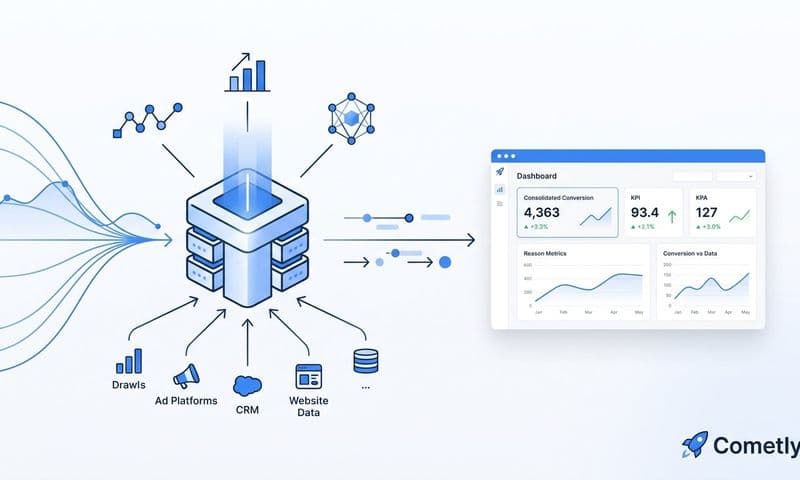
Cometly is a marketing attribution platform that tracks the entire customer journey from ad click to CRM conversion with AI-powered optimization recommendations.
 9 Best Marketing Analytics Tools to Track Campaign Performance in 2026
Where This Tool Shines
Cometly stands out for its server-side tracking approach, which bypasses iOS limitations and browser restrictions that plague traditional pixel-based tracking. This means you get accurate attribution data even as privacy regulations tighten.
The AI Ads Manager analyzes your campaign performance across all channels and delivers actionable optimization recommendations. Instead of manually digging through reports, you get clear guidance on which campaigns to scale and which to cut.
Key Features
Multi-Touch Attribution: Tracks every touchpoint across all marketing channels to show the complete customer journey.
AI Ads Manager: Provides optimization recommendations based on real-time performance analysis across all ad platforms.
Server-Side Tracking: Captures accurate conversion data that bypasses iOS privacy restrictions and ad blockers.
Conversion Sync: Feeds enriched conversion data back to Meta, Google, and other ad platforms to improve their targeting algorithms.
Real-Time Analytics Dashboard: Displays campaign performance and attribution insights in a unified interface.
Best For
Digital marketers and agencies running paid campaigns across multiple platforms who need to understand which ads actually drive revenue. Particularly valuable for teams struggling with attribution accuracy due to iOS updates or managing significant ad spend where optimization decisions directly impact profitability.
Pricing
Custom pricing based on ad spend volume. Demo available to explore features and discuss pricing tailored to your campaign scale.
2. Google Analytics 4
Best for: Budget-conscious teams wanting comprehensive free web analytics with Google Ads integration
Google Analytics 4 is a free web analytics platform with event-based tracking and cross-platform measurement capabilities.
 11 Best Conversion Optimization Tools to Boost Your ROI in 2026
Where This Tool Shines
GA4's biggest advantage is simple: it's free and deeply integrated with the Google ecosystem. If you're running Google Ads, the native connection provides seamless campaign tracking without additional setup.
The event-based data model offers flexibility that the old Universal Analytics lacked. You can track virtually any user interaction without being constrained by rigid page view structures, making it adaptable to modern web applications and mobile apps.
Key Features
Event-Based Data Model: Flexible tracking framework that captures any user interaction you define.
Cross-Platform Measurement: Tracks user journeys across web and mobile app properties in unified reports.
Predictive Metrics: Uses machine learning to forecast purchase probability and churn likelihood.
Free Tier: Generous limits suitable for most small to mid-sized businesses without monthly fees.
Google Ads Integration: Native connection for seamless campaign performance tracking and audience building.
Best For
Small to mid-sized businesses needing general web analytics and Google Ads tracking without budget for paid tools. Also suitable for teams with technical resources to customize the platform's flexible event tracking.
Pricing
Free for standard implementation. GA4 360 enterprise version available with higher data limits and additional features for large organizations.
3. Triple Whale
Best for: Shopify-focused DTC brands needing profit tracking and creative analytics
Triple Whale is an ecommerce analytics platform built specifically for Shopify stores with profit-focused metrics.
 11 Best Marketing Attribution Companies to Track Your Ad ROI in 2026
Where This Tool Shines
Triple Whale calculates true profitability by factoring in product costs, shipping, and platform fees—not just revenue. This profit-first approach helps DTC brands understand actual margins instead of vanity metrics.
The creative analytics feature tracks which specific ad creatives drive purchases, helping brands identify winning assets faster. Combined with post-purchase surveys that ask customers how they found you, attribution becomes more reliable than pixel tracking alone.
Key Features
Profit-Focused Metrics: Displays true ROAS after accounting for costs, fees, and expenses.
First-Party Pixel: Proprietary tracking that captures conversion data more accurately than standard pixels.
Creative Performance Analytics: Shows which ad creatives and copy variations drive the most conversions.
Shopify Integration: Deep native connection with Shopify and Klaviyo for seamless data flow.
Post-Purchase Surveys: Collects attribution data directly from customers to validate tracking accuracy.
Best For
Direct-to-consumer ecommerce brands running on Shopify who need to understand profitability at the product and campaign level. Especially valuable for brands scaling paid social campaigns where creative testing drives results.
Pricing
Starts at $129 per month for the Growth plan with core features included.
4. Northbeam
Best for: Enterprise brands with complex media mixes needing advanced attribution modeling
Northbeam is an enterprise marketing intelligence platform combining multi-touch attribution with media mix modeling.
 9 Best Marketing Analytics Tools to Track Campaign Performance in 2026
Where This Tool Shines
Northbeam uses machine learning to build custom attribution models based on your actual customer journey data, rather than forcing you into preset models. This approach adapts to how your specific customers actually convert.
The media mix modeling capability helps brands with significant spend allocate budgets across channels—including offline channels like TV and direct mail—based on statistical analysis rather than last-click attribution alone.
Key Features
Machine Learning Attribution: Builds custom models that adapt to your unique customer conversion patterns.
Media Mix Modeling: Statistical analysis for budget allocation across all channels including offline media.
Incrementality Testing: Measures true lift from marketing activities versus organic baseline performance.
Cross-Channel Optimization: Provides spend recommendations across your entire marketing mix.
Custom Attribution Windows: Flexible lookback periods tailored to your typical sales cycle length.
Best For
Enterprise brands with monthly ad spend exceeding $100,000 who run complex omnichannel campaigns. Best suited for teams with dedicated analytics resources who can leverage advanced modeling capabilities.
Pricing
Custom enterprise pricing based on ad spend and data volume, typically starting above $1,000 per month.
5. Mixpanel
Best for: Product teams analyzing user behavior and retention within digital products
Mixpanel is a product analytics platform focused on understanding how users interact with digital products through behavioral analysis.
 9 Best Marketing Analytics Tools to Track Campaign Performance in 2026
Where This Tool Shines
Mixpanel excels at answering product questions rather than marketing questions. It shows you how users move through your product, where they get stuck, and which features drive retention.
The self-serve interface lets non-technical team members build funnels, cohorts, and retention reports without waiting for data teams. This democratizes product insights across your organization.
Key Features
Funnel Analysis: Visualizes conversion rates through multi-step user flows with drop-off points highlighted.
Cohort Analysis: Groups users by behavior or acquisition source to compare retention patterns.
User Segmentation: Creates dynamic user segments based on actions, properties, or engagement levels.
A/B Test Analysis: Compares feature variants to measure impact on key metrics.
Interactive Reports: Drag-and-drop report building without SQL or technical knowledge required.
Best For
SaaS companies and mobile apps needing to understand in-product user behavior and optimize conversion funnels. Less suited for marketing attribution but excellent for product-led growth strategies.
Pricing
Free tier available up to 20 million events per month. Growth plans start at $20 per month with increased limits.
6. HubSpot Marketing Analytics
Best for: Teams already using HubSpot CRM who want integrated marketing analytics
HubSpot Marketing Analytics provides built-in attribution reporting within HubSpot's marketing suite.
 10 Best Enterprise Channel Analytics Software To Maximize Marketing ROI
Where This Tool Shines
The seamless connection between marketing activities and CRM data is HubSpot's core advantage. You can see which campaigns influenced specific deals without wrestling with data integration.
Multi-touch revenue attribution connects marketing touchpoints directly to closed revenue, making it easier to prove marketing's impact to leadership. The custom report builder lets you slice data by campaign, channel, or any CRM property.
Key Features
Multi-Touch Revenue Attribution: Tracks how marketing touchpoints contribute to closed deals and revenue.
Campaign Performance Tracking: Monitors email, social, ads, and content performance in unified dashboards.
Customer Journey Analytics: Visualizes the complete path from first touch to customer.
CRM Data Connection: Native integration eliminates data silos between marketing and sales.
Custom Report Builder: Creates tailored reports using any combination of marketing and CRM data.
Best For
B2B companies already invested in HubSpot's ecosystem who need marketing analytics that connect directly to sales pipeline data. Less competitive if you're not already using HubSpot CRM.
Pricing
Included with Marketing Hub Professional at $800 per month, which includes the full marketing suite.
7. Supermetrics
Best for: Teams needing data aggregation from multiple sources into custom reporting tools
Supermetrics is a data aggregation tool that pulls marketing data from over 100 sources into spreadsheets and BI tools.
 9 Best Marketing Analytics Tools to Track Campaign Performance in 2026
Where This Tool Shines
Supermetrics solves the data consolidation problem. Instead of logging into five different ad platforms to pull reports, you pipe everything into Google Sheets, Looker Studio, or your data warehouse automatically.
The automated refresh capability means your reports update on schedule without manual exports. Set up your dashboard once, and it stays current with fresh data pulled directly from each platform's API.
Key Features
100+ Data Source Connectors: Pulls data from major ad platforms, analytics tools, and marketing systems.
Automated Data Refreshes: Schedules regular updates so reports always show current data.
Multiple Export Destinations: Sends data to Sheets, Looker Studio, BigQuery, Snowflake, and other tools.
Custom Metrics: Creates calculated fields and custom dimensions within the platform.
Data Blending: Combines metrics from different sources in unified reports.
Best For
Marketing teams and agencies that need to aggregate data from multiple platforms into custom dashboards or data warehouses. Best for users comfortable building their own reports rather than using pre-built analytics interfaces.
Pricing
Starts at $39 per month per data source connector, with volume discounts available for multiple connections.
8. Rockerbox
Best for: Brands running omnichannel campaigns including TV, podcast, and offline media
Rockerbox is an attribution platform that tracks both digital and offline channels in unified measurement.
 8 Best Enterprise Attribution Platforms: Pricing Comparison for 2026
Where This Tool Shines
Rockerbox bridges the gap between digital and traditional media by attributing conversions to TV spots, podcast ads, and direct mail alongside your digital campaigns. This unified view helps brands with diversified media mixes understand total marketing impact.
The incrementality testing feature measures whether marketing activities actually drive lift versus what would have happened organically. This helps separate correlation from causation in attribution analysis.
Key Features
TV and Podcast Attribution: Tracks conversions from broadcast and streaming media using time-based modeling.
Unified Measurement: Combines digital and offline channel performance in single attribution models.
Incrementality Testing: Measures true marketing lift through holdout tests and geo experiments.
Journey-Based Attribution: Maps customer paths across all touchpoints regardless of channel type.
Spend Optimization: Provides budget allocation recommendations across your complete media mix.
Best For
Mid-market to enterprise brands investing in TV, podcast, or other offline channels alongside digital campaigns. Particularly valuable for brands transitioning from digital-only to omnichannel marketing strategies.
Pricing
Custom pricing based on campaign complexity and data volume, typically serving mid-market to enterprise clients.
9. Heap
Best for: Teams wanting automatic event tracking without manual implementation
Heap is a digital insights platform with automatic event capture that tracks all user interactions without manual tagging.
Where This Tool Shines
Heap's automatic capture eliminates the implementation bottleneck that plagues most analytics tools. Instead of defining events upfront and waiting for development resources, Heap records everything automatically from day one.
The retroactive analysis capability is particularly powerful. You can define new events months after they occurred and analyze historical data immediately, without having waited to implement tracking first.
Key Features
Automatic Event Capture: Records all clicks, taps, form submissions, and page views without manual event definitions.
Retroactive Analytics: Analyzes historical data for newly defined events without prior implementation.
Session Replay: Watches recordings of actual user sessions to understand behavior context.
Funnel and Path Analysis: Visualizes conversion funnels and explores common user journeys.
Data Science Features: Provides advanced statistical analysis tools for technical teams.
Best For
Product teams at SaaS companies and digital businesses who want behavioral analytics without heavy implementation work. Less focused on marketing attribution, more on product optimization and user experience improvement.
Pricing
Free tier available for basic usage. Growth plans start at $3,600 per year with increased data limits and advanced features.
Finding Your Perfect Analytics Match
The right marketing analytics tool depends on what you're actually trying to measure and optimize.
For paid advertising teams needing accurate attribution across multiple ad platforms, Cometly delivers the most comprehensive view with AI-powered optimization recommendations. The server-side tracking approach solves accuracy problems that plague pixel-based tools, and the Conversion Sync feature improves ad platform algorithms by feeding them better data.
Budget-conscious teams wanting solid web analytics should start with Google Analytics 4. It's free, well-documented, and handles most standard tracking needs. Shopify brands focused on profitability will find Triple Whale's cost-aware metrics more actionable than revenue-only reporting.
Enterprise teams with complex media mixes spanning TV, podcast, and digital channels need the advanced modeling capabilities in Northbeam or Rockerbox. These platforms handle attribution complexity that simpler tools can't address.
Product teams analyzing in-app behavior should look at Mixpanel or Heap rather than marketing-focused tools. They're built for different questions about user engagement and feature adoption.
Consider your primary use case first. Are you optimizing paid ad campaigns, understanding website behavior, proving marketing ROI to leadership, or analyzing product usage? Your answer determines which tool category fits best.
Think about your team's technical capabilities too. Some platforms require data warehouse setup and SQL knowledge, while others offer self-serve interfaces anyone can use. Match the tool's complexity to your team's resources.
Ready to elevate your marketing game with precision and confidence? Discover how Cometly's AI-driven recommendations can transform your ad strategy—Get your free demo today and start capturing every touchpoint to maximize your conversions.