The death of third-party cookies isn't coming—it's already here. With Safari and Firefox blocking them by default, and Chrome's privacy sandbox reshaping how advertisers track users, the old playbook is obsolete. But here's the opportunity most marketers miss: cookie-less tracking methods often deliver MORE accurate data than cookies ever did.
Why? Because they capture actual customer behavior across devices and sessions, not just browser-specific fragments.
This guide breaks down the seven most effective cookie-less tracking strategies that leading advertisers are using right now to maintain—and often improve—their attribution accuracy. Each method addresses a specific tracking challenge, and many work even better when combined. Whether you're running campaigns on Meta, Google, TikTok, or across multiple platforms, these strategies will help you build a privacy-compliant tracking infrastructure that actually works.
1. Server-Side Tracking
The Challenge It Solves
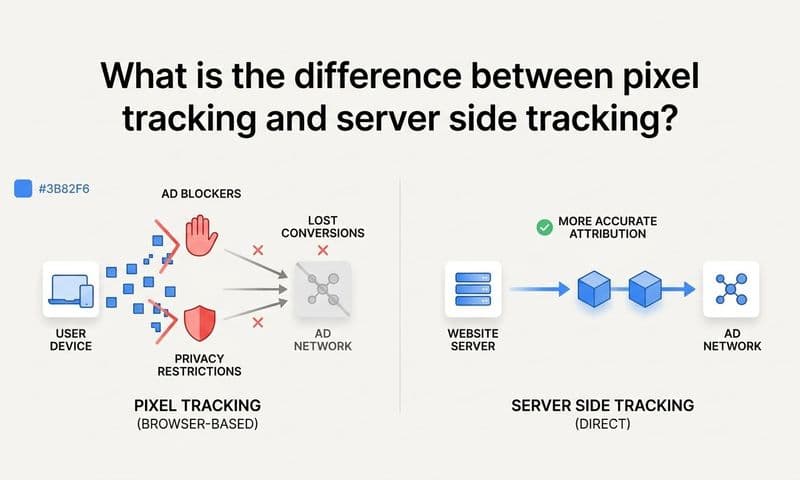
Browser-based tracking is dying a slow, painful death. Ad blockers strip pixels. iOS privacy settings block conversion events. Safari's Intelligent Tracking Prevention kills cookies after seven days. The result? You're making budget decisions based on incomplete data, and your ad platforms are optimizing toward ghosts.
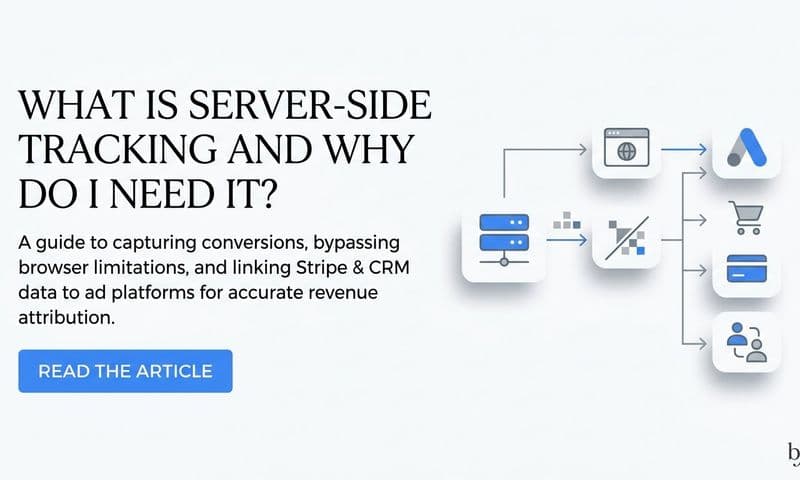
Server-side tracking solves this by processing conversion data on your servers before sending it to ad platforms. Instead of relying on browser pixels that can be blocked, your server communicates directly with Meta, Google, and other platforms through their APIs.
The Strategy Explained
Think of server-side tracking as moving your tracking infrastructure behind a wall that ad blockers and browser restrictions can't touch. When someone converts on your site, your server captures that event, enriches it with additional data from your CRM or database, and then sends it to your ad platforms.
This approach bypasses the browser entirely. No pixel can be blocked because there's no pixel to block. The data flows server-to-server, which means you capture conversions that browser-based tracking would miss completely.
The real power comes from data enrichment. Before sending the conversion event, you can append customer lifetime value, subscription tier, or any other first-party data you've collected. Your ad platforms receive richer signals, which means their algorithms can optimize toward your actual business goals, not just surface-level conversions.
Implementation Steps
1. Set up a server-side tracking infrastructure using Google Tag Manager Server-Side, Segment, or a dedicated attribution platform that handles the technical complexity.
2. Configure your conversion events to fire from your server instead of the browser, ensuring you're sending all required parameters that ad platforms need for attribution.
3. Implement event deduplication logic so you're not double-counting conversions that fire from both browser and server, which would inflate your reported results.
4. Test your implementation thoroughly by comparing server-side events against browser-based tracking for a period, then gradually shift budget allocation as you build confidence in the data.
Pro Tips
Start with your highest-value conversion events first. You don't need to move everything server-side immediately. Focus on purchase events, lead submissions, or whatever drives revenue for your business. Also, make sure you're sending user identification parameters like email hashes or phone number hashes when available. This helps ad platforms match conversions back to the right users, improving attribution accuracy significantly.
2. First-Party Data Collection
The Challenge It Solves
Third-party cookies let advertisers borrow audience data from publishers and platforms. That borrowing arrangement is ending. Without owned data about your customers, you're flying blind. You can't retarget effectively, you can't build lookalike audiences, and you can't personalize experiences based on actual customer behavior.
First-party data collection builds your owned intelligence. It's data you collect directly from customers with their consent, which makes it both privacy-compliant and incredibly valuable for targeting and attribution.
The Strategy Explained
First-party data is any information you collect directly from your customers through their interactions with your business. Email addresses from newsletter signups. Purchase history from your e-commerce platform. Engagement data from your app. Support tickets from your help desk.
The key is creating a unified customer database that connects all these touchpoints. When someone visits your site from a Facebook ad, signs up for your newsletter, makes a purchase, and later contacts support, you need systems that recognize this is the same person moving through different stages of your funnel.
This creates a persistent identifier that works across channels and survives cookie deletion. Even better, it's data you own completely. No platform can take it away, and privacy regulations actually favor this approach because customers have given explicit consent.
Implementation Steps
1. Audit every customer touchpoint where you can ethically collect data: website forms, checkout processes, mobile apps, email interactions, customer service platforms, and loyalty programs.
2. Implement a customer data platform or CRM that unifies these data sources into single customer profiles, using email addresses or phone numbers as primary identifiers.
3. Create value exchanges that incentivize customers to share data willingly: exclusive content for email signups, personalized recommendations for profile completion, early access to sales for loyalty program members.
4. Build progressive profiling into your customer journey so you're collecting data gradually over time rather than overwhelming people with long forms upfront.
Pro Tips
Focus on collecting email addresses and phone numbers first. These are the identifiers that matter most for matching users across platforms and building custom audiences. Make your data collection transparent and valuable. Tell customers exactly what they'll get in exchange for sharing information, and then deliver on that promise. The trust you build here becomes a competitive advantage that compounds over time.
3. Probabilistic Attribution Modeling
The Challenge It Solves
Even with server-side tracking and first-party data, you'll have attribution gaps. Users who don't log in. Cross-device journeys where someone clicks an ad on mobile but converts on desktop. Anonymous browsing sessions that eventually lead to conversions. Deterministic tracking—where you can definitively match a user across touchpoints—only covers part of your customer journey.
Probabilistic attribution fills these gaps using statistical models that identify likely user matches based on contextual signals, even when you don't have a perfect identifier.
The Strategy Explained
Probabilistic attribution analyzes patterns in anonymous user behavior to estimate which touchpoints influenced a conversion. It looks at signals like IP addresses, device types, operating systems, browser fingerprints, timestamps, and browsing patterns to calculate the probability that different sessions belong to the same user.
Picture this: Someone clicks your Facebook ad on their iPhone during their morning commute. Later that day, they visit your site directly on their work laptop and browse product pages. That evening, they convert on their home desktop after clicking a Google ad. Probabilistic modeling analyzes the timing, geographic location, and behavioral patterns to determine these are likely the same person, even without a logged-in identifier connecting the sessions.
The models become more accurate as they process more data. Machine learning algorithms identify patterns that human analysts would miss, continuously refining their probability calculations based on which predictions prove correct.
Implementation Steps
1. Collect as many anonymous signals as possible from your website and ad platforms: device types, browsers, screen resolutions, time zones, referring URLs, and behavioral patterns like pages viewed and time on site.
2. Implement an attribution platform that uses machine learning to analyze these signals and build probabilistic user graphs connecting likely touchpoints.
3. Validate your probabilistic models against deterministic data where you have it, using logged-in user journeys as ground truth to train and refine the algorithms.
4. Layer probabilistic attribution alongside deterministic tracking rather than replacing it, using statistical models to fill gaps while relying on confirmed matches where available.
Pro Tips
Probabilistic attribution works best when combined with other methods in this guide. Use it to complement server-side tracking and first-party data, not replace them. Also, be transparent about probability scores when making decisions. If your model is 95% confident about a match versus 60% confident, weight those attributions differently in your analysis. Understanding confidence levels prevents you from making budget decisions based on statistical noise.
4. Unified ID Solutions and Identity Graphs
The Challenge It Solves
Your customers don't live in silos, but your tracking does. They click an Instagram ad, visit your site, abandon cart, see a retargeting ad on a different device, read your email, and finally convert. Without a way to connect these touchpoints across platforms and devices, you're attributing conversions to the last click and missing the entire journey that led there.
If you're evaluating vendors, our AI Instagram ad generator breakdown can help.
Unified ID solutions create persistent identifiers based on authenticated user data—typically email addresses or phone numbers—that work across platforms, devices, and channels.
The Strategy Explained
Unified IDs work by creating a privacy-compliant identifier from data users have willingly shared. When someone logs into your site with their email, that email gets hashed into an encrypted identifier. This same identifier can be recognized across different platforms and publishers who participate in the unified ID ecosystem.
Major solutions include UID 2.0, LiveRamp's RampID, and The Trade Desk's EUID. Each works slightly differently, but the core concept is the same: create a persistent, privacy-compliant way to recognize users across the open internet without relying on third-party cookies.
The real power comes from the identity graph these systems build. As users interact with different touchpoints, the graph connects those interactions to a single identity. You see the full customer journey from first touch to conversion, even when it spans multiple devices, browsers, and platforms.
Implementation Steps
1. Choose a unified ID solution that aligns with your advertising ecosystem, considering which platforms and publishers your target audience uses most frequently.
2. Implement the technical integration on your website and in your ad platforms, ensuring you're generating and passing unified IDs whenever users authenticate or provide identifying information.
3. Work with your demand-side platform or ad server to activate unified IDs for targeting and measurement, enabling cross-platform frequency capping and attribution.
4. Build processes for refreshing and maintaining ID graphs as users update their information or opt out, ensuring your identity data stays current and compliant.
Pro Tips
Unified IDs work best when you have high login rates or frequent email collection points. If users rarely authenticate on your site, the coverage will be limited. Consider implementing progressive profiling or gated content strategies that give users reasons to log in. Also, don't rely on a single ID solution. The ecosystem is still evolving, and different platforms support different standards. Implementing multiple unified ID solutions increases your coverage across the advertising landscape.
5. Contextual Targeting with Attribution Feedback Loops
The Challenge It Solves
Behavioral targeting is getting harder. Privacy restrictions limit how much you can track individual users across sites. But here's what hasn't changed: people searching for running shoes are probably interested in fitness content. Context still matters, and modern contextual targeting has evolved far beyond simple keyword matching.
The challenge is proving it works. Old-school contextual advertising was a black box. You placed ads next to relevant content and hoped for the best. Modern contextual targeting closes this loop by connecting placements to actual conversion outcomes.
The Strategy Explained
Today's contextual targeting uses AI to understand content at a semantic level. It analyzes sentiment, topics, entities mentioned, and even the emotional tone of articles and videos. An ad for financial services might target content about career advancement, not just articles that mention "investing" or "money."
The breakthrough is the attribution feedback loop. When you place ads contextually, you track which contexts drive conversions. Maybe ads on articles about sustainable living convert better than ads on general environmental news. Your attribution system feeds this intelligence back to your contextual targeting, creating a continuous optimization cycle.
This approach respects privacy because you're targeting content, not individuals. But it still delivers performance because you're using conversion data to refine which contexts actually drive results for your business.
Implementation Steps
1. Partner with contextual targeting platforms that use semantic analysis and machine learning to categorize content beyond basic keywords, ensuring your ads appear in genuinely relevant environments.
2. Implement tracking that captures contextual signals alongside conversion data: which topics, sentiments, and content categories your converting users engaged with.
3. Build reporting dashboards that show conversion rates by contextual category, identifying which content environments drive the highest-quality traffic for your business.
4. Create feedback mechanisms that automatically adjust bids or exclude low-performing contexts based on conversion data, treating contextual targeting as a performance channel rather than just brand safety.
Pro Tips
Don't abandon audience targeting completely. Use contextual targeting to find new customers while using first-party data for retargeting known users. This combination gives you both reach and precision. Also, test contextual categories that aren't obvious fits. Sometimes adjacent interests convert better than direct matches because you're reaching people earlier in their consideration journey when competition is lower.
6. Clean Room Data Collaboration
The Challenge It Solves
You have customer data. Publishers have audience data. Ad platforms have conversion data. But privacy regulations make it risky to share raw user information between these parties. Traditional data sharing exposes you to compliance risk and erodes customer trust.
Clean rooms solve this by creating privacy-preserving environments where different parties can match and analyze data without exposing individual user records to each other.
The Strategy Explained
A clean room is a secure environment where advertisers and publishers upload encrypted customer data. The clean room matches records between the data sets without revealing raw information to either party. You learn aggregate insights about overlapping audiences without seeing individual user details.
For example, you upload your customer email list (hashed and encrypted). A publisher uploads their subscriber list. The clean room identifies matches and tells you what percentage of your customers are also their subscribers, what content categories those customers engage with, and how they respond to different ad formats. But neither party sees the other's raw data.
Major platforms like Google Ads Data Hub and Meta's Advanced Analytics operate as clean rooms. Independent solutions like InfoSum and Habu offer neutral environments for brands and publishers to collaborate without platform intermediation.
Implementation Steps
1. Identify data collaboration opportunities where matching your customer data with publisher or platform data would unlock targeting or measurement insights you can't get elsewhere.
2. Choose clean room solutions that match your use case: platform clean rooms for campaign measurement, independent clean rooms for direct publisher relationships.
3. Prepare your first-party data for clean room analysis by hashing personally identifiable information and ensuring data quality, since match rates depend on accurate, standardized data formatting.
4. Define specific questions you want to answer before running clean room analyses, focusing on actionable insights like audience overlap, conversion lift, or optimal frequency caps.
Pro Tips
Clean rooms require high-quality first-party data to work well. If your email addresses are outdated or your customer records are fragmented, match rates will be low and insights will be limited. Invest in data hygiene before diving into clean room collaborations. Also, start with platform clean rooms since they're easier to implement and often free for advertisers. Once you understand the methodology, expand to independent clean rooms for more sophisticated publisher partnerships.
7. AI-Powered Cross-Channel Attribution
The Challenge It Solves
Multi-touch attribution has always been complex. Someone sees a Facebook ad, clicks a Google ad, reads your email, and converts after a retargeting campaign. Which channel gets credit? Traditional attribution models use simple rules: first touch, last touch, linear, or time decay. But these rules don't reflect reality.
AI-powered attribution uses machine learning to model conversion probability across every touchpoint, accounting for interactions that rule-based models miss completely. Even better, it feeds enriched signals back to ad platforms to improve their optimization algorithms.
The Strategy Explained
AI attribution platforms analyze patterns in your first-party data to understand which touchpoint combinations drive conversions. Instead of applying predetermined rules, machine learning models calculate the actual influence each interaction had on the final outcome.
The models identify non-obvious patterns. Maybe users who see three Facebook ads before clicking a Google ad convert at twice the rate of users who only see one Facebook ad. Or perhaps email opens don't directly drive conversions but significantly increase the conversion rate of subsequent ad clicks. AI attribution quantifies these relationships.
But here's where it gets powerful: these platforms send enriched conversion events back to Meta, Google, and other ad platforms. Instead of just telling Facebook "this user converted," you send "this user converted with a 78% probability of becoming a high-value customer based on their engagement pattern." Ad platform algorithms use these enriched signals to find more users who match high-value patterns, improving targeting precision.
Implementation Steps
1. Implement a platform that captures conversion data from all your marketing channels and uses machine learning to model attribution, ensuring it integrates with your ad platforms for signal enrichment.
2. Connect your CRM or customer database so the AI can analyze which touchpoint combinations lead to high lifetime value customers, not just immediate conversions.
3. Configure conversion sync to send enriched events back to ad platforms, including predicted customer value, conversion probability scores, and any other signals that help algorithms optimize toward your business goals.
4. Monitor how enriched signals impact campaign performance over time, comparing conversion rates and customer quality before and after implementing AI-powered attribution.
Pro Tips
AI attribution gets smarter with more data. Don't expect perfect insights in the first week. The models need time to process enough conversions to identify meaningful patterns. Also, focus on enriching signals for your highest-value conversions first. If you're sending enriched data for every micro-conversion, you're adding noise. Prioritize the events that actually matter for your business, and let the AI optimize toward those outcomes.
Putting It All Together: Your Cookie-Less Tracking Roadmap
Start with server-side tracking as your foundation. It's the most immediate impact for most advertisers, solving browser-based tracking limitations that are costing you visibility right now. You'll capture conversions that ad blockers and privacy settings currently hide, giving you a more complete picture of campaign performance.
Layer in first-party data collection to build your owned intelligence. Every email address, every authenticated session, every customer interaction becomes an asset that strengthens your targeting and attribution. This is the moat that protects you from future platform changes and privacy regulations.
Then add AI-powered attribution to connect every touchpoint to actual revenue. This is where cookie-less tracking becomes better than cookies ever were. You're not just seeing which ads got clicked—you're understanding which combinations of touchpoints drive high-value customers and feeding that intelligence back to ad platforms for continuous optimization.
The advertisers winning in 2026 aren't mourning cookies. They're building tracking systems that are more accurate, more privacy-compliant, and more resilient than anything cookies could deliver. Platforms like Cometly help you implement these strategies without building everything from scratch, capturing every touchpoint and using AI to identify what's actually driving revenue across your entire marketing mix.
The question isn't whether to adopt these methods. It's how quickly you can implement them before your competitors do. While others are still clinging to dying cookie-based tracking, you can be building the infrastructure that defines advertising for the next decade.
Ready to elevate your marketing game with precision and confidence? Discover how Cometly's AI-driven recommendations can transform your ad strategy. Get your free demo today and start capturing every touchpoint to maximize your conversions.