Your customer clicks a Facebook ad on their phone during lunch, researches your product on their laptop that evening, and converts three days later on their tablet. Without cross-device tracking, you see three separate anonymous users—and your attribution is completely wrong.
This isn't a hypothetical scenario. The average buyer now uses 3-4 devices before converting, and marketers who can't connect those dots are flying blind. You're either over-crediting last-click channels or under-investing in the touchpoints that actually drive awareness.
The good news? Cross-device tracking has evolved significantly since the cookie-apocalypse began. Server-side methods, identity resolution platforms, and privacy-compliant frameworks now make it possible to see the complete customer journey—without violating user trust or regulatory requirements.
Here are the top cross-device tracking methods that marketing teams are using successfully in 2026. We evaluated each based on accuracy, privacy compliance, implementation complexity, and real-world effectiveness across different business models.
1. Cometly
Best for: Marketing teams running multi-channel paid campaigns who need accurate attribution without browser limitations
Cometly is a server-side attribution platform that tracks complete customer journeys across devices using AI-powered analytics and optimization recommendations.
 9 Best Cross-Device User Tracking Methods for Marketers in 2026
Where This Tool Shines
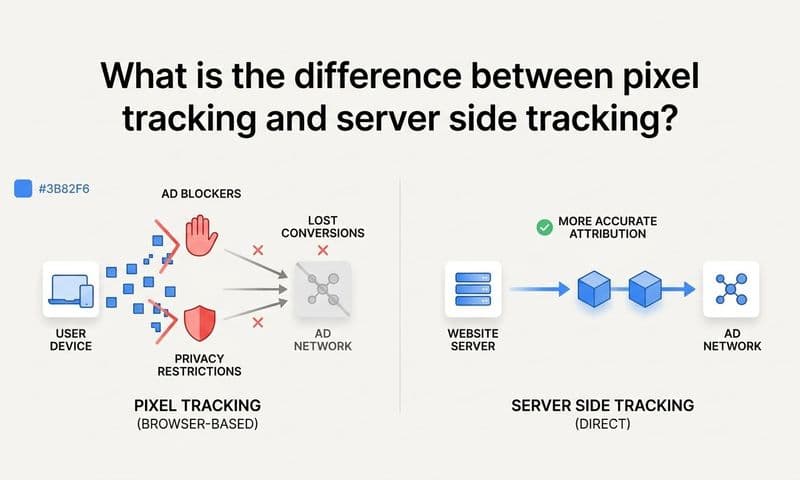
Cometly operates entirely server-side, which means it bypasses the browser restrictions that cripple most tracking methods. When iOS blocks tracking pixels or Chrome deprecates cookies, Cometly keeps working because it captures data at the server level before those limitations apply.
The platform's AI layer analyzes your cross-device attribution data and delivers specific recommendations—like which campaigns to scale or which audiences are converting across multiple touchpoints. This transforms raw tracking data into actionable insights that directly improve campaign performance.
Key Features
Server-Side Tracking: Captures conversion data independently of browser restrictions and ad blockers.
Multi-Touch Attribution: Maps every touchpoint across devices to show the complete path to conversion.
AI Campaign Recommendations: Identifies high-performing ads and suggests optimization opportunities based on cross-device behavior patterns.
Conversion Sync: Feeds enriched conversion data back to Meta, Google, and other ad platforms to improve their algorithm targeting.
Real-Time Journey Visualization: Shows how individual users move between devices and channels throughout their buying journey.
Best For
Marketing teams and agencies managing significant ad spend across multiple platforms who need reliable attribution despite privacy restrictions. Particularly valuable for businesses with longer sales cycles where customers research across devices before converting.
Pricing
Custom pricing based on monthly ad spend volume. Demo available to evaluate fit before commitment.
2. Deterministic ID Matching
Best for: Businesses with authenticated user experiences where customers log in across devices
Deterministic ID matching uses login-based authentication to link devices with 100% accuracy when users sign into your platform.
 9 Best Cross-Device User Tracking Methods for Marketers in 2026
Where This Tool Shines
This is the gold standard for accuracy because it relies on actual user authentication rather than probabilistic guessing. When someone logs into your app on their phone and later on their laptop, you know with absolute certainty it's the same person.
The method is inherently privacy-compliant because users actively authenticate—there's no shadowy tracking happening behind the scenes. This makes it particularly valuable in regulated industries where data accuracy and consent documentation are critical.
Key Features
100% Match Accuracy: No statistical inference—you're tracking actual authenticated sessions with zero error rate.
Universal Device Coverage: Works across smartphones, tablets, laptops, smart TVs, and any device with login capability.
Privacy-First Design: Users explicitly consent by logging in, creating clear audit trails for compliance.
SSO Integration: Connects with single sign-on providers like Google, Microsoft, and Okta for seamless implementation.
Persistent Identity: User identity remains consistent even as they switch devices or clear cookies.
Best For
SaaS companies, subscription services, financial platforms, and any business where users naturally create accounts and log in regularly. Less effective for anonymous browsing scenarios or businesses with low authentication rates.
Pricing
Implementation costs vary based on your authentication infrastructure. No direct licensing fees for the method itself, though you may need developer resources for integration.
3. Segment (CDP)
Best for: Companies building comprehensive customer data strategies with identity resolution across hundreds of tools
Segment is a customer data platform that collects, unifies, and routes user data across your entire marketing stack while resolving identities across devices.
 9 Best Cross-Device User Tracking Methods for Marketers in 2026
Where This Tool Shines
Segment acts as the central nervous system for your customer data, collecting events from every touchpoint and resolving them into unified user profiles. When someone browses on mobile then converts on desktop, Segment automatically merges those sessions into a single customer record.
The platform's 400+ pre-built integrations mean you can connect virtually any tool in your stack—from analytics to email to advertising platforms—and maintain consistent identity resolution across all of them. This eliminates the data silos that typically break cross-device tracking.
Key Features
Identity Resolution Engine: Automatically merges anonymous and known user sessions into unified profiles across devices.
400+ Native Integrations: Connects with your entire marketing and analytics stack through pre-built connectors.
Real-Time Profile Unification: Updates customer profiles instantly as new device interactions occur.
Privacy Controls: Built-in consent management and data governance tools for GDPR and CCPA compliance.
Predictive Traits: Uses machine learning to enrich profiles with behavioral predictions and audience segments.
Best For
Mid-market to enterprise companies with complex marketing stacks who need a single source of truth for customer data. Particularly valuable when you're managing dozens of tools and struggling with inconsistent user identification.
Pricing
Free tier available for up to 1,000 monthly tracked users. Team plan starts at $120/month. Business and enterprise pricing scales with data volume and feature requirements.
4. Probabilistic Device Graphing
Best for: Reaching anonymous users at scale when deterministic matching isn't possible
Probabilistic device graphing uses statistical algorithms to infer device relationships based on signals like IP address, location patterns, and browsing behavior.
 9 Best Cross-Device User Tracking Methods for Marketers in 2026
Where This Tool Shines
This method fills the gap when users don't log in. By analyzing patterns—like two devices that consistently connect from the same home WiFi network during similar time windows—the algorithm infers they likely belong to the same person.
The approach scales to anonymous traffic, which means you can track cross-device behavior for prospects who haven't yet identified themselves. This is particularly valuable for top-of-funnel attribution where most users are still anonymous browsers.
Key Features
Anonymous User Tracking: Works without requiring login or authentication from users.
Multi-Signal Analysis: Combines IP address, geolocation, device characteristics, and behavioral patterns for matching.
Continuous Graph Updates: Device relationships are recalculated regularly as new data becomes available.
Broad Reach: Can track users across the open web, not just within your owned properties.
Confidence Scoring: Assigns probability scores to matches so you can filter by accuracy threshold.
Best For
Media companies, publishers, and advertisers who need to understand cross-device behavior for large anonymous audiences. Works well for display advertising and programmatic campaigns where login rates are low.
Pricing
Enterprise pricing model, typically charged on a CPM basis for the volume of impressions or events tracked. Contact for custom quote based on scale.
5. Unified ID 2.0 (UID2)
Best for: Publishers and advertisers participating in industry-wide identity frameworks
Unified ID 2.0 is an open-source identity framework that creates encrypted, interoperable identifiers from email addresses for cross-device targeting and measurement.
 9 Best Cross-Device User Tracking Methods for Marketers in 2026
Where This Tool Shines
UID2 represents a collaborative industry solution to the cookie-apocalypse. Instead of each company building proprietary identity graphs, participating publishers and advertisers use a shared framework where encrypted email addresses become the common identifier.
The framework is privacy-first by design—users can opt out at any time, and the encryption ensures raw email addresses aren't exposed across the ecosystem. As adoption grows, it's becoming a viable alternative to third-party cookies for programmatic advertising.
Key Features
Email-Based Identity: Creates persistent identifiers from hashed and encrypted email addresses.
Interoperable Framework: Works across all participating publishers, DSPs, and SSPs in the ecosystem.
User Control: Consumers can opt out through a centralized transparency portal.
Privacy-Preserving Encryption: Raw email addresses are never exposed to unauthorized parties.
Open-Source Foundation: Governed by The Trade Desk but open for industry participation.
Best For
Publishers with authenticated audiences and advertisers running programmatic campaigns who want to participate in the post-cookie identity ecosystem. Requires email capture infrastructure and integration with participating ad tech platforms.
Pricing
Free to implement as an open-source framework. Integration costs depend on your technical resources and ad tech stack compatibility.
6. First-Party Data Enrichment (Clearbit)
Best for: B2B companies enriching anonymous website visitors with firmographic data
Clearbit enriches your first-party data by appending company information, technographic signals, and intent data to help identify and track cross-device users.
 9 Best Cross-Device User Tracking Methods for Marketers in 2026
Where This Tool Shines
Clearbit excels at revealing the companies behind anonymous website visitors. When someone from Acme Corp visits your site on their work laptop, Clearbit identifies the company even if the person doesn't fill out a form. Later, when someone from the same company visits on mobile, you can connect those sessions.
The platform continuously enriches your CRM records with updated job titles, company size, technology stack, and intent signals—creating a richer profile that helps with cross-device attribution in B2B contexts where company identity matters more than individual identity.
Key Features
IP-to-Company Identification: Reveals which companies are visiting your site based on IP address, even for anonymous visitors.
Real-Time Enrichment: Appends firmographic and technographic data to leads instantly as they're captured.
Intent Signal Detection: Identifies companies showing buying intent based on their research behavior across the web.
CRM Integration: Automatically enriches records in Salesforce, HubSpot, and other CRMs.
Technographic Data: Shows what technologies companies use, helping with targeting and personalization.
Best For
B2B SaaS companies, enterprise software vendors, and any business selling to companies rather than individual consumers. Most effective when combined with account-based marketing strategies.
Pricing
Free tier available with limited enrichment credits. Paid plans start at $99/month for small teams, scaling to custom enterprise pricing for high-volume usage.
7. AppsFlyer (MMP)
Best for: Mobile-first businesses tracking app installs and cross-device journeys from mobile to web
AppsFlyer is a mobile measurement partner that specializes in attributing app installs and tracking user journeys that span mobile apps and web properties.
 9 Best Cross-Device User Tracking Methods for Marketers in 2026
Where This Tool Shines
AppsFlyer solves the uniquely complex problem of mobile attribution, where iOS privacy restrictions have made traditional tracking nearly impossible. The platform integrates with Apple's SKAdNetwork while also providing deterministic tracking for Android and cross-device measurement when users move from app to web.
Deep linking technology ensures that when someone clicks an ad on mobile, installs your app, then later visits your website on desktop, you can track that complete journey. This is critical for mobile-first businesses where the customer experience naturally spans devices.
Key Features
SKAdNetwork Integration: Works within Apple's privacy framework to provide iOS attribution despite ATT restrictions.
Deep Linking: Maintains user context as they move between apps, web, and different devices.
Web-to-App Attribution: Tracks journeys that start on mobile web and convert in-app, or vice versa.
Fraud Protection: Built-in detection for install fraud, click flooding, and attribution manipulation.
Audience Segmentation: Creates cohorts based on cross-device behavior for retargeting and personalization.
Best For
Mobile app developers, gaming companies, e-commerce apps, and any business where mobile app engagement is central to the customer experience. Essential for companies spending heavily on mobile app install campaigns.
Pricing
Free tier available for up to 10,000 conversions per month. Paid plans scale with conversion volume, starting around $0.06 per attributed conversion with volume discounts.
8. Google Privacy Sandbox
Best for: Future-proofing attribution as Chrome deprecates third-party cookies
Google Privacy Sandbox is a collection of browser-based APIs that enable interest-based advertising and attribution without third-party cookies or cross-site tracking.
Where This Tool Shines
Privacy Sandbox represents Google's answer to the cookie-apocalypse. Instead of tracking individuals across sites, the APIs enable targeting and measurement at the browser level using privacy-preserving techniques like differential privacy and aggregated reporting.
The Topics API replaces behavioral targeting by allowing advertisers to reach users interested in broad categories—without revealing specific browsing history. The Attribution Reporting API enables conversion measurement across sites without exposing individual user journeys. As Chrome holds significant browser market share, these APIs will become increasingly important for cross-device tracking.
Key Features
Topics API: Enables interest-based targeting using broad content categories instead of granular user tracking.
Attribution Reporting API: Measures conversions across sites using aggregated, privacy-preserving reports.
FLEDGE for Remarketing: Allows on-device ad auctions for remarketing without sharing browsing data with third parties.
Chrome-Native Implementation: Built directly into the browser, no additional tracking scripts required.
Privacy-Preserving by Design: Uses techniques like differential privacy to prevent individual user identification.
Best For
Advertisers and publishers preparing for the post-cookie era who want to maintain targeting and measurement capabilities in Chrome. Most relevant for businesses with significant Chrome user bases and programmatic advertising strategies.
Pricing
Free—these APIs are built into Chrome browser at no cost. Implementation requires developer resources to integrate with the new APIs.
9. CRM-Based Matching (HubSpot/Salesforce)
Best for: Connecting anonymous website behavior to known CRM contacts across devices
CRM-based matching uses your CRM data to identify anonymous website visitors as known contacts and track their cross-device engagement patterns.
Where This Tool Shines
Your CRM already contains rich customer data—email addresses, phone numbers, company information, and purchase history. CRM-based tracking leverages this first-party data to identify when known contacts visit your website, even if they don't fill out a form.
When someone clicks a link in your email campaign on their phone, then visits your website later on their laptop, the CRM can connect both sessions to the same contact record. This creates a unified view of engagement that spans devices and channels, all within the platform your sales team already uses.
Key Features
Contact-to-Visitor Matching: Automatically identifies website visitors who match existing CRM records.
Email Click Tracking: Tracks when contacts click email links and continues tracking their cross-device website journey.
Form Submission Resolution: Instantly connects form fills to existing contacts, merging device histories.
Sales and Marketing Alignment: Gives sales teams visibility into cross-device research behavior before they reach out.
Behavioral Scoring: Updates lead scores based on cross-device engagement patterns.
Best For
B2B companies with established CRM databases who want to track how known contacts research across devices before converting. Particularly effective for businesses with active email marketing programs and inside sales teams.
Pricing
HubSpot offers a free CRM with basic tracking. Marketing Hub with advanced tracking features starts at $800/month. Salesforce Marketing Cloud pricing varies by edition and feature requirements.
Choosing Your Cross-Device Tracking Stack
Here's the reality: no single method captures everything. The most effective approach combines multiple tracking methods based on your business model and data maturity.
For most marketing teams running paid campaigns, server-side tracking provides the most reliable foundation. Cometly's approach bypasses browser restrictions entirely, which means you maintain accurate attribution even as privacy regulations tighten. Layer in deterministic matching for your logged-in users, and you've covered the majority of your trackable journeys.
If you're in B2B, CRM-based matching through HubSpot or Salesforce connects website behavior to sales pipeline data—giving you attribution that actually ties to revenue. Enrich that with Clearbit's firmographic data, and you can track accounts across devices even when individuals remain anonymous.
Mobile-first businesses need MMP integration. AppsFlyer handles the complex world of app attribution, especially on iOS where traditional tracking breaks down. Combine it with web analytics, and you can track the complete app-to-web journey.
The key is starting with a strong foundation—server-side tracking—then adding identity resolution methods as your first-party data strategy matures. Don't try to implement everything at once. Build incrementally, validate accuracy at each step, and prioritize methods that align with how your customers actually behave.
As third-party cookies disappear completely, the teams that win will be those who invested early in first-party data infrastructure and server-side tracking. The good news? You don't need to guess which devices belong to which users. You just need the right combination of methods working together.
Ready to elevate your marketing game with precision and confidence? Discover how Cometly's AI-driven recommendations can transform your ad strategy—Get your free demo today and start capturing every touchpoint to maximize your conversions.