Modern marketers face an impossible puzzle: customers interact with your brand across Facebook, Google, TikTok, email, and your website before converting, but each platform claims credit for the same sale. Facebook says it drove 200 conversions, Google claims 150, and your CRM shows only 180 actual sales.
This attribution chaos isn't just frustrating—it's costing you money. Without accurate cross-platform analytics, you're scaling the wrong campaigns, cutting budgets from your best-performing channels, and missing the customer journey insights that could double your ROI.
The solution lies in sophisticated cross-platform analytics tools that track customers across every touchpoint, device, and platform. These tools connect the dots between your marketing efforts and actual revenue, giving you the clarity needed to make confident scaling decisions.
Here are the leading cross-platform analytics tools that solve the attribution puzzle, each offering unique approaches to tracking, measuring, and optimizing your multi-channel marketing performance.
1. Cometly
Best for: Marketers seeking AI-powered attribution with real-time optimization recommendations
Cometly is a marketing attribution software that tracks, analyzes, and optimizes ad campaigns with AI-powered insights, providing accurate attribution data to measure conversions and revenue from every marketing source.
 8 Best Cross Platform Analytics Tools To Solve Attribution Chaos
Where This Tool Shines
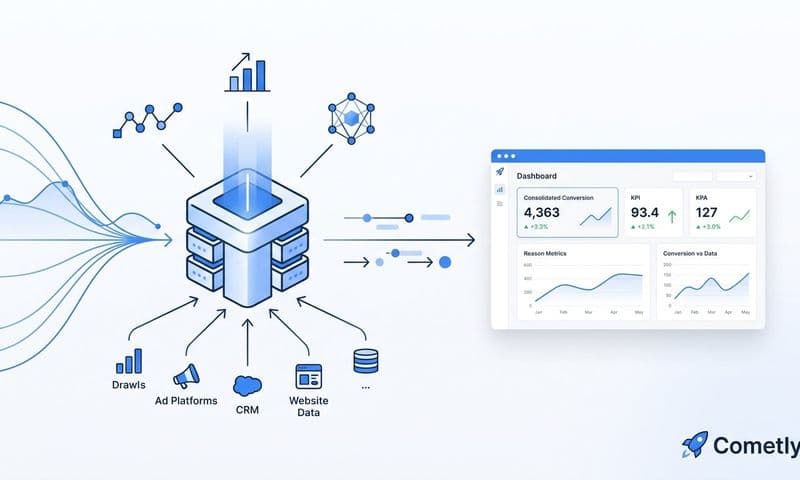
Cometly excels at capturing every customer touchpoint across your entire marketing ecosystem, from initial ad click through CRM events and beyond. The platform's AI engine continuously analyzes this complete data picture to identify high-performing ads and campaigns across every channel you're running.
What sets Cometly apart is its focus on actionable recommendations rather than just data reporting. The AI doesn't just show you what happened—it tells you specifically which campaigns to scale and where to allocate budget for maximum ROI. This approach transforms attribution from a reporting exercise into a strategic growth tool.
Key Features & Capabilities
Complete Journey Tracking: Monitors every touchpoint from initial ad click through final conversion and post-purchase behavior, creating a comprehensive view of your marketing effectiveness.
AI-Powered Recommendations: Identifies top-performing campaigns and suggests specific optimization strategies based on continuous analysis of your attribution data.
Server-Side Tracking: Bypasses iOS limitations and cookie restrictions by sending data directly from your server, ensuring accurate data collection in the privacy-focused era.
Multi-Touch Attribution: Compares different attribution models to understand true campaign impact and see which touchpoints contribute most to conversions.
Conversion Sync: Feeds enriched data back to Meta, Google, and other platforms to improve their AI targeting and optimization algorithms.
Real-Time Analytics: Provides instant insights for quick campaign adjustments and optimization decisions without waiting for delayed reporting.
CRM Integration: Connects marketing data with sales outcomes for complete ROI visibility across your entire customer lifecycle.
Best For / Ideal Users
Perfect for digital marketing agencies, e-commerce brands, and growing businesses running multi-platform campaigns who need accurate attribution data to make confident scaling decisions.
Particularly valuable for marketers frustrated with platform-specific reporting discrepancies and those seeking AI-driven optimization insights rather than just raw data dumps.
Ideal for teams managing significant paid advertising budgets across Meta, Google, TikTok, and other platforms where attribution accuracy directly impacts scaling decisions.
Pricing
Starts with a free trial, with plans scaling based on tracked conversions and advanced features needed for your specific attribution requirements.
2. Google Analytics 4
Best for: Businesses wanting comprehensive free analytics with advanced machine learning insights
Google Analytics 4 represents Google's next-generation analytics platform, built specifically for cross-platform measurement in a privacy-focused world where traditional cookie-based tracking is becoming obsolete.
 10 Best Enterprise Channel Analytics Software To Maximize Marketing ROI
Where This Tool Shines
GA4 excels at unifying web and app data into a single customer view, using machine learning to fill data gaps caused by privacy restrictions and cookie limitations. Unlike its predecessor Universal Analytics, GA4 uses event-based tracking that captures user interactions across your entire digital presence—from website visits to mobile app usage—creating a complete picture of customer behavior.
The platform's predictive metrics help marketers understand future customer behavior patterns, while enhanced measurement automatically tracks key interactions like scroll depth, video engagement, and file downloads without requiring additional technical setup or custom code implementation.
Key Features & Capabilities
Cross-Platform Tracking: Unified measurement across websites, iOS and Android apps, and offline touchpoints in a single property.
Machine Learning Insights: Predictive metrics including purchase probability, churn probability, and revenue predictions powered by Google's AI.
Privacy-Centric Design: Built for cookieless future with consent mode integration and modeling to fill data gaps.
Enhanced Measurement: Automatic tracking of scrolls, outbound clicks, site search, video engagement, and file downloads.
Attribution Modeling: Compare data-driven, last-click, first-click, linear, time decay, and position-based attribution models.
BigQuery Integration: Export raw event-level data for advanced custom analysis and data warehouse integration.
Audience Builder: Create dynamic segments based on predicted behavior, lifetime value, and complex user properties.
Best For / Ideal Users
Perfect for businesses of all sizes seeking robust analytics capabilities without budget constraints, especially those already invested in the Google ecosystem with Google Ads or Google Marketing Platform tools.
For step-by-step instructions, see our guide on how to make UGC ads with AI.
Particularly valuable for companies prioritizing data ownership and requiring custom analysis capabilities through BigQuery exports. The free tier provides enterprise-grade features that many paid platforms charge for, making it ideal for growing businesses with technical resources to handle the implementation.
Pricing
Completely free for standard implementation, with optional Google Analytics 360 available for enterprise organizations requiring higher data limits, advanced features, and dedicated support.
3. Adobe Analytics
Best for: Enterprise organizations requiring advanced segmentation and real-time personalization capabilities
Adobe Analytics delivers enterprise-grade cross-platform measurement with sophisticated analysis capabilities and seamless integration across the Adobe Experience Cloud ecosystem.
Where This Tool Shines
Adobe Analytics excels in complex customer journey analysis, offering advanced segmentation capabilities that go far beyond basic demographic filters. The platform's real-time processing enables immediate personalization decisions across all customer touchpoints.
The platform's robust attribution modeling helps enterprises understand the true impact of each marketing touchpoint across their entire customer lifecycle and multiple brand portfolios. This depth of analysis makes it particularly valuable for organizations managing complex customer relationships across numerous channels and properties.
Key Features & Capabilities
Advanced Segmentation: Create complex audience segments based on behavior, demographics, and predictive models with unlimited breakdown dimensions.
Real-Time Processing: Instant data processing enables immediate personalization and optimization decisions across all customer touchpoints.
Cross-Channel Attribution: Sophisticated modeling across all digital and offline touchpoints with algorithmic attribution using machine learning.
Cohort Analysis: Track customer groups over time to understand retention and lifetime value patterns across different user segments.
Anomaly Detection: AI-powered alerts automatically identify unusual patterns in your data before they impact business outcomes.
Data Warehouse Integration: Connect with enterprise data systems for comprehensive analysis and custom reporting capabilities.
Custom Variables: Track unlimited custom metrics specific to your business requirements without technical limitations.
Best For / Ideal Users
Perfect for large enterprises with complex customer journeys, multiple brands, and dedicated analytics teams. The platform requires significant technical resources for implementation and ongoing management.
Ideal for organizations requiring advanced data governance, real-time personalization capabilities, and deep integration with other Adobe marketing tools. Companies with existing Adobe Experience Cloud investments gain maximum value from the unified ecosystem.
Pricing
Enterprise-level pricing with custom quotes based on data volume, number of report suites, and specific feature requirements for your organization.
4. Mixpanel
Best for: Product-focused companies tracking detailed user behavior across web and mobile applications
Mixpanel is a product analytics platform that tracks specific user actions rather than just pageviews, providing granular insights into how people interact with your digital products across every platform and device.
 8 Best Cross Platform Analytics Tools To Solve Attribution Chaos
Where This Tool Shines
Mixpanel excels at event-based tracking, which means it monitors the specific actions users take—button clicks, feature usage, form submissions, video plays—rather than simply recording page visits. This granular approach reveals exactly how users engage with your product across web and mobile platforms.
The platform's cohort analysis capabilities help product teams understand retention patterns by grouping users based on shared behaviors or characteristics. You can track how different user segments engage over time, identify which features drive long-term retention, and spot early warning signs of churn before users leave.
Key Features & Capabilities
Event-Based Tracking: Monitor any user action as a custom event with detailed properties for context.
Cross-Platform User Profiles: Unified view connecting user behavior across web, iOS, Android, and other touchpoints.
Funnel Analysis: Visualize multi-step conversion processes and identify exactly where users drop off.
Cohort Analysis: Track user groups over time to measure retention, engagement, and behavior evolution.
A/B Testing Integration: Built-in experimentation tools to test features and measure impact on key metrics.
Real-Time Data: Instant insights enable immediate product decisions and rapid iteration cycles.
Custom Dashboards: Flexible reporting tailored to your specific product metrics and team KPIs.
Best For / Ideal Users
Ideal for SaaS companies, mobile app developers, and product-focused organizations that need detailed user behavior insights. Perfect for product managers and growth teams who prioritize feature adoption, user engagement, and retention optimization over traditional marketing attribution metrics.
Works best for teams with technical resources to implement event tracking and a clear product analytics strategy focused on understanding how users interact with specific features and functionality.
Pricing
Free tier available for up to 20 million monthly events, with paid plans scaling based on tracked events and advanced features like group analytics and data pipelines.
5. HubSpot Analytics
Best for: Growing businesses seeking integrated marketing, sales, and customer analytics in one unified platform
HubSpot Analytics provides comprehensive cross-platform insights within an all-in-one marketing and sales ecosystem, making it ideal for businesses wanting unified customer data without managing multiple tools.
Where This Tool Shines
HubSpot Analytics excels at connecting marketing activities directly to sales outcomes, providing clear ROI visibility across all channels and campaigns. The platform's strength lies in its integrated approach, where marketing analytics, sales data, and customer service interactions create a complete picture of customer relationships and revenue attribution throughout the entire business lifecycle.
What sets HubSpot apart is the contact timeline feature, which displays every interaction a prospect or customer has had with your business—from email opens and website visits to sales calls and support tickets. This unified view eliminates the data silos that plague businesses using separate tools for marketing, sales, and service.
Key Features & Capabilities
Multi-Touch Attribution: Track customer journeys across all marketing touchpoints from first interaction to final conversion.
Revenue Attribution: Connect marketing activities directly to closed deals and actual revenue generated.
Campaign Analytics: Comprehensive performance tracking across email, social media, ads, and content marketing.
Contact Timeline: Complete interaction history for every prospect and customer in one chronological view.
Custom Reports: Build dashboards specific to your business metrics and KPIs without technical expertise.
Marketing ROI: Calculate return on investment for individual campaigns and channels with revenue data.
Sales Analytics Integration: Unified view of marketing and sales performance metrics for complete funnel visibility.
Best For / Ideal Users
Perfect for small to medium businesses using HubSpot's CRM or marketing tools, especially those wanting to align marketing and sales teams around shared metrics and goals.
Particularly valuable for companies tired of juggling multiple disconnected tools and seeking a single source of truth for customer data. The platform works best when you're committed to the HubSpot ecosystem rather than using it alongside competing CRM or marketing automation tools.
Pricing
Free tier available with basic analytics features, paid plans scale with contact database size and advanced functionality needs.
6. Segment
Best for: Technical teams building custom analytics infrastructure with multiple tool integrations and data destinations
Segment functions as the data infrastructure layer that sits between your customer touchpoints and your analytics tools, collecting data once and distributing it consistently across your entire technology stack.
 8 Best Cross Platform Analytics Tools To Solve Attribution Chaos
Where This Tool Shines
Segment excels as a customer data platform that eliminates the complexity of implementing tracking code for every individual analytics and marketing tool. Instead of adding multiple tracking scripts to your website and apps, you implement Segment once, and it handles distribution to all your downstream tools automatically.
This approach solves a critical problem for technical teams: maintaining data consistency across platforms. When each tool collects data independently, discrepancies arise from different tracking implementations, timing issues, and data formatting variations. Segment ensures every tool receives identical, clean data from a single source of truth.
Key Features & Capabilities
Universal Data Collection: Single API captures events from web, mobile, server-side, and cloud applications with consistent formatting.
300+ Integrations: Pre-built connections to analytics platforms, marketing tools, data warehouses, and business intelligence systems.
Real-Time Data Streaming: Events flow instantly to all connected destinations without delays or batch processing.
Identity Resolution: Automatically merges user profiles across devices and sessions to create unified customer views.
Data Governance Controls: Privacy filters, PII blocking, and compliance features ensure data handling meets regulatory requirements.
Custom Transformations: Modify, enrich, or filter data before sending to specific destinations using JavaScript functions.
Audience Builder: Create dynamic user segments based on behavior and send them to advertising and marketing platforms.
Best For / Ideal Users
Ideal for companies with technical resources that need to connect multiple specialized analytics and marketing tools without managing individual integrations. Perfect for organizations running sophisticated marketing technology stacks where data consistency and governance are critical priorities.
Particularly valuable for businesses that frequently add or change tools in their stack, as Segment eliminates the need to re-implement tracking code each time. Engineering teams appreciate the single implementation that scales across their entire toolset.
Pricing
Free tier supports up to 1,000 monthly tracked users with two destinations. Paid plans scale based on monthly tracked users and events processed, with usage-based pricing that grows with your data volume.
7. Amplitude
Best for: Product teams focused on behavioral analytics and user engagement optimization across web and mobile platforms
Amplitude is a digital analytics platform that specializes in understanding how users interact with your product across every touchpoint, using AI-guided insights to drive growth and product optimization decisions.
 8 Best Cross Platform Analytics Tools To Solve Attribution Chaos
Where This Tool Shines
Amplitude excels at behavioral cohort analysis, enabling you to group users based on what they actually do rather than simple demographics. This approach reveals patterns that lead to retention and conversion—like discovering that users who complete three specific actions in their first week are 5x more likely to become long-term customers.
The platform's user journey mapping visualizes the complex paths users take through your product ecosystem. Unlike basic funnel tools that show linear paths, Amplitude reveals the messy reality of how users navigate features, helping you identify unexpected conversion patterns and optimize based on actual behavior rather than assumptions.
Key Features & Capabilities
Behavioral Cohorts: Analyze user groups based on actions taken, revealing which behaviors correlate with retention and conversion.
User Journey Mapping: Visualize complex paths users take through your product to identify optimization opportunities.
Retention Analysis: Understand what keeps users engaged over time with detailed retention curves and cohort comparisons.
Funnel Optimization: Identify specific conversion bottlenecks and measure the impact of product changes on completion rates.
Predictive Analytics: Forecast user behavior and lifetime value using machine learning models trained on your product data.
Cross-Platform Tracking: Create unified user profiles across web, mobile apps, and other touchpoints for complete journey visibility.
Experimentation Platform: Run A/B tests with built-in statistical significance tracking and automated winner detection.
Best For / Ideal Users
Perfect for product managers and growth teams at digital-first companies who need to understand feature adoption and user engagement patterns. Particularly valuable for SaaS businesses and mobile apps where product usage drives retention and revenue.
Ideal for organizations implementing product-led growth strategies where user behavior insights directly inform product development and optimization priorities.
Pricing
Free tier available for up to 10 million monthly events, with paid plans scaling based on monthly tracked users and advanced analytics features like predictive analytics and experimentation tools.
8. Klaviyo Analytics
Best for: E-commerce brands seeking integrated email marketing and comprehensive customer analytics in one platform
Klaviyo Analytics combines powerful customer analytics with email and SMS marketing automation, making it the preferred choice for e-commerce businesses wanting unified customer insights and marketing execution capabilities.
Where This Tool Shines
Klaviyo excels at connecting customer behavior data with marketing automation, enabling highly personalized campaigns based on purchase history, browsing behavior, and engagement patterns. The platform tracks every customer interaction across your store and communication channels, then uses this data to trigger automated campaigns at precisely the right moments.
The platform's predictive analytics help identify high-value customers before they make their next purchase and flag customers at risk of churning. This forward-looking approach lets you optimize marketing spend by focusing resources on customers most likely to convert or those needing retention efforts.
Key Features & Capabilities
Customer Lifetime Value Tracking: Predict and monitor CLV across all marketing channels, helping you identify your most valuable customer segments and allocate budget accordingly.
Behavioral Segmentation: Create dynamic segments that automatically update based on purchase patterns, browsing behavior, email engagement, and custom events from your store.
Cross-Channel Attribution: Track complete customer journeys from email and SMS touchpoints through website visits to final conversions, showing which messages drive revenue.
Predictive Analytics: Machine learning identifies customers likely to churn, make repeat purchases, or become high-value buyers, enabling proactive campaign strategies.
Revenue Tracking: Connect every marketing campaign directly to sales outcomes, showing exactly which emails, SMS messages, and automated flows generate revenue.
E-commerce Integration: Native connections with Shopify, WooCommerce, Magento, and other platforms ensure seamless data flow without technical complexity.
Best For / Ideal Users
Perfect for e-commerce brands, online retailers, and direct-to-consumer companies that want to combine customer analytics with marketing automation in a single platform. The tool works especially well for businesses prioritizing email marketing performance and customer retention strategies.
Ideal for marketing teams that need to understand customer behavior patterns and act on those insights immediately through automated campaigns, without switching between separate analytics and marketing tools.
Pricing
Free tier available for email lists up to 250 contacts, with pricing scaling based on contact count and SMS usage. Paid plans start at accessible rates for growing brands.
Making the Right Choice
The right cross-platform analytics tool depends on your specific attribution challenges and business objectives. If you're running multi-platform ad campaigns and need AI-driven optimization recommendations, Cometly delivers the most comprehensive solution with server-side tracking that bypasses privacy restrictions. For budget-conscious teams wanting robust free analytics, Google Analytics 4 provides machine learning insights and privacy-focused design. Enterprise organizations with complex customer journeys should consider Adobe Analytics for its advanced segmentation and real-time personalization capabilities.
Product-focused companies benefit most from Mixpanel or Amplitude's behavioral analysis, while e-commerce brands find Klaviyo's integrated approach connects customer analytics directly to marketing automation. HubSpot Analytics works best when you need marketing and sales data unified in one platform, and Segment provides the flexibility to build custom analytics infrastructure with multiple tool integrations.
Start by identifying your primary attribution challenge: Are you struggling with platform reporting discrepancies? Need to understand the complete customer journey? Want AI recommendations for scaling campaigns? Your answer points to the right solution.
Ready to solve your attribution puzzle with AI-powered insights and accurate cross-platform tracking? Get your free demo and see how Cometly transforms fragmented campaign data into confident scaling decisions.