A customer journey stage is just a fancy way of saying a distinct phase someone goes through when dealing with your brand. Think of it as moving from "Who are you?" to "Here's my money," and hopefully, to "I'm telling all my friends about this."
These stages are your roadmap for understanding what a customer is thinking and feeling, so you can deliver the right message at the right time—instead of trying to sell them a product before they even know they have a problem.
The Four Core Customer Journey Stages
While every business is a bit different, most customer journeys can be broken down into four foundational stages. Understanding these helps you organize your marketing efforts and measure what's actually working.
Here’s a quick look at the core stages, what your goal is as a marketer, and what's going through your customer's head at each point.
In the Awareness stage, the marketer’s primary goal is to get noticed by the right people. At this point, the customer is just beginning to recognize a problem or need and is asking themselves, “I have a problem or need. What are my options?”
During the Consideration stage, the goal shifts to proving that your solution is the best fit. The customer is actively comparing options and evaluating alternatives, asking, “Which of these options is the best fit for me?”
In the Decision stage, the focus is on closing the deal and securing the sale. The customer is close to converting and wants reassurance, thinking, “Am I confident this is the right choice to buy?”
Finally, in the Retention stage, the objective is to keep customers happy and encourage repeat purchases. After the initial purchase, the customer reflects on their experience and asks, “Did I make the right choice? Should I buy again?”
This simple framework helps you map everything—from the ads you run to the emails you send—to a specific customer mindset. It's the first step to moving beyond chaotic, disconnected marketing and into a structured, effective strategy.
Why Your Customer Journey Is More Complicated Than You Think
 Mapping Every Customer Journey Stage for True Marketing ROI
If you think the customer journey is a clean, straight line from A to B, I've got some bad news. That neat, predictable path is a relic of the past.
Today's journey is much more like a chaotic road trip through a massive city. A potential customer might see your TikTok ad during their commute, search for reviews on their laptop at lunch, get sidetracked by a competitor's email, and then finally land back on your site weeks later after hearing a podcast mention.
They aren't following your perfectly drawn map; they're creating their own messy, unpredictable route.
The Myth of the Linear Path
This new reality makes old-school marketing models dangerously out of touch. While it's common to talk about stages like "Awareness" and "Decision," customers no longer move through them in a straight line. They bounce back and forth, occupy multiple stages at once, and take all sorts of detours.
This chaotic behavior creates some massive headaches for marketers trying to figure out what's actually working. The biggest issues are:
- Fragmented Data: Customer interactions are scattered across dozens of platforms and devices—Google, Meta, TikTok, email, your blog. Trying to connect those dots manually is a nightmare.
- Inaccurate Attribution: Simple models that only credit the last click before a sale are lying to you. They completely ignore all the earlier touchpoints that built trust and interest.
- Wasted Ad Spend: Without a clear picture of the whole journey, you're just throwing money at channels that seem effective on the surface but don't actually contribute to the final sale.
The core problem is visibility. When you can't see the detours, U-turns, and pit stops your customers are making, you can't guide them effectively or understand which roads actually led them to your doorstep.
Getting clear on each customer journey stage is the first step toward getting accurate attribution and making smarter marketing investments. You need to see the full story behind every single conversion.
Our complete guide on customer journey analytics dives deeper into how to piece this complex puzzle together. But for now, let's break down how to map, measure, and master this new reality.
Breaking Down the Four Essential Journey Stages
To really get a handle on the modern customer journey, you have to break it down into manageable phases. While no two paths are ever identical, we can use a reliable framework to make sense of the chaos. Think of these stages less as a rigid sequence and more as distinct mindsets a customer moves through.
Before we dive in, it’s helpful to understand the broader process of consumer decision making that underpins every purchase. This is the foundation that helps organize the countless touchpoints your customers will have with your brand. By mapping their actions to a specific customer journey stage, you can stop just reacting to what they do and start proactively guiding them.
Let's walk through the four fundamental stages every customer experiences: Awareness, Consideration, Decision, and Retention.
Awareness: The Spark of Recognition
The Awareness stage is ground zero. This is where a potential customer first realizes they have a problem or a need. They aren't looking for your product yet; they're just starting to explore a challenge or an opportunity. It's the "I think I have a problem" phase.
Imagine a small e-commerce owner who’s still packing and shipping every order from their garage. They might stumble upon a blog post titled "5 Signs You've Outgrown Your Garage Fulfillment" or see a TikTok ad from a shipping software company. At this point, they aren't comparing solutions—they're just becoming aware that a solution to their growing headache even exists.
Your goal here isn't to sell. It's to educate and connect. The customer is asking, "What are my options?" and your job is to be the helpful resource that gives them an initial answer.
At the Awareness stage, you are planting a seed. The customer isn't ready to buy, but they are open to learning. Your content should focus on their pain points, not your product features.
Common customer actions in this stage look like this:
- Reading blog posts or articles that explore a problem they're facing.
- Watching educational videos or webinars that introduce new concepts or strategies.
- Engaging with social media content that highlights a common challenge.
- Listening to podcast episodes where an expert discusses a relevant topic.
Consideration: The Research Phase
Once a customer fully understands their problem, they enter the Consideration stage. Now, they're actively researching and evaluating different ways to solve it. They’ve moved from "I have a problem" to "How can I solve this problem?" This is where your brand gets put under the microscope and compared to everyone else.
Our e-commerce owner now knows they need a better shipping solution. They'll start searching for terms like "best shipping software for small business" or "Shopify fulfillment integrations." They’re going to read reviews, compare pricing pages, and look at case studies to see how others have solved the same problem.
This is your chance to show them why your solution is the best fit. Your content needs to shift from general education to specific proof that builds trust and showcases what makes you different.
Decision: The Moment of Truth
The Decision stage is the final hurdle before a purchase. The customer has done their homework, narrowed down their options, and is ready to pull the trigger. Their mindset shifts from "Which option is best?" to "Am I confident enough to buy this specific one?"
This is where the smallest details can make or break a sale. For our e-commerce owner, this is the moment they add your software to their cart, sign up for a free trial, or book a demo with your sales team. They are looking for one last bit of reassurance that they're making the right choice.
At this point, you have to remove any and all friction from the buying process. Key activities in the Decision stage often include:
- Requesting a Demo: The customer wants to see the product in action to confirm it meets their needs.
- Starting a Free Trial: They want hands-on experience before committing financially.
- Reading Final Reviews: They look for social proof from recent customers to validate their choice.
- Adding to Cart: The definitive signal of purchase intent, even if the checkout isn't completed immediately.
Your goal is simple: instill confidence and make it easy for them to say "yes." Clear pricing, a dead-simple checkout process, and strong social proof are absolutely critical here.
Retention: The Path to Loyalty
The journey isn't over once the sale is made. The Retention stage kicks off the moment a customer completes their purchase, and it's arguably the most important customer journey stage for long-term growth. The customer is now asking themselves, "Did I make the right decision?"
A happy customer is infinitely more valuable than a new one. In fact, increasing customer retention by just 5% can boost profits by a staggering 25% to 95%. This is where you turn a one-time buyer into a loyal advocate for your brand.
For our e-commerce owner, this means a smooth onboarding process, proactive customer support, and ongoing communication that helps them get the most value from their new software. Post-purchase emails, community forums, and exclusive content all play a role in reinforcing their decision and building a lasting relationship. Strong retention strategies are what ensure your business grows sustainably, powered by a base of happy, repeat customers.
Connecting KPIs to Every Customer Touchpoint
Knowing the stages of the customer journey is one thing. Actually measuring them is a whole different ballgame.
Without clear metrics, you’re basically flying blind. You have no real way of knowing which parts of your strategy are hitting the mark and which are just burning through your budget. By attaching tangible Key Performance Indicators (KPIs) to each customer journey stage, you turn abstract ideas into a data-driven action plan.
This is all about mapping specific customer actions—or touchpoints—to the metrics that tell you if they’re working. For instance, a "like" on a social media post is a touchpoint in the Awareness stage. The KPI? Engagement rate. This simple connection gives you a clear signal of success (or failure) at every single step.
The first move here is building out a detailed customer journey map. This isn't just a flowchart; it's a visual representation of every key touchpoint across the entire customer lifecycle, showing what customers are doing, thinking, and feeling as they move from first hearing about you to becoming a loyal fan. You can find more insights on this in All Things Insights' guide to decoding customer journey mapping.
This map breaks down the four core stages, from that initial spark of Awareness all the way to long-term Retention.
 Mapping Every Customer Journey Stage for True Marketing ROI
What this really drives home is that each stage demands a different approach and, crucially, a different set of measurements. You’re tracking the natural progression from broad, top-of-funnel reach to specific, revenue-driving actions.
Measuring The Awareness Stage
In the Awareness stage, the goal is simple: get noticed. Your future customers are just realizing they have a problem, and you need your brand to be the one they find first. Success here isn’t about sales—it’s about visibility and making a good first impression.
Your touchpoints are your top-of-funnel content and ads, so the KPIs need to reflect how far and wide your message is spreading.
- Common Touchpoints: Blog posts, social media ads (Facebook, TikTok, Instagram), podcast sponsorships, and showing up in organic search results.
- Primary KPIs: Impressions, reach, website traffic, and click-through rate (CTR) on your ads.
- Example: A sponsored post on Instagram is a classic touchpoint. The key metric to watch is its reach—the total number of unique people who saw it.
Tracking The Consideration Stage
Once someone knows you exist, they slide into the Consideration stage. Now, they're actively researching solutions and stacking you up against your competitors. Your job is to build trust and show them you’re the best choice.
The metrics here shift from broad reach to deeper engagement. You’re looking for signs that someone is genuinely interested in what you’re selling.
At this point, you're measuring intent. A website visit is a good start, but someone downloading a case study or spending five minutes on your pricing page? That’s a much stronger signal of a qualified lead.
Common metrics for this phase include:
- Time on Page: How long are they sticking around on your product pages or comparison guides?
- Email Signups: A direct signal that they want to hear more from you.
- Lead Magnet Downloads: Shows they're actively researching the problem you solve.
- Video View Duration: Are they watching your whole product demo or just the first 10 seconds?
Evaluating The Decision Stage
The Decision stage is where the magic happens—the transaction. The customer has done their homework and is ready to pull the trigger. Your objective is straightforward: make buying from you as easy as possible and close the deal.
The KPIs here are all about the money. They’re directly tied to revenue and efficiency. You're measuring not just if people buy, but how effectively you turn prospects into paying customers.
- Common Touchpoints: Checkout pages, sales calls, free trial signups, and demo requests.
- Primary KPIs: Conversion rate, customer acquisition cost (CAC), and cart abandonment rate.
- Example: A customer adds a product to their cart but bounces. The cart abandonment rate is the KPI that screams, "Hey, there's friction in your checkout process that needs fixing!"
Monitoring The Retention Stage
The journey doesn't end at the sale. Now it shifts to Retention. The goal is to keep customers happy, encourage them to buy again, and turn them into your biggest fans. The metrics here are all about loyalty and long-term value.
- Common Touchpoints: Onboarding emails, customer support interactions, and community forums.
- Primary KPIs: Customer lifetime value (CLV), churn rate, and repeat purchase rate.
To give you a clearer picture, let's break down how these pieces fit together.
Key Metrics and Touchpoints Across Customer Journey Stages
This table aligns each stage with its typical touchpoints and the most important KPIs to track. Think of it as your cheat sheet for measuring what matters.
Journey Stage | Common Touchpoints | Primary KPIs | Example Metric |
|---|---|---|---|
Awareness | Social Media Ads, Blogs, SEO | Impressions, Reach, CTR | An ad’s reach on Facebook |
Consideration | Webinars, Case Studies, Email | Time on Page, Lead Magnet Downloads | Number of eBook downloads |
Decision | Pricing Page, Free Trial, Demo | Conversion Rate, CAC, AOV | Conversion rate on the checkout page |
Retention | Onboarding, Support, Community | CLV, Churn Rate, Repeat Purchases | Monthly customer churn rate |
Tying specific KPIs to each stage provides a clear, measurable framework for success.
When you assign specific KPIs to each customer journey stage, you create a playbook for growth. A well-organized marketing KPI dashboard can pull all these metrics into one place, giving you a clean, at-a-glance view of your entire funnel's health. This lets you pinpoint weaknesses and optimize your strategy with confidence, because you're letting the data lead the way.
The Attribution Blind Spot Costing You Money
 Mapping Every Customer Journey Stage for True Marketing ROI
This is where even the sharpest marketing strategies start to fall apart. You can map every customer journey stage and set perfect KPIs, but if you fall into the attribution trap, all that hard work goes right out the window.
The trap is simplistic attribution. Most analytics platforms default to a last-click attribution model, which gives 100% of the credit for a sale to the very last thing a customer clicked before buying. It’s neat and tidy, but it's also dangerously misleading. It creates a massive blind spot that costs businesses a fortune.
The Problem with Giving All the Credit to the Goal Scorer
Think about a championship soccer game. The striker scores the winning goal in the final minute, and the crowd goes wild. If you're using a last-click model, that striker is the hero—the only reason the team won.
But what about the midfielder who made the incredible assist? Or the defenders who held the line for 89 minutes? Their work was absolutely critical, but last-click attribution ignores them completely. It’s like celebrating the goal scorer while pretending the rest of the team doesn’t even exist.
This is exactly what happens in your marketing. That bottom-of-funnel ad—the one that finally got the click right before the purchase—is your goal scorer. But what about the blog post that first made the customer aware of their problem? Or the social media video that built trust along the way? They were the critical assists, but they get zero credit.
This is a fundamental flaw, and it leads to terrible decisions about where you put your money at every customer journey stage.
How This Blind Spot Wastes Your Ad Spend
When the final click gets all the glory, marketers naturally start pouring more money into bottom-funnel channels—things like branded search ads or retargeting campaigns. On paper, these channels look like rockstars with an unbeatable ROI.
Meanwhile, your top-of-funnel activities in the Awareness and Consideration stages look like expensive failures. That educational blog post or engaging TikTok campaign isn't driving immediate sales, so its budget gets slashed.
This creates a disastrous feedback loop:
- Overvalue Closing Channels: You invest heavily in channels that are great at "scoring the goal" but do nothing to bring new prospects into your world.
- Undervalue Nurturing Channels: You cut funding for the very activities that fill your pipeline and introduce new customers to your brand in the first place.
- Shrink Your Audience: Eventually, your pool of potential customers dries up because you've stopped investing at the top of the funnel.
You end up spending more and more to convert a shrinking audience, all because your attribution model is giving you a dangerously incomplete picture. Learning about the nuances of last-click attribution can reveal just how much this common model might be costing you.
Seeing the Whole Field with Multi-Touch Attribution
The only way out of this mess is to adopt a multi-touch attribution approach. It’s a model that assigns value to every single touchpoint across the entire customer journey, acknowledging the assists, the defensive plays, and the final goal.
This approach lets you see the full, interconnected story of how a customer moves from one customer journey stage to the next. You can finally understand the true ROI of your top-funnel efforts and make budget decisions based on what's actually driving growth. Without it, you're just celebrating the goal while the rest of your team gets benched.
Achieving True Clarity with Unified Attribution
 Mapping Every Customer Journey Stage for True Marketing ROI
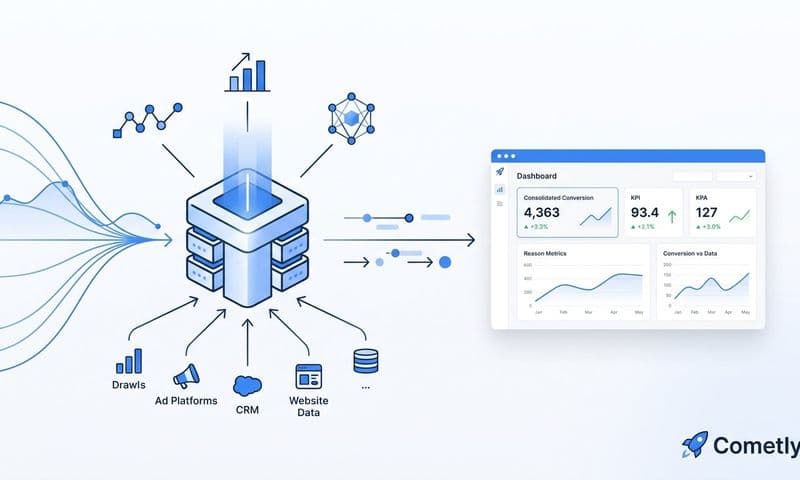
After seeing the massive blind spots in last-click models, the solution becomes pretty obvious. You need to see the entire field of play, not just the final shot on goal. This means ditching the fragmented, platform-specific data and committing to a single source of truth.
This is where unified attribution, backed by server-side tracking, completely changes the game. Instead of trusting flawed, browser-based data that misses huge chunks of the story, this approach captures every single customer interaction directly from the server.
It stitches together the full narrative for each customer journey stage—from the first ad someone glanced at six months ago to the email they opened this morning. The result is a complete, unbiased view of every single touchpoint that nudged a customer toward a sale.
From Fragmented Data to a Single Source of Truth
Imagine trying to build a 1,000-piece puzzle, but you've got pieces from five different boxes that don't quite fit together. That’s what most marketers are doing, wrestling with conflicting numbers from Google Analytics, Meta Ads, and their CRM. Unified attribution hands you a single box with all the right pieces.
A platform like Cometly centralizes all this data, becoming the undisputed record for your marketing performance. It doesn't guess which channel gets the blue ribbon; it shows you exactly how each one contributed along the way. This kind of clarity is becoming non-negotiable, with the global customer journey analytics market growing at over 19%. Businesses are scrambling for better tools to finally understand how customers really interact with them.
By centralizing every touchpoint, you eliminate the data silos that lead to bad decisions. You can finally see which channels are true Awareness-stage heroes and which ones are your reliable closers in the Decision stage.
This approach gives you a clear, holistic view of performance, which you can see right here in a Cometly attribution dashboard.
Mapping Every Customer Journey Stage for True Marketing ROI
The dashboard clearly breaks down revenue and ROAS by platform, providing an undeniable source of truth for your budget meetings.
Making Smarter Decisions with Confidence
When you have this level of clarity, your strategy sessions sound completely different. Instead of arguing over whose data to trust, you can focus on what to do next.
- Smarter Budget Allocation: You see that your podcast ads are incredible at generating initial awareness, even if they don't get the last click. You can now confidently invest in them, knowing they're filling the top of your funnel.
- Eliminate Wasteful Spending: That retargeting campaign that looked like a superstar under a last-click model? Unified data might reveal it’s just taking credit for sales that were already going to happen. You can now cut that spend and put it into channels driving real, incremental growth.
- Scale with Confidence: When you know precisely which campaigns are driving value at each customer journey stage, scaling becomes a science, not a gamble. You can double down on your winners, backed by undeniable data.
This unified approach lets you optimize your entire marketing ecosystem. You can learn more about how this works in our guide on full-funnel attribution. Ultimately, achieving this clarity means you stop burning cash on attribution blind spots and start investing in a predictable engine for growth.
From Journey Mapping to Marketing Mastery
Let's be honest: understanding the customer journey isn't just a nice-to-have anymore. It's the absolute bedrock of sustainable growth. The path from a curious prospect to a loyal customer is never a straight line; it's a winding road full of different stops, detours, and interactions. If you can’t see the whole map, you're flying blind.
This means you have to look beyond siloed analytics and appreciate the role every single customer journey stage plays. From that first spark of interest in the Awareness stage, through the deep dive of Consideration, to the final commitment in the Decision stage, and finally, the ongoing relationship in Retention—each step demands its own strategy and a precise way to measure what’s working.
Unifying Your Marketing Vision
The real challenge isn't just drawing a map of these stages; it's accurately measuring what happens at each stop along the way. Outdated attribution models that only give credit to the very last click are actively sabotaging your budget. They create huge blind spots, causing you to undervalue the very channels that build initial trust and keep your pipeline full. To really level up, you need to be thinking about advanced B2B customer journey mapping strategies that are tied directly to revenue.
The ultimate takeaway is simple: to win in today’s market, you need a single, undisputed source of truth for your marketing data.
This unified view is the only way you can confidently connect your marketing efforts to actual sales. It’s how you see that the blog post someone read three weeks ago (top-funnel) directly influenced the demo they booked today (bottom-funnel). That clarity allows for much smarter investments across the board.
When you finally adopt a unified attribution solution, you unlock the true potential of your marketing. You stop guessing, you cut wasted ad spend, and you get the clarity needed to scale with total confidence. For those ready to put these ideas into action, finding the right customer journey mapping software is the next logical step to turn your data into a powerful growth engine.
Frequently Asked Questions
Even with a clear map of the customer journey, a few common questions always pop up. Let's tackle them head-on so you can apply these concepts with confidence.
Customer Journey Versus Marketing Funnel
"Wait, isn't this just a marketing funnel?" Not quite. While people often use the terms interchangeably, they represent two totally different viewpoints.
A marketing funnel is a linear, brand-first model. It’s how you see the world—a neat, orderly path you push a ton of people through, hoping a few pop out the bottom as customers.
A customer journey, on the other hand, is a messy, customer-first model. It reflects the chaotic reality of how people actually buy things today. It accounts for all the detours, the channel-hopping, and the dozens of little moments that influence their final decision. A funnel shows your process; a journey shows their experience.
Key Takeaway: A funnel is how you want them to buy. A journey is how they actually buy. Getting this distinction right is the first step to mastering each customer journey stage.
The Number of Touchpoints Before a Sale
So, how many touchpoints does it take to get a sale? This is one of the most revealing questions in modern marketing, and the answer is almost always, "Way more than you think."
The exact number varies wildly depending on your industry, price point, and how complex your product is. But we're talking about dozens of interactions across multiple channels.
For a simple e-commerce buy, it might be five to ten touchpoints. For a big-ticket B2B software decision, it could easily be over fifty. This huge range is precisely why comprehensive tracking is so critical. Without it, you're only seeing a tiny fraction of the story behind your sales.
Starting Journey Tracking on a Budget
Can I start tracking the customer journey if I have a limited budget? Absolutely. You don’t need a massive investment to get started.
You can begin with free tools like Google Analytics and disciplined use of UTM parameters. This will give you a basic, foundational view of where your traffic is coming from and what people are doing on your site.
But as you start to scale, you'll hit the limitations of these tools pretty fast. They struggle to connect the dots when a user switches devices and can't give you the person-level data needed for true attribution. A small investment in a dedicated attribution platform quickly pays for itself by giving you the clarity you need for long-term growth across every customer journey stage.
Ready to stop guessing and get a unified view of your entire customer journey? Cometly provides the server-side tracking and multi-touch attribution you need to see what's truly driving sales, cut wasteful spend, and scale with confidence. Get started with Cometly today.