Your customer clicked a Facebook ad on their phone during lunch. Three days later, they Googled your brand on their work laptop. A week after that, they opened your email newsletter on their tablet, clicked through to a product page, but didn't convert. Two weeks later, they finally purchased—via a direct visit on desktop.
Which touchpoint gets credit for that sale?
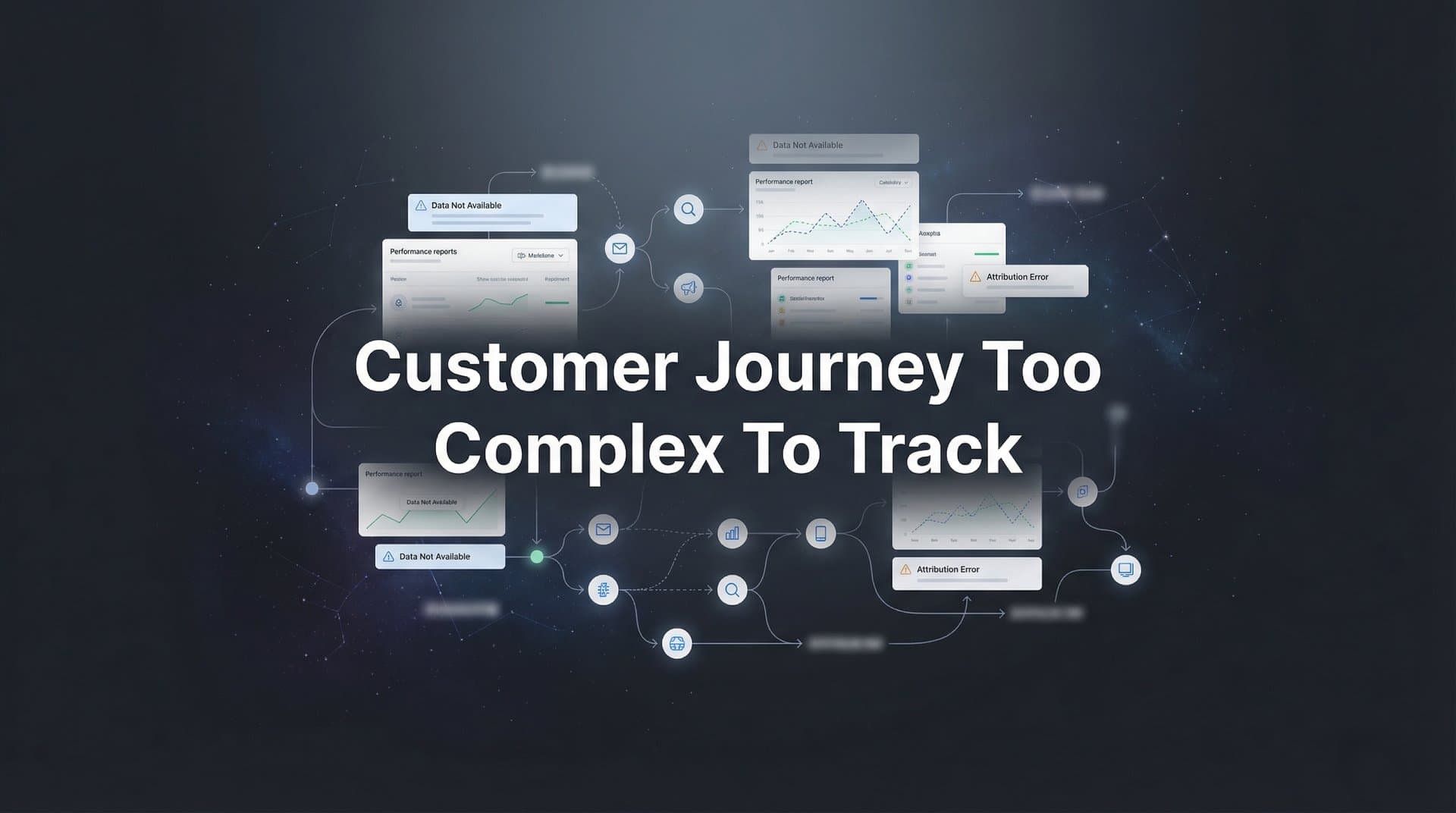
Modern customer journeys span dozens of touchpoints across multiple devices, platforms, and timeframes—making accurate tracking feel nearly impossible. Between iOS privacy updates, cookie deprecation, and customers who research on mobile, compare on desktop, and convert via email weeks later, marketers face unprecedented complexity.
But here's the truth: complex doesn't mean untrackable.
The right strategies can transform fragmented data into a clear picture of what's actually driving revenue. This guide breaks down seven battle-tested approaches to conquering customer journey complexity, from server-side tracking foundations to AI-powered attribution models that connect the dots automatically.
Whether you're struggling with cross-device tracking, offline conversions, or simply making sense of multi-touch paths, these strategies will help you regain control of your attribution data.
1. Implement Server-Side Tracking as Your Foundation
The Challenge It Solves
Browser-based tracking has become increasingly unreliable. Ad blockers strip tracking pixels, iOS privacy settings block cross-site tracking, and cookie consent requirements create data gaps. When your tracking relies on what happens in the user's browser, you're building on unstable ground.
The result? Missing conversions, incomplete journey data, and ad platforms that can't optimize effectively because they're only seeing a fraction of your actual results.
The Strategy Explained
Server-side tracking moves data collection from the browser to your server infrastructure. Instead of relying on JavaScript pixels that can be blocked, your server captures events directly and sends them to analytics platforms and ad networks.
This approach operates independently of browser limitations. When a conversion happens, your server records it and communicates with ad platforms directly—no client-side code required. The data flows reliably regardless of ad blockers, cookie settings, or privacy restrictions.
Think of it like switching from sending messages through an unreliable postal service to using a dedicated courier. The information gets where it needs to go, every single time.
Implementation Steps
1. Set up a server-side tracking container using Google Tag Manager Server-Side or a dedicated attribution platform that includes server-side infrastructure.
2. Configure your server to capture conversion events from your website, CRM, and other data sources, then forward those events to your ad platforms via their Conversion APIs.
3. Implement first-party cookies on your domain to maintain user identity across sessions while respecting privacy regulations and user consent preferences.
4. Test your implementation by comparing server-side event tracking against your existing browser-based setup, ensuring all critical conversions are being captured accurately.
Pro Tips
Start with your highest-value conversion events first. Don't try to move everything server-side immediately. Focus on purchase events, lead submissions, and other revenue-driving actions. Once those are stable, expand to engagement events.
Monitor your data quality closely during the transition. Server-side tracking is more reliable, but it requires proper configuration. Watch for duplicate events or missing parameters that could skew your attribution data.
2. Unify Your Data Sources Into a Single Customer View
The Challenge It Solves
Your customer journey data lives in silos. Facebook Ads Manager shows one story. Google Analytics shows another. Your CRM has different conversion numbers. Your email platform tracks its own engagement metrics.
Each platform claims credit for the same conversion, and you're left trying to piece together what actually happened. This fragmentation makes it impossible to understand the true customer journey or make confident optimization decisions.
The Strategy Explained
Data unification connects all your marketing touchpoints into a single source of truth. Instead of logging into six different platforms to understand performance, you bring all that data together where it can be analyzed as one complete customer journey.
This means connecting your ad platforms, website analytics, CRM, email marketing tools, and sales data into a unified tracking system. When someone converts, you can see every interaction that led to that moment—the Facebook ad they clicked last month, the blog post they read, the email they opened, and the Google search that brought them back.
The power isn't just in seeing all the data. It's in understanding how these touchpoints work together to drive conversions.
Implementation Steps
1. Audit all platforms where customer journey data currently exists, including ad platforms, analytics tools, CRM systems, email marketing software, and any sales or customer success platforms.
2. Choose a marketing attribution platform that can integrate with your key data sources and create a unified customer journey view across all touchpoints.
3. Set up integrations to pull data from each source into your unified system, ensuring consistent event naming and parameter mapping across all platforms.
4. Establish a single customer identifier strategy using email addresses, user IDs, or other first-party data to link touchpoints across different platforms and sessions.
Pro Tips
Don't wait for perfect data to start unifying. Begin with your highest-impact channels and expand from there. Even connecting your top three traffic sources provides dramatically better visibility than analyzing them in isolation.
Pay special attention to how you handle customer identifiers. Consistent ID matching is what allows you to connect touchpoints across platforms. Invest time in getting this right from the start.
3. Choose the Right Attribution Model for Your Sales Cycle
The Challenge It Solves
Single-touch attribution models oversimplify reality. Last-click attribution gives all credit to the final touchpoint, ignoring the Facebook ad that introduced your brand or the content piece that built trust. First-click attribution does the opposite, crediting only the initial interaction.
For businesses with complex sales cycles, this creates a distorted view of performance. You end up over-investing in channels that get credit by default while under-funding the touchpoints that actually drive customer decisions.
The Strategy Explained
Multi-touch attribution distributes credit across the customer journey based on how different touchpoints contribute to conversions. Instead of giving 100% credit to one interaction, these models recognize that multiple touchpoints work together to move customers toward a purchase.
Different models weight touchpoints differently. Linear attribution splits credit evenly across all interactions. Time-decay gives more credit to recent touchpoints. Position-based models emphasize first and last interactions while still acknowledging middle touches. Data-driven models use machine learning to assign credit based on actual conversion patterns.
The key is matching your attribution model to your sales cycle complexity. Longer consideration periods and higher-value purchases typically benefit from more sophisticated multi-touch approaches.
Implementation Steps
1. Analyze your typical customer journey length by reviewing the time between first touch and conversion, as well as the average number of touchpoints customers engage with before purchasing.
2. Select an attribution model that matches your journey complexity, starting with position-based or time-decay models if you have moderate complexity, or data-driven models for highly complex journeys.
3. Implement your chosen model in your attribution platform and run it alongside your current single-touch model for comparison during a testing period.
4. Review how credit distribution changes under the new model, identifying channels that were previously under-credited or over-credited based on their actual contribution to conversions.
Pro Tips
Don't switch attribution models during active campaigns. Let your current campaigns finish, analyze the data under your new model, then apply those insights to future budget allocation and strategy decisions.
Use multiple attribution models simultaneously. Compare how different models credit your channels. This multi-model view reveals which touchpoints consistently drive value regardless of methodology versus which channels only look good under specific attribution approaches.
4. Track Micro-Conversions to Fill Journey Gaps
The Challenge It Solves
Focusing only on final conversions creates blind spots in your customer journey. You know someone eventually purchased, but you don't understand what happened between their first visit and that final transaction. Did they engage with your content? Download resources? Watch product videos?
These mid-funnel actions provide critical context about customer intent and readiness. Without tracking them, you're missing opportunities to optimize the journey and identify which content or touchpoints move customers closer to conversion.
The Strategy Explained
Micro-conversions are meaningful engagement signals that indicate progress through your funnel without being final conversions. These include actions like content downloads, video views, product page visits, demo requests, email sign-ups, and comparison tool usage.
We compare the leading options in our AI product video generator roundup.
By tracking these signals, you create a more complete picture of customer behavior. You can see which marketing channels drive engaged visitors versus low-quality traffic. You can identify content that moves customers from awareness to consideration. You can spot where customers get stuck in the journey.
This visibility transforms how you optimize. Instead of only knowing which ads drive sales, you understand which ads drive engagement that leads to sales—a crucial distinction for improving your entire funnel.
Implementation Steps
1. Map your customer journey stages and identify the key actions that indicate progress at each stage, such as content engagement, product research behaviors, or intent signals like pricing page visits.
2. Set up tracking for these micro-conversion events in your analytics platform, ensuring each event includes relevant parameters like content type, engagement depth, or product category.
3. Create segments in your attribution platform to analyze how micro-conversions correlate with final conversions, identifying which engagement signals are strongest predictors of purchase behavior.
4. Build funnel reports that show how customers move from initial touch to micro-conversions to final conversions, revealing drop-off points and optimization opportunities.
Pro Tips
Focus on quality over quantity. Track micro-conversions that genuinely indicate intent or progress, not every possible interaction. Too many tracked events create noise that obscures meaningful patterns.
Use micro-conversion data to improve your ad targeting. Create lookalike audiences based on users who complete high-value micro-conversions. These audiences often perform better than those based solely on website visitors or even purchasers, because they target engaged, in-market prospects.
5. Leverage AI to Connect Disconnected Touchpoints
The Challenge It Solves
Even with unified data and proper tracking, connecting the dots across complex journeys requires analyzing massive datasets. A customer might interact with your brand 15 times across 8 channels over 30 days before converting. Multiply that by thousands of customers, and pattern recognition becomes humanly impossible.
Manual analysis can't process this complexity at scale. You need technology that can identify which touchpoint sequences lead to conversions, which channels amplify each other's effectiveness, and which customer paths indicate high purchase intent.
The Strategy Explained
AI-powered attribution uses machine learning to analyze your complete customer journey data and automatically identify patterns that drive conversions. These systems process thousands of customer paths simultaneously, learning which touchpoint combinations and sequences most reliably lead to revenue.
Rather than applying a predetermined attribution model, AI builds a custom model based on your actual data. It recognizes that your customer journey is unique to your business, your audience, and your marketing mix. The system continuously learns and adjusts as customer behavior evolves.
This approach also provides optimization recommendations. The AI doesn't just tell you what happened—it suggests what to do next based on patterns it's identified in your data.
Implementation Steps
1. Ensure you have sufficient data volume for machine learning to work effectively, typically requiring at least several hundred conversions per month across multiple channels and touchpoints.
2. Implement an AI-powered attribution platform that can analyze your unified customer journey data and build custom attribution models based on your specific conversion patterns.
3. Allow the AI system to learn from your data over an initial training period, typically 30-60 days, during which it analyzes historical customer journeys and identifies conversion patterns.
4. Review AI-generated insights and recommendations regularly, focusing on actionable findings about channel performance, audience segments, or campaign optimizations that can improve results.
Pro Tips
AI attribution works best when combined with human expertise. Use the AI to identify patterns and opportunities, but apply your market knowledge and strategic context when deciding which recommendations to implement.
Monitor how AI attribution evolves over time. As customer behavior changes—seasonally, due to market conditions, or as your marketing mix shifts—the AI should adapt its model. If it's not evolving, your system may not be learning effectively.
6. Sync Enriched Conversion Data Back to Ad Platforms
The Challenge It Solves
Ad platforms optimize based on the conversion data you send them. When that data is incomplete or inaccurate due to tracking limitations, their algorithms make poor optimization decisions. Facebook's AI might think a campaign is underperforming when it's actually driving high-value customers you're not tracking properly.
This creates a vicious cycle. Bad data leads to bad optimization, which leads to worse performance, which leads to more bad data. Your campaigns struggle because the platforms don't understand what's actually working.
The Strategy Explained
Conversion data sync feeds accurate, enriched conversion information back to your ad platforms using their Conversion APIs. Instead of relying on pixel-based tracking that misses conversions, you send complete conversion data directly from your server.
This enriched data includes not just that a conversion happened, but valuable context: customer lifetime value, product categories, offline conversions, CRM status changes, and other signals that help ad platforms optimize more effectively.
When Meta, Google, and other platforms receive this complete picture, their machine learning algorithms can identify patterns in who converts and how much they spend. They optimize toward high-value customers instead of just any conversion, improving your overall return on ad spend.
Implementation Steps
1. Set up Conversion API integrations with your primary ad platforms, starting with Meta and Google Ads, which offer the most robust server-side conversion tracking capabilities.
2. Configure your server-side tracking to send enriched conversion events that include value data, product information, customer attributes, and other parameters that help platforms optimize effectively.
3. Implement offline conversion tracking to sync CRM events, phone sales, and other offline conversions back to ad platforms so they can attribute these outcomes to the right campaigns.
4. Monitor conversion matching rates in each platform's reporting to ensure your server-side events are being properly attributed to ad clicks and impressions.
Pro Tips
Prioritize conversion value over conversion volume when syncing data. Sending revenue information or customer lifetime value predictions helps platforms optimize for profitable customers, not just any customer who converts.
Be patient with the learning period. When you start sending more accurate conversion data, ad platforms need time to relearn and adjust their optimization. Performance may fluctuate for 1-2 weeks before stabilizing at improved levels.
7. Build a Cross-Device Identity Resolution Strategy
The Challenge It Solves
Customers don't live on a single device. They discover your brand on mobile, research on desktop, and convert on tablet. Without a way to connect these sessions, each device looks like a different person. Your attribution data fragments, showing three separate customer journeys instead of one continuous path.
This fragmentation inflates your reported customer acquisition costs, obscures which channels drive cross-device conversions, and makes it impossible to understand the true customer journey from awareness to purchase.
The Strategy Explained
Cross-device identity resolution links user sessions across devices using first-party identifiers. When someone provides their email address, logs into an account, or authenticates in any way, you can connect their current session to previous sessions on other devices.
This creates a unified user profile that persists across devices. Whether they're on their phone, laptop, or tablet, you recognize them as the same person and can track their complete journey.
The strategy relies on encouraging authentication or email capture early in the customer journey. The sooner you can identify a user, the more complete your journey data becomes.
Implementation Steps
1. Implement strategic email capture points throughout your customer journey, such as content downloads, account creation, newsletter signups, or quiz participation that provides value in exchange for identification.
2. Set up a customer data platform or attribution system that can link sessions across devices using email addresses, user IDs, or other first-party identifiers as the primary matching key.
3. Configure your tracking to persist user identifiers across sessions and devices, ensuring that when someone logs in or provides their email, all subsequent activity is linked to their profile.
4. Create probabilistic matching rules as a backup for users who don't authenticate, using signals like IP address, user agent, and behavior patterns to suggest likely device connections.
Pro Tips
Focus on value exchange for email capture. Don't just ask for emails—offer something genuinely useful like exclusive content, tools, early access, or personalized recommendations. Higher-quality email captures lead to better identity resolution.
Combine deterministic and probabilistic matching. Deterministic matching using email or login provides certainty. Probabilistic matching using behavioral signals fills gaps for users who don't authenticate. Using both approaches maximizes your cross-device visibility.
Putting It All Together
Tracking complex customer journeys isn't about finding a single magic solution. It's about building a connected system where server-side tracking, unified data, smart attribution models, and AI work together to reveal what's actually driving revenue.
Start with your foundation. Implement server-side tracking to ensure reliable data capture regardless of browser limitations or privacy restrictions. Then unify your data sources so you can see complete customer journeys instead of fragmented platform-specific views.
Once your data infrastructure is solid, layer on intelligence. Choose the right attribution model for your sales cycle complexity—don't settle for oversimplified single-touch approaches that miss the nuance of how customers actually make decisions. Track micro-conversions to understand mid-funnel behavior and identify optimization opportunities you're currently missing.
Finally, leverage technology to scale your analysis. Use AI tools to connect the dots across thousands of customer journeys and identify patterns that would be impossible to spot manually. Sync enriched conversion data back to your ad platforms so their algorithms can optimize toward high-value customers, not just any conversion.
And don't forget the cross-device challenge. Build an identity resolution strategy that links sessions across devices, giving you a true picture of how customers move from awareness to purchase across their entire device ecosystem.
The marketers who master these strategies don't just track complex journeys. They turn that complexity into a competitive advantage, knowing exactly which channels and campaigns drive real revenue while their competitors are still guessing based on incomplete data.
Ready to elevate your marketing game with precision and confidence? Discover how Cometly's AI-driven recommendations can transform your ad strategy—Get your free demo today and start capturing every touchpoint to maximize your conversions.