

Stop Guessing, Start Growing: Why Your Tech Stack Needs Better Ecommerce Analytics Tools
Wasted ad spend and inaccurate data are silent killers for modern brands. Relying solely on platform-native analytics, like Meta Ads Manager, is a flawed strategy. Due to privacy updates, cookie deprecation, and fragmented customer journeys across multiple devices, these built-in dashboards no longer provide a complete or reliable picture of your marketing performance. You are likely making critical budget decisions based on incomplete, misleading information.
Modern ecommerce brands require a single source of truth to understand what really drives sales and fuels growth. This is where dedicated ecommerce analytics tools become essential. They are designed to solve the data accuracy problem by unifying information from all your marketing channels, your store, and your CRM into one coherent view.
This guide provides a detailed, unbiased comparison of the 12 best platforms available today. We'll move beyond marketing claims to analyze core capabilities like server-side tracking, multi-touch attribution models, and deep integrations with platforms like Shopify and Salesforce. Ultimately, the goal of leveraging ecommerce analytics is to gain actionable insights that directly answer the question of how to improve website conversion rate and maximize your ROI. Each review includes screenshots, pros, cons, and direct links to help you find the perfect tool for your specific needs, whether you're a high-growth DTC brand, a multi-client agency, or an enterprise marketing team.
1. Cometly: The All-in-One Attribution and AI Optimization Platform
Cometly establishes itself as a premier solution among ecommerce analytics tools by moving beyond simple data visualization to offer a complete attribution and optimization ecosystem. It is engineered for brands and agencies that demand a definitive source of truth for their marketing performance, eliminating the data discrepancies often found between ad platforms and native analytics.
 The Top 12 Ecommerce Analytics Tools for Data-Driven Growth in 2026
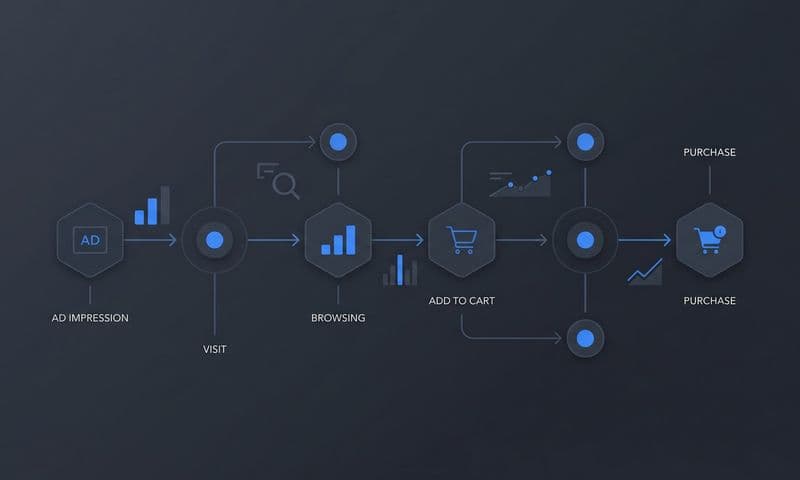
The platform's core strength lies in its sophisticated, multi-touch attribution model combined with integrated server-side tracking. This dual approach ensures exceptional data accuracy by capturing user interactions that are frequently missed by pixel-based methods alone. Cometly tracks the entire customer journey, from the first ad click to the final purchase, providing a clear, holistic view of which channels and campaigns are truly driving revenue.
Key Differentiators and Use Cases
What sets Cometly apart is how it makes its data actionable. The platform doesn't just show you what happened; it helps you decide what to do next.
- Conversion Sync: A standout feature is the one-click Conversion Sync, which sends enriched, accurate conversion data directly back to ad platforms like Meta and Google. This process continuously trains the ad algorithms with high-quality signals, leading to improved ad delivery, lower CPAs, and more efficient budget allocation.
- AI-Powered Optimization: Cometly integrates AI directly into the workflow with its Ads Manager and AI Chat. These tools analyze your real-time attribution data to provide concrete recommendations. For instance, the AI can suggest which ad creatives to scale, which audiences to target with increased budget, or which campaigns are showing signs of fatigue and should be paused.
- Zero-Code Implementation: Designed for accessibility, Cometly features a zero-code setup. This allows marketing teams to implement powerful server-side tracking and integrate with over 100 platforms, including Shopify, Stripe, Salesforce, and ClickFunnels, without requiring dedicated developer resources.
Key Benefit: Finally gain confidence in your data and stop wasting ad spend.
Ideal User Profile and Pricing
Cometly is best suited for performance-focused DTC brands, digital marketing agencies managing multiple client accounts, and in-house marketing teams ready to graduate from fragmented analytics. Its ability to provide a single, revenue-focused dashboard makes it invaluable for those who tie ad spend directly to ROI.
- Pricing: Cometly offers tiered pricing based on monthly ad spend, starting with the Growth plan at $199/month for up to $20k in ad spend. The Scale plan is $499/month for up to $100k, and custom Enterprise plans are available for larger advertisers. All plans include a 14-day free trial.
Visit Cometly: https://www.cometly.com/
2. Shopify App Store – Analytics Category
For brands built on Shopify, the official App Store’s Analytics category is the most logical starting point for expanding your data capabilities. It serves as a central, curated marketplace where you can discover, compare, and install hundreds of specialized ecommerce analytics tools directly into your store's backend. This streamlined ecosystem eliminates much of the friction associated with sourcing and integrating third-party software.
 The Top 12 Ecommerce Analytics Tools for Data-Driven Growth in 2026
The primary advantage is convenience; one-click installations and integrated billing through your Shopify account simplify admin tasks. You can find everything from profit dashboards like BeProfit to retention platforms like Peel and advanced attribution tools like Triple Whale. Each app listing provides transparent pricing tiers, user reviews, and feature breakdowns, allowing for quick side-by-side comparisons. This centralized access is invaluable for gathering the data needed for effective conversion optimisation strategies.
Key Details & Assessment
- Best For: Shopify-native DTC brands seeking to quickly test and deploy new analytics functionalities.
- Integration: Natively integrates with the Shopify ecosystem, with billing handled through your main account.
- Pricing: Varies significantly by app, from free plans to thousands of dollars per month. Most offer free trials.
- Website: apps.shopify.com/categories/analytics
ProsConsHuge selection of vetted, Shopify-compatible apps.Overwhelming choice can lead to decision fatigue.One-click installation and unified billing.App quality varies greatly; requires careful vetting.Transparent pricing and user reviews aid comparison.Primarily useful for stores on the Shopify platform.
3. Google Analytics 4 (GA4) and Analytics 360
As the industry standard for web analytics, Google Analytics 4 (GA4) is an essential, foundational layer for nearly every ecommerce brand. Its event-based data model offers a unified view of the user journey across both websites and apps, moving beyond the session-based limitations of its predecessor. For ecommerce, this means more flexible tracking of critical actions like add_to_cart, begin_checkout, and purchase, all within a free, powerful platform.
The platform's strength lies in its deep integration with the Google ecosystem, particularly Google Ads, enabling the creation of AI-powered predictive audiences for smarter ad targeting. For advanced users, the native BigQuery export unlocks raw event data for complex SQL queries and custom data modeling. While the standard version is free, high-volume enterprises can upgrade to Analytics 360 for higher data limits, unsampled reporting, and service-level agreements. For brands looking to get started, you can learn how to setup GA4 for Shopify to ensure accurate data collection from day one.
Related reading: our complete guide to AI powered tools for optimizing ad targeting.
Key Details & Assessment
- Best For: All ecommerce businesses needing a free, foundational tool for traffic analysis and Google Ads integration.
- Integration: Natively connects with Google Ads, BigQuery, Search Console, and other Google Marketing Platform products.
- Pricing: GA4 Standard is free. Analytics 360 is enterprise-level and sold through sales partners with custom pricing.
- Website: analytics.google.com
ProsConsFree standard version with a massive user base and support.GA4 360 enterprise pricing is not publicly listed.Deep integration with Google Ads for acquisition optimization.Implementation and governance can be complex.Native BigQuery export allows for advanced, custom analysis.The user interface has a steep learning curve for beginners.
4. Adobe Analytics (Adobe Experience Cloud)
Adobe Analytics is an enterprise-grade digital analytics solution designed for large, omnichannel retailers that need to unify complex data streams. It excels at combining information across content, products, and customer journeys, offering a holistic view of user behavior. This platform is ideal for organizations already invested in or standardizing on Adobe’s marketing stack, as it provides advanced segmentation, cohorting, and identity stitching capabilities that go far beyond standard reporting.
 The Top 12 Ecommerce Analytics Tools for Data-Driven Growth in 2026
The core strength of Adobe Analytics lies in its flexible data schemas and deep integration with the Adobe Experience Platform. This allows for sophisticated analysis and activation, making it a powerful component of an enterprise ecommerce analytics tools suite. Unlike more accessible tools, its implementation is a significant undertaking, often requiring specialist resources or certified partners to configure correctly and extract maximum value. It's built to handle massive data volumes for complex, multi-brand commerce operations.
Key Details & Assessment
- Best For: Enterprise-level ecommerce businesses and multi-brand retailers that are heavily invested in the Adobe Experience Cloud ecosystem.
- Integration: Natively integrates with the entire Adobe marketing stack, including Adobe Target, Audience Manager, and Experience Manager.
- Pricing: Custom enterprise pricing only. Requires contacting the sales team for a quote; no public pricing is available.
- Website: business.adobe.com/products/adobe-analytics.html
ProsConsMature enterprise feature set with robust governance.No public pricing; requires a complex, sales-led process.Scales well for complex, multi-brand commerce.Implementation often requires specialist resources or partners.Advanced identity stitching and segmentation capabilities.High barrier to entry for small to mid-sized businesses.
5. Amplitude
Amplitude positions itself as a product analytics platform, but its deep focus on user behavior makes it a powerful ecommerce analytics tool for optimizing the customer journey. It excels at answering complex questions about user actions, moving beyond simple page views to analyze every step from initial ad click to final purchase. This allows brands to pinpoint exactly where users drop off in the conversion funnel, from the add-to-cart action to the checkout process.
 The Top 12 Ecommerce Analytics Tools for Data-Driven Growth in 2026
The platform’s strength lies in its behavioral cohort analysis and funnel visualization capabilities. For example, you can build a cohort of users who used a specific discount code and analyze their subsequent purchase frequency and retention rates. Amplitude also offers features like session replay to watch real user sessions and an experimentation tool to run A/B tests on product pages or checkout flows, providing a comprehensive toolkit for UX and product-led growth teams in an ecommerce context.
Key Details & Assessment
- Best For: Product and growth teams at scaling ecommerce businesses focused on deep user behavior analysis and UX optimization.
- Integration: Integrates with a wide range of data sources and platforms, including Shopify, Segment, and marketing automation tools.
- Pricing: Offers a generous free "Starter" plan with limits on monthly tracked users (MTUs) and events. Paid "Plus" and "Growth" plans have custom pricing.
- Website: www.amplitude.com/pricing
ProsConsGenerous free tier is excellent for smaller stores.MTU/event caps on free plans require close monitoring.Powerful self-serve UI for complex behavioral analysis.Advanced features often locked behind expensive enterprise plans.Strong tools for funnel, cohort, and retention analysis.Can be complex to set up compared to simpler tools.
6. Mixpanel
Mixpanel is a powerful, event-based product analytics platform that excels at helping ecommerce businesses understand user behavior in granular detail. Instead of focusing on page views, it tracks specific actions customers take, such as "added to cart," "viewed product," or "completed checkout step." This approach makes it one of the most effective ecommerce analytics tools for building conversion funnels, analyzing user flows, and measuring customer retention over time.
 The Top 12 Ecommerce Analytics Tools for Data-Driven Growth in 2026
The platform is particularly strong for diagnosing friction points in the customer journey. You can build detailed funnels to see exactly where users drop off during checkout or create cohorts to track the long-term value of customers acquired from different marketing campaigns. With features like its AI-powered query builder (Spark AI) and session replays, teams can quickly move from identifying a problem to understanding the "why" behind it, enabling faster, data-driven optimizations to the user experience and marketing strategies.
Key Details & Assessment
- Best For: Product and marketing teams wanting to understand and optimize the user journey, from feature adoption to checkout completion.
- Integration: Offers a wide range of SDKs and API access for custom implementation, plus integrations with data warehouses like BigQuery and Snowflake.
- Pricing: Starts with a generous free plan for up to 1 million monthly events. Paid plans (Growth and Enterprise) are usage-based and scale with event volume.
- Website: mixpanel.com
ProsConsStrong focus on user funnels and retention analysis.Event overages can become costly without careful planning.Scales from startups to enterprise with usage-based pricing.Some enterprise controls and advanced features are paywalled.Fast to implement and allows for rapid report iteration.Can be less intuitive for pure marketing attribution vs. product usage.
7. Matomo (Cloud and On‑Premise)
For ecommerce brands prioritizing data privacy and ownership, Matomo offers a powerful alternative to mainstream analytics platforms. It stands out by giving businesses complete control over their data, either through a cloud-hosted SaaS model or a self-hosted, open-source version. This dual-deployment option makes it one of the most flexible ecommerce analytics tools for companies with strict data governance or compliance requirements like GDPR and CCPA.
 The Top 12 Ecommerce Analytics Tools for Data-Driven Growth in 2026
Matomo delivers comprehensive analytics without data sampling, ensuring 100% accuracy in your reporting. Its ecommerce features include detailed order tracking, abandoned cart analysis, and product performance reports. The platform’s commitment to privacy is a key differentiator, helping brands build trust with their customers while still gathering the crucial insights needed for growth. This approach aligns perfectly with the growing importance of leveraging first-party data strategies in a post-cookie world.
Key Details & Assessment
- Best For: Privacy-conscious brands and businesses in regulated industries needing full data ownership.
- Integration: Offers integrations with major platforms like Shopify, WooCommerce, and Magento, plus a robust API for custom connections.
- Pricing: On-Premise is free (requires your own hosting). Cloud plans start at ~$23/month, scaling with traffic.
- Website: matomo.org
ProsConsFull data ownership and strong privacy controls.Self-hosting requires technical expertise and resources.No data sampling provides 100% accurate reports.The third-party app ecosystem is smaller than Google's.Flexible deployment (cloud or on-premise).Premium features like A/B testing require add-ons.
8. Triple Whale
Triple Whale is an analytics and attribution platform built specifically for the high-velocity world of direct-to-consumer ecommerce brands. It excels at centralizing data from paid media channels (like Meta and Google), email/SMS platforms, and your store’s performance into a single, cohesive dashboard. Its core value lies in the "Triple Pixel," which provides a more accurate view of customer journeys than standard client-side tracking.
 The Top 12 Ecommerce Analytics Tools for Data-Driven Growth in 2026
The platform goes beyond simple sales tracking by offering creative analytics, cohort analysis, and sophisticated profit dashboards. For brands heavily invested in Shopify, the onboarding is exceptionally smooth, offering deep integration almost immediately. Higher-tier plans introduce advanced features like marketing mix modeling (MMM) and an AI assistant named "Moby," making it one of the more forward-thinking ecommerce analytics tools. Its focus on providing a clear picture of multi-touch attribution is a key reason for its popularity among DTC marketers.
Key Details & Assessment
- Best For: Shopify-based DTC brands seeking an all-in-one platform for attribution, finance, and creative analytics.
- Integration: Deep native integration with Shopify, along with major ad platforms like Meta, Google, TikTok, and Pinterest.
- Pricing: Starts at $129/month for the "Growth" plan, with a "Pro" plan at $199/month and custom "Enterprise" pricing. A 14-day free trial is available.
- Website: www.triplewhale.com/pricing
ProsConsStraightforward onboarding for Shopify DTC brands.Most powerful features are gated on higher-priced tiers.All-in-one view of marketing, finance, and creative data.Shopify-centric focus may limit its use for other platforms.Includes AI-driven insights and business intelligence features.Can become expensive as revenue and feature needs grow.
9. Northbeam
Northbeam is an advanced marketing analytics platform built for high-growth DTC brands that need to make sense of complex, multi-channel advertising strategies. It moves beyond standard last-click models to offer sophisticated multi-touch attribution, including deterministic view-through tracking, which helps brands understand the true influence of top-of-funnel video and display ads. This focus on a complete customer journey view makes it a powerful ecommerce analytics tool for teams spending heavily on paid media.
 The Top 12 Ecommerce Analytics Tools for Data-Driven Growth in 2026
The platform stands out by blending granular attribution with higher-level insights like creative analytics and Media Mix Modeling (MMM+). This allows marketing leaders to analyze performance from the ad-creative level all the way up to strategic budget allocation. For enterprise clients, Northbeam offers a strong service layer, providing dedicated support, more frequent data refreshes, and strategic guidance to help maximize the value of their advertising investments and navigate complex data challenges.
Key Details & Assessment
- Best For: High-spend DTC brands and enterprise teams managing complex, multi-channel ad budgets.
- Integration: Integrates with major ad platforms (Meta, Google, TikTok), ecommerce platforms, and other marketing tools.
- Pricing: Custom pricing based on revenue and ad spend, with plans starting at a significant investment level for scaling brands.
- Website: www.northbeam.io/pricing
ProsConsBuilt for scaling ad spend and complex channels.Price point targets brands with significant ad budgets.Click-plus-view attribution for a fuller picture.Some advanced features are gated to higher enterprise tiers.Strong service layer for enterprise support.Can be complex to implement without dedicated resources.
10. Peel Analytics (Peel Insights)
Peel is a powerful analytics platform designed specifically for direct-to-consumer brands that want to move beyond surface-level metrics and focus on retention. It automates the complex analysis of customer cohorts, lifetime value (LTV), and subscription performance, providing a clear lens on long-term business health. By integrating with Shopify, Amazon, and key ad platforms, Peel helps brands understand which channels acquire the most valuable, loyal customers over time.
 The Top 12 Ecommerce Analytics Tools for Data-Driven Growth in 2026
The platform’s strength lies in its segmentation capabilities, allowing users to dissect data by product, discount code, location, and more. This makes it one of the most effective ecommerce analytics tools for identifying patterns in repeat purchase behavior and subscription churn. For brands heavily invested in subscription models or striving to increase customer LTV, Peel provides the specialized insights needed to make informed strategic decisions. This detailed analysis helps you master key ecommerce performance metrics that drive sustainable growth.
Key Details & Assessment
- Best For: DTC brands with a focus on subscriptions, repeat purchases, and maximizing customer LTV.
- Integration: Natively connects with Shopify, Amazon, Klaviyo, Google Ads, Facebook Ads, and Google Sheets.
- Pricing: Starts at $249/month for the "Growth" plan, with higher tiers for larger brands. A 15-day free trial is available.
- Website: apps.shopify.com/peel-insights
ProsConsClear retention-first lens useful for subscription brands.Best fit for Shopify/Amazon retailers; limited outside those stacks.Deep cohort, LTV, and RFM segmentation analysis.Advanced features like custom metrics are on higher-priced tiers.Straightforward pricing tiers and a free trial period.Can be less focused on top-of-funnel ad attribution.
11. Glew.io (Commerce Data Cloud)
Glew.io positions itself as a comprehensive "Commerce Data Cloud," designed for brands that are outgrowing basic storefront analytics and need a more robust, centralized solution. It combines a managed data pipeline (ELT) with a business intelligence (BI) layer powered by Looker, allowing users to integrate and analyze data from dozens of sources. This approach provides a unified view of performance across marketing, inventory, product, and customer subscriptions, making it a powerful step up from native platform reporting.
 The Top 12 Ecommerce Analytics Tools for Data-Driven Growth in 2026
The platform stands out by bundling its managed data warehouse and Looker license in its Plus plan, which simplifies the tech stack for growing businesses. With over 250 pre-built KPIs and dashboards, teams can get immediate insights without extensive setup. Its strength lies in cross-channel reporting, enabling merchants to see how ad spend on one platform influences customer lifetime value and product performance. For complex analysis, its customer segmentation and automated reporting features are key ecommerce analytics tools for strategic decision-making.
Key Details & Assessment
- Best For: Mid-market and enterprise ecommerce brands needing a unified data warehouse and BI solution without building it from scratch.
- Integration: Offers over 150 integrations on its Plus plan, connecting to platforms like Shopify, BigCommerce, Klaviyo, and major ad networks.
- Pricing: Starts with a "Pro" plan at $79/month, with a custom-priced "Plus" plan for advanced features and integrations.
- Website: glew.io/pricing
ProsConsCombines analytics, data pipeline, and BI in one.Plus plan features are custom-priced, making it less transparent.Excellent for cross-source reporting and unified data.Learning curve for custom report building in Looker can be steep.Ideal for brands scaling beyond native analytics.The Pro plan is significantly more limited than the Plus plan.
12. Littledata
Littledata specializes in fixing data accuracy for Shopify stores by implementing robust server-side tracking. It connects your storefront directly to key analytics and advertising platforms like Google Analytics 4, Meta (CAPI), and Klaviyo, bypassing browser-level tracking blockers and privacy restrictions. This ensures that a higher percentage of your sales and customer events are captured reliably, leading to more accurate attribution and a truer picture of your marketing ROI.
 The Top 12 Ecommerce Analytics Tools for Data-Driven Growth in 2026
The platform’s primary function is to enhance event match quality and provide a complete first-party data stream for analysis. For brands heavily reliant on Google and Meta for customer acquisition, this tool is invaluable for optimizing ad spend based on dependable conversion data. Littledata is particularly effective at tracking complex customer journeys, including recurring subscriptions, which are often misreported by standard client-side tracking setups. It stands out as one of the key ecommerce analytics tools for businesses determined to solve attribution gaps.
Key Details & Assessment
- Best For: Shopify brands struggling with data accuracy in GA4 and ad platforms due to privacy updates.
- Integration: Primarily built for Shopify, with direct server-side connections to Google Analytics, Meta, TikTok, Pinterest, and Klaviyo.
- Pricing: Starts with a usage-based Flex plan, with all-inclusive tiers available for higher volume stores. A 30-day free trial is offered.
- Website: apps.shopify.com/littledata
ProsConsFocuses on accurate revenue and subscription attribution.Primarily built and optimized for the Shopify platform.Uses server-side tracking to bypass common data gaps.Per-order overages can apply beyond plan thresholds.Straightforward setup for connecting multiple ad platforms.Destination availability may differ depending on the plan.
Top 12 Ecommerce Analytics Tools — Feature & Capability Comparison
Product | Core features ✨ | Experience ★ | Price/Value 💰 | Target 👥 |
|---|---|---|---|---|
🏆 Cometly (Recommended) | ✨ Real-time multi-touch MTA + server-side tracking; 1-click conversion sync; AI Ads Manager & AI Chat; 100+ integrations | ★★★★☆ Unified dashboards; zero-code fast setup; demo onboarding | 💰 Demo-based + free trial; pricing tailored to ad-spend bands | 👥 SaaS, DTC/e-commerce, agencies, performance & enterprise teams |
Shopify App Store — Analytics | ✨ Curated analytics marketplace; 1-click install; app pages with pricing/reviews | ★★★☆☆ Experience varies by app; easy discovery | 💰 App-dependent; billing via Shopify; many trials | 👥 Shopify merchants & app evaluators |
Google Analytics 4 (GA4) | ✨ Event-based web+app tracking; BigQuery export; Google Ads audiences | ★★★★☆ Widely adopted; steep setup/governance curve | 💰 Free standard tier; Analytics 360 enterprise (sales) | 👥 Broad web/app teams, advertisers, enterprises |
Adobe Analytics (Experience Cloud) | ✨ Omnichannel enterprise analytics; advanced segmentation & identity stitching | ★★★★☆ Enterprise-grade capabilities; specialist implementation | 💰 Sales-led, enterprise pricing | 👥 Large enterprises standardizing on Adobe stack |
Amplitude | ✨ Behavioral cohorts, funnels, session replay, experimentation | ★★★★☆ Strong self-serve UX; generous free starter plan | 💰 Free starter (MTU limits); paid Growth/Enterprise tiers | 👥 Product & growth teams |
Mixpanel | ✨ Funnels, retention, Spark AI query builder, pipelines | ★★★★☆ Fast to implement; excellent funnel/retention tools | 💰 Free up to 1M events/mo; usage-based pricing | 👥 Startups → enterprises; analytics teams |
Matomo (Cloud / On-Prem) | ✨ Privacy-first analytics; cloud or self-host; plugins for heatmaps/A/B | ★★★☆☆ Strong data control; less 3rd-party ecosystem | 💰 Cloud tiers or self-host costs; traffic-based pricing | 👥 Privacy-conscious brands & compliance teams |
Triple Whale | ✨ Shopify-first attribution (Triple Pixel), creative analytics, AI assistant | ★★★☆☆ Smooth DTC onboarding; top features on paid tiers | 💰 Paid tiers; advanced features require higher plans | 👥 DTC Shopify brands & marketers |
Northbeam | ✨ Deterministic view attribution, MMM+, creative correlation analytics | ★★★★☆ Built for scaling ad spend; strong service layer | 💰 Premium pricing for high ad budgets | 👥 High-spend DTC & enterprise performance teams |
Peel Analytics (Peel Insights) | ✨ Cohorts, LTV/CAC, subscription & retention analytics; exports | ★★★☆☆ Retention-first UX; clear tiering | 💰 Clear tiers & trials; higher tiers unlock advanced features | 👥 Subscription & repeat-purchase DTC brands |
Glew.io (Commerce Data Cloud) | ✨ Managed ELT + Looker BI; 250+ KPIs; prebuilt LookML | ★★★☆☆ Powerful cross-source BI; steeper learning curve | 💰 Pro vs Plus; Plus custom-priced with BI bundle | 👥 Teams needing warehouse + BI for ecommerce |
Littledata | ✨ Server-side tracking for Shopify; GA4, Meta CAPI & ad platform feeds | ★★★★☆ Improves event match & revenue accuracy for Shopify | 💰 Usage-based Flex or all-inclusive tiers; per-order overages possible | 👥 Shopify stores needing accurate server-side tracking |
The Future of Ecommerce is Attributed
Navigating the landscape of modern ecommerce analytics tools can feel like assembling a complex puzzle with pieces from a dozen different boxes. We've explored a wide spectrum of solutions, from the foundational web analytics of Google Analytics 4 to the specialized retention insights of Peel, and the enterprise-level data platforms like Adobe Analytics. Each tool offers a unique lens through which to view your business performance.
The central theme that emerges is clear: surface-level metrics are no longer sufficient. Relying solely on platform-reported data or last-click attribution models is akin to navigating a storm with a broken compass. It gives you a direction, but not an accurate one, leading to wasted ad spend, missed opportunities, and a flawed understanding of your customer’s journey. The true competitive advantage lies in achieving a unified, accurate, and actionable view of your marketing efforts.
Key Takeaways for Choosing Your Analytics Stack
As you move forward, the most critical step is to honestly assess your business's current stage and primary challenges. A startup’s need for agile, easy-to-implement tracking is vastly different from an enterprise’s requirement for deep, customized data modeling.
Remember these core principles from our analysis:
- Web Analytics vs. Attribution: Tools like GA4 and Matomo excel at understanding on-site behavior, but dedicated ecommerce analytics tools like Cometly, Triple Whale, and Northbeam are built specifically to solve the ad attribution problem. Don’t confuse one for the other.
- The Data Accuracy Dilemma: The shift toward privacy, exemplified by iOS updates and the phasing out of third-party cookies, has rendered client-side tracking unreliable. Prioritize platforms that offer robust server-side tracking and first-party data collection to build a resilient, future-proof data foundation.
- Actionability is Paramount: A beautiful dashboard is useless if it doesn't lead to better decisions. The best tools don't just present data; they provide clear, trustworthy insights that empower you to confidently scale winning campaigns and cut losing ones. This is where multi-touch attribution models truly shine, revealing the hidden influence of every touchpoint.
Your Actionable Path to Data Confidence
Making the right choice isn't just about buying software; it's about investing in a new operational reality where every marketing dollar is fully accounted for. Before you commit, use the buyer's checklist provided earlier to evaluate your top contenders. Start a trial, connect your ad accounts, and run the new tool in parallel with your existing setup. Let the data speak for itself.
The future of ecommerce won't be won by the brand with the biggest budget, but by the one with the clearest understanding of what truly drives growth. Accurate, real-time attribution is the engine of that understanding. It transforms marketing from a cost center plagued by guesswork into a predictable, scalable driver of profit. The goal is to move beyond simply collecting data and toward achieving genuine data confidence, empowering you to make bold, decisive moves that leave competitors behind.
Ready to stop guessing and start scaling with a single source of truth? Cometly provides the real-time, server-side attribution you need to gain complete confidence in your ad spend and unlock profitable growth. Take the first step toward data clarity and see exactly what's working with our zero-code setup by visiting Cometly today.