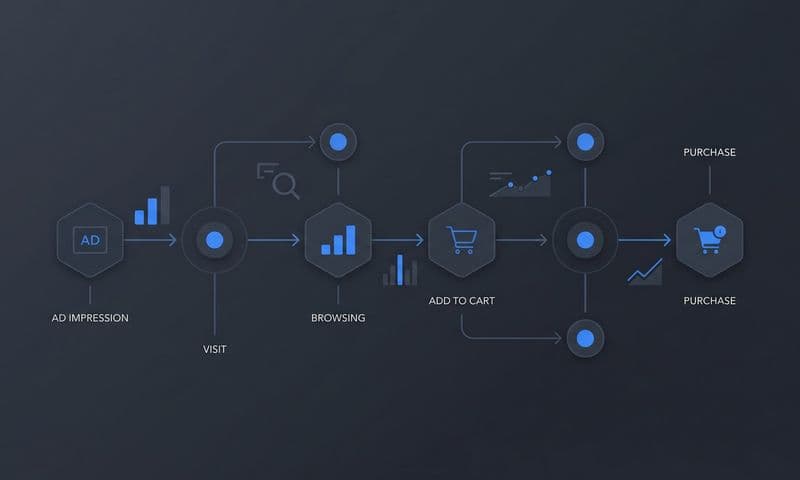
In the competitive world of online retail, running a successful store without a clear view of your data is like navigating a maze blindfolded. You might make progress, but it's based on guesswork, not strategy. The right ecommerce data analytics software removes the blindfold, transforming raw numbers into a clear roadmap for growth. These platforms are the engines that power informed decisions, helping you understand precisely which marketing channels drive sales, who your most valuable customers are, and where your conversion funnel is leaking revenue.
This comprehensive guide is designed to cut through the noise and help you select the ideal analytics partner for your specific needs. Whether you're a burgeoning DTC brand trying to optimize a tight ad budget, an agency juggling multiple client accounts, or an enterprise-level team demanding granular, real-time insights, the perfect solution is out there. We will dive deep into 12 of the top platforms on the market, moving beyond surface-level feature lists to provide a practical analysis. To fully grasp the strategic imperative of these tools, understanding why use ecommerce analytics is crucial for making informed decisions and driving growth.
Inside this resource, you'll find:
- Detailed Tool Breakdowns: A close look at platforms like Cometly, Northbeam, GA4, Adobe Analytics, and more.
- Practical Use-Cases: Real-world scenarios showing how to apply each tool's features.
- Honest Pros and Cons: A balanced view of strengths and limitations to guide your choice.
- Pricing and Target Audience: Clear information on who each platform is built for and what it costs.
Each review includes direct links and screenshots to give you a tangible feel for the user experience. Let's find the growth engine that will power your ecommerce success.
1. Cometly
Cometly stands as a premier choice in the ecommerce data analytics software landscape, specifically designed for businesses that need to connect ad spend directly to revenue with surgical precision. It moves beyond surface-level metrics by offering a full-funnel marketing attribution platform that unifies every customer touchpoint. From the initial ad click and website visit to CRM updates and final payment data, Cometly provides a holistic view of what actually drives sales.
 The Top 12 Ecommerce Data Analytics Software Platforms of 2026
What truly sets Cometly apart is its powerful combination of attribution accuracy and actionable AI. It leverages multi-touch attribution and zero-code server-side tracking to ensure no conversion is missed. This enriched, accurate data is then fed back to ad platforms like Meta and Google via a one-click conversion sync, directly improving their algorithmic targeting and boosting ROAS. The integrated AI Ads Manager and AI Chat analyze this clean data to provide actionable recommendations, helping teams identify winning creatives and confidently scale their budgets.
Key Features & Use Cases
- Full-Funnel Attribution: Track the complete customer journey across organic, paid, email, and outbound channels. Ideal for DTC brands needing to understand the blended impact of their marketing efforts.
- AI-Powered Optimization: Use the AI Ads Manager to get specific recommendations on which campaigns to scale or cut. A perfect use case for performance marketing teams aiming to eliminate wasted ad spend.
- One-Click Conversion Sync: Seamlessly send accurate, server-side conversion data back to ad networks. Agencies managing multiple client accounts can use this to dramatically improve campaign performance and reporting accuracy.
- No-Code Setup & Integrations: With over 100 integrations (Shopify, Stripe, Salesforce, Zapier), teams can get set up in minutes without developer resources.
Pricing and Access
Cometly's pricing is not publicly listed on its website. To get detailed plan information, you need to sign up for a free trial or book a demo with their team. This approach ensures they can tailor a package to your specific business needs and scale.
- Highly accurate, unified attribution ties every marketing action to revenue.
- Actionable AI provides clear recommendations for budget optimization.
- Seamless server-side conversion sync improves ad platform performance.
- Extensive integrations and fast, no-code setup.
- Lack of public pricing can make initial evaluation difficult.
- May be overly robust for very small businesses with minimal ad spend.
Website: https://www.cometly.com
2. Google Analytics (GA4)
Google Analytics (GA4) is the ubiquitous, free analytics platform from Google, serving as the foundational layer of ecommerce data analytics software for millions of businesses. Its event-based model offers a more flexible and user-centric approach to tracking than its predecessor, Universal Analytics, making it highly adaptable for monitoring complex customer journeys across web and app properties.
For ecommerce brands, GA4 provides detailed reporting on everything from traffic acquisition and user engagement to specific ecommerce events like add_to_cart and purchase. Its core strength lies in its deep integration with the Google ecosystem, particularly Google Ads, allowing for seamless audience sharing and conversion tracking. A standout feature is the native BigQuery export, which lets data-savvy teams access raw, unsampled event data for advanced analysis and custom modeling, a capability often reserved for expensive enterprise tools.
Key Strengths & Use Cases
- Cost-Effective Foundation: The free version is incredibly powerful, making it the default starting point for startups and small businesses needing robust web analytics without an initial investment.
- Deep Google Ads Integration: Ideal for brands heavily invested in Google Ads. You can build predictive audiences (e.g., "likely 7-day purchasers") in GA4 and use them directly in ad campaigns to improve targeting.
- Advanced Data Exploration: The BigQuery export unlocks the ability to build custom attribution models or blend GA4 data with other sources (like CRM data) for a comprehensive view of the customer.
While the free tier has data retention limits (up to 14 months) and sampling on high-traffic reports, it remains an essential tool. The enterprise version, GA4 360, removes these limits but comes with a significant, quote-based price tag.
Website: https://marketingplatform.google.com/analytics/
3. Adobe Analytics
Adobe Analytics is an enterprise-grade platform that delivers comprehensive insights for large-scale businesses seeking a unified view of the customer journey. As a mature piece of ecommerce data analytics software, it excels at stitching together user interactions from disparate channels like web, mobile, in-store kiosks, and even IoT devices into a single, cohesive profile. This allows complex organizations to move beyond simple web traffic analysis and into deep behavioral and product analytics.
The platform's core power lies in its deep integration within the Adobe Experience Cloud, enabling seamless data activation. Insights gathered in Adobe Analytics can be used to personalize experiences in Adobe Target or build sophisticated audience segments for campaigns in Adobe Journey Optimizer. Features like advanced segmentation, real-time data processing, and customizable reporting dashboards are built to handle the immense data volume and governance requirements of enterprise-level ecommerce operations. For organizations looking beyond basic reporting, exploring a suitable Adobe Analytics alternative might offer more focused functionality.
Key Strengths & Use Cases
- Omnichannel Customer Journey Analysis: Ideal for large retailers that need to connect online browsing behavior with in-store purchases or app usage to understand the full customer lifecycle.
- Deep Product & Funnel Analysis: Teams can ingest custom event data to analyze product feature adoption, identify drop-off points in complex conversion funnels, and measure the impact of UX changes.
- Enterprise Data Governance: Provides robust controls for data collection, processing, and user access, which is critical for large, multinational teams managing compliance and data privacy.
Adobe Analytics has a notoriously steep learning curve and requires significant implementation resources. Pricing is not public and involves enterprise-level, sales-led contracting, placing it out of reach for most SMBs.
Website: https://business.adobe.com/products/adobe-analytics.html
4. Shopify Analytics
Shopify Analytics is the native reporting and analytics suite built directly into the Shopify platform, offering merchants a convenient, integrated solution for understanding store performance. Rather than being a separate piece of ecommerce data analytics software, it provides an immediate, out-of-the-box view of key commerce metrics, making it the most accessible option for store owners who want to avoid the complexity of third-party tools.
It delivers real-time dashboards and a suite of pre-built reports covering sales, customer behavior, marketing effectiveness, and more. For users on higher-tier plans, ShopifyQL allows for the creation of custom reports using a structured query language, offering a degree of flexibility. A unique feature is the ability to benchmark your store’s performance against similar businesses on the Shopify platform, providing valuable competitive context that is difficult to obtain elsewhere.
We compare the leading options in our performance marketing software roundup.
 The Top 12 Ecommerce Data Analytics Software Platforms of 2026
Key Strengths & Use Cases
- Zero-Configuration Insights: Perfect for new merchants or teams who need immediate access to core ecommerce KPIs like conversion rate, average order value, and sales by traffic source without any setup.
- Integrated Performance Monitoring: Because it's native, the data is always live and directly reflects store activity. This is ideal for monitoring the immediate impact of flash sales, new product launches, or marketing campaigns.
- Competitive Benchmarking: Businesses can use the benchmarking reports to see if their session-to-purchase rate or AOV is above or below the average for their industry, helping to identify areas for strategic improvement.
While its convenience is unparalleled for Shopify users, its analytical depth and customization capabilities do not match dedicated analytics suites. Advanced features like multi-touch attribution or granular user pathing are limited. However, it is included with all Shopify plans, making it an essential, cost-free starting point for any merchant on the platform.
Website: https://www.shopify.com/analytics
5. Amplitude
Amplitude is a leading product and marketing analytics platform that empowers ecommerce teams to understand user behavior with incredible depth. While many tools focus on acquisition, Amplitude excels at revealing what happens after the click, making it a powerful piece of ecommerce data analytics software for optimizing retention and lifetime value. It provides sophisticated tools for cohort analysis, funnel visualization, and user journey mapping, helping brands identify friction points and opportunities for growth.
Its strength lies in its event-based model, which allows for granular tracking of every user interaction. This enables ecommerce managers to answer complex questions like, "How does using the search filter affect conversion rates for first-time visitors?" or "What is the 90-day retention rate of customers who first purchased a specific product?" The platform also includes powerful features like session replays, experimentation (A/B testing), and feature flagging to connect data insights directly to product improvements.
 The Top 12 Ecommerce Data Analytics Software Platforms of 2026
Key Strengths & Use Cases
- Deep Product & Behavior Analysis: Ideal for ecommerce businesses focused on improving the user experience and increasing customer lifetime value. Use it to build detailed funnels, analyze user paths, and identify drop-off points in the buyer journey.
- Powerful Segmentation & Cohorts: Create highly specific user segments based on behavior (e.g., "users who viewed three product categories but did not add to cart") to personalize marketing campaigns or product experiences.
- Integrated Experimentation: Run A/B tests on new features or website layouts and measure the impact directly within the same platform, closing the loop between insight and action without needing separate tools.
Amplitude offers a generous free Starter plan, with paid tiers like Plus starting from $49/month, making it accessible for startups. However, its event-based pricing can become costly as traffic scales, requiring careful planning of your tracking implementation. For those evaluating their options, exploring some of the top Amplitude alternatives can provide a broader perspective on the product analytics landscape.
Website: https://amplitude.com
6. Mixpanel
Mixpanel is a self-serve product analytics platform widely adopted by ecommerce teams to understand user behavior in granular detail. While not exclusively an ecommerce data analytics software, its powerful event-based tracking is perfectly suited for analyzing complex customer journeys, from initial landing to final purchase. It excels at visualizing funnels, retention cohorts, and user flows, helping teams pinpoint exactly where customers drop off in the checkout process or what actions lead to repeat purchases.
For ecommerce, Mixpanel’s strength is its speed and flexibility in answering product-related questions. Teams can quickly build reports to analyze cart abandonment, feature adoption (e.g., using a new "wishlist" feature), or the impact of a UI change on conversions. It also offers session replays to watch user interactions and a multi-touch attribution model to understand which marketing channels contribute to key events, making it a powerful tool for both product and marketing optimization.
 The Top 12 Ecommerce Data Analytics Software Platforms of 2026
Key Strengths & Use Cases
- Product & Funnel Optimization: Ideal for ecommerce stores focused on improving the on-site user experience. You can build a detailed checkout funnel report to see the drop-off rate between each step (
add_to_cart,begin_checkout,add_shipping_info) and identify friction points. - User Retention Analysis: Perfect for subscription-based or high-repeat-purchase businesses. Use cohort reports to track how many customers who signed up in January made a second purchase within 30, 60, or 90 days.
- Flexible Self-Serve Analysis: The user-friendly interface and AI query builder empower non-technical team members to explore data without needing to write SQL, although there are many Mixpanel alternatives that may better suit different needs.
The platform offers a generous free plan, and its transparent, event-based "Growth" pricing makes it accessible for startups. However, this pricing model requires careful event governance to manage costs, and more advanced features like A/B testing and governance tools are reserved for its higher-priced Enterprise tier.
Website: https://mixpanel.com
7. Heap (by Contentsquare)
Heap is a powerful product analytics platform, now part of the Contentsquare suite, that distinguishes itself with a feature called "autocapture." This technology automatically captures every user interaction on a website or app, like clicks, swipes, and form submissions, without needing manual event tracking setup. For ecommerce teams, this means you can retroactively analyze user behavior and ask new questions of your data without waiting for developers to instrument a new event.
 12 Best Customer Journey Analytics Tools for 2026
The primary value of Heap as an ecommerce data analytics software is its speed to insight. Instead of defining events upfront, you can define them retroactively within the Heap interface, immediately seeing historical data. This is invaluable for understanding unexpected user paths, analyzing friction points in the checkout funnel, or segmenting users based on behaviors you hadn't considered important before. Optional add-ons like Session Replay and data warehouse syncs allow businesses to scale their analytics capabilities as they grow.
Key Strengths & Use Cases
- Retroactive Analysis: Ideal for product and marketing teams who need to move quickly. If you launch a new feature and forget to add tracking, Heap has already captured the data, allowing you to build a funnel or cohort analysis on day one.
- Codeless Event Definition: Perfect for non-technical users. Marketers can define critical ecommerce events like "Applied Discount Code" or "Viewed Size Guide" directly from the front-end interface without writing any code.
- Behavioral Segmentation: Build detailed user segments based on a sequence of actions (e.g., users who viewed three product pages, then used the search bar, but didn't add to cart) and use these cohorts to understand purchasing intent.
While Heap offers a free plan for low-traffic sites, most of its powerful features and higher volume tiers require a custom quote. The Session Replay feature is also a paid add-on, so it's not included in the base packages.
Website: https://www.heap.io
8. Daasity
Daasity is an omnichannel analytics platform built specifically for consumer brands that need to unify disparate data sources. It serves as powerful ecommerce data analytics software by centralizing information from Shopify, Amazon, retail, and wholesale channels into a single, cohesive view. Its core value proposition is reducing the heavy data engineering lift required to build an in-house data pipeline, offering prebuilt data models and dashboards out of the box.
 The Top 12 Ecommerce Data Analytics Software Platforms of 2026
For growing DTC and omnichannel businesses, Daasity provides immediate insights across marketing, sales, inventory, and promotions. With over 300 data connections, it enables sophisticated analysis like lifecycle marketing performance, product profitability, and channel-specific attribution. This pre-built foundation allows teams to bypass months of development and focus directly on strategic analysis, answering complex questions about customer lifetime value and inventory forecasting without needing a dedicated data science team.
Key Strengths & Use Cases
- Omnichannel Data Unification: Ideal for brands selling across multiple platforms (e.g., Shopify, Amazon FBA, brick-and-mortar). Daasity consolidates this data to provide a true single customer view and accurate performance metrics.
- Accelerated Time-to-Insight: The prebuilt data models and dashboards significantly reduce setup time. This is perfect for brands that need sophisticated analytics but lack the internal resources to build and maintain a custom data warehouse.
- Comprehensive Business Reporting: It goes beyond just marketing analytics, offering deep dives into inventory management, operations, and financial performance, making it a central hub for business intelligence.
While Daasity accelerates data maturity, its sales-led, premium pricing model and higher implementation effort make it better suited for established brands rather than early-stage startups. The platform's power comes from its depth, which requires a more involved setup compared to simpler plug-and-play analytics apps.
Website: https://www.daasity.com/
9. Glew
Glew is a comprehensive commerce data platform designed for brands seeking a unified view of their performance without needing to build a data stack from scratch. It functions as both a pre-built analytics solution (Glew Pro) and a fully managed data pipeline with business intelligence (Glew Plus), making it a powerful piece of ecommerce data analytics software for growing teams. The platform consolidates data from over 170 integrations, including Shopify, Klaviyo, and major ad networks, into cohesive, actionable dashboards.
For a deeper dive into this space, see our ecommerce ad design tool guide.
 The Top 12 Ecommerce Data Analytics Software Platforms of 2026
What sets Glew apart is its end-to-end offering. The Plus plan provides a fully managed ETL pipeline, a dedicated data warehouse, and a bundled Looker (Google Cloud's BI tool) license. This gives teams the power of an enterprise-grade BI setup without the immense overhead of hiring data engineers and managing infrastructure. Its pre-built LookML models and 250+ KPIs mean users can immediately start exploring complex questions, like customer lifetime value by first-touch channel or product profitability.
Key Strengths & Use Cases
- Managed BI for Non-Technical Teams: Perfect for brands that have outgrown basic dashboards but lack the internal resources to build and maintain their own data warehouse and BI environment.
- Rapid Time-to-Insight: With pre-built dashboards, segments, and KPIs focused squarely on ecommerce, teams can skip the lengthy setup and get straight to analyzing performance, from marketing attribution to inventory forecasting.
- Holistic Business Reporting: By unifying data from marketing, sales, and operations, Glew enables comprehensive reporting on overall business health, not just isolated channel performance.
While Glew is an incredibly robust solution, its Pro and Plus plans are quote-based, making it a heavier and more significant investment than simple plug-and-play analytics apps. It's best suited for established brands ready to graduate to a more sophisticated, centralized data strategy.
Website: https://www.glew.io/
10. Peel
Peel is a highly focused ecommerce data analytics software designed to automate retention analysis for direct-to-consumer brands, primarily on Shopify and Amazon. It moves beyond basic sales reporting to deliver deep, actionable insights on customer lifetime value (LTV), cohort behavior, and repeat purchase rates, all with minimal setup required.
For ecommerce brands that live and die by customer loyalty, Peel automatically segments data into over 100 metrics, answering critical questions about long-term profitability and customer health. Its key differentiator is its out-of-the-box simplicity for complex retention KPIs. Instead of building manual reports, store owners can instantly visualize LTV by a customer's first product purchased, track cohort-based repurchase rates, and perform detailed RFM (Recency, Frequency, Monetary) analysis to identify their most valuable customer segments.
 The Top 12 Ecommerce Data Analytics Software Platforms of 2026
Key Strengths & Use Cases
- Automated Retention & LTV Tracking: Perfect for subscription-based or CPG brands needing to understand customer value beyond the first sale. You can immediately see which marketing channels or discount codes acquire customers with the highest LTV.
- Actionable Cohort Analysis: Peel makes it easy to compare customer cohorts side-by-side. For example, you can analyze if customers acquired during a Black Friday sale have a lower or higher repeat purchase rate than those from a Valentine's Day campaign.
- Data Syndication: Ideal for activating insights. You can export LTV or RFM segments directly to tools like Klaviyo for targeted email campaigns or to ad platforms like Facebook and Google to build lookalike audiences from your best customers.
Peel’s pricing is transparently based on monthly order volume, making it accessible for emerging brands via the Shopify App Store, often with a free trial. While it excels at retention, it's less of a full-funnel business intelligence tool and more of a specialized LTV and cohort analysis platform, which can become costly as order volume scales significantly.
Website: https://www.peelinsights.com/
11. Northbeam
Northbeam is a premium analytics and attribution platform built specifically for high-growth ecommerce brands and agencies managing significant paid media spend. It positions itself as a more granular and media-focused ecommerce data analytics software by combining first-party data with sophisticated machine learning to deliver a unified view of marketing performance. Its core value is providing clarity on how every ad, creative, and influencer touchpoint contributes to a conversion.
We compare the leading options in our ecommerce ad creative generator roundup.
For performance marketing teams, Northbeam excels at tracking complex customer journeys across channels like Meta, Google, and TikTok. It offers powerful features like deterministic view-through attribution, creative-level performance analytics, and product-level reporting, allowing brands to see exactly which ad creative is driving sales for a specific SKU. Its Apex conversion enrichment feature also helps improve ad platform algorithms by sending more accurate data back to the networks.
 The Top 12 Ecommerce Data Analytics Software Platforms of 2026
Key Strengths & Use Cases
- High-Spend Paid Media Optimization: Ideal for brands spending heavily on paid social and search who need to justify every dollar. It helps answer critical questions about creative fatigue, optimal frequency, and true channel ROAS. For more on this, you can learn about the different multi-touch attribution models.
- Creative & Influencer Analytics: Go beyond simple click-throughs to understand the view-through impact of video ads or influencer posts, attributing sales to content that users saw but didn't immediately click.
- Agency & Portfolio Management: The platform is well-suited for agencies that need to manage and report on attribution for multiple clients from a single, centralized dashboard.
While Northbeam offers unparalleled depth for paid media analysis, its pricing reflects its focus on the mid-market and enterprise segments, with starter plans beginning around $1,500 per month. This makes it a significant investment compared to more accessible tools, but for brands at scale, the clarity it provides can deliver a substantial return.
Website: https://www.northbeam.io
12. Triple Whale
Triple Whale is a popular analytics and attribution suite built specifically for ecommerce brands, especially those on the Shopify platform. It offers a centralized dashboard that pulls together data from various marketing channels and your ecommerce store to provide a single source of truth. The platform's core offering is its "Triple Pixel," which combines server-side and client-side tracking to offer more accurate attribution than platform-native reporting alone.
For Shopify merchants, Triple Whale provides a turnkey solution for understanding profitability and marketing performance. It goes beyond simple traffic metrics to include features like multi-touch attribution models, creative analytics to see which ad visuals are driving sales, and cohort analysis. A key differentiator is its straightforward, app-store signup process, making it highly accessible for brands looking for a quick and powerful upgrade to their ecommerce data analytics software stack.
 The Top 12 Ecommerce Data Analytics Software Platforms of 2026
Key Strengths & Use Cases
- Shopify-Native Experience: The platform is ideal for Shopify merchants seeking a plug-and-play analytics solution. Its deep integration and self-serve signup via the Shopify App Store streamline the setup process significantly.
- Creative & Product Analytics: Brands can move beyond channel-level reporting to analyze the performance of specific ad creatives, copy, and individual products, helping to optimize both marketing campaigns and merchandise strategy.
- Customer Insights: With built-in features like post-purchase surveys and segmentation tools, merchants can gather valuable zero-party data and understand customer lifetime value (LTV) through detailed cohort analysis.
While Triple Whale offers a robust feature set, its most advanced capabilities, such as Marketing Mix Modeling (MMM), are reserved for higher-tier plans. While it is a strong choice, some brands may want to explore if a Triple Whale alternative might better suit their specific cross-platform needs or budget.
Website: https://www.triplewhale.com
Top 12 Ecommerce Data Analytics Tools Comparison
Product | Core Features | UX / Quality | Value & Pricing | Target Audience & USP |
|---|---|---|---|---|
Cometly 🏆 | Multi-touch attribution, server-side tracking, AI Ads Manager, 100+ integrations, AI recommendations, one-click conversion sync | ★★★★☆ Real-time insights with zero-code setup | Trial or demo; quote-based pricing focused on ROI and reducing wasted ad spend | SaaS, DTC, agencies, and performance teams needing full-funnel attribution and actionability |
Google Analytics (GA4) | Event-based analytics, ecommerce reporting, BigQuery export | ★★★★☆ Powerful but configuration-heavy | Free core offering; GA4 360 enterprise tier available by quote | All business sizes needing free, robust analytics with raw data access |
Adobe Analytics | Cross-channel journeys, identity stitching, enterprise governance | ★★★★☆ Enterprise-grade with a steeper learning curve | Sales-led, enterprise pricing (quote-based) | Mid-market and enterprise teams requiring deep governance and Adobe Experience Platform activation |
Shopify Analytics | Prebuilt commerce reports, ShopifyQL, real-time dashboards | ★★★★☆ No-code, merchant-friendly UX | Included with Shopify plans | Shopify merchants needing instant store insights without additional vendors |
Amplitude | Cohorts, funnels, session replay, experimentation | ★★★★☆ Product-centric with a generous free tier | Free Starter plan; paid tiers scale by monthly tracked users | Product and growth teams focused on experimentation and behavioral analysis |
Mixpanel | Funnels, retention, multi-touch attribution, AI query builder | ★★★★☆ Fast, self-serve analytics | Generous free usage; Growth pricing based on events | Product and marketing teams wanting transparent, per-event pricing |
Heap (by Contentsquare) | Autocapture, retroactive events, cohorts | ★★★☆☆ Fast time-to-value via autocapture | Sales-led pricing with add-ons for session replay and data warehouse sync | Teams without heavy instrumentation looking for retroactive event analysis |
DaaSity | 300+ connections, prebuilt DTC models and dashboards | ★★★☆☆ Data-heavy, purpose-built for brands | Sales-led premium tiers | DTC and omnichannel brands seeking to reduce data engineering overhead |
Glew | 170+ integrations, 250+ KPIs, managed ETL, Looker option | ★★★☆☆ End-to-end commerce BI | Quote-based Pro and Plus plans | Merchants needing a fully managed analytics pipeline and BI layer |
Peel | Cohorts, LTV, CAC, RFM, Klaviyo and ad integrations | ★★★★☆ Retention-focused with clear reporting | Shopify App pricing that scales with order volume | DTC and subscription brands needing out-of-the-box retention and LTV tooling |
Northbeam | Multi-touch attribution, conversion enrichment, creative analytics | ★★★★☆ Strong paid-media and creative visibility | Starts around $1,500/month with enterprise options | High-spend ecommerce advertisers focused on paid media attribution |
Triple Whale | Triple Pixel, MTA, creative and product analytics, cohorting | ★★★★☆ Shopify-first with self-serve setup | App store signup with tiered pricing | Shopify merchants wanting turnkey attribution and creative insights |
From Data Overload to Data-Driven: Making Your Final Decision
Navigating the crowded landscape of ecommerce data analytics software can feel like a monumental task. We've explored a wide spectrum of platforms, from the foundational, free-to-use power of Google Analytics 4 to the enterprise-grade complexity of Adobe Analytics. We’ve seen how Shopify-specific tools like Peel and Daasity provide deep, out-of-the-box insights for merchants, while product analytics giants like Amplitude and Mixpanel offer unparalleled visibility into user behavior.
The core takeaway is that there is no single "best" platform for everyone. The right choice is deeply personal to your business's current stage, technical resources, and ultimate goals. Your decision hinges on accurately diagnosing your most pressing data challenges. Are you struggling with murky attribution data from ad platforms? Are you blind to the true customer journey? Or are you simply overwhelmed by siloed data sources?
Key Considerations Before You Commit
As you weigh your options, from the granular event-based tracking of Mixpanel to the holistic LTV focus of Glew, keep these final decision-making factors at the forefront. Choosing the right tool is only half the battle; successful implementation and adoption are what truly drive results.
- Implementation Overhead: Be realistic about your team's capacity. A tool like Adobe Analytics offers immense power but demands significant technical expertise and time to configure correctly. Conversely, platforms like Cometly or Triple Whale are designed for quicker, more straightforward setups, allowing you to see value faster.
- Scalability and Future Needs: Consider your growth trajectory. A startup might begin with Shopify Analytics, but as you scale ad spend and diversify channels, you'll need a more robust solution that can handle increased complexity. Ensure your chosen software can grow with you, avoiding a costly migration down the line.
- Data Accuracy and Trust: The central theme of our analysis is the pursuit of a single source of truth. Post-iOS 14, client-side tracking alone is insufficient. Prioritize solutions that offer server-side tracking and advanced attribution models to ensure you're making decisions based on reliable, accurate data, not platform-reported estimates.
- Integration Ecosystem: Your analytics hub must connect seamlessly with your existing tech stack. Verify that the platform integrates effortlessly with your ecommerce platform (Shopify, BigCommerce), your advertising channels (Facebook, Google, TikTok), and your email marketing software (Klaviyo). A fragmented system only perpetuates data silos.
Your Actionable Next Steps
Feeling empowered is different from taking action. To transition from analysis to implementation, follow this simple framework:
- Define Your Primary Goal: Pinpoint your single most critical analytics problem. Is it ad attribution? Customer LTV? Product performance? This focus will immediately narrow your choices.
- Shortlist 2-3 Contenders: Based on your primary goal and the detailed reviews in this guide, select a few top candidates that align with your business size and budget.
- Request Live Demos: Engage with the sales and support teams. Prepare specific questions about your use cases. How would their tool track a customer who first sees a TikTok ad, then gets a Klaviyo email, and finally converts via a Google search? The quality of their answer will reveal a lot.
- Initiate a Trial: Whenever possible, use a free trial to connect your actual data sources. This is the ultimate test. An interface might look great in a demo, but its true utility is only revealed when it's processing your unique business data.
The journey to becoming a data-driven ecommerce brand is a continuous process of measurement, analysis, and optimization. The ecommerce data analytics software you choose is your compass for that journey. By selecting a tool that provides clarity instead of complexity, you empower your team to make smarter, faster, and more profitable decisions that will define your brand's success.
Tired of inaccurate ad attribution and struggling to prove ROI? Cometly was built to provide ecommerce brands and agencies with a definitive source of truth, combining server-side tracking, one-click conversion syncs, and AI-powered insights. See exactly what’s working and scale with confidence by starting your free trial at Cometly today.