
Your enterprise just spent $2.3 million on digital advertising last quarter, but your CEO is asking the question that makes every CMO's stomach drop: "Which campaigns actually drove revenue?" You're staring at fragmented data across Google Analytics, Facebook Ads Manager, your CRM, and three other platforms—each telling a completely different story about what's working.
This scenario plays out in boardrooms daily. Traditional analytics tools show clicks, impressions, and basic conversions, but they fail to connect the dots between ad spend and actual revenue. When you're managing enterprise-level budgets, this blind spot isn't just frustrating—it's financially devastating.
Most analytics platforms operate in silos, creating attribution gaps that make it impossible to understand the true customer journey. A prospect might see your LinkedIn ad, click a Google search result, download a whitepaper, attend a webinar, and finally convert through a sales call six weeks later. Standard tools only capture fragments of this journey.
Enterprise conversion analytics tools solve this by providing unified tracking across all channels, advanced attribution modeling, and revenue-focused reporting. These platforms don't just count conversions—they connect every marketing touchpoint to actual revenue, giving you the clarity needed to optimize campaigns and justify spend.
Here are the leading enterprise conversion analytics tools that actually track revenue.
1. Cometly
Best for: Enterprises needing AI-powered attribution with real-time revenue tracking across all marketing channels.
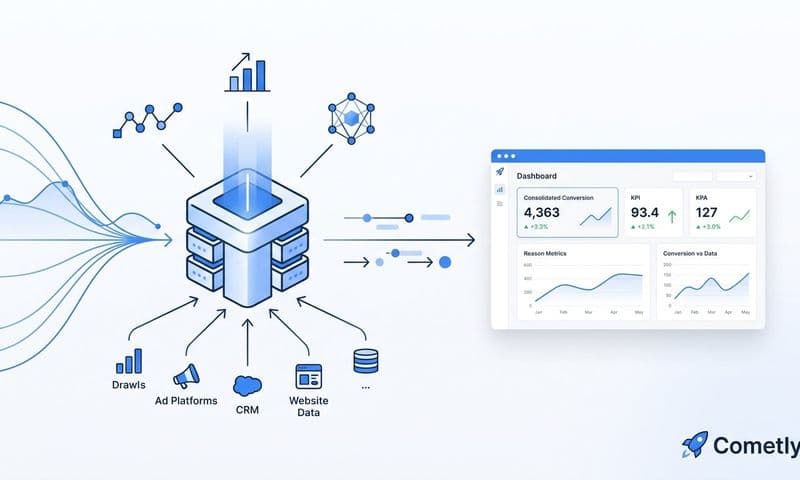
Cometly is a marketing attribution software that tracks, analyzes, and optimizes ad campaigns with AI-powered insights, providing accurate attribution data to measure conversions and revenue from every marketing source.
 9 Best Enterprise Conversion Analytics Tools That Actually Track Revenue
Where This Tool Shines
Cometly excels at solving the fundamental challenge enterprise marketers face: connecting ad spend to actual revenue. Unlike traditional analytics that stop at conversion tracking, Cometly captures every touchpoint in your customer journey and ties them directly to closed deals and revenue outcomes. The platform's AI continuously analyzes this enriched data to identify which campaigns, ad sets, and even specific creatives drive the highest-value customers.
The real power emerges in how Cometly feeds enhanced conversion data back to your ad platforms. When Meta or Google's algorithms receive richer, more accurate conversion signals, they optimize better—targeting prospects more likely to convert and generate revenue. This creates a compounding effect where your attribution accuracy improves your targeting, which improves your results, which provides even better data for optimization.
Key Features & Capabilities
AI-Powered Attribution Tracking: Automatically captures and analyzes every marketing touchpoint across all channels to show what's actually driving revenue.
Server-Side Tracking: Bypasses browser-based tracking limitations and iOS restrictions to maintain accurate data collection even as privacy regulations tighten.
Real-Time Revenue Analytics: See which campaigns are generating revenue as deals close, not weeks later when it's too late to optimize.
Conversion Sync Technology: Sends enriched conversion events back to ad platforms like Meta and Google, improving their AI targeting and optimization.
AI Ads Manager: Provides specific recommendations for budget allocation, campaign optimization, and scaling decisions based on actual revenue performance.
Complete Customer Journey Mapping: Tracks prospects from first anonymous website visit through every interaction to final purchase and beyond.
Best For / Ideal Users
Cometly is built for enterprise marketing teams and agencies managing significant ad budgets across multiple platforms who need to prove ROI with revenue-focused reporting. The platform particularly benefits organizations with complex sales cycles where understanding the full customer journey—not just the last click—is critical for optimization decisions.
It's ideal for businesses that have struggled with attribution gaps between their ad platforms and CRM, or those frustrated by conflicting conversion reports across different tools. Companies running campaigns on Meta, Google, TikTok, and other platforms simultaneously will appreciate the unified view of performance.
Pricing
Cometly offers custom enterprise pricing based on your tracking volume and specific feature requirements. Contact their team directly for pricing tailored to your organization's needs and scale.
2. HubSpot Marketing Analytics
Best for: Enterprises already using HubSpot CRM who need integrated marketing attribution and lead scoring.
HubSpot Marketing Analytics provides comprehensive attribution reporting within their broader marketing automation ecosystem, offering seamless integration between marketing activities and sales outcomes.
 10 Best Enterprise Channel Analytics Software To Maximize Marketing ROI
Where This Tool Shines
HubSpot excels when your organization is already invested in their CRM ecosystem. The platform automatically connects marketing touchpoints to deal outcomes, providing clear attribution without requiring complex integrations or custom development work.
The contact timeline feature shows every interaction a prospect has with your brand—from first website visit through email opens, content downloads, and sales conversations—all in one unified view. This eliminates the data fragmentation that plagues most enterprise marketing teams who struggle to piece together customer journeys across disconnected platforms.
Key Features & Capabilities
Multi-Touch Attribution Reporting: Choose from six attribution models including first touch, last touch, linear, time decay, U-shaped, and W-shaped to understand how different touchpoints contribute to conversions.
Revenue Attribution: Track marketing's direct impact on closed deals with automatic connection between campaigns and revenue outcomes in your CRM.
Contact Timeline Visualization: See every website visit, email interaction, form submission, and sales activity for each prospect in chronological order.
Campaign ROI Analysis: Measure performance across all marketing channels with unified reporting that shows cost per lead, cost per customer, and revenue generated.
Built-In Lead Scoring: Automatically prioritize prospects based on their engagement patterns, demographic fit, and conversion likelihood using customizable scoring models.
Best For / Ideal Users
Perfect for enterprises using HubSpot CRM who want unified marketing and sales reporting without the complexity of integrating separate analytics platforms. The native integration means your marketing team can see attribution data immediately without waiting for IT to build custom connections.
Ideal for organizations with dedicated marketing operations teams who need detailed attribution analysis but lack the technical resources for complex analytics implementations. The platform works particularly well for B2B companies with sales cycles ranging from weeks to several months.
Pricing
HubSpot Marketing Hub starts at $800/month for Professional features, with Enterprise plans beginning at $3,200/month. Attribution reporting is available in Professional and Enterprise tiers, with more advanced modeling options in Enterprise.
3. Salesforce Marketing Cloud Intelligence
Best for: Large enterprises with complex marketing stacks requiring advanced data harmonization and custom attribution modeling.
Salesforce Marketing Cloud Intelligence (formerly Datorama) provides enterprise-level marketing analytics with powerful data integration capabilities and advanced attribution modeling for complex B2B sales cycles.
 9 Best Enterprise Conversion Analytics Tools That Actually Track Revenue
Where This Tool Shines
This platform excels at handling massive data volumes from hundreds of marketing sources simultaneously. Its data harmonization engine automatically standardizes metrics across different platforms, solving the common problem of inconsistent naming conventions and measurement methodologies that plague enterprise marketing teams.
The custom attribution modeling allows enterprises to create sophisticated models that reflect their unique sales processes, including offline touchpoints and long consideration periods typical in enterprise B2B sales. Unlike rigid attribution tools, you can build models that account for your specific business reality—whether that's 90-day sales cycles, multiple decision-makers, or complex channel interactions.
Key Features & Capabilities
Advanced Data Harmonization: Connects 170+ marketing platforms and automatically standardizes metrics across different naming conventions and measurement systems.
Custom Attribution Modeling: Build sophisticated attribution models with machine learning optimization that reflect your unique sales processes and buyer journeys.
Real-Time Dashboard Creation: Drag-and-drop interface allows marketing teams to build custom dashboards without requiring technical resources or IT support.
Automated Anomaly Detection: Machine learning algorithms identify unusual performance patterns and send alerts when campaigns deviate from expected results.
Cross-Channel Budget Optimization: Provides recommendations for budget reallocation based on actual performance data across all marketing channels.
Best For / Ideal Users
Ideal for large enterprises with complex marketing technology stacks, multiple brands, or global operations requiring sophisticated data analysis. The platform works best for organizations with dedicated marketing operations and analytics teams who can leverage its advanced customization capabilities.
Companies managing marketing across dozens of platforms—from traditional ad networks to niche B2B channels—benefit most from the harmonization capabilities. If your team struggles with inconsistent reporting across platforms or needs to prove marketing ROI to executive leadership, this tool provides the unified view required for confident decision-making.
Pricing
Salesforce Marketing Cloud Intelligence pricing starts around $3,000 monthly for basic plans, with enterprise implementations typically ranging from $15,000-$50,000+ monthly depending on data volume and features required.
4. Adobe Analytics
Best for: Enterprises needing advanced segmentation and real-time analytics with deep customization capabilities.
Adobe Analytics provides enterprise-grade web and marketing analytics with advanced segmentation, real-time reporting, and sophisticated attribution modeling capabilities for complex digital experiences.
 10 Best Enterprise Channel Analytics Software To Maximize Marketing ROI
Where This Tool Shines
Adobe Analytics excels at providing granular insights into customer behavior across digital touchpoints. Its advanced segmentation capabilities allow enterprises to create highly specific audience groups and analyze their conversion patterns with precision that most platforms can't match.
The platform's real-time processing means you can see campaign performance and make optimization decisions immediately, not hours or days later. Adobe's machine learning features automatically identify significant trends and anomalies, helping marketing teams focus on the most impactful opportunities without manually sifting through reports.
Key Features & Capabilities
Advanced Audience Segmentation: Create unlimited custom segments based on any combination of behaviors, attributes, and conversion patterns.
Real-Time Analytics: Monitor campaign performance and user behavior as it happens with automated anomaly detection.
Cross-Device Tracking: Identity resolution connects user behavior across devices and browsers for complete journey visibility.
Custom Attribution Modeling: Build attribution models that reflect your specific business logic, including algorithmic attribution options.
Advanced Calculated Metrics: Create custom metrics and KPIs tailored to your business requirements beyond standard analytics.
Adobe Experience Cloud Integration: Seamlessly connect with other Adobe products for personalization and optimization.
Enterprise Data Governance: Comprehensive privacy controls and data governance features for regulatory compliance.
Best For / Ideal Users
Perfect for large enterprises with sophisticated digital experiences, e-commerce platforms, or media companies requiring deep behavioral analytics. The platform is particularly valuable for organizations with dedicated analytics teams who need advanced customization capabilities and can leverage the tool's full potential.
Ideal for companies managing complex customer journeys across multiple digital properties who need granular segmentation and real-time insights to optimize conversion rates.
Pricing
Adobe Analytics pricing is custom and typically starts around $4,800/month for enterprise implementations, with costs scaling based on server calls and feature requirements.
5. Google Analytics 4
Best for: Enterprises seeking comprehensive digital analytics with machine learning insights and cross-platform tracking.
Google Analytics 4 represents Google's latest analytics platform, designed for cross-platform measurement with enhanced privacy controls and machine learning-powered insights for enterprise marketing teams.
 10 Best Enterprise Channel Analytics Software To Maximize Marketing ROI
Where This Tool Shines
GA4 excels at providing comprehensive digital analytics with strong integration across Google's advertising ecosystem. Its machine learning capabilities automatically surface insights about customer behavior and conversion patterns that might otherwise go unnoticed. The platform's cross-platform tracking helps enterprises understand how customers interact across websites, mobile apps, and other digital touchpoints, creating a unified view of the customer journey.
The enhanced e-commerce tracking provides detailed revenue attribution for online sales, connecting specific marketing activities to actual purchase behavior. Unlike its predecessor Universal Analytics, GA4 uses an event-based data model that captures user interactions more flexibly, allowing enterprises to track custom conversion events that matter to their specific business model.
Key Features & Capabilities
Cross-Platform Tracking: Unified measurement across web and mobile applications with automatic identity resolution.
Machine Learning Insights: Predictive analytics that identify users likely to convert or churn based on behavioral patterns.
Enhanced E-Commerce Tracking: Detailed revenue attribution showing which campaigns drive actual purchases and customer lifetime value.
Custom Conversion Modeling: Flexible attribution analysis with data-driven attribution models that adapt to your customer journey.
Advanced Audience Building: Sophisticated segmentation with seamless integration to Google Ads for remarketing and targeting.
Privacy-Focused Measurement: Consent mode and cookieless tracking options that maintain data accuracy while respecting user privacy.
BigQuery Integration: Direct data export to Google's data warehouse for advanced analysis and custom reporting beyond the standard interface.
Best For / Ideal Users
GA4 is ideal for enterprises heavily invested in Google's advertising ecosystem who need comprehensive digital analytics without significant platform costs. The tool works particularly well for organizations running substantial Google Ads campaigns, as the integration allows for seamless audience sharing and conversion optimization.
Companies with strong technical teams who can leverage advanced features like BigQuery integration and custom event tracking will extract maximum value. E-commerce businesses benefit significantly from the enhanced e-commerce tracking capabilities that connect marketing activities directly to revenue outcomes.
Pricing
Google Analytics 4 is free for standard use with generous data limits suitable for most enterprises. Google Analytics 360 (the enterprise version) starts around $12,500/month and provides higher data limits, advanced features, and dedicated support for large-scale implementations.
6. Ruler Analytics
Best for: B2B enterprises needing closed-loop attribution that connects marketing activities directly to revenue and customer lifetime value.
Ruler Analytics is a marketing measurement platform that offers multi-touch attribution, impression attribution, and marketing mix modeling to help companies track and prove their marketing's impact on sales.
 9 Best Enterprise Conversion Analytics Tools That Actually Track Revenue
Where This Tool Shines
Ruler Analytics excels at solving the revenue attribution puzzle that plagues B2B companies with complex sales cycles. The platform tracks anonymous website visitors from their first interaction through every touchpoint, maintaining identity even when prospects convert through offline channels like phone calls or sales meetings.
What sets Ruler apart is its closed-loop attribution approach. While most analytics tools stop at lead generation, Ruler connects those leads to actual closed deals and ongoing customer value. This means you can see not just which campaigns generate the most leads, but which ones produce customers who actually generate revenue and stick around long-term.
Key Features & Capabilities
Closed-Loop Revenue Attribution: Connects marketing touchpoints directly to closed deals and revenue outcomes, showing true campaign ROI.
Anonymous Visitor Tracking: Identifies and tracks website visitors through their entire journey, even before they fill out a form.
Call Tracking Integration: Attributes phone call conversions back to the marketing sources that drove them, capturing offline touchpoints.
Customer Lifetime Value Analysis: Tracks revenue beyond initial purchase to show which campaigns produce the most valuable long-term customers.
Multi-Touch Attribution Models: Offers various attribution models to distribute credit across the customer journey based on your sales cycle.
CRM Integration: Syncs with major CRMs to connect marketing data with sales outcomes for complete visibility.
Marketing Mix Modeling: Analyzes overall marketing effectiveness across channels to optimize budget allocation.
Best For / Ideal Users
Ruler Analytics is perfect for B2B enterprises with longer sales cycles where prospects interact with multiple touchpoints before converting. It's particularly valuable for organizations with high-value customers where understanding which marketing activities drive the best accounts matters more than pure lead volume.
The platform is ideal for marketing teams that need to prove ROI to executive leadership with revenue-focused reporting rather than vanity metrics. If your sales process includes significant offline components like phone consultations or in-person meetings, Ruler's call tracking and offline attribution capabilities become essential.
Pricing
Ruler Analytics offers plans starting around $199/month for small businesses, with enterprise plans typically ranging from $1,000-$5,000+ monthly based on tracking volume and features needed.
7. Mixpanel
Best for: Product-focused enterprises needing detailed user behavior analytics and conversion funnel optimization.
Mixpanel is a product analytics platform that provides event tracking and digital analytics to help teams track, analyze, and act on user behavior to drive acquisition, growth, and retention.
 9 Best Enterprise Conversion Analytics Tools That Actually Track Revenue
Where This Tool Shines
Mixpanel excels at tracking user actions within digital products, providing granular insights into how customers interact with your platform or application. Its event-based tracking model allows enterprises to measure any user action, from button clicks to feature usage patterns, giving product teams the data they need to optimize user experience and drive conversions.
The platform's cohort analysis helps identify which user acquisition campaigns produce the most engaged, long-term customers. Instead of just counting sign-ups, you can see which marketing channels bring users who actually stick around and use your product. This insight transforms how you allocate acquisition budget—focusing spend on channels that deliver quality, not just quantity.
Key Features & Capabilities
Event-based tracking: Measure any user action within your product for detailed behavior analysis.
Advanced cohort analysis: Group users by acquisition source, behavior patterns, or custom criteria to understand retention.
Conversion funnel optimization: Identify exactly where users drop off in your conversion process with detailed funnel reports.
A/B testing integration: Test product changes with statistical significance testing to validate improvements.
Real-time analytics: See user behavior as it happens, enabling immediate optimization decisions.
Custom dashboard creation: Build tailored views for different teams with advanced filtering and segmentation.
User journey mapping: Visualize complete paths users take through your product to identify optimization opportunities.
Best For / Ideal Users
Ideal for SaaS companies, mobile app developers, or digital product teams needing detailed user behavior insights beyond basic web analytics. Perfect for product marketing teams focused on optimizing user experience and conversion rates within the product itself.
Works particularly well for organizations where the product IS the business—subscription software, mobile applications, or digital platforms where understanding in-app behavior directly impacts revenue and retention.
Pricing
Mixpanel offers a free tier for basic usage with up to 20 million monthly events. Paid plans start at $25/month, with enterprise plans typically ranging from $833-$2,000+ monthly based on data volume and advanced features.
8. Heap Analytics
Best for: Enterprises wanting automatic event tracking without manual implementation, providing comprehensive user behavior insights.
Heap Analytics automatically captures every user interaction on your website or application, providing comprehensive behavioral data without requiring manual event tracking setup.
 11 Best Marketing Analytics Software to Track What Actually Drives Revenue in 2026
Where This Tool Shines
Heap's automatic event capture eliminates the technical burden that slows down most analytics implementations. While traditional tools require developers to manually tag every button, form, and interaction you want to track, Heap captures everything automatically from day one. This means your product and marketing teams can analyze user behavior retroactively—answering questions about past user actions without having waited to set up tracking in advance.
The platform's Session Replay feature provides visual context that raw data can't deliver. You can watch exactly how users navigate your site, where they hesitate, and what causes them to abandon conversion funnels. This combination of complete data capture and visual playback helps teams understand not just what users do, but why certain conversion paths succeed while others fail.
Key Features & Capabilities
Automatic Event Capture: Tracks all user interactions without manual tagging or developer implementation.
Retroactive Analysis: Analyze historical user behavior without prior tracking setup, enabling teams to answer new questions about past data.
Session Replay: Visual playback of user sessions provides context for understanding conversion barriers and user experience issues.
Heap Illuminate: Data science capabilities that automatically identify friction points and conversion obstacles in user journeys.
Advanced Segmentation: Create detailed user cohorts based on any combination of behaviors, properties, and conversion patterns.
Conversion Funnel Analysis: Detailed drop-off insights show exactly where users abandon conversion paths and why.
Sense AI Analytics: AI-powered analytics that surfaces insights and answers questions in natural language.
Best For / Ideal Users
Heap is perfect for enterprises that want comprehensive user behavior data without extensive technical implementation overhead. Product teams benefit from the ability to analyze feature adoption and usage patterns without waiting for engineering resources to implement tracking.
UX researchers and conversion optimization specialists find particular value in Session Replay combined with quantitative funnel analysis. Marketing teams use Heap to understand which campaigns drive the most engaged users and identify optimization opportunities in conversion paths.
Organizations with limited development resources or those needing to move quickly on analytics questions will appreciate Heap's automatic capture approach that eliminates the typical implementation bottleneck.
Pricing
Heap offers a free tier for basic usage with up to 10,000 sessions monthly. Paid plans start around $3,600 annually for growing teams. Enterprise plans with advanced features, higher data volumes, and dedicated support typically range from $12,000 to $48,000+ annually based on session volume and feature requirements.
9. Amplitude
Best for: Data-driven enterprises requiring advanced product analytics with machine learning-powered insights and predictive modeling.
Amplitude is a digital analytics platform that helps build better products by turning user data into meaningful insights, with experimentation tools and AI-powered analytics.
 9 Best Enterprise Conversion Analytics Tools That Actually Track Revenue
Where This Tool Shines
Amplitude excels at providing predictive insights about user behavior, using machine learning to identify which users are likely to convert, churn, or become high-value customers. The platform's behavioral cohorts automatically group users based on their actions, revealing hidden patterns in customer behavior that drive business outcomes.
What sets Amplitude apart is its focus on the complete product experience. Rather than just tracking marketing touchpoints, it analyzes how users actually interact with your product or platform after conversion. This depth of insight helps enterprises understand not just which campaigns drive sign-ups, but which ones bring users who actually engage with key features and become long-term customers.
Key Features & Capabilities
Machine Learning-Powered Predictive Analytics: Amplitude's AI identifies patterns in user behavior to predict future actions, helping you focus resources on high-potential users.
Advanced Behavioral Cohort Analysis: Automatically groups users based on their actions rather than demographics, revealing which acquisition campaigns produce the most engaged customers.
User Journey Mapping with Conversion Path Optimization: Visualizes the actual paths users take through your product, identifying friction points and optimization opportunities.
Retention Analysis with Churn Prediction: Tracks user retention over time and predicts which users are at risk of churning before it happens.
A/B Testing with Statistical Significance: Built-in experimentation tools measure feature impact with proper statistical analysis, ensuring confident decision-making.
Real-Time Analytics with Automated Insights: Processes user actions immediately and surfaces significant trends automatically, reducing time spent on manual analysis.
Best For / Ideal Users
Amplitude is ideal for SaaS companies, mobile app developers, and digital platforms where understanding in-product behavior is critical to growth. It's particularly valuable for product marketing teams who need to connect acquisition campaigns to actual product engagement and retention.
The platform works best for organizations with sophisticated analytics needs who want to move beyond basic conversion tracking to understand the full customer lifecycle. Companies with dedicated product analytics or growth teams will extract the most value from Amplitude's advanced capabilities.
Pricing
Amplitude offers a free tier for basic usage with up to 10 million events per month. Paid plans start around $995/month for the Growth tier. Enterprise plans with advanced machine learning features and higher data limits typically range from $1,500-$50,000+ monthly based on event volume and feature requirements.
Making the Right Choice
Selecting the right enterprise conversion analytics tool comes down to three factors: your existing technology stack, your team's analytical maturity, and your specific attribution challenges.
If you're struggling with fragmented data across multiple platforms and need AI-powered insights that actually improve your ad targeting, Cometly delivers real-time revenue attribution with the most advanced optimization capabilities. For organizations already invested in specific ecosystems, HubSpot Marketing Analytics or Google Analytics 4 provide seamless integration with minimal setup complexity.
B2B enterprises with long sales cycles and offline conversions should prioritize Ruler Analytics or Salesforce Marketing Cloud Intelligence—both excel at connecting marketing touchpoints to closed deals across complex buyer journeys. Product-focused teams needing granular user behavior insights will find Mixpanel, Heap, or Amplitude provide the depth required for conversion optimization.
The most critical factor isn't features—it's implementation speed and data accuracy. Every day without proper attribution means wasted ad spend and missed optimization opportunities. Start with a platform that matches your current capabilities while providing room to grow as your analytics maturity increases.
Ready to see which campaigns actually drive revenue? Get your free demo and discover how AI-powered attribution transforms your marketing performance from guesswork to precision.