
Your CMO just asked which of your $2.3 million marketing campaigns actually drove revenue last quarter. You open three different dashboards, export four spreadsheets, and still can't give a confident answer. Meanwhile, your competitors are making data-driven decisions in real-time while you're drowning in attribution chaos.
Enterprise marketing measurement has become the ultimate puzzle. With customers bouncing between LinkedIn ads, Google searches, email campaigns, webinars, and sales calls before converting, traditional analytics tools leave massive blind spots. The average enterprise uses 12+ marketing channels, but most measurement tools only track fragments of the customer journey.
The companies that crack this code see remarkable results. Organizations with unified marketing measurement report 23% better campaign performance and 31% more efficient budget allocation. But choosing the right tool means understanding which platforms actually connect all your marketing dots versus those that just add more data silos.
Here are the leading enterprise marketing measurement platforms that transform scattered touchpoints into clear, actionable insights. We'll explore tools that handle complex attribution models, integrate with your existing tech stack, and provide the executive-level reporting your leadership team demands.
1. Cometly
Best for: AI-powered attribution and cross-platform campaign optimization
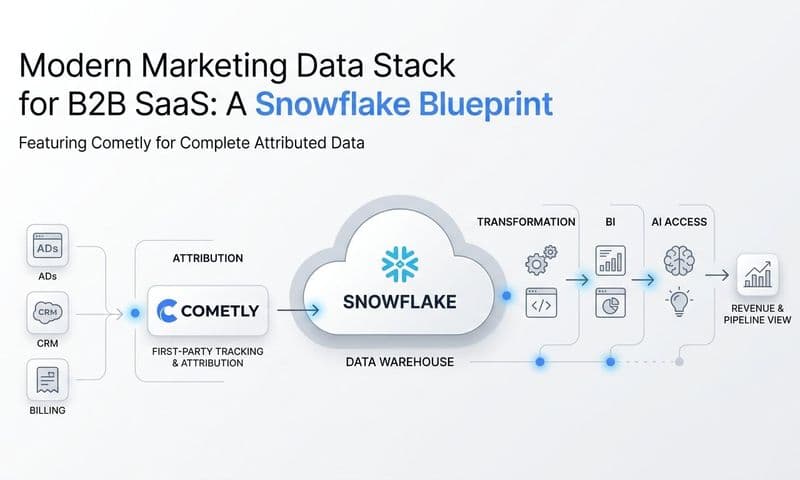
Cometly is a marketing attribution software that tracks, analyzes, and optimizes ad campaigns with AI-powered insights, providing accurate attribution data to measure conversions and revenue from every marketing source.
 8 Best Enterprise Marketing Measurement Tools To Track ROI Across Every Channel
Where This Tool Shines
Cometly excels at capturing the complete customer journey across your entire marketing ecosystem. The platform tracks interactions from Meta ads and Google campaigns to CRM events and website behavior, connecting every touchpoint from initial ad click to final conversion and beyond.
What sets Cometly apart is its conversion sync technology that feeds enriched data back to ad platforms like Meta and Google. This creates a feedback loop that improves targeting algorithms and optimization, leading to measurably better ad performance over time. The platform's AI engine analyzes these touchpoints to identify which campaigns actually drive revenue, not just surface-level metrics like clicks or impressions.
Key Features & Capabilities
Multi-touch attribution modeling: Compare first-click, last-click, and AI-powered attribution models to understand which approach best reflects your customer journey.
Real-time customer journey tracking: See every touchpoint from awareness to conversion as it happens across all marketing channels.
AI-powered campaign recommendations: Get specific suggestions for budget allocation and optimization based on actual performance patterns.
Server-side tracking: Bypass iOS limitations and cookie restrictions for accurate data collection that maintains reliability despite privacy regulations.
Conversion sync technology: Send enriched events back to ad platforms for better targeting and improved algorithmic learning.
Best For / Ideal Users
Cometly works best for enterprise marketing teams and agencies running complex, multi-channel campaigns. It's particularly valuable for businesses with longer sales cycles where customers interact with multiple touchpoints before converting.
The platform serves performance marketers who need to optimize ad spend across platforms and connect advertising performance to actual revenue outcomes. Companies running significant paid advertising budgets across Meta, Google, TikTok, and other platforms find the most value in Cometly's unified attribution approach.
Pricing
Custom enterprise pricing based on monthly tracked events and required integrations.
2. Adobe Analytics
Best for: Enterprise-grade web analytics with advanced segmentation and behavioral analysis capabilities
Adobe Analytics is the enterprise standard for sophisticated web and app analytics, offering measurement capabilities that extend far beyond basic traffic reporting into deep behavioral analysis and customer intelligence.
 10 Best Enterprise Channel Analytics Software To Maximize Marketing ROI
Where This Tool Shines
Adobe Analytics excels at processing massive data volumes while maintaining granular detail. The platform handles billions of server calls monthly without sacrificing the ability to drill down into individual user journeys and micro-conversions.
The Analysis Workspace provides unmatched flexibility for creating custom reports and visualizations. Marketers can build complex queries, compare segments, and visualize data relationships without writing code or waiting for IT support. This self-service capability transforms how enterprise teams explore marketing performance.
Key Features & Capabilities
Advanced Segmentation Engine: Build complex audience definitions combining behavioral patterns, demographics, and custom business variables to understand precise customer groups.
Attribution IQ: Compare first-touch, last-touch, linear, time-decay, and algorithmic attribution models side-by-side to understand how different approaches impact campaign credit.
Real-Time Data Processing: Access current performance metrics without delays, enabling immediate campaign adjustments and optimization decisions.
Anomaly Detection: AI-powered alerts automatically identify unusual metric patterns and significant deviations from expected performance.
Cohort Analysis: Track specific user groups over time to measure retention, lifetime value progression, and long-term engagement patterns.
Flow Visualization: See exactly how users navigate through your website or app, identifying common paths and unexpected journey patterns.
Custom Variable Tracking: Configure unlimited custom dimensions and metrics to track business-specific KPIs beyond standard web analytics.
Best For / Ideal Users
Adobe Analytics works best for large enterprises with complex digital properties generating substantial traffic volumes. Organizations with dedicated analytics teams who need sophisticated segmentation and behavioral analysis capabilities find the most value.
The platform particularly suits businesses already invested in Adobe Experience Cloud, where integration with Adobe Target, Campaign, and other components creates powerful optimization synergies.
Pricing
Enterprise licensing typically starts around $48,000 annually, with costs scaling based on server call volumes and advanced feature requirements.
3. Salesforce Marketing Cloud Intelligence
Best for: Multi-channel campaign measurement with deep CRM integration
Salesforce Marketing Cloud Intelligence (formerly Datorama) serves as a centralized marketing analytics hub that connects data from over 170 marketing platforms into unified dashboards and reports.
 8 Best Enterprise Marketing Measurement Tools To Track ROI Across Every Channel
Where This Tool Shines
Marketing Cloud Intelligence excels at solving the data fragmentation problem that plagues enterprise marketing teams. When your campaigns span Meta, Google, LinkedIn, email platforms, webinars, and offline events, manually combining performance reports becomes impossible at scale.
The platform's automated data harmonization standardizes metrics across different sources. Your Facebook "conversions" and Google "goal completions" get normalized into consistent measurement frameworks, eliminating the confusion of comparing apples to oranges across platforms.
Key Features & Capabilities
170+ Platform Integrations: Pre-built connectors for major advertising, social, email, and analytics platforms eliminate custom API development.
Automated Data Harmonization: Standardizes metrics, dimensions, and naming conventions across disparate data sources automatically.
AI-Powered Insights: Einstein AI identifies performance anomalies, trends, and optimization opportunities across your marketing mix.
Custom Dashboard Builder: Drag-and-drop interface creates executive-level reports without requiring technical expertise or SQL knowledge.
Marketing Intelligence Cloud: Combines descriptive analytics with predictive modeling for budget allocation and performance forecasting.
Best For / Ideal Users
Marketing Cloud Intelligence works best for large enterprises with complex marketing technology stacks spanning 10+ platforms. Organizations already invested in Salesforce's ecosystem gain additional value through native CRM integration that connects marketing spend to closed revenue.
The platform particularly benefits marketing operations teams responsible for cross-channel reporting and CMOs who need executive dashboards showing unified performance across all marketing investments.
Pricing
Enterprise licensing typically starts around $3,000 monthly, with costs scaling based on data volume, number of integrations, and user seats required.
4. HubSpot Marketing Analytics
Best for: All-in-one marketing measurement with CRM integration
HubSpot Marketing Analytics combines campaign tracking with comprehensive customer relationship management, creating a unified view of marketing and sales performance that eliminates the disconnect between lead generation and revenue outcomes.
 7 Best Enterprise Marketing Data Analytics Software Tools To Maximize ROI
Where This Tool Shines
HubSpot's greatest strength is its seamless integration between marketing activities and sales outcomes. The platform automatically connects marketing touchpoints to closed deals, providing clear attribution from first touch to revenue without requiring manual data matching or complex integrations.
The contact timeline feature shows every interaction a prospect has with your marketing content—from email opens and website visits to content downloads and form submissions. This granular view helps marketing teams understand which specific assets and campaigns influence buying decisions at each stage of the funnel.
Key Features & Capabilities
Revenue attribution reporting: Connect marketing activities directly to closed deals and revenue with automatic CRM integration.
Contact timeline tracking: See every interaction in a prospect's journey from first website visit to customer conversion.
Campaign performance analysis: Track ROI across email, social media, content marketing, and paid advertising campaigns in one dashboard.
For a deeper dive, see our guide to ad campaign performance analysis methods.
Lead scoring and attribution: Understand which marketing activities indicate genuine purchase intent versus casual browsing.
Custom dashboard creation: Build executive-level reports tailored to specific business metrics and KPIs without technical expertise.
Marketing automation analytics: Measure the effectiveness of automated workflows and nurture sequences on conversion rates.
Social media monitoring: Track brand mentions, social campaign performance, and engagement metrics alongside other marketing channels.
Best For / Ideal Users
HubSpot works exceptionally well for B2B companies that want to align marketing and sales teams around shared metrics and revenue goals. The platform eliminates the common disconnect where marketing reports on leads while sales focuses on deals.
It's ideal for organizations that prefer an all-in-one platform over managing multiple specialized tools. Companies with defined sales processes and longer consideration cycles benefit most from seeing the complete journey from marketing touchpoint to closed revenue.
Pricing
Marketing Hub Professional starts at $890/month for up to 2,000 marketing contacts, with Enterprise plans offering advanced analytics features and higher contact limits at custom pricing.
5. Google Analytics 4
Best for: Free enterprise-level analytics with machine learning insights
Google Analytics 4 represents a fundamental shift in how enterprises approach web and app analytics, offering sophisticated measurement capabilities without licensing costs while introducing privacy-focused tracking methods that comply with evolving data regulations.
 10 Best Enterprise Channel Analytics Software To Maximize Marketing ROI
Where This Tool Shines
GA4's event-based tracking model provides unprecedented flexibility compared to traditional pageview-focused analytics. Instead of being limited to predefined page tracking, you can measure any user interaction as a custom event—button clicks, video plays, scroll depth, form interactions, or business-specific actions unique to your enterprise.
If you're evaluating vendors, our ecommerce video creator tool breakdown can help.
The platform's machine learning capabilities automatically surface insights about user behavior, conversion patterns, and revenue opportunities that might otherwise remain hidden in your data. These predictive metrics include purchase probability, churn probability, and predicted revenue, helping marketing teams identify high-value users before they convert.
Key Features & Capabilities
Event-based measurement architecture: Track any user interaction as a measurable event without code changes for each new metric.
Cross-platform journey tracking: Unified measurement across websites and mobile apps using a single property for complete customer journey visibility.
AI-powered predictive analytics: Machine learning models automatically calculate customer lifetime value predictions and churn probability scores.
Enhanced ecommerce tracking: Detailed analysis of purchase behavior, product performance, and shopping funnel optimization without additional implementation.
For a deeper dive into this space, see our ecommerce UGC creator tool guide.
Audience creation and export: Build custom audiences based on website behavior and export directly to Google Ads, Display & Video 360, and other advertising platforms.
Conversion path analysis: Understand the complete sequence of interactions leading to conversions across multiple sessions and devices.
Privacy-focused measurement: Cookieless tracking options and consent mode features ensure compliance with GDPR, CCPA, and other data regulations.
Best For / Ideal Users
GA4 works exceptionally well for enterprises that want comprehensive analytics without the six-figure licensing costs of enterprise platforms. It's particularly valuable for companies heavily invested in Google's advertising ecosystem, as the integration with Google Ads creates powerful optimization opportunities through automated audience creation and conversion data sharing.
The platform suits organizations with technical resources to implement custom event tracking and configure advanced features, though the interface has become more accessible for non-technical marketers compared to Universal Analytics.
Pricing
Free for most businesses with standard data collection limits. Google Analytics 360 offers enterprise features including advanced attribution modeling, unsampled reporting, and BigQuery integration starting at $150,000 annually.
6. Mixpanel
Best for: Product and user behavior analytics with advanced cohort analysis
Mixpanel is a product analytics platform that provides a complete view of customers through digital analytics, enabling teams to track, analyze, and act on user behavior to drive acquisition, growth, and retention.
 8 Best Enterprise Marketing Measurement Tools To Track ROI Across Every Channel
Where This Tool Shines
Mixpanel's event-based tracking model captures granular user interactions that traditional pageview analytics completely miss. Instead of just knowing someone visited your pricing page, you see exactly which features they explored, how long they engaged with each element, and what actions preceded their conversion decision.
The platform excels at answering specific behavioral questions through its intuitive query interface. Marketing teams can build sophisticated marketing analytics tools workflows to quickly analyze questions like "Which acquisition channels bring users who actually engage with our product?" or "What's the common behavior pattern among customers who upgrade to enterprise plans?" without waiting for data teams to build custom reports.
Key Features & Capabilities
Event-based user tracking: Measure any user action as a trackable event, from button clicks to feature usage to custom business actions.
Advanced cohort analysis: Understand retention and engagement patterns over time by grouping users based on shared characteristics or behaviors.
Funnel analysis: Identify exactly where users drop off in conversion processes and which steps create the most friction.
A/B testing integration: Measure the impact of experiments on user behavior and connect tests to actual business outcomes.
Real-time analytics: Access current user activity and engagement metrics without delays, enabling immediate campaign adjustments.
Best For / Ideal Users
Mixpanel works best for product-led companies and SaaS businesses that need to understand user engagement beyond basic web analytics. It's particularly valuable for optimizing onboarding flows, measuring feature adoption, and identifying which marketing campaigns drive engaged users rather than just sign-ups.
The platform serves marketing teams who want to connect acquisition campaigns to actual product usage and long-term customer value, not just initial conversions.
Pricing
Starts at $25/month for basic features, with enterprise plans offering advanced analytics and higher event volumes based on specific tracking needs.
7. Amplitude
Best for: Product analytics and user journey optimization for digital-first enterprises
Amplitude is a digital analytics platform that transforms user behavior data into actionable insights through AI-powered analytics, helping enterprises understand not just what users do, but why they do it and how to optimize their experience.
 8 Best Enterprise Marketing Measurement Tools To Track ROI Across Every Channel
Where This Tool Shines
Amplitude excels at behavioral cohort analysis that reveals how different user segments interact with your product and marketing touchpoints over time. The platform's machine learning algorithms automatically surface meaningful patterns in user behavior that would take analysts weeks to discover manually.
What sets Amplitude apart is its ability to connect product usage patterns with marketing attribution. You can see which campaigns drive users who actually engage long-term versus those who convert but never return. This insight transforms how you allocate marketing budget—focusing on channels that deliver engaged users, not just conversions.
Key Features & Capabilities
Behavioral Cohort Analysis: Track how specific user groups engage over time based on their actions, acquisition source, or any custom property you define.
User Journey Mapping: Visualize the actual paths users take through your product or website, revealing unexpected navigation patterns and optimization opportunities.
Automated Insights: AI-powered discovery identifies significant behavior patterns, unusual trends, and user segments worth investigating without manual analysis.
Retention Analysis: Measure and optimize long-term user engagement with flexible retention curves that show exactly when and why users return or churn.
Revenue Analytics: Connect user behavior directly to business outcomes by tracking how engagement patterns correlate with revenue generation and customer lifetime value.
Experimentation Platform: Test and measure the impact of product changes or marketing campaigns with built-in A/B testing capabilities that integrate with behavioral data.
Cross-Platform Tracking: Unified analytics across web, mobile apps, and other digital touchpoints create a complete view of user behavior regardless of device.
Best For / Ideal Users
Amplitude works best for digital-first companies where product engagement drives business success—mobile apps, SaaS platforms, and e-commerce businesses that need to optimize user experience and retention.
The platform is particularly valuable for product-led growth companies where marketing's job extends beyond acquisition to driving activation, engagement, and expansion revenue through product usage.
Pricing
Free tier available for teams tracking up to 10 million events monthly, with paid plans starting at $995/month for advanced features, higher event volumes, and enterprise support.
8. Tableau with Marketing Data Connectors
Best for: Advanced data visualization and custom marketing analytics dashboards
Tableau transforms complex marketing data into visual stories that reveal patterns and insights hidden in traditional spreadsheet reports.
 7 Best Enterprise Marketing Analytics Tools To Prove Marketing ROI
Where This Tool Shines
Tableau's power lies in its ability to combine data from multiple marketing platforms into sophisticated visualizations without requiring SQL knowledge or technical expertise. The drag-and-drop interface lets marketers build custom dashboards that answer specific business questions—from campaign ROI analysis to customer journey mapping—in ways that standard platform reports simply can't.
When paired with marketing data connectors, Tableau becomes particularly valuable for executive reporting. You can pull Google Ads spend, Meta campaign results, email performance, and CRM data into a single dashboard that tells the complete story of marketing performance. This eliminates the manual work of exporting data from multiple platforms and combining it in spreadsheets.
Key Features & Capabilities
Interactive data visualization: Create charts, graphs, and dashboards that stakeholders can explore and filter themselves.
Multi-source data integration: Connect to marketing platforms, databases, spreadsheets, and cloud applications simultaneously.
Custom calculation engine: Build complex metrics and KPIs specific to your business without writing code.
Real-time dashboard updates: Connect to live data sources for current performance visibility across all channels.
Collaborative analytics: Share dashboards with teams and enable collaborative data exploration and insights.
Mobile optimization: Access full-featured dashboards from tablets and smartphones for on-the-go insights.
Automated reporting: Schedule dashboard snapshots and reports to be delivered to stakeholders automatically.
Best For / Ideal Users
Tableau works best for enterprises with dedicated analytics or marketing operations teams that need to create custom visualizations beyond what standard marketing platforms provide. It's particularly valuable for organizations that want to combine marketing data with other business metrics like sales performance, customer support data, or financial information.
The platform excels when you need to answer complex questions that require data from multiple sources or when executive stakeholders demand sophisticated visual reporting that goes beyond basic charts.
Pricing
Creator licenses start at $75 per user monthly for full authoring capabilities. Enterprise deployments typically require multiple license types—Creators build dashboards, Explorers interact with them, and Viewers consume reports—with costs scaling based on user count and deployment complexity.
Making the Right Choice
The right enterprise marketing measurement tool depends on your specific attribution challenges and organizational priorities. Cometly delivers the most comprehensive solution for marketers who need AI-powered attribution that connects every touchpoint to revenue outcomes while feeding optimization data back to ad platforms. Adobe Analytics remains unmatched for enterprises requiring sophisticated behavioral segmentation and high-volume data processing. For teams deeply embedded in specific ecosystems, HubSpot provides seamless CRM integration while Google Analytics 4 offers robust capabilities at no cost.
Consider your primary measurement gap when choosing. If attribution accuracy across complex customer journeys is your biggest challenge, platforms with server-side tracking and multi-touch modeling deliver the clearest ROI visibility. Organizations focused on product analytics and user engagement patterns will find more value in Mixpanel or Amplitude. Teams that need custom visualizations combining marketing data with broader business metrics should explore Tableau's flexibility.
The most successful implementations start with a clear audit of your current attribution blind spots. Identify which customer touchpoints you're missing, which channels lack proper tracking, and where your reporting creates more questions than answers. This clarity helps you select the platform that addresses your specific measurement challenges rather than adding another disconnected data source.
Ready to eliminate attribution chaos and gain complete visibility into your marketing performance? Get your free demo to see how AI-powered attribution transforms scattered marketing data into actionable revenue insights.