
Enterprise sales teams are drowning in data but starving for insights. When your latest $2 million deal closes, can you confidently tell leadership which marketing campaigns, content pieces, and touchpoints actually drove that revenue? Most can't.
The modern B2B buyer journey spans months, involves multiple stakeholders, and touches dozens of channels before a purchase decision. Without proper attribution software, you're essentially flying blind—making budget decisions based on last-click attribution or gut feelings rather than comprehensive data.
Enterprise sales attribution software solves this by connecting every customer touchpoint to actual revenue outcomes. These platforms track the entire buyer journey from first anonymous website visit through closed deal, revealing which marketing investments truly drive pipeline and revenue.
The stakes couldn't be higher. Companies with advanced attribution capabilities see 15-20% better marketing ROI because they can double down on what works and eliminate what doesn't. They make faster, more confident decisions about budget allocation, campaign optimization, and sales enablement.
We've evaluated the top enterprise sales attribution platforms based on tracking accuracy, integration capabilities, reporting depth, and scalability. Here are the leading solutions for 2026.
1. Cometly
Best for: Enterprises seeking AI-powered attribution with real-time insights and advanced campaign optimization
Cometly is a marketing attribution platform that tracks every touchpoint from ad click to closed deal, providing enterprises with complete visibility into their customer journey through AI-powered insights and server-side tracking technology.
 8 Best Enterprise Sales Attribution Software Tools To Maximize ROI
Where This Tool Shines
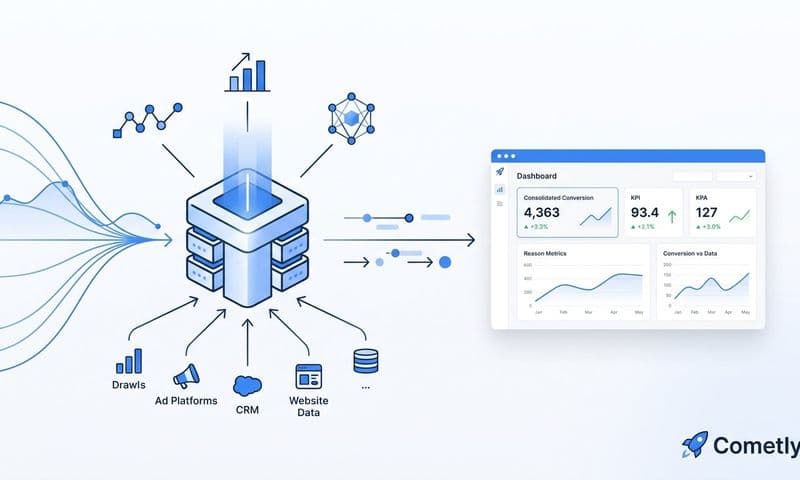
Cometly excels at capturing the complete customer journey with AI-enhanced tracking that goes far beyond basic attribution models. The platform connects ad platforms, CRM systems, and website analytics to create a unified view of how prospects become customers.
Its AI engine identifies patterns in successful conversions, automatically surfacing insights about which campaigns and touchpoints drive the highest-value deals. Real-time data processing means sales and marketing teams always have current attribution data for decision-making, eliminating the delays that plague monthly reporting cycles.
Key Features & Capabilities
Complete Customer Journey Tracking: Captures every interaction from first anonymous website visit through closed deal, providing end-to-end visibility into the buyer journey.
AI-Powered Recommendations: Machine learning algorithms analyze conversion patterns and automatically suggest campaign optimizations and budget allocation adjustments for maximum ROI.
Server-Side Tracking: Implements advanced tracking technology that maintains accuracy even as browser-based tracking becomes less reliable, ensuring data integrity across all touchpoints.
Conversion Data Sync: Sends enriched conversion data back to ad platforms like Meta and Google, improving their targeting algorithms and campaign performance over time.
Multi-Touch Attribution Models: Offers customizable attribution models with flexible weighting to match your specific sales process and buyer journey stages.
Real-Time Analytics Dashboard: Provides instant updates across all touchpoints, enabling immediate optimization decisions rather than waiting for delayed reports.
Best For / Ideal Users
Cometly is ideal for enterprise marketing teams and agencies managing complex, multi-channel campaigns who need accurate attribution data to optimize ad spend and prove marketing ROI.
Perfect for companies running significant paid advertising budgets across multiple platforms like Google Ads, Meta, LinkedIn, and TikTok who struggle to understand which channels actually drive revenue.
Marketing leaders who need to justify budget allocation decisions with concrete data will find Cometly's revenue-focused reporting particularly valuable for demonstrating marketing's contribution to pipeline and closed deals.
Pricing
Cometly offers enterprise pricing based on tracked events and integrations. Contact their sales team for custom enterprise packages that scale with your attribution needs and data volume requirements.
2. HubSpot Marketing Analytics
Best for: Enterprises already using HubSpot CRM who want integrated attribution within their existing ecosystem
HubSpot Marketing Analytics provides multi-touch attribution reporting directly within the HubSpot platform, eliminating the need for separate attribution tools when you're already invested in their ecosystem.
 7 Best Conversion Attribution Software To Track Multi-Channel ROI In 2026
Where This Tool Shines
HubSpot's attribution power comes from its native CRM integration. Attribution data appears directly in contact records, deal timelines, and company profiles—exactly where your sales team already works. This means no platform switching, no data exports, and no training on yet another tool.
The platform automatically captures every marketing touchpoint: email opens, website visits, form submissions, content downloads, social media interactions, and ad clicks. These touchpoints map directly to contacts and deals, creating a complete engagement timeline that both marketing and sales can reference during the customer journey.
Key Features & Capabilities
Native CRM Integration: Attribution data lives in contact and deal records, not a separate dashboard.
Multiple Attribution Models: Choose from first-touch, last-touch, linear, U-shaped, W-shaped, and time-decay models to match your analysis needs.
Automated Touchpoint Tracking: Captures email, social, content, and website interactions without manual tagging.
Revenue Attribution Reporting: Connect marketing activities to actual closed deals and revenue outcomes.
Campaign ROI Analysis: See which campaigns drive pipeline and revenue across all HubSpot marketing tools.
Custom Report Builder: Create attribution dashboards tailored to your specific reporting requirements.
Best For / Ideal Users
HubSpot attribution is perfect for enterprises already using HubSpot CRM and Marketing Hub who want attribution insights without adding another platform to their tech stack. It works especially well for teams that prioritize ease of use and sales-marketing alignment over advanced statistical modeling.
The platform suits organizations with straightforward B2B sales processes where most touchpoints happen within the HubSpot ecosystem—email campaigns, landing pages, forms, and tracked website visits.
Pricing
Attribution reporting is included in HubSpot Marketing Hub Professional ($890/month) and Enterprise ($3,600/month) plans. The Professional tier offers standard attribution models, while Enterprise adds custom attribution reports and advanced analytics capabilities.
3. Salesforce Pardot (Marketing Cloud Account Engagement)
Best for: Large enterprises with complex Salesforce implementations requiring deep CRM integration and sophisticated B2B attribution
Salesforce Pardot delivers enterprise-grade B2B attribution capabilities built directly into the Salesforce ecosystem, providing marketing influence insights where sales teams actually work.
 8 Best Enterprise Sales Attribution Software Tools To Maximize ROI
Where This Tool Shines
Pardot's attribution power comes from its native Salesforce integration. Campaign influence data appears directly in opportunity records, contact timelines, and account views—eliminating the context-switching that kills productivity.
The platform excels at tracking complex B2B buyer journeys where multiple stakeholders research independently before converging on a purchase decision. Campaign influence reporting shows exactly which marketing activities touched an opportunity and when, providing visibility into how marketing contributes throughout the entire sales process—not just at lead creation.
Key Features & Capabilities
Campaign Influence Reporting: Tracks which campaigns touched opportunities at different sales stages, showing marketing's impact on pipeline creation, progression, and close.
Multi-Touch Attribution Models: Offers first-touch, last-touch, even distribution, and custom weighting models that reflect your specific sales process.
Account-Based Attribution: Tracks engagement across entire buying committees and target accounts, not just individual contacts.
Revenue Cycle Analytics: Connects marketing activities to pipeline velocity, deal size, and actual revenue outcomes with full Salesforce reporting integration.
Lead Scoring Integration: Combines behavioral scoring with attribution insights to prioritize prospects based on engagement patterns that historically drive conversions.
Best For / Ideal Users
Pardot makes sense for enterprises already invested in Salesforce who need sophisticated B2B attribution without adding another platform. Marketing teams that must prove pipeline contribution and revenue impact to leadership will find the campaign influence reporting particularly valuable.
Organizations with sales cycles exceeding 60 days and multiple decision-makers benefit most from Pardot's ability to track complex, multi-stakeholder journeys over extended periods.
Pricing
Pardot pricing starts at $1,250/month for Growth edition (up to 10,000 contacts). Plus edition ($2,500/month) and Advanced edition ($4,000/month) offer enhanced attribution features including custom models and advanced analytics.
4. Adobe Analytics
Best for: Enterprise organizations requiring advanced analytics capabilities and custom attribution modeling
Adobe Analytics delivers enterprise-grade attribution modeling through its Attribution IQ feature, providing organizations with sophisticated tools to understand complex customer journeys across digital channels.
 10 Best Enterprise Channel Analytics Software To Maximize Marketing ROI
Where This Tool Shines
Adobe Analytics stands apart with its ability to compare multiple attribution models simultaneously within the same workspace. Marketing teams can view first-touch, last-touch, linear, time-decay, and algorithmic models side-by-side to understand how different methodologies tell different stories about campaign performance.
The platform's custom model builder lets enterprises create attribution logic that matches their specific business reality. You can weight touchpoints differently based on channel type, engagement level, or position in the customer journey. This flexibility matters when your sales process doesn't fit standard attribution templates.
Key Features & Capabilities
Attribution IQ Workspace: Compare up to ten attribution models simultaneously to understand how methodology impacts insights and budget allocation decisions.
Algorithmic Attribution: Machine learning analyzes conversion patterns to assign credit based on actual impact rather than predetermined rules.
Advanced Segmentation: Analyze attribution patterns across customer segments, geographic regions, product categories, or any custom dimension in your data.
Cross-Device Identity Resolution: Track customers across devices and platforms to maintain attribution continuity throughout complex journeys.
Real-Time Processing: Attribution insights update continuously as new data flows in, enabling immediate optimization decisions.
Adobe Experience Cloud Integration: Connect attribution data with customer profiles, content management, and campaign orchestration for comprehensive journey mapping.
Best For / Ideal Users
Adobe Analytics serves large enterprises with dedicated analytics teams who need sophisticated attribution customization. Organizations running complex digital experiences across multiple properties benefit from the platform's advanced segmentation and cross-device tracking capabilities.
The tool fits companies that require attribution insights integrated with broader customer experience management. If your enterprise uses other Adobe Experience Cloud products, the native integration provides seamless data flow across marketing technology.
Pricing
Adobe Analytics uses custom enterprise pricing based on data volume, implementation scope, and required features. Enterprise packages typically start around $48,000 annually, with costs scaling based on server calls and advanced capability requirements.
5. Google Analytics 4
Best for: Enterprises seeking free attribution insights with Google Ads integration and cross-platform tracking
Google Analytics 4 provides enterprise-grade attribution modeling capabilities at no cost, making it an accessible entry point for organizations looking to understand customer journeys across web and app properties without additional platform expenses.
 10 Best Enterprise Channel Analytics Software To Maximize Marketing ROI
Where This Tool Shines
GA4's attribution capabilities represent a significant evolution from Universal Analytics, introducing data-driven attribution modeling that uses machine learning to assign conversion credit across touchpoints based on actual performance patterns. The platform excels at cross-platform tracking, seamlessly connecting web and mobile app interactions into a unified customer journey view that reflects how modern buyers actually engage with brands.
The native integration with Google Ads provides immediate attribution insights for paid search and display campaigns, automatically importing cost data and connecting ad clicks to conversions. The Conversion Paths report reveals complete customer journeys leading to conversions, showing the sequence of channels and touchpoints that contributed to each sale.
Key Features & Capabilities
Data-Driven Attribution Modeling: Machine learning algorithms analyze conversion patterns to assign credit based on actual impact rather than arbitrary rules.
Cross-Platform Journey Tracking: Unified tracking connects web and mobile app interactions using Google signals and user ID tracking for complete customer view.
Google Ads Integration: Automatic cost import and conversion tracking provides seamless attribution for paid search and display campaigns.
Conversion Path Analysis: Detailed journey reports show the sequence of touchpoints leading to conversions, revealing how channels work together.
Custom Event Tracking: Flexible event configuration allows tracking of industry-specific conversion actions beyond standard e-commerce goals.
Best For / Ideal Users
GA4 is ideal for enterprises running significant Google Ads campaigns who want comprehensive attribution insights without additional platform costs. Perfect for organizations with strong web and mobile app presence who need cross-platform journey tracking and are comfortable with Google's ecosystem.
The platform works particularly well for companies transitioning from Universal Analytics who want to maintain free analytics while gaining improved attribution capabilities. Marketing teams with technical resources can leverage GA4's extensive customization options to build sophisticated attribution reporting.
Pricing
Google Analytics 4 is free for most enterprise use cases with generous data limits. Google Analytics 360 (premium version) starts at $150,000 annually, offering advanced features including unsampled reporting, BigQuery export, and dedicated support for the largest enterprises.
6. Bizible (Microsoft Dynamics 365)
Best for: Enterprises using Microsoft Dynamics 365 CRM requiring integrated B2B attribution and pipeline reporting
Bizible provides comprehensive B2B attribution capabilities within the Microsoft ecosystem, offering multi-touch attribution modeling designed specifically for complex enterprise sales processes.
 8 Best Enterprise Sales Attribution Software Tools To Maximize ROI
Where This Tool Shines
Bizible excels at B2B attribution within the Microsoft Dynamics 365 ecosystem, providing attribution insights directly in CRM records where sales teams work daily. The platform automatically tracks all marketing touchpoints—from website visits and content downloads to email engagement and ad clicks—then maps them to opportunities and closed deals.
What sets Bizible apart is its pipeline influence reporting. Rather than just tracking attribution at conversion, it shows how marketing activities influence deals throughout the entire sales process. This means you can see which campaigns helped move opportunities from qualification to proposal stage, or which content pieces accelerated deal closure.
Key Features & Capabilities
Native Microsoft Dynamics 365 Integration: Attribution data appears directly in CRM contact and opportunity records without switching platforms.
B2B Multi-Touch Attribution: Tracks complex buying journeys with multiple stakeholders and assigns credit across all touchpoints.
Pipeline Influence Reporting: Shows marketing's impact at every sales stage, not just at initial conversion.
Automated Touchpoint Tracking: Captures website visits, form submissions, email engagement, and ad interactions without manual tagging.
Custom Attribution Models: Configure weighting and credit assignment to match your specific sales process and buyer journey stages.
Revenue ROI Reporting: Connects marketing spend directly to closed deals and actual revenue outcomes with deal-level attribution.
Best For / Ideal Users
Bizible is perfect for enterprises using Microsoft Dynamics 365 CRM who need sophisticated B2B attribution capabilities integrated with their existing Microsoft technology stack. It's particularly valuable for organizations with long sales cycles and complex buying committees.
Marketing teams that must demonstrate pipeline contribution and revenue impact to leadership will find Bizible's reporting capabilities especially useful. The platform works best when sales and marketing teams are aligned on attribution methodology and regularly review insights together.
Pricing
Bizible pricing is included in Dynamics 365 Marketing plans, starting at $1,500/month for the Marketing application. Enterprise implementations may require additional configuration and support costs.
7. Ruler Analytics
Best for: Enterprises focused on phone call attribution and offline conversion tracking alongside digital touchpoints
Ruler Analytics specializes in connecting offline conversions, particularly phone calls, to their digital marketing sources, providing complete attribution for businesses with significant offline sales components.
 8 Best Enterprise Sales Attribution Software Tools To Maximize ROI
Where This Tool Shines
Ruler Analytics bridges the critical gap between digital marketing and offline conversions that most attribution platforms overlook. The platform excels at tracking website visitors through their entire digital journey, then connecting phone calls and offline conversions back to the original marketing sources that drove them.
Dynamic number insertion ensures accurate call tracking across different campaigns and keywords. When a prospect calls, Ruler automatically identifies which ad, keyword, or campaign they came from—even if they visited your site multiple times before picking up the phone.
Revenue attribution connects closed deals back to their original marketing touchpoints, providing complete ROI visibility for businesses where the sale happens offline. This closes the loop that traditional analytics platforms leave wide open.
Key Features & Capabilities
Advanced Phone Call Tracking: Dynamic number insertion displays unique phone numbers based on marketing source, enabling precise attribution of inbound calls to specific campaigns, keywords, and channels.
Offline Conversion Attribution: Connects sales that happen via phone, in-person meetings, or other offline channels back to the digital marketing sources that initiated the customer journey.
Website Visitor Journey Tracking: Tracks anonymous visitors through their complete digital journey before they convert, capturing every touchpoint from first visit to final conversion.
Revenue Attribution for Closed Deals: Integrates with CRM systems to track deals through to close, attributing revenue to the marketing activities that influenced the sale.
Multi-Touch Attribution Models: Applies various attribution models that include both digital and offline touchpoints, providing a complete view of the customer journey.
Major Platform Integrations: Connects with leading CRM, marketing automation, and analytics platforms to create a unified attribution view across your entire tech stack.
Best For / Ideal Users
Ruler Analytics is ideal for enterprises with significant phone-based sales processes who need to connect offline conversions to their digital marketing efforts. Perfect for industries like professional services, healthcare, home services, and B2B companies where phone calls represent a primary conversion path.
The platform works particularly well for organizations running paid search campaigns where prospects research online but convert via phone. Marketing teams that struggle to prove ROI because their conversions happen offline will find Ruler's capabilities transformative.
Pricing
Ruler Analytics offers custom enterprise pricing based on call volume and feature requirements. Plans typically start around $400/month for small implementations, with enterprise packages scaled to handle higher call volumes and advanced attribution needs.
8. Attribution (by Neustar)
Best for: Large enterprises requiring advanced statistical modeling and people-based attribution across all channels
Attribution delivers enterprise-grade attribution through sophisticated statistical modeling that goes far beyond standard multi-touch approaches.
Where This Tool Shines
Neustar Attribution stands apart through its people-based methodology that tracks actual individuals across devices, browsers, and channels rather than relying solely on cookies or session data. The platform combines deterministic identity resolution (matching known customer data) with probabilistic modeling (using statistical patterns to connect anonymous interactions) to create unified customer profiles.
The real power emerges in Neustar's incrementality testing capabilities. Rather than simply showing which touchpoints customers encountered, the platform measures the actual lift each marketing channel provides—answering whether your TV ads truly drive incremental sales or if those customers would have converted anyway. This statistical rigor helps enterprises understand true marketing effectiveness rather than correlation masquerading as causation.
Key Features & Capabilities
Cross-Device Identity Resolution: Tracks customers across smartphones, tablets, desktops, and connected TVs using both deterministic matching and probabilistic modeling.
Advanced Statistical Modeling: Employs regression analysis, Markov chains, and machine learning algorithms to assign attribution credit based on actual conversion patterns.
Incrementality Testing: Measures true marketing impact through holdout testing and control groups to determine which channels drive incremental conversions.
Omnichannel Attribution: Connects online and offline touchpoints including digital ads, TV commercials, radio spots, direct mail, and in-store visits.
Enterprise Data Processing: Handles billions of events monthly with the infrastructure to support Fortune 500 attribution requirements.
Best For / Ideal Users
Neustar Attribution serves large enterprises with complex, multi-channel marketing strategies spanning digital and traditional media. Companies with significant TV, radio, or out-of-home advertising budgets benefit most from the platform's ability to attribute offline media impact.
Organizations running sophisticated marketing mix modeling or those needing to justify eight-figure marketing budgets find the statistical rigor and incrementality testing invaluable for board-level reporting.
Pricing
Neustar provides custom enterprise pricing based on data volume, channel complexity, and implementation scope. Implementations typically require substantial investment appropriate for Fortune 1000 organizations with corresponding marketing budgets.
Making the Right Choice
Selecting the right enterprise sales attribution software depends on your specific needs, existing technology stack, and attribution complexity requirements. The platforms above represent the best options for different enterprise scenarios.
For enterprises seeking comprehensive AI-powered attribution with real-time insights, Cometly delivers the most advanced capabilities. Its ability to track complete customer journeys and feed enriched data back to ad platforms makes it ideal for companies running significant multi-channel campaigns. HubSpot and Salesforce Pardot work best for organizations already invested in those ecosystems who want native integration without adding another platform.
Budget-conscious enterprises running heavy Google Ads campaigns should start with Google Analytics 4's free attribution features. Companies with significant phone-based sales need Ruler Analytics' specialized call tracking capabilities. Large enterprises requiring sophisticated statistical modeling should evaluate Adobe Analytics or Neustar Attribution.
The key is matching platform capabilities to your actual attribution challenges. A B2B company with 12-month sales cycles needs different attribution depth than an e-commerce business with instant conversions. Consider your offline conversion tracking needs, team technical capabilities, and integration requirements before deciding.
Attribution technology continues evolving rapidly, with AI and machine learning becoming standard rather than premium features. The platforms that win in 2026 are those that not only track attribution accurately but also provide actionable recommendations for optimization.
Ready to see how complete attribution visibility can transform your marketing ROI? Get your free demo and discover which campaigns are actually driving your enterprise revenue.