How to Evaluate Marketing Channels: A Step-by-Step Guide
You're staring at five different dashboards. Facebook claims 500 conversions this month. Google Ads reports 300. LinkedIn says 150. But when you check your CRM, you only closed 200 new customers.
Which platform is telling the truth?
More importantly—which channels deserve more budget, and which should you cut?
This isn't just a reporting glitch. It's the fundamental challenge of modern marketing: every platform operates as its own measurement system, each using different attribution windows, conversion tracking methods, and reporting logic. When a customer interacts with multiple touchpoints before converting—which most do—every platform involved can legitimately claim credit for that same conversion.
The result? Platform-reported conversions often exceed your actual customer count by 50% or more. And when you make budget decisions based on these inflated numbers, you end up killing profitable channels that drive awareness while over-investing in bottom-funnel channels that simply capture demand you've already created.
The problem runs deeper than attribution overlap. Most marketers evaluate channels using last-click attribution by default—the model that gives 100% credit to whichever channel touched the customer last before they converted. This systematically undervalues every channel that introduced your brand, built consideration, or kept you top-of-mind during the research phase.
Think about your own buying behavior. You probably discovered a product through social media, researched it on Google, read reviews, received email nurture, and finally clicked a retargeting ad before purchasing. Last-click attribution would give that retargeting ad all the credit, even though it was just the final touchpoint in a multi-channel journey.
This guide walks you through a systematic framework for evaluating marketing channels based on their true contribution to revenue—not the inflated numbers platforms report. You'll learn how to collect complete journey data, analyze multi-touch attribution, calculate real ROI, and make confident budget allocation decisions that account for how channels work together.
We're not going to teach you to trust platform dashboards or rely on vanity metrics. Instead, you'll learn to evaluate channels through a revenue-attribution lens that reveals which channels actually drive customer acquisition and which ones are taking credit for conversions they didn't earn.
By the end of this guide, you'll have a repeatable process for channel evaluation that connects marketing activity to actual business outcomes. You'll know which channels to scale, which to optimize, and which to cut—based on data that reflects reality, not platform reporting bias.
Let's walk through how to evaluate your marketing channels step-by-step, starting with the foundation you need in place.
Step 1: Set Up Unified Tracking Infrastructure
Before you can evaluate any marketing channel accurately, you need a tracking system that captures the complete customer journey across all touchpoints. Platform-native analytics only show you what happens within their walled gardens—they can't tell you how channels work together or which touchpoints actually influenced a purchase decision.
The foundation of accurate channel evaluation is unified tracking that connects every marketing touchpoint to actual revenue outcomes. This means implementing tracking that follows individual users from their first interaction with your brand through every subsequent touchpoint until they convert and beyond.
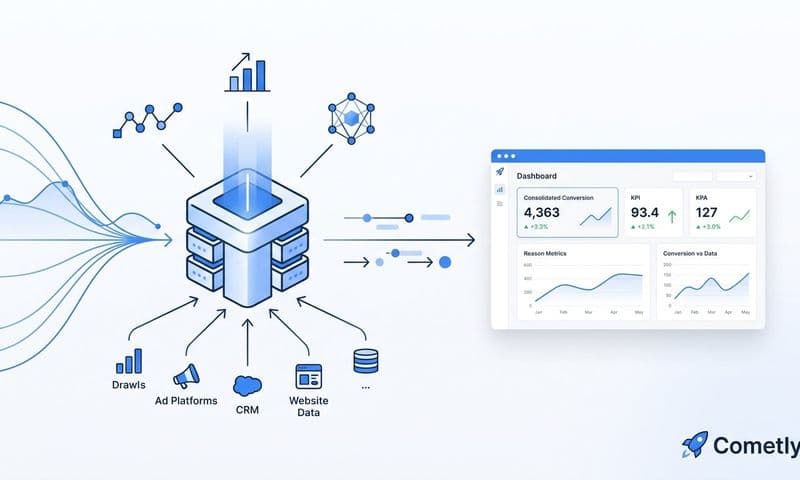
Start by implementing a customer data platform or marketing attribution software that can collect data from all your marketing channels in one place. This system needs to track user behavior across your website, landing pages, and conversion points while maintaining individual user identity throughout the journey.
Your tracking infrastructure should capture several critical data points for every user interaction. First, you need source attribution—which channel, campaign, ad set, and specific ad brought each user to your site. Second, you need behavioral data showing what users do after they arrive: which pages they visit, how long they stay, what content they engage with, and whether they complete micro-conversions like email signups or content downloads.
Third, and most importantly, you need conversion tracking that connects marketing touchpoints to actual revenue. This means tracking not just form submissions or trial signups, but actual purchases, subscription starts, and customer lifetime value. Without revenue connection, you're just measuring activity, not business impact.
Implement server-side tracking wherever possible to ensure data accuracy despite browser restrictions and ad blockers. Client-side tracking through pixels and JavaScript has become increasingly unreliable as privacy regulations tighten and browsers block third-party cookies. Server-side tracking sends conversion data directly from your server to advertising platforms, bypassing browser limitations.
Set up UTM parameters consistently across all paid campaigns. Every ad, email, and promotional link should include source, medium, campaign, and content parameters that identify exactly where traffic originated. Create a standardized UTM naming convention and enforce it across your entire marketing team to ensure data consistency.
Configure cross-domain tracking if your customer journey spans multiple domains. If users move from your main website to a subdomain checkout page or a separate landing page domain, your tracking needs to maintain their identity across these transitions. Without cross-domain tracking, you'll lose attribution data every time a user crosses domain boundaries.
Integrate your tracking system with your CRM and payment processor to connect marketing touchpoints to actual customer records and revenue. This integration is what transforms marketing analytics from vanity metrics into business intelligence. When you can see that a specific Facebook ad generated $50,000 in customer lifetime value, you can make informed budget decisions.
Test your tracking implementation thoroughly before you start making decisions based on the data. Run test conversions through each marketing channel and verify that they appear correctly in your analytics with proper attribution. Check that revenue data flows through accurately and that customer journeys are being captured completely.
Document your tracking setup and create a maintenance schedule. Tracking breaks more often than most marketers realize—platform updates, website changes, and tag manager modifications can all disrupt data collection. Regular audits ensure you catch tracking issues before they corrupt your channel evaluation data.
Step 2: Map Complete Customer Journeys
Once your tracking infrastructure is capturing data from all channels, the next step is understanding how customers actually move through your marketing ecosystem before converting. This journey mapping reveals which channels work together, which touchpoints are most influential, and where customers typically enter and exit your funnel.
Start by pulling journey data for all conversions over a meaningful time period—typically 30-90 days depending on your sales cycle length. For each conversion, you want to see every marketing touchpoint that customer encountered, in chronological order, from their first interaction with your brand through their final purchase.
Analyze journey length and complexity across your customer base. How many touchpoints does the average customer encounter before converting? What's the typical time span from first touch to conversion? These metrics reveal whether you're dealing with simple, direct-response journeys or complex, multi-touch consideration cycles.
Understanding journey complexity is critical because it determines which channels deserve credit for conversions. In a simple two-touch journey where someone clicks a Google ad and immediately purchases, last-click attribution might be reasonable. But in a ten-touch journey spanning three weeks, giving all credit to the final touchpoint ignores nine other interactions that built awareness and consideration.
Identify common journey patterns by analyzing which channel sequences appear most frequently. You might discover that your highest-value customers typically follow a pattern like: Facebook ad → website visit → email signup → nurture sequence → Google search → purchase. This pattern tells you that Facebook and email work together to drive conversions, even though Google might get last-click credit.
Look for channel roles within these journeys. Some channels primarily serve as introduction points—they're where customers first discover your brand. Other channels excel at consideration—they're where customers research and evaluate your offering. Still others function as conversion drivers—they're the final touchpoint before purchase.
Understanding these roles helps you evaluate channels appropriately. A channel that introduces 1,000 new prospects who later convert through other channels is extremely valuable, even if it never gets last-click credit. Conversely, a retargeting channel that only reaches people who've already visited your site five times isn't creating new demand—it's just capturing existing intent.
Segment your journey analysis by customer value, product type, or customer demographic. High-value customers often follow different paths than low-value ones. B2B buyers typically have longer, more complex journeys than B2C consumers. Understanding these differences helps you optimize channel strategy for the customers you actually want to acquire.
Pay special attention to assisted conversions—touchpoints that occurred in the customer journey but didn't get last-click credit. A channel might have a low last-click conversion count but a high assisted conversion count, indicating it plays a crucial role in the consideration phase even though it rarely closes deals directly.
Map drop-off points in your customer journeys to identify where you're losing potential customers. If you see many journeys that include three Facebook ad clicks but no conversion, that suggests a disconnect between your ad messaging and your landing page experience. If email subscribers rarely convert, your nurture sequence might need optimization.
Create visual journey maps for your most common conversion paths. These visualizations help stakeholders understand how channels work together and why simple last-click attribution fails to capture reality. When executives can see that 80% of customers interact with five channels before converting, they're more likely to support sophisticated attribution approaches.
Step 3: Implement Multi-Touch Attribution
With complete journey data in hand, you can now implement attribution models that distribute conversion credit across all the touchpoints that contributed to each sale. This is where you move beyond platform-reported numbers to understand each channel's true contribution to revenue.
The goal of multi-touch attribution is to answer a deceptively simple question: if you increased or decreased spend in a specific channel, how would that affect your total conversions? Last-click attribution can't answer this because it ignores how channels work together to move customers through the funnel.
Start with position-based attribution models that assign credit based on where touchpoints appear in the customer journey. A common approach is the U-shaped model, which gives 40% credit to the first touch (introduction), 40% to the last touch (conversion), and distributes the remaining 20% evenly across middle touches (consideration).
This model recognizes that both introducing customers to your brand and closing the sale are valuable, while still acknowledging the role of middle touchpoints. It's more sophisticated than last-click attribution but simple enough to explain to stakeholders who aren't attribution experts.
For more advanced analysis, consider time-decay attribution, which gives more credit to touchpoints closer to the conversion. This model assumes that recent interactions have more influence on purchase decisions than older ones. It's particularly useful for products with long consideration cycles where early touchpoints might have less impact than recent ones.
Implement data-driven attribution if you have sufficient conversion volume—typically at least 400 conversions per month. Data-driven models use machine learning to analyze your actual conversion patterns and determine which touchpoints have the strongest correlation with successful conversions. These models adapt to your specific business rather than applying generic rules.
Compare results across multiple attribution models to understand how different approaches affect channel valuation. If a channel looks valuable under first-touch attribution but weak under last-touch, it's primarily an awareness driver. If it's strong under last-touch but weak under first-touch, it's capturing existing demand rather than creating new interest.
Calculate attributed revenue for each channel by applying your chosen attribution model to all conversions. Instead of counting conversions (where platforms can claim the same conversion multiple times), you're distributing actual revenue across the channels that contributed to each sale. This gives you a true picture of each channel's revenue contribution.
For sophisticated evaluation, implement incrementality testing alongside attribution modeling. Incrementality tests measure what happens when you turn a channel on or off—they reveal whether a channel is actually driving new conversions or just taking credit for sales that would have happened anyway.
Run geo-based incrementality tests by turning off specific channels in certain geographic regions while keeping them active in others. Compare conversion rates between test and control regions to measure the channel's true incremental impact. This is the gold standard for channel evaluation, though it requires significant traffic volume to produce statistically significant results.
Document your attribution methodology clearly and communicate it to stakeholders. When you tell a channel manager that their attributed revenue is lower than their platform-reported conversions, they need to understand why. Clear documentation of your attribution logic helps build trust in your evaluation process.
Remember that no attribution model is perfect—they're all simplifications of complex human behavior. The goal isn't to find the "true" attribution (which doesn't exist), but to use a consistent methodology that better reflects reality than last-click attribution. Consistency matters more than perfection when you're making comparative decisions across channels.
Step 4: Calculate True Channel ROI
Attribution tells you how much revenue each channel contributed, but ROI calculation tells you whether that revenue justified the cost. This is where you connect attributed revenue to actual channel spend to determine which channels are profitable and which are burning money.
Start by collecting complete cost data for every marketing channel. This includes obvious costs like ad spend, but also less visible expenses like agency fees, software subscriptions, content creation costs, and internal team time. Many marketers underestimate true channel costs by focusing only on media spend while ignoring operational overhead.
For paid advertising channels, pull spend data directly from each platform's reporting interface. Don't rely on platform-reported ROI calculations—these use platform-reported conversions, which we've already established are inflated. Instead, you'll calculate ROI using your attributed revenue numbers against actual spend.
Calculate basic ROI for each channel using the formula: (Attributed Revenue - Channel Cost) / Channel Cost. A channel with $100,000 in attributed revenue and $25,000 in total costs has an ROI of 300%, meaning you're generating $3 in profit for every $1 invested.
But basic ROI doesn't tell the complete story because it doesn't account for profit margins. A channel might generate $100,000 in revenue, but if your profit margin is only 20%, that revenue only produces $20,000 in actual profit. Subtract the $25,000 channel cost and you're losing money despite positive ROI.
Calculate ROAS (Return on Ad Spend) separately from ROI to understand media efficiency. ROAS is simply Attributed Revenue / Ad Spend, ignoring other costs. A channel might have strong ROAS but weak ROI if operational costs are high. Conversely, a channel might have modest ROAS but strong ROI if operational costs are minimal.
Segment ROI analysis by customer cohort to understand which channels acquire your most valuable customers. A channel might have lower overall ROI but acquire customers with 2x higher lifetime value. When you factor in LTV, that channel becomes more attractive than one with higher immediate ROI but lower customer quality.
Calculate customer acquisition cost (CAC) for each channel by dividing total channel cost by the number of new customers acquired. This metric is particularly useful for subscription businesses where immediate revenue doesn't reflect customer value. A channel with $200 CAC might seem expensive until you realize those customers have $2,000 average LTV.
Compare CAC to customer lifetime value to determine channel sustainability. The general rule is that LTV should be at least 3x CAC for a channel to be profitable long-term. This ratio accounts for operational costs, churn, and the time value of money while ensuring healthy unit economics.
Analyze ROI trends over time to identify channels that are becoming more or less efficient. A channel might show strong ROI initially but declining returns as you scale spend and exhaust your best audiences. Conversely, a channel might start weak but improve as you optimize creative, targeting, and landing pages.
Consider payback period in your ROI analysis, especially for channels with high upfront costs. A channel might have strong lifetime ROI but take 12 months to break even on each customer. If your business needs faster cash flow, channels with shorter payback periods might be more valuable despite lower ultimate ROI.
Account for attribution window in your ROI calculations. If you're using a 30-day attribution window, conversions that occur 31+ days after a channel touchpoint won't be credited to that channel. This systematically undervalues channels that drive long-term consideration, particularly for products with extended sales cycles.
Document all assumptions in your ROI calculations—attribution model used, cost categories included, profit margins applied, and time periods analyzed. These assumptions significantly affect results, and stakeholders need to understand the methodology behind your numbers to trust your channel recommendations.
Step 5: Analyze Channel Interactions and Synergies
Individual channel ROI is important, but it doesn't capture how channels work together to drive conversions. Some channel combinations create synergies where the combined impact exceeds the sum of individual contributions. Other combinations create conflicts where channels compete for the same conversions.
Start by analyzing which channel pairs appear most frequently in conversion journeys. If 60% of conversions include both Facebook and Google touchpoints, these channels are working together effectively. If certain channel combinations rarely appear together, they might be reaching different audience segments or serving different stages of the funnel.
Look for sequential patterns that indicate channel synergies. A common pattern is social media → organic search → conversion, where social ads introduce your brand and drive branded search volume that converts through organic results. In this scenario, cutting social spend would reduce organic conversions, even though organic search gets last-click credit.
Identify channels that primarily serve as introduction points versus conversion points. Introduction channels have high first-touch attribution but low last-touch attribution—they're where customers discover your brand. Conversion channels show the opposite pattern—they're where customers who already know you finally decide to buy.
Understanding these roles prevents you from making destructive budget decisions. If you cut an introduction channel because it has low last-click conversions, you'll reduce the flow of new prospects into your funnel. Eventually, your conversion channels will have fewer people to convert, and total revenue will decline even though conversion channel efficiency looks stable.
Analyze cross-channel impact by looking at how changes in one channel affect performance in others. When you increase Facebook spend, does Google branded search volume increase? When you pause email campaigns, do retargeting conversions decline? These correlations reveal hidden dependencies between channels.
Test channel interactions through structured experiments. Run a test where you increase spend in Channel A while holding Channel B constant, then measure whether Channel B's performance changes. If Channel B conversions increase when you scale Channel A, you've identified a synergy that wouldn't be visible in standard attribution reports.
Map your funnel stages to specific channels to understand which channels serve which purposes. Top-of-funnel channels like display advertising and social media introduce new prospects. Middle-of-funnel channels like content marketing and email nurture build consideration. Bottom-of-funnel channels like search and retargeting capture ready-to-buy intent.
Evaluate whether you have appropriate channel coverage at each funnel stage. If you're heavily invested in bottom-funnel channels but weak at top-of-funnel, you're efficiently converting existing demand but not creating new demand. This works until you exhaust your addressable market, then growth stalls because you're not introducing new prospects to your brand.
Identify channel conflicts where multiple channels compete for the same conversions without adding incremental value. If you're running both Google search ads and Google Shopping ads for the same keywords, you might be bidding against yourself and inflating costs without increasing total conversions.
Analyze audience overlap across channels to understand how much you're reaching the same people through multiple touchpoints versus expanding your reach. High overlap suggests you're reinforcing your message with the same audience (which can be valuable for consideration) but not efficiently expanding your addressable market.
Step 6: Make Data-Driven Budget Allocation Decisions
With complete channel evaluation data in hand—attributed revenue, true ROI, journey patterns, and channel interactions—you can now make informed decisions about where to invest, where to optimize, and where to cut spending.
Start by categorizing channels into four groups based on their performance and role. Stars are channels with strong ROI that are efficiently driving conversions—these deserve increased investment. Question marks are channels with unclear ROI or insufficient data—these need testing and optimization before you scale them.
Cash cows are channels with positive ROI but limited scaling potential—they're profitable but you've already captured most of the available opportunity. Maintain current investment but don't expect significant growth. Dogs are channels with negative ROI and no clear path to profitability—these are candidates for budget cuts or elimination.
But don't make budget decisions based solely on immediate ROI. Consider each channel's strategic role in your marketing ecosystem. A channel with modest ROI might be your primary source of new customer acquisition, making it strategically valuable even if other channels show better immediate returns.
Evaluate scaling potential for each channel before increasing investment. A channel might show strong ROI at current spend levels but have limited inventory or audience size. Doubling spend might not double results—it might just increase costs while delivering diminishing returns as you exhaust your best audiences.
Test scaling incrementally rather than making large budget shifts all at once. Increase spend by 20-30% in your best-performing channels and monitor whether ROI remains stable. If efficiency holds, continue scaling. If ROI declines significantly, you've found the channel's optimal spend level.
Consider budget reallocation between channels with similar roles. If two channels both serve as introduction points but one has 2x better ROI, shift budget from the weaker channel to the stronger one. But maintain some investment in multiple channels to avoid over-dependence on any single traffic source.
Account for seasonality in your budget allocation decisions. A channel might show weak ROI in January but strong ROI in November. Don't cut channels based on off-season performance—analyze full-year trends to understand true potential.
Balance short-term ROI with long-term brand building. Channels like content marketing and organic social media might show weak immediate ROI but build brand awareness and organic traffic that compounds over time. Pure performance marketing optimization can sacrifice long-term growth for short-term efficiency.
Create a budget allocation framework that balances multiple objectives: immediate ROI, customer acquisition, brand building, and risk diversification. Not every dollar needs to generate maximum immediate return—some investment should go toward building sustainable, long-term growth channels.
Document your budget allocation rationale clearly. When you recommend cutting a channel or shifting budget, explain the data behind your decision. Show the attributed revenue, the true costs, the ROI calculation, and how the channel fits into your overall marketing ecosystem.
Set up regular review cycles to reassess channel performance and adjust budgets accordingly. Marketing channels don't remain static—platform changes, competitive dynamics, and audience behavior all shift over time. What works today might not work in six months, so continuous evaluation is essential.
Build scenario models to understand how different budget allocations would affect total revenue. If you shifted $10,000 from Channel A to Channel B, what would happen to overall conversions? These models help you make confident decisions about budget reallocation by quantifying the expected impact.
Step 7: Monitor Performance and Iterate
Channel evaluation isn't a one-time project—it's an ongoing process of measurement, analysis, and optimization. The marketing landscape changes constantly, and your evaluation framework needs to adapt to remain accurate and useful.
Set up automated reporting dashboards that track key metrics for each channel: attributed revenue, spend, ROI, conversion volume, and CAC. These dashboards should update daily or weekly so you can spot performance changes quickly and respond before small issues become major problems.
Establish performance thresholds that trigger reviews. If a channel's ROI drops below a certain level, or if attributed revenue declines by more than a specific percentage, that should automatically trigger a deeper investigation. Don't wait for monthly reviews to catch significant performance shifts.
Monitor platform changes that might affect your tracking or attribution. When Facebook updates its conversion API, or Google changes its attribution models, these updates can impact your data accuracy. Stay informed about platform changes and adjust your tracking accordingly.
Conduct regular tracking audits to ensure data accuracy. Test conversions through each channel monthly to verify that they're being tracked correctly. Check that UTM parameters are being applied consistently. Confirm that revenue data is flowing through properly from your payment system to your analytics.
Review your attribution model periodically to ensure it still reflects your business reality. As your marketing mix evolves, your attribution approach might need adjustment. A model that worked well when you had three channels might not be appropriate when you're running ten channels with complex interactions.
Analyze performance trends over time to identify patterns and predict future performance. A channel that's shown declining ROI for three consecutive months is likely to continue declining unless you make significant changes. Trend analysis helps you make proactive decisions rather than reactive ones.
Run regular incrementality tests to validate your attribution model's accuracy. Attribution models make assumptions about which touchpoints drive conversions, but incrementality tests measure actual impact. If your attribution model says a channel drives $100,000 in revenue but an incrementality test shows minimal impact, your model needs adjustment.
Stay current with industry benchmarks to understand whether your channel performance is competitive. If your Facebook ROI is declining but industry-wide Facebook performance is also declining, that's different from a situation where your performance is declining while competitors are succeeding.
Document learnings from your channel evaluation process. When you discover that a specific channel combination drives particularly strong results, or that certain audience segments respond better to specific channels, capture these insights. Over time, you'll build institutional knowledge that informs future strategy.
Create feedback loops between channel evaluation and campaign execution. When your evaluation reveals that certain messaging or creative approaches drive better attributed ROI, feed those insights back to your campaign teams so they can optimize accordingly. Channel evaluation should inform optimization, not just budget allocation.
Invest in team training to ensure everyone understands your attribution methodology and channel evaluation framework. When campaign managers understand how channels are evaluated, they can optimize their work to drive the metrics that actually matter rather than gaming platform-reported numbers.
Build relationships with platform representatives and stay informed about new features or beta opportunities. Platforms regularly release new attribution tools, tracking capabilities, and optimization features. Early access to these tools can give you competitive advantages in channel evaluation and optimization.
Common Mistakes to Avoid When Evaluating Marketing Channels
Even with a solid evaluation framework, marketers commonly make mistakes that lead to poor channel decisions. Understanding these pitfalls helps you avoid them and maintain accurate channel evaluation.
The biggest mistake is trusting platform-reported conversions without implementing independent tracking. Platforms have inherent bias toward reporting high conversion numbers because it justifies continued ad spend. When you make decisions based on platform data alone, you're optimizing for what platforms want you to see, not what's actually driving business results.
Another common error is using last-click attribution for budget decisions. Last-click systematically overvalues bottom-funnel channels that capture existing demand while undervaluing top-funnel channels that create awareness and consideration. This leads to cutting introduction channels, which eventually starves your funnel of new prospects.
Many marketers fail to account for full channel costs when calculating ROI. They include ad spend but ignore agency fees, software costs, content creation expenses, and team time. This makes channels appear more profitable than they actually are and leads to over-investment in channels with hidden costs.
Ignoring customer lifetime value in channel evaluation is another critical mistake. A channel might have weak immediate ROI but acquire customers with 3x higher LTV than other channels. When you optimize purely for immediate ROI, you might cut your best long-term customer acquisition channels.
Some marketers make budget decisions based on insufficient data. They'll test a channel for two weeks, see weak results, and immediately cut it. But many channels require time to optimize—creative testing, audience refinement, and landing page optimization all take time to show results.
Failing to account for channel interactions leads to destructive budget cuts. When you cut a top-funnel awareness channel because it has weak last-click attribution, you don't immediately see the impact. But over time, your bottom-funnel conversion channels have fewer people to convert, and total revenue declines.
Over-optimizing for short-term ROI at the expense of long-term brand building is a strategic mistake. Channels like content marketing, SEO, and organic social media might show weak immediate ROI but build compounding value over time. Pure performance marketing optimization can sacrifice sustainable growth for short-term efficiency.
Many marketers fail to test their attribution assumptions through incrementality testing. They build elaborate attribution models but never validate whether those models reflect reality. Without incrementality testing, you might be confidently making decisions based on inaccurate attribution.
Ignoring external factors when evaluating channel performance leads to incorrect conclusions. If your Facebook ROI declines during a period when iOS privacy changes reduced tracking accuracy industry-wide, that's different from a decline caused by poor campaign execution. Context matters when interpreting performance data.
Finally, many marketers fail to communicate their evaluation methodology to stakeholders. When channel managers see their attributed revenue is lower than platform-reported conversions, they resist the new methodology unless they understand the reasoning behind it. Clear communication builds trust in your evaluation process.
Conclusion
Evaluating marketing channels accurately is one of the most important skills in modern marketing. When you base decisions on platform-reported numbers and last-click attribution, you're optimizing for metrics that don't reflect reality. You end up killing profitable awareness channels while over-investing in bottom-funnel channels that simply capture demand you've already created.
The framework we've covered—unified tracking, journey mapping, multi-touch attribution, true ROI calculation, channel interaction analysis, data-driven budget allocation, and continuous monitoring—gives you a systematic approach to channel evaluation that reveals which channels actually drive business results.
This isn't a one-time project. Channel evaluation is an ongoing process of measurement, analysis, and optimization. Marketing platforms change, customer behavior evolves, and competitive dynamics shift. Your evaluation framework needs to adapt continuously to remain accurate and useful.
Start by implementing unified tracking that captures complete customer journeys across all touchpoints. Without this foundation, everything else is guesswork. Once you have journey data, implement multi-touch attribution that distributes credit based on each touchpoint's actual contribution rather than arbitrary last-click rules.
Calculate true ROI by accounting for all channel costs, not just media spend. Factor in customer lifetime value to understand which channels acquire your most valuable customers. Analyze how channels work together rather than evaluating them in isolation.
Make budget allocation decisions based on data, but balance immediate ROI with strategic considerations like customer acquisition, brand building, and risk diversification. Not every dollar needs to generate maximum immediate return—some investment should go toward building sustainable, long-term growth.
The marketers who master channel evaluation gain a significant competitive advantage. While competitors waste budget on channels that look good in platform dashboards but don't drive real results, you'll be investing in channels that actually contribute to revenue. That difference compounds over time into substantial business impact.
Take the time to implement this framework properly. The upfront investment in tracking infrastructure and attribution modeling pays dividends every time you make a budget decision. And once the system is in place, ongoing evaluation becomes straightforward rather than overwhelming.
Your marketing channels are your growth engine. Evaluate them accurately, invest in the ones that drive real results, and you'll build a marketing operation that scales efficiently and sustainably.
Ready to elevate your marketing game with precision and confidence? Discover how Cometly's AI-driven recommendations can transform your ad strategy—Get your free demo today and start capturing every touchpoint to maximize your conversions.