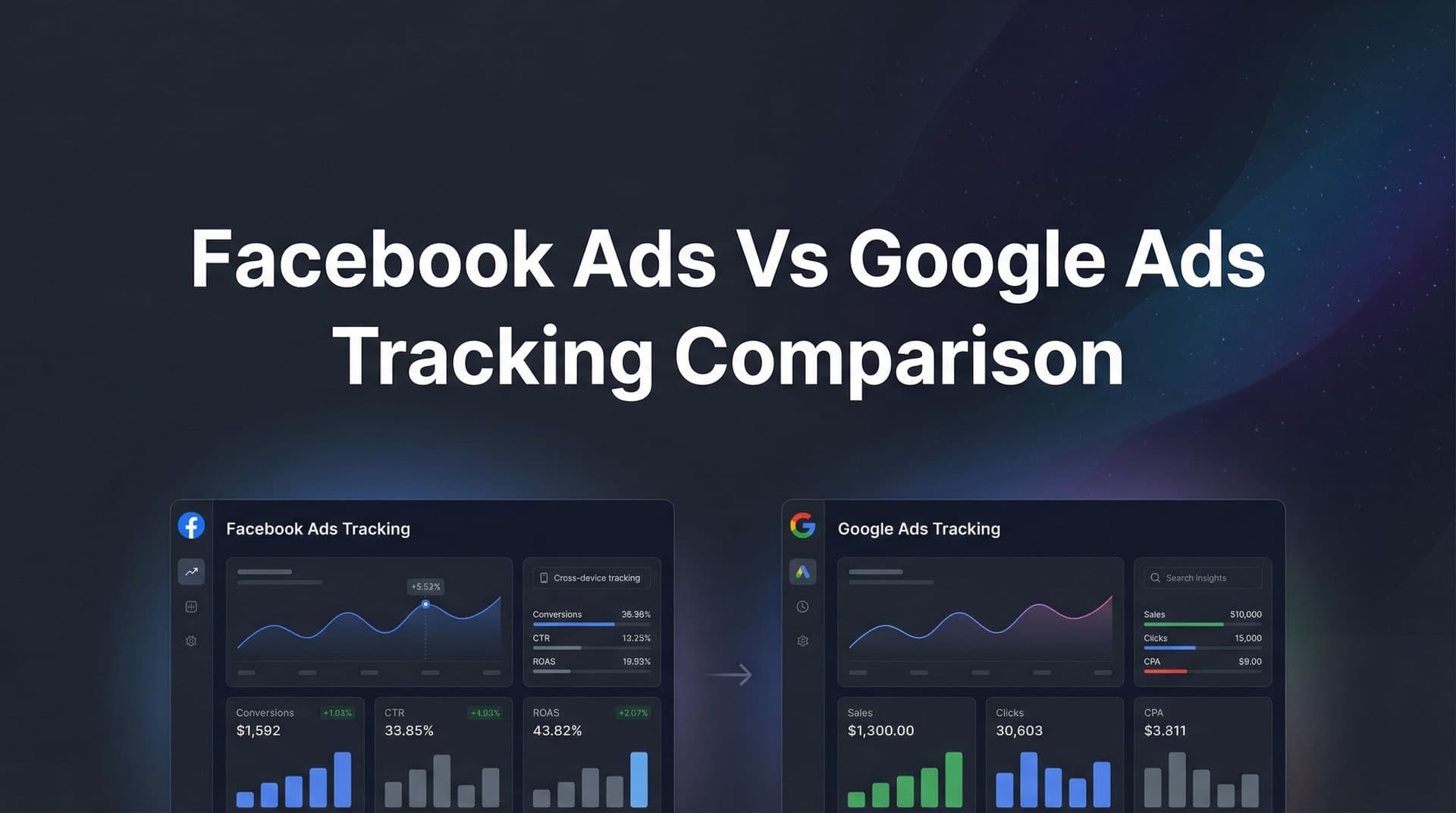
Running ads on both Facebook and Google means dealing with two completely different tracking ecosystems—each with its own logic, limitations, and blind spots. Facebook's pixel-based approach and Google's cookie-dependent system often tell conflicting stories about the same customer journey, leaving marketers wondering which platform actually deserves credit for conversions.
This disconnect isn't just frustrating; it leads to misallocated budgets, scaling the wrong campaigns, and missing the ads that truly drive revenue.
The good news? With the right strategies, you can cut through the noise and build a tracking system that reveals the truth about cross-platform performance. These seven approaches will help you compare Facebook and Google Ads tracking accurately, identify what's really working, and make confident decisions about where to invest your ad spend.
1. Implement Server-Side Tracking Across Both Platforms
The Challenge It Solves
Browser-based tracking has become increasingly unreliable. Ad blockers, privacy settings, and browser restrictions mean your Facebook Pixel and Google Ads tag miss conversions that actually happened. When iOS 14.5 rolled out, many advertisers saw dramatic drops in reported conversions—not because performance declined, but because tracking broke.
The result? You're making budget decisions based on incomplete data, potentially cutting campaigns that are actually profitable.
The Strategy Explained
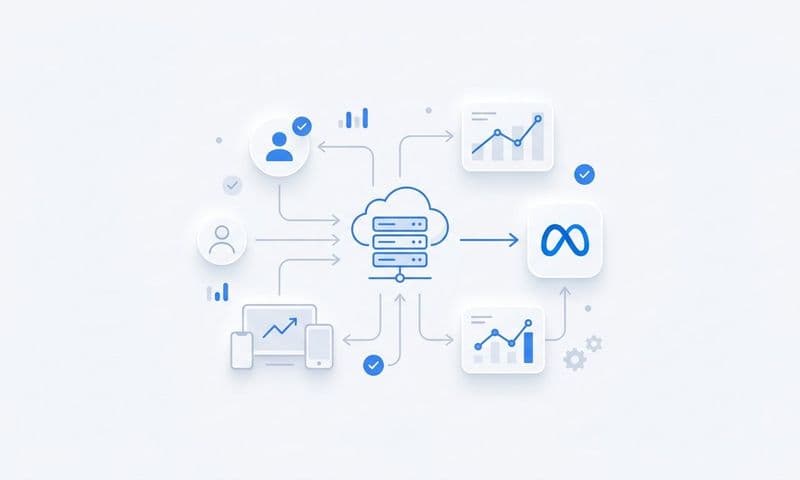
Server-side tracking bypasses the browser entirely by sending conversion data directly from your server to Facebook's Conversions API and Google's Enhanced Conversions. When a customer converts, your server communicates that event to both platforms, capturing data that browser-based tracking would miss.
This approach is particularly powerful for e-commerce sites, lead generation funnels, and any business where the conversion happens after multiple touchpoints. You're not relying on cookies or pixels that can be blocked—you're sending verified conversion data straight from your system.
Think of it like this: browser tracking is like asking customers to self-report their journey, while server-side tracking is like having your own system document every step.
Implementation Steps
1. Set up Facebook's Conversions API alongside your existing Pixel to create redundant tracking that captures conversions both ways.
2. Enable Google Enhanced Conversions by passing hashed customer data (email, phone) from your server to match conversions accurately.
3. Use a tag management solution or attribution platform that handles server-side implementation automatically, reducing technical complexity.
4. Test your setup by completing test conversions and verifying they appear in both platforms' reporting interfaces.
Pro Tips
Keep your browser-based tracking active even after implementing server-side solutions. Running both in parallel provides the most complete data picture and helps you identify discrepancies. Monitor the "match rate" in both platforms to ensure your server is successfully sending conversion data that platforms can attribute to specific ad clicks.
2. Establish a Unified Attribution Model for Cross-Platform Analysis
The Challenge It Solves
Facebook naturally credits Facebook touchpoints. Google naturally credits Google touchpoints. When a customer clicks a Facebook ad on Monday, then clicks a Google ad on Wednesday before converting, both platforms want to claim the win.
Without a neutral attribution system, you're comparing apples to oranges—and likely over-crediting both platforms while missing the true contribution of each.
The Strategy Explained
A unified attribution model applies the same rules to every touchpoint, regardless of platform. Whether it's first-click, last-click, linear, or time-decay attribution, the key is consistency. You need one system that sees the entire customer journey and distributes credit fairly.
This means moving beyond platform-native reporting to a third-party attribution solution that captures data from all sources. When you analyze performance through a unified lens, you can finally answer questions like "Which platform starts journeys?" and "Which platform closes deals?"
The goal isn't to prove one platform is better—it's to understand how they work together in your specific customer journey.
Implementation Steps
1. Choose an attribution model that aligns with your typical customer journey length and complexity (linear for long cycles, last-click for short cycles).
2. Implement a tracking solution that captures touchpoints from both platforms and applies your chosen model consistently across all data.
3. Set a consistent conversion window (like 30 days) that applies to both platforms, eliminating the bias of different default windows.
4. Review attribution reports weekly to understand how often each platform appears at different journey stages (first touch, middle touch, last touch).
Pro Tips
Start with a simple model like linear attribution, which gives equal credit to every touchpoint. This approach is fair when you're initially trying to understand cross-platform dynamics. As you gather data, you can experiment with weighted models that reflect your actual customer behavior patterns.
3. Connect Your CRM to Close the Revenue Loop
The Challenge It Solves
Ad platforms tell you about conversions, but they don't tell you about revenue quality. A lead from Facebook might convert faster but have a lower lifetime value. A lead from Google might take longer to close but become your most valuable customer segment.
Without connecting ad data to actual sales outcomes, you're optimizing for volume instead of value—and potentially scaling campaigns that attract the wrong customers.
The Strategy Explained
CRM integration creates a closed loop between ad spend and revenue. When you connect your CRM to your ad platforms, you can track which campaigns generate leads that become customers, which customers spend the most, and which acquisition sources deliver the highest ROI.
This visibility transforms your optimization strategy. Instead of asking "Which platform gets more conversions?" you can ask "Which platform attracts customers who actually buy our premium product?" or "Which campaigns have the shortest sales cycle?"
The data flows both ways: your CRM tells you about revenue, and that information feeds back to your ad analysis to reveal true performance.
Implementation Steps
1. Tag all CRM leads with their original ad source using UTM parameters or platform-specific identifiers that persist through your funnel.
2. Create custom fields in your CRM to track key metrics like deal size, time to close, customer lifetime value, and product category purchased.
3. Build reports that connect ad campaign data to closed revenue, showing cost per acquired customer (not just cost per lead) for each platform.
4. Set up automated data syncing so revenue information flows back to your analytics dashboard in real time, not just monthly exports.
Pro Tips
Focus on cohort analysis by looking at customers acquired in the same month from each platform. This reveals patterns like "Google leads from Q1 had 40% higher lifetime value" or "Facebook campaigns convert faster but Google campaigns convert bigger deals." These insights are impossible to see without CRM integration.
For a deeper dive, see our guide to AI creative for Facebook ads.
4. Use UTM Parameters Strategically for Consistent Tracking
The Challenge It Solves
When your Facebook ads use one naming convention and your Google ads use another, comparing performance becomes a manual nightmare. Inconsistent UTM parameters mean you can't quickly answer basic questions like "How do my social campaigns compare to search campaigns?" without hours of data cleanup.
Poor UTM hygiene also breaks attribution, making it impossible for analytics tools to properly categorize traffic and assign credit to the right campaigns.
The Strategy Explained
A standardized UTM structure creates a universal language for tracking campaigns across all platforms. When every ad follows the same naming logic, you can slice your data any way you want—by platform, campaign type, audience, creative format, or any other dimension that matters to your business.
The key is building a system that's both consistent and flexible. Your UTM parameters should capture enough detail to enable granular analysis while remaining simple enough that your team actually uses them correctly.
Think of UTM parameters as the metadata that makes cross-platform comparison possible in any analytics tool, from Google Analytics to your attribution platform to your custom dashboards.
Implementation Steps
1. Create a UTM naming convention document that specifies exactly how to structure source, medium, campaign, content, and term parameters for each platform.
2. Use consistent values across platforms—for example, always use "social" as the medium for Facebook, Instagram, and LinkedIn ads, not "facebook" for one and "social" for another.
3. Build UTM templates or use dynamic parameters in your ad platforms to automatically generate properly formatted URLs without manual entry errors.
4. Implement a quality check system where someone reviews UTM parameters weekly to catch and fix inconsistencies before they corrupt your data.
Pro Tips
Include campaign objective in your UTM structure (like "prospecting" or "retargeting") so you can compare how different strategies perform across platforms. Use the utm_content parameter to test creative variations—this lets you see which ad formats work best on each platform while maintaining clean campaign-level data.
5. Account for Platform-Specific Attribution Windows
The Challenge It Solves
Facebook's default attribution window is 7 days after click or 1 day after view. Google Ads defaults to 30 days after click. This means the same conversion happening 10 days after an ad click gets counted by Google but not by Facebook—making Google appear more effective even when both ads contributed equally.
When you compare platform reports without adjusting for these window differences, you're not comparing performance—you're comparing measurement methodologies.
The Strategy Explained
Normalizing attribution windows means either adjusting platform settings to match or using a third-party tool that applies consistent windows to all data. The goal is ensuring that every conversion has the same opportunity to be attributed, regardless of which platform drove the initial click.
This doesn't mean one window length is "correct"—it means choosing a window that reflects your actual customer behavior and applying it consistently. If your average sales cycle is 14 days, using a 30-day window on one platform and 7 days on another creates artificial performance gaps.
Understanding window differences also helps you interpret native platform reporting more accurately when you can't change the settings.
Implementation Steps
1. Analyze your typical conversion timeline by looking at how many days pass between first click and conversion for your business.
2. Adjust Facebook's attribution window in Ads Manager settings to match Google's 30-day default, or adjust both to a custom window that fits your sales cycle.
3. Document which attribution window you're using for each platform so your team interprets reports correctly and doesn't compare mismatched data.
4. Review "conversion lag" reports in both platforms to understand how many conversions happen at different time intervals after the ad click.
Pro Tips
For businesses with longer sales cycles, consider using a 30 or even 60-day attribution window across both platforms. This captures delayed conversions that shorter windows miss. For e-commerce with immediate purchases, a 7-day window might be more accurate. The key is matching the window to your reality, not to platform defaults.
6. Build Custom Dashboards for Side-by-Side Performance Views
The Challenge It Solves
Switching between Facebook Ads Manager and Google Ads to compare performance wastes time and makes it nearly impossible to spot meaningful patterns. Each platform's interface is designed to make that platform look good, not to facilitate honest cross-platform comparison.
Without a unified view, you're forced to export data, manipulate spreadsheets, and manually calculate metrics—a process that's error-prone and too time-consuming to do regularly.
The Strategy Explained
Custom dashboards pull data from both platforms into a single interface where you can compare performance using consistent metrics, time periods, and visualizations. The best dashboards go beyond simple metric display to show relationships like "cost per acquisition by platform and campaign type" or "conversion rate by audience segment across channels."
This centralized view transforms how quickly you can make decisions. Instead of spending an hour gathering data, you spend five minutes analyzing it and the rest of your time optimizing campaigns.
The key is choosing metrics that matter for your business and displaying them in ways that reveal actionable insights, not just numbers.
Implementation Steps
1. Choose a dashboard platform that connects to both Facebook and Google APIs automatically, pulling fresh data without manual exports.
2. Create views that answer your most common questions—like "Which platform has better ROAS this month?" or "Where should I allocate next week's budget?"
3. Use consistent date ranges and currency formatting across all metrics so you're truly comparing apples to apples between platforms.
4. Set up automated alerts for significant changes in key metrics, so you catch performance shifts on either platform immediately.
Pro Tips
Build separate dashboards for different stakeholders. Your daily optimization dashboard should show granular campaign data, while your executive dashboard shows high-level trends and ROI by platform. Include both platform-reported conversions and your unified attribution data side by side—this helps you understand the gap between what platforms claim and what actually happened.
7. Feed Accurate Conversion Data Back to Platform Algorithms
The Challenge It Solves
Facebook's and Google's machine learning algorithms optimize based on the conversion data they receive. When tracking is incomplete or inaccurate, the algorithms learn from flawed data—targeting the wrong audiences, bidding incorrectly, and showing ads to people unlikely to convert.
This creates a vicious cycle: poor tracking leads to poor optimization, which leads to poor results, which makes you question the platform when the real problem is data quality.
The Strategy Explained
Conversion data enrichment means sending more accurate, complete information back to ad platforms so their algorithms can optimize effectively. Instead of just telling Facebook "a conversion happened," you send enriched data like purchase value, product category, customer type, or lead quality score.
This enhanced feedback helps algorithms understand which conversions are valuable and which aren't. Google's Smart Bidding and Facebook's campaign budget optimization become dramatically more effective when they're working with complete, accurate data instead of partial browser-based signals.
The platforms' AI isn't the problem—it's the quality of data you're feeding it.
Implementation Steps
1. Implement server-side tracking that sends conversion value data, not just conversion events, so platforms understand the relative value of different actions.
2. Use custom conversion events that reflect your actual business goals—like "high-value lead" or "repeat purchase"—instead of generic "conversion" events.
3. Send offline conversion data back to platforms when sales happen outside the browser, like phone orders or in-store purchases tracked in your CRM.
4. Enable Enhanced Conversions on Google and Advanced Matching on Facebook to improve the platforms' ability to match conversions to specific ad clicks.
Pro Tips
Prioritize conversion value optimization over conversion volume optimization when your customers have different lifetime values. Sending revenue data with each conversion trains algorithms to find more high-value customers, not just more conversions. Review your conversion events monthly to ensure you're tracking actions that actually correlate with business outcomes.
Putting It All Together
Comparing Facebook Ads and Google Ads tracking doesn't have to mean choosing which platform's data to trust. By implementing server-side tracking, establishing unified attribution, and connecting your CRM to actual revenue data, you create a system that reveals the true performance of both platforms.
Start with the strategy that addresses your biggest blind spot—for most marketers, that's connecting ad clicks to actual revenue through CRM integration. This single change transforms your optimization from guesswork into data-driven decision making.
Then layer in the remaining approaches to build a complete cross-platform tracking system. Implement server-side tracking to capture conversions you're currently missing. Standardize your UTM parameters so you can slice data any way you need. Build dashboards that make cross-platform comparison effortless instead of exhausting.
The result? Confidence in your data, clarity on what's working, and the ability to scale the campaigns that actually drive your business forward. You'll stop arguing about which platform is "better" and start understanding how they work together in your specific customer journey.
Ready to elevate your marketing game with precision and confidence? Discover how Cometly's AI-driven recommendations can transform your ad strategy—Get your free demo today and start capturing every touchpoint to maximize your conversions.