Facebook attribution has become increasingly challenging since iOS 14.5 fundamentally changed how user data flows between platforms. Many marketers now see incomplete conversion data, delayed reporting, and attribution windows that don't match their actual customer journey. The result? Budget decisions based on flawed data, underperforming campaigns getting cut while inefficient ones scale, and constant second-guessing about what's really working.
The privacy-first landscape isn't going away. Apple's App Tracking Transparency framework has permanently altered how conversion tracking works, and other platforms are following suit. Marketers who rely solely on Facebook's native reporting are often making decisions based on incomplete information—sometimes seeing only 60-70% of their actual conversions.
This guide covers proven attribution practices that help you reclaim visibility into your Facebook ad performance and make confident scaling decisions based on accurate data. These aren't theoretical concepts—they're practical implementations that address the specific tracking challenges marketers face today.
1. Implement Server-Side Tracking Through the Conversions API
The Challenge It Solves
Browser-based pixel tracking has become unreliable. Ad blockers, privacy settings, and iOS restrictions prevent the Facebook Pixel from capturing many conversions. When users opt out of tracking or browse in private mode, your pixel simply doesn't fire—creating blind spots in your attribution data that make it impossible to accurately measure campaign performance.
These gaps aren't small. Many businesses discover they're missing significant conversion data when they implement proper server-side tracking. The conversions are happening, but Facebook's algorithm never learns about them, which means your campaigns optimize based on incomplete information.
The Strategy Explained
Server-side tracking through Facebook's Conversions API sends conversion data directly from your server to Facebook, bypassing browser limitations entirely. When a conversion happens on your website or in your system, your server communicates that event to Facebook—regardless of whether the user has ad blockers enabled or has opted out of tracking.
This approach captures conversions that browser pixels miss while also improving data quality. Server-side events include additional parameters and customer information that help Facebook match conversions to the correct ad interactions, creating more accurate attribution even when browser-based matching fails.
The Conversions API works alongside your pixel, not instead of it. The pixel still captures browser-based events, while the Conversions API fills in the gaps and provides redundancy. Facebook's systems deduplicate events that both sources capture, ensuring you don't double-count conversions.
Implementation Steps
1. Set up the Conversions API integration through your website platform or tag management system—most major platforms now offer native integrations that simplify the technical setup.
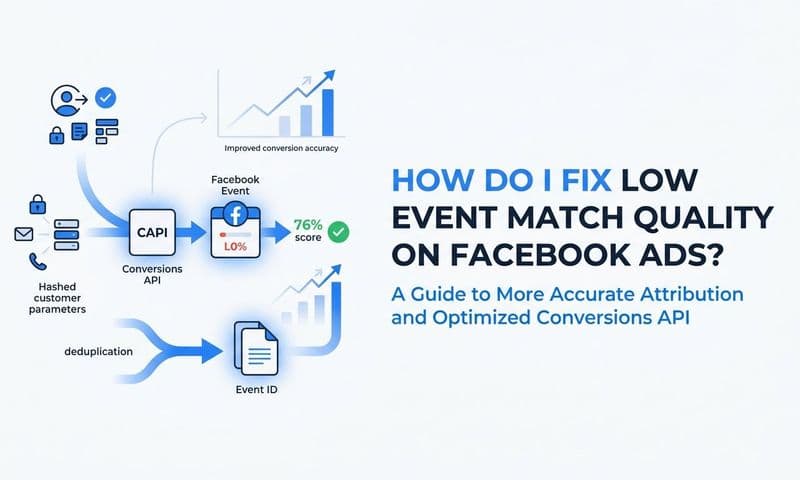
2. Configure event matching parameters including email addresses, phone numbers, and user agent data to help Facebook accurately attribute conversions to the right ad interactions.
3. Test your implementation using Facebook's Test Events tool to verify that server events are firing correctly and including the necessary matching parameters for accurate attribution.
4. Monitor the Event Match Quality score in your Events Manager to ensure your server events include enough information for Facebook to reliably match them to users.
Pro Tips
Enable automatic advanced matching on both your pixel and Conversions API to capture hashed customer data that improves event matching. Prioritize sending high-value conversion events server-side first—purchase events and lead submissions typically provide the biggest impact on campaign optimization and attribution accuracy.
2. Extend Your Attribution Window to Match Your Sales Cycle
The Challenge It Solves
Facebook's default 7-day click and 1-day view attribution window doesn't reflect how most businesses actually convert customers. If your sales cycle takes two weeks, or if customers typically research for several days before purchasing, the default window systematically undercounts conversions from your Facebook campaigns.
This creates a dangerous pattern where you undervalue campaigns that drive awareness and consideration early in the customer journey. You might cut budget from campaigns that are actually working because Facebook's reporting doesn't credit them for conversions that happen outside the narrow default window.
The Strategy Explained
Attribution windows determine how long after someone clicks or views your ad Facebook will credit that ad for a conversion. Extending these windows to match your actual customer behavior ensures you capture the full impact of your campaigns rather than just the conversions that happen immediately.
Facebook offers attribution windows up to 28 days for clicks and 7 days for views. If your analytics show that customers typically convert within three weeks of their first interaction, a 28-day click window provides much more accurate attribution than the 7-day default.
Different campaign objectives may warrant different attribution windows. Top-of-funnel awareness campaigns often benefit from longer windows since they introduce customers who convert later, while retargeting campaigns might perform well even with shorter windows since they target people already familiar with your brand.
Implementation Steps
1. Analyze your customer journey data in Google Analytics or your CRM to understand the typical time between first touch and conversion—this reveals your actual sales cycle length.
2. Navigate to Ads Manager settings and configure your default attribution window to match your findings, selecting the click and view windows that align with your customer behavior patterns.
3. Create custom columns in Ads Manager that show performance across multiple attribution windows simultaneously, allowing you to compare how results change with different time frames.
4. Review campaign performance using your extended attribution window for at least two full sales cycles before making major budget decisions based on the new data.
Pro Tips
Document your attribution window settings and communicate them to your team so everyone interprets reporting consistently. When comparing performance to previous periods, ensure you're using the same attribution window—switching windows mid-analysis creates misleading comparisons that can lead to poor decisions.
3. Use UTM Parameters Consistently Across All Campaigns
The Challenge It Solves
Without standardized UTM parameters, you can't accurately track which specific Facebook campaigns, ad sets, and ads drive results in your analytics platform. Inconsistent naming creates fragmented data where the same campaign appears under multiple names, making it impossible to aggregate performance or compare results across time periods.
This fragmentation becomes especially problematic when you need to reconcile Facebook's reporting with Google Analytics or your CRM. If your UTM structure doesn't match your campaign naming conventions, you'll spend hours manually matching data sources instead of analyzing performance and optimizing campaigns.
The Strategy Explained
UTM parameters are tags you add to your destination URLs that tell analytics platforms exactly where traffic originated. A consistent UTM structure creates a single source of truth for campaign tracking that works across Facebook, Google Analytics, your CRM, and any other analytics tools you use.
The key parameters for Facebook attribution are utm_source (always "facebook"), utm_medium (typically "paid_social" or "cpc"), utm_campaign (your campaign name), utm_content (your ad set), and utm_term (your specific ad). This structure allows you to track performance at every level of your campaign hierarchy.
Consistency matters more than the specific format you choose. Whether you use underscores or hyphens, the critical requirement is that everyone on your team follows the same conventions and that your naming structure remains stable over time so you can track performance trends accurately.
Implementation Steps
1. Create a UTM naming convention document that specifies exactly how to structure each parameter, including capitalization rules, separator characters, and naming patterns for different campaign types.
2. Build URL templates or use Facebook's built-in URL parameters feature to automatically append UTM tags to all your ads, reducing manual errors and ensuring consistency.
3. Set up a spreadsheet or URL builder tool that generates properly formatted URLs based on your naming conventions, making it easy for team members to create compliant URLs.
4. Audit existing campaigns to identify and fix any URLs with incorrect or missing UTM parameters, then establish a review process to catch errors before campaigns launch.
Pro Tips
Use Facebook's dynamic parameters like {{campaign.name}} and {{adset.name}} in your URL templates to automatically populate UTM values from your campaign structure. This eliminates manual entry while ensuring your UTM parameters always match your actual campaign names, even if you rename campaigns later.
4. Connect Facebook Data to Your CRM for Revenue Attribution
The Challenge It Solves
Facebook reports conversions, but conversions don't always equal revenue. A lead submission or trial signup might show as a successful conversion in Facebook's reporting, yet that lead could be unqualified, never respond to follow-up, or churn before becoming profitable. Without connecting to your CRM, you're optimizing for activity rather than actual business outcomes.
This disconnect becomes especially problematic for businesses with longer sales cycles or complex customer journeys. The ad that generated the initial lead might deserve credit for a deal that closes three months later, but Facebook's reporting stops at the lead capture—leaving you blind to which campaigns actually drive revenue.
The Strategy Explained
CRM integration maps Facebook ad interactions to actual revenue outcomes by connecting the customer data in your CRM back to the original ad touchpoints. When a lead converts to a customer, your attribution system can trace that revenue back through your sales funnel to identify which Facebook campaigns, ad sets, and specific ads influenced the deal.
This creates revenue-level attribution that transforms how you evaluate campaign performance. Instead of judging campaigns by cost per lead, you can analyze cost per customer and return on ad spend based on actual closed revenue. Campaigns that generate expensive leads might suddenly look profitable when you discover those leads convert at much higher rates.
The connection works both ways. You can also send CRM events back to Facebook through the Conversions API, teaching Facebook's algorithm which leads actually become customers. This improves targeting and optimization since Facebook can prioritize finding more people who match your best customer profiles rather than just anyone who submits a form.
Implementation Steps
1. Ensure your lead capture forms collect Facebook click IDs (fbclp) and store them in your CRM alongside contact records, creating the data connection needed for attribution.
2. Implement offline conversion tracking by sending closed deal events from your CRM back to Facebook, including the original click ID so Facebook can match revenue to the correct ad interactions.
3. Build reporting dashboards that show Facebook campaign performance alongside CRM metrics like lead-to-customer conversion rate, average deal size, and customer lifetime value.
4. Create audience segments in Facebook based on CRM data, allowing you to create lookalike audiences from your highest-value customers rather than just any converted lead.
Pro Tips
Track the full customer journey timeline in your CRM to understand how long deals typically take to close after the initial Facebook interaction. This insight helps you set realistic expectations for campaign performance and prevents premature optimization decisions based on incomplete conversion data.
5. Compare Multiple Attribution Models Before Making Decisions
The Challenge It Solves
Single attribution models create blind spots by crediting conversions to just one touchpoint in a multi-touch customer journey. Last-click attribution makes awareness campaigns look ineffective since they rarely get credit for final conversions, while first-click attribution undervalues the retargeting and nurture campaigns that actually close deals.
These blind spots lead to budget misallocation. You might cut awareness campaigns that are actually driving your pipeline because last-click attribution doesn't show their contribution. Or you might overspend on retargeting because first-click attribution doesn't reveal that those conversions would have happened anyway without additional ad spend.
The Strategy Explained
Multi-model attribution analysis compares how different attribution models credit your campaigns, revealing the full picture of how each campaign contributes to conversions. First-touch attribution shows which campaigns introduce new customers, last-touch shows which campaigns close deals, and multi-touch models distribute credit across the entire journey.
The goal isn't to pick the "right" model—it's to understand how your campaigns work together. A top-of-funnel campaign might look weak in last-click attribution but strong in first-click, indicating it's effective at generating awareness even though other campaigns close the deals. That's valuable information you'd miss by looking at only one model.
Facebook offers several attribution models in Ads Manager, and external attribution platforms provide even more sophisticated options. Comparing these models side-by-side reveals which campaigns deserve credit for different stages of your customer journey, enabling smarter budget allocation across your full funnel.
Implementation Steps
1. Set up custom columns in Facebook Ads Manager that display results using different attribution models simultaneously, making it easy to compare how each model evaluates your campaigns.
2. Analyze the attribution model comparison for campaigns at different funnel stages, noting which models favor awareness campaigns versus conversion-focused campaigns.
3. Calculate the attribution variance for each campaign by comparing its performance across models—high variance indicates the campaign plays different roles depending on where customers are in their journey.
4. Use these insights to set appropriate performance benchmarks for different campaign types rather than judging all campaigns by the same conversion metrics.
Pro Tips
Pay special attention to campaigns that perform well in first-touch attribution but poorly in last-click—these are often your most valuable awareness campaigns that don't get proper credit in standard reporting. Consider protecting budget for these campaigns even when short-term conversion metrics look weak, since they're feeding your entire funnel.
6. Feed Enriched Conversion Data Back to Facebook's Algorithm
The Challenge It Solves
Facebook's algorithm optimizes based on the conversion data it receives, but basic pixel events only tell Facebook that a conversion happened—not whether it was a high-value conversion worth pursuing. When Facebook treats all conversions equally, it finds more people who convert but not necessarily more people who become valuable customers.
This limitation becomes costly when lead quality varies significantly. If Facebook optimizes for lead volume without understanding that some leads are worth ten times more than others, you'll generate plenty of conversions while your actual revenue and ROI decline. The algorithm needs richer data to make intelligent optimization decisions.
The Strategy Explained
Conversion value optimization sends enriched event data back to Facebook that includes purchase amounts, lead scores, customer lifetime value predictions, or other quality indicators. This teaches Facebook's algorithm to prioritize finding people likely to become high-value customers rather than just anyone who might convert.
The enrichment happens through custom parameters in your Conversions API events or by sending offline conversion events from your CRM. When Facebook receives conversion data that includes value information, its machine learning systems can identify patterns that distinguish high-value customers from low-value ones.
Over time, this creates a positive feedback loop. Facebook finds better customers, you send back data showing those customers are valuable, and Facebook refines its targeting to find even more people with similar characteristics. Your cost per conversion might increase slightly, but your revenue per conversion typically increases much more.
Implementation Steps
1. Configure your Conversions API implementation to include the value parameter for all conversion events, sending actual purchase amounts or calculated lead values based on your historical conversion data.
2. Set up offline conversion tracking to send CRM events back to Facebook when leads qualify, become customers, or reach other value milestones in your sales process.
3. Create value-based lookalike audiences using your highest-value customers as the seed audience, allowing Facebook to find more people who match your best customer profiles.
4. Switch campaign optimization objectives from conversions to conversion value where appropriate, letting Facebook's algorithm explicitly optimize for revenue rather than just conversion volume.
Pro Tips
Start with a simple value model even if you don't have perfect customer lifetime value data—using average order value or basic lead scoring is significantly better than treating all conversions equally. You can refine your value model over time as you gather more data about which initial conversions actually drive long-term revenue.
7. Audit Your Pixel Setup and Event Configuration Regularly
The Challenge It Solves
Pixel implementation errors corrupt your attribution data silently. A misconfigured event might fire twice for each conversion, making your campaigns look half as efficient as they actually are. Or an event might stop firing entirely after a website update, creating a sudden apparent performance drop that triggers panic budget cuts for campaigns that are still working fine.
These errors often go undetected for weeks or months because the symptoms look like normal performance fluctuations. By the time you discover the tracking problem, you've made multiple optimization decisions based on corrupted data—potentially cutting budget from your best campaigns or scaling campaigns that never actually performed well.
The Strategy Explained
Regular pixel audits verify that your tracking implementation remains accurate as your website, product, and marketing campaigns evolve. This includes checking that events fire correctly, that they include the right parameters, that there are no duplicate events, and that your pixel remains properly connected to your ad account.
The audit process involves both automated monitoring and manual testing. Facebook's Events Manager provides diagnostic tools that identify common issues, while manual testing catches edge cases and validates that events fire in realistic user scenarios. Together, these approaches ensure your attribution data stays reliable.
Timing matters for audits. Schedule them after any website changes, before major campaign launches, and regularly throughout the year even when nothing has changed. Many tracking issues emerge from updates to third-party tools, browser changes, or platform updates that you might not immediately notice without systematic auditing.
Implementation Steps
1. Use Facebook Pixel Helper browser extension to verify pixel installation and check for errors, warnings, or duplicate events on your key conversion pages.
2. Test complete conversion paths manually by clicking your ads and completing conversions while monitoring Events Manager in real-time to confirm events fire correctly with proper parameters.
3. Review the Diagnostics tab in Events Manager weekly to catch issues like declining event match quality, missing parameters, or events that have stopped firing.
4. Set up automated alerts through Facebook Business Manager that notify you when event volume drops significantly or when critical events stop firing entirely.
Pro Tips
Create a testing checklist that documents every conversion path and event configuration, making it easy to systematically verify your entire tracking setup during audits. Include this checklist in your quality assurance process for website updates so developers know to verify tracking before deploying changes that might affect event firing.
8. Build a Cross-Platform Attribution View for Complete Visibility
The Challenge It Solves
Customers rarely convert from a single Facebook ad in isolation. They might see your Facebook ad, search your brand on Google, read reviews, visit your website directly, and then convert from a retargeting email. Facebook's attribution reporting only shows you the Facebook touchpoints—leaving you blind to how Facebook campaigns work together with your other marketing channels.
This fragmented view leads to budget conflicts between channels. Your Google Ads and Facebook Ads might both claim credit for the same conversion using last-click attribution, making it look like you're generating twice as many conversions as you actually are. Or you might undervalue Facebook's role in driving branded search traffic that converts through Google Ads.
The Strategy Explained
Cross-platform attribution connects data from all your marketing channels into a unified view that shows how channels influence each other throughout the customer journey. This reveals patterns like Facebook ads driving awareness that leads to branded search conversions, or email campaigns closing deals that Facebook campaigns initiated.
The unified view requires connecting data sources through a central attribution platform that can track the same customer across multiple channels. This typically involves consistent UTM parameters, cross-device identity resolution, and integration with your CRM to tie everything back to actual customers and revenue.
With complete visibility, you can make holistic budget decisions that account for channel interactions. You might discover that increasing Facebook spend drives more branded search traffic, or that certain Facebook campaigns work best when paired with email follow-up. These insights are invisible when you analyze each channel in isolation.
Implementation Steps
1. Implement consistent tracking across all channels using standardized UTM parameters and ensuring your analytics platform can connect touchpoints from the same user across different sessions and devices.
2. Set up multi-touch attribution reporting that shows the complete sequence of touchpoints leading to conversions, including Facebook ads alongside other channels in the customer journey.
3. Analyze channel interaction patterns to identify how Facebook campaigns influence conversions in other channels, such as driving branded search traffic or increasing email engagement rates.
4. Create budget allocation models that account for cross-channel effects rather than treating each channel's performance as independent—recognizing that cutting Facebook budget might reduce conversions across multiple channels.
Pro Tips
Focus on understanding channel roles rather than fighting over attribution credit. Some channels excel at awareness while others close deals, and both roles are valuable. The goal is to optimize the entire customer journey, not to prove which single channel deserves the most credit for conversions that result from multiple touchpoints working together.
Making Attribution Work for Your Business
Implementing these Facebook attribution best practices requires prioritization based on your current gaps. Start with server-side tracking if you're seeing significant data loss—this foundation fixes the most critical attribution problems and provides immediate visibility improvements. Once your tracking captures conversions accurately, move toward CRM integration for true revenue attribution that connects ad spend to actual business outcomes.
The sequence matters. Accurate data collection comes first, then enrichment, then analysis. You can't make good decisions from multi-touch attribution if your underlying tracking is incomplete, and you can't feed valuable data back to Facebook's algorithm if you're not capturing conversions in the first place.
Most businesses should implement these practices in this order: server-side tracking through Conversions API, extended attribution windows that match your sales cycle, consistent UTM parameters across campaigns, and then CRM integration for revenue attribution. These four practices solve the most common attribution challenges and provide the foundation for everything else.
The marketers who thrive in this privacy-first landscape are those who build robust attribution systems that go beyond platform-reported metrics. They understand that Facebook's native reporting shows only part of the picture, and they've invested in tracking infrastructure that captures the complete customer journey across all touchpoints.
With accurate data flowing across your entire customer journey, you can finally make scaling decisions with confidence—knowing exactly which ads and campaigns drive real revenue. The difference between guessing and knowing transforms how you allocate budget, which campaigns you scale, and ultimately how efficiently you grow your business.
Ready to elevate your marketing game with precision and confidence? Discover how Cometly's AI-driven recommendations can transform your ad strategy—Get your free demo today and start capturing every touchpoint to maximize your conversions.