You're looking at your dashboard, and something doesn't add up. Your analytics platform shows 500 conversions this month. Your CRM reports 485 new customers. Meanwhile, your ad platforms claim credit for 650 conversions combined. The math is broken, and so is your ability to make confident marketing decisions.
This isn't a technical glitch. It's the natural consequence of fragmented customer data. The same person who clicked your Facebook ad on their phone, researched on their laptop, and converted on their tablet appears in your systems as three separate individuals. Your attribution models are crediting the wrong channels. Your ad platforms are optimizing with incomplete information. And you're making budget decisions based on a distorted view of reality.
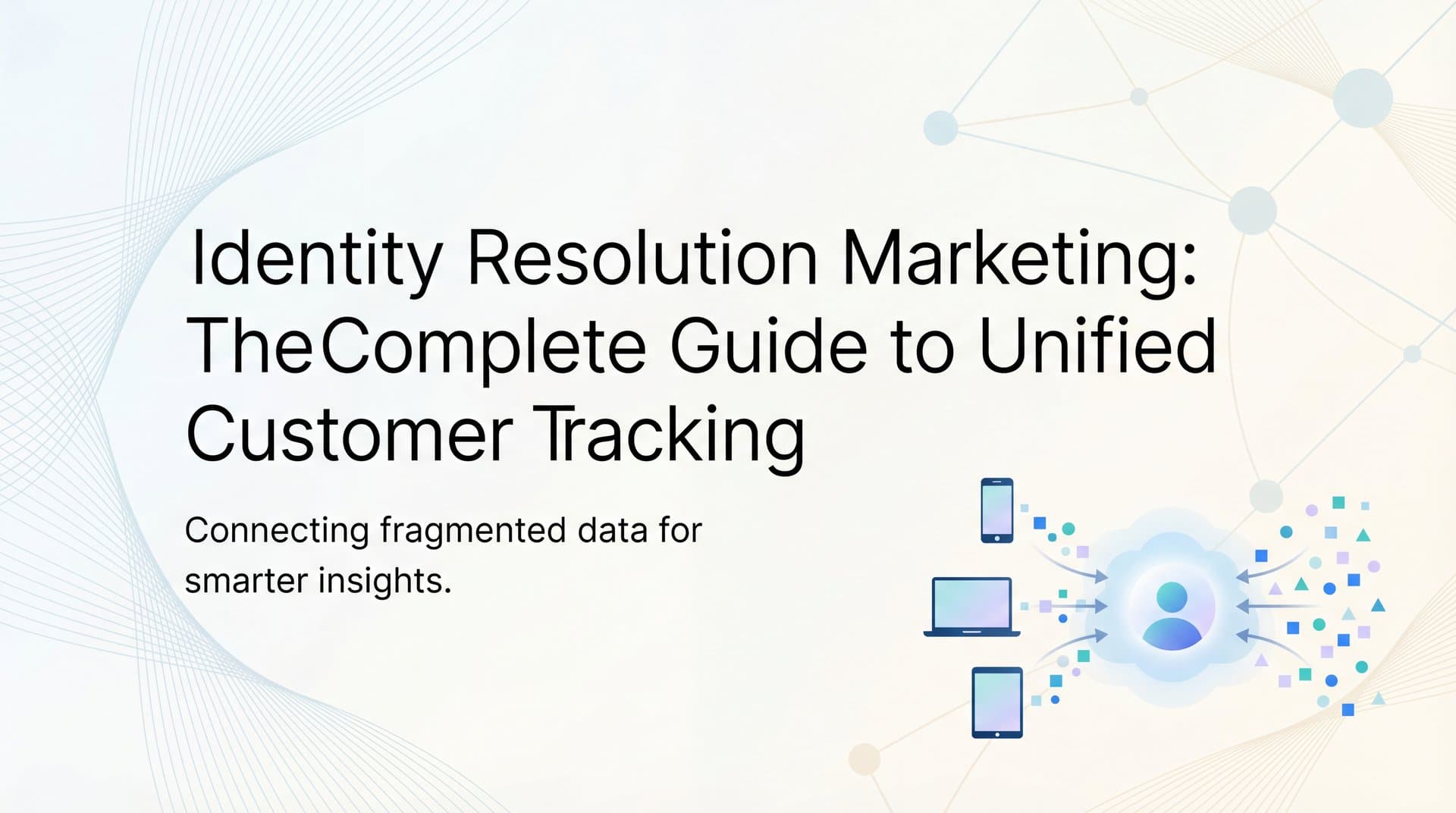
Identity resolution marketing solves this fundamental problem by connecting scattered customer data points into unified profiles. Instead of treating each device, session, and touchpoint as a separate entity, identity resolution recognizes when these signals belong to the same person—giving you an accurate view of customer journeys and enabling smarter attribution decisions.
The Science Behind Connecting Customer Data Points
Identity resolution is the systematic process of matching and merging customer identifiers across different platforms and touchpoints to create unified customer profiles. Think of it as detective work at scale: taking fragments of information—an email address here, a device ID there, a cookie from last week—and determining which pieces belong to the same person.
At its core, identity resolution relies on two distinct matching methodologies. Deterministic matching uses exact data matches to link identifiers with near-perfect accuracy. When someone logs into your website with their email address and later fills out a form with that same email on a different device, you can confidently connect those touchpoints to a single person. Phone numbers, customer IDs, and other unique identifiers work the same way.
Probabilistic matching takes a different approach, using statistical models and behavioral patterns to infer connections when exact matches aren't available. This method analyzes signals like device characteristics, IP addresses, browsing patterns, time zones, and interaction sequences to calculate the likelihood that different identifiers belong to the same person. While less precise than deterministic matching, probabilistic methods help fill gaps where direct identifiers aren't captured.
The real magic happens in the identity graph—a data structure that maintains relationships between all these connected identifiers. Picture a web where each node represents a different identifier (email, device ID, cookie, phone number) and the connections between nodes represent confirmed or probable matches. As new data arrives, the graph updates dynamically, strengthening existing connections or creating new ones.
This persistent identity layer enables continuous tracking across sessions and devices. When a customer returns to your site weeks later from a new device, the identity graph can recognize them based on login credentials or behavioral patterns, connecting this new interaction to their complete history. The graph doesn't just store static snapshots—it evolves with each touchpoint, building increasingly comprehensive customer profiles over time.
Modern identity resolution systems combine both matching approaches strategically. They prioritize deterministic matches when available, then layer in probabilistic signals to extend coverage where exact identifiers are missing. This hybrid methodology balances accuracy with completeness, ensuring you capture as much of the customer journey as possible without sacrificing data quality.
Why Fragmented Customer Data Destroys Marketing ROI
Cross-device tracking represents one of the most significant challenges in marketing analytics today. The average person switches between their smartphone, laptop, and tablet throughout a single purchase journey. Without identity resolution, your analytics treats each device as a separate user, fragmenting what should be a unified customer story into disconnected episodes.
This fragmentation creates immediate attribution blind spots. When a customer discovers your brand through a Facebook ad on their phone during their morning commute, researches your product on their work laptop during lunch, and finally converts on their home desktop that evening, traditional tracking methods see three different people. The desktop session gets credited with the conversion, while the mobile ad that started the journey receives no recognition.
The consequences extend beyond reporting accuracy. Attribution models that rely on fragmented data systematically miscredit channels, leading to budget allocation decisions based on fiction rather than fact. You might be dramatically underfunding the channels that initiate customer journeys while overspending on channels that simply capture demand you've already created elsewhere.
Ad platform algorithms suffer even more severely from fragmented data. Meta's Advantage+ campaigns and Google's Smart Bidding rely on conversion signals to optimize targeting and bidding automatically. When these platforms receive incomplete or duplicate conversion data—because the same customer appears multiple times in your system—their machine learning models train on corrupted signals.
The result is algorithmic degradation. Instead of learning which audiences and creative combinations actually drive conversions, ad platforms optimize toward patterns in your fragmented data. They might target people similar to your "three separate converters" when they're really just one person. Or they might avoid bidding on valuable prospects because the conversion signal never connected back to the original ad click.
Duplicate data compounds these problems exponentially. If your tracking fires multiple conversion events for the same purchase because it can't recognize the customer across sessions, you're not just inflating your conversion numbers—you're teaching ad platforms to optimize for duplicate signals. The platforms think certain actions are twice as valuable as they actually are, leading to bid inflation and wasted spend on patterns that don't represent real customer behavior.
This fragmentation also prevents you from understanding true customer lifetime value. When the same customer's purchases are split across multiple profiles, you can't accurately calculate marketing ROI or segment customers by their actual behavior. Your retention analysis becomes unreliable. Your audience building for retargeting campaigns targets fragments of customers rather than complete profiles.
Core Components of an Identity Resolution System
Every identity resolution system starts with a robust data collection layer that captures customer identifiers from every touchpoint. This includes first-party data from your website (cookies, logged-in user IDs, form submissions), ad platform data (click IDs, campaign parameters), CRM records (email addresses, phone numbers, customer IDs), and offline sources (point-of-sale systems, call center interactions). The more comprehensive your data collection, the more connection points you have for building unified profiles.
The quality of data collection matters as much as the quantity. Server-side tracking has become essential because it captures data at the server level rather than relying on browser-based methods that ad blockers can prevent and iOS restrictions can limit. When someone clicks an ad, server-side tracking logs that click directly to your servers with all relevant parameters, creating a reliable record independent of what happens in their browser.
At the heart of the system sits the identity matching engine—the logic layer that determines which identifiers belong to the same person. This engine applies matching rules in a hierarchy, typically prioritizing deterministic matches first. If two interactions share the same email address or logged-in user ID, the engine confidently links them to a single profile.
For interactions without exact identifier matches, the engine applies probabilistic matching algorithms. These algorithms analyze multiple signals simultaneously: Did both interactions come from the same IP address within a short timeframe? Do the device fingerprints share characteristics? Does the browsing behavior match known patterns from this profile? The engine calculates confidence scores for potential matches, linking identifiers only when the probability exceeds defined thresholds.
Profile persistence and continuous updating represent the third critical component. Identity graphs aren't static databases—they're living systems that evolve with every new interaction. When a customer who previously interacted anonymously later provides their email address, the system retroactively connects their earlier anonymous sessions to their now-identified profile, filling in historical gaps in their customer journey.
This persistence extends across time periods. If a customer returns six months after their last interaction, the system recognizes them and appends the new touchpoints to their existing profile rather than creating a duplicate. This longitudinal tracking enables accurate customer lifetime value calculations and proper attribution for long consideration cycles.
The system must also handle profile merging intelligently. Sometimes two profiles that initially appeared separate are later discovered to represent the same person—perhaps when a customer logs in from a new device for the first time. The matching engine needs rules for merging these profiles without losing historical data, resolving conflicts when merged profiles contain contradictory information, and maintaining data integrity throughout the consolidation process.
How Identity Resolution Transforms Marketing Attribution
Complete customer journey visibility becomes possible when identity resolution connects all touchpoints to unified profiles. Instead of seeing isolated interactions, you can trace the full path from initial awareness through conversion and beyond. That Facebook ad impression from three weeks ago connects to the Google search two weeks later, which links to the email open last week, culminating in yesterday's purchase—all recognized as a single customer's journey.
This unified view reveals patterns that fragmented data obscures. You discover that your highest-value customers typically interact with five or more touchpoints before converting, with specific channel sequences that indicate strong purchase intent. These insights only emerge when you can confidently track individuals across their entire journey rather than analyzing disconnected sessions.
Multi-touch attribution gains accuracy and reliability when built on resolved identities. Traditional attribution models struggle when they can't determine whether touchpoints belong to the same customer. First-click attribution might credit a Facebook ad while last-click credits a Google search, but if these represent different people in your fragmented data, you're not even attributing the same conversion—you're comparing unrelated events.
With identity resolution, attribution models in digital marketing operate on actual customer journeys. A linear attribution model can properly distribute credit across all touchpoints in a real person's path to conversion. Time-decay models can accurately weight interactions based on their temporal proximity to conversion. Position-based models can correctly identify the true first and last touches in genuine customer journeys.
The transformation extends to how you evaluate channel performance. Without identity resolution, channels that initiate customer journeys often appear undervalued because conversions happen later on different devices or sessions. Identity resolution reveals the true role each channel plays—showing which channels excel at awareness, which drive consideration, and which capture demand. You might discover that your "low-converting" display campaigns are actually essential journey initiators that feed customers to your "high-converting" search campaigns.
Enhanced ad platform performance represents one of the most immediate benefits of identity resolution. When you send conversion data back to Meta, Google, and other platforms through Conversion APIs or server-side integrations, you're feeding their algorithms complete, accurate signals rather than fragmented, duplicate data. The platforms learn which audiences and creative strategies actually drive conversions because the conversion events correctly connect to the ad interactions that influenced them.
This enriched data improves algorithmic optimization across multiple dimensions. Lookalike audiences become more effective because they're built from complete customer profiles rather than fragments. Automated bidding strategies optimize toward true conversion patterns rather than artifacts of tracking fragmentation. Dynamic creative optimization learns which messages resonate with real customer segments instead of optimizing for tracking anomalies.
The feedback loop strengthens over time. As ad platforms receive better conversion signals, their targeting and bidding improve, which drives better-qualified traffic, which generates more accurate conversion data, which further enhances algorithmic performance. Identity resolution initiates this virtuous cycle by ensuring the foundational data is accurate from the start.
Implementing Identity Resolution: A Practical Framework
Start by auditing your current data sources and identifying which customer identifiers you're already capturing. Map out every system that touches customer data: your website analytics, ad platforms (Meta, Google, LinkedIn, TikTok), CRM, email marketing platform, payment processor, and any other tools in your marketing stack. For each system, document which identifiers it captures—emails, phone numbers, device IDs, cookies, customer IDs, transaction IDs.
Look for gaps in your identifier collection. Are you capturing email addresses early in the customer journey through newsletter signups or gated content? Do you have mechanisms for recognizing returning visitors before they convert? Are your ad platform click IDs being preserved through the entire conversion path? These gaps represent opportunities to strengthen your identity resolution capabilities by adding new data capture points.
Establish server-side tracking as your foundation for reliable first-party data collection. Browser-based tracking faces increasing limitations from iOS restrictions, ad blockers, and privacy-focused browsers. Server-side tracking bypasses these obstacles by capturing data at your server level, creating a persistent record of customer interactions independent of browser capabilities or user privacy settings.
Implementing server-side tracking typically involves setting up server-side tag management or direct API integrations with your ad platforms and analytics tools. When someone clicks an ad, the click parameters are logged to your server. When they convert, your server sends the conversion event directly to the ad platform's Conversion API, including all relevant identifiers that connect the conversion back to the original click.
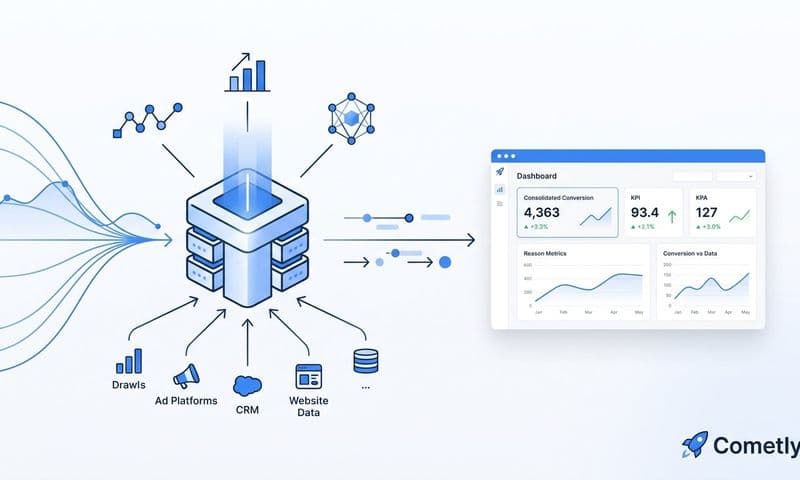
Connect your entire marketing stack through a central marketing campaign attribution platform that maintains unified customer profiles. This platform becomes your identity resolution hub, ingesting data from all your sources, applying matching logic to resolve identities, and maintaining the persistent identity graph that connects touchpoints across channels and time.
The integration process requires connecting each data source to your attribution platform through APIs, webhooks, or direct integrations. Your website sends event data including all available identifiers. Your CRM syncs customer records and transaction data. Your ad platforms share impression, click, and conversion data. The attribution platform continuously processes these inputs, matching identifiers, updating profiles, and building comprehensive customer journey records.
Configure your matching rules and thresholds based on your business requirements and data quality. Deterministic matching rules are straightforward—exact email matches, phone number matches, or customer ID matches should automatically link to the same profile. Probabilistic matching requires more careful calibration. Set confidence thresholds that balance coverage (linking as many interactions as possible) with accuracy (avoiding false matches that connect different people).
Test your implementation thoroughly before relying on it for decision-making. Compare conversion counts across your systems to ensure they align. Verify that customer journeys make logical sense—if you're seeing implausible patterns like the same person converting twice in the same minute from different locations, your matching rules may be too aggressive. Refine your configuration based on these observations until you achieve reliable, accurate identity resolution.
Navigating Privacy Regulations While Resolving Identities
First-party data collected with proper user consent forms the foundation of privacy-compliant identity resolution. Unlike third-party data collected by external entities without direct user relationships, first-party data comes from your direct interactions with customers who have chosen to engage with your brand. When you collect email addresses through account creation, capture purchase data from your e-commerce platform, or track website behavior on your own domain, you're building first-party data assets.
The key is transparency and consent. Privacy regulations like GDPR and CCPA require that users understand what data you're collecting and how you'll use it. Clear privacy policies, cookie consent mechanisms, and opt-in processes for email collection ensure your identity resolution practices respect user privacy while maintaining legal compliance. First-party data collected this way is both more privacy-compliant and more valuable than third-party alternatives because it represents genuine customer relationships.
Cookie deprecation preparedness becomes less urgent when your identity resolution strategy emphasizes server-side tracking and deterministic matching. While third-party cookies enabled cross-site tracking for years, their phase-out doesn't eliminate identity resolution—it simply shifts the methodology toward first-party identifiers and server-side data collection that doesn't rely on browser cookies.
Server-side tracking captures customer interactions at your server level, creating persistent records independent of cookie policies or browser restrictions. When combined with deterministic identifiers like email addresses or logged-in user IDs, you maintain robust identity resolution capabilities even as third-party cookies disappear. The transition actually strengthens your competitive position if you've invested in first-party data infrastructure while competitors still depend on cookie-based tracking.
Balancing personalization with privacy requires respecting user consent while delivering value through relevant experiences. Identity resolution enables personalization by connecting customer touchpoints, but this capability must be deployed thoughtfully. Users who opt out of tracking should have their preferences honored. Data minimization principles suggest collecting only the identifiers necessary for your business purposes rather than hoarding every possible data point.
Transparent data practices build trust while enabling effective identity resolution. When customers understand that you're connecting their interactions to provide better service—more relevant product recommendations, more helpful support experiences, more appropriate marketing messages—many willingly provide the identifiers that make this possible. The value exchange becomes clear: customers share information that enables better experiences, and you use that information responsibly to deliver those experiences.
Moving Forward with Unified Customer Intelligence
Identity resolution marketing has evolved from competitive advantage to operational necessity. In a landscape where customers interact across multiple devices, platforms, and sessions before converting, fragmented tracking doesn't just limit your insights—it actively distorts your understanding of what drives results. Without unified customer profiles, your attribution models credit the wrong channels, your ad platforms optimize with corrupted signals, and your budget decisions rest on a foundation of incomplete data.
The benefits of implementing identity resolution extend across your entire marketing operation. Unified customer views reveal the true paths to conversion, showing which touchpoints genuinely influence purchase decisions rather than simply appearing in proximity to them. Accurate attribution enables confident budget allocation, directing spend toward channels that drive real results rather than artifacts of tracking limitations. Enhanced ad platform performance emerges naturally when algorithms train on complete, accurate conversion data that correctly connects outcomes to the campaigns that influenced them.
The transition to identity resolution requires investment in infrastructure—server-side tracking capabilities, attribution platforms that maintain unified profiles, and integration work to connect your marketing stack—but the alternative is continuing to make million-dollar decisions based on fragmented, unreliable data. As privacy regulations tighten and third-party tracking methods decline, first-party identity resolution built on consented data becomes the only sustainable path forward.
Start by evaluating your current tracking setup honestly. How confident are you that your attribution models reflect reality? Can you trace individual customer journeys across devices and platforms? Are your ad platforms receiving accurate, complete conversion signals? Understanding how to evaluate marketing performance metrics reveals whether your existing infrastructure supports the unified customer intelligence modern marketing demands.
Ready to elevate your marketing game with precision and confidence? Discover how Cometly's AI-driven recommendations can transform your ad strategy—Get your free demo today and start capturing every touchpoint to maximize your conversions.