You check your ad platform dashboard and see 50 conversions. Then you look at your CRM and count only 30 actual sales. Sound familiar?
Inaccurate ad reporting is one of the most frustrating challenges digital marketers face today. Between iOS privacy updates, cookie restrictions, cross-device tracking gaps, and platform attribution windows, the data you rely on to make budget decisions often tells an incomplete story.
The consequences go beyond confusion. When your reporting is off, you might scale campaigns that are not actually performing, cut winners that look like losers, or waste budget on channels that get credit they do not deserve. For marketing teams running campaigns across Meta, Google, TikTok, and other platforms, these discrepancies can mean thousands of dollars in misallocated spend.
The good news is that inaccurate ad reporting is fixable. This guide walks you through a systematic process to identify where your data breaks down, implement tracking improvements, and build a reporting system you can actually trust. Whether you are dealing with missing conversions, inflated metrics, or conflicting numbers across platforms, you will find actionable steps to get your data back on track.
Step 1: Audit Your Current Tracking Setup for Data Gaps
Before you can fix inaccurate reporting, you need to understand exactly where and how your tracking is failing. Start by pulling conversion data from every source you use: Meta Ads Manager, Google Ads, TikTok Ads, Google Analytics, and most importantly, your CRM or sales system.
Create a simple spreadsheet comparing conversion counts for the same date range across all platforms. If Meta reports 100 conversions while your CRM shows 65, you have a 35% discrepancy. Document these gaps for each platform. This baseline tells you which tracking issues to prioritize.
Next, verify your pixel and tag implementation. Open your website in Chrome or Firefox and launch the developer tools. Navigate to the Network tab and trigger a conversion action like submitting a form or completing a purchase. You should see tracking requests fire to Meta, Google, and any other platforms you use.
Use browser extensions like Meta Pixel Helper, Google Tag Assistant, or similar debugging tools for your ad platforms. These extensions show you in real time whether pixels are installed correctly, firing on the right pages, and sending the expected data. Pay attention to error messages or warnings that indicate implementation problems.
Common tracking breakdowns happen in predictable places. Check if your pixels fire before page redirects complete, especially on thank-you pages that immediately redirect users elsewhere. Test your tracking on mobile devices, where iOS restrictions and app environments can block pixel requests. Verify that pixels fire correctly when users move between subdomains or from your main site to a checkout hosted on a different domain.
Document everything you find. Note which pages have missing pixels, where tracking fails on mobile, and which conversion events are not being captured. This audit gives you a clear roadmap of what needs fixing.
The goal is not perfection but awareness. Once you know your tracking captures 70% of actual conversions instead of 100%, you can make better decisions while you implement improvements. You stop treating platform numbers as gospel and start using them as directional indicators.
Step 2: Implement Server-Side Tracking to Capture Lost Conversions
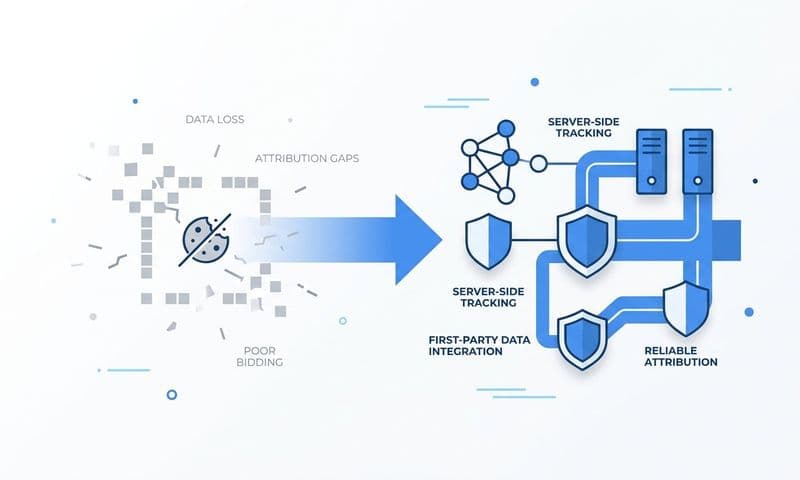
Browser-based pixels have become increasingly unreliable. Ad blockers prevent them from firing. Safari's Intelligent Tracking Prevention and Firefox's Enhanced Tracking Protection limit cookie lifespans. iOS App Tracking Transparency requires user permission before any tracking happens. The result is that browser pixels miss a significant portion of your actual conversions.
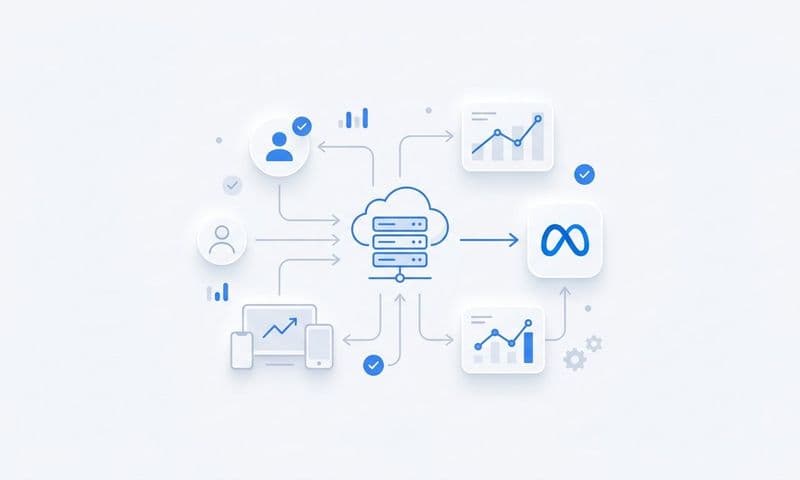
Server-side tracking solves this problem by sending conversion data directly from your server to ad platforms, completely bypassing the browser. When a conversion happens on your site, your backend system records it and sends the event data through a server-to-server connection that cannot be blocked by privacy tools or browser restrictions.
To implement server-side tracking, you need to capture conversion events on your server. This typically happens when a form submission reaches your backend, when a payment processor confirms a transaction, or when your CRM records a new lead. At that moment, your server should send the conversion data to your ad platforms using their conversion APIs.
For Meta, you will use the Conversions API (CAPI). This requires setting up an access token in your Meta Business Manager, then configuring your server to send POST requests to Meta's API endpoint whenever a conversion occurs. Include key data points like the event name, timestamp, user information (hashed email or phone number), and the original click ID if available. If you need help with setup, check out this guide on how to fix Facebook Conversion API issues.
Google Ads uses a similar approach with its API for offline conversion tracking. You will need to capture the Google Click ID (GCLID) when users arrive from Google Ads, store it in your database or session, then send it back to Google when the conversion completes. This tells Google exactly which ad click led to the conversion.
The technical implementation varies based on your tech stack. If you use WordPress, Shopify, or another CMS, look for plugins or apps that handle server-side tracking. If you have a custom application, your development team will need to integrate the conversion APIs directly. Alternatively, marketing attribution platforms like Cometly handle server-side tracking for you, connecting your backend systems to all your ad platforms through a single integration.
One critical consideration is event deduplication. You will likely run both browser pixels and server-side tracking simultaneously for maximum coverage. Ad platforms need to know when the same conversion is reported twice so they do not double-count it. Include an event ID parameter in both your pixel and server events that uniquely identifies each conversion. Platforms use this ID to deduplicate automatically.
After implementing server-side tracking, verify it works by triggering test conversions and checking that events appear in your ad platform's event manager or conversion tracking dashboard. You should see server events marked distinctly from browser events, confirming the data is flowing correctly.
Server-side tracking typically recovers 20-40% of conversions that browser pixels miss. This dramatically improves data accuracy and gives ad platform algorithms better information to optimize your campaigns.
Step 3: Establish a Single Source of Truth for Conversion Data
Ad platforms will always show different numbers. Meta uses a 7-day click and 1-day view attribution window by default. Google Ads uses 30-day click attribution. TikTok has its own windows. Each platform claims credit for conversions based on its own rules, which is why the same conversion often appears in multiple dashboards.
You need one definitive record of what actually happened. For most businesses, this is your CRM or sales system. Salesforce, HubSpot, Pipedrive, or whatever tool records your actual customers and revenue is the source of truth. If a conversion does not appear there, it did not happen, regardless of what ad platforms claim.
Connect your CRM to your marketing data. This means tracking the complete customer journey from the first ad click through to the final purchase or signup. When someone clicks an ad, capture where they came from using UTM parameters in your URLs. These parameters tag each link with information about the campaign, source, medium, and specific ad.
A properly tagged URL looks like this: yoursite.com/landing-page?utm_source=facebook&utm_medium=cpc&utm_campaign=spring_sale&utm_content=video_ad_1. When users arrive, your website should capture these parameters and pass them along through the conversion process, ultimately storing them in your CRM alongside the customer record.
Consistency matters enormously. Create a UTM naming convention and stick to it across all campaigns and team members. Decide whether you will use "facebook" or "meta" as your source name, then use it every time. Inconsistent tagging creates data chaos that makes accurate attribution impossible.
Map out your customer journey to understand all the touchpoints that matter. Someone might click a Facebook ad, visit your site but not convert, then later search for your brand on Google, click that ad, and purchase. Your CRM should ideally capture both touchpoints, not just the last one. This requires tracking systems that can follow users across sessions and devices.
Build a unified reporting dashboard that shows CRM conversions alongside ad platform data. This lets you see the discrepancies clearly and understand how much credit each platform is claiming compared to what actually converted. When you spot a campaign that ad platforms say is performing well but your CRM shows few actual customers, you know not to scale it.
The goal is to make decisions based on real business outcomes, not platform-reported metrics. Your CRM tells you what drives revenue. Ad platforms tell you what they think drove revenue. Trust your CRM, use platform data to understand trends, and optimize based on what actually works.
Step 4: Configure Attribution Models That Match Your Sales Cycle
Attribution models determine which touchpoints get credit for conversions. The model you choose dramatically affects which campaigns appear successful and where you allocate budget. Using the wrong model for your business creates a distorted view that leads to poor decisions.
Last-touch attribution gives 100% credit to the final interaction before conversion. If someone clicks a Google search ad and immediately purchases, that ad gets all the credit. This model works well for businesses with short sales cycles where customers make quick decisions. But it ignores all the earlier touchpoints that built awareness and consideration.
First-touch attribution gives all credit to the initial interaction. If someone first discovers you through a Facebook ad, that ad gets credit even if they later return through organic search to purchase. This model helps you understand which channels drive new customer acquisition but ignores the nurturing that happens afterward.
Linear attribution distributes credit equally across all touchpoints in the customer journey. If someone interacts with five different campaigns before converting, each gets 20% credit. This provides a more balanced view but treats all interactions as equally important, which is rarely true.
Data-driven attribution uses machine learning to assign credit based on which touchpoints statistically increase conversion likelihood. This is the most sophisticated approach but requires significant data volume to work effectively. Platforms like Google Analytics and some attribution tools offer data-driven models when you have enough conversion history. For more guidance, explore attribution reporting best practices.
Your attribution window matters as much as your model. A 7-day window only credits touchpoints that happened in the week before conversion. A 30-day window looks back further. If your typical customer researches for three weeks before buying, a 7-day window will miss most of their journey and make your top-of-funnel campaigns look ineffective.
Match your attribution settings to your actual sales cycle. Run a simple analysis: look at your last 100 customers and calculate the average time between their first website visit and their purchase. If it is 5 days, a 7-day window works. If it is 25 days, you need a 30-day or longer window to capture the full journey.
Consider using different attribution models for different purposes. Last-touch helps you optimize for immediate conversions and efficient bottom-of-funnel spend. First-touch helps you evaluate which channels effectively acquire new prospects. Multi-touch models help you understand the complete journey and make strategic budget allocation decisions.
Set up comparison reports that show the same campaign performance under different attribution models. This reveals which campaigns are pure converters versus which ones play important roles earlier in the funnel. A campaign that looks weak under last-touch attribution might be your best new customer acquisition channel under first-touch.
The right attribution model is not about finding the "true" answer. It is about choosing the view that helps you make better decisions for your specific business goals and customer journey.
Step 5: Sync Clean Conversion Data Back to Ad Platforms
Once you have accurate conversion data in your CRM or attribution system, you can dramatically improve campaign performance by sending that verified data back to your ad platforms. This process, often called conversion syncing or offline conversion import, feeds the platform algorithms better information so they can optimize more effectively.
Ad platforms use conversion data to train their machine learning systems. When you rely only on browser pixels, platforms receive incomplete data full of gaps and inaccuracies. Their algorithms optimize based on this flawed information, which leads to suboptimal targeting and bidding decisions. When you send server-side data or CRM-verified conversions back to platforms, you give their algorithms the complete picture.
Start by identifying which conversions to sync. Focus on high-value actions that represent real business outcomes: completed purchases, qualified leads, signed contracts, or activated subscriptions. Include conversion value data whenever possible. If someone purchases $500 worth of products, send that value along with the conversion event. This allows platforms to optimize for revenue, not just conversion volume.
For Meta, use the Conversions API to send conversion events in real time as they happen. Include the external ID or event ID that matches the original pixel event for proper deduplication. Send enhanced data like customer lifetime value or lead quality scores if you have them. Meta's algorithm uses this information to find more high-value customers.
Google Ads allows offline conversion imports through its API or through manual CSV uploads. You need to capture the Google Click ID (GCLID) when users arrive from Google, then send it back with the conversion data. This tells Google exactly which click led to the conversion, even if it happened days or weeks later after multiple site visits.
Set up automated syncing rather than manual uploads. Manual processes break down when someone goes on vacation or gets busy with other priorities. Automated systems ensure your platforms receive fresh conversion data continuously. Most attribution platforms and some CRM integrations handle this automatically once configured. Consider using automated attribution reporting software to streamline this process.
Monitor how improved data quality affects your campaign performance. You should see cost per acquisition stabilize or improve as algorithms get better information to work with. Campaigns that previously looked unprofitable might become winners once platforms understand which clicks actually led to conversions. Lookalike audiences and automated targeting improve when trained on accurate conversion data.
Include post-conversion events when relevant to your business. If customers who complete onboarding are more valuable than those who sign up but never activate, send that onboarding event back to platforms. This helps algorithms optimize for activated users, not just signups. If customers who remain active after 30 days have higher lifetime value, send that milestone event to improve targeting.
The feedback loop between accurate conversion data and platform optimization creates a compounding effect. Better data leads to better targeting, which leads to better customers, which generates more accurate data. This cycle is what separates marketers who consistently scale efficiently from those who struggle with rising costs and declining performance.
Step 6: Build Ongoing Monitoring to Catch Future Discrepancies
Tracking does not stay fixed. New iOS updates break implementations. Platform changes alter how data is collected. Team members launch campaigns with incorrect UTM parameters. Landing pages get redesigned without pixels. If you are not actively monitoring, your data quality degrades without you noticing until decisions have already been made on bad information.
Create a weekly reporting cadence that compares platform-reported conversions against your CRM source of truth. Build a simple dashboard or spreadsheet that shows conversion counts from each ad platform alongside your actual CRM conversions for the same period. Calculate the discrepancy percentage for each platform. If Meta typically shows 15% more conversions than your CRM and suddenly shows 40% more, something broke.
Set up automated alerts for when discrepancy rates exceed your acceptable thresholds. If your normal tracking accuracy is within 10% and suddenly you see a 25% gap, you need to investigate immediately. Many attribution platforms include anomaly detection that notifies you when data patterns change significantly. If you are building custom monitoring, use simple threshold alerts that trigger when numbers fall outside expected ranges.
Document your entire tracking setup in a shared document that your team can reference. List every pixel installed, where it fires, what events it tracks, and how it is configured. Include your UTM naming conventions, attribution model settings, and integration details. When something breaks, this documentation helps you troubleshoot quickly instead of trying to remember how everything was set up months ago.
Review your tracking setup whenever you launch new campaigns, create new landing pages, or start using new ad platforms. Make tracking verification part of your campaign launch checklist. Before you spend a dollar on a new campaign, confirm that conversions from that campaign will be tracked correctly in all your systems.
Test your tracking regularly with manual conversions. Once a month, go through your conversion flow yourself: click an ad, complete the desired action, and verify the conversion appears in all expected places. Check that it shows up in your ad platform, your analytics tool, and your CRM. This simple test catches broken conversion tracking before it costs you significant budget.
Schedule quarterly deep audits where you repeat the comprehensive tracking review from Step 1. Technology changes, platforms update their requirements, and implementations drift over time. A quarterly audit catches issues that weekly monitoring might miss and ensures your tracking foundation remains solid.
Build tracking maintenance into your team's workflow. Assign someone to own data quality and make it part of their regular responsibilities, not an extra task that gets ignored when things get busy. Accurate reporting requires ongoing attention, and that attention needs a clear owner who is accountable for catching and fixing issues.
Putting It All Together
Fixing inaccurate ad reporting is not a one-time project but an ongoing discipline. By auditing your current setup, implementing server-side tracking, establishing a single source of truth, configuring proper attribution, syncing clean data back to platforms, and monitoring for discrepancies, you build a foundation for confident marketing decisions.
Here is your quick checklist to verify your reporting is on track:
Conversion counts within 10% across platforms and CRM: Your ad platforms and CRM should show similar conversion numbers. Small discrepancies are normal, but large gaps indicate tracking problems.
Server-side tracking active for all major ad platforms: You should be sending conversion data directly from your server to Meta, Google, and other platforms to bypass browser limitations.
UTM parameters consistent across all campaigns: Every campaign link should include properly formatted UTM tags following your naming conventions.
Attribution model aligned with your sales cycle: Your attribution windows and models should match how long customers actually take to convert.
Weekly discrepancy checks scheduled: Someone on your team should be comparing platform data to CRM data every week and investigating anomalies.
When your data is accurate, you stop guessing and start scaling. You know exactly which campaigns drive real revenue, which channels deserve more budget, and where to cut spend. That clarity is what separates marketers who grow efficiently from those who burn budget on misleading metrics.
The investment in accurate tracking pays for itself quickly. Every misallocated dollar you prevent, every winning campaign you scale with confidence, and every losing campaign you cut before wasting more budget adds up to significant performance improvements.
Ready to elevate your marketing game with precision and confidence? Discover how Cometly's AI-driven recommendations can transform your ad strategy. Get your free demo today and start capturing every touchpoint to maximize your conversions.