Picture this: You're in a Monday morning marketing meeting, and your CEO asks, "Which keywords are actually driving revenue?" You pull up your standard keyword ranking report, but it only shows positions and search volumes. You can't connect the dots between keyword performance and actual business impact. Sound familiar?
Most marketers are drowning in keyword data but starving for actionable insights. Traditional keyword reports focus on vanity metrics like rankings and impressions, while the real question—"What's driving revenue?"—remains unanswered. In today's competitive landscape, you need keyword reports that connect search performance to business outcomes.
The strategies below will transform your keyword reporting from basic position tracking to revenue-focused intelligence. You'll learn how to build reports that not only show what's happening with your keywords but also guide strategic decisions that impact your bottom line. These aren't theoretical concepts—they're battle-tested approaches used by successful marketing teams to turn keyword data into competitive advantages.
1. Assign business impact scores
Most keyword reports show you rankings and traffic numbers, but they can't answer the question that actually matters: "Which keywords are driving revenue?" You're tracking positions and impressions while your CEO wants to know ROI. This disconnect happens because traditional keyword reporting treats all traffic equally, when the reality is that some keywords generate customers while others just generate clicks.
Revenue attribution reporting solves this by tracking keywords throughout the entire customer journey—from that first informational search through the final purchase decision. Instead of crediting only the last keyword someone searched before converting, you see how different search terms contribute at various stages. That "how to" query someone searched three weeks ago? It might have started the journey that eventually led to a high-value conversion.
Why Traditional Last-Click Attribution Fails for Keywords
When you only track the final keyword before conversion, you're missing most of the story. A potential customer might discover your brand through an informational keyword like "content marketing strategies," return later via a comparison keyword like "marketing automation platforms comparison," and finally convert on a branded search. Last-click attribution gives all the credit to that final branded search, making it look like your informational content and comparison pages contributed nothing.
This creates a dangerous cycle where you optimize only for bottom-funnel keywords because they show direct conversions, while the top-funnel keywords that actually start customer relationships get deprioritized. Your keyword strategy becomes increasingly narrow, focused only on people already ready to buy, while competitors capture the awareness stage.
Setting Up Multi-Touch Attribution for Keywords
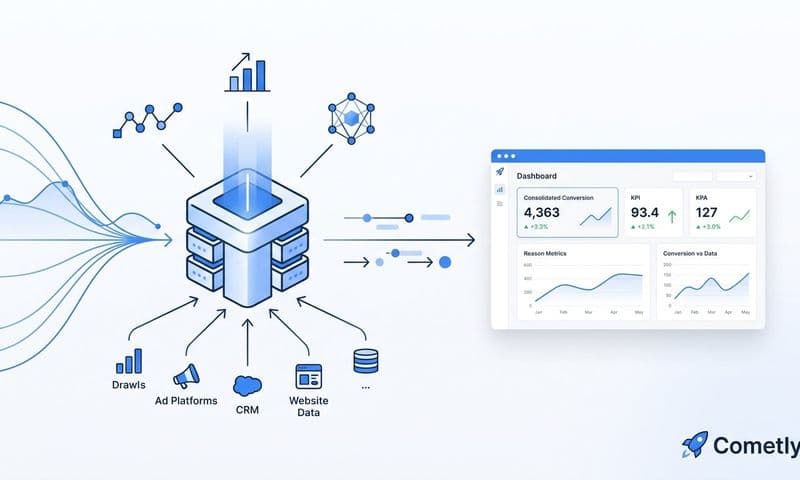
Start by connecting your analytics platform to your CRM system so you can track the complete path from keyword to closed deal. Google Analytics 4 offers built-in attribution modeling, but you'll need proper UTM parameter tracking on all your campaigns to capture keyword data at every touchpoint. For organic keywords, ensure your analytics platform is recording the search terms that bring users to your site.
Define your attribution window based on your typical sales cycle. B2B companies with longer sales processes might use 90-day windows, while e-commerce sites might use 30 days. The key is capturing enough of the customer journey to see how keywords work together without extending so far that you're attributing conversions to irrelevant touchpoints.
Choose an attribution model that reflects your business reality. Position-based attribution (giving 40% credit to first and last touch, 20% to middle touches) works well for most businesses because it acknowledges both the keywords that start relationships and those that close them. Data-driven attribution uses machine learning to assign credit based on actual conversion patterns, but requires significant conversion volume to be effective.
Connecting Keywords to Actual Revenue Numbers
Beyond tracking conversions, assign revenue values to different keyword-driven actions. A demo request might be worth $500 based on your close rate and average deal size. A whitepaper download might be worth $50. An e-commerce purchase has direct revenue. These values let you calculate true keyword ROI, not just conversion counts.
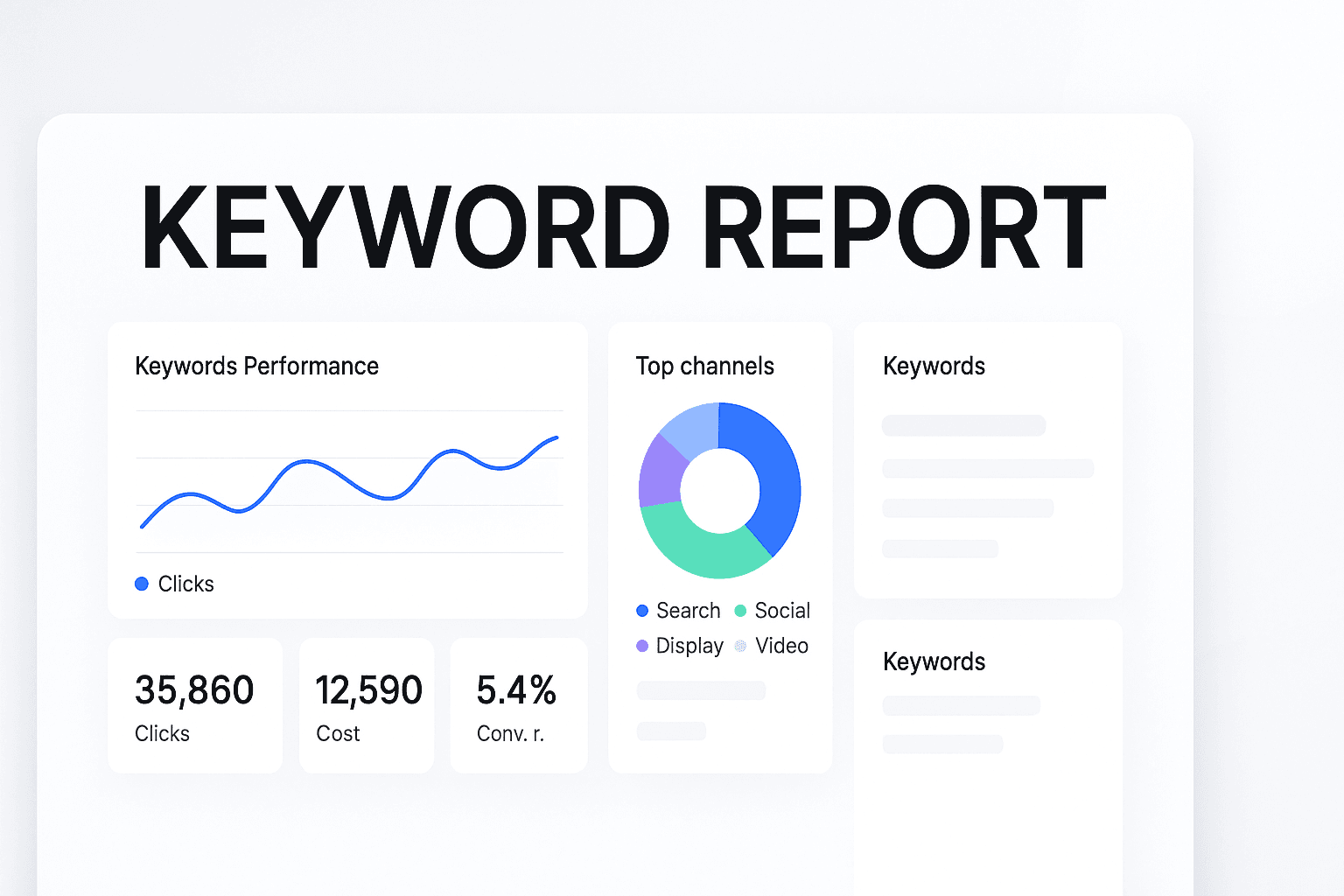
Build reports that show keyword performance alongside revenue metrics. You want to see not just that a keyword drove 50 conversions, but that those conversions generated $25,000 in revenue. This transforms keyword reporting from a technical SEO exercise into strategic business intelligence that guides budget allocation and content investment decisions.
Track assisted conversions separately from last-click conversions. Many of your most valuable keywords will show high assisted conversion numbers even if their last-click conversions are low. These are the awareness-stage keywords that start customer relationships—they deserve optimization investment even though they don't get final credit.
Making Attribution Data Actionable
Create keyword segments based on their role in the customer journey. Your "first-touch keywords" that consistently appear at the beginning of conversion paths need content that educates and builds trust. Your "last-touch keywords" need content optimized for conversion
2. Build Competitive Keyword Gap Analysis Reports
Most keyword reports show you what you're ranking for, but they completely miss what you're not ranking for—and that's where your biggest opportunities hide. Your competitors are capturing traffic and conversions from keywords you haven't even considered, and without competitive gap analysis, you're essentially flying blind in your market.
Competitive keyword gap analysis reveals the search terms where your competitors have established strong positions while your site remains invisible. This isn't about copying competitor strategies—it's about identifying market opportunities you're currently missing and understanding where you have realistic potential to compete.
Why Gap Analysis Transforms Keyword Strategy: Traditional keyword research starts with your own ideas about what people might search for. Gap analysis flips this approach by showing you what's actually working in your market. When competitors consistently rank for specific keywords, they've validated that these terms drive valuable traffic worth pursuing.
The strategic value goes beyond just finding new keywords. Gap analysis reveals content topics your competitors have prioritized, search intent patterns you might be missing, and market positioning insights that inform broader marketing strategy. You'll discover whether competitors are dominating informational content, product comparison keywords, or specific solution categories.
Building Your Competitive Gap Analysis Report:
Identify Your True SERP Competitors: Start by analyzing who actually appears in search results for your target keywords. These SERP competitors often differ from your direct business competitors. A local marketing agency might compete with HubSpot and Neil Patel's blog in search results, even though they're not business competitors. Export the top 10-20 ranking domains across your primary keyword set to identify patterns.
Extract Competitor Keyword Portfolios: Use SEO tools to pull comprehensive keyword lists for your top 5-10 competitors. Focus on keywords where they rank in positions 1-10, as these represent their strongest visibility. Export this data including search volume, ranking position, and estimated traffic for each keyword.
Cross-Reference Against Your Rankings: Compare competitor keyword lists against your own ranking data. Create filters to identify keywords where competitors rank in top 10 but you either don't rank at all or appear below position 20. This creates your initial gap keyword list—the foundation of your opportunity analysis.
Apply Strategic Filters: Not every gap keyword deserves attention. Filter your list based on search volume thresholds relevant to your business size, keyword difficulty scores that match your domain authority, and business relevance to your actual offerings. A gap keyword with 50,000 monthly searches means nothing if it's not aligned with what you actually sell or the audience you serve.
Categorize Gap Opportunities: Segment your gap keywords into strategic categories. Group them by search intent (informational vs. transactional), topic clusters, product categories, or customer journey stages. This organization reveals patterns—you might discover competitors dominate "how to" content while you focus on product pages, or they're capturing comparison keywords you're missing entirely.
Assess Realistic Ranking Potential: Not every gap represents a viable opportunity. Evaluate whether you can realistically compete for each keyword based on your domain authority, content resources, and unique expertise. Keywords where competitors have massive authority advantages might not be worth pursuing immediately, while gaps in areas where you have subject matter expertise represent quick wins.
Create Prioritized Opportunity Lists: Build a scoring system combining search volume, keyword difficulty, business relevance, and your competitive advantages. High-priority gaps are keywords with decent search volume, manageable competition, strong business alignment, and topics where you have expertise or resources competitors lack.
Track Competitive Movement: Set up ongoing monitoring for your gap keywords. Track when competitors gain or lose rankings, when new competitors enter the space, and when gap keywords you're targeting show ranking improvements. This creates a
Putting It All Together
Building effective keyword reports isn't about collecting more data—it's about connecting keyword performance to business outcomes that drive real decisions. The strategies above transform keyword reporting from a compliance exercise into a strategic advantage that guides optimization efforts and resource allocation.
Start with revenue attribution reporting to establish the foundation for business-focused keyword analysis. This single shift—from tracking rankings to tracking revenue—changes everything about how you evaluate keyword performance. Then layer in competitive intelligence and trend analysis to identify opportunities your current reports might be missing. Intent-based segmentation helps you prioritize the keywords that actually matter to your business goals, while cannibalization tracking ensures you're not competing against yourself.
The most successful marketing teams use keyword reports as strategic intelligence rather than just performance summaries. They connect search data to customer behavior, competitive positioning, and business growth objectives. When your keyword reports can answer questions like "Which keywords should we prioritize for Q2?" and "What search trends indicate new market opportunities?", you've transformed data into competitive advantage.
Ready to see how advanced attribution tracking can revolutionize your keyword reporting? Cometly connects every keyword touchpoint to actual revenue, showing you which search terms drive real business results across your entire customer journey. Get your free demo and discover how AI-powered attribution can transform your keyword strategy from guesswork into data-driven confidence.