When you're running campaigns across Google, Meta, LinkedIn, and a dozen other channels, knowing which touchpoints actually generate qualified leads feels impossible. Your CRM shows a conversion, but which ad deserves credit? Which content piece nudged them closer? Which email sealed the deal?
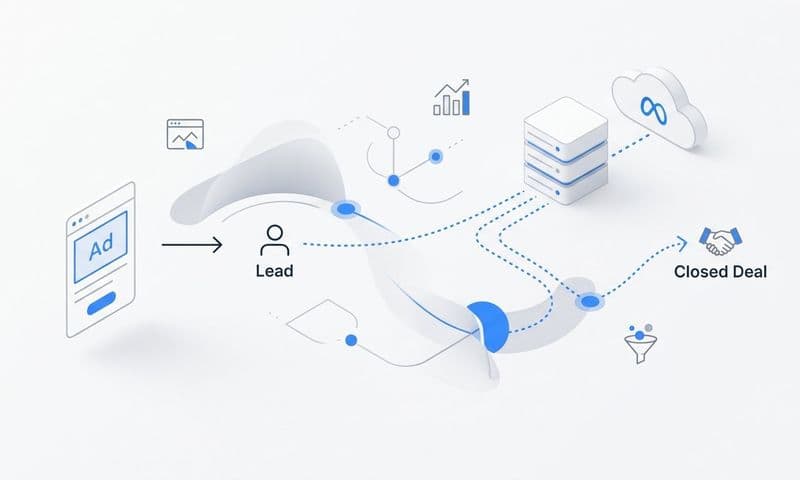
Lead attribution software solves this by tracking the entire customer journey—from first click to closed deal—so you can stop guessing and start scaling what works. We evaluated dozens of platforms based on tracking accuracy, CRM integration depth, multi-touch attribution models, and ease of implementation. Here are the top lead attribution tools for marketing teams in 2026.
1. Cometly
Best for: Marketing teams needing AI-powered attribution with server-side tracking and conversion sync
Cometly is an AI-powered marketing attribution platform that tracks the entire customer journey and feeds enriched conversion data back to ad platforms for better optimization.
 9 Best Lead Attribution Software for Marketing in 2026
Where This Tool Shines
Cometly stands out for its server-side tracking architecture, which bypasses iOS limitations and browser restrictions that plague traditional pixel-based tracking. This means you're capturing accurate data even when third-party cookies fail or users opt out of tracking.
The platform's AI-powered recommendations analyze your attribution data to identify high-performing campaigns across every channel, then suggest specific scaling opportunities. Rather than drowning in dashboards, you get actionable insights that tell you exactly where to increase spend.
Key Features
Server-Side Tracking: Captures conversion data regardless of browser settings or iOS restrictions, ensuring complete journey visibility.
AI Campaign Recommendations: Machine learning identifies winning ad combinations and suggests budget reallocation for maximum ROI.
Conversion Sync: Sends enriched, first-party event data back to Meta, Google, and other platforms to improve their targeting algorithms.
Multi-Touch Attribution: Distributes credit across all marketing touchpoints using customizable attribution models.
Real-Time CRM Integration: Connects directly to your CRM to track leads from first touch through closed revenue.
Best For
Marketing teams and agencies running substantial ad spend across multiple platforms who need accurate attribution despite tracking limitations. Particularly valuable for businesses struggling with iOS attribution gaps or those wanting to feed better data to ad platform algorithms for improved automated optimization.
Pricing
Custom pricing based on monthly ad spend and tracking volume. Demo available to evaluate fit before commitment.
2. HubSpot Marketing Hub
Best for: Teams already using HubSpot CRM who want native attribution without additional integrations
HubSpot Marketing Hub is a comprehensive marketing platform with built-in attribution reporting that connects to HubSpot's CRM for closed-loop revenue tracking.
 10 Best Enterprise Channel Analytics Software To Maximize Marketing ROI
Where This Tool Shines
If you're already in the HubSpot ecosystem, the attribution reporting feels effortless. There's no complex integration process—your marketing activities, lead data, and revenue metrics all live in one unified system. This eliminates the data sync headaches that plague multi-tool setups.
The contact-level and deal-level attribution views let you see both the micro and macro picture. You can drill into individual lead journeys or zoom out to understand which campaigns drive the most pipeline value across your entire funnel.
Key Features
Native CRM Integration: Seamless connection between marketing touchpoints and closed revenue without third-party connectors.
Multiple Attribution Models: Compare linear, time decay, U-shaped, and other models side-by-side to understand different perspectives.
Contact and Deal Attribution: View attribution at both the individual lead level and the aggregate deal level.
Campaign Tracking: Automatic tracking across email, paid ads, content, and social without manual UTM management.
Custom Report Builder: Create attribution reports tailored to your specific KPIs and stakeholder needs.
Best For
Companies already using HubSpot CRM who want attribution capabilities without adding another platform. Works especially well for inbound marketing teams tracking content performance alongside paid campaigns.
Pricing
Professional tier starts at $800/month with basic attribution features. Enterprise tier at $3,600/month unlocks advanced attribution models and custom reporting.
3. Ruler Analytics
Best for: Businesses with significant phone call volume who need offline conversion tracking
Ruler Analytics is a closed-loop attribution platform specializing in connecting offline conversions, phone calls, and form fills to their original marketing source.
 8 Best Enterprise Marketing Attribution Tools To Track Complex B2b Journeys
Where This Tool Shines
Many attribution tools struggle with phone calls—arguably the highest-intent conversion for many B2B businesses. Ruler Analytics solves this by tracking which marketing touchpoint triggered each call, then connecting those calls to closed revenue in your CRM.
The platform's form tracking works without modifying your existing forms, which means your development team doesn't need to rebuild landing pages just to get attribution working. It captures form submissions and ties them back to the visitor's complete marketing journey automatically.
Key Features
Call Tracking with Attribution: Dynamic number insertion connects phone calls to specific marketing sources and campaigns.
Form Tracking: Captures form submissions without code changes, linking them to the visitor's complete touchpoint history.
CRM Integration: Syncs with Salesforce, HubSpot, Pipedrive, and other CRMs to connect marketing data with closed deals.
Revenue Attribution: Ties marketing touchpoints to actual revenue, not just lead generation metrics.
Multi-Touch Models: Distributes credit across the customer journey using various attribution methodologies.
Best For
Service businesses and B2B companies where phone calls represent a significant portion of conversions. Particularly valuable for industries like legal services, home services, financial services, and healthcare where calls often lead to high-value deals.
Pricing
Starts at £199/month for basic tracking. Pricing scales based on monthly tracked visitors and call volume.
4. Dreamdata
Best for: B2B companies practicing account-based marketing with complex buying committees
Dreamdata is a B2B revenue attribution platform built for account-based marketing, visualizing the entire buying journey across multiple stakeholders.
 7 Best Customer Journey Tracking Software in 2026
Where This Tool Shines
B2B sales rarely involve a single decision-maker. Dreamdata recognizes this reality by grouping all contacts from the same company into account-level attribution. You can see how different stakeholders engaged with your content, which touchpoints influenced the buying committee, and which channels drove account engagement.
The buying journey visualization shows the complete timeline of interactions across an account, making it easy to understand complex B2B sales cycles that might span months and dozens of touchpoints. This visibility helps you identify patterns in successful deals and replicate those journeys.
Key Features
Account-Based Attribution: Groups individual contacts by company to show complete account engagement across the buying committee.
Buying Journey Visualization: Timeline view of all touchpoints leading to conversion, showing the complete decision-making process.
Content Attribution: Identifies which blog posts, whitepapers, webinars, and other assets influence deals.
Integration Ecosystem: Connects with major CRMs, ad platforms, and marketing automation tools.
Revenue Attribution: Links marketing activities to closed revenue and pipeline value.
Best For
B2B SaaS companies and enterprise software providers with long sales cycles and multiple decision-makers. Especially valuable for teams running account-based marketing programs who need to understand engagement at the company level rather than just individual leads.
Pricing
Free tier available for basic tracking. Team plan starts at $999/month with full attribution features and unlimited users.
5. Attribution
Best for: Data-driven teams wanting granular control over attribution modeling methodologies
Attribution is a multi-touch attribution platform offering flexible modeling options including data-driven attribution for teams wanting granular control.
 9 Best Lead Attribution Software for Marketing in 2026
Where This Tool Shines
Attribution gives you the flexibility to compare multiple attribution models side-by-side, which reveals how different methodologies change your understanding of channel performance. You might discover that last-click attribution dramatically undervalues your top-of-funnel content, while linear attribution spreads credit more fairly.
The data-driven attribution model uses machine learning to analyze your actual conversion patterns and assign credit based on what statistically matters most. This moves beyond rule-based models to let your data tell the story of what drives conversions.
Key Features
Multiple Attribution Models: Compare first-click, last-click, linear, time decay, position-based, and custom models simultaneously.
Data-Driven Attribution: Machine learning analyzes conversion patterns to assign credit based on statistical impact.
Cohort Analysis: Segment customers by acquisition source, behavior, or characteristics to understand different audience journeys.
Ad Platform Integration: Connects with Google Ads, Meta, LinkedIn, and other platforms for unified reporting.
Custom Conversion Events: Define and track any conversion event important to your business model.
Best For
Marketing teams with analytical depth who want to experiment with different attribution methodologies. Works well for companies running complex multi-channel campaigns where simple attribution models don't capture the full picture.
Pricing
Custom pricing based on monthly tracked conversions and data volume. Pricing typically scales with business size and complexity.
6. Northbeam
Best for: DTC brands with substantial ad spend needing media mix modeling
Northbeam is an attribution and media mix modeling platform designed for DTC brands, combining multi-touch attribution with incrementality testing.
 9 Best AI-Powered Marketing Insights Platforms in 2026
Where This Tool Shines
Northbeam combines traditional multi-touch attribution with media mix modeling, which gives you two complementary views of performance. Attribution shows you the touchpoint-level journey, while media mix modeling reveals the holistic impact of each channel on overall revenue—including channels that don't have perfect tracking.
The creative-level attribution is particularly valuable for brands running multiple ad variations. You can see which specific images, videos, and copy variations drive conversions, not just which campaigns or ad sets perform best. This granularity helps creative teams understand what resonates.
Key Features
Media Mix Modeling: Holistic channel performance analysis that accounts for incrementality and interaction effects.
First-Party Data Collection: Server-side tracking infrastructure for accurate measurement post-iOS changes.
Creative-Level Attribution: Tracks performance down to individual ad creatives, not just campaigns.
Incrementality Testing: Validates attribution findings through controlled experiments to measure true lift.
Forecasting Tools: Predicts the impact of budget changes across channels before you commit spend.
Best For
Direct-to-consumer e-commerce brands spending at least $1 million annually on paid advertising. The platform's sophistication makes most sense for brands with complex media mixes across multiple channels and significant creative testing volume.
Pricing
Custom pricing based on ad spend and data complexity. Typically positioned for brands with substantial marketing budgets.
7. Triple Whale
Best for: Shopify stores needing fast setup with accurate post-iOS tracking
Triple Whale is an e-commerce attribution platform with deep Shopify integration, using first-party tracking to measure ad performance accurately.
 11 Best Paid Advertising Analytics Tools to Maximize Your Ad ROI in 2026
Where This Tool Shines
Triple Whale's one-click Shopify setup means you can go from installation to actionable attribution data in minutes, not weeks. The platform was built specifically for e-commerce, so everything from the dashboard layout to the metrics displayed reflects what matters most for online stores.
The first-party pixel architecture addresses the iOS tracking challenges that have plagued e-commerce brands. By collecting data server-side before it hits browser restrictions, Triple Whale captures conversion data that traditional pixels miss. The post-purchase surveys add a validation layer, asking customers directly how they discovered your brand.
Key Features
First-Party Pixel: Server-side tracking that bypasses iOS limitations for more accurate conversion measurement.
Native Shopify Integration: One-click installation with automatic data sync and no technical setup required.
Real-Time Dashboard: Unified view combining attribution data with profit and loss metrics for complete financial visibility.
Post-Purchase Surveys: Ask customers how they found you to validate and supplement attribution data.
Creative Cockpit: Track performance of individual ad creatives to identify winning variations.
Best For
Shopify stores of any size looking for quick implementation and accurate attribution without technical complexity. Particularly valuable for brands frustrated with Meta and Google's native attribution reporting post-iOS changes.
Pricing
Starts at $129/month for basic features. Pricing scales with monthly revenue and advanced feature requirements.
8. Bizible (Adobe Marketo Measure)
Best for: Enterprise B2B organizations with complex Salesforce implementations
Bizible is an enterprise B2B attribution solution within Adobe's marketing stack, offering granular touchpoint tracking with deep Salesforce integration.
Where This Tool Shines
Bizible's Salesforce integration goes beyond basic field mapping. It tracks touchpoints at both the contact and account level, supports custom objects, and maintains attribution data through complex opportunity structures. For enterprises with heavily customized Salesforce instances, this depth of integration is essential.
The stage-based attribution recognizes that B2B funnels aren't linear. You can assign different attribution weights to touchpoints based on which funnel stage they influenced, acknowledging that moving a deal from SQL to opportunity might be more valuable than the initial MQL conversion.
Key Features
Contact and Account Touchpoints: Tracks marketing interactions at both individual and company levels for complete B2B visibility.
Deep Salesforce Integration: Native connection with support for custom objects, complex opportunity structures, and advanced reporting.
Stage-Based Attribution: Assigns credit based on which funnel stage each touchpoint influenced, not just final conversion.
ABM Attribution: Account-based marketing capabilities for tracking engagement across buying committees.
Offline Event Tracking: Captures trade shows, conferences, and other offline marketing activities in attribution models.
Best For
Enterprise B2B companies with substantial Salesforce investments and complex, multi-stakeholder sales processes. The platform's complexity and price point make sense for organizations with sophisticated attribution needs and dedicated marketing operations teams.
Pricing
Enterprise pricing typically starts around $30,000 annually. Actual cost varies based on organization size and feature requirements.
9. Rockerbox
Best for: Brands running omnichannel campaigns including TV, podcast, and direct mail
Rockerbox is a cross-channel marketing measurement platform that unifies attribution across digital, TV, podcast, direct mail, and other channels.
Where This Tool Shines
Most attribution tools focus exclusively on digital channels, but Rockerbox recognizes that modern marketing spans TV commercials, podcast sponsorships, direct mail, and other offline channels. The platform unifies measurement across all these touchpoints, giving you a complete view of how different channels work together.
The TV and podcast attribution capabilities use statistical modeling to connect viewership or listenership data with conversion patterns. While not perfect, this approach provides directional guidance on how these traditionally hard-to-measure channels contribute to your overall marketing mix.
Key Features
Unified Cross-Channel Measurement: Tracks attribution across digital, TV, podcast, direct mail, and other channels in one platform.
TV and Podcast Attribution: Statistical modeling connects broadcast and audio advertising to conversion patterns.
First-Party Data Infrastructure: Server-side tracking and data collection for cookieless measurement.
Custom Attribution Modeling: Build attribution models tailored to your specific business model and customer journey.
Incrementality Testing: Validate attribution findings through controlled experiments across channels.
Best For
Consumer brands running integrated campaigns across digital and traditional media channels. Particularly valuable for companies investing in TV, podcast, or direct mail who need to understand how these channels interact with digital touchpoints.
Pricing
Custom pricing based on channels tracked and data volume. Pricing structure reflects the complexity of omnichannel measurement.
Making the Right Choice
The right lead attribution software depends on your specific marketing mix and business model. For teams running substantial paid campaigns across multiple platforms who need accurate tracking despite iOS limitations, Cometly's server-side infrastructure and AI-powered recommendations deliver actionable insights without overwhelming complexity.
If you're already embedded in the HubSpot ecosystem, their native attribution reporting eliminates integration headaches. B2B teams with complex buying committees should look at Dreamdata or Bizible for account-level attribution. DTC brands benefit from e-commerce-specific solutions like Triple Whale or Northbeam that understand the nuances of online retail.
Consider your implementation timeline and technical resources. Tools like Triple Whale offer one-click Shopify setup, while enterprise platforms like Bizible require dedicated implementation teams. Think about your attribution sophistication needs—do you need basic last-click reporting or advanced data-driven modeling?
The tracking landscape continues to evolve as privacy regulations tighten and third-party cookies disappear. Platforms with robust first-party data collection and server-side tracking architectures will remain accurate as browser-based tracking becomes less reliable. Prioritize solutions that adapt to these changes rather than relying on tracking methods that won't work in two years.
Ready to elevate your marketing game with precision and confidence? Discover how Cometly's AI-driven recommendations can transform your ad strategy—Get your free demo today and start capturing every touchpoint to maximize your conversions.