Every marketer knows the frustration: you're spending thousands on ads, but when it comes to proving ROI, the data just doesn't add up. Conversions vanish into thin air. Your CRM shows leads, but you can't connect them to specific campaigns. And worst of all, you're making budget decisions based on incomplete information—essentially flying blind with real money on the line.
The tracking problem isn't just an inconvenience; it's actively costing you revenue. When you can't see which ads drive actual sales, you inevitably fund underperformers while starving your best campaigns. You're left guessing which channels deserve more budget, which creative variations actually convert, and whether that expensive new campaign is worth continuing.
This guide breaks down seven actionable strategies to regain visibility, fix tracking gaps, and finally understand where your ad dollars are actually going. These aren't theoretical concepts—they're practical solutions that address the real-world challenges created by privacy regulations, browser restrictions, and platform limitations that have fundamentally changed how we track marketing performance.
1. Implement Server-Side Tracking to Bypass Browser Limitations
The Challenge It Solves
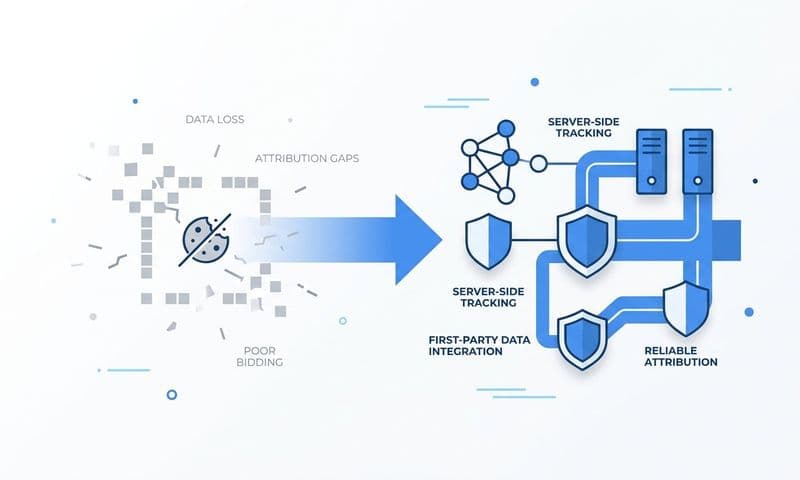
Browser-based tracking has become increasingly unreliable. Safari's Intelligent Tracking Prevention, Firefox's Enhanced Tracking Protection, and widespread ad blocker usage mean that traditional pixel tracking misses significant portions of your actual conversions. iOS App Tracking Transparency made this problem even more acute—many marketers report discrepancies of 30-40% between what their ad platforms show and what actually happened.
When your tracking relies entirely on browser cookies and client-side pixels, you're building your entire attribution strategy on a foundation that's crumbling beneath you.
The Strategy Explained
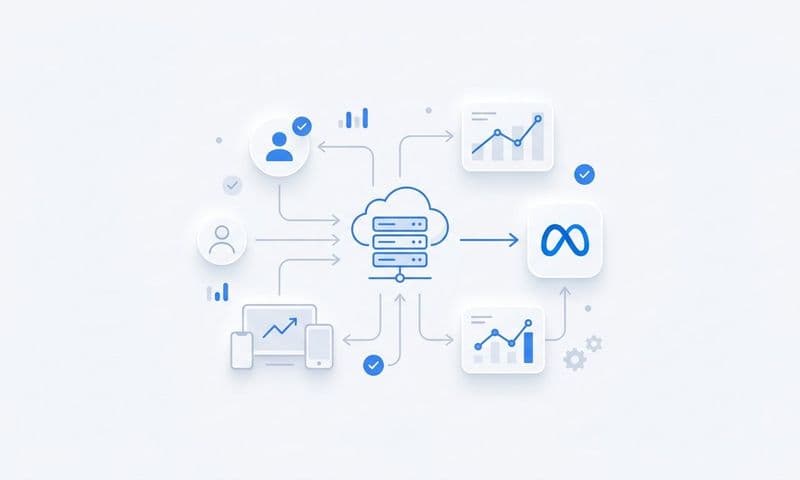
Server-side tracking captures conversion data directly from your server rather than relying on the user's browser. When someone converts on your site, your server sends that conversion event directly to your ad platforms and analytics tools. This approach bypasses browser restrictions entirely because the data transmission happens server-to-server, not through the user's browser.
Think of it like this: traditional tracking is like sending a letter through someone else's mailbox where they can choose whether to forward it. Server-side tracking is like delivering the letter directly yourself—nothing gets lost in transit.
The result is more complete, accurate conversion data that gives you a true picture of campaign performance. Your ad platform algorithms also receive better signals, which improves their optimization capabilities.
Implementation Steps
1. Set up a server-side tracking solution that connects to your website backend and can send conversion events to your ad platforms (Meta Conversions API, Google Enhanced Conversions, etc.).
2. Configure your server to capture conversion events when they occur—form submissions, purchases, sign-ups—and format them according to each platform's API specifications.
3. Implement event deduplication so that conversions captured by both browser pixels and server-side tracking aren't counted twice in your reports.
4. Test thoroughly by triggering test conversions and verifying they appear correctly in your ad platform dashboards and analytics tools.
Pro Tips
Start with your highest-value conversion events first rather than trying to implement server-side tracking for everything at once. Focus on purchases, qualified leads, or demo requests—the conversions that directly impact revenue. You can expand to lower-funnel events later once your core tracking is solid.
2. Connect Your CRM to Your Ad Platforms for Full-Funnel Visibility
The Challenge It Solves
Your ad platforms know about clicks and website conversions, but they have no idea what happens after someone becomes a lead. Did that Facebook lead turn into a $50,000 customer six months later? Did the Google Ads click generate a qualified opportunity that your sales team is currently nurturing? Without CRM integration, you're optimizing for leads without knowing which campaigns drive actual revenue.
This blind spot is especially costly for B2B companies and high-ticket sales where the real conversion—the closed deal—happens weeks or months after the initial ad click. You end up scaling campaigns that generate lots of cheap leads while underfunding campaigns that attract fewer leads but higher-quality buyers.
The Strategy Explained
CRM integration creates a feedback loop between your sales data and your advertising platforms. When a lead closes in your CRM, that conversion event flows back to the ad platform that originally generated the click. Suddenly, Meta and Google can see which campaigns drive not just form fills, but actual customers with real revenue values attached.
This transforms how ad algorithms optimize. Instead of optimizing for "lead form submissions," they can optimize for "leads that become customers." The difference in campaign performance can be dramatic—you're teaching the algorithm what success actually looks like for your business.
Implementation Steps
1. Identify which CRM fields contain the data you need to send back to ad platforms—typically deal stage, deal value, and close date at minimum.
2. Set up integration between your CRM and ad platforms, either through native integrations, third-party tools, or custom API connections that can pass conversion events when deals reach specific stages.
3. Map your CRM conversion events to corresponding events in your ad platforms (e.g., "Closed Won" in CRM becomes "Purchase" event in Meta).
4. Configure the integration to include revenue values so ad platforms can optimize for conversion value, not just conversion volume.
5. Monitor the data flow for the first few weeks to ensure conversions are being attributed correctly and revenue values are passing through accurately.
Pro Tips
Don't wait until deals close to send data back. Consider sending intermediate events like "Sales Qualified Lead" or "Opportunity Created" so your ad platforms receive optimization signals faster. Long sales cycles mean waiting months for closed-deal data, but intermediate milestones give the algorithm feedback it can act on immediately.
3. Use UTM Parameters Consistently Across Every Campaign
The Challenge It Solves
Inconsistent UTM parameters create attribution chaos. When one person uses "utm_source=facebook" and another uses "utm_source=fb" and a third uses "utm_source=Facebook," your analytics tool treats these as three separate sources. Multiply this problem across campaigns, ad sets, and creative variations, and you end up with fragmented data that makes accurate analysis impossible.
The result is reports that show hundreds of tiny traffic sources instead of clear campaign performance. You can't answer basic questions like "How much revenue did our Facebook campaigns generate this quarter?" because the data is scattered across dozens of inconsistently labeled entries.
The Strategy Explained
Standardized UTM naming conventions create a consistent taxonomy for all your traffic sources. Every campaign URL follows the same structure, uses the same capitalization, and includes the same level of detail. This consistency means your analytics data aggregates correctly, giving you clean reports that actually reflect campaign performance.
Think of UTM parameters as the filing system for your marketing data. Without a consistent system, you're throwing documents into random folders and hoping you can find them later. With standardization, every piece of data goes into its proper place automatically.
Implementation Steps
1. Document your UTM naming conventions in a shared guide that specifies exact formats for utm_source, utm_medium, utm_campaign, utm_term, and utm_content across all channels.
2. Create a UTM builder tool or spreadsheet that enforces your naming conventions—dropdown menus work well to prevent freeform entries that introduce inconsistency.
3. Establish rules for each parameter: utm_source should identify the platform (facebook, google, linkedin), utm_medium should identify the format (cpc, email, social), utm_campaign should identify the specific initiative or offer.
4. Audit existing campaigns to identify and fix inconsistent UTM parameters, then update any active links to match your new standards.
5. Train everyone who creates campaign URLs on the naming conventions and require them to use your standardized UTM builder.
Pro Tips
Keep your UTM parameters lowercase and use hyphens instead of spaces or underscores for maximum compatibility across analytics platforms. Also, resist the urge to cram too much detail into UTM parameters—you can always drill down in your analytics tool, but you can't fix inconsistent naming after the traffic arrives.
4. Set Up Conversion Sync to Feed Better Data Back to Ad Platforms
The Challenge It Solves
Ad platform algorithms are only as good as the data they receive. When browser tracking limitations cause conversion data loss, your Meta and Google campaigns optimize based on incomplete information. They think certain ads aren't working when they actually are—they just can't see the conversions that happened.
This creates a vicious cycle: incomplete data leads to poor optimization, which leads to worse campaign performance, which makes you question whether paid advertising even works for your business. Meanwhile, your actual results might be significantly better than what your ad dashboards show.
The Strategy Explained
Conversion sync sends enriched, complete conversion events back to your ad platforms to give their algorithms the full picture. Instead of relying solely on what browser pixels capture, you send server-side conversion data that includes events the browser tracking missed. You're essentially filling in the gaps so the ad platform's machine learning can optimize accurately.
The impact goes beyond just seeing better numbers in your dashboard. When Meta's algorithm knows that certain audiences, placements, or creative variations drive conversions, it can find more people like your converters and show them your best-performing ads. You're teaching the algorithm what success looks like with complete data instead of partial glimpses.
Implementation Steps
1. Implement server-side tracking for your key conversion events so you have complete conversion data to send back to ad platforms.
2. Configure conversion sync to send events to Meta Conversions API, Google Enhanced Conversions, and other platforms you advertise on, ensuring each event includes relevant parameters like conversion value and user identifiers.
3. Set up event matching so you can connect server-side conversion events to the original ad clicks—this typically requires passing click IDs or other identifiers through your conversion flow.
4. Test the setup by triggering conversions and verifying they appear in your ad platform attribution reports with the correct source attribution.
Pro Tips
Include as many user identifiers as possible when sending conversion events—email, phone, IP address, user agent. The more matching parameters you provide, the better ad platforms can attribute conversions to the correct campaigns. This improves both your reporting accuracy and the algorithm's optimization effectiveness.
5. Adopt Multi-Touch Attribution to See the Complete Picture
The Challenge It Solves
Last-click attribution gives all the credit to whatever touchpoint happened right before conversion, completely ignoring the journey that led there. Someone might discover your brand through a Facebook ad, research you via Google search, read your email nurture sequence, and finally convert after clicking a retargeting ad—but last-click attribution would credit only that final retargeting click.
This distorted view makes you undervalue top-of-funnel campaigns that introduce people to your brand and overvalue bottom-funnel campaigns that simply collect conversions from people who were already convinced. You end up cutting awareness campaigns that actually drive your pipeline while pouring money into retargeting that only works because other campaigns did the heavy lifting.
The Strategy Explained
Multi-touch attribution distributes conversion credit across all the touchpoints that influenced a purchase decision. Instead of giving 100% credit to the last click, you might give 40% to the first touch, 20% to middle touches, and 40% to the last touch. Or you might distribute credit evenly across all touchpoints. The specific model matters less than acknowledging that customer journeys involve multiple interactions.
When you can see the full journey, you make smarter decisions about where to invest. That expensive awareness campaign suddenly shows its value when you realize it's the first touch for 60% of your customers. That email sequence you almost cut is actually a crucial middle touch that moves people toward conversion.
Implementation Steps
1. Choose an attribution model that makes sense for your business—position-based (U-shaped) works well for most businesses, while time-decay models suit long sales cycles.
2. Implement tracking that captures the entire customer journey, not just the last click—this typically requires marketing attribution software that can stitch together multiple touchpoints for each customer.
3. Set a reasonable attribution window that reflects your actual sales cycle—30 days might work for e-commerce, but B2B companies often need 90-180 day windows.
4. Compare multi-touch attribution results against last-click attribution to identify which campaigns are undervalued in your current reporting.
5. Adjust your budget allocation based on multi-touch insights, increasing investment in campaigns that contribute meaningfully to the customer journey even if they don't get last-click credit.
Pro Tips
Start by comparing different attribution models side-by-side rather than immediately switching your entire reporting to multi-touch. This helps you understand how each model changes the story and builds confidence in multi-touch insights before you start making major budget decisions based on them.
6. Audit Your Tracking Setup Monthly to Catch Breaks Early
The Challenge It Solves
Tracking breaks happen constantly. A developer pushes a site update that removes your tracking code. An integration stops working after a platform API change. A campaign launches with broken UTM parameters. Each break corrupts your data, but you might not notice for weeks—by which time you've made dozens of decisions based on incomplete information.
The cost of broken tracking compounds quickly. Not only do you lose visibility into what's happening, but ad algorithms optimize based on incomplete data, leading to poor performance. By the time you discover the problem, you've wasted significant budget and lost the ability to accurately measure what happened during the broken period.
The Strategy Explained
Regular tracking audits catch problems before they cause serious damage. By systematically checking your tracking setup monthly, you identify breaks within days instead of weeks or months. You verify that conversion events are firing correctly, data is flowing to all necessary platforms, and your reports show reasonable numbers that align with business reality.
Think of it like changing the oil in your car. You don't wait until the engine seizes to check the oil level—you do regular maintenance to prevent catastrophic failure. Tracking audits are the same preventive maintenance for your marketing data infrastructure.
Implementation Steps
1. Create a tracking audit checklist that covers all critical components: pixel firing, conversion event tracking, CRM integration, UTM parameter accuracy, and cross-platform data consistency.
2. Schedule monthly audit sessions where you systematically work through the checklist, testing conversions, checking integration logs, and comparing data across platforms.
3. Set up automated alerts for obvious problems—sudden drops in conversion volume, missing data from key platforms, or integration errors that indicate something stopped working.
4. Document your tracking setup so anyone on the team can run an audit and understand what should be happening—this prevents knowledge silos where only one person knows how tracking works.
5. When you find breaks, fix them immediately and document what went wrong so you can prevent similar issues in the future.
Pro Tips
Test your entire conversion funnel as part of each audit by actually completing a conversion yourself—fill out the form, make a test purchase, trigger whatever conversion events matter most. This hands-on testing catches issues that wouldn't be obvious from just looking at dashboards and reports.
7. Consolidate Your Analytics Into a Single Source of Truth
The Challenge It Solves
When your conversion data lives in five different platforms—Google Analytics, Meta Ads Manager, your CRM, Google Ads, and LinkedIn Campaign Manager—you inevitably get five different answers to the same question. Each platform uses different attribution windows, different conversion definitions, and different data collection methods. The result is constant confusion and endless debates about which numbers are "right."
This fragmentation paralyzes decision-making. You can't confidently adjust budgets when every platform tells a different story about campaign performance. Stakeholders lose trust in your reporting when the numbers change depending on which dashboard you're showing them. And you waste hours reconciling data instead of analyzing it.
The Strategy Explained
A unified analytics dashboard pulls data from all your platforms into one place and applies consistent attribution logic across everything. Instead of logging into six different tools to piece together campaign performance, you see all your marketing data in a single view with standardized metrics and attribution models.
This isn't just about convenience—it's about having a reliable foundation for decisions. When everyone looks at the same dashboard with the same numbers, you eliminate the "which report is correct?" debates. You can compare channel performance apples-to-apples because everything uses the same methodology. And you spot trends and opportunities faster because you're not manually combining data from multiple sources.
Implementation Steps
1. Choose a marketing attribution platform that can ingest data from all your advertising platforms, analytics tools, and CRM—look for solutions that offer native integrations with your existing tech stack.
2. Connect all your data sources to the platform, ensuring conversion events, ad spend, and customer journey data flow in automatically.
3. Configure your attribution settings to match your business model—set appropriate attribution windows, choose your preferred attribution model, and define what counts as a conversion.
4. Build dashboards that answer your most important questions: Which campaigns drive revenue? What's the actual ROI by channel? Where should we allocate more budget?
5. Train your team to use the unified dashboard as the primary source for performance data, gradually phasing out the habit of checking individual platform dashboards for decision-making.
Pro Tips
Don't try to build a unified dashboard yourself by exporting data to spreadsheets—this approach breaks down quickly as data volume grows and becomes a maintenance nightmare. Invest in proper attribution software that automates data collection and applies consistent methodology across all your channels. The time savings alone justify the cost.
Putting These Strategies Into Action
Start by auditing your current tracking setup to identify the biggest gaps. For most marketers, server-side tracking and CRM integration deliver the fastest ROI improvements because they address the most significant data loss issues. Once you've captured more complete conversion data, you can make better decisions about everything else.
From there, standardize your UTM practices across all campaigns—this single change will immediately clean up your analytics reports and make channel comparison possible. Then implement conversion sync to feed that better data back to your ad platforms so their algorithms can optimize more effectively.
The goal isn't perfect tracking overnight. That's unrealistic given the complexity of modern marketing technology. Instead, aim for progressive improvement that compounds over time. Each fix you implement makes your data more reliable, which enables better decisions, which improves campaign performance, which justifies further investment in your tracking infrastructure.
When you can finally see which ads drive real revenue, everything changes. You stop wasting budget on guesswork and start scaling what actually works. You can confidently defend your marketing budget because you have clear attribution connecting spend to results. And you sleep better knowing your decisions are based on complete data instead of fragments and assumptions.
Ready to elevate your marketing game with precision and confidence? Discover how Cometly's AI-driven recommendations can transform your ad strategy—Get your free demo today and start capturing every touchpoint to maximize your conversions.