
Picture this: you're a marketer, sitting in front of a mountain of data from various campaigns, social media platforms, and web analytics. You know that somewhere within these numbers lies the secret to improving your marketing performance, but you can't seem to decipher the patterns or make sense of it all. If this scenario sounds familiar, you're not alone. Many marketers today are overwhelmed by the sheer volume of data available, leading to confusion rather than clarity. Traditional methods of analyzing marketing performance often fall short, leaving you questioning the effectiveness of your strategies.
In a rapidly evolving digital landscape, effective marketing analytics are more critical than ever. By harnessing the right tools, you can turn data overload into actionable insights that drive your marketing campaigns forward. According to recent studies, over 65% of marketers report feeling overwhelmed by the amount of data they need to analyze. This is where marketing analytics tools come into play, providing clarity and simplifying decision-making processes. By the end of this article, you'll know exactly how to leverage these tools to enhance your marketing strategies and achieve better results. Let's dive into the top 6 marketing analytics tools that can help you unlock the full potential of your data.
1. Cometly
Best for: Marketers seeking comprehensive attribution and analytics.
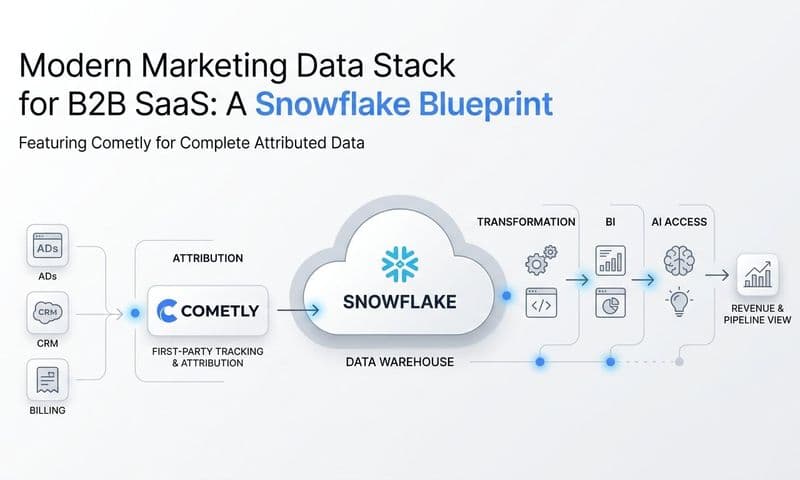
Cometly is a leading marketing attribution and analytics platform that tracks every touchpoint in the customer journey in real-time.
 6 Essential Marketing Analytics Tools To Drive Your Campaign Performance
Cometly shines by providing a complete view of customer interactions, making it easier for marketers to understand which ads and channels drive revenue. It integrates seamlessly with various ad platforms, CRMs, and analytics tools to deliver a cohesive understanding of campaign performance.
Key Features:
1. Multi-Touch Attribution: Cometly captures every interaction a customer has with your brand, allowing marketers to see how different channels contribute to conversions.
2. Real-Time Data Processing: Access to real-time analytics ensures that marketers can make informed decisions quickly, adapting strategies based on current performance.
3. AI-Driven Insights: Cometly uses artificial intelligence to provide recommendations for optimizing ad spend and identifying high-performing campaigns.
How It Works: By connecting to various ad platforms and your CRM, Cometly aggregates data that reveals the complete customer journey, enabling informed decision-making.
Pricing & Plans: Cometly offers tiered pricing plans based on features, making it accessible for businesses of all sizes.
Why It's Great for Marketers: With its comprehensive tracking capabilities and AI-driven insights, Cometly empowers marketers to optimize their campaigns effectively and confidently.
2. Google Analytics
Best for: Businesses looking for a robust free analytics solution.
Google Analytics is an industry-standard analytics tool that provides deep insights into website traffic and user behavior.
 10 Performance Marketing Tracking Software Tools To Optimize Your Ad Campaigns
This tool excels in tracking user interactions across websites and apps, allowing marketers to assess the effectiveness of their online strategies.
We compare the leading options in our media buying automation tools roundup.
Key Features:
1. Goal Tracking: Set specific objectives to measure how well your website meets its targets.
2. Real-Time Analytics: Monitor user activity in real-time, gaining insights into how visitors interact with your content.
If you're evaluating vendors, our AI ecommerce creative breakdown can help.
3. User Segmentation: Analyze data by segmenting users based on demographics, behaviors, and acquisition channels.
How It Works: Google Analytics uses tracking codes embedded in your web pages to collect data on user interactions, which is then presented in an easy-to-understand dashboard.
Pricing & Plans: Google Analytics is free for most features, with a premium version available for more extensive enterprise needs.
Why It's Great for Businesses: Its comprehensive capabilities and ease of use make Google Analytics a go-to choice for marketers aiming to understand their audience better.
3. HubSpot Analytics
Best for: Companies using HubSpot CRM.
HubSpot Analytics integrates seamlessly with HubSpot's marketing automation tools, providing insights into campaign performance.
If you're evaluating vendors, our ecommerce ad automation tool breakdown can help.
 6 Essential Marketing Analytics Tools To Drive Your Campaign Performance
It is particularly beneficial for businesses already utilizing HubSpot's suite of tools, as it offers a unified platform for managing customer relationships and marketing efforts.
Key Features:
1. Lead Tracking: Monitor how leads interact with your marketing content and track their journey through the sales funnel.
2. Campaign Performance Analysis: Evaluate the effectiveness of your marketing campaigns with detailed reports and analytics.
3. Custom Dashboards: Create tailored dashboards that display the metrics most relevant to your marketing goals.
How It Works: HubSpot aggregates data from various marketing channels and presents it in a user-friendly interface, allowing for easy monitoring of performance metrics.
Pricing & Plans: HubSpot offers a free tier with essential features, with more advanced capabilities available in paid plans.
Why It's Great for Inbound Marketers: HubSpot Analytics simplifies the process of measuring marketing effectiveness, making it easier for teams to adapt their strategies based on real-time insights.
4. SEMrush
Best for: SEO-focused marketers.
SEMrush is not only an SEO tool but also offers robust analytics capabilities for tracking marketing performance.
 6 Essential Marketing Analytics Tools To Drive Your Campaign Performance
It excels in providing insights into competitor strategies and keyword performance, helping marketers optimize their content and campaigns.
Key Features:
1. Keyword Tracking: Monitor keyword rankings and analyze competitors' keyword strategies for better SEO performance.
2. Site Audits: Conduct comprehensive audits to identify areas for improvement in your website's SEO health.
3. Traffic Analysis: Gain insights into traffic sources and user behavior on your site compared to competitors.
How It Works: SEMrush uses a combination of site audits, keyword tracking, and competitor analysis to deliver actionable insights.
Pricing & Plans: SEMrush offers various subscription plans, catering to different levels of user needs, from individuals to larger organizations.
Why It's Great for Digital Marketing Agencies: Its extensive features for SEO and competitive analysis make SEMrush a powerful tool for driving traffic and improving search rankings.
5. Mixpanel
Best for: Product and engagement insights.
Mixpanel focuses on tracking user engagement and product analytics, making it ideal for SaaS companies.
 6 Essential Marketing Analytics Tools To Drive Your Campaign Performance
This tool is designed to help marketers understand how users interact with their products, allowing for data-driven improvements.
Key Features:
1. Event Tracking: Capture and analyze user interactions with your product to understand usage patterns.
2. Funnel Analysis: Visualize the user journey and identify drop-off points in your conversion funnel.
3. Retention Tracking: Monitor user retention rates to evaluate customer loyalty and engagement over time.
How It Works: Mixpanel tracks specific user events and provides detailed reports on how users engage with your products, helping teams make informed decisions based on real usage data.
Pricing & Plans: Mixpanel offers a free tier with limited features, with paid plans that expand capabilities based on the amount of data processed.
Why It's Great for Tech Startups: Its focus on product engagement makes Mixpanel a vital tool for understanding user behavior and improving product features.
6. Tableau
Best for: Businesses needing robust data visualization.
Tableau is renowned for its powerful data visualization capabilities, enabling users to create stunning and informative dashboards.
 6 Essential Marketing Analytics Tools To Drive Your Campaign Performance
It allows marketers to visualize complex data sets, making it easier to share insights with stakeholders.
Key Features:
1. Custom Dashboards: Create interactive dashboards that bring your data to life with visual storytelling.
2. Data Blending: Combine data from different sources for a comprehensive view of marketing performance.
3. Collaboration Tools: Share visualizations with team members and stakeholders for collaborative decision-making.
How It Works: Tableau connects to various data sources and enables users to create visual representations of their data, enhancing understanding and engagement.
Pricing & Plans: Tableau offers a range of pricing options, including a free public version and paid licenses for more advanced features.
Why It's Great for Organizations with Large Datasets: Its robust visualization capabilities make Tableau an essential tool for presenting complex data in an understandable format.
Marketing Analytics Tools Comparison
Tool | Best For | Key Strength | Primary Metrics & Insights |
|---|---|---|---|
Cometly | Revenue-focused marketing teams | Full customer journey and attribution visibility | Revenue attribution, ROI, multi-touch attribution, ad-level performance |
Google Analytics | Website traffic analysis | Free and widely adopted traffic analytics | Sessions, page views, engagement, basic conversion tracking |
HubSpot Analytics | Inbound and CRM-driven marketing | Native CRM and marketing automation integration | Lead tracking, funnel conversion rates, campaign ROI |
SEMrush | SEO and competitive research | Deep keyword and competitor insights | Organic traffic, keyword rankings, search visibility |
Mixpanel | Product and user behavior analytics | Event-level tracking and retention analysis | Funnels, engagement events, retention cohorts |
Tableau | Enterprise analytics and reporting | Advanced data visualization and BI | Custom KPIs, blended datasets, executive dashboards |
What Metrics Actually Matter in Marketing Analytics
Marketing data is abundant — impressions, clicks, bounce rates, and followers can fill dashboards quickly — but not all metrics are equally valuable. The most impactful analytics programs focus on metrics tied to business outcomes, such as revenue contribution, customer acquisition efficiency, and long-term value, rather than vanity metrics that have little strategic signal.
At the top of the funnel, teams often start with awareness and engagement metrics like impressions, reach, and click-through rate (CTR). These are useful for understanding how many people see and interact with your marketing, but on their own they rarely prove effectiveness. For example, CTR tells you how enticing your ad or link was — not whether those clicks resulted in pipeline growth.
Moving further down the funnel, conversion metrics — including lead conversions, form completions, and purchase actions — become much more valuable because they directly relate to business activity. Tracking conversion rate helps you evaluate whether your marketing is not just attracting attention, but turning interest into measurable action. Coupling this with customer acquisition cost (CAC) shows how efficiently those conversions are generated relative to spend.
For holistic measurement, revenue-linked metrics like return on ad spend (ROAS), overall ROI, and customer lifetime value (CLV) are critical. They tie campaigns directly to financial performance — something leadership cares deeply about. These are the metrics that turn dashboards into strategic decision tools by quantifying the value each channel or campaign delivers over time.
Ultimately, the worth of a metric isn’t just in what it measures but why it matters in your context. Engagement might be essential for brand awareness, while CAC and CLV are crucial for pricing strategy and scaling. Good analytics programs prioritize metrics that inform decisions and connect actions to outcomes — not just numbers that look nice.
Industry | Key Metrics to Track | Why These Metrics Matter |
|---|---|---|
SaaS & Technology | Activation rate, churn rate, retention, CLV, demo-to-customer conversion | Success depends on long-term customer value, retention, and efficient acquisition |
Ecommerce & DTC | ROAS, conversion rate, average order value (AOV), CAC, CLV | Directly ties marketing spend to profitability and repeat purchase behavior |
Agencies | Client ROI, CAC, lead quality, multi-touch attribution | Proving measurable value across channels is essential for retention and growth |
B2B Companies | Lead velocity rate, MQL-to-SQL conversion, CAC, pipeline influence | Revenue is driven by pipeline quality and sales alignment, not just lead volume |
Retail & Consumer Goods | ROAS, in-store vs online conversions, repeat purchase rate | Balances digital marketing impact with offline purchasing behavior |
Healthcare & Education | Lead conversion rate, engagement, CAC, retention | Long decision cycles make nurturing and lead quality more important than clicks |
Travel & Hospitality | Booking conversion rate, ROAS, seasonality-adjusted CAC | Marketing effectiveness depends on timing, demand cycles, and booking efficiency |
Ultimately, the most effective marketing analytics programs are the ones that adapt measurement to the realities of the business rather than forcing every team to track the same generic metrics. A B2B SaaS company scaling pipeline and retention will naturally prioritize lead quality, conversion velocity, and lifetime value, while an ecommerce brand focused on growth must obsess over return on ad spend, conversion rate, and average order value to maintain profitability. Agencies live and die by their ability to clearly demonstrate ROI across multiple channels, making attribution and revenue influence essential, while industries with longer buying cycles like healthcare, education, and enterprise services rely more heavily on engagement and nurturing metrics to understand intent over time. When teams align their analytics strategy with their revenue model, sales motion, and customer journey, metrics stop being static numbers in a dashboard and start becoming a decision-making system that guides budget allocation, creative direction, and long-term growth.
Putting It All Together
Marketing analytics tools are essential for any marketer looking to enhance their strategies and improve campaign performance. From comprehensive platforms like Cometly, which provide deep insights into customer journeys, to visualization tools like Tableau that help you present data effectively, each of these tools offers unique advantages tailored to different business needs.
As you consider which tool might be right for your marketing efforts, think about your specific needs: Are you looking for detailed attribution tracking? Do you need real-time data processing? Or perhaps you want advanced visualization capabilities? By evaluating your requirements and exploring the tools mentioned in this article, you can make informed decisions that will lead to improved marketing outcomes.
Ready to take your marketing analytics to the next level? Get your free demo today and discover how Cometly can transform your marketing strategy with accurate, real-time insights!