When you're running campaigns across Meta, Google, TikTok, and half a dozen other platforms, your marketing data lives in silos. You're juggling separate dashboards, exporting CSV files, and piecing together the story of what's actually working. Marketing analytics dashboard software solves this by centralizing your performance data into one unified view—showing you which campaigns drive real results, where to optimize spend, and how each channel contributes to revenue.
The best platforms go beyond surface-level metrics. They connect ad clicks to conversions, track the full customer journey, and give you actionable insights instead of just pretty charts. We evaluated these tools based on real-time data accuracy, multi-channel integration depth, ease of use, and their ability to connect marketing activity to actual business outcomes.
Here are the top marketing analytics dashboard platforms built for modern marketing teams.
1. Cometly
Best for: Teams who need accurate attribution across all ad platforms with AI-powered optimization recommendations
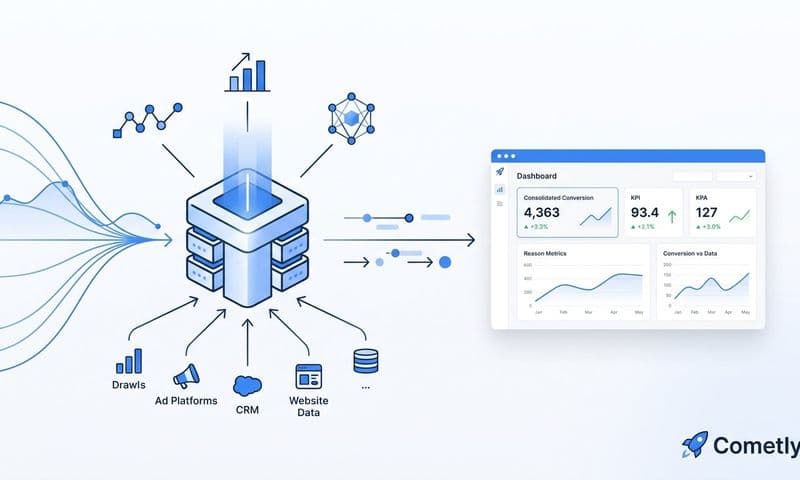
Cometly is a marketing attribution and analytics platform that tracks every touchpoint in the customer journey—from first ad click to final purchase—then uses AI to show you exactly what's driving revenue.
 9 Best Marketing Analytics Dashboard Software in 2026
Where This Tool Shines
Cometly captures the complete customer journey across every marketing channel, CRM event, and website interaction. This gives you a full picture of how prospects move through your funnel, which campaigns actually convert, and where your budget should go.
The platform's server-side tracking solves the accuracy problems caused by iOS privacy changes and browser limitations. You get reliable data even when third-party cookies fail, which means your attribution reports reflect reality instead of guesswork.
Key Features
Multi-Touch Attribution: See every touchpoint that contributed to a conversion, not just the last click.
Server-Side Tracking: Capture accurate conversion data that bypasses browser-based tracking limitations.
AI-Powered Recommendations: Get specific suggestions on which ads and campaigns to scale based on actual performance data.
Conversion Sync: Send enriched conversion data back to Meta, Google, and other ad platforms to improve their AI targeting and optimization.
Real-Time Dashboard: Monitor campaign performance across all channels in one unified interface with live data updates.
Best For
Marketing teams and agencies managing significant ad spend across multiple platforms who need to prove ROI and make data-driven optimization decisions. Especially valuable for businesses dealing with complex customer journeys or struggling with attribution accuracy after iOS privacy updates.
Pricing
Custom pricing based on your ad spend volume. Contact their team for a quote tailored to your tracking needs and scale.
2. Google Analytics 4
Best for: Budget-conscious teams wanting free, comprehensive web analytics with native Google Ads integration
Google Analytics 4 is Google's latest analytics platform built around event-based tracking, cross-platform measurement, and predictive insights powered by machine learning.
 11 Best Conversion Optimization Tools to Boost Your ROI in 2026
Where This Tool Shines
GA4 handles both website and app data in one property, tracking users across devices and platforms. This unified approach gives you a clearer picture of how people interact with your brand across touchpoints, without needing separate tools for web and mobile.
The platform's predictive metrics use machine learning to forecast purchase probability, churn likelihood, and potential revenue from user segments. These insights help you focus on high-value audiences before they convert.
Key Features
Event-Based Data Model: Track any user interaction as an event, giving you flexibility beyond traditional pageview-based analytics.
Cross-Device Tracking: Follow users across devices and platforms when they're signed in to Google accounts.
Predictive Audiences: Build segments based on predicted behavior like purchase probability or churn risk.
BigQuery Integration: Export raw data to BigQuery for advanced analysis and custom reporting.
Native Google Ads Connection: Link directly to Google Ads for seamless campaign performance tracking and audience creation.
Best For
Small to mid-sized businesses and startups needing comprehensive analytics without budget constraints. Also ideal for teams heavily invested in the Google ecosystem who want tight integration with Google Ads and other Google Marketing Platform tools.
Pricing
Completely free for most businesses. GA4 360 enterprise version available for organizations needing higher data limits, SLAs, and advanced features.
3. HubSpot Marketing Analytics
Best for: Teams using HubSpot CRM who want marketing analytics that connect directly to contact records and revenue
HubSpot Marketing Analytics is the built-in analytics suite within HubSpot's marketing platform, designed to show how campaigns influence deals and revenue at the contact level.
 10 Best Enterprise Channel Analytics Software To Maximize Marketing ROI
Where This Tool Shines
HubSpot's analytics live inside the same platform as your CRM data, which means you can trace marketing activity directly to individual contacts, deals, and closed revenue. This tight integration eliminates data silos between marketing and sales.
The multi-touch revenue attribution shows which campaigns influenced each deal throughout the entire buying journey. You see first-touch, last-touch, and everything in between—all connected to actual dollar amounts in your pipeline.
Key Features
Native CRM Integration: Marketing data connects automatically to contact records, deals, and revenue without separate integrations.
Multi-Touch Revenue Attribution: Track how each marketing touchpoint contributed to closed deals and revenue.
Custom Report Builder: Create reports combining marketing metrics with sales and service data for complete business visibility.
Campaign Performance Tracking: Monitor email, social, ads, and content performance in unified campaign dashboards.
Contact Journey Analysis: See the complete timeline of marketing interactions for any contact in your database.
Best For
B2B companies and teams already using HubSpot CRM who want seamless integration between marketing analytics and sales data. Particularly valuable for organizations with longer sales cycles where multiple marketing touches influence deals.
Pricing
Included with HubSpot Marketing Hub Professional (starts at $800/month) and Enterprise tiers. Not available as a standalone product.
4. Databox
Best for: Agencies and teams needing quick, customizable dashboards that pull from 100+ marketing tools
Databox is a dashboard platform that aggregates data from your entire marketing stack into real-time, customizable dashboards you can build in minutes.
 9 Best Marketing Analytics Dashboard Software in 2026
Where This Tool Shines
Databox connects to over 100 marketing tools through native integrations, which means you can build comprehensive dashboards without custom API work or data engineering. The drag-and-drop builder makes it fast to create professional dashboards for clients or executives.
The platform excels at automated reporting and alerts. Set up scheduled reports that deliver to stakeholders' inboxes, and configure alerts that notify you when metrics hit specific thresholds—no manual checking required.
Key Features
100+ Native Integrations: Connect Google Ads, Facebook Ads, HubSpot, Salesforce, and dozens of other platforms without coding.
Drag-and-Drop Builder: Create custom dashboards quickly using pre-built metric blocks and visualization options.
Automated Reporting: Schedule reports to send automatically via email, Slack, or other channels.
Goal Tracking: Set targets for any metric and track progress with visual indicators and alerts.
Mobile App: Monitor your dashboards and get alerts on iOS or Android devices.
Best For
Marketing agencies managing multiple clients, in-house teams reporting to executives, and businesses wanting quick dashboard setup without technical complexity. The white-label options make it especially useful for agencies presenting data to clients.
Pricing
Free tier available with basic features. Paid plans start at $47/month and scale based on data sources and users.
5. Klipfolio
Best for: Teams wanting real-time dashboards with strong metric governance and data blending capabilities
Klipfolio is a business dashboard platform that combines flexible data visualization with PowerMetrics, their system for standardizing how your organization defines and tracks KPIs.
 9 Best Agency Client Reporting Dashboards in 2026
Where This Tool Shines
Klipfolio's PowerMetrics feature solves the problem of different teams calculating metrics differently. It creates a single source of truth for how KPIs are defined, calculated, and tracked across your organization—eliminating the confusion when marketing, sales, and finance report different numbers.
The platform handles complex data blending from multiple sources. You can combine data from your CRM, ad platforms, and analytics tools in one visualization, creating custom metrics that span your entire marketing stack.
Key Features
PowerMetrics for Metric Governance: Standardize KPI definitions across teams so everyone reports consistent numbers.
Real-Time Data Connections: Connect to APIs and databases for live data that updates as changes happen.
Custom Visualization Options: Build exactly the charts and visualizations you need with flexible design tools.
Data Blending: Combine data from multiple sources into unified metrics and reports.
White-Label Dashboards: Create branded dashboards for clients with custom domains and styling.
Best For
Mid-sized to enterprise teams dealing with metric inconsistency across departments, and agencies needing white-label client reporting. Also valuable for businesses with complex data requirements that go beyond what pre-built dashboard tools offer.
Pricing
Plans start at $90/month for teams. Enterprise pricing available for larger organizations with advanced needs.
6. Tableau
Best for: Enterprise organizations needing advanced data visualization and business intelligence at scale
Tableau is an enterprise-grade analytics platform that turns complex data from any source into interactive visualizations and dashboards, backed by AI-driven insights.
 11 Best Marketing Analytics Tools to Track and Optimize Campaign Performance in 2026
Where This Tool Shines
Tableau handles massive datasets and complex analysis that would overwhelm simpler dashboard tools. It connects to virtually any data source—databases, cloud apps, spreadsheets, big data platforms—and processes millions of rows without performance issues.
The platform's AI capabilities through Tableau Pulse surface insights automatically, flagging anomalies and trends you might miss. This turns your dashboard from a passive reporting tool into an active intelligence system that alerts you to opportunities and problems.
Key Features
Advanced Data Visualization: Create sophisticated charts, maps, and interactive visualizations beyond basic dashboard tools.
Tableau Pulse AI Insights: Get automated insights and anomaly detection powered by machine learning.
Enterprise Security: Role-based access control, data governance, and compliance features for large organizations.
Extensive Data Connectivity: Connect to hundreds of data sources including databases, cloud platforms, and enterprise systems.
Embedded Analytics: Embed Tableau visualizations in other applications and portals for seamless integration.
Best For
Large enterprises with complex data needs, organizations requiring advanced analytics capabilities, and companies where multiple departments need sophisticated business intelligence tools beyond marketing analytics.
Pricing
Viewer licenses start at $15/user/month for viewing dashboards only. Creator licenses with full authoring capabilities start at $75/user/month. Enterprise deployments typically involve custom pricing.
7. Looker Studio
Best for: Teams wanting free, shareable dashboards with strong Google product integration
Looker Studio is Google's free data visualization and reporting tool that lets you create interactive dashboards from Google Analytics, Google Ads, and hundreds of other data sources.
 9 Best Data Visualization Tools for Marketing Analytics in 2026
Where This Tool Shines
Looker Studio is completely free with no usage limits, making it accessible for businesses of any size. Despite being free, it offers professional-grade visualization options and the ability to create polished, interactive reports you can share with stakeholders.
The platform integrates seamlessly with Google's ecosystem. Connecting Google Analytics, Google Ads, Search Console, and YouTube data takes seconds, and the reports update automatically as your data changes.
Key Features
Free to Use: No cost for unlimited reports, data sources, or users.
Native Google Integration: One-click connections to Google Analytics, Ads, Search Console, Sheets, and BigQuery.
Collaborative Editing: Multiple team members can edit reports simultaneously, like Google Docs.
Community Connector Library: Access hundreds of pre-built connectors for non-Google data sources.
Embeddable Reports: Share reports via link or embed them in websites and internal portals.
Best For
Small businesses and startups with tight budgets, teams heavily using Google marketing products, and anyone needing quick custom reports without software costs. Also useful as a secondary reporting tool for teams using more expensive platforms.
Pricing
Completely free with no paid tiers or usage limits.
8. Mixpanel
Best for: Product teams and SaaS companies tracking user behavior, retention, and product engagement metrics
Mixpanel is a product analytics platform focused on understanding how users interact with your product, which features drive retention, and where people drop off in key workflows.
Where This Tool Shines
Mixpanel tracks individual user actions as events, letting you analyze behavior at a granular level. You see exactly which features engaged users interact with, how often they return, and what actions predict long-term retention or churn.
The platform excels at funnel analysis and cohort tracking. You can visualize conversion funnels to spot drop-off points, then segment users into cohorts based on behavior to understand what differentiates your best customers from those who churn.
Key Features
Event-Based User Tracking: Track any user action as an event and analyze patterns across your product.
Funnel and Retention Analysis: Visualize conversion funnels and track how cohorts retain over time.
Cohort Segmentation: Group users by behavior, acquisition source, or any property to compare performance.
A/B Test Analysis: Measure the impact of product experiments on user behavior and retention.
User Flow Visualization: See the paths users take through your product and identify common journeys.
Best For
SaaS companies, mobile apps, and product teams focused on improving user engagement and retention. Less suited for traditional marketing campaign tracking, but excellent for understanding post-conversion behavior and product performance.
Pricing
Free tier available for up to 20 million events per month. Growth plan starts at $20/month with higher limits and additional features.
9. Supermetrics
Best for: Teams needing automated data extraction from marketing platforms into spreadsheets, BI tools, or data warehouses
Supermetrics is a data pipeline tool that pulls marketing data from 100+ platforms and loads it into your preferred destination—whether that's Google Sheets, Excel, BigQuery, Looker Studio, or other analytics tools.
Where This Tool Shines
Supermetrics solves the data extraction problem. Instead of manually exporting CSVs from each ad platform or building custom API integrations, you set up automated data flows that refresh on your schedule. Your reports always contain current data without manual updates.
The platform works as a connector layer between your marketing tools and wherever you analyze data. This flexibility means you can use your preferred BI tool or spreadsheet while Supermetrics handles the messy work of pulling data from APIs and formatting it consistently.
Key Features
100+ Marketing Platform Connectors: Extract data from Google Ads, Meta, TikTok, LinkedIn, and dozens of other advertising and analytics platforms.
Automated Data Refresh: Schedule data pulls to run automatically at intervals you choose.
Multiple Destinations: Send data to Google Sheets, Excel, BigQuery, Snowflake, Looker Studio, Tableau, and more.
Data Transformation: Apply filters, combine data sources, and transform data during the extraction process.
Scheduled Reporting: Set up automated report delivery via email with fresh data.
Best For
Teams building custom reporting workflows in spreadsheets or BI tools, data analysts who need raw marketing data in data warehouses, and agencies managing reporting for multiple clients across many platforms.
Pricing
Pricing starts at $19/month per data source connector. Cost scales based on the number of data sources and destinations you need.
Making the Right Choice
Your ideal marketing analytics dashboard depends on what you're trying to solve. If you're struggling with attribution accuracy and need to prove which campaigns actually drive revenue, Cometly gives you the complete journey tracking and AI-powered recommendations that turn data into action.
Budget-conscious teams should start with Google Analytics 4 or Looker Studio—both free tools with solid capabilities for basic to intermediate analytics needs. They integrate seamlessly if you're already using Google Ads and other Google marketing products.
For enterprise organizations with complex data requirements across multiple departments, Tableau provides the advanced analytics and governance features that scale with large teams. HubSpot works best if you're already invested in their CRM and want marketing analytics that connect directly to sales data.
Agencies managing multiple clients benefit from Databox's white-label dashboards and quick setup, while teams building custom reporting workflows should consider Supermetrics for automated data extraction into their preferred tools.
The common thread across successful analytics implementations is accuracy. Your dashboard is only as valuable as the data feeding it. Server-side tracking, proper integration setup, and platforms designed specifically for attribution—like Cometly—ensure you're making decisions based on reality, not incomplete data.
If your campaigns include creator partnerships, tracking influencer marketing ROI alongside your paid channels gives you a complete picture of what's driving revenue.
Ready to elevate your marketing game with precision and confidence? Discover how Cometly's AI-driven recommendations can transform your ad strategy—Get your free demo today and start capturing every touchpoint to maximize your conversions.