
Your marketing team just reported a 40% increase in website traffic and a 25% boost in lead generation. The CFO's response? "Great, but revenue is flat. What are we actually getting for our marketing spend?"
This conversation happens in boardrooms every single day. Marketing celebrates engagement metrics while finance demands proof of revenue impact. Sales questions lead quality. And everyone's looking at different dashboards, drawing different conclusions from the same campaigns.
The problem isn't that your marketing isn't working. The problem is that you can't prove which parts are working—and more importantly, which parts are driving actual revenue growth.
This disconnect between marketing activity and business outcomes represents one of the most expensive blind spots in modern business. You're making million-dollar budget decisions based on incomplete data. You're scaling campaigns that might be attracting the wrong customers. You're cutting budgets on channels that could be your most profitable revenue drivers.
The solution isn't more data—you're already drowning in metrics. The solution is integrated marketing and business analytics that connects every campaign, every channel, and every customer touchpoint directly to revenue outcomes.
When marketing analytics and business analytics work together, something powerful happens. You stop optimizing for vanity metrics and start optimizing for profit. You stop guessing which campaigns drive revenue and start knowing with certainty. You transform marketing from a cost center that leadership questions into a growth engine that leadership funds.
This guide will show you exactly how marketing and business analytics work together to create this transformation. You'll understand why traditional tracking methods are fundamentally broken, how integrated analytics actually works, and most importantly—how to implement a revenue-driven analytics system that proves marketing's impact on your bottom line.
Here's everything you need to know about marketing and business analytics.
Decoding Marketing and Business Analytics for Modern Teams
Let's clear up the confusion. Marketing analytics and business analytics aren't the same thing—but they're not separate either. Understanding the distinction, and more importantly the convergence, changes everything about how you measure success.
Marketing analytics tracks what happens in your campaigns. It tells you which ads got clicked, which emails got opened, which landing pages converted visitors into leads. You see cost per click, conversion rates, engagement metrics, and channel performance. It's the world of Google Analytics dashboards, Facebook Ads Manager reports, and email marketing stats.
But here's what marketing analytics typically doesn't tell you: which campaigns actually drove profitable customers. Which channels generate buyers who stick around. Which acquisition sources lead to high lifetime value versus quick churn.
That's where business analytics enters the picture. Business analytics focuses on outcomes that matter to your bottom line—revenue, profit margins, customer lifetime value, retention rates, and operational efficiency. It answers questions like "What's our customer acquisition cost relative to the revenue they generate?" and "Which customer segments are actually profitable?"
The problem most companies face is that these two disciplines operate in silos. Marketing celebrates a 40% increase in leads while finance sees flat revenue. Sales complains about lead quality while marketing points to impressive engagement numbers. Everyone's measuring something different, and nobody can connect the dots.
This is where the integration sweet spot creates real competitive advantage. When marketing analytics and business analytics work together, you get a complete picture of customer value creation. You can track a customer's journey from first ad click through multiple touchpoints all the way to their actual revenue contribution—and beyond, to their lifetime value.
Suddenly, you're not just optimizing for clicks or conversions. You're optimizing for profitable customer acquisition. You can see that Facebook might drive more leads, but Google drives customers who spend 3x more over their lifetime. You discover that your "expensive" LinkedIn campaigns actually generate your highest-value enterprise clients.
This integrated approach transforms decision-making across your entire organization. Marketing can prove ROI in terms finance actually cares about. Sales gets higher-quality leads because campaigns are optimized for revenue fit, not just volume. Leadership can allocate budgets based on actual profit contribution rather than proxy metrics that may or may not correlate with business growth.
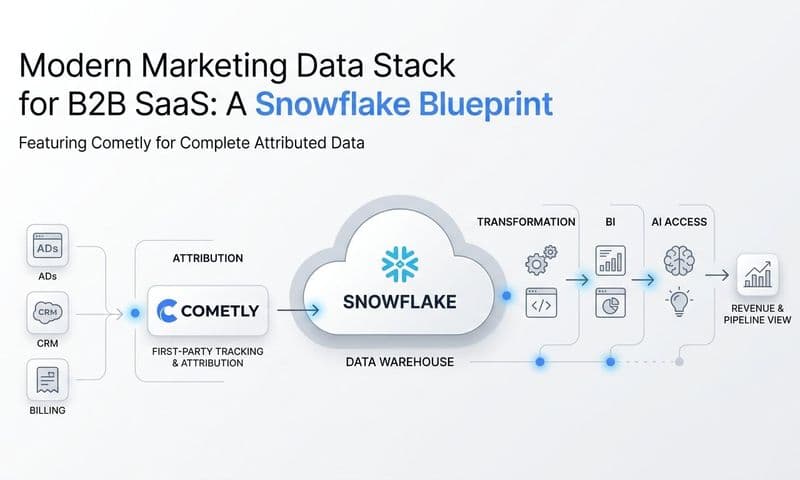
Achieving this integrated view requires sophisticated marketing analytics tools that can unify data from advertising platforms, CRM systems, and revenue databases into a single source of truth. Without this technical foundation, you're stuck with disconnected dashboards and incomplete insights.
The businesses winning in today's market aren't the ones with the most data—they're the ones who've connected marketing activity directly to business outcomes. They've moved beyond celebrating vanity metrics to optimizing for the numbers that actually determine whether the company grows or stagnates.
Marketing Analytics: Beyond Campaign Metrics
Marketing analytics has become the backbone of modern digital campaigns, but here's the uncomfortable truth: most teams are tracking the wrong things.
You've got dashboards filled with impressive numbers. Click-through rates climbing. Cost-per-click dropping. Conversion rates improving. Your weekly reports look fantastic. But when the CFO asks about revenue impact, you're stuck explaining why those metrics matter without being able to prove they're actually driving profitable growth.
This is the fundamental limitation of traditional marketing analytics. It excels at measuring marketing activity—what happened in your campaigns—but it stops short of connecting that activity to business outcomes. You know which ads got clicked, but not which ads drove customers who actually spent money and stayed loyal.
Marketing analytics typically focuses on three core areas, each valuable but incomplete on its own.
Campaign Performance Tracking: This is where most marketing teams live. You're measuring click-through rates, cost-per-click, impression share, and conversion rates. These metrics tell you how efficiently your campaigns are running from a technical standpoint. Your Facebook ads might have a 2.5% CTR and a $1.20 CPC—both solid numbers. But do those clicks turn into customers who generate profit? Traditional marketing analytics can't answer that question.
Customer Acquisition Metrics: You're tracking how many leads each channel generates, which campaigns drive the most form submissions, and where your traffic originates. Channel attribution shows you that Google Ads brought in 500 leads this month while LinkedIn brought in 200. But if those LinkedIn leads close at 3x the rate and spend 5x more over their lifetime, your acquisition metrics are telling you to invest in the wrong channel.
Engagement Analytics: You measure time on site, pages per session, email open rates, and content interaction patterns. These behavioral insights reveal how prospects engage with your brand. High engagement feels like success. But engagement without revenue is just expensive entertainment. A prospect who reads every blog post but never buys is less valuable than one who reads nothing but converts immediately.
The gap becomes painfully obvious in real-world scenarios. Consider an e-commerce brand running Facebook campaigns. Their marketing analytics dashboard shows strong performance: 50,000 impressions, 1,500 clicks, 75 purchases. The campaign looks profitable based on immediate conversion data. But marketing analytics doesn't track what happens next. It doesn't know that 60 of those 75 customers will return products, that 10 will become repeat buyers worth $2,000 each, or that 5 will refer friends who also become high-value customers.
Marketing analytics provides the "what happened" without the "business impact." You can see that Campaign A generated more conversions than Campaign B, but you can't see that Campaign B's conversions were worth 10x more to your business. You know which channels drive traffic, but not which channels drive profit.
This creates a dangerous optimization trap. Teams make budget decisions based on incomplete data, scaling campaigns that look efficient but destroy profitability, while cutting budgets on channels that appear expensive but drive your most valuable customers.
The limitation isn't a failure of marketing analytics—it's doing exactly what it was designed to do. It measures marketing activities with precision. The problem is that marketing activities alone don't determine business success. Revenue impact does. And that requires connecting marketing data to business data in ways that traditional marketing analytics course programs often overlook.
Business Analytics: The Revenue Connection
While marketing analytics tells you what happened in your campaigns, business analytics answers the question that actually matters: what does this mean for revenue growth?
Business analytics focuses on the financial outcomes and operational efficiency that determine whether your company thrives or struggles. It's the discipline that connects every business activity—including marketing—to the metrics your CFO and board actually care about: revenue impact, profit margins, customer lifetime value, and sustainable growth rates.
Think of business analytics as the translation layer between activity and outcomes. Marketing might report that a campaign generated 500 leads. Business analytics reveals that those 500 leads converted at 8%, generated $200K in revenue, cost $50K to acquire, and will likely produce an additional $150K in lifetime value based on retention patterns. Suddenly, you're not just counting leads—you're calculating ROI and making informed decisions about where to invest next.
The core components of business analytics extend far beyond marketing performance. Revenue impact measurement tracks how different business activities contribute to top-line growth. Profit analysis reveals which customer segments, products, or channels generate the highest margins. Customer lifetime value calculations show the long-term financial impact of acquisition decisions made today. Retention metrics identify revenue risks before they become crises.
Consider a SaaS company analyzing customer churn patterns through a business analytics lens. Marketing analytics might show which campaigns drive the most sign-ups. But business analytics reveals something more valuable: customers acquired through certain channels have 40% higher retention rates and generate 3x more lifetime revenue than others. This insight transforms marketing strategy from "get more leads" to "get more of the right leads that actually drive profitable growth."
Operational efficiency represents another critical dimension of business analytics. Resource optimization ensures you're allocating budget, personnel, and technology investments to activities that generate the highest returns. Process analysis identifies bottlenecks that prevent revenue growth—like sales cycles that drag on too long or customer onboarding processes that increase early churn.
The challenge with business analytics is that it often operates in isolation from marketing data. Finance teams analyze revenue trends without understanding which marketing campaigns drove those results. Operations teams optimize processes without seeing how marketing touchpoints influence customer behavior. Sales teams forecast revenue without visibility into the marketing pipeline that feeds their funnel.
This is where business analytics hits its limitation. It can tell you that revenue grew 25% last quarter, but it can't tell you which marketing channels, campaigns, or messages drove that growth. It can identify that customer acquisition costs are rising, but it can't pinpoint which marketing investments are efficient and which are wasteful. It answers "what does this mean for growth" but struggles to answer "what marketing actions should we take next."
The real power emerges when business analytics and marketing analytics work together. When you can connect specific marketing touchpoints to revenue outcomes, customer lifetime value, and profit margins, you transform both disciplines. Marketing stops optimizing for vanity metrics and starts optimizing for the business outcomes that actually matter. Finance stops viewing marketing as an unaccountable cost center and starts seeing it as a measurable growth driver with clear ROI.
This integration creates a complete picture of customer value creation—from the first marketing touchpoint through the entire revenue lifecycle. You can finally answer the questions that drive real business decisions: Which campaigns drive the most profitable customers? What's the true ROI of each marketing channel? How should we allocate budget to maximize revenue growth?
The Integration Sweet Spot
Here's where marketing and business analytics stop being separate disciplines and start becoming a competitive advantage.
When these two systems work together, you're no longer choosing between marketing metrics and business outcomes. You're seeing both simultaneously. Every campaign decision gets evaluated through a dual lens: engagement performance and revenue impact. Every budget allocation gets justified with actual profit data, not proxy metrics.
This integration creates three fundamental shifts in how marketing operates.
Real-Time Revenue Optimization: Instead of waiting weeks for sales data to trickle in, you see revenue impact as it happens. Your Facebook campaign isn't just generating leads—you can see which specific ad sets are driving customers who actually buy, and more importantly, which ones generate profitable customers versus discount hunters who churn immediately.
This real-time visibility transforms decision making. You're not guessing which campaigns to scale based on cost-per-lead. You're scaling campaigns based on cost-per-profitable-customer. You're not cutting budgets on channels that "seem expensive"—you're protecting channels that drive high lifetime value customers, even if their initial acquisition cost looks high.
Predictive Campaign Intelligence: When marketing activity connects directly to revenue outcomes, patterns emerge that would be invisible in siloed systems. You start seeing that customers who engage with three specific touchpoints have 5x higher lifetime value. You discover that certain campaign combinations create compounding effects that single-channel attribution would miss entirely.
This predictive capability changes how you plan campaigns. You're not just reacting to what worked last month. You're forecasting which campaign strategies will drive the most profitable growth next quarter, backed by actual customer behavior data that spans the entire journey from first click to final purchase.
Cross-Functional Alignment on Growth: Perhaps most importantly, integrated analytics creates a shared language between marketing, sales, and finance. Everyone's looking at the same dashboard. Everyone agrees on what success looks like. Marketing isn't defending lead quality while sales complains about conversion rates—both teams are optimizing toward the same revenue goals.
This alignment eliminates the political battles that waste time and resources. When the CMO and CFO are both looking at revenue attribution data, budget conversations shift from "justify your spending" to "where should we invest more to accelerate growth?"
Achieving this integrated view requires sophisticated advanced marketing analytics capabilities that can unify data from advertising platforms, CRM systems, and revenue databases into a single source of truth. Without this technical foundation, you're stuck with disconnected systems that create more confusion than clarity.
The transformation from reactive reporting to proactive growth driving doesn't happen by accident. It requires deliberate integration of marketing and business analytics, supported by enterprise marketing analytics tools that can actually track the complete customer journey from first touchpoint to final revenue outcome.
Leading brands are already seeing dramatic results from this integrated approach, with case studies showing 30-50% improvements in marketing ROI when teams can clearly connect campaigns to revenue outcomes. The competitive advantage comes not from having more data, but from having the right data connected in ways that drive immediate action.
This integration represents the difference between marketing teams that constantly justify their existence and marketing teams that confidently drive business growth. The question isn't whether to integrate marketing and business analytics—it's how quickly you can implement systems that make this integration possible.
Why Integrated Analytics Became Non-Negotiable
The shift toward integrated marketing and business analytics isn't a trend—it's a fundamental response to how dramatically the business landscape has changed.
Five years ago, you could get away with siloed analytics. Marketing reported on their metrics, finance tracked their numbers, and as long as revenue was growing, nobody asked too many questions about the connection between the two.
That world is gone.
Today's business environment demands precision. Investors want proof of efficient growth. Boards want clear ROI on every dollar spent. Competitors are using data advantages to outmaneuver slower-moving companies. And customers expect personalized experiences that require deep understanding of their entire journey.
Several forces converged to make integrated analytics essential rather than optional.
Customer journeys became impossibly complex. The linear path from awareness to purchase disappeared. Now prospects interact with your brand across dozens of touchpoints—social ads, search results, email campaigns, retargeting, content downloads, webinars, sales calls. Traditional marketing analytics can track these touchpoints individually, but it can't connect them to revenue outcomes. You're left guessing which combination of interactions actually drives profitable customers.
Marketing costs exploded while efficiency demands increased. Ad platforms became more competitive and expensive. Customer acquisition costs rose across every channel. At the same time, investors and leadership started demanding capital efficiency. The days of "spend more to grow faster" ended. Now you need to prove that every marketing dollar generates measurable return. That requires connecting marketing spend directly to revenue outcomes—something impossible without integrated analytics.
Privacy regulations eliminated traditional tracking methods. GDPR, iOS 14.5, and cookie deprecation fundamentally broke the tracking infrastructure marketing teams relied on for years. Third-party cookies disappeared. Platform attribution became unreliable. The old approach of tracking users across the web stopped working. Companies that adapted by building first-party data systems with integrated analytics maintained visibility into campaign performance. Those that didn't are flying blind.
Competition intensified in every market. Your competitors aren't just optimizing for clicks anymore—they're optimizing for profit. They're using integrated analytics to identify which campaigns drive the highest lifetime value customers, then aggressively scaling those campaigns. If you're still making decisions based on cost-per-lead while they're optimizing for cost-per-profitable-customer, you're losing market share without even realizing it.
The technology finally caught up to the need. For years, connecting marketing data to revenue outcomes required massive engineering resources and custom data pipelines. Most companies couldn't justify the investment. But modern marketing analytics software platforms now make this integration accessible to companies of all sizes. The technical barriers that once made integrated analytics a luxury for enterprise companies have largely disappeared.
These forces created a new reality: companies that can't connect marketing activity to revenue outcomes are making decisions with incomplete information. They're scaling campaigns that might be destroying profitability. They're cutting budgets on channels that could be their most efficient growth drivers. They're losing competitive ground to companies that have better visibility into what actually drives profitable growth.
The question isn't whether integrated analytics provides value—the data proves it does. Companies with integrated marketing and business analytics consistently outperform competitors who operate with siloed systems. They make better budget allocation decisions. They identify profitable growth opportunities faster. They prove marketing ROI in terms that leadership actually cares about.
The real question is how quickly you can implement integrated analytics before the competitive gap becomes impossible to close. Because in today's market, the companies winning aren't the ones with the biggest marketing budgets—they're the ones with the clearest visibility into which marketing investments actually drive profitable growth.