You're tracking clicks. You're monitoring impressions. You're watching conversion counts climb across Meta, Google, and LinkedIn. But when you look at your actual revenue numbers, something doesn't add up. The platforms are claiming credit for more conversions than you actually have, your budget is spread thin across campaigns you can't confidently assess, and you're making decisions based on data that tells you what happened—but not why it matters.
This is the reality for most digital marketers today: drowning in data but starving for insights.
Marketing and data analytics bridges this gap. It's not about collecting more numbers or adding another dashboard to your stack. It's about connecting the dots between every ad click, every website visit, every CRM interaction, and the revenue that actually hits your bank account. It's the difference between knowing your Facebook ads got 500 clicks and understanding that those clicks generated $12,000 in revenue from three specific customer segments.
By the end of this guide, you'll understand how to build an analytics framework that reveals what's actually driving your results—and how to use those insights to scale the winners and cut the losers with confidence.
Why Raw Marketing Data Fails Without Proper Analytics
Let's get something straight: data collection and data analysis are not the same thing. Every ad platform hands you reports. Your website analytics tool shows you traffic sources. Your CRM tracks leads. You're collecting data constantly. But collecting numbers doesn't mean you understand what they mean or what to do with them.
This is where most marketing teams hit a wall. They have spreadsheets full of metrics, but those metrics exist in isolation. Facebook says it drove 200 conversions. Google Ads claims 150. LinkedIn reports 75. Add those up and you've got 425 conversions—except your actual sales team only closed 180 deals last month.
This isn't a tracking error. It's the attribution gap, and it's costing you money every single day. Understanding the attribution challenges in marketing analytics is the first step toward solving this problem.
Each platform uses last-click attribution by default, meaning they take credit for any conversion where their ad was the final touchpoint. But customers don't follow linear paths anymore. They see your Facebook ad, search your brand on Google three days later, click a retargeting ad on LinkedIn the following week, and then finally convert. Every platform claims the win. None of them show you the complete journey.
The result? You're making budget decisions based on inflated, overlapping data. You might be pouring money into channels that look effective in isolation but are actually just intercepting customers who were already going to convert. Meanwhile, the channels doing the heavy lifting at the top of the funnel get starved for budget because they don't show up in last-click reports.
Then there are vanity metrics—the numbers that look impressive in a meeting but don't connect to business outcomes. High click-through rates mean nothing if those clicks don't convert. Thousands of impressions don't matter if they're reaching the wrong audience. Low cost-per-click sounds great until you realize those cheap clicks are generating zero revenue.
Without proper analytics, you're flying blind. You're spending based on what platforms tell you worked, not what actually drove revenue. And that gap between reported performance and real results? That's where your marketing budget disappears.
The Core Components of Marketing Analytics That Matter
So what does proper marketing analytics actually look like? It starts with understanding the three foundational components that separate data collection from actionable intelligence.
Customer Journey Tracking: This is the foundation of everything. You need to capture every touchpoint a prospect has with your brand—from the first ad impression to the final purchase and beyond. Not just the clicks. Not just the conversions. Every interaction.
Think about your own buying behavior. You probably saw a product mentioned in an article, looked it up later, visited the website a few times, signed up for a demo or trial, got some follow-up emails, and eventually made a purchase. That's five or six touchpoints minimum. If your analytics only captures the last click before purchase, you're missing the entire story of what actually influenced that decision.
Effective customer journey tracking connects your ad platforms to your website analytics to your CRM to your actual sales data. It creates a timeline that shows: first touchpoint (Facebook ad), second touchpoint (Google search three days later), third touchpoint (direct website visit), fourth touchpoint (email click), final touchpoint (demo request), and ultimate outcome (closed deal worth $5,000).
Now you can see the complete picture. That Facebook ad didn't directly cause a conversion, but it started a journey that eventually generated real revenue. Without journey tracking, you'd never know its true value.
Attribution Modeling: Once you're tracking the complete journey, you need a way to assign value to each touchpoint. This is where attribution models come in, and choosing the right one matters more than most marketers realize.
Last-click attribution gives 100% credit to the final touchpoint before conversion. It's simple, but it ignores everything that happened before. First-click attribution does the opposite—it credits the initial interaction. Also simple, but it ignores everything that happened after.
Multi-touch attribution distributes credit across the entire journey. A linear model splits credit equally. A time-decay model gives more weight to recent interactions. A position-based model emphasizes the first and last touchpoints while still acknowledging the middle. Learning how to use data analytics in marketing effectively requires understanding these different approaches.
The right model depends on your business. If you're running simple, short-cycle e-commerce with impulse purchases, last-click might be fine. If you're in B2B with six-month sales cycles and multiple decision-makers, you need multi-touch attribution to understand which early-stage activities actually contribute to closed deals.
The key insight: attribution modeling isn't about finding the "true" answer. It's about choosing a framework that helps you make better budget allocation decisions than you're making now.
Real-Time Performance Analysis: Traditional marketing analytics meant waiting for monthly reports, reviewing what happened weeks ago, and making adjustments for next month. That approach is dead.
Modern marketing moves too fast for batch reporting. Ad performance can shift dramatically in days or even hours. A creative that's crushing it on Monday might be suffering from ad fatigue by Thursday. A targeting adjustment that seemed smart last week might be bleeding budget this week.
Real-time analytics means you can spot these patterns as they happen. You can identify a winning ad combination and scale it immediately. You can catch underperforming campaigns before they waste thousands of dollars. You can see when your attribution patterns shift and adjust your strategy accordingly.
This isn't about obsessively checking dashboards every hour. It's about having systems that alert you to significant changes and give you the data you need to act quickly when opportunities or problems emerge.
Building Your Marketing Analytics Framework
Understanding the components is one thing. Actually building a framework that delivers accurate, actionable insights is another. Here's how to construct an analytics system that works.
Connect Your Data Sources: Your analytics framework is only as good as the data flowing into it. That means connecting every system that touches your customer journey—ad platforms, website analytics, CRM, email marketing tools, and even offline conversion data if you have it.
This is harder than it sounds because these systems weren't designed to talk to each other. Facebook tracks ad clicks. Your website analytics tracks sessions. Your CRM tracks leads. Your sales team tracks closed deals. But they're all using different identifiers, different timestamps, and different definitions of what counts as a conversion.
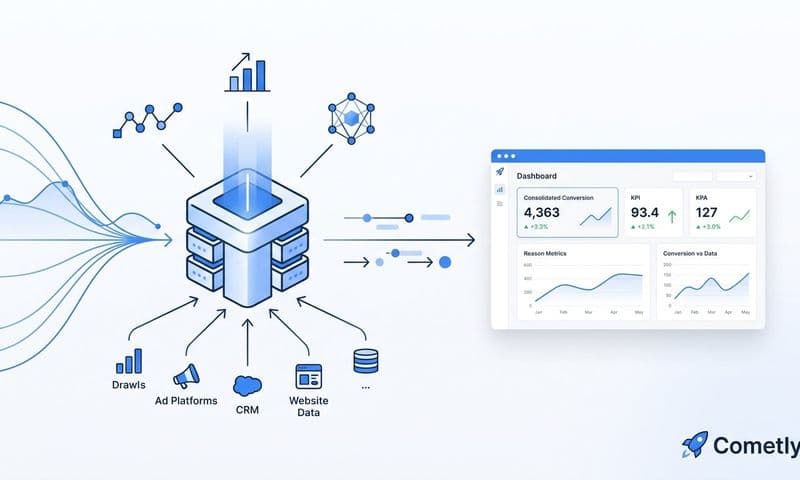
A unified analytics framework creates a single source of truth by matching these disparate data points to individual customer journeys. When someone clicks your Facebook ad, visits your website, fills out a form, and eventually becomes a customer, all of those events need to be connected to the same person and the same journey. The right marketing data analytics software makes this connection seamless.
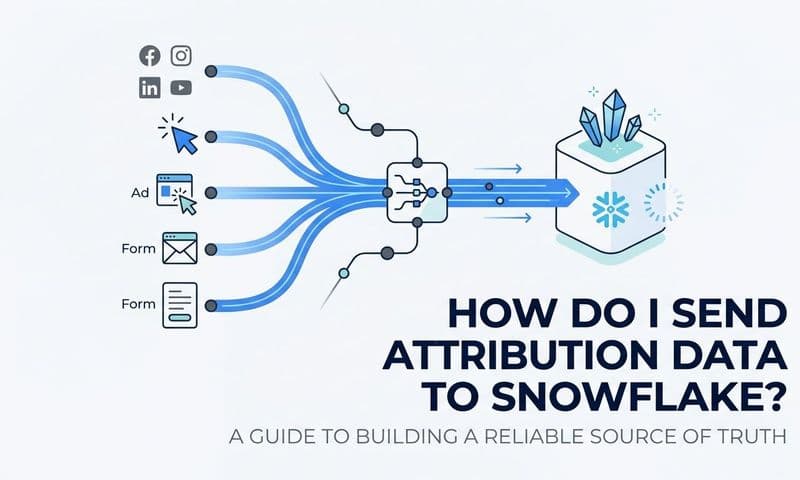
The technical implementation typically involves server-side tracking (more on that shortly), unique customer identifiers, and data pipelines that flow information from each platform into a central analytics system. The goal is to eliminate data silos so you can see the complete picture.
Choose Your Attribution Model: Remember those attribution models we discussed? Now you need to pick one—or actually, you should probably use multiple models and compare them.
Here's why: different attribution models reveal different insights. Last-click attribution shows you which channels are closing deals. First-click attribution shows you which channels are starting journeys. Multi-touch attribution shows you which channels are assisting throughout.
If you only look at last-click, you might cut budget from your top-of-funnel awareness campaigns because they don't show direct conversions—even though they're essential for starting the journeys that eventually convert. If you only look at first-click, you might miss that your retargeting campaigns are crucial for bringing people back to complete purchases.
The sophisticated approach is to analyze multiple attribution models side by side. Look for channels that perform well across different models—those are your reliable performers. Watch for channels that excel in first-click but disappear in last-click—those are your awareness drivers that deserve credit even if they don't close deals directly.
For most businesses with moderate-to-complex sales cycles, a multi-touch attribution model weighted toward recent interactions provides the most actionable insights. But test different approaches and see what helps you make better decisions.
Implement Privacy-Proof Tracking: Here's the uncomfortable truth: traditional client-side tracking is increasingly unreliable. iOS privacy changes, browser tracking restrictions, and cookie limitations mean that pixel-based tracking misses a significant portion of your actual conversions.
Server-side tracking solves this problem by capturing conversion data directly from your server rather than relying on browser cookies and pixels. When someone completes a purchase or fills out a form, your server sends that conversion data directly to your analytics platform and back to your ad platforms.
This approach bypasses browser restrictions and captures conversions that client-side tracking misses. It also allows you to send enriched data—not just that a conversion happened, but the revenue value, customer lifetime value, product category, and other business context that makes the data actually useful.
Setting up server-side tracking requires more technical work than dropping a pixel on your site, but it's becoming essential for accurate attribution. The platforms that survive the privacy-first future will be the ones that implement robust server-side tracking now.
From Insights to Action: Making Data-Driven Decisions
Analytics frameworks are worthless if they don't change how you make decisions. Here's how to turn insights into action.
Identify True Performance Patterns: Stop looking at individual metrics in isolation. Start looking for patterns across your entire attribution data. Which combinations of channels consistently lead to high-value conversions? Which ad creatives perform well across multiple touchpoints? Which audience segments show up repeatedly in your most profitable customer journeys?
This is where analytics becomes powerful. You might discover that customers who interact with both your Facebook ads and your Google search ads convert at three times the rate of those who only see one channel. That insight should immediately inform your budget allocation—you want to maximize the overlap between these channels, not treat them as competing options.
Or you might find that certain ad creatives work brilliantly as first touchpoints but perform poorly as retargeting ads. That tells you to use those creatives for cold traffic and develop different creative for warm audiences. Simple insight, significant impact on performance. Mastering data analytics for digital marketing helps you uncover these patterns consistently.
The key is moving beyond "this ad got X conversions" to "this ad plays this role in journeys that generate Y revenue." That shift in perspective changes everything.
Allocate Budget Based on Revenue Attribution: Platform-reported conversions are a starting point, not a decision-making framework. Your budget allocation should be based on which channels and campaigns drive actual revenue, weighted by your chosen attribution model.
Let's say your Facebook campaigns show 100 last-click conversions and your Google campaigns show 80. If you're only looking at last-click data, you'd probably give Facebook more budget. But what if your multi-touch attribution reveals that Google initiates 60% of the journeys that eventually convert, while Facebook primarily closes deals that Google started?
Suddenly the picture changes. You need both channels, but cutting Google's budget would collapse your top-of-funnel and eventually hurt Facebook's performance too. Revenue attribution shows you these dependencies that platform-reported metrics hide.
The practical application: review your attribution data weekly or biweekly, identify channels and campaigns that consistently show up in high-value customer journeys, and shift budget toward those patterns. Cut budget from campaigns that look good in platform reports but don't connect to actual revenue outcomes.
Feed Better Data Back to Ad Platforms: Here's a strategy that most marketers miss: your analytics insights don't just inform your decisions—they can also improve how ad platforms optimize your campaigns.
Ad platforms use conversion data to train their algorithms. When you send them better, more accurate conversion data, their optimization improves. Instead of just telling Facebook that a conversion happened, send them the revenue value, the customer lifetime value estimate, and whether it was a new customer or a repeat purchase.
This enriched data helps platforms identify patterns in high-value conversions that they couldn't see with basic conversion tracking. Over time, their algorithms learn to find more people who look like your best customers, not just people who look like anyone who converted. Understanding the impact of marketing and analytics on business success shows why this feedback loop matters.
The feedback loop works like this: better tracking captures more accurate data, better attribution reveals which conversions drive revenue, enriched conversion data flows back to ad platforms, platforms optimize toward high-value outcomes, performance improves, and the cycle continues.
Common Analytics Mistakes That Sabotage Campaign Performance
Even marketers who understand analytics principles often fall into traps that undermine their results. Here are the most expensive mistakes to avoid.
Trusting Platform Data Without Verification: Facebook says it drove 200 conversions. Google says 150. TikTok claims 80. Add them up and you've got 430 conversions, but your actual sales were 180. This isn't a hypothetical scenario—it's the reality for most multi-channel marketers.
The mistake is taking platform-reported conversions at face value. Platforms optimize for their own metrics, use attribution windows that overlap with other platforms, and have no visibility into your complete customer journey. Their numbers aren't lies, but they're not the whole truth either.
Always cross-reference platform-reported conversions with your actual business outcomes. Build reports that compare what platforms claim happened to what your CRM and sales data confirm actually happened. The gaps between these numbers reveal where your attribution is broken and where you're making decisions based on inflated data. Implementing sales and marketing analytics together helps close this verification gap.
Analyzing Channels in Isolation: Looking at Facebook performance separately from Google performance separately from email performance gives you three incomplete pictures. Customer journeys don't respect channel boundaries—they flow across platforms based on where people happen to be when they're ready to engage.
The isolation mistake leads to budget battles between channels that should be working together. Your paid social team wants more budget because their last-click conversions look good. Your search team wants more budget because their first-click attribution is strong. Both are probably right, but neither is seeing the full picture.
Instead of channel-by-channel analysis, look at channel combinations and sequences. Which channels work well together? Which sequences of touchpoints lead to the highest conversion rates? Which channels serve as effective first touches versus effective closing touches? A multi-channel marketing analytics dashboard gives you this unified view.
This cross-channel perspective reveals synergies that single-channel analysis misses. You might discover that your best-performing customer journeys start with organic social, continue through paid search, and close with email—a pattern you'd never see if you only looked at each channel's individual performance.
Waiting Too Long to Act on Data: Monthly performance reviews made sense when campaign changes required manual work and data took days to compile. Neither is true anymore. Modern analytics platforms provide real-time data, and most campaign adjustments can be made in minutes.
Yet many marketers still operate on monthly cycles. They review performance at the end of the month, identify what worked and what didn't, and make changes for next month. Meanwhile, winning campaigns could have been scaled weeks ago, and losing campaigns burned budget that should have been cut immediately.
The cost of delayed action compounds quickly. A campaign that's performing well today might saturate its audience or face increased competition next week. A targeting test that's clearly failing after three days doesn't need two more weeks of data—it needs to be paused now.
Build systems that alert you to significant changes in real-time. Set thresholds for performance drops that trigger immediate review. Create processes for rapid testing and scaling so you can act on insights while they're still fresh and relevant.
Putting Your Analytics Strategy Into Practice
Theory is worthless without execution. Here's how to actually implement an effective marketing analytics strategy.
Start With Your Highest-Spend Channels: Don't try to build a perfect analytics system for every channel at once. Start with the channels where you're spending the most money—that's where better attribution will have the biggest immediate impact.
If you're spending $50,000 per month on Facebook and Google combined, improving your attribution accuracy on those channels by even 10% could redirect $5,000 per month toward better-performing campaigns. That's $60,000 per year in improved efficiency from getting one thing right.
Build your attribution framework for your top two or three channels first. Get that working accurately. Prove the value by making better budget decisions and improving performance. Then expand to additional channels once the core system is solid. Knowing how to leverage analytics for marketing strategy helps you prioritize these efforts effectively.
Implement Server-Side Tracking: This is non-negotiable if you want accurate data in a privacy-first world. Client-side tracking misses conversions. Server-side tracking captures them. The implementation requires technical work, but the data accuracy improvement is worth it.
Work with your development team or your analytics platform to set up server-side conversion tracking. This typically involves adding code to your server that fires when specific events occur—purchases, form submissions, trial signups, whatever matters for your business.
These server-side events then flow to your analytics platform and back to your ad platforms with enriched data. Not just "a conversion happened" but "a conversion worth $500 happened from a new customer in the enterprise segment who started their journey 14 days ago."
That level of detail transforms both your attribution accuracy and your ability to optimize campaigns toward high-value outcomes.
Build Your Feedback Loop: Analytics without action is just expensive reporting. The goal is to create a continuous cycle: analyze performance, identify opportunities, make optimizations, measure results, and repeat.
Set up a regular cadence for reviewing your attribution data—weekly for most businesses, daily for high-velocity campaigns. During these reviews, look for patterns that suggest action: campaigns that are scaling efficiently and deserve more budget, campaigns that are declining and need creative refresh or pause, audience segments that are outperforming and should be expanded.
Make the optimizations, document what you changed and why, then track the results. Did shifting budget from Campaign A to Campaign B improve overall performance? Did the new creative test based on your attribution insights perform better than your hypothesis suggested?
This feedback loop is how analytics becomes a competitive advantage. You're not just collecting data—you're using insights to make better decisions faster than competitors who are still relying on platform-reported metrics and monthly reviews.
The Path Forward: From Data Collection to Revenue Intelligence
Marketing and data analytics isn't about drowning in dashboards or obsessing over every metric. It's about connecting the dots between your marketing activities and your actual business outcomes. It's about knowing—really knowing—which campaigns drive revenue, which channels work together to create high-value customer journeys, and where your next dollar of ad spend will generate the best return.
The marketers who win in the coming years won't be the ones with the biggest budgets or the flashiest creative. They'll be the ones who understand their attribution data deeply enough to make confident decisions about where to scale and where to cut. They'll be the ones who've built analytics frameworks that survive privacy changes and platform limitations. They'll be the ones who can prove ROI with actual revenue data, not platform-reported conversions.
This isn't optional anymore. The gap between marketers who understand their data and marketers who are flying blind is widening every quarter. The tools exist to build sophisticated attribution systems that connect every touchpoint to revenue outcomes. The question is whether you'll implement them before your competitors do.
Ready to elevate your marketing game with precision and confidence? Discover how Cometly's AI-driven recommendations can transform your ad strategy—Get your free demo today and start capturing every touchpoint to maximize your conversions.