Picture this: You're running campaigns across Facebook, Google, TikTok, and email, spending thousands monthly, but you can't definitively say which touchpoint actually drove your biggest customer to convert. Sound familiar? You're not alone in this attribution nightmare that's plaguing marketers worldwide.
The marketing attribution software industry has exploded as businesses demand clarity on their customer journeys. With iOS updates fragmenting tracking and third-party cookies disappearing, marketers need sophisticated attribution platforms that can connect the dots across every touchpoint. Traditional analytics tools simply can't keep up with today's complex, multi-device customer paths.
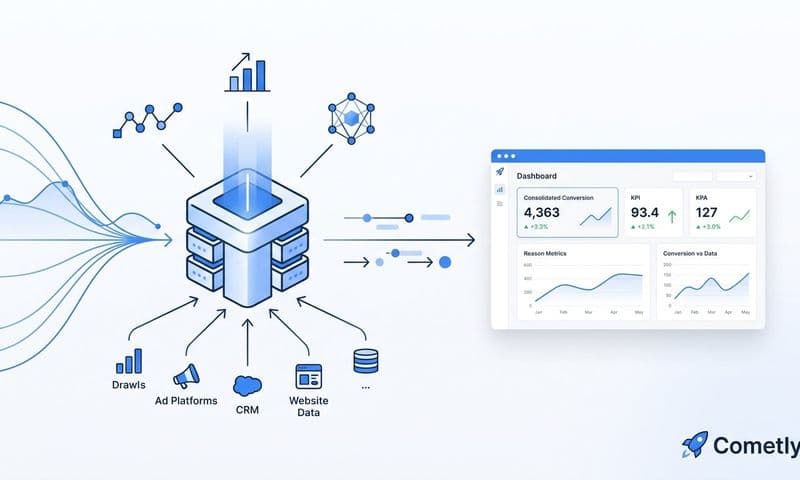
Modern attribution software goes beyond basic last-click models, offering multi-touch attribution, AI-powered insights, and real-time optimization recommendations. These platforms integrate with your ad accounts, CRM, and analytics tools to create a unified view of how customers actually move through your funnel. The best solutions don't just show you what happened—they tell you what to do next.
Whether you're a growing e-commerce brand struggling with iOS tracking limitations, a B2B company trying to connect marketing efforts to pipeline, or an agency managing attribution across multiple clients, choosing the right attribution platform can make or break your marketing ROI. Our academy has helped thousands of marketers understand these complex attribution challenges.
Here are the leading marketing attribution platforms that are helping businesses unlock their true marketing ROI and make data-driven scaling decisions in 2026.
1. Cometly
Best for: AI-powered attribution with real-time optimization recommendations and conversion sync
Cometly stands out as a comprehensive marketing attribution platform that combines advanced tracking with AI-driven insights to help marketers understand exactly which ads and channels drive real revenue.
 8 Best Marketing Attribution Software Industry Platforms To Track True ROI In 2026
Where This Tool Shines
Cometly excels at capturing every customer touchpoint from initial ad click through CRM conversion events, bypassing iOS limitations with server-side tracking. Their AI engine analyzes performance patterns to identify your highest-converting campaigns while providing specific recommendations on where to shift budget for maximum impact.
What truly sets Cometly apart is their conversion sync feature that sends enriched, first-party data back to Meta, Google, and TikTok. This closed-loop feedback improves ad platform algorithms and helps optimize targeting and bidding strategies. The platform transforms complex attribution data into clear, actionable insights that drive profitable scaling decisions.
Key Features & Capabilities
AI-Powered Campaign Optimization: Machine learning algorithms identify patterns in your conversion data and provide specific recommendations on budget allocation and campaign adjustments.
Server-Side Tracking: Captures accurate data at the server level, bypassing browser limitations, ad blockers, and iOS tracking restrictions that plague traditional attribution tools.
Multi-Touch Attribution: Track the complete customer journey across all marketing channels with customizable attribution models that align with your sales cycle.
Real-Time Conversion Sync: Send enriched conversion events back to Meta, Google, and TikTok to improve their optimization algorithms and ad performance.
Advanced Audience Insights: Understand customer behavior patterns across touchpoints with detailed journey mapping and segmentation capabilities.
Budget Optimization Recommendations: Get AI-driven suggestions on where to allocate spend based on true ROI and conversion patterns.
Custom Attribution Models: Build attribution models tailored to your specific business requirements with flexible lookback windows.
Unified Analytics Dashboard: Access comprehensive reporting with drill-down capabilities to analyze performance at campaign, ad set, and creative levels.
Best For / Ideal Users
Perfect for digital marketing teams, agencies, and e-commerce businesses running multi-channel campaigns who need accurate attribution data to scale profitably. The platform delivers exceptional value for companies struggling with iOS tracking limitations or managing complex customer journeys across multiple ad platforms.
Particularly valuable for performance marketers who need to make fast optimization decisions based on real-time data, and for agencies managing attribution across multiple client accounts who require a unified view of cross-platform performance.
Pricing
Offers flexible pricing tiers starting with a free trial, with plans scaling based on monthly tracked conversions and advanced features needed.
2. HubSpot Marketing Analytics
Best for: All-in-one marketing attribution within a complete CRM ecosystem
HubSpot Marketing Analytics provides multi-touch attribution reporting integrated seamlessly with their comprehensive marketing and sales platform, connecting every touchpoint to actual revenue outcomes.
Where This Tool Shines
HubSpot excels when you need attribution insights tightly woven into your entire marketing and sales operation. Their attribution reports show how different touchpoints contribute to deals, with the added benefit of seeing how marketing efforts translate into actual sales conversations and closed revenue.
The platform automatically tracks email opens, website visits, social interactions, form submissions, and content downloads—creating a complete picture of prospect engagement without requiring complex integrations. Since everything lives in one ecosystem, data flows seamlessly between marketing campaigns and sales follow-up, eliminating the data silos that plague most attribution efforts.
Key Features & Capabilities
Multi-Touch Attribution Models: Choose from first-touch, last-touch, linear, time-decay, or custom models that align with your sales cycle.
Revenue Attribution: Connect marketing activities directly to closed deals and pipeline value, showing true ROI beyond just lead generation.
Contact Timeline View: See every interaction a prospect has had with your brand in chronological order, from first website visit to final purchase.
Campaign Performance Analysis: Track attribution across email campaigns, social posts, paid ads, and content offers in unified reporting.
Deal Stage Attribution: Understand which marketing touchpoints influence prospects at different stages of your sales funnel.
Cost-Per-Acquisition Tracking: Calculate true customer acquisition costs by connecting ad spend to closed revenue through the attribution chain.
Best For / Ideal Users
Ideal for B2B companies and service businesses tracking longer sales cycles where multiple touchpoints influence purchase decisions. Perfect for teams that need to connect marketing efforts to actual sales conversations and revenue, not just leads.
Best suited for organizations already using or seriously considering HubSpot's CRM and marketing tools, as the attribution value multiplies when the full ecosystem is utilized. Marketing teams that work closely with sales will find the integrated approach eliminates finger-pointing about lead quality and campaign effectiveness.
Pricing
Attribution reporting is available in HubSpot's Marketing Hub Professional and Enterprise plans, starting around $890/month. Advanced attribution features and custom models are available in higher tiers.
3. Google Analytics 4 Attribution
Best for: Free multi-platform attribution with Google's machine learning capabilities
Google Analytics 4 Attribution offers sophisticated attribution modeling powered by Google's AI, providing insights across web, app, and offline conversions at no cost.
Where This Tool Shines
GA4's attribution capabilities leverage Google's vast data infrastructure and machine learning to provide insights that many paid tools struggle to match. The data-driven attribution model analyzes your actual conversion paths to assign credit intelligently across touchpoints, moving beyond simple rule-based models that treat all customer journeys the same.
What makes GA4 particularly powerful is its cross-platform tracking that connects web and app interactions into unified customer journeys. The platform excels at revealing how different marketing channels work together, with path analysis showing the most common sequences that lead to conversions. For businesses invested in Google's advertising ecosystem, the seamless integration with Google Ads enables direct campaign optimization based on attribution insights.
Key Features & Capabilities
Data-Driven Attribution Model: Uses machine learning algorithms to analyze conversion paths and assign credit based on actual impact rather than arbitrary rules.
Cross-Platform Journey Tracking: Connects customer interactions across websites and mobile apps into complete attribution views.
Path Analysis Reports: Reveals common conversion sequences and touchpoint patterns that drive results.
Custom Event Tracking: Define specific conversion events and goals relevant to your business model for tailored attribution analysis.
Google Ads Integration: Attribution data flows directly into campaign optimization and bidding strategies.
Audience Insights: Demographic and behavioral attribution analysis shows which customer segments respond to different touchpoints.
Real-Time Reporting: Monitor attribution patterns as they happen with immediate data processing and alerts.
Best For / Ideal Users
Perfect for businesses heavily invested in the Google ecosystem who want sophisticated attribution without budget constraints. Ideal for small to medium companies needing robust multi-touch attribution capabilities, teams running significant Google Ads campaigns, and organizations wanting to understand cross-platform customer behavior patterns between web and mobile properties.
Pricing
Completely free for standard use with no limits on basic attribution features. Google Analytics 360 available for enterprise needs with advanced features and support.
4. Adobe Analytics Attribution
Best for: Enterprise-level attribution with advanced segmentation and real-time processing
Adobe Analytics Attribution delivers sophisticated attribution modeling designed for organizations processing massive data volumes across multiple brands and complex marketing operations.
Where This Tool Shines
Adobe Analytics processes enterprise-scale data in real-time while maintaining granular detail that smaller platforms struggle to handle. Their algorithmic attribution goes beyond simple rule-based models by using machine learning to weight each touchpoint based on its actual influence on conversions, not just its position in the customer journey.
The platform's segmentation capabilities stand out for organizations needing to analyze attribution patterns across specific customer groups, geographic regions, product categories, or business units. Integration with Adobe Experience Cloud enables attribution insights to directly inform optimization across display advertising, email campaigns, and personalization efforts—creating a closed loop between measurement and action.
Key Features & Capabilities
Algorithmic Attribution: Machine learning analyzes conversion paths to assign credit based on actual touchpoint contribution rather than predetermined rules.
Real-Time Processing: Immediate data processing enables quick optimization decisions without waiting for batch processing delays.
Advanced Segmentation: Analyze attribution patterns for specific audiences, regions, or product lines with granular detail.
Cross-Device Identity Resolution: Connects customer interactions across devices to create unified attribution views.
Custom Attribution Models: Build models tailored to your specific sales cycle with flexible lookback windows and touchpoint weighting.
Marketing Cloud Integration: Attribution insights flow directly into Adobe's campaign management tools for immediate optimization.
Advanced Visualization: Workspace interface provides powerful reporting capabilities with drag-and-drop analysis tools.
API Access: Export attribution data for custom integrations with other business intelligence systems.
Best For / Ideal Users
Built for large enterprises managing complex marketing operations across multiple brands, regions, or business units. Companies processing high data volumes need the platform's robust infrastructure to maintain performance at scale.
Organizations already invested in Adobe's marketing technology stack gain the most value through seamless integration across the Experience Cloud. Teams requiring sophisticated segmentation capabilities—analyzing attribution by customer lifetime value, product category, or geographic market—benefit from the platform's analytical depth.
Pricing
Enterprise pricing typically starts around $48,000 annually, with costs scaling based on data volume, number of report suites, and advanced feature requirements. Implementation often requires dedicated technical resources for setup and ongoing management.
5. Mixpanel Attribution
Best for: Product-focused attribution tracking user behavior and feature engagement
Mixpanel Attribution specializes in event-based attribution that goes beyond initial conversions to track how marketing channels influence ongoing product engagement and user retention.
Where This Tool Shines
Mixpanel takes a fundamentally different approach to attribution by focusing on what happens after the conversion. While most attribution platforms stop at the purchase or signup, Mixpanel tracks how users from different acquisition channels actually behave inside your product. This matters because a user who converts but never engages has far less value than one who becomes an active, retained customer.
The platform excels at cohort analysis, letting you compare how users from Facebook ads versus Google Search versus organic social actually use your product over weeks and months. You might discover that while Facebook drives more signups, Google users have higher feature adoption rates and better retention. This insight completely changes how you allocate budget when you're optimizing for lifetime value rather than just initial conversion cost.
Key Features & Capabilities
Event-Based Attribution: Track specific user actions like feature usage, content engagement, and product interactions tied back to acquisition source.
Cohort Analysis: Compare long-term behavior patterns across different attribution sources to identify which channels drive valuable users.
Retention Attribution: See which marketing touchpoints lead to users who stick around versus those who churn quickly.
Funnel Analysis: Break down conversion funnels by attribution source to understand where different channel users drop off.
Custom Event Tracking: Define product-specific events that matter to your business model and attribute them to marketing sources.
Best For / Ideal Users
Perfect for SaaS companies, mobile apps, and digital products where the initial conversion is just the beginning of the customer relationship. Ideal for product teams who need to understand which marketing channels drive users who actually engage with key features and generate long-term value.
Especially valuable for businesses with freemium models or trial periods where activation and engagement metrics matter as much as signup volume.
Pricing
Offers a free tier for up to 20 million monthly events, with paid plans starting around $25/month and scaling based on data volume and advanced features needed.
6. Salesforce Marketing Cloud Attribution
Best for: B2B attribution integrated with comprehensive CRM and sales data
Salesforce Marketing Cloud Attribution connects marketing touchpoints directly to sales pipeline and revenue, providing complete visibility into complex B2B customer journeys.
 8 Best Marketing Attribution Software Industry Platforms To Track True ROI In 2026
Where This Tool Shines
Salesforce excels at B2B attribution by connecting every marketing touchpoint to actual sales outcomes and pipeline progression. Their attribution models track how email campaigns, webinars, content downloads, and sales outreach work together to move prospects through complex B2B sales cycles.
The platform's strength lies in its deep CRM integration, showing not just which channels drive leads, but which ones generate qualified opportunities and closed revenue. This makes it invaluable for understanding true marketing ROI in longer sales cycles where multiple stakeholders influence purchase decisions.
Key Features & Capabilities
Pipeline Attribution: Connects marketing activities to specific sales stages and opportunity progression.
Revenue Attribution: Provides closed-loop reporting showing actual revenue generated by each marketing touchpoint.
Multi-Touch Attribution: Tracks attribution across email, social media, paid channels, and sales interactions.
Lead Scoring Integration: Combines attribution insights with lead scoring for better qualification.
Campaign ROI Analysis: Calculates cost-per-opportunity and cost-per-customer metrics for true marketing ROI.
Account-Based Marketing Attribution: Tracks attribution at the account level for enterprise sales strategies.
Custom Attribution Models: Build models based on your specific sales cycle length and complexity.
Best For / Ideal Users
Ideal for B2B companies with complex sales processes where multiple touchpoints influence purchase decisions. Perfect for enterprise sales teams needing to justify marketing spend with pipeline and revenue data.
Especially valuable for organizations already using Salesforce CRM who want integrated attribution insights without complex third-party integrations.
Pricing
Pricing varies significantly based on Salesforce edition and features, typically starting around $1,250 per month for Marketing Cloud with attribution capabilities included.
7. Triple Whale
Best for: E-commerce attribution with profit-focused analytics and creative insights
Triple Whale provides attribution specifically designed for e-commerce brands, focusing on profit margins and creative performance across marketing channels.
 6 Best Attribution Reporting Software Tools To Maximize ROI
Where This Tool Shines
Triple Whale stands out by focusing on profit-based attribution rather than just revenue, helping e-commerce brands understand which campaigns drive profitable growth after accounting for costs and margins. Their creative attribution shows which ad creatives perform best across different channels, while their customer lifetime value attribution reveals which sources bring the most valuable long-term customers.
The platform excels at connecting attribution insights to inventory management and profit optimization, making it invaluable for direct-to-consumer brands managing tight margins and complex product catalogs. Triple Whale's dashboard consolidates data from Shopify, Facebook, Google, TikTok, and other platforms into a single view that prioritizes profitability metrics over vanity numbers.
Key Features & Capabilities
Profit-Based Attribution: Tracks actual profit margins by accounting for product costs, shipping, and advertising spend to show which campaigns drive profitable growth.
Creative Performance Attribution: Analyzes which specific ad creatives perform best across different platforms, helping you scale winning assets and cut underperformers.
Customer Lifetime Value Attribution: Reveals which acquisition sources bring customers with the highest long-term value, not just immediate conversion value.
Multi-Touch Attribution Models: Offers e-commerce-specific attribution models that account for typical DTC customer journey patterns and purchase behaviors.
Real-Time Profit Tracking: Provides live updates on campaign profitability, allowing quick budget shifts based on actual margin performance rather than just ROAS.
Best For / Ideal Users
Perfect for direct-to-consumer e-commerce brands, Shopify stores, and online retailers who need to optimize for profit rather than just revenue. Especially valuable for brands running creative-heavy campaigns across multiple platforms like Meta, TikTok, and Google.
Ideal for marketing teams managing products with varying profit margins who need to understand which campaigns drive profitable sales, not just high-volume sales. The platform works best for brands spending at least $10,000 monthly on paid advertising across multiple channels.
Pricing
Plans typically start around $99/month for basic attribution features, with advanced profit analytics and integrations available in higher tiers based on monthly revenue and data volume requirements.
8. Ruler Analytics
Best for: Closed-loop attribution connecting marketing activities to actual revenue with call tracking
Ruler Analytics is a marketing measurement platform that specializes in closing the loop between marketing touchpoints and actual revenue, with particularly strong call tracking capabilities.
 11 Best Marketing Attribution Companies to Track Your Ad ROI in 2026
Where This Tool Shines
Ruler Analytics excels at solving a problem many attribution platforms ignore: tracking phone calls back to their original marketing source. When a prospect clicks your Google Ad, visits your website, then calls your sales team three days later, Ruler captures that complete journey and attributes the eventual sale back to that initial ad click.
The platform's closed-loop tracking connects every marketing touchpoint—from first website visit through form submissions and phone calls—directly to revenue outcomes in your CRM. This makes it invaluable for businesses where phone conversations drive significant revenue, such as professional services, healthcare providers, insurance agencies, and high-ticket B2B sales. While other tools might show you leads generated, Ruler shows you actual revenue generated, transforming attribution from a vanity metric into a profit center.
Key Features & Capabilities
Revenue Attribution: Tracks complete customer journey from first click to final purchase, showing actual revenue generated by each channel.
Call Tracking Integration: Dynamic number insertion captures phone conversions and attributes them back to original marketing touchpoints.
Multi-Touch Attribution: Distributes credit across online and offline touchpoints using customizable attribution models.
CRM Integration: Connects with major CRM platforms to track sales cycle progression and closed revenue.
Marketing Mix Modeling: Analyzes how different channels work together to drive conversions and revenue.
Best For / Ideal Users
Perfect for service-based businesses where phone calls represent a critical conversion point in the customer journey. Particularly valuable for professional services firms, healthcare providers, legal practices, and B2B companies with consultative sales processes.
Ideal for marketing teams that need to prove ROI with actual revenue data rather than just lead counts, and organizations wanting to understand how offline conversions connect to digital marketing efforts.
Pricing
Plans typically start around $199/month for basic attribution and call tracking capabilities, with enterprise features and higher call volumes available in advanced tiers.
Making the Right Choice
Selecting the right marketing attribution software depends on your specific business model and growth stage. For e-commerce brands focused on profit optimization and creative performance, Cometly and Triple Whale deliver the actionable insights you need to scale profitably. B2B companies with complex sales cycles will find more value in HubSpot or Salesforce, where attribution connects directly to pipeline and revenue outcomes.
If you're just starting with attribution, Google Analytics 4 provides powerful multi-touch capabilities at no cost, making it ideal for testing attribution strategies before investing in specialized platforms. Enterprise teams processing massive data volumes should evaluate Adobe Analytics for its real-time processing and advanced segmentation. SaaS companies and mobile apps benefit most from Mixpanel's event-based attribution that tracks long-term user engagement beyond initial conversions.
The most effective attribution implementations combine accurate data collection with AI-powered optimization recommendations. Look for platforms that provide clear next steps, not just historical reporting. Features like server-side tracking, conversion sync capabilities, and real-time alerts can dramatically improve your ability to make profitable scaling decisions quickly.
Ready to see how accurate attribution can transform your marketing ROI? Get your free demo of Cometly's AI-powered attribution platform and start making data-driven decisions that actually drive revenue growth.