Metadata.io has been a go-to platform for B2B marketers running paid campaigns, but it's not the right fit for everyone. Whether you're facing budget constraints, need better attribution accuracy, or want more flexibility in tracking customer journeys across channels, exploring alternatives makes sense.
The marketing technology landscape has evolved significantly. New solutions now offer AI-powered insights, server-side tracking, and multi-touch attribution that traditional platforms don't provide. Privacy changes have made accurate tracking harder than ever, and marketers need tools that can handle the complexity of modern customer journeys.
This guide breaks down seven proven alternatives, each solving specific challenges that marketers commonly face when outgrowing or moving away from Metadata. We'll cover what each platform does best, who it's ideal for, and how to evaluate which solution matches your specific needs.
1. Cometly: AI-Powered Attribution with Server-Side Tracking
The Challenge It Solves
Most marketers struggle to connect ad spend directly to revenue outcomes. Client-side tracking breaks down with iOS privacy updates and ad blockers, leaving gaps in your attribution data. You're making budget decisions based on incomplete information, and proving ROI to leadership becomes a constant battle.
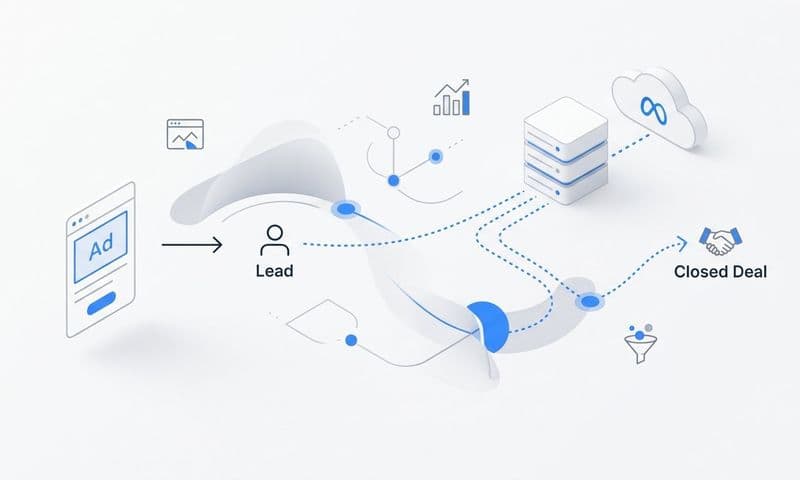
Cometly addresses this by tracking the complete customer journey from initial ad click through to revenue, using server-side tracking that bypasses browser limitations and captures data other platforms miss.
The Platform Explained
Cometly is an AI-powered marketing attribution platform built specifically for marketers who need accurate, actionable data across their entire funnel. It connects your ad platforms, CRM, and website to create a unified view of every customer touchpoint.
What sets Cometly apart is its combination of server-side tracking for accuracy and AI-driven recommendations for optimization. The platform doesn't just show you what happened—it tells you what to do next. Its Conversion Sync feature sends enriched conversion data back to Meta, Google, and other ad platforms, improving their AI targeting and optimization.
The AI Chat feature lets you ask questions about your data in plain English, making complex attribution analysis accessible without needing a data analyst on your team.
Implementation Steps
1. Connect your ad platforms (Meta, Google, TikTok, etc.) and integrate your CRM to start capturing touchpoint data across your entire marketing ecosystem.
2. Install the Cometly tracking script on your website and set up server-side tracking to ensure accurate data collection that bypasses browser limitations.
3. Configure your attribution models and conversion events, then enable Conversion Sync to feed better data back to your ad platforms for improved targeting.
4. Use the AI Chat feature to analyze which campaigns, ads, and channels are actually driving revenue, then implement the AI's optimization recommendations.
Pro Tips
Start with a single campaign or channel to validate data accuracy before rolling out platform-wide. Compare Cometly's server-side data against your existing attribution for the first two weeks—you'll likely discover conversions you've been missing. Use the multi-touch attribution models to understand the full customer journey, not just last-click conversions.
2. HubSpot Marketing Hub: All-in-One Marketing Automation
The Challenge It Solves
Marketing teams often juggle multiple disconnected tools—email platform here, landing page builder there, analytics somewhere else. This fragmentation creates data silos and makes it nearly impossible to see the complete picture of how prospects move through your funnel.
HubSpot consolidates these functions into a single platform with native CRM integration, eliminating the need to stitch together data from multiple sources.
The Platform Explained
HubSpot Marketing Hub is a comprehensive marketing automation platform that combines email marketing, landing pages, forms, workflows, and analytics in one ecosystem. Because it's built on HubSpot's CRM foundation, every marketing action automatically connects to contact records and deal stages.
The platform excels at inbound marketing workflows and lead nurturing. You can build sophisticated automation sequences that respond to prospect behavior, score leads based on engagement, and route qualified opportunities to sales automatically.
HubSpot's reporting dashboard shows how marketing activities contribute to pipeline and revenue, though it's primarily focused on inbound channels rather than paid advertising attribution.
Implementation Steps
1. Set up your HubSpot CRM and import existing contacts, ensuring proper segmentation and custom properties for your specific business needs.
2. Build your core marketing assets—landing pages, email templates, and forms—using HubSpot's drag-and-drop builders.
3. Create automated workflows for lead nurturing, scoring, and sales handoff based on prospect engagement and behavior patterns.
4. Configure attribution reports to track how different marketing channels contribute to deal creation and revenue generation.
Pro Tips
HubSpot works best when you commit fully to the ecosystem. Half-measures with external tools reduce the platform's effectiveness. Invest time in proper CRM setup and contact properties from day one—clean data architecture makes everything easier later. The platform's strength is inbound marketing and automation, so if paid advertising attribution is your primary need, consider pairing it with a dedicated attribution solution.
3. Demandbase: Enterprise ABM with Intent Data
The Challenge It Solves
B2B marketers waste significant budget targeting accounts that aren't ready to buy. Without visibility into buying signals and account-level intent, you're essentially guessing which companies to prioritize in your campaigns.
Demandbase solves this by combining intent data, account intelligence, and advertising capabilities to help you identify and engage accounts showing active buying behavior.
The Platform Explained
Demandbase is an enterprise-focused account-based marketing platform that uses AI to identify accounts in-market for your solutions. It aggregates intent signals from across the web—content consumption, search behavior, technology installations—to score accounts based on their likelihood to buy.
The platform includes account-based advertising capabilities, letting you serve targeted ads to specific companies and decision-makers. It also provides account intelligence like org charts, technology stacks, and firmographic data to inform your targeting and messaging.
Demandbase integrates with major marketing automation platforms and CRMs to sync account data and orchestrate multi-channel campaigns.
Implementation Steps
1. Define your ideal customer profile and target account list, then configure Demandbase's intent scoring to identify accounts showing buying signals.
2. Integrate with your CRM and marketing automation platform to sync account data and enable coordinated outreach across teams.
3. Set up account-based advertising campaigns targeting high-intent accounts with personalized messaging based on their industry and pain points.
4. Monitor account engagement scores and intent signals to identify when accounts enter active buying stages, then coordinate sales outreach.
Pro Tips
Demandbase requires significant investment in both budget and resources. It's built for enterprise teams with dedicated ABM programs, not companies just starting with account-based strategies. Make sure you have sales alignment before implementation—ABM fails without tight coordination between marketing and sales teams. Use the intent data to prioritize accounts, but validate signals with direct engagement before assuming buying readiness.
4. 6sense: Predictive Revenue AI for B2B
The Challenge It Solves
Traditional marketing tools show you what happened, but they don't predict what's about to happen. You're reacting to prospects who've already raised their hands instead of proactively engaging accounts entering the buying cycle.
6sense uses predictive AI to identify accounts in early buying stages before they contact you, giving you first-mover advantage with high-potential opportunities.
The Platform Explained
6sense is a revenue AI platform that analyzes billions of buying signals to predict which accounts are in-market and what stage of the buying journey they're in. The platform's AI models identify patterns in account behavior that indicate buying intent, even when prospects haven't directly engaged with your brand yet.
The platform segments accounts into buying stages—from awareness through decision—and recommends specific actions for each stage. It orchestrates campaigns across channels including advertising, email, and sales outreach based on where accounts are in their journey.
6sense's account intelligence includes contact discovery, helping you identify the right decision-makers within target accounts and providing insights into organizational structure and technology usage.
Implementation Steps
1. Upload your target account list and integrate 6sense with your CRM and marketing automation platform to begin collecting account engagement data.
2. Configure the AI models to recognize buying signals relevant to your industry and solution category, then set up account scoring thresholds.
3. Build stage-specific campaigns that automatically engage accounts based on their predicted buying stage, from awareness content to sales-ready outreach.
4. Train sales teams to use 6sense insights for account prioritization and conversation preparation, ensuring they focus on high-potential opportunities.
Pro Tips
6sense delivers the most value when you have a substantial target account list and enough data volume for the AI to identify meaningful patterns. Smaller companies with limited addressable markets may not see the same predictive accuracy. The platform works best when both marketing and sales teams actively use the insights—predictive data is only valuable if it changes how you prioritize and engage accounts.
5. RollWorks: Mid-Market ABM Made Accessible
The Challenge It Solves
Enterprise ABM platforms often require six-figure budgets and dedicated teams to manage. Mid-market companies want account-based capabilities without the complexity and cost of enterprise solutions.
RollWorks provides account-based advertising and engagement tools at a price point and complexity level that makes sense for growing B2B companies.
The Platform Explained
RollWorks is an ABM platform designed specifically for mid-market B2B companies. It focuses on account-based advertising across display, social, and search, making it easier to reach decision-makers at target accounts without needing a massive ad budget.
The platform includes account identification capabilities that help you build target lists based on firmographics and technographics. It also provides basic intent signals to help prioritize which accounts to target most aggressively.
RollWorks integrates with popular CRMs like Salesforce and HubSpot, syncing account engagement data so sales teams can see which accounts are engaging with ads and content.
Implementation Steps
1. Build your target account list using RollWorks' account discovery tools or upload your existing list from your CRM.
2. Create account-based advertising campaigns across display, LinkedIn, and Google, with messaging tailored to different account segments.
3. Set up retargeting campaigns for accounts that have visited your website or engaged with previous ads to maintain consistent presence.
4. Configure CRM integration to sync account engagement data and enable sales to see which accounts are showing interest.
Pro Tips
RollWorks is most effective when you have a clearly defined target account list of at least 500 companies—too few accounts limits the platform's ability to build effective audiences. Focus on account-level metrics rather than individual lead metrics when measuring success. The platform's sweet spot is companies spending $5,000-$50,000 monthly on B2B advertising who want better targeting without enterprise complexity.
6. Terminus: Multi-Channel ABM Orchestration
The Challenge It Solves
Account-based marketing fails when channels operate in silos. Your display ads say one thing, your email campaigns say another, and your website experience doesn't acknowledge that you're targeting specific accounts.
Terminus orchestrates coordinated campaigns across multiple channels to create consistent, personalized experiences for target accounts.
The Platform Explained
Terminus is a multi-channel ABM platform that helps you coordinate campaigns across display advertising, email, chat, and website personalization. The platform's strength is channel orchestration—ensuring that accounts receive consistent messaging regardless of where they encounter your brand.
The platform includes account-based advertising capabilities, email tools for reaching decision-makers, and website personalization that adapts content based on the visiting account. It also provides chat tools that prioritize conversations from target accounts.
We break down the leading options in our AI UGC ad maker guide.
Terminus tracks account engagement across all these channels in a unified dashboard, showing you which accounts are actively engaging and which touchpoints are most effective.
Implementation Steps
1. Define your target account segments and create messaging frameworks for each segment based on industry, company size, or pain points.
2. Set up coordinated campaigns across channels—display ads for awareness, personalized web experiences for engagement, email for nurturing.
3. Configure website personalization to show account-specific content, case studies, or offers when visitors from target accounts land on your site.
4. Monitor cross-channel engagement in the Terminus dashboard to identify accounts showing buying signals across multiple touchpoints.
Pro Tips
Terminus requires significant content investment to be effective—you need messaging and assets tailored to different account segments across multiple channels. Start with one or two channels and expand as you build content libraries and refine your approach. The platform works best for companies with mature ABM programs that have already proven the account-based approach and are ready to scale orchestration.
7. Triple Whale: E-Commerce Attribution for DTC Brands
The Challenge It Solves
E-commerce brands running campaigns across Meta, Google, TikTok, and other platforms struggle to understand which channels actually drive profitable sales. Platform-reported metrics often conflict, and iOS privacy changes have made native attribution increasingly unreliable.
Triple Whale provides unified attribution specifically designed for Shopify and e-commerce brands, connecting ad spend to actual revenue and profitability.
The Platform Explained
Triple Whale is an attribution and analytics platform built specifically for direct-to-consumer e-commerce brands. It integrates with Shopify and major ad platforms to provide a single source of truth for marketing performance.
The platform tracks customer journeys from ad click through purchase, using first-party data and pixel tracking to attribute revenue to the correct channels. It also calculates metrics like customer acquisition cost, lifetime value, and contribution margin to help you understand true profitability by channel.
Triple Whale's dashboard consolidates data from all your marketing channels, showing real-time performance and making it easy to spot trends and anomalies without switching between multiple platforms.
Implementation Steps
1. Connect your Shopify store and integrate all active ad platforms (Meta, Google, TikTok, etc.) to begin collecting unified attribution data.
2. Set up the Triple Whale pixel on your website to capture first-party data and improve attribution accuracy beyond platform-reported metrics.
3. Configure your product costs and shipping expenses so the platform can calculate true profitability metrics, not just revenue.
4. Build custom dashboards that show the metrics most important to your business, from ROAS by channel to customer cohort performance.
Pro Tips
Triple Whale is built for e-commerce, so if you're a B2B company or service business, this isn't the right fit. The platform shines for Shopify brands spending at least $10,000 monthly on paid advertising across multiple channels. Use the profitability metrics to make budget decisions—highest revenue channel isn't always the most profitable. The platform's value increases as you scale ad spend and channel diversity.
Finding Your Best Fit
Choosing a Metadata alternative comes down to understanding your specific attribution and campaign management needs. Each platform we've covered solves different challenges, and the right choice depends on your business model, budget, and primary marketing objectives.
If accurate revenue attribution across the full customer journey is your priority, Cometly's AI-powered tracking and conversion sync capabilities directly address the gaps many marketers experience with traditional platforms. The server-side tracking ensures you're not losing data to browser limitations, and the AI recommendations take the guesswork out of optimization.
For teams focused purely on ABM with substantial budgets, platforms like Demandbase or 6sense offer deeper account intelligence and predictive capabilities. Mid-market companies may find RollWorks or Terminus provide the right balance of functionality and accessibility.
E-commerce brands should look at Triple Whale for Shopify-specific attribution, while teams needing comprehensive marketing automation might benefit from HubSpot's all-in-one approach.
The key is matching the platform's strengths to your biggest marketing challenges. Start by identifying whether your primary need is better attribution accuracy, campaign automation, or account-based targeting. Then evaluate platforms with a focused trial period, testing them against specific use cases rather than trying to assess everything at once.
Most importantly, remember that the tool is only as good as the strategy behind it. Clear goals, clean data, and cross-functional alignment matter more than feature lists.
Ready to elevate your marketing game with precision and confidence? Discover how Cometly's AI-driven recommendations can transform your ad strategy—Get your free demo today and start capturing every touchpoint to maximize your conversions.