You're spending thousands on paid ads across Facebook, Google, TikTok, and LinkedIn. Your dashboards show clicks, impressions, and conversions. But here's the uncomfortable truth: you probably have no idea which campaigns are actually making you money.
The gap between what ad platforms report and what actually drives revenue has never been wider. iOS privacy changes block tracking pixels. Browser restrictions delete cookies. Multi-device journeys fragment attribution. And while your Facebook Ads Manager celebrates 100 conversions, your bank account tells a different story.
This isn't just a reporting problem—it's a profitability crisis. When you can't accurately track which ads drive real results, you're essentially gambling with your marketing budget. You scale campaigns that feel successful while starving the ones actually generating revenue.
The solution isn't better guesswork. It's building a comprehensive tracking system that captures the complete customer journey from first click to final purchase. That means moving beyond platform-reported metrics to create your own source of truth—one that connects ad exposure to actual revenue with precision.
The following strategies form a progressive framework for mastering paid advertising performance tracking. Implement them systematically, and you'll transform your marketing from an expense you justify to an investment you scale with confidence.
1. Implement Server-Side Tracking to Capture What Browsers Miss
The Challenge It Solves
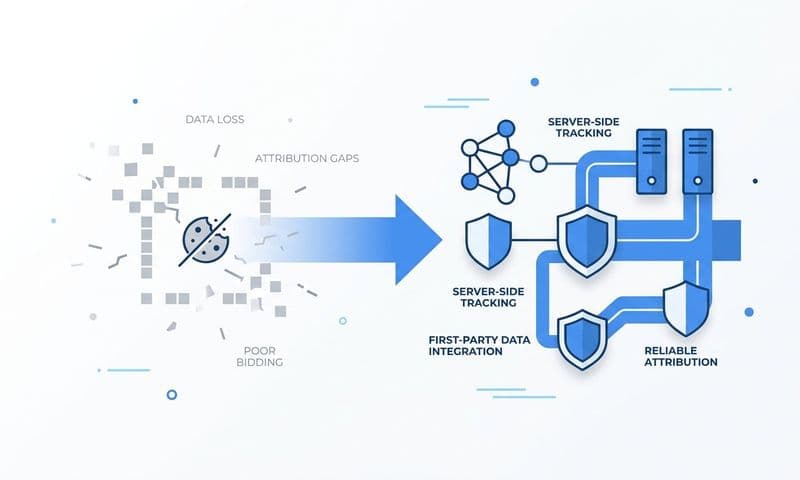
Browser-based tracking pixels are dying. Safari's Intelligent Tracking Prevention blocks third-party cookies. Firefox Enhanced Tracking Protection does the same. Chrome is phasing out cookie support. And iOS privacy settings let users opt out entirely—which the majority now do.
The result? Your client-side Facebook pixel or Google tag might miss 30-50% of actual conversions. You're making budget decisions based on incomplete data, often cutting campaigns that are actually profitable while scaling ones that aren't.
The Strategy Explained
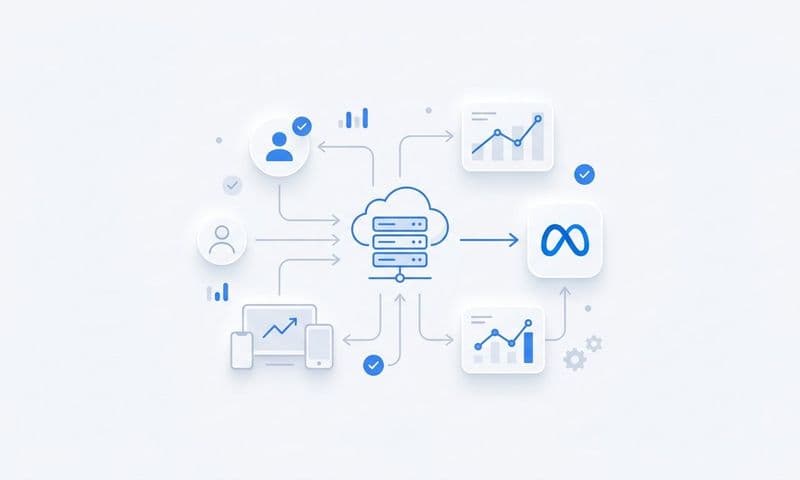
Server-side tracking moves conversion tracking from the user's browser to your server. Instead of relying on a JavaScript pixel that browsers can block, your server directly communicates conversion events to ad platforms using their APIs.
When a user converts, your website sends that data to your server first. Your server then forwards it to Facebook, Google, and other platforms through secure server-to-server connections that can't be blocked by browser restrictions or privacy settings.
This approach captures conversions that client-side tracking misses entirely. It also sends more accurate data because it includes information from your backend systems—order values, customer IDs, subscription details—that JavaScript pixels can't access.
Implementation Steps
1. Set up server-side tracking infrastructure through your ad platform's Conversions API (Meta) or Enhanced Conversions (Google), or use a dedicated attribution platform that handles this automatically.
2. Configure your website to send conversion events to your server with all relevant data points: transaction ID, customer email (hashed), order value, product details, and any custom parameters.
3. Map these server events to match your existing client-side pixel events so platforms can deduplicate and combine data from both sources for maximum accuracy.
4. Test thoroughly by triggering test conversions and verifying they appear correctly in your ad platform's events manager with all expected parameters.
Pro Tips
Don't abandon client-side tracking entirely—run both in parallel. Platforms use deduplication logic to combine data from both sources, giving you the best of both worlds. Also, prioritize server-side tracking for high-value conversion events first, then expand to micro-conversions once the foundation is solid.
2. Connect Your CRM to Close the Revenue Attribution Loop
The Challenge It Solves
Ad platforms report conversions, but conversions aren't revenue. Someone might fill out a lead form (conversion) but never close. They might purchase a low-value product when you're optimizing for high-ticket sales. Or they might convert through one channel after being influenced by another.
Without connecting your CRM, you're tracking the beginning of the customer journey but missing the ending—where actual revenue happens. You can't distinguish between leads that close for $50,000 and those that go nowhere.
The Strategy Explained
CRM integration sends closed deal data back to your attribution system, connecting revenue to the original ads and campaigns that generated each customer. This creates a closed loop where you can see not just which ads drove conversions, but which ads drove profitable customers.
When a lead converts in your CRM—becoming a paying customer with a specific deal value—that information flows back to your attribution platform. The system matches that customer to their original ad interactions, attributing the revenue to the correct campaigns.
This transforms your optimization strategy. Instead of maximizing conversions or even conversion value, you optimize for actual closed revenue. You can calculate true ROAS, identify which campaigns attract high-value customers, and eliminate spend on sources that generate junk leads.
Implementation Steps
1. Integrate your CRM (Salesforce, HubSpot, Pipedrive, etc.) with your attribution platform using native integrations or API connections that sync deal data in real time or near-real time.
2. Map CRM deal stages to your attribution events—typically tracking when deals move to "Closed Won" status and capturing the final deal value.
3. Ensure customer matching works correctly by using consistent identifiers across systems (email addresses, phone numbers, or custom customer IDs) so revenue can be attributed to the right source.
4. Set up reporting that shows campaign performance based on closed revenue, not just initial conversions, and create segments for high-value vs. low-value customer sources.
Pro Tips
Track deal stage progression, not just closed deals. Knowing which campaigns generate leads that advance through your pipeline—even if they haven't closed yet—gives you faster feedback for optimization. Also consider tracking customer lifetime value over time, not just initial purchase value, to identify campaigns that attract customers who stick around.
3. Adopt Multi-Touch Attribution to See the Full Customer Journey
The Challenge It Solves
Last-click attribution gives 100% credit to the final touchpoint before conversion. First-click gives it all to the initial touchpoint. Both are fundamentally wrong because they ignore the reality of modern customer journeys.
A customer might discover you through a Facebook ad, research on Google, compare options after seeing a LinkedIn post, and finally convert through a retargeting campaign. Last-click credits only retargeting. First-click credits only Facebook. Neither tells you the truth about what's actually working.
The Strategy Explained
Multi-touch attribution distributes conversion credit across all touchpoints that influenced the customer journey. Instead of giving 100% credit to one interaction, it recognizes that multiple channels worked together to drive the conversion.
Different multi-touch models distribute credit differently. Linear attribution splits credit equally across all touchpoints. Time-decay gives more credit to interactions closer to conversion. Position-based (U-shaped) emphasizes first and last touch while acknowledging middle interactions. Data-driven attribution uses machine learning to assign credit based on actual influence.
This reveals which channels work together effectively. You might discover that Facebook ads are excellent at generating awareness, Google Search converts high-intent prospects, and email nurtures consideration—all playing essential but different roles in your funnel.
Implementation Steps
1. Choose an attribution platform that supports multiple attribution models and can track cross-device, cross-channel customer journeys over extended time windows (30-90 days minimum).
2. Start by comparing last-click, first-click, and linear attribution side-by-side to understand how credit distribution changes your perspective on channel performance.
3. Experiment with different models to find one that aligns with your actual customer journey length and complexity—B2B with long sales cycles might favor time-decay, while e-commerce might prefer position-based.
4. Use multi-touch insights to adjust budget allocation, giving more resources to channels that play important assisting roles even if they don't get last-click credit.
Pro Tips
Don't get paralyzed choosing the "perfect" attribution model. Start with linear or time-decay to move beyond single-touch thinking, then refine based on what you learn. Also, use multi-touch attribution for strategic planning and budget allocation, but continue optimizing individual campaigns using platform-reported metrics to work with ad algorithms effectively.
4. Unify Cross-Platform Data in a Single Source of Truth
The Challenge It Solves
You're running campaigns across Facebook, Google, LinkedIn, TikTok, and maybe Pinterest or Twitter. Each platform has its own dashboard with its own metrics, attribution windows, and conversion tracking methodology. Comparing performance across platforms is nearly impossible.
Facebook uses a 7-day click, 1-day view window by default. Google uses last-click attribution. LinkedIn counts conversions differently. You can't answer basic questions like "Which platform actually drives the most revenue?" because you're comparing apples to oranges using inconsistent measurement.
The Strategy Explained
Cross-platform unification aggregates all your advertising data into a single dashboard where every platform is measured using the same attribution methodology, conversion definitions, and time windows. This creates an apples-to-apples comparison.
Instead of logging into five different dashboards with five different stories about performance, you see all your campaigns in one place with consistent metrics. The same conversion event is counted the same way regardless of which platform drove it. Attribution follows the same rules across all channels.
This enables true cross-platform optimization. You can confidently shift budget from LinkedIn to Facebook because you know they're being measured identically. You can identify which platforms excel at different funnel stages. And you can stop the endless debates about which dashboard to trust.
Implementation Steps
1. Connect all your ad platforms to a unified attribution dashboard that pulls data via API connections and normalizes it using consistent methodology.
2. Standardize conversion definitions across platforms—ensure "Purchase" means the same thing whether it came from Facebook or Google, using your own tracking as the source of truth.
3. Set consistent attribution windows across all platforms in your reporting (even if individual platforms use different windows internally) so you're comparing performance fairly.
4. Create unified reports that show cross-platform performance with metrics like blended ROAS, cost per acquisition across all channels, and channel contribution to overall revenue.
Pro Tips
Keep platform-native dashboards for tactical campaign optimization—ad algorithms respond to their own reported metrics. Use your unified dashboard for strategic decisions about budget allocation and channel mix. Also, track channel interaction effects: conversions where customers touched multiple platforms before converting often perform better than single-channel journeys.
5. Feed Enriched Conversion Data Back to Ad Platform Algorithms
The Challenge It Solves
Ad platform algorithms—Meta's Advantage+, Google's Performance Max, TikTok's automated campaigns—optimize based on the conversion data you send them. If that data is incomplete or inaccurate, their targeting and bidding decisions will be too.
When browser tracking misses conversions, algorithms think certain audiences don't convert when they actually do. They scale the wrong campaigns, target the wrong people, and waste budget on audiences that appear successful but aren't. Garbage in, garbage out.
The Strategy Explained
Conversion data enrichment sends more accurate, complete conversion information back to ad platforms through their APIs. This includes conversions that client-side tracking missed, enhanced with additional data from your backend systems.
When someone converts, you send the event to Facebook, Google, and other platforms with enriched details: actual order value, customer type (new vs. returning), product category, lifetime value prediction, or any custom parameters that help algorithms understand what makes a valuable conversion.
Platforms use this enriched data to improve their machine learning models. They learn which audiences are most likely to generate high-value conversions. They optimize bidding for customers who actually complete purchases, not just those who initiate checkout. They find more people who look like your best customers, not just any customers.
Implementation Steps
1. Set up Conversions API for Meta and Enhanced Conversions for Google to send server-side conversion data with maximum detail and accuracy.
2. Enrich conversion events with custom parameters that matter to your business—customer lifetime value, product margin, subscription tier, or lead quality score.
3. Send both standard events (Purchase, Lead) and custom events that represent meaningful business outcomes, giving algorithms more signals to optimize against.
4. Monitor how feeding better data affects campaign performance over 2-4 weeks as algorithms re-learn and adjust targeting based on more accurate conversion information.
Pro Tips
Use value-based optimization where platforms can optimize for conversion value, not just conversion volume. Send actual purchase amounts or custom values that represent true business impact. Also, feed back negative signals when appropriate—if someone requests a refund or churns quickly, some platforms let you send that information to improve future targeting.
6. Track Micro-Conversions to Optimize Before the Sale
The Challenge It Solves
If you only track final purchases or closed deals, you're flying blind until enough conversions happen to reach statistical significance. For high-ticket products or long sales cycles, that might take weeks or months—too slow to optimize effectively.
You need faster feedback about what's working. But tracking meaningless actions (page views, time on site) doesn't help because they don't predict actual conversion. You need signals that actually matter.
The Strategy Explained
Micro-conversion tracking identifies and measures meaningful actions that predict final conversion likelihood, giving you optimization signals long before the sale happens. These aren't vanity metrics—they're genuine indicators of purchase intent.
For e-commerce, that might be adding to cart, viewing product details, or starting checkout. For SaaS, it could be signing up for a trial, completing onboarding steps, or inviting team members. For lead generation, it might be downloading a key resource, attending a webinar, or scheduling a call.
By tracking these predictive micro-conversions, you can optimize campaigns based on hundreds of signals per week instead of waiting for dozens of final conversions per month. You identify which campaigns drive high-intent traffic faster, make budget adjustments sooner, and improve performance while competitors are still waiting for data.
Implementation Steps
1. Analyze your conversion funnel to identify which intermediate actions have the strongest correlation with final conversion—these become your trackable micro-conversions.
2. Set up tracking for 3-5 key micro-conversions that represent progressive commitment: awareness actions, consideration actions, and high-intent actions just before purchase.
3. Create campaign optimization strategies that use micro-conversions as leading indicators—if a campaign drives high add-to-cart rates but low purchases, the issue is likely checkout experience, not targeting.
4. Feed important micro-conversions back to ad platforms as optimization events, especially for campaigns targeting upper-funnel audiences where final conversions are rare.
Pro Tips
Weight micro-conversions by their predictive value when analyzing performance. Someone who adds to cart and starts checkout is a stronger signal than someone who just views a product page. Also, use micro-conversion patterns to segment audiences for retargeting—someone who engaged deeply but didn't convert is a different opportunity than someone who bounced immediately.
7. Leverage AI-Powered Analysis to Surface Actionable Insights
The Challenge It Solves
You're drowning in data. Thousands of campaigns across multiple platforms, hundreds of audience segments, dozens of ad creatives, and millions of data points. Finding meaningful patterns manually is impossible—by the time you spot a trend, the opportunity has passed.
You need to know when performance shifts significantly, which audience segments are underperforming, what creative patterns work best, and where to focus optimization efforts. But you can't analyze everything, so important insights slip through the cracks.
The Strategy Explained
AI-powered analytics automatically monitors your advertising data, identifies statistically significant patterns, detects anomalies, and surfaces actionable recommendations without requiring manual analysis of every metric.
Modern AI tools can spot when campaign performance deviates from expected patterns, identify which audience segments deliver the best return, recognize creative elements that drive higher conversion rates, and recommend specific optimization actions based on what's working across your entire account.
Instead of spending hours in spreadsheets trying to find insights, AI presents them to you: "This campaign's performance dropped 40% in the last 3 days," "Audience segment X has 3x higher conversion rate than others," or "Ads featuring product demos convert 2x better than lifestyle images."
Implementation Steps
1. Implement an attribution platform with built-in AI analysis capabilities that can monitor performance across all your campaigns and automatically flag significant changes.
2. Configure AI recommendations to focus on your key performance indicators—whether that's ROAS, cost per acquisition, conversion rate, or custom metrics specific to your business model.
3. Set up automated alerts for significant performance changes, budget pacing issues, or unusual patterns that require immediate attention.
4. Review AI-generated insights regularly and take action on high-confidence recommendations, using them to inform budget reallocation, creative testing priorities, and audience strategy.
Pro Tips
Use AI for pattern recognition and hypothesis generation, but apply human judgment before making major changes. AI excels at spotting what's happening and why it might matter—you decide what to do about it based on broader business context. Also, train AI tools with your business knowledge by marking which recommendations were helpful so they learn what matters most to your specific situation.
Putting It All Together
Mastering paid advertising performance tracking isn't about implementing one silver bullet—it's about building a comprehensive system where accurate data flows through every stage of your marketing operation.
Start with your foundation: server-side tracking and CRM integration. These two strategies ensure you're capturing complete, accurate data about what actually drives revenue. Without this foundation, everything else is built on sand.
Once your data is accurate, add sophistication: implement multi-touch attribution to understand how channels work together, and unify cross-platform data so you're making decisions based on consistent measurement. This transforms scattered platform dashboards into a coherent story about performance.
Then optimize the feedback loop: feed enriched conversion data back to ad platforms so their algorithms work with accurate information, and track meaningful micro-conversions so you can optimize faster. This accelerates your learning cycles and improves platform performance simultaneously.
Finally, scale your analysis: leverage AI-powered insights to spot opportunities and issues you'd never catch manually. This lets you manage increasing complexity without drowning in data.
The marketers who master this framework don't guess which campaigns work—they know. They don't justify marketing spend—they demonstrate ROI. And they don't wonder where to invest next—they follow the data to profitable growth.
Ready to elevate your marketing game with precision and confidence? Discover how Cometly's AI-driven recommendations can transform your ad strategy—Get your free demo today and start capturing every touchpoint to maximize your conversions.