The old measurement playbook is officially dead. Third-party cookies—those invisible trackers that followed users across the web for two decades—are gone. Chrome's Privacy Sandbox completed the transition in 2025, joining Safari and Firefox in blocking cross-site tracking. Privacy regulations from GDPR to state-level laws now require explicit consent for data collection. And yet, many marketing teams are still operating like it's 2019, patching together incomplete data from platform dashboards and hoping their attribution reports tell the real story.
Here's the reality: most marketers are flying blind right now. They're seeing conversion gaps between what ad platforms report and what actually shows up in their CRM. They're watching ad blockers strip out tracking pixels. They're making million-dollar budget decisions based on last-click attribution that ignores 80% of the customer journey.
But there's a better way forward—one that's actually more accurate than cookie-based tracking ever was.
The marketers who adapted early discovered something surprising: privacy-compliant measurement isn't a compromise. When done right, it captures more complete data, provides clearer insights, and builds sustainable competitive advantages. The strategies below represent the new measurement standard—approaches that respect user privacy while delivering the granular performance data you need to optimize campaigns and prove ROI.
These seven strategies aren't theoretical. They're battle-tested methods that forward-thinking marketing teams are using right now to measure advertising effectiveness without third-party cookies. Each addresses specific measurement gaps while working within the privacy-first constraints that define modern digital marketing.
1. Server-Side Tracking
The Challenge It Solves
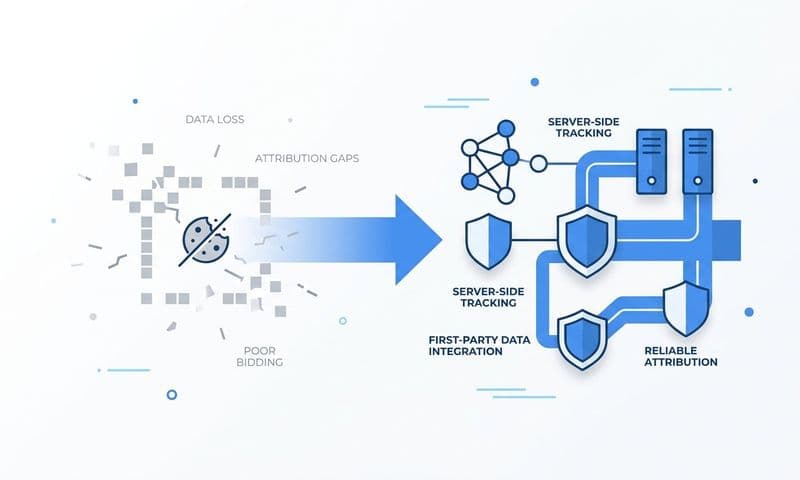
Browser-based tracking has always been fragile. Ad blockers strip out pixels. Browser privacy features block scripts. Users clear cookies. The result? Massive blind spots in your conversion data. When tracking happens entirely in the browser, you're at the mercy of client-side variables you can't control.
For marketers running campaigns across multiple platforms, this creates a nightmare scenario. You're spending thousands on ads, but your analytics shows only a fraction of the conversions actually happening. The gap between platform-reported results and your CRM data keeps growing. And you have no reliable way to connect ad clicks to downstream revenue.
The Strategy Explained
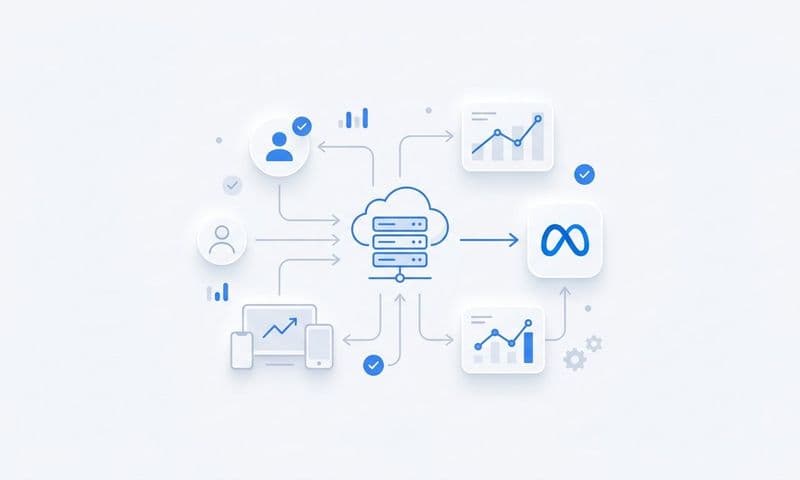
Server-side tracking moves data collection from the browser to your server infrastructure. Instead of relying on JavaScript pixels that execute in the user's browser, conversion events get captured on your server and sent directly to analytics platforms and ad networks. This approach operates independently of browser restrictions, ad blockers, and cookie policies.
Think of it like this: browser-based tracking is like asking someone to carry a message through a crowded street where half the people will block them. Server-side tracking is a direct phone line between two buildings. The message gets through regardless of what's happening at street level.
The technical setup involves implementing server-side tag management, configuring conversion endpoints, and establishing secure connections between your server and the platforms you're tracking. The payoff? Complete, accurate conversion data that captures every touchpoint without depending on client-side scripts.
Implementation Steps
1. Set up a server-side tag management container (Google Tag Manager Server-Side or similar) on your own infrastructure or cloud hosting.
2. Configure your website to send conversion events to your server endpoint instead of directly to third-party platforms.
3. Establish server-to-server connections with your ad platforms and analytics tools, ensuring proper authentication and data formatting.
4. Implement user identification methods that connect server-side events to the original ad interactions without relying on third-party cookies.
5. Test thoroughly by comparing server-side conversion counts against your CRM data to verify accuracy and completeness.
Pro Tips
Start with your highest-value conversion events first—purchases, qualified leads, and trial signups. These matter most for optimization and attribution. Also, server-side tracking works best when combined with first-party data strategies that help you identify users across sessions. Don't try to replicate every single browser-based tracking event server-side; focus on the conversion points that actually drive business decisions.
2. First-Party Data Activation
The Challenge It Solves
Without third-party cookies, you can't follow anonymous users across different websites to build behavioral profiles. But here's what many marketers miss: you don't need to track strangers across the internet. You need to understand your own customers better. The real measurement gap isn't about tracking random visitors—it's about connecting the dots between anonymous sessions and known customers in your own database.
Most marketing teams are sitting on goldmines of first-party data—email addresses, purchase history, CRM records, account activity—but they're not using it for attribution. They treat anonymous website sessions and known customer data as separate universes. That disconnect creates massive blind spots in understanding which marketing touchpoints actually drive conversions.
The Strategy Explained
First-party data activation means building unified customer profiles from data you already own and using those profiles to connect anonymous marketing interactions to known outcomes. When someone clicks your ad, visits your site, and later converts, you want to tie all those touchpoints together using identifiers you control—email addresses, customer IDs, phone numbers.
This approach creates a complete view of the customer journey without ever tracking users across third-party sites. You're connecting data within your own ecosystem: your ad platforms, your website, your CRM, your email system. When a lead fills out a form or makes a purchase, you can retroactively connect that conversion back to their earlier anonymous sessions using first-party identifiers.
The key is implementing identity resolution that works across your marketing stack. This means capturing identifiers early in the journey, storing them securely, and using them to enrich conversion data before sending it to analytics platforms and ad networks.
Implementation Steps
1. Audit all sources of first-party data in your organization—website forms, CRM records, email lists, purchase databases, and account systems.
2. Implement a customer data platform or unified database that consolidates these data sources using common identifiers like email addresses and customer IDs.
3. Set up identity resolution logic that connects anonymous website sessions to known users when they provide identifying information.
4. Configure your tracking to capture and persist first-party identifiers throughout the customer journey, even across multiple sessions.
5. Enrich conversion events with customer profile data before sending them to ad platforms and analytics tools, providing richer context for optimization.
Pro Tips
Create multiple touchpoints for identity capture—not just at conversion. Gated content, email signups, and account creation all provide opportunities to connect anonymous sessions to known users. Also, make sure your privacy policy clearly explains how you're using first-party data, and implement proper consent mechanisms. First-party data strategies only work when they respect user privacy and comply with regulations.
3. Conversion APIs and Enhanced Conversions
The Challenge It Solves
Ad platforms need conversion data to optimize delivery. Their algorithms learn which audiences, placements, and creative variations drive results by analyzing conversion patterns. But when browser-based tracking breaks down, platforms lose the signal they need. Your campaigns start optimizing based on incomplete data, which means worse performance and wasted budget.
The disconnect between what's happening in your CRM and what ad platforms can see creates a vicious cycle. Platforms optimize toward the conversions they can track—which might not be your most valuable conversions. Meanwhile, the high-value leads that came through your ads but weren't properly tracked never feed back into the optimization algorithm.
The Strategy Explained
Conversion APIs solve this by sending conversion data directly from your server to ad platforms, bypassing browser limitations entirely. Instead of relying on pixels that fire in the user's browser, you send conversion events through secure server-to-server connections. Enhanced conversions take this further by including hashed customer data that helps platforms match conversions back to the original ad interactions.
Major platforms built these APIs specifically for the post-cookie era. Meta's Conversions API, Google's Enhanced Conversions, TikTok's Events API, and similar tools from other platforms all work the same way: you send conversion data directly from your server, including hashed identifiers that help platforms connect conversions to users without relying on cookies.
This approach gives ad platforms the complete, accurate conversion data they need to optimize delivery. It also helps you measure performance more accurately by closing the gap between platform-reported conversions and actual business outcomes.
Implementation Steps
1. Review the conversion API documentation for each ad platform you use—Meta CAPI, Google Enhanced Conversions, TikTok Events API, and others relevant to your channels.
2. Set up server-side endpoints that capture conversion events from your website, app, or CRM system in real time.
3. Implement secure hashing for customer identifiers (email addresses, phone numbers) before sending them to platforms, ensuring privacy compliance.
4. Configure event matching parameters that help platforms connect server-side conversions back to the original ad clicks or impressions.
5. Monitor conversion matching rates in each platform's reporting to verify that your implementation is working correctly and events are being attributed properly.
Pro Tips
Send conversion events as quickly as possible after they occur. The faster platforms receive conversion data, the better they can optimize delivery. Also, include as many matching parameters as you can—email, phone, user agent, IP address—to improve match rates. And don't just send purchase events; include micro-conversions like lead forms, trial signups, and add-to-cart actions that help platforms optimize throughout the funnel.
We break down the leading options in our AI advertising agent guide.
4. Multi-Touch Attribution
The Challenge It Solves
Last-click attribution is a lie. It tells you that the final touchpoint before conversion deserves all the credit, completely ignoring the awareness campaigns, retargeting ads, email nurtures, and organic content that actually moved the prospect through the funnel. In a world where customer journeys span multiple sessions, devices, and channels over days or weeks, last-click attribution creates a distorted view of what's working.
The problem gets worse when you're running campaigns across multiple platforms. Each platform's dashboard shows you conversions using its own attribution model, which inevitably favors that platform. Meta takes credit for conversions that Google also claims. Your analytics tool shows different numbers than both. You're left with contradictory data and no clear picture of which channels truly drive results.
The Strategy Explained
Multi-touch attribution tracks every touchpoint in the customer journey and assigns appropriate credit to each interaction based on its contribution to the conversion. Instead of giving 100% credit to the last click, you distribute credit across all the touchpoints that influenced the decision—the awareness ad, the educational content, the retargeting campaign, the email that brought them back.
This requires tracking capabilities that connect all marketing interactions to conversions using first-party methods. When someone converts, you need to know every ad they clicked, every page they visited, every email they opened, and every campaign they engaged with along the way. Then you apply an attribution model—linear, time decay, position-based, or algorithmic—that reflects how those touchpoints actually contributed.
The insight this provides is transformative. You stop optimizing for last-click vanity metrics and start understanding which channels work together to drive conversions. You discover that your awareness campaigns aren't "wasting budget"—they're creating the pipeline that your retargeting converts. You learn which content pieces actually move prospects closer to purchase.
Implementation Steps
1. Implement tracking that captures every marketing touchpoint—ad clicks, email opens, content views, and social interactions—using first-party identifiers.
2. Build a database that stores complete customer journey data, connecting all touchpoints to eventual conversions using persistent user IDs.
3. Choose attribution models that align with your business reality—time decay for longer sales cycles, position-based for awareness and conversion focus, or algorithmic for data-driven credit assignment.
4. Create reporting dashboards that show channel contribution based on multi-touch attribution, not just last-click conversions from platform dashboards.
5. Use attribution insights to reallocate budget toward channels that contribute meaningfully to conversions, even if they don't get last-click credit.
Pro Tips
Don't obsess over finding the "perfect" attribution model. The goal isn't mathematical precision—it's better decision-making. Start with a simple model like linear or time decay, then refine as you learn more about your customer journey. Also, segment your attribution analysis by customer value. High-value customers often have different journey patterns than low-value ones, and treating them the same in attribution leads to poor optimization decisions.
5. Media Mix Modeling
The Challenge It Solves
Not everything can be tracked at the user level. Brand awareness campaigns, TV ads, podcast sponsorships, and offline marketing all influence conversions without leaving clear digital footprints. Even in digital channels, some users will never be trackable due to privacy settings, ad blockers, or cross-device behavior. If your measurement strategy only accounts for trackable conversions, you're missing a massive part of the picture.
Traditional attribution methods struggle with this reality. They can only credit touchpoints they can see, which creates systematic bias toward bottom-funnel, last-click channels. Upper-funnel brand building gets undervalued. Offline channels get ignored. And you end up with a measurement framework that pushes you toward short-term tactics at the expense of sustainable growth.
The Strategy Explained
Media Mix Modeling takes a completely different approach. Instead of tracking individual users, it uses statistical analysis to understand how different marketing channels contribute to overall business outcomes. You analyze historical data—marketing spend by channel, conversion volumes, external factors like seasonality—to build models that show how each channel influences results.
Think of it as working backward from outcomes. You know you spent X on Facebook, Y on Google, and Z on podcast ads in a given week. You also know total conversions and revenue for that week. Media Mix Modeling uses regression analysis to determine how much each channel contributed, accounting for factors like time lag, saturation effects, and interactions between channels.
This approach is privacy-safe by design because it works with aggregated data rather than user-level tracking. It also captures the full impact of your marketing, including channels that don't provide granular attribution data. The tradeoff is less real-time feedback and less ability to optimize at the campaign or creative level.
Implementation Steps
1. Collect historical data on marketing spend by channel, conversion volumes, revenue, and relevant external variables like seasonality or competitive activity.
2. Choose appropriate time intervals for analysis—typically weekly or monthly—that balance statistical power with actionable insights.
3. Build regression models that correlate marketing inputs with business outcomes, accounting for time lags between exposure and conversion.
4. Validate model accuracy by testing predictions against holdout data or actual results from budget changes you've made.
5. Use model outputs to inform budget allocation across channels, understanding that MMM provides strategic guidance rather than tactical optimization insights.
Pro Tips
Media Mix Modeling works best when combined with more granular attribution methods. Use MMM for high-level budget allocation across major channels, then use multi-touch attribution and conversion data for tactical optimization within those channels. Also, update your models regularly as market conditions change. A model built on 2023 data might not reflect 2026 realities around platform algorithms, audience behavior, or competitive dynamics.
6. Incrementality Testing
The Challenge It Solves
Here's an uncomfortable truth: correlation doesn't prove causation. Just because conversions happened after someone saw your ad doesn't mean the ad caused the conversion. Many of those people would have converted anyway—they were already searching for your product, already in your email nurture, already planning to buy. Attribution models can't distinguish between conversions you influenced and conversions that would have happened regardless.
This creates a fundamental measurement problem. You might be celebrating a "successful" campaign that's actually just taking credit for organic demand. Or you might be pausing campaigns that are driving real incremental value because they don't show strong last-click attribution. Without a way to prove true advertising impact, you're optimizing based on assumptions rather than evidence.
The Strategy Explained
Incrementality testing solves this through controlled experiments. You create a holdout group that doesn't see your ads, then compare conversion rates between the exposed group and the holdout. The difference represents true incremental impact—conversions that happened because of your advertising, not despite it.
This is the gold standard for proving advertising effectiveness because it directly measures causation. You're not inferring impact from correlation; you're measuring the actual lift your campaigns create. Platforms like Meta and Google offer built-in tools for conversion lift studies. You can also run geographic holdout tests where certain regions see campaigns and others don't.
The insights from incrementality testing often surprise marketers. You might discover that your retargeting campaigns have lower incrementality than expected because they're mostly reaching people who would have converted anyway. Or you might find that upper-funnel awareness campaigns drive significant incremental conversions even though they show weak last-click attribution.
Implementation Steps
1. Identify campaigns or channels where you want to measure true incremental impact, focusing on areas where attribution data might be misleading.
2. Design controlled experiments with proper test and control groups—either through platform-provided tools or geographic/audience-based holdouts.
3. Ensure sufficient sample sizes and test durations to achieve statistical significance, accounting for your typical conversion rates and sales cycle length.
4. Measure conversion rates in both test and control groups, calculating the incremental lift attributable to advertising exposure.
5. Use incrementality insights to adjust your attribution models and budget allocation, giving more credit to channels that drive true incremental conversions.
Pro Tips
Run incrementality tests regularly, not just once. Market conditions change, audience saturation builds, and creative effectiveness decays over time. What showed strong incrementality six months ago might not today. Also, test at different budget levels. A campaign might be highly incremental at lower spend but hit diminishing returns at scale. Understanding these saturation curves helps you optimize budget allocation across channels.
7. AI-Powered Analysis
The Challenge It Solves
Modern marketing generates overwhelming amounts of data. You're tracking conversions across multiple platforms, analyzing customer journeys with dozens of touchpoints, running attribution models that assign credit across channels, and managing campaigns with hundreds of variables. No human can process all that information quickly enough to spot patterns, identify opportunities, and make optimal decisions in real time.
Manual analysis also introduces bias and blind spots. You look for patterns you expect to find. You optimize based on metrics you're familiar with. You miss subtle interactions between variables that might reveal breakthrough opportunities. And by the time you've analyzed last week's data to inform this week's decisions, market conditions have already shifted.
The Strategy Explained
AI-powered analysis uses machine learning to process attribution data, identify patterns, and surface optimization opportunities automatically. Instead of manually reviewing dashboards to decide where to allocate budget, AI analyzes performance across all campaigns, channels, and audience segments to recommend specific actions that will improve results.
This goes beyond basic reporting automation. AI can identify which ad creative variations perform best for different audience segments. It can spot when campaign performance is declining before it becomes obvious in aggregate metrics. It can analyze customer journey patterns to predict which touchpoints matter most for specific conversion types. And it can automate budget reallocation based on real-time performance signals.
The key advantage is speed and scale. AI processes data continuously, spots opportunities immediately, and can optimize across more variables than any human analyst. This means you're always operating with current insights rather than making decisions based on last week's patterns.
Implementation Steps
1. Consolidate attribution data from all channels into a unified analytics platform that AI can access and analyze comprehensively.
2. Implement AI-powered analytics tools that can process multi-touch attribution data, identify performance patterns, and generate optimization recommendations.
3. Configure AI models to align with your business objectives—whether that's maximizing ROAS, reducing CAC, improving conversion rates, or optimizing for customer lifetime value.
4. Start with AI recommendations in advisory mode, reviewing suggestions before implementing them to build confidence in the system's insights.
5. Gradually increase automation as AI proves its value, allowing it to make tactical optimization decisions while you focus on strategy and creative direction.
Pro Tips
AI is only as good as the data you feed it. Make sure your attribution data is clean, complete, and properly structured before expecting AI to generate valuable insights. Also, don't treat AI as a black box. Understand the logic behind recommendations so you can evaluate whether they make strategic sense for your business. AI should augment human judgment, not replace it entirely.
Putting It All Together
The strategies above aren't isolated tactics—they work best as an integrated measurement ecosystem. The most effective post-cookie measurement approaches layer these methods strategically, using each one to address specific gaps while building toward complete visibility into advertising performance.
Start with server-side tracking as your foundation. This ensures you're capturing complete, accurate conversion data regardless of browser restrictions or ad blockers. Without solid data collection, everything else falls apart. Once your tracking infrastructure is solid, activate your first-party data to connect anonymous sessions to known customers and build unified profiles that show the complete customer journey.
Layer in conversion APIs next. Feed that enriched, accurate conversion data back to ad platforms so their algorithms can optimize delivery based on real outcomes rather than incomplete browser-based signals. This closes the loop between what's happening in your business and what platforms can see.
Add multi-touch attribution to understand how channels work together. Last-click attribution made sense in a simpler era, but modern customer journeys demand more sophisticated analysis. Know which touchpoints contribute to conversions so you can allocate budget intelligently across the full funnel.
Validate everything with incrementality testing. Attribution models tell you which touchpoints correlate with conversions, but only controlled experiments prove true causal impact. Run regular tests to ensure you're optimizing for real incremental value, not just taking credit for conversions that would have happened anyway.
Use Media Mix Modeling to capture the full picture, including channels that don't provide granular tracking. This ensures your measurement framework accounts for brand building, offline marketing, and upper-funnel activities that influence conversions without leaving clear digital footprints.
Finally, leverage AI to process all this data and surface actionable insights. The measurement strategies above generate enormous amounts of information. AI helps you make sense of it, identifying patterns and opportunities that would take humans weeks to discover manually.
The marketers who thrive in 2026 aren't the ones mourning the loss of third-party cookies. They're the ones who recognized that privacy-compliant, first-party measurement was always the better path forward. These strategies deliver more accurate data, deeper insights, and sustainable competitive advantages—all while respecting user privacy and complying with regulations.
Building this measurement stack takes effort, but the alternative is worse. Without modern measurement infrastructure, you're making million-dollar budget decisions based on incomplete data and platform-reported metrics that don't reflect business reality. You're optimizing for vanity metrics that don't drive growth. And you're falling behind competitors who invested in measurement capabilities that actually work in the post-cookie era.
Ready to elevate your marketing game with precision and confidence? Discover how Cometly's AI-driven recommendations can transform your ad strategy—Get your free demo today and start capturing every touchpoint to maximize your conversions.