You've just spent $50,000 on a multi-platform campaign. Three weeks later, the data comes in: two channels underperformed, one audience segment never converted, and your best-performing creative started declining halfway through. You adjust, you optimize, you pivot—but the money's already gone.
This is reactive marketing. And it's expensive.
Predictive analytics flips this entire approach on its head. Instead of analyzing what happened after you've spent your budget, you forecast what will likely happen before you commit a dollar. You identify which campaigns will drive the best returns, which audiences are most likely to convert, and when your ad creative will start losing effectiveness—all before performance drops.
For paid advertising teams managing budgets across Meta, Google, TikTok, and other platforms, this shift from hindsight to foresight isn't just convenient—it's the difference between guessing and knowing. This guide will show you how predictive analytics works in practice, what data you need to make it accurate, and how to turn forecasts into confident campaign decisions that optimize spend before you waste it.
From Hindsight to Foresight: The Predictive Analytics Shift
Traditional marketing analytics tells you what happened. You run a campaign, wait for results, then analyze the data to understand performance. It's like driving while only looking in the rearview mirror—you can see where you've been, but you're blind to what's ahead.
Predictive analytics changes the view. It uses historical performance data, machine learning algorithms, and statistical modeling to forecast future campaign outcomes before you spend. Instead of asking "Which ads performed best last month?" you ask "Which campaigns will deliver the highest ROAS next month?"
Here's how it works at a fundamental level. Predictive models analyze patterns in your historical data—how different audiences behaved, which creative formats drove conversions, how budget allocation affected results across channels. The algorithms identify correlations and trends that human analysts would miss, then apply those patterns to forecast future performance under similar conditions.
The core data inputs that power these predictions include your historical campaign performance metrics, audience behavior patterns across touchpoints, conversion journey data showing the path from first click to purchase, and external market signals like seasonality or competitive activity. The richer and more complete this data, the more accurate your predictions become. Understanding data analytics for marketing is essential for building this foundation.
The difference in approach is stark. Traditional reporting shows you that Campaign A generated 150 conversions at $45 CPA last month. Predictive analytics tells you that if you increase Campaign A's budget by 30% next month while maintaining current targeting, you'll likely generate 195 conversions at $47 CPA—and that Campaign B will probably underperform its target by 22%, so you should reallocate that budget now.
This isn't about replacing human decision-making with algorithms. It's about giving marketers forward-looking intelligence so they can make proactive decisions instead of reactive corrections. You still bring strategy, market knowledge, and business context. But now you're working with predictions about what will happen, not just reports about what did happen.
Key Applications in Paid Advertising
Let's get specific about where predictive analytics creates the most value in your day-to-day campaign management.
Budget Allocation Forecasting: This is where prediction directly impacts your bottom line. Instead of distributing budget based on past performance or gut instinct, predictive models forecast which channels and campaigns will deliver the best return on ad spend before you commit resources. The algorithm might predict that increasing your Google Search budget by $10,000 will generate $45,000 in revenue, while the same investment in a particular Meta campaign will only return $28,000. You make the allocation decision with confidence before spending a dollar.
The models factor in dozens of variables simultaneously—time of day performance patterns, day-of-week conversion trends, seasonal fluctuations, audience saturation levels, and historical response to budget changes. This multi-variable analysis catches opportunities and risks that would be invisible when looking at channels in isolation. A robust cross-platform analytics tool makes this level of analysis possible.
Audience Performance Prediction: Not all audience segments are created equal, but you often don't know which will convert best until after you've spent budget testing them. Predictive analytics identifies high-propensity conversion segments before you launch campaigns by analyzing behavioral patterns in your historical data.
For example, the model might detect that users who visited your pricing page, engaged with a specific content topic, and returned within 48 hours convert at 340% higher rates than your average visitor. It can then predict that targeting similar behavioral profiles will outperform your current broad audience approach. You shift budget toward predicted winners instead of spending weeks testing to find them.
This becomes especially powerful when combined with first-party data. If you're tracking the complete customer journey—from first ad click through website behavior to CRM interactions—your predictive models have richer inputs to identify which audience characteristics actually correlate with revenue, not just clicks or form fills.
Creative Fatigue and Lifecycle Prediction: Every ad eventually loses effectiveness as audiences see it repeatedly. The question is when. Predictive analytics anticipates creative performance decay before it happens, so you can refresh ads proactively instead of watching engagement and conversion rates decline.
The model analyzes historical creative performance patterns—how quickly different ad formats lose effectiveness, how audience engagement metrics change over time, and when performance typically drops below profitable thresholds. It then forecasts when your current ads will hit fatigue points and need replacement.
This might look like a notification: "Your top-performing Meta ad set is predicted to drop below target CPA in 6 days based on declining engagement trends. Prepare new creative now to maintain performance." You're not reacting to a performance drop that already happened—you're preventing it.
The same approach applies to predicting when to scale winning creatives. If an ad is performing well and the model predicts it has room to scale before hitting audience saturation, you can confidently increase budget while performance is still strong rather than waiting until it's already declining.
Building the Data Foundation for Accurate Predictions
Here's the hard truth about predictive analytics: garbage in, garbage out. Your predictions are only as accurate as the data feeding the models. If you're working with incomplete customer journey data, siloed platform metrics, or tracking gaps, your forecasts will be unreliable—and potentially expensive.
The foundation of accurate prediction is complete customer journey data. This means tracking every touchpoint from first ad exposure through final conversion and beyond. When someone clicks your Meta ad, visits your site, downloads a resource, receives nurture emails, clicks a Google retargeting ad, and finally converts, you need all of those interactions connected to that single customer and their revenue outcome.
Why does completeness matter so much? Because predictive models identify patterns in how customers actually convert. If you only see the last click before conversion—say, a Google Search ad—your model thinks direct search traffic drives all your revenue. It will predict that increasing search spend is your best bet, completely missing that most of those searchers were originally introduced to your brand through Meta campaigns or content marketing.
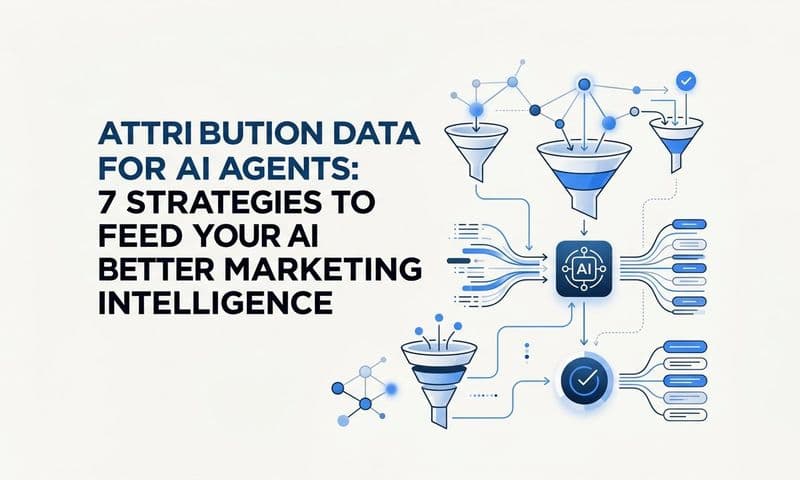
This is where multi-touch attribution becomes critical for prediction accuracy. Attribution models that capture the full customer journey provide the rich input data predictive algorithms need. Instead of feeding the model simplistic "this ad drove this conversion" data, you're providing "this customer interacted with these five touchpoints over 12 days, and this is the sequence that led to a $5,000 purchase." Learning attribution tracking for multiple campaigns is fundamental to building this complete picture.
The model can then identify patterns like: "Customers who engage with educational content before seeing product ads convert at higher values" or "The combination of social awareness ads followed by search retargeting within 3 days produces the highest conversion probability." These multi-touch insights create far more accurate predictions than last-click data ever could.
But here's the challenge: data completeness has gotten harder. iOS 14.5+ privacy changes and third-party cookie deprecation have created significant tracking gaps for many marketers. When you can't track the full customer journey because of browser restrictions or app tracking limitations, your predictive models are working with incomplete information. Many teams face ongoing attribution challenges in marketing analytics that directly impact prediction accuracy.
The solution lies in server-side tracking approaches. Instead of relying on browser cookies and client-side pixels that get blocked by privacy features, server-side tracking sends event data directly from your server to analytics and ad platforms. This maintains data accuracy even as browser-based tracking becomes less reliable.
First-party data strategies also become essential. When you capture customer information directly—through account creation, email subscriptions, or CRM interactions—you can track behavior and conversions more reliably than through third-party cookies. This first-party data becomes the foundation for accurate predictive modeling in a privacy-focused world.
Turning Predictions Into Campaign Decisions
Having accurate predictions is valuable. Knowing how to act on them is where you actually improve results. Let's talk about translating forecast insights into confident campaign decisions that optimize spend before performance drops.
The most direct application is scaling predicted winners before they prove themselves through traditional testing. When your predictive model forecasts that a new audience segment or campaign structure will outperform your current approach, you can allocate meaningful budget immediately rather than starting with small test budgets and waiting weeks for statistical significance.
This might look like: "Model predicts this lookalike audience will convert at 28% better CPA than your current targeting. Recommendation: Shift $15,000 from existing campaigns to this segment over the next week." You make the move with data-driven confidence instead of treating it as a risky experiment.
The inverse is equally important—pausing predicted underperformers before they waste budget. If the model forecasts that a campaign will miss its ROAS target based on early performance trends and historical patterns, you can cut budget or pause it immediately. You're not waiting for two weeks of poor performance to confirm what the prediction already told you. Mastering how to improve campaign performance with analytics requires this proactive mindset.
Budget reallocation becomes proactive rather than reactive. Instead of analyzing last month's performance and adjusting this month's budget accordingly, you're continuously optimizing based on forward-looking forecasts. The model might recommend shifting budget between campaigns multiple times per week as predictions update with new data.
This is where AI-powered recommendations become practical tools rather than theoretical concepts. Modern attribution and analytics platforms can analyze predictive insights across all your campaigns simultaneously—something that would be impossible to do manually—and surface specific optimization opportunities ranked by predicted impact. Exploring the top predictive marketing analytics platforms can help you find the right solution for your needs.
You might receive recommendations like: "Increase Google Search campaign budget by $8,000 (predicted +$32,000 revenue). Decrease Meta broad audience campaign by $5,000 (predicted declining performance). Test new creative in TikTok campaign (current creative predicted to hit fatigue in 5 days)." Each recommendation includes the predicted outcome, so you can prioritize actions by expected impact.
Another powerful application is feeding enriched conversion data back to ad platforms to improve their native algorithms. Platforms like Meta and Google use machine learning to optimize delivery and targeting, but they can only optimize toward the conversion data you send them. If you're only sending basic "purchase" events, their algorithms optimize for any purchase.
When you enrich conversion events with additional data—customer lifetime value, product margins, lead quality scores—the platform algorithms can optimize toward more valuable conversions. Your predictive insights about which customer types drive the most revenue become inputs that improve how ad platforms target and deliver your campaigns.
This creates a compounding effect. Better data leads to more accurate predictions. More accurate predictions lead to better optimization decisions. Better decisions improve campaign performance. Improved performance generates more high-quality data. The cycle continues, and your predictive accuracy improves over time.
Common Pitfalls and How to Avoid Them
Predictive analytics is powerful, but it's not foolproof. Let's address the most common mistakes marketers make when implementing prediction-driven optimization—and how to avoid them.
Over-Relying on Predictions Without Validation: The biggest pitfall is treating predictions as guarantees rather than forecasts. Models are probabilistic—they tell you what's likely to happen based on patterns in historical data, not what will definitely happen. Market conditions change, competitors launch new campaigns, external events disrupt normal patterns. If you blindly follow every prediction without monitoring actual performance, you'll miss when reality diverges from the forecast.
The solution is continuous feedback loops. Compare predicted outcomes against actual results regularly. When predictions miss the mark, investigate why. Was it a data quality issue? A market shift the model couldn't anticipate? A seasonal pattern not yet captured in your historical data? Use these insights to improve model accuracy over time, and maintain human oversight to catch when predictions need to be overridden.
Using Incomplete or Siloed Data: Many marketers implement predictive analytics while still working with fragmented data—Meta performance in one dashboard, Google in another, website analytics separate from CRM data. When your predictive models only see part of the customer journey, they generate inaccurate forecasts because they're missing critical context. Understanding the difference between Google Analytics vs attribution platforms helps clarify why unified data matters.
A model analyzing only Meta data might predict that increasing Meta spend will drive more conversions. But if it can't see that most of those conversions were actually influenced by Google Search ads earlier in the journey, it's recommending budget allocation based on incomplete information. The prediction might be technically correct for last-click conversions but strategically wrong for actual customer acquisition.
Avoid this by ensuring your predictive tools have access to complete, unified customer journey data before relying on their recommendations. If you're still working with siloed data, focus on improving data integration before making major budget decisions based on predictions.
Ignoring the Human Element: Predictive models are excellent at identifying patterns in historical data, but they don't understand market context, competitive dynamics, or business strategy. There are times when you should override model predictions based on information the algorithm can't access.
Maybe you're launching a new product and need to invest in awareness even though the model predicts lower short-term ROAS. Maybe a competitor just launched a major campaign that will shift market dynamics. Maybe seasonal trends are about to hit that aren't yet reflected in your historical data because this is your first year in business.
The best approach combines algorithmic predictions with human judgment. Use predictions as a powerful input to decision-making, not as a replacement for strategic thinking. When you override a prediction, document why. This creates a feedback loop that helps you identify when human judgment adds value and when you should trust the model.
Putting Predictive Analytics Into Practice
Ready to implement predictive optimization in your campaigns? Here's how to start in a way that delivers immediate value while building toward more sophisticated prediction over time.
Begin with your highest-spend campaigns where predictive insights can have the most immediate budget impact. If you're spending $100,000 per month on Google Search and $10,000 on TikTok, start by applying predictive analytics to Google. A 10% improvement in Google efficiency saves $10,000, while the same improvement in TikTok saves $1,000. Focus where the leverage is highest.
This focused approach also lets you validate prediction accuracy in a controlled way. You're not betting your entire marketing budget on untested forecasts—you're applying predictions to one major channel while monitoring how well they match reality. Once you've confirmed accuracy and built confidence, expand to additional channels.
Before you can generate reliable predictions, ensure your attribution and tracking infrastructure captures the complete customer journey. This means implementing tracking that connects ad clicks to website behavior to conversions to revenue outcomes—all tied to individual customers. If you're still relying on platform-reported conversions without cross-platform attribution, your predictions will only be as accurate as those incomplete data sources. Knowing what features to look for in analytics software ensures you select tools that support accurate prediction.
Server-side tracking becomes essential here. As browser-based tracking faces increasing limitations, server-side approaches maintain the data quality predictive models need. This isn't just about implementing a tool—it's about building the data foundation that makes accurate prediction possible.
Emphasize iterative improvement rather than expecting perfect predictions immediately. Predictive models get smarter as they receive more conversion data and feedback. Your first month of predictions might be directionally helpful but not precisely accurate. By month three, as the model learns from actual outcomes and refines its algorithms, accuracy improves significantly. By month six, you're making confident budget decisions based on consistently reliable forecasts.
This iterative approach also helps you build organizational trust in predictive insights. When your team sees predictions consistently matching reality—and optimization decisions based on those predictions improving results—confidence grows. You move from "let's test this prediction with 10% of budget" to "let's reallocate 40% of budget based on what the model forecasts."
Making the Shift from Reactive to Predictive
Predictive analytics transforms advertising from a reactive guessing game into a data-driven strategy where you anticipate outcomes and optimize proactively. Instead of analyzing what happened after you've spent your budget, you forecast what will happen before you commit resources. Instead of discovering which campaigns underperformed after the fact, you identify and fix issues before they waste spend.
The shift isn't just about better technology—it's about a fundamentally different approach to campaign management. You move from asking "What did we learn from last month?" to "What should we do differently next week?" From "Which campaigns performed best?" to "Which campaigns will perform best?" From reactive optimization to proactive strategy.
But here's what makes prediction actually work: accurate, complete data across the entire customer journey. The most sophisticated machine learning algorithms can't generate reliable forecasts from incomplete tracking, siloed metrics, or data gaps. The foundation of effective prediction is knowing what actually drives conversions—not just the last click, but the full sequence of touchpoints that leads to revenue.
This means investing in attribution infrastructure that captures every interaction, server-side tracking that maintains accuracy despite privacy changes, and unified data that connects ad platforms to website behavior to CRM outcomes. When you have this complete view, predictive models can identify the patterns that actually matter and forecast performance you can trust.
The question isn't whether predictive analytics will become standard in advertising—it's whether you'll adopt it while you still have a competitive advantage or wait until it's table stakes. The marketers making this shift now are the ones who'll be optimizing campaigns with confidence while competitors are still analyzing last month's reports.
Ready to elevate your marketing game with precision and confidence? Discover how Cometly's AI-driven recommendations can transform your ad strategy—Get your free demo today and start capturing every touchpoint to maximize your conversions.