The tracking landscape has fundamentally shifted. Third-party cookies are nearly extinct. iOS App Tracking Transparency has limited mobile data collection. GDPR and CCPA carry real enforcement teeth that companies can't ignore.
But here's what many marketers miss: privacy compliance and effective attribution aren't mutually exclusive.
In fact, privacy-first tracking methods often deliver more accurate data because they're built on consented, first-party relationships rather than probabilistic guessing. When users trust your data practices, they're more likely to engage authentically, creating cleaner signals for attribution.
This guide walks through seven proven alternatives that let you maintain full visibility into your customer journey while respecting user privacy and staying compliant with global regulations. Each strategy has been battle-tested by marketing teams navigating this new reality.
The path forward isn't about finding loopholes. It's about building tracking systems that earn user trust and deliver more reliable data as a result.
1. Server-Side Tracking
The Challenge It Solves
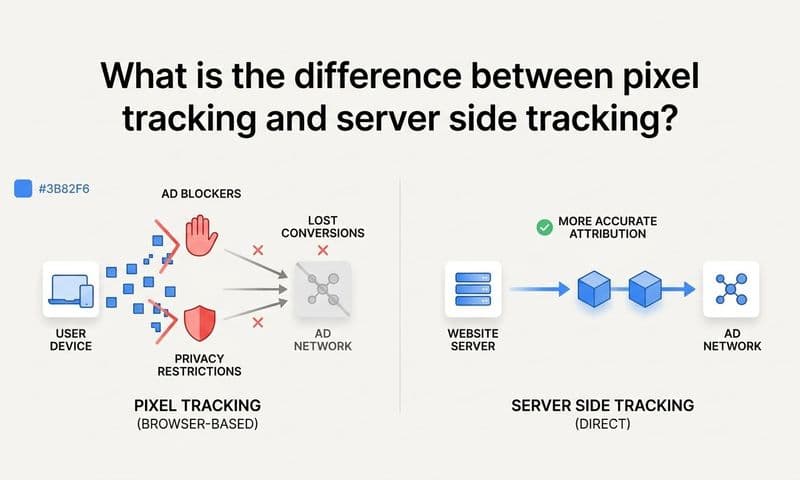
Browser-based tracking faces constant interference. Ad blockers strip pixels. Intelligent Tracking Prevention deletes cookies. Safari and Firefox block third-party scripts by default. Even Chrome's Privacy Sandbox limits what you can track.
When your tracking runs entirely in the browser, you're at the mercy of these restrictions. The result? Massive data gaps that make attribution nearly impossible.
The Strategy Explained
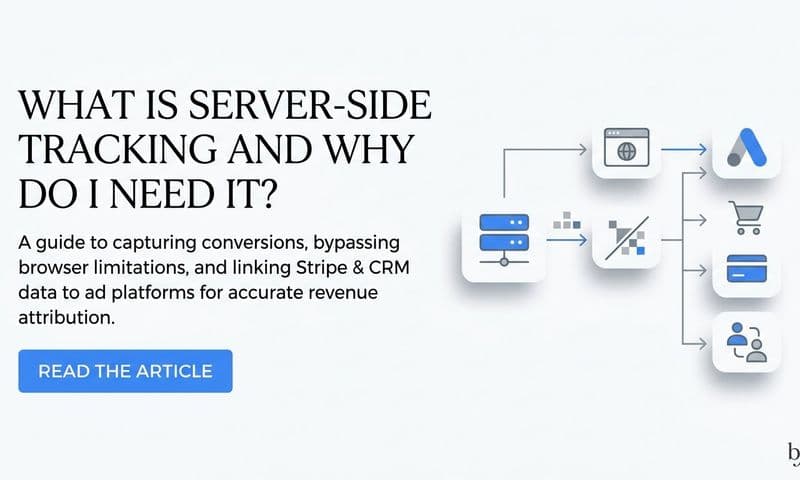
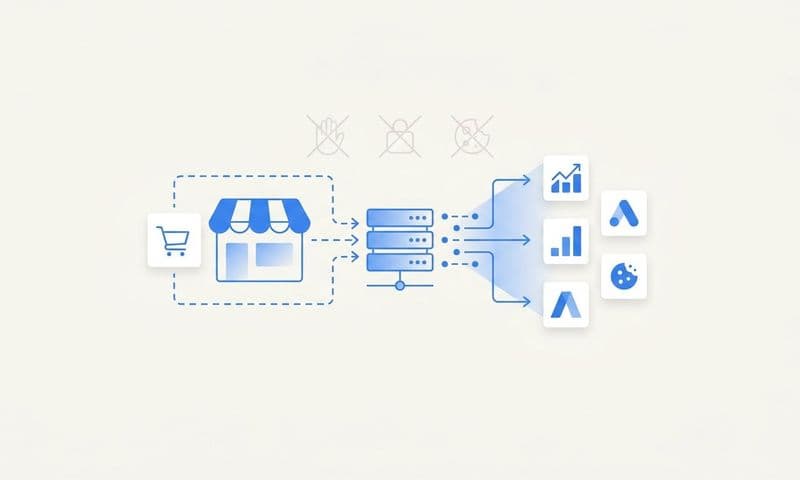
Server-side tracking moves data collection from browsers to your own servers. Instead of relying on client-side JavaScript that users can block, your server captures events directly and sends them to analytics platforms and ad networks.
This approach bypasses browser restrictions entirely. Ad blockers can't touch server-side requests. ITP can't delete cookies that never existed. Your tracking infrastructure becomes independent of browser policies.
The key difference: you control the entire data flow. Events fire on your server, not in the user's browser, giving you complete visibility into every interaction regardless of tracking prevention technologies.
Implementation Steps
1. Set up a server-side tracking container using Google Tag Manager Server-Side or a custom tracking server that processes events before sending them to platforms.
2. Configure your website to send events to your server first, then have your server relay those events to analytics platforms, ad networks, and attribution tools with enriched data.
3. Implement proper consent management that respects user preferences while maintaining data flow, ensuring you're collecting data only from users who've opted in.
4. Test thoroughly by comparing server-side data against client-side tracking to identify gaps, then gradually shift more event tracking to the server as you validate accuracy.
Pro Tips
Start with conversion events before expanding to all pageviews. This lets you validate the setup on your most critical data points first. Use your server to enrich events with additional context like customer lifetime value or CRM data before sending to platforms.
Server-side tracking isn't a workaround to privacy laws. You still need proper consent. The advantage is reliability, not circumvention.
2. First-Party Data Infrastructure
The Challenge It Solves
Third-party data sources are disappearing. Cross-site tracking is dead. Cookie pools are shrinking. The data you don't own is data you can't rely on.
Most marketing teams built their attribution on borrowed infrastructure. When that infrastructure collapses, they're left with blind spots across the entire customer journey.
The Strategy Explained
First-party data infrastructure means building owned data assets through direct customer relationships. You create unified customer identifiers that connect touchpoints across your website, email, CRM, and product without depending on third-party cookies or tracking networks.
This approach treats data collection as a core business asset, not an afterthought. You maintain a customer data platform or data warehouse that becomes your single source of truth for attribution.
The advantage is durability. First-party data doesn't disappear when browsers change policies or regulations tighten. It's your data, collected with explicit consent, stored in systems you control.
Implementation Steps
1. Implement a customer data platform or data warehouse that unifies user identities across all touchpoints, creating persistent identifiers tied to email addresses or customer IDs.
2. Connect every data source into your unified system including website analytics, ad platform data, CRM records, email engagement, and product usage to build complete customer profiles.
3. Create identity resolution logic that matches anonymous sessions to known users when they log in or provide information, retroactively attributing earlier touchpoints to the complete journey.
4. Build data governance processes that ensure compliance with privacy regulations while maximizing data utility, including clear consent workflows and data retention policies.
Pro Tips
Focus on progressive profiling. Don't ask for everything upfront. Gather data gradually as users engage more deeply with your brand. Each interaction should add detail to the customer profile.
Use hashed email addresses as your primary identifier. They're privacy-safe, work across platforms, and can be matched to ad network audiences without exposing personal information.
3. Conversion APIs
The Challenge It Solves
Browser pixels miss conversions constantly. Users block scripts. Sessions expire. Attribution windows close. By the time a conversion happens, the connection to the original ad click is often lost.
Ad platforms need conversion data to optimize campaigns. When that data is incomplete or delayed, their algorithms make decisions based on partial information, leading to wasted spend and poor targeting.
The Strategy Explained
Conversion APIs enable direct server-to-server communication with ad platforms. Instead of relying on browser pixels to report conversions, your server sends conversion events directly to Meta, Google, TikTok, LinkedIn, and other platforms through their APIs.
This method is cookie-independent and immune to browser restrictions. When a conversion happens in your CRM or backend system, you immediately notify the ad platforms regardless of whether the user's browser can fire a tracking pixel.
The result is more complete conversion data, faster optimization, and better match rates because you're sending verified, first-party information rather than hoping a browser pixel fires correctly.
Implementation Steps
1. Set up Meta Conversions API, Google Enhanced Conversions, and similar APIs for every ad platform you use, configuring them to receive events from your server.
2. Implement event deduplication by sending both browser pixel data and server-side API data with matching event IDs, allowing platforms to deduplicate while maximizing coverage.
3. Enrich conversion events with additional parameters like customer lifetime value, order details, and user attributes that help ad platforms optimize more effectively.
4. Monitor match rates and data quality in each platform's Events Manager to ensure your server-side events are being properly attributed to ad interactions.
Pro Tips
Send conversion events as quickly as possible. The faster platforms receive conversion data, the better they can optimize in real time. Delayed events reduce optimization effectiveness.
Include user information parameters like hashed email, phone, and IP address to improve match rates. More matching parameters means more conversions get attributed correctly to the originating ad.
4. Privacy-Safe Attribution Modeling
The Challenge It Solves
Traditional attribution relied on tracking individual users across every touchpoint. That's no longer possible at scale. Privacy restrictions create gaps in the customer journey that make individual-level tracking incomplete.
Without complete tracking, attribution becomes guesswork. You can't optimize campaigns if you don't know which touchpoints actually contribute to conversions.
The Strategy Explained
Privacy-safe attribution uses aggregated and modeled data to understand customer journeys without tracking individuals across sites. This approach combines first-party data from your owned properties with statistical modeling to fill gaps created by privacy restrictions.
Multi-touch attribution in this context means analyzing patterns across your customer base rather than tracking every individual. You identify which combinations of touchpoints correlate with conversions, then use that insight to optimize channel mix.
The methodology respects privacy by working with anonymized, aggregated data while still providing actionable insights about campaign performance and customer journey patterns.
Implementation Steps
1. Implement a multi-touch attribution platform that connects data from all marketing channels and assigns credit based on actual contribution to conversions rather than last-click assumptions.
2. Compare multiple attribution models including first-touch, last-touch, linear, time-decay, and data-driven models to understand how different perspectives reveal channel performance.
3. Use cohort analysis to track how groups of users acquired through different channels behave over time, revealing long-term value without individual-level tracking.
4. Integrate offline conversions and CRM data into your attribution model so you're measuring the complete customer journey from first ad interaction to closed deal or purchase.
Pro Tips
Don't obsess over perfect attribution. Privacy restrictions mean you'll never have complete data. Focus on directional accuracy and consistent measurement over time rather than chasing precise attribution percentages.
Test attribution models against incrementality studies. Run occasional holdout tests to validate that your attribution model reflects actual causal impact, not just correlation.
5. Contextual and Cohort-Based Targeting
The Challenge It Solves
Behavioral tracking across sites is dying. Third-party cookies enabled following users everywhere they browsed. That's over. Marketers who built strategies entirely on cross-site tracking face an existential challenge.
Without behavioral targeting, many teams assume they'll lose the ability to reach relevant audiences. The reality is different: contextual and cohort approaches often perform better because they're based on intent signals rather than stale browsing history.
The Strategy Explained
Contextual targeting places ads based on the content users are currently viewing rather than their past behavior. If someone is reading an article about marketing analytics, they're showing intent right now, which is more valuable than knowing they visited a marketing site three weeks ago.
Cohort-based targeting groups users into privacy-preserving segments based on shared interests without tracking individuals. Google's Privacy Sandbox uses this approach, creating interest groups that ad platforms can target without knowing individual identities.
Both methods respect privacy by eliminating individual tracking while maintaining relevance. You're reaching people based on what they're interested in right now or broad preference groups, not a detailed profile of their browsing history.
Implementation Steps
1. Shift ad spend toward contextual targeting options in Google Ads, programmatic platforms, and social networks that place ads based on content context rather than user profiles.
2. Experiment with Google's Topics API and other cohort-based targeting mechanisms that group users into interest categories without individual tracking.
3. Refine your content targeting by analyzing which contexts drive the best conversion rates, then focus budget on the most relevant content environments for your audience.
4. Combine contextual targeting with first-party audiences by using your owned customer data to inform which contexts are most likely to reach similar high-value users.
Pro Tips
Contextual targeting works best when you understand your customer's mindset at different journey stages. Map content contexts to funnel stages, then target accordingly rather than treating all contexts equally.
Test contextual against behavioral remnants. Many marketers assume contextual underperforms, but recent data suggests it often converts better because it captures current intent rather than historical interest.
6. Zero-Party Data Collection
The Challenge It Solves
Inferred data is unreliable. You guess what users want based on their behavior, but those guesses are often wrong. Privacy restrictions make behavioral inference even harder, leaving you with incomplete pictures of customer preferences.
The gap between what you think customers want and what they actually want creates wasted ad spend, poor personalization, and missed opportunities.
The Strategy Explained
Zero-party data is information customers intentionally and proactively share with you. Unlike first-party data that you observe, zero-party data comes directly from the customer telling you their preferences, interests, and intentions.
This approach flips the tracking model. Instead of trying to figure out what someone wants by watching their behavior, you create interactive experiences where they tell you directly. Quizzes, preference centers, surveys, and progressive profiling all collect zero-party data.
The advantage is accuracy and consent. When someone tells you they're interested in a specific product category or planning a purchase in the next month, that signal is far more valuable than inferring intent from pageviews.
Implementation Steps
1. Create interactive experiences like product recommendation quizzes, preference centers, or onboarding flows that gather explicit customer preferences in exchange for personalized value.
2. Build progressive profiling into your customer journey where each interaction gathers additional preference data without overwhelming users with long forms upfront.
3. Use zero-party data to create highly targeted segments for email campaigns and ad audiences, knowing you're reaching people based on their stated interests rather than behavioral guesses.
4. Store zero-party data in your CRM or customer data platform alongside behavioral data to create rich customer profiles that combine stated preferences with observed actions.
Pro Tips
Offer clear value exchange. Users will share preferences if they understand how it benefits them through better recommendations, relevant content, or exclusive offers. Make the benefit explicit.
Update preferences regularly. Interests change. Build mechanisms for customers to update their preferences over time rather than assuming initial preferences remain static forever.
7. Unified Measurement Platforms
The Challenge It Solves
Most marketing teams operate in data silos. Google Analytics tracks website behavior. Ad platforms report their own metrics. CRM systems track sales. Email platforms measure engagement. Nothing connects.
When data lives in separate systems, attribution becomes impossible. You can't optimize the customer journey if you can't see the complete journey from first touch to revenue.
The Strategy Explained
Unified measurement platforms consolidate tracking across all channels into a single privacy-compliant system. These platforms connect every touchpoint to revenue by integrating data from ad platforms, analytics tools, CRM systems, and conversion points.
The key is creating a single source of truth for attribution. Instead of reconciling conflicting reports from different tools, you have one platform that tracks the complete customer journey and attributes revenue accurately across all channels.
This approach solves the fragmentation problem while maintaining privacy compliance. The platform handles consent management, data governance, and regulatory requirements while giving you complete visibility into campaign performance.
Implementation Steps
1. Implement a marketing attribution platform that integrates with all your data sources including ad platforms, analytics tools, CRM systems, and conversion tracking to create unified customer journey views.
2. Connect server-side tracking and conversion APIs through your attribution platform so all data flows through a single system that maintains consistency across sources.
3. Configure multi-touch attribution models within the platform to understand how different channels work together throughout the customer journey from awareness to conversion.
4. Use the unified data to identify optimization opportunities across channels, reallocating budget toward the combinations of touchpoints that drive the highest-quality conversions.
Pro Tips
Look for platforms that offer AI-powered insights. The best unified measurement tools don't just collect data—they analyze patterns and surface recommendations for budget allocation and campaign optimization.
Cometly captures every touchpoint from ad clicks to CRM events, providing AI with a complete view of every customer journey. The platform connects every interaction to revenue while feeding enriched conversion data back to ad platforms, improving targeting and optimization. When you know what's really driving results, you can scale with confidence.
Building Your Privacy-First Tracking Foundation
Implementing privacy-compliant tracking isn't a one-time project. It's an ongoing commitment to respecting user data while maintaining the visibility you need to optimize campaigns.
Start with server-side tracking and conversion APIs as your foundation. These two strategies solve the most immediate problems: browser restrictions and incomplete conversion data. Once those are in place, layer in first-party data infrastructure and attribution modeling.
The marketers who thrive in this environment won't be those who find workarounds to privacy rules. They'll be those who build tracking systems that earn user trust and deliver more accurate data as a result.
Think about it this way: privacy-first tracking forces you to focus on quality over quantity. You're measuring real, consented interactions rather than tracking every anonymous pageview. That shift actually improves decision-making because you're working with reliable signals.
The path forward is clear. Own your data. Respect consent. Connect every touchpoint to revenue with tools designed for this new reality.
Ready to elevate your marketing game with precision and confidence? Discover how Cometly's AI-driven recommendations can transform your ad strategy—Get your free demo today and start capturing every touchpoint to maximize your conversions.