You're staring at your campaign dashboard on a Tuesday morning, reviewing Monday's performance. The numbers look fine. You approve the day's budget, confident in your strategy. By Wednesday afternoon, you discover that a key campaign has been bleeding money since Monday evening—a targeting issue, a broken landing page, or an audience that suddenly stopped converting. Twenty-four hours of wasted spend, gone before you even knew there was a problem.
This is the hidden cost of delayed data. While you're making decisions based on yesterday's numbers, your competitors are adjusting in real time, catching problems within minutes and capitalizing on opportunities the moment they emerge.
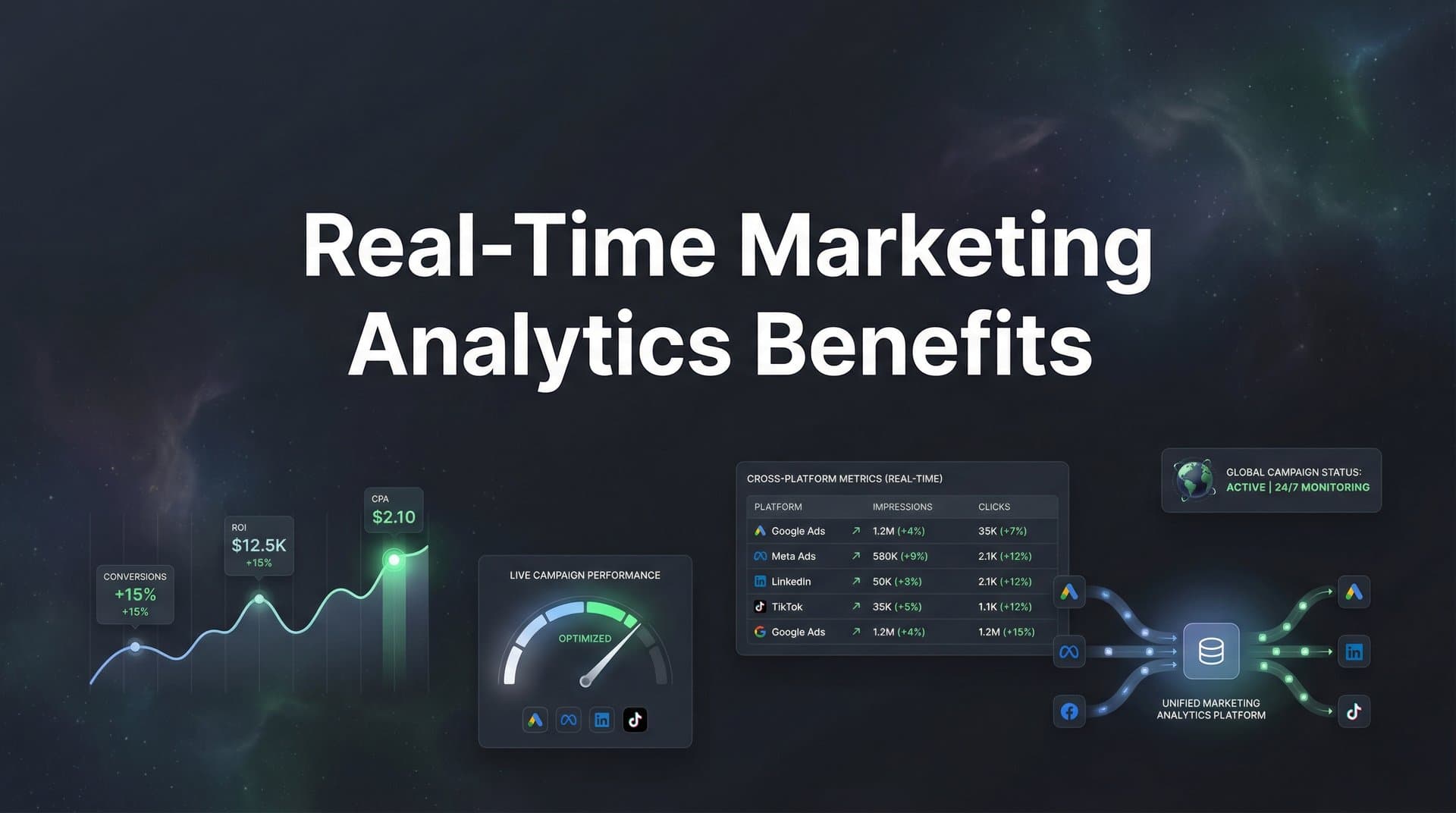
Real-time marketing analytics represents a fundamental shift from reactive to proactive campaign management. Instead of discovering what happened yesterday, you see what's happening right now—and you can act on it immediately. This article explores the concrete benefits that instant data visibility delivers for paid advertising campaigns, from smarter budget allocation to better algorithm performance across every platform you run.
The Hidden Cost of Working with Yesterday's Data
Traditional marketing reporting operates on a delay. You run campaigns all day, data gets processed overnight, and you review performance the next morning. This cycle feels normal because it's how most teams have always worked. But in today's fast-moving advertising landscape, this delay creates expensive blind spots.
Consider what happens during those lag hours. A campaign that performed well yesterday morning might have shifted dramatically by afternoon. An audience segment that was converting beautifully could have exhausted its best prospects. A competitor might have launched an aggressive campaign that's driving up your CPCs. Technical issues—a slow landing page, a broken form, a tracking pixel that stopped firing—can burn through hundreds or thousands of dollars before you catch them.
The compounding effect is what really hurts. It's not just one hour of poor performance. It's that hour, plus the time it takes to notice the problem, plus the time to investigate, plus the time to implement a fix. By the time you've corrected course, you might have lost an entire day of budget to an issue that could have been resolved in minutes with real-time visibility.
The modern advertising landscape makes this problem worse. You're not managing one campaign on one platform anymore. You're running simultaneous campaigns across Meta, Google, LinkedIn, TikTok, and more. Each platform has its own dashboard, its own reporting delay, its own metrics. Piecing together a unified view of performance means jumping between multiple tools, each showing you slightly different data from slightly different time periods.
When you're making budget decisions based on fragmented, delayed data, you're essentially flying blind. You might be doubling down on a channel that's already declining. You might be pausing a campaign that's about to hit its stride. You're always one step behind what's actually happening in your campaigns.
Smarter Budget Allocation Through Live Performance Insights
Real-time analytics transforms budget management from a daily planning exercise into a dynamic optimization process. When you can see performance as it unfolds, you can shift resources toward what's working and away from what's not—while opportunities are still fresh.
Picture this scenario: It's 11 AM, and your real-time dashboard shows that your Google Search campaign is converting at twice its normal rate. Your Meta campaign, usually a strong performer, is underdelivering today. With live data, you can increase your Google budget immediately to capitalize on whatever's driving that surge—maybe a competitor paused their campaigns, maybe there's a trending topic boosting search volume, maybe your new ad copy is resonating better than expected.
Without real-time visibility, you'd discover this opportunity tomorrow morning, after the surge has already passed. The budget you could have profitably deployed sat idle, and the extra conversions you could have captured went to competitors who were watching their data more closely.
The inverse matters just as much. Real-time analytics helps you identify wasteful spend before it drains your budget. When a campaign suddenly stops converting, you see it within minutes, not hours or days. Maybe your audience has reached saturation. Maybe ad fatigue has set in. Maybe there's a technical issue affecting your landing page. Whatever the cause, you can pause spending immediately and investigate, rather than letting the problem compound.
Cross-platform budget optimization becomes genuinely possible when you have real-time visibility across all channels simultaneously. Most marketers know conceptually that they should shift budget toward their best-performing channels, but executing that strategy requires actually knowing which channels are performing best right now. When your Meta data is from this morning, your Google data is from last night, and your LinkedIn data is from yesterday afternoon, you're not really comparing apples to apples.
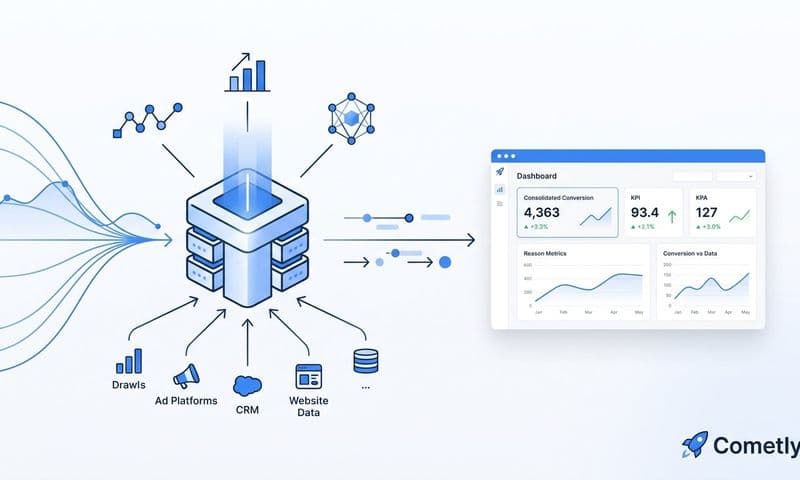
Real-time analytics gives you a unified view of performance across every platform, updated continuously throughout the day. You can see which channels are delivering the best cost per acquisition, which audiences are most engaged, which creative approaches are driving results. A multi-channel marketing analytics dashboard enables confident budget decisions based on current performance, not yesterday's patterns.
The compounding effect of these optimizations adds up quickly. Making the right budget adjustment an hour earlier, catching a problem ten hours sooner, capitalizing on an opportunity while it's still hot—these improvements might seem small in isolation, but they compound throughout the day, throughout the week, throughout the quarter. The cumulative impact on campaign efficiency can be substantial.
Connecting the Full Customer Journey in Real Time
Understanding which marketing touchpoints actually drive conversions requires tracking the entire customer journey from first click to final purchase. Real-time analytics makes this comprehensive view not just possible, but immediately actionable.
Traditional analytics often focuses on last-click attribution—giving all the credit to whatever the customer clicked right before converting. But customer journeys are rarely that simple. Someone might discover your brand through a Facebook ad, research on Google, revisit through a retargeting campaign, and finally convert after receiving an email. If you only look at last-click data, you'd credit that email and miss the crucial role that Facebook and Google played in the journey.
Real-time multi-touch attribution tracks every interaction as it happens. When someone clicks your ad, that event is recorded immediately. When they visit your pricing page, browse your blog, or download a resource, each touchpoint is captured and connected to their journey. When they finally convert, you can see the complete path they took—not tomorrow, not next week, but right now. Understanding these attribution challenges in marketing analytics is essential for accurate performance measurement.
This immediate visibility into customer journeys reveals patterns that delayed data obscures. You might discover that conversions from a particular campaign consistently involve three or four touchpoints over several days. Armed with this insight, you can adjust your expectations and budget allocation for that campaign, recognizing that its value extends beyond immediate conversions to its role in longer customer journeys.
Connecting ad clicks to CRM events in real time creates even deeper insight. When someone fills out a form, becomes a qualified lead, schedules a demo, or closes as a customer, those events flow into your analytics immediately. You can see not just which campaigns drive form fills, but which campaigns drive qualified leads and actual revenue. This distinction matters enormously for budget decisions and campaign optimization.
Real-time journey tracking also helps you identify friction points as they emerge. If you notice that traffic from a particular source consistently drops off at a specific stage in your funnel, you can investigate immediately. Maybe that audience needs different messaging. Maybe your landing page isn't aligned with the ad creative. Maybe there's a technical issue affecting that traffic source. With real-time data, you catch these problems while they're fresh and fixable.
Feeding Ad Platform Algorithms Better Data, Faster
Modern advertising platforms rely heavily on machine learning to optimize campaign performance. Meta's Advantage+ campaigns, Google's Smart Bidding, LinkedIn's automated targeting—these systems all learn from conversion data to improve targeting and bidding decisions. The quality and timeliness of the data you feed these algorithms directly impacts how well they perform.
When you're using standard pixel-based tracking, conversion data often reaches ad platforms with significant delays, and iOS privacy restrictions mean much of that data is incomplete or missing entirely. This creates a problem: the algorithms are making optimization decisions based on incomplete, delayed information about what's actually driving conversions.
Real-time server-side tracking solves both problems. By capturing conversion events on your server and sending them directly to ad platforms, you bypass browser-based tracking limitations. The data is more accurate, more complete, and arrives faster. This gives ad platform algorithms a clearer picture of which audiences, placements, and creative approaches are actually driving results.
The impact on campaign performance can be significant. When Meta's algorithm knows with confidence which users are converting, it can find more people like them. When Google's Smart Bidding has accurate conversion data, it can optimize bids more effectively. When LinkedIn's targeting system understands which job titles and industries are most valuable, it can prioritize those audiences.
Enriched conversion data makes this even more powerful. Instead of just telling Meta that someone converted, you can send additional context: the conversion value, the product purchased, the lead quality score from your CRM. This enriched data helps algorithms optimize not just for conversions, but for valuable conversions. The system learns to prioritize users who are more likely to become high-value customers, not just any customers.
Real-time event syncing means these optimization improvements happen continuously throughout your campaign. As your ad platform's algorithm learns and adjusts, it's working with current data about what's driving results today, not delayed data about what worked yesterday. This creates a faster feedback loop between performance and optimization, allowing campaigns to improve more quickly.
The combination of accurate data, enriched events, and real-time delivery gives ad platform algorithms everything they need to perform at their best. You're not fighting against tracking limitations or working around data delays. You're providing clean, complete, timely information that enables sophisticated optimization across every campaign you run.
From Dashboards to Decisions: Acting on Real-Time Insights
Having real-time data is valuable, but only if you can act on it. The true benefit of instant visibility comes from building workflows and processes that turn insights into immediate action.
Start by identifying which metrics matter most for your campaigns and deserve real-time monitoring. For most paid advertising efforts, this includes cost per acquisition, conversion rate by channel, and total spend versus budget. Understanding the right marketing analytics metrics tells you whether campaigns are performing as expected and whether you're on track with your budget. When these numbers move outside expected ranges, you need to know immediately.
Set up alerts that notify you when important thresholds are crossed. If your cost per acquisition suddenly spikes 30% above normal, you want to know right away. If a campaign burns through 50% of its daily budget in the first two hours, that's worth investigating. If conversions from a particular source drop to zero, something might be broken. Automated alerts ensure you catch these situations quickly, even when you're not actively watching your dashboard.
Create clear response protocols for common scenarios. What do you do when a campaign's performance suddenly improves? When should you increase budget versus just letting it run? What's your process for investigating performance drops? Having predetermined workflows means you can respond quickly and consistently, rather than having to figure out the right action each time something changes.
AI-powered recommendations can accelerate this process significantly. Instead of manually analyzing data to identify opportunities, an AI system can continuously monitor performance across all campaigns and surface specific, actionable recommendations. It might identify that Campaign A is converting at half the cost of Campaign B and suggest reallocating budget. It might notice that a particular audience segment is outperforming and recommend expanding reach. It might detect that creative fatigue is setting in and suggest refreshing ad content. Discover more about AI marketing analytics and how it drives results.
These AI recommendations work best when they're based on real-time data. The system can spot emerging patterns and opportunities while they're still actionable, rather than identifying trends that have already passed. This creates a continuous optimization cycle: the AI monitors performance in real time, surfaces opportunities as they emerge, you take action, and the impact of that action is immediately visible in your real-time dashboard.
Building a data-driven culture within your marketing team becomes easier with real-time analytics. When everyone can see current performance at any time, data becomes central to daily conversations and decisions. Team members develop intuition about what good performance looks like and what signals suggest problems. This shared visibility creates alignment and enables faster decision-making across the team.
Implementing Real-Time Analytics: Where to Start
Transitioning to real-time marketing analytics doesn't require rebuilding your entire tech stack overnight. Start by evaluating your current setup and identifying the biggest gaps between what you have and what you need.
Look for an analytics solution that offers genuine real-time data processing, not just frequently updated dashboards. Real-time means events are captured, processed, and displayed within seconds or minutes, not hours. The platform should handle data from all your advertising channels, your website, and your CRM, connecting these sources to provide a unified view of customer journeys. When choosing a marketing analytics platform, prioritize solutions that deliver true real-time capabilities.
Server-side tracking capability is essential for accurate data in today's privacy-conscious environment. The platform should be able to capture conversion events on your server and sync them to ad platforms like Meta and Google, bypassing browser-based tracking limitations. This ensures your data is complete and your ad algorithms have the information they need to optimize effectively.
Multi-touch attribution is crucial for understanding the full customer journey. The system should track every touchpoint and provide flexible attribution models so you can analyze performance from different perspectives. Explore marketing attribution analytics to understand not just which campaigns drive final conversions, but which campaigns play important roles earlier in the customer journey.
AI-powered insights and recommendations add significant value by helping you identify opportunities and issues faster than manual analysis. Look for systems that can analyze patterns across your campaigns and surface specific, actionable suggestions based on real-time performance data.
Start your real-time analytics implementation by focusing on your most important campaigns and metrics. You don't need to monitor everything in real time immediately. Begin with your highest-spend campaigns or your most critical conversion goals. Get comfortable with real-time visibility for these priority areas before expanding to additional campaigns and metrics.
Establish baseline performance expectations so you can recognize when something changes. What's your normal cost per acquisition for each channel? What conversion rate do you typically see? What time of day usually performs best? Understanding these patterns helps you distinguish between normal variation and genuine issues that require action.
Measure the impact of your shift to real-time decision-making by tracking how quickly you catch and resolve problems. How long does it take to identify a performance issue now versus before? How much budget do you save by pausing underperforming campaigns sooner? How much additional revenue do you capture by scaling successful campaigns faster? These metrics demonstrate the tangible value of real-time visibility.
The Competitive Advantage of Real-Time Decision Making
Real-time marketing analytics isn't just about having faster data—it's about making faster, smarter decisions that compound into significant competitive advantage. Every hour you catch a problem sooner, every opportunity you capitalize on while it's fresh, every budget optimization you make based on current performance rather than yesterday's patterns—these improvements add up.
The marketing teams that win in today's landscape are the ones that can move fastest with confidence. They're not guessing about what's working or making decisions based on stale data. They're seeing performance as it unfolds, understanding the full customer journey in real time, and taking immediate action when opportunities or issues emerge. Learning how to leverage analytics for marketing strategy separates high-performing teams from the rest.
This agility becomes even more valuable as advertising platforms become more sophisticated and customer journeys become more complex. The ability to track every touchpoint, feed accurate data to ad algorithms, and optimize across multiple channels simultaneously creates a compounding advantage that grows stronger over time.
Consider where your current analytics setup falls on this spectrum. Are you making decisions based on yesterday's data, or do you have real-time visibility into what's happening right now? Can you see the full customer journey across all touchpoints, or are you limited to last-click attribution? Are your ad platform algorithms getting the accurate, timely data they need to optimize effectively?
The gap between delayed analytics and real-time visibility represents real money—wasted on underperforming campaigns that run too long, missed in opportunities that pass before you can act, lost to competitors who are simply moving faster. Closing that gap transforms how your marketing team operates and what results you can achieve.
Ready to elevate your marketing game with precision and confidence? Discover how Cometly's AI-driven recommendations can transform your ad strategy—Get your free demo today and start capturing every touchpoint to maximize your conversions.