Managing paid advertising across Meta, Google, TikTok, and LinkedIn simultaneously creates a data nightmare for most marketing teams. Each platform reports conversions differently, attribution windows vary, and when a customer touches multiple channels before converting, figuring out what actually drove the sale becomes nearly impossible.
The result? Wasted ad spend on underperforming campaigns and missed opportunities to scale what's actually working.
This guide breaks down seven battle-tested strategies that marketers use to track multiple ad campaigns with precision—giving you the clarity needed to make confident budget decisions and prove real ROI. Whether you're running campaigns for an ecommerce brand or a B2B SaaS company, these approaches will help you move from guessing to knowing.
1. Establish a Unified Tracking Foundation with UTM Parameters
The Challenge It Solves
When you're running campaigns across multiple platforms without standardized tracking, your analytics data becomes a fragmented mess. One team member tags Facebook ads as "fb," another uses "facebook," and someone else writes "meta"—suddenly your reporting can't aggregate performance accurately. This inconsistency makes it impossible to compare channel effectiveness or understand which campaigns truly drive results.
The Strategy Explained
Creating a standardized UTM parameter structure gives every campaign a consistent tracking DNA that follows users from ad click to conversion. Think of UTM parameters as the labels you attach to every campaign link—they tell your analytics platform exactly where traffic originated, which campaign it came from, and what specific ad or creative drove the click.
The key is establishing naming conventions that your entire team follows religiously. This means documenting exactly how you'll format platform names, campaign identifiers, ad set references, and creative variations. When everyone uses the same structure, your analytics can accurately aggregate performance across thousands of ads.
Implementation Steps
1. Document your UTM naming convention in a shared guide that specifies exact formatting for utm_source (platform), utm_medium (channel type), utm_campaign (campaign name), utm_content (ad variation), and utm_term (targeting details).
2. Create a UTM builder spreadsheet or tool that auto-generates properly formatted parameters based on dropdown selections—this removes human error from the equation.
3. Apply your standardized UTMs to every campaign link across all platforms, and store the complete list in a central tracking document that serves as your campaign reference library.
Pro Tips
Use lowercase consistently to avoid case-sensitivity issues in reporting. Include date stamps in campaign names to make historical analysis easier. Build your naming convention with future scale in mind—what works for ten campaigns should still work for a thousand.
2. Implement Server-Side Tracking to Capture Lost Conversions
The Challenge It Solves
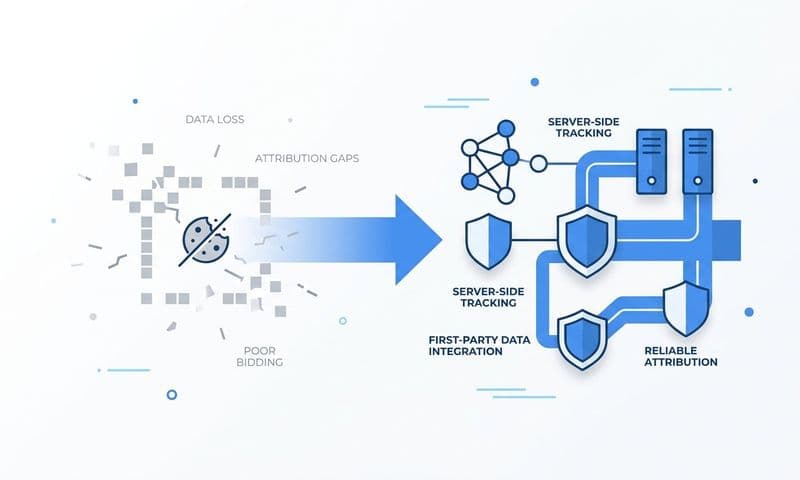
Browser-based tracking pixels miss a significant portion of conversion data due to ad blockers, browser privacy settings, and iOS tracking restrictions. When your Facebook pixel or Google tag fires only in the browser, you're likely capturing only 60-80% of actual conversions. This incomplete data leads to underreporting campaign performance and makes optimization decisions based on partial information.
The Strategy Explained
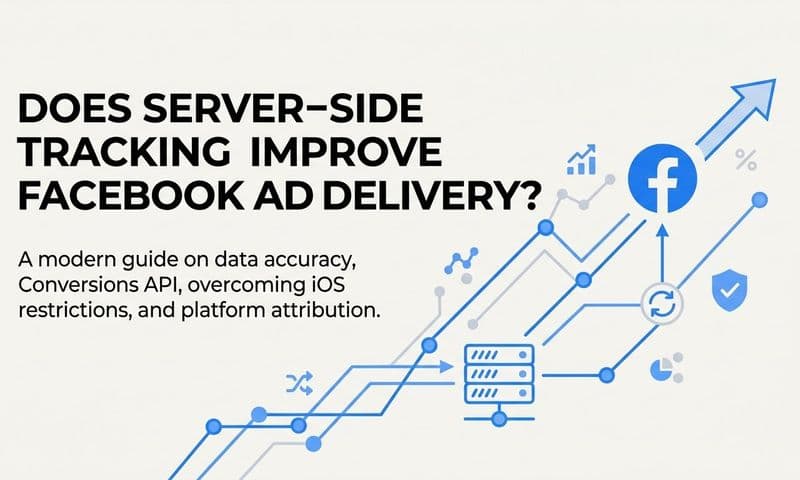
Server-side tracking moves conversion data collection from the user's browser to your server, where it can't be blocked by privacy tools or browser restrictions. When a conversion happens, your server sends the event directly to ad platforms through their APIs—bypassing all the limitations that plague client-side tracking.
This approach captures conversions that traditional pixels miss, giving you a more complete picture of campaign performance. For platforms like Meta and Google, server-side tracking has become essential for maintaining accurate conversion data in the post-iOS 14 advertising landscape.
Implementation Steps
1. Set up a server-side tracking solution that can receive conversion events from your website or application and route them to ad platform APIs—this typically involves configuring a server container or using a specialized attribution platform.
2. Implement event forwarding that sends conversion data from your server to Meta Conversions API, Google Ads API, and other platform endpoints with proper event matching parameters.
3. Run dual tracking (client-side and server-side) initially to validate data accuracy, then gradually shift to prioritizing server-side events as your primary conversion source.
Pro Tips
Include as many customer matching parameters as possible (email, phone, address) to improve event match quality and attribution accuracy. Monitor your event match quality scores in each platform's interface to identify and fix matching issues. Server-side tracking works best when combined with proper event deduplication to avoid counting the same conversion twice.
3. Connect Your CRM to Close the Revenue Attribution Loop
The Challenge It Solves
Ad platforms can track clicks and on-site conversions, but they can't see what happens after a lead enters your sales pipeline. For B2B companies or businesses with complex sales cycles, the real value isn't the form submission—it's the closed deal three months later. Without connecting marketing touchpoints to actual revenue outcomes, you're optimizing for lead volume instead of revenue quality.
The Strategy Explained
CRM integration creates a closed loop between your marketing campaigns and revenue results by connecting every lead back to their original touchpoints. When a deal closes, you can trace it back through your CRM to see which ads, campaigns, and channels influenced that customer's journey. This transforms your attribution from measuring form fills to measuring actual business impact.
The integration works by passing campaign tracking data (like UTM parameters) into your CRM when leads are created, then enriching that data with deal outcomes, revenue amounts, and customer lifetime value. This gives you the power to calculate true ROI for every campaign and optimize toward revenue, not just conversions.
Implementation Steps
1. Configure your lead capture forms to pass UTM parameters and other tracking data into hidden fields that sync directly to your CRM as custom properties on contact and deal records.
2. Set up automated workflows that track deal progression and revenue outcomes, ensuring that closed-won deals retain the original source attribution data throughout the sales cycle.
3. Create revenue attribution reports that connect closed revenue back to original campaigns, allowing you to calculate customer acquisition cost and ROI at the campaign level.
Pro Tips
Track both first-touch and last-touch campaign data in your CRM to understand which campaigns start relationships versus which ones close them. Use CRM automation to flag high-value leads based on source attribution, allowing sales teams to prioritize follow-up. For long sales cycles, implement opportunity-stage tracking to measure campaign influence at each pipeline stage, not just closed deals.
4. Deploy Multi-Touch Attribution to Credit the Right Campaigns
The Challenge It Solves
Last-click attribution gives 100% credit to the final touchpoint before conversion, completely ignoring the awareness campaigns, retargeting ads, and email touchpoints that nurtured the customer along their journey. This creates a distorted view where bottom-funnel campaigns look like heroes while top-funnel campaigns appear ineffective—leading to budget decisions that starve the campaigns actually building your pipeline.
The Strategy Explained
Multi-touch attribution distributes conversion credit across all the touchpoints that influenced a customer's journey, giving you a realistic picture of how your campaigns work together. Instead of declaring one campaign the winner, you understand which campaigns excel at awareness, which ones drive consideration, and which ones close the deal.
Different attribution models weight touchpoints differently: linear gives equal credit to all touches, time-decay gives more credit to recent interactions, and position-based emphasizes first and last touches. The key is choosing a model that reflects your actual customer journey and using it consistently to compare campaign performance.
Implementation Steps
1. Map your typical customer journey to identify how many touchpoints prospects encounter before converting—this helps you choose an attribution model that matches your reality.
2. Implement a tracking system that captures and stores all touchpoints for each user, creating a complete journey history that can be analyzed with different attribution models.
3. Run comparative reports using multiple attribution models (last-click, first-click, linear, time-decay) to understand how different perspectives change your campaign performance rankings.
Pro Tips
Start by comparing last-click and first-click attribution to identify the biggest discrepancies—campaigns that perform well in first-click but poorly in last-click are your awareness drivers. Use position-based attribution for businesses where both initial discovery and final conversion matter significantly. Don't switch attribution models frequently; consistency over time reveals more valuable insights than constantly changing your measurement approach.
5. Create a Centralized Dashboard for Cross-Platform Visibility
The Challenge It Solves
Logging into five different ad platforms to pull performance data wastes hours every week and makes it nearly impossible to spot cross-channel trends or compare performance accurately. Each platform uses different metrics, reporting interfaces, and attribution windows—turning simple questions like "which channel has the lowest cost per acquisition?" into multi-hour research projects.
The Strategy Explained
A centralized dashboard pulls data from all your ad platforms, CRM, and analytics tools into a single view where you can analyze performance without platform-hopping. This unified reporting layer normalizes metrics across platforms, applies consistent attribution rules, and presents everything in a format designed for decision-making rather than data collection.
The real power comes from being able to answer questions instantly: Which platform drives the highest-quality leads? How do campaigns perform when you compare true cost per closed deal instead of cost per click? Where should you shift budget this week? With centralized reporting, these answers are seconds away instead of hours.
Implementation Steps
1. Connect all your advertising platforms, analytics tools, and CRM to a centralized reporting solution using API integrations that automatically sync performance data on a regular schedule.
2. Build custom dashboards that answer your most frequent questions—overall channel performance, campaign-level ROI, creative performance comparisons, and budget efficiency metrics.
3. Set up automated reporting that delivers key metrics to stakeholders on a scheduled cadence, reducing ad-hoc reporting requests and keeping everyone aligned on performance.
Pro Tips
Design dashboards for your specific decision-making workflow—daily optimization views need different metrics than monthly strategy reviews. Include year-over-year and period-over-period comparisons to add context to current performance. Use consistent date ranges across all platforms to ensure accurate cross-channel comparisons, and document any platform-specific quirks that affect how metrics are calculated.
6. Feed Enriched Conversion Data Back to Ad Platforms
The Challenge It Solves
Ad platform algorithms optimize toward the conversion events you send them—but if you're only sending basic "purchase" events without revenue values or quality signals, the AI can't distinguish between a $50 customer and a $5,000 customer. This leads to optimization that maximizes conversion volume instead of conversion value, often driving lower-quality traffic that converts but doesn't generate meaningful revenue.
The Strategy Explained
Conversion sync sends enriched event data back to ad platforms with additional context that helps their algorithms optimize more intelligently. Instead of just telling Meta "a purchase happened," you send "a $2,500 purchase happened from a repeat customer with high lifetime value potential." This enhanced data helps platform AI identify patterns in high-value conversions and find more users who match those patterns.
The strategy is particularly powerful when you sync CRM outcomes back to ad platforms weeks or months after the initial conversion. When a lead closes as a high-value customer, sending that signal back to the platform helps it understand which ad interactions led to quality outcomes—improving targeting for future campaigns.
Implementation Steps
1. Configure your conversion tracking to pass revenue values, product categories, and customer quality signals with every conversion event sent to ad platforms.
2. Set up delayed conversion sync that sends CRM outcomes (closed deals, revenue amounts, customer lifetime value) back to ad platforms after they occur, enriching the platform's understanding of which campaigns drive valuable customers.
3. Use value-based optimization in your campaign settings to explicitly tell platforms to prioritize high-value conversions over simply maximizing conversion volume.
Pro Tips
Include customer match parameters (email, phone) with your conversion events to improve the platform's ability to attribute the conversion and use it for optimization. For B2B campaigns, consider sending multiple conversion events that represent pipeline stages—not just the initial lead, but also SQL qualification and closed-won outcomes. Monitor your event match quality scores regularly, as poor matching reduces the effectiveness of conversion data for optimization.
7. Audit and Validate Your Tracking Setup Monthly
The Challenge It Solves
Tracking systems break silently—a developer removes a tracking script during a website update, a UTM parameter gets malformed in a new campaign, or a CRM integration stops syncing without triggering an alert. By the time you notice the discrepancy in your reports, you've lost weeks of data and made optimization decisions based on incomplete information. These silent failures compound over time, gradually degrading data quality until your entire attribution system becomes unreliable.
The Strategy Explained
Regular tracking audits catch issues before they compound into major data gaps. A systematic validation process checks that all tracking components are functioning correctly: pixels are firing, UTM parameters are being captured, conversion events are reaching ad platforms, and CRM data is syncing properly. This proactive approach transforms tracking maintenance from reactive firefighting into predictable quality assurance.
The audit process involves both automated monitoring (alerts for missing conversions or broken integrations) and manual spot-checks (testing conversion flows and validating data accuracy). Together, these practices ensure your attribution data remains trustworthy month after month.
Implementation Steps
1. Create a monthly audit checklist that includes testing conversion flows on your website, verifying that tracking pixels fire correctly, confirming UTM parameters are captured in analytics, and comparing platform-reported conversions against CRM records.
2. Set up automated alerts that notify you when conversion volumes drop unexpectedly, when specific tracking events stop firing, or when CRM sync errors occur—catching issues within hours instead of weeks.
3. Document your tracking setup in detail so team members can quickly identify and fix issues when audits reveal discrepancies, including pixel IDs, API configurations, and integration settings.
Pro Tips
Schedule audits for the same time each month to build them into your operational rhythm. Use browser extensions that visualize pixel fires and tag implementations to speed up technical validation. Keep a log of tracking issues and fixes to identify recurring problems that need permanent solutions. When you find discrepancies, investigate whether they represent actual tracking failures or expected differences in attribution methodology.
Your Path to Attribution Clarity
Accurate multi-campaign tracking isn't a one-time setup—it's an ongoing system that requires the right foundation, tools, and maintenance rhythm. Start by standardizing your UTM parameters and implementing server-side tracking to capture the data you're currently missing. Then connect your CRM and deploy multi-touch attribution to understand the full customer journey.
Finally, create centralized reporting and establish a regular audit cadence to keep everything running smoothly.
The marketers who master accurate tracking don't just report better metrics; they make smarter decisions that compound into significant competitive advantages. When you know exactly which campaigns drive revenue, you can confidently scale what works and cut what doesn't. You stop arguing about attribution methodology and start focusing on growth.
For marketing teams ready to stop guessing and start scaling with confidence, platforms like Cometly bring all these capabilities together—connecting your ad platforms, CRM, and website to track every touchpoint and show exactly which campaigns drive revenue. From server-side tracking that captures lost conversions to AI-powered recommendations that identify your highest-performing campaigns, the right attribution platform transforms scattered data into actionable intelligence.
Ready to elevate your marketing game with precision and confidence? Discover how Cometly's AI-driven recommendations can transform your ad strategy—Get your free demo today and start capturing every touchpoint to maximize your conversions.