Data-driven marketing has shifted from competitive advantage to baseline requirement. Marketers who rely on gut instinct or vanity metrics are losing ground to competitors who let data guide every decision—from ad spend allocation to content strategy. The challenge? The marketing tech landscape is overwhelming, with hundreds of tools claiming to deliver actionable insights.
This guide cuts through the noise to highlight trending tools that are genuinely reshaping how marketing teams collect, analyze, and act on data. Whether you need attribution clarity, predictive analytics, or real-time optimization, these platforms represent the current state of the art for data-driven marketing.
1. Cometly
Best for: Marketing teams running multi-channel paid campaigns who need accurate attribution and AI-powered optimization.
Cometly is a marketing attribution platform that tracks the complete customer journey from initial ad click through to revenue, with AI-powered recommendations to optimize your campaigns.
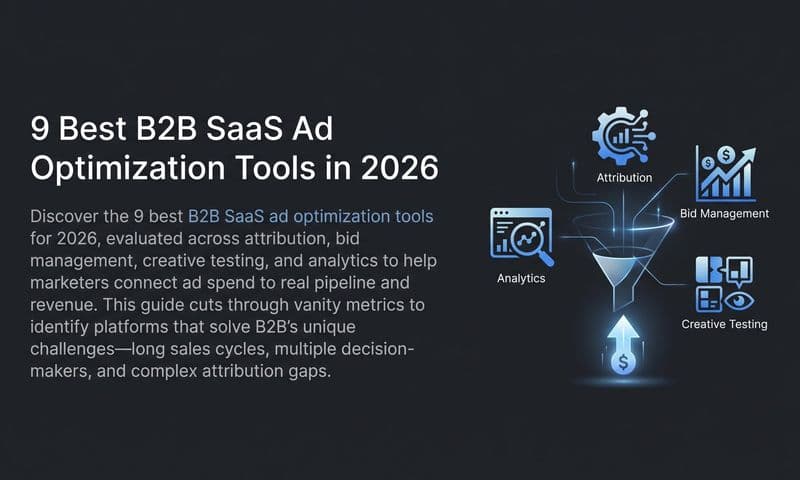
 9 Trending Tools for Data-Driven Marketing Strategies in 2026
Where This Tool Shines
Cometly excels at connecting the dots between ad spend and actual revenue outcomes. Unlike platforms that stop at surface-level metrics, it tracks every touchpoint in the customer journey and shows exactly which ads and channels are driving conversions.
The AI-powered recommendations set it apart—rather than just showing you data, Cometly's AI analyzes performance patterns across all your campaigns and suggests specific optimization actions. This turns attribution data into actionable intelligence that directly improves your ad ROI.
Key Features
Multi-Touch Attribution: Track customer journeys across all marketing channels to see which touchpoints contribute to conversions.
AI Ads Manager: Get AI-driven recommendations for campaign optimization based on performance patterns across your entire ad ecosystem.
Server-Side Tracking: Collect accurate data even with browser tracking limitations and iOS privacy changes that impact pixel-based tracking.
Conversion Sync: Feed enriched conversion data back to Meta, Google, and other ad platforms to improve their algorithm targeting and optimization.
Real-Time Analytics Dashboard: Monitor campaign performance and attribution data as it happens, enabling faster decision-making.
Best For
Cometly is ideal for digital marketers and agencies managing significant ad spend across multiple platforms who need to prove marketing ROI. It's particularly valuable for teams struggling with attribution accuracy due to iOS tracking changes or those wanting to move beyond last-click attribution models.
Pricing
Custom pricing based on ad spend volume. Contact their team for a quote tailored to your campaign scale and tracking needs.
2. Amplitude
Best for: Product-led growth teams analyzing user behavior patterns, retention, and engagement metrics.
Amplitude is a product analytics platform focused on understanding how users interact with your product or website through behavioral tracking and cohort analysis.
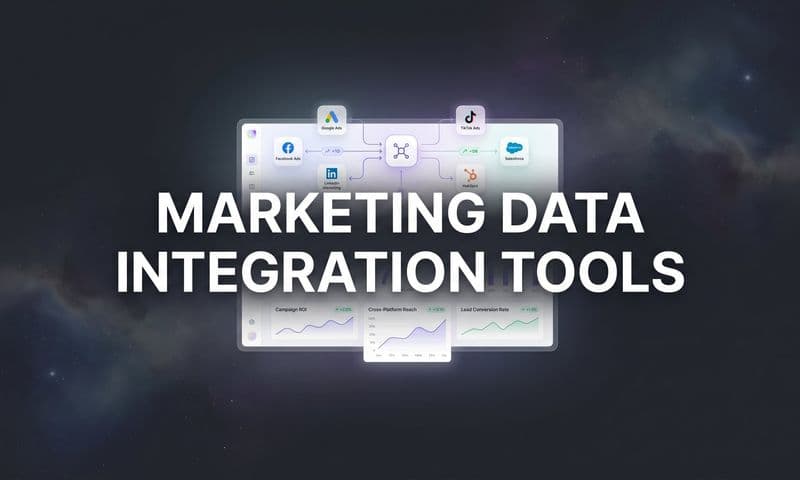
 8 Best Cross Platform Analytics Tools To Solve Attribution Chaos
Where This Tool Shines
Amplitude's strength lies in its behavioral cohort analysis capabilities. You can segment users based on any combination of actions they've taken, then track how those cohorts behave over time. This makes it exceptional for understanding what drives retention and identifying the paths that lead to conversion.
The platform's predictive analytics features help you identify users likely to churn or convert before it happens, enabling proactive marketing interventions. For product-led growth strategies, this forward-looking insight is invaluable.
Key Features
Behavioral Cohort Analysis: Group users by actions taken and track how different cohorts perform over time.
Retention Tracking: Visualize user retention patterns and identify what keeps users coming back or causes drop-off.
A/B Testing Integration: Connect experimentation data to behavioral analytics to see how tests impact long-term user behavior.
Custom Event Tracking: Define and track any user action that matters to your business goals.
Predictive Analytics: Use machine learning to forecast which users are likely to convert or churn based on behavioral patterns.
Best For
SaaS companies, mobile apps, and product teams focused on improving user engagement and retention. Particularly powerful for businesses with product-led growth models where understanding in-app behavior is critical to marketing strategy.
Pricing
Free tier available for startups. Growth and Enterprise plans use custom pricing based on event volume and features needed.
3. Mixpanel
Best for: Marketing teams building conversion funnels and tracking specific user actions across web and mobile.
Mixpanel is an event-based analytics platform that tracks individual user actions, helping you understand conversion paths and optimize key funnels.
 9 Trending Tools for Data-Driven Marketing Strategies in 2026
Where This Tool Shines
Mixpanel's event-based architecture gives you granular control over what you track and how you analyze it. Rather than relying on pageviews, you track meaningful actions—button clicks, form submissions, feature usage—and build analysis around those events.
The funnel analysis tools are particularly strong, letting you visualize exactly where users drop off in conversion paths. You can segment funnels by any user property or behavior, making it easy to identify which user groups struggle with specific steps and need targeted messaging.
Key Features
Event-Based Tracking: Track any user action as a distinct event rather than relying solely on pageview data.
Funnel Analysis: Build conversion funnels and identify drop-off points with detailed breakdown by user segments.
User Segmentation: Create dynamic user segments based on properties, behaviors, or any combination of criteria.
Cross-Platform Analytics: Track users consistently across mobile apps, web, and other touchpoints.
Interactive Reports: Build custom reports that stakeholders can interact with and filter without technical knowledge.
Best For
Growth marketers and product teams who need detailed funnel analysis and want to track specific user actions rather than just pageviews. Excellent for mobile-first businesses and companies with complex multi-step conversion processes.
Pricing
Free tier includes up to 20 million events per month. Growth plans start at $20 per month with custom pricing for higher volumes.
4. Tableau
Best for: Enterprise marketing teams needing powerful data visualization and cross-source reporting capabilities.
Tableau is an enterprise-grade data visualization platform that creates interactive dashboards by connecting to multiple data sources simultaneously.
 11 Best Marketing Analytics Tools to Track and Optimize Campaign Performance in 2026
Where This Tool Shines
Tableau's ability to connect to virtually any data source—from marketing platforms to CRMs to data warehouses—makes it the go-to choice for comprehensive marketing reporting. You can blend data from Google Ads, Salesforce, your database, and spreadsheets into unified dashboards that tell the complete story.
The drag-and-drop interface democratizes data visualization, letting marketers build sophisticated reports without SQL knowledge. Yet it's powerful enough for data analysts to create complex calculations and statistical models when needed.
Key Features
Multi-Source Connectivity: Connect to over 100 data sources including databases, cloud services, and marketing platforms.
Drag-and-Drop Builder: Create complex visualizations without coding through an intuitive visual interface.
Real-Time Data Updates: Dashboards refresh automatically as source data changes, ensuring current insights.
Embedded Analytics: Embed interactive dashboards directly into other applications or internal tools.
AI-Powered Insights: Tableau's Einstein AI surfaces unexpected patterns and anomalies in your data automatically.
Best For
Enterprise marketing teams with complex data ecosystems who need to combine multiple sources into comprehensive dashboards. Ideal for organizations where multiple stakeholders need access to interactive marketing reports.
Pricing
Creator licenses start at $75 per user per month. Explorer and Viewer licenses available at lower price points for teams who need access without full creation capabilities.
5. Looker Studio
Best for: Teams using Google's marketing ecosystem who need free, shareable reporting dashboards.
Looker Studio is Google's free data visualization tool for creating reports and dashboards from marketing data sources, with native integration across Google's platform.
 9 Best Data Visualization Tools for Marketing Analytics in 2026
Where This Tool Shines
Looker Studio's seamless integration with Google Ads, Google Analytics, and other Google properties makes it the natural choice for teams heavily invested in that ecosystem. Connecting these sources takes seconds, and the data automatically stays in sync.
The collaborative features stand out—multiple team members can edit reports simultaneously, and sharing is as simple as sending a link. For agencies managing multiple clients, the template functionality lets you standardize reporting across accounts efficiently.
Key Features
Google Platform Integration: Native connections to Google Ads, Analytics, Search Console, and other Google services.
Shareable Interactive Reports: Recipients can interact with filters and date ranges without needing edit access.
Community Connectors: Access hundreds of third-party data connectors built by the community for non-Google sources.
Collaborative Editing: Multiple team members can build and refine reports together in real-time.
Template Gallery: Start from pre-built report templates or save your own as templates for future use.
Best For
Marketing teams primarily using Google Ads and Google Analytics who need professional-looking reports without budget for paid tools. Particularly valuable for agencies needing standardized client reporting.
Pricing
Completely free with no usage limits or feature restrictions.
6. HubSpot Marketing Hub
Best for: B2B marketing teams wanting an all-in-one platform with built-in CRM and attribution reporting.
HubSpot Marketing Hub is a comprehensive marketing platform that combines email marketing, content management, social media, and analytics with an integrated CRM.
 10 Best Enterprise Channel Analytics Software To Maximize Marketing ROI
Where This Tool Shines
HubSpot's integrated approach eliminates data silos that plague most marketing stacks. Because the CRM, email platform, website analytics, and campaign tools all live in one system, attribution tracking is built-in rather than bolted on. You can trace revenue back through the entire marketing funnel without complex integrations.
The multi-touch revenue attribution reports show which campaigns and content pieces influence deals throughout the sales cycle. For B2B teams with longer sales processes, this visibility into marketing's contribution to pipeline and revenue is transformative.
Key Features
Multi-Touch Revenue Attribution: Track how marketing touchpoints contribute to closed deals across the entire customer journey.
Campaign Performance Tracking: Measure ROI for every campaign with built-in analytics tied to CRM data.
CRM-Integrated Analytics: All marketing data connects automatically to contact and company records for complete context.
Email and Content Analytics: Track engagement metrics for email campaigns, landing pages, and website content in one place.
Custom Reporting Dashboards: Build custom reports combining marketing metrics with sales and revenue data.
Best For
B2B marketing teams seeking an all-in-one solution that handles email marketing, landing pages, social media, and analytics while maintaining tight CRM integration. Best suited for businesses with moderate complexity who value convenience over specialized best-of-breed tools.
Pricing
Starter tier at $20 per month covers basic features. Professional at $890 per month includes advanced analytics and attribution reporting. Enterprise plans available for larger teams.
7. Segment
Best for: Marketing teams with complex tech stacks who need clean, consistent data across all tools.
Segment is a customer data platform that collects data once, then routes it cleanly to all your marketing and analytics tools automatically.
 9 Trending Tools for Data-Driven Marketing Strategies in 2026
Where This Tool Shines
Segment solves the data infrastructure problem that creates headaches for growing marketing teams. Instead of implementing tracking code separately for Google Analytics, Mixpanel, your email platform, and a dozen other tools, you implement Segment once. It then sends properly formatted data to every destination.
The identity resolution features are particularly valuable—Segment connects user actions across devices and anonymous sessions, creating unified customer profiles. This means your analytics tools get cleaner data about actual individuals rather than fragmented sessions.
Key Features
Single API for Data Collection: Implement tracking once and route data to multiple destinations without additional code.
300+ Tool Integrations: Pre-built connections to virtually every marketing and analytics platform.
Identity Resolution: Connect user actions across devices and sessions to build unified customer profiles.
Data Governance Controls: Manage data quality, privacy compliance, and access controls from a central interface.
Real-Time Data Streaming: Events flow to destinations in real-time, enabling immediate action on customer behavior.
Best For
Marketing teams using multiple analytics and marketing tools who struggle with inconsistent data or complex tracking implementations. Particularly valuable for companies scaling their marketing tech stack or dealing with data quality issues.
Pricing
Free tier available for startups with limited event volume. Team plans start at $120 per month, with pricing scaling based on monthly tracked users.
8. Hotjar
Best for: Marketing teams wanting qualitative insights into visitor behavior through heatmaps and session recordings.
Hotjar is a qualitative analytics tool that shows how visitors actually interact with your website through heatmaps, session recordings, and user feedback.
Where This Tool Shines
While quantitative analytics tell you what's happening, Hotjar shows you why. Session recordings let you watch actual visitors navigate your site, revealing confusion points, broken experiences, and unexpected behavior patterns that numbers alone miss.
The heatmaps provide instant visual feedback on what content gets attention and what gets ignored. Combined with on-site surveys, you can quickly validate hypotheses about user experience issues and gather context for conversion rate optimization efforts.
Key Features
Click and Scroll Heatmaps: Visualize where visitors click, how far they scroll, and what elements get attention.
Session Recordings: Watch anonymized recordings of real user sessions to identify friction points and usability issues.
On-Site Surveys and Feedback: Collect qualitative feedback directly from visitors at key moments in their journey.
Funnel and Form Analysis: See exactly where users abandon forms and which fields cause problems.
User Interview Recruitment: Identify and recruit specific user segments for deeper research interviews.
Best For
CRO teams and marketers who need to understand the "why" behind quantitative data. Particularly useful when optimizing landing pages, checkout flows, or any high-value conversion paths where small improvements drive significant revenue.
Pricing
Free tier available with basic features. Plus plans start at $32 per month with increased session recording limits and advanced features.
9. Supermetrics
Best for: Marketing teams automating data extraction from ad platforms into spreadsheets or data warehouses.
Supermetrics is a marketing data pipeline tool that automatically pulls data from advertising platforms and marketing tools into spreadsheets, dashboards, and data warehouses.
Where This Tool Shines
Supermetrics eliminates the manual work of exporting data from multiple ad platforms and stitching it together. It connects to over 100 marketing platforms and automatically refreshes your reports on whatever schedule you set—daily, hourly, or in real-time.
The flexibility in destinations is a major advantage. You can send data to Google Sheets for quick analysis, BigQuery for advanced analytics, or directly to visualization tools. This makes it valuable whether you're a small team using spreadsheets or an enterprise with a data warehouse.
Key Features
100+ Marketing Platform Connectors: Pull data from Google Ads, Meta, LinkedIn, TikTok, and dozens of other advertising and marketing platforms.
Automated Reporting: Schedule data refreshes to run automatically without manual exports.
Data Warehouse Destinations: Send data to BigQuery, Snowflake, or other warehouses for advanced analysis.
Spreadsheet Integrations: Direct connections to Google Sheets and Excel for teams that work in spreadsheets.
Scheduled Data Refreshes: Set custom schedules for data updates from hourly to monthly depending on needs.
Best For
Marketing teams running campaigns across multiple platforms who spend significant time manually exporting and combining data. Ideal for agencies managing many client accounts or in-house teams building custom reporting solutions.
Pricing
Plans start at $39 per month per destination. Pricing increases based on number of data sources, destinations, and user seats needed.
Making the Right Choice
The right tool depends on your primary challenge. If you're struggling to connect ad spend to actual revenue outcomes, start with an attribution platform like Cometly that tracks the complete customer journey and provides AI-powered optimization recommendations. For product-led growth teams focused on user behavior, Amplitude or Mixpanel deliver the behavioral insights you need.
When visualization is your bottleneck, Tableau offers enterprise-grade power while Looker Studio provides solid capabilities at no cost for Google-centric teams. HubSpot makes sense if you want an all-in-one solution that eliminates integration complexity, particularly for B2B marketing.
If your tech stack feels fragmented with inconsistent data, Segment creates the data infrastructure foundation that makes everything else work better. Hotjar fills the qualitative gap that quantitative analytics miss, showing you why visitors behave the way they do. And Supermetrics eliminates the tedious work of manual data exports across platforms.
Most successful data-driven marketing operations use a combination of these tools rather than relying on a single solution. The key is starting with your biggest pain point and expanding strategically as you mature your analytics capabilities.
Ready to elevate your marketing game with precision and confidence? Discover how Cometly's AI-driven recommendations can transform your ad strategy—Get your free demo today and start capturing every touchpoint to maximize your conversions.