Every marketing dollar you spend touches multiple channels before a customer converts—but which touchpoint actually deserves credit for the sale? This is the fundamental question attribution models answer.
Whether you're running paid ads across Meta, Google, and TikTok or blending organic content with email campaigns, understanding how different attribution models assign credit determines how you optimize budgets and scale what's working.
The challenge? There's no universal "best" model. Each attribution approach reveals different insights about your customer journey, and choosing the wrong one can lead you to cut high-performing channels or over-invest in low-impact touchpoints.
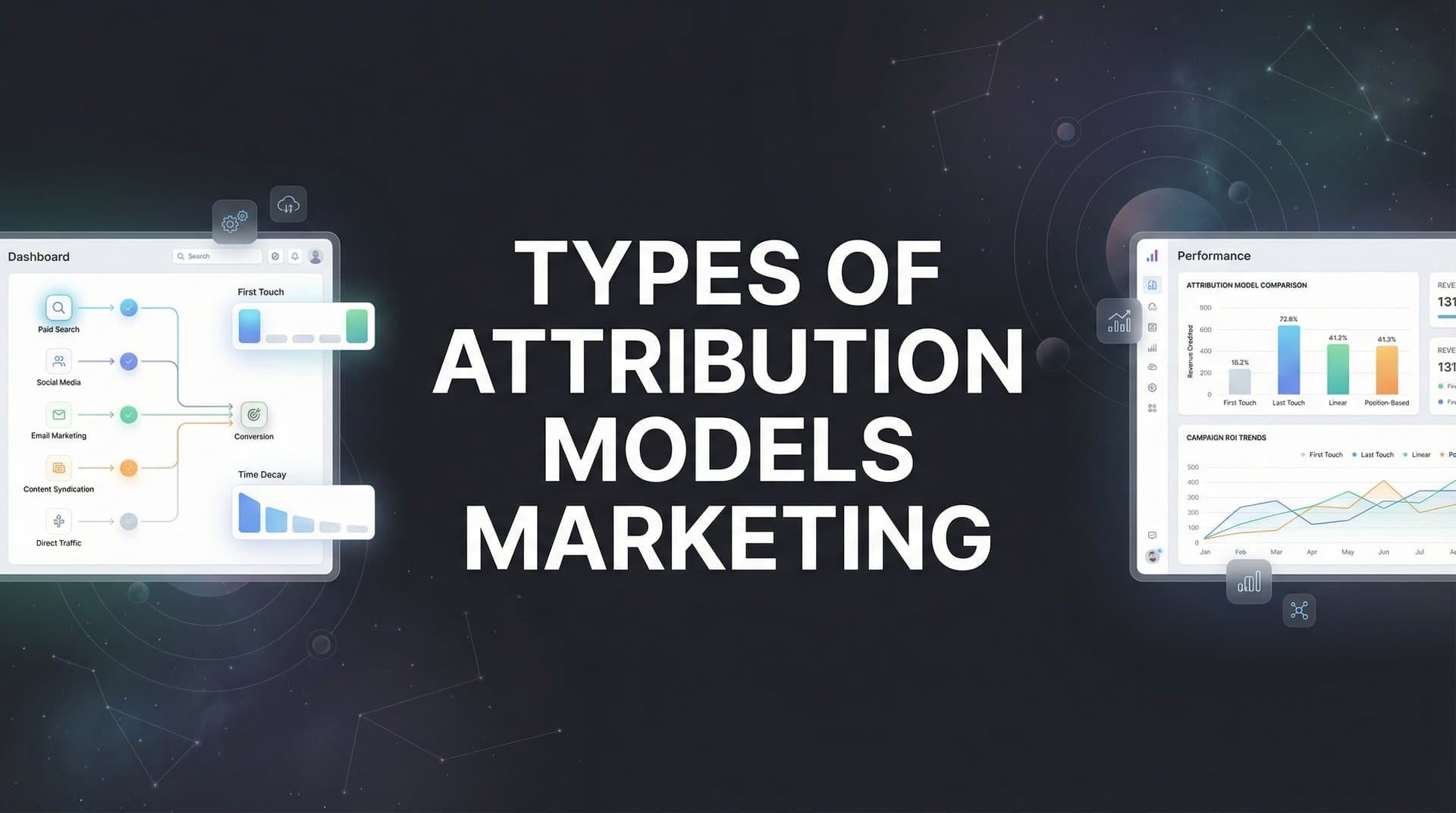
Think of attribution models as different lenses for viewing the same customer journey. One lens might show you which channels start relationships. Another reveals which channels close deals. A third distributes credit across every interaction equally. The lens you choose shapes the story your data tells—and the decisions you make as a result.
In this guide, we'll break down the seven core attribution models marketers use today, explain when each makes sense, and help you identify which model (or combination) aligns with your specific marketing goals and sales cycle.
1. First-Touch Attribution
The Challenge It Solves
When you're scaling acquisition efforts, you need to know which channels are actually bringing new prospects into your ecosystem. If you can't identify what's driving awareness and initial interest, you might be cutting the very channels that feed your entire funnel.
First-touch attribution answers a simple but critical question: Where did this customer first discover us? This matters especially when you're testing new channels, evaluating brand campaigns, or trying to understand which top-of-funnel investments generate the most qualified prospects.
The Strategy Explained
First-touch attribution assigns 100% of the conversion credit to the very first interaction a customer had with your brand. If someone clicked a Facebook ad three weeks ago, then returned through organic search, then converted via a Google ad, the Facebook ad gets full credit.
This model operates on a straightforward principle: without that first touchpoint, the customer wouldn't exist in your funnel at all. It's particularly valuable for understanding brand awareness efforts and content marketing that might not directly drive conversions but initiates relationships.
The trade-off? First-touch attribution completely ignores everything that happened after initial discovery. It can't tell you which nurture sequences, retargeting campaigns, or sales touchpoints actually moved prospects toward purchase.
Implementation Steps
1. Enable tracking that captures the original referral source for each visitor, storing this data with their user profile or cookie throughout their entire journey.
2. Configure your analytics platform to report conversions based on the first documented interaction, ensuring your tracking persists across sessions and devices.
3. Review first-touch reports specifically when evaluating top-of-funnel campaigns, content initiatives, or new channel tests where initial discovery is the primary goal.
Pro Tips
First-touch works best for businesses with short consideration cycles where the first interaction strongly influences eventual purchase. If you're running brand awareness campaigns or testing new acquisition channels, track first-touch alongside other models to see which sources start the most valuable customer journeys—not just which ones close them.
2. Last-Touch Attribution
The Challenge It Solves
You're running retargeting campaigns, sending abandoned cart emails, and optimizing your checkout flow—but if you can't identify which final touchpoint actually drives conversions, you're flying blind on your closing efforts.
Last-touch attribution solves the "what closed the deal" question. For direct response marketers focused on immediate conversions and revenue, understanding which channels consistently deliver the final push matters more than mapping the entire journey.
The Strategy Explained
Last-touch attribution assigns 100% credit to the final interaction before conversion. If a customer discovered you through organic search, clicked three different ads over two weeks, then finally converted through an email link, the email gets full credit.
This model reflects how many ad platforms report conversions by default. It's optimized for understanding which channels are most effective at closing prospects who are already familiar with your brand and ready to buy.
The limitation? Last-touch completely ignores all the marketing work that built awareness, consideration, and intent leading up to that final click. It can make bottom-funnel tactics look artificially successful while undervaluing the channels that actually initiated and nurtured the relationship.
Implementation Steps
1. Set your analytics platform to attribute conversions to the most recent interaction before purchase, typically using a defined lookback window like 7 or 30 days.
2. Align your conversion tracking with your typical sales cycle length—shorter windows for e-commerce, longer windows for considered purchases.
3. Use last-touch reporting when optimizing bottom-funnel campaigns like retargeting, remarketing, and conversion-focused email sequences where immediate response is the goal.
Pro Tips
Last-touch attribution works well for businesses with simple, short sales cycles where most customers convert quickly after discovery. It's also useful for optimizing specific conversion campaigns in isolation. Just remember that what closes deals isn't always what starts them—combine last-touch insights with first-touch data to understand both ends of your funnel.
3. Linear Attribution
The Challenge It Solves
When customers interact with your brand across multiple channels before converting, single-touch models force you to choose between understanding acquisition or conversion—but never both simultaneously. You need a view that acknowledges every touchpoint contributed to the eventual sale.
Linear attribution solves the "give everyone credit" problem. It's designed for marketers who recognize that modern customer journeys involve multiple interactions and want to value each channel's contribution equally.
The Strategy Explained
Linear attribution distributes conversion credit equally across every touchpoint in the customer journey. If someone interacted with five different channels before converting, each channel receives 20% of the credit.
This model operates on the principle that every interaction played an equal role in moving the customer toward conversion. It provides a balanced, democratic view of channel performance that doesn't artificially inflate any single touchpoint's importance.
The challenge? Linear attribution can dilute the impact of genuinely pivotal moments in the customer journey. Not all touchpoints are created equal—some interactions drive significant behavior changes while others are passive exposures. Linear models treat them all the same.
Implementation Steps
1. Configure your attribution platform to track all customer interactions across channels, ensuring you capture email opens, ad clicks, website visits, and other meaningful touchpoints.
2. Set clear rules for what qualifies as a "touchpoint" worth crediting—decide whether you'll count every page view or only significant interactions like ad clicks and email engages.
3. Review linear attribution reports when you want a holistic view of channel contribution without favoring acquisition or conversion moments, particularly useful for understanding overall marketing mix effectiveness.
Pro Tips
Linear attribution works best when you have a relatively consistent customer journey with multiple touchpoints that genuinely contribute value. It's particularly useful for content-heavy strategies where awareness, consideration, and conversion content all play meaningful roles. Use this model when you want to avoid the bias of single-touch models but don't yet have enough data for algorithmic approaches.
4. Time-Decay Attribution
The Challenge It Solves
In longer sales cycles, the ad someone clicked three months ago probably matters less than the webinar they attended last week. You need an attribution model that reflects how recency influences conversion likelihood without completely ignoring earlier touchpoints.
Time-decay attribution solves the "recent interactions matter more" reality. It's built for businesses where customer consideration spans weeks or months, and the touchpoints closest to conversion carry the most influence on final purchase decisions.
The Strategy Explained
Time-decay attribution assigns progressively more credit to touchpoints as they get closer to the conversion event. The first interaction might receive 5% credit, middle touchpoints get 15-20%, and the final interaction receives 40% or more—with the exact distribution following an exponential decay curve.
This model recognizes that while early touchpoints initiated the relationship, recent interactions reflect active buying intent and had more direct influence on the conversion decision. It's particularly relevant for complex B2B sales or high-consideration consumer purchases.
The limitation? Time-decay can undervalue the awareness and consideration-building work that happens early in the funnel, making top-of-funnel investments look less effective than they actually are.
Implementation Steps
1. Determine your typical sales cycle length and set an appropriate lookback window—30 days for shorter cycles, 90+ days for complex B2B sales.
2. Configure your attribution platform to apply exponential weighting that increases as touchpoints approach the conversion date, with the steepness of the curve matching your business reality.
3. Use time-decay reporting when analyzing performance for products or services with longer consideration periods where recent engagement signals strong buying intent.
Pro Tips
Time-decay attribution excels for businesses with sales cycles longer than a few days but shorter than several months. It balances the need to credit early awareness efforts while recognizing that recent touchpoints matter more for conversion. If your customers typically research for weeks before buying, time-decay provides a more realistic view than equal-weight linear models.
5. Position-Based (U-Shaped) Attribution
The Challenge It Solves
You know the first touchpoint that starts a customer relationship matters. You also know the final touchpoint that closes the deal matters. But single-touch models force you to pick one, and linear models dilute both. You need a model that emphasizes both critical moments.
Position-based attribution solves the "value both ends of the funnel" challenge. It's designed for marketers who recognize that acquisition and conversion are the two most influential moments in the customer journey, while middle touchpoints play supporting roles.
The Strategy Explained
Position-based attribution assigns 40% of conversion credit to the first touchpoint, 40% to the last touchpoint, and distributes the remaining 20% equally across all middle interactions. This creates a U-shaped credit distribution that emphasizes the journey's beginning and end.
The model operates on the principle that discovering your brand and deciding to convert represent the two highest-impact moments. Everything in between—nurture emails, retargeting ads, content consumption—plays a supporting role in moving prospects between these key stages.
The trade-off? Position-based models can undervalue genuinely influential middle-funnel touchpoints. If a specific piece of content or a particular retargeting campaign consistently drives consideration and intent, this model might not reveal its full impact.
Implementation Steps
1. Enable comprehensive journey tracking that captures the first interaction, all middle touchpoints, and the final conversion source for every customer.
2. Configure your attribution platform to apply the 40-20-40 credit distribution, ensuring first and last touches receive equal emphasis while middle interactions share the remaining credit.
3. Review position-based reports when you're optimizing both acquisition campaigns and conversion efforts simultaneously, particularly when you want balanced insights into both ends of your funnel.
Pro Tips
Position-based attribution works exceptionally well for businesses that invest heavily in both acquisition and conversion optimization. If you're running significant top-of-funnel campaigns to drive awareness alongside aggressive retargeting to close deals, this model reveals the performance of both strategies without forcing you to choose. It's particularly valuable when your middle-funnel is relatively passive.
6. W-Shaped Attribution
The Challenge It Solves
For B2B companies and complex sales funnels, there's often a critical moment between first touch and conversion: when a prospect becomes a qualified lead. This might be a demo request, a consultation booking, or a trial signup. Position-based models ignore this pivotal transition entirely.
W-shaped attribution solves the "three critical moments" reality. It's built specifically for businesses where lead creation represents a distinct, valuable stage between initial discovery and final conversion.
The Strategy Explained
W-shaped attribution assigns 30% credit to the first touch, 30% to the lead creation moment (like a form submission or trial signup), 30% to the final conversion touchpoint, and distributes the remaining 10% across other interactions. This creates a W-shaped credit distribution emphasizing three key stages.
The model recognizes that in B2B and complex funnels, moving from anonymous visitor to identified lead is as significant as the initial discovery or final purchase. Each of these three moments represents a major progression in customer intent and relationship depth.
The limitation? W-shaped attribution requires clearly defined lead creation events and sufficient tracking to identify when prospects cross that threshold. It's more complex to implement than simpler models and may not be relevant for direct-to-consumer businesses without distinct lead stages.
Implementation Steps
1. Define what constitutes a "lead creation" event in your funnel—this might be form submissions, trial signups, demo requests, or consultation bookings that represent qualification.
2. Implement tracking that captures the specific touchpoint that drove each lead creation event, not just first touch and conversion.
3. Configure your attribution platform to apply 30-10-30-30 credit distribution across first touch, middle interactions, lead creation, and final conversion.
Pro Tips
W-shaped attribution excels for B2B companies, SaaS businesses, and any organization with a defined lead qualification stage between discovery and purchase. If your sales process involves moving prospects from awareness to qualified leads to customers—with each stage requiring different marketing efforts—this model reveals which channels drive each critical transition. It's particularly valuable when optimizing lead generation campaigns.
7. Data-Driven (Algorithmic) Attribution
The Challenge It Solves
Every rule-based attribution model makes assumptions about which touchpoints matter most. But what if your actual customer data reveals patterns that don't match any standard model? What if certain middle-funnel touchpoints consistently drive higher conversion rates than others?
Data-driven attribution solves the "let the data decide" challenge. Instead of applying predetermined rules, it analyzes your actual conversion patterns to determine which touchpoints genuinely influence outcomes based on statistical analysis of customer behavior.
The Strategy Explained
Data-driven attribution uses machine learning algorithms to compare the journeys of customers who converted against those who didn't. It identifies which touchpoints, sequences, and timing patterns correlate with higher conversion likelihood, then assigns credit based on each interaction's actual measured impact.
This model doesn't assume first touch matters most or that recent interactions carry more weight. Instead, it discovers the truth hidden in your data. If your analysis reveals that customers who engage with a specific blog post convert at 3x the rate of those who don't, that touchpoint receives proportionally higher credit.
The requirement? Data-driven attribution needs substantial conversion volume to generate statistically meaningful patterns—typically hundreds or thousands of conversions monthly. Without sufficient data, the algorithms can't reliably distinguish signal from noise.
Implementation Steps
1. Ensure you're collecting comprehensive journey data across all channels and touchpoints, with enough conversion volume to support statistical analysis.
2. Implement a platform that offers algorithmic attribution capabilities, whether that's Google Analytics 4, a dedicated attribution tool, or a comprehensive marketing analytics solution.
3. Allow the model to analyze several weeks or months of data before making major optimization decisions, giving the algorithms time to identify reliable patterns.
Pro Tips
Data-driven attribution represents the most sophisticated approach, but it's not universally accessible. You need significant conversion volume, comprehensive tracking across channels, and platforms capable of running the analysis. If you have the data and tools, this model reveals insights that rule-based approaches miss. It's particularly valuable for businesses with complex, varied customer journeys that don't fit neat patterns.
Finding Your Attribution Strategy
Selecting the right attribution model isn't about finding a universal answer—it's about matching your model to your business reality. The attribution approach that works for a direct-response e-commerce brand running primarily paid ads looks completely different from what a B2B SaaS company with a 90-day sales cycle needs.
Start by considering your sales cycle length. For quick e-commerce purchases where most customers convert within days of discovery, last-touch or first-touch attribution may provide sufficient insight. These simpler models answer clear questions: What's driving initial traffic? What's closing sales?
For businesses with longer consideration periods and multiple touchpoints, multi-touch models reveal more actionable insights. If your customers typically interact with your brand 5-10 times before converting, linear or time-decay attribution shows which channels contribute throughout the journey.
The most sophisticated approach? Use multiple models simultaneously to see your data from different angles. Review first-touch reports when evaluating top-of-funnel campaigns. Check last-touch data when optimizing conversion efforts. Compare position-based insights to understand the full funnel. Each model answers different questions about your marketing effectiveness.
Here's what matters most: moving beyond default platform attribution. When you rely solely on Facebook Ads Manager or Google Ads reporting, you're seeing attribution through a lens designed to make that platform look good. These tools typically use last-touch attribution within their own ecosystem, giving themselves credit for conversions that might have been influenced by other channels.
A unified attribution approach connects data across all your marketing touchpoints—paid ads, organic search, email, social, direct traffic—giving you a complete view of how channels work together to drive results. This is where platforms like Cometly become essential. By tracking the entire customer journey from first click through CRM events and final conversion, you can analyze performance across attribution models and let AI identify patterns you might miss.
As you scale, consider graduating toward data-driven attribution if you have sufficient conversion volume. Let machine learning analyze your actual customer behavior patterns rather than relying on predetermined rules about which touchpoints matter most. The algorithms might reveal that a specific piece of content, a particular retargeting sequence, or an unexpected channel combination drives disproportionate results.
The key insight? Different attribution models don't contradict each other—they complement each other. First-touch shows what starts relationships. Last-touch reveals what closes deals. Multi-touch models illuminate everything in between. Use them together to build a complete picture of your marketing performance.
Ready to elevate your marketing game with precision and confidence? Discover how Cometly's AI-driven recommendations can transform your ad strategy—Get your free demo today and start capturing every touchpoint to maximize your conversions.