Managing ad performance across a dozen client accounts, each running campaigns on Meta, Google, TikTok, and LinkedIn simultaneously, is one of the most operationally complex challenges in modern marketing. You're juggling different platforms, different budgets, different conversion events, and different definitions of success. And at the end of every month, every client wants the same thing: proof that their ad spend is working.
The problem is that the data you're looking at often tells conflicting stories. Meta says a campaign generated 80 conversions. Google claims credit for 60 more. But when the client checks their CRM, only 50 new deals closed. Someone is wrong, and when the numbers don't add up, it's the agency that loses credibility.
This is the core challenge of ad performance tracking for agencies. It's not just about measuring clicks and impressions. It's about building a reliable, independent view of what's actually driving revenue for each client, across every platform, without losing your mind managing it all at scale. This guide breaks down why traditional tracking approaches fall short, what accurate cross-client tracking actually looks like, and how modern attribution tools give agencies the edge they need to retain clients and grow.
Why Platform-Reported Metrics Can't Be Your Only Source of Truth
Every major ad platform has a vested interest in looking like the top performer in your client's marketing mix. Meta wants credit for every conversion. So does Google. So does TikTok. And because each platform uses its own attribution model, its own lookback window, and its own definition of a conversion, the numbers they report rarely align with each other or with reality.
This isn't a bug. It's a structural issue. When a customer sees a Facebook ad on Monday, clicks a Google search ad on Wednesday, and converts on Thursday, both platforms will often claim full credit for that sale. Add a third platform to the mix and you can end up with total reported conversions that far exceed actual sales. For an agency presenting these numbers to a client, that discrepancy is a trust-eroding time bomb.
Privacy changes have made this problem significantly worse. Apple's App Tracking Transparency framework and the ongoing deprecation of third-party cookies have degraded the accuracy of pixel-based tracking across the board. When a user opts out of tracking on iOS, pixel-based systems simply can't see the conversion. The platform either misses it entirely or makes a probabilistic guess using modeled data. Either way, the number you're reporting to your client is increasingly disconnected from what actually happened. Understanding the scope of unreliable ad performance metrics is essential for any agency navigating this landscape.
For agencies managing cross-platform campaigns, this creates a compounding accuracy problem. Each platform's native data is already imperfect. When you layer multiple platforms together without an independent attribution layer, the errors stack up. You end up reporting inflated or conflicting performance numbers that don't match the client's CRM, don't match their revenue, and don't hold up under scrutiny.
Agencies that pass along platform-reported metrics without independent verification are essentially letting the ad platforms grade their own homework. That approach worked reasonably well in a pre-iOS 14 world. Today, it's a liability. Clients are more sophisticated, CFOs are asking harder questions, and the agencies that can provide independent, revenue-connected attribution data are the ones winning long-term retainers.
The Building Blocks of Accurate Cross-Client Tracking
Getting ad performance tracking right at the agency level starts with the infrastructure underneath the numbers. Before you can build meaningful reports, you need a data collection setup that actually captures what's happening across every client's customer journey.
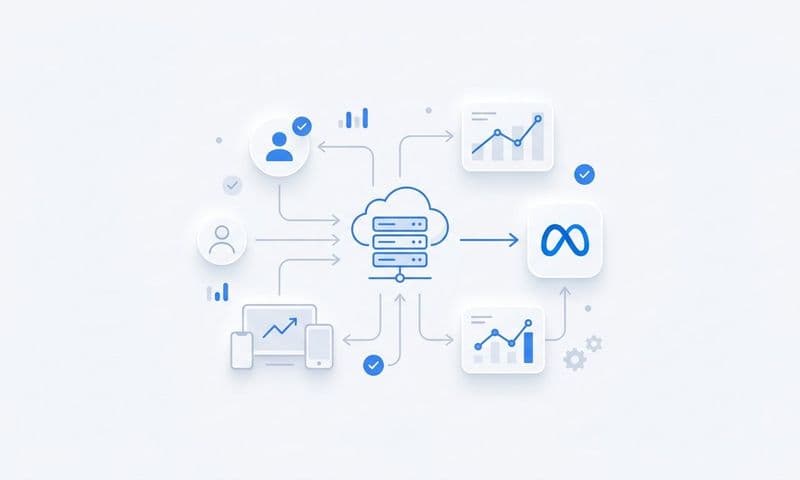
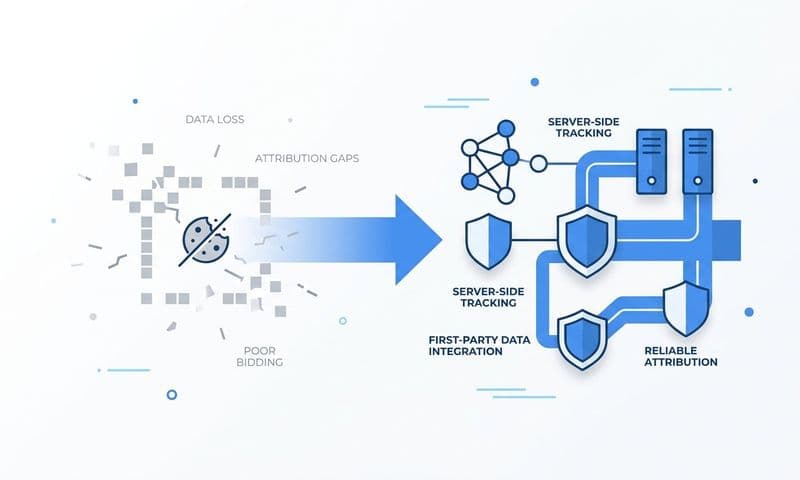
Server-Side Tracking as the Foundation: Client-side pixels fire from the user's browser, which means they're vulnerable to ad blockers, browser privacy settings, and iOS restrictions. Server-side tracking flips this model. Instead of relying on the browser to send conversion data to the ad platform, your server sends it directly. This approach bypasses most browser-level limitations and captures conversions that client-side pixels regularly miss. For agencies, implementing server-side tracking across client accounts is the single most impactful step toward accurate data collection.
Multi-Touch Attribution Models: Last-click attribution assigns all the credit to the final touchpoint before a conversion. It's simple, but it's deeply misleading for clients running multi-platform campaigns. A customer might have discovered a brand through a TikTok video, researched it after seeing a YouTube pre-roll, and converted after clicking a Google search ad. Last-click gives Google 100% of the credit and makes TikTok and YouTube look worthless. Multi-touch attribution distributes credit across all the touchpoints in the journey, giving agencies a far more accurate picture of what's actually working for each client. Linear, time-decay, and data-driven models each have their place depending on the client's sales cycle and campaign mix.
A Unified Tracking Infrastructure: The most powerful move an agency can make is connecting all data sources into a single attribution platform. That means pulling in data from every ad platform the client uses, connecting it to their CRM, and ideally tying it to payment or revenue data. When all of this flows into one place, you can track ad performance across platforms and compare campaign performance apples-to-apples across channels, eliminate double-counting, and tie ad spend directly to pipeline and closed revenue. This unified view is what separates agencies that can confidently defend their recommendations from those that are just reading platform dashboards.
Building this infrastructure for a single client takes effort. Building it consistently across dozens of clients requires standardized processes, reliable tooling, and a clear framework for how tracking is set up, validated, and maintained. That's where the operational challenge of agency-scale tracking really begins.
Scaling Visibility Across Every Client Account
Here's where many agencies hit a wall. The tracking approach that works beautifully for one client becomes a logistical nightmare when you're managing ten, twenty, or fifty accounts. Every client has different ad platforms, different CRMs, different conversion events, and different reporting expectations. If your tracking setup is bespoke for each client, you're constantly reinventing the wheel and creating fragile systems that break when someone changes a UTM parameter or updates a landing page.
The operational fix starts with standardization. Agencies that build a consistent naming convention framework, a standard set of conversion events, and a repeatable onboarding process for new clients can scale tracking without proportionally scaling the manual work. A purpose-built tracking solution for multiple ad accounts makes this standardization far more achievable. When every client account follows the same structural logic, it becomes much easier to spot anomalies, compare performance across accounts, and train team members on how to manage them.
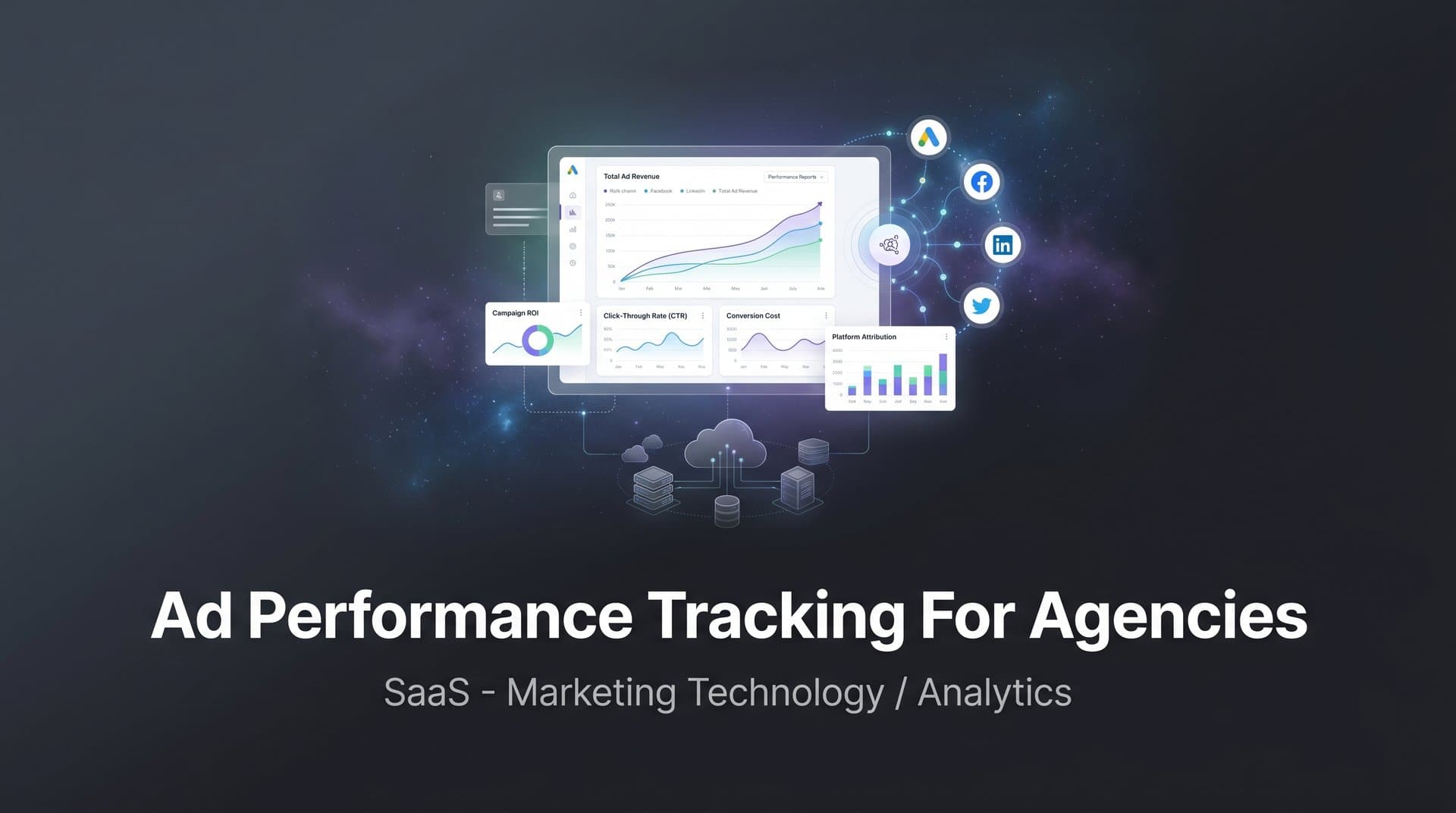
Centralized dashboards are the other critical piece. When you're managing multiple client campaigns, you need a single view that lets you quickly assess which accounts are performing well and which need attention, without opening ten separate platform logins. A centralized attribution dashboard that pulls data from all client accounts lets you monitor performance at the portfolio level, drill into specific accounts when something looks off, and identify patterns across clients that inform broader strategy recommendations.
This is where AI-powered tools are changing the game for agencies. Rather than manually reviewing every ad set across every client account to find optimization opportunities, AI-driven recommendation engines can surface the highest-performing ads across channels and flag underperforming campaigns that need attention. Investing in the right tracking software for digital agencies means you can focus your time on the accounts and decisions that matter most instead of drowning in data.
The agencies that scale successfully are the ones that treat their tracking infrastructure as a product, not a one-off project. They invest in the right tools, build repeatable processes, and create a consistent client experience from onboarding to reporting. That consistency is what allows them to grow their client base without sacrificing the quality of their work.
Turning Tracking Data Into Reports Clients Actually Value
There's a significant difference between a report that shows what happened and a report that shows what it means. Most platform-generated reports fall into the first category. They're full of impressions, clicks, and CTRs that look impressive but leave clients asking the question that actually matters: "Did this make us money?"
Revenue-connected reporting answers that question directly. When your tracking infrastructure ties ad spend to CRM pipeline and closed deals, you can show clients exactly which campaigns generated leads that converted into paying customers, what the cost per acquisition actually was, and which channels are delivering the strongest return on ad spend. Dedicated revenue tracking software for marketers transforms the agency-client conversation from a defensive exercise into a strategic one.
Conversion sync is a practice that amplifies this further. When you send enriched, verified conversion events back to the ad platforms, you're not just improving your own reporting. You're feeding better data to the platform's optimization algorithms. Meta and Google use conversion signals to decide who to show ads to next. When those signals are accurate and complete, the algorithms improve their targeting over time, which compounds into better campaign performance for your clients. Agencies that implement conversion sync consistently give their clients a structural performance advantage that competitors without this setup simply can't match.
The reporting workflow matters too. Clients who receive consistent, clearly structured reports that tie every dollar spent to a measurable outcome develop a much stronger sense of trust in their agency. Agencies focused on tracking ROI for performance marketing understand that transparent, revenue-connected reporting is one of the most underrated client retention tools available. They can see the value being delivered, and they're far less likely to question the retainer when renewal time comes around.
Tracking Pitfalls That Quietly Undermine Agency Performance
Even agencies with strong intentions make tracking mistakes that compromise data quality and, eventually, client relationships. These pitfalls are worth knowing because they're surprisingly common and often go undetected until the damage is done.
Over-relying on UTM Parameters Without Validation: UTM parameters are a useful tool for tracking traffic sources, but they're not a complete attribution solution. They break when users switch devices, when links are shared in messaging apps, or when someone types a URL directly. Agencies that treat UTM data as their primary attribution source without cross-referencing it against actual conversion data regularly end up misattributing spend and making optimization decisions based on flawed inputs.
Ignoring Cross-Device and Cross-Channel Journeys: Modern customers move between devices constantly. They might see an ad on their phone, research on a tablet, and convert on a desktop. Tracking systems that don't account for this journey will over-credit the final device and under-credit every touchpoint that came before it. For clients running awareness campaigns alongside conversion campaigns, this creates a distorted picture of what's working and often leads agencies to cut budget from channels that are actually contributing meaningfully to the funnel. Learning how to effectively track ad performance across channels is critical to avoiding this mistake.
Missing Offline Conversions: For clients whose sales process includes phone calls, in-person consultations, or deals closed by a sales team, a significant portion of conversions never show up in digital tracking by default. If these offline conversions aren't synced back into the attribution system, the agency is only seeing part of the picture. Campaigns that look like they're underperforming might actually be driving a substantial volume of offline revenue that's simply invisible in the reporting. Closing this loop requires intentional integration between ad platforms, CRM systems, and the attribution layer.
Each of these pitfalls has the same root cause: gaps in the tracking infrastructure that allow real conversion data to slip through unrecorded. The fix in every case is building a more complete, server-side, multi-source data collection system that captures the full customer journey rather than just the parts that are easy to measure.
A Modern Agency Tracking Workflow, Step by Step
Pulling everything together into a repeatable workflow is what separates agencies that manage tracking reactively from those that do it systematically. Here's what an effective modern tracking workflow looks like in practice.
1. Connect all ad platforms. Start by integrating every ad platform the client uses, whether that's Meta, Google, TikTok, LinkedIn, or others, into a central attribution platform. This gives you a unified data feed to work from.
2. Implement server-side tracking. Set up server-side event tracking for each client to ensure conversions are captured accurately regardless of browser restrictions or ad blockers. Reviewing the server-side tracking benefits for advertisers can help you make the case to clients during onboarding. This is the foundation of data quality.
3. Connect the CRM and revenue data. Link the client's CRM to the attribution platform so you can trace ad interactions all the way through to pipeline stages and closed revenue. This is what makes revenue-connected reporting possible.
4. Choose and compare attribution models. Use multi-touch attribution to evaluate campaign performance across the full customer journey. Compare models (linear, time-decay, data-driven) to understand how credit shifts depending on the lens you use.
5. Sync enriched conversions back to ad platforms. Feed verified, enriched conversion events back to Meta, Google, and other platforms to improve algorithmic targeting and compound performance over time.
6. Build centralized reporting dashboards. Create a standardized reporting view that shows performance across all client accounts, making it easy to monitor, compare, and act on data without manual aggregation. Exploring top attribution platforms for agencies can help you find the right tool for this step.
Cometly is built to support exactly this workflow. It provides multi-touch attribution across all major ad platforms, server-side tracking that captures conversions client-side pixels miss, AI-driven optimization recommendations that surface high-performing ads across every channel, and conversion sync that feeds better data back to Meta, Google, and beyond. For agencies managing multi-client, multi-platform campaigns, it's a purpose-built solution for getting accurate, actionable attribution data at scale.
Your Competitive Edge Starts With Better Data
Agencies that invest in accurate, independent ad performance tracking don't just report better numbers. They make better decisions, retain clients longer, and build a reputation for delivering results that are actually connected to revenue. In a market where every agency claims to be data-driven, the ones that can back it up with transparent, verifiable attribution data stand apart.
Take a hard look at your current tracking setup. Are you relying on platform-reported metrics without independent verification? Are offline conversions falling through the cracks? Are your clients getting reports that answer the question "did this make us money?" or just reports that show what the platforms want them to see?
If there are gaps, now is the time to close them. The tools exist to build a tracking infrastructure that is accurate, scalable, and genuinely useful for every client you serve.
Ready to elevate your marketing game with precision and confidence? Discover how Cometly's AI-driven recommendations can transform your ad strategy. Get your free demo today and start capturing every touchpoint to maximize your conversions.