

You've just spent thousands on Facebook ads. Your dashboard shows 50 conversions. Your CRM shows 32 actual sales. The numbers don't match, and you have no idea which ads actually drove revenue.
This isn't a glitch. It's the reality of modern digital advertising.
Between iOS privacy updates blocking tracking, browsers restricting cookies, and ad blockers eliminating pixels entirely, traditional tracking methods are crumbling. Your retargeting audiences are shrinking. Your conversion data has gaps. And your ad platforms are optimizing campaigns based on incomplete information, which means they're essentially guessing at what works.
Server side tracking for ads changes this equation completely. Instead of relying on browser-based pixels that can be blocked or restricted, server side tracking moves data collection to your own server and sends conversion events directly to ad platforms through secure API connections. The result? More complete data, better campaign optimization, and attribution you can actually trust.
This guide will walk you through exactly what server side tracking is, how it differs from the traditional pixel-based approach you're probably using now, and why it's becoming essential for any marketer who wants accurate data driving their paid campaigns. Whether you're running Meta ads, Google campaigns, or multi-channel strategies, understanding server side tracking isn't optional anymore. It's how you compete.
How Traditional Browser-Based Tracking Works (And Why It's Breaking Down)
For years, tracking ad conversions worked the same way across every platform. You'd install a JavaScript pixel on your website. When someone clicked your ad and landed on your site, that pixel would fire in their browser, drop a cookie to identify them, and send conversion data back to the ad platform when they completed an action.
This client-side tracking approach seemed simple and effective. The Facebook Pixel, Google Ads tag, and similar tools became the foundation of digital advertising measurement. Marketers could see which ads drove clicks, which audiences converted, and how to optimize campaigns based on actual user behavior.
Then the privacy restrictions hit, and everything changed.
Apple's iOS 14.5 update in April 2021 introduced App Tracking Transparency, requiring apps to get explicit user permission before tracking activity across other apps and websites. Most users chose not to allow tracking. Suddenly, a massive portion of mobile traffic became invisible to traditional pixels.
Browsers followed suit. Safari and Firefox started blocking third-party cookies by default. Google Chrome announced plans to phase them out entirely. Ad blockers, which prevent JavaScript tracking tags from firing at all, grew increasingly popular among privacy-conscious users.
The impact on your campaigns is real and measurable. When a user has tracking disabled or uses an ad blocker, your pixel never fires. That conversion happens, but your ad platform never knows about it. Your Facebook Ads Manager might show 40 conversions while your actual sales total 65.
Here's where it gets worse: ad platforms use conversion data to train their machine learning algorithms. When Meta's algorithm optimizes your campaign for conversions, it's looking for patterns among users who converted. But if half your actual converters are invisible due to tracking restrictions, the algorithm is learning from an incomplete dataset. It's like trying to find your best customers while wearing a blindfold.
Your retargeting audiences shrink because you can't track everyone who visited your site. Your lookalike audiences become less effective because they're based on a fraction of your actual customer base. And your attribution reports show a distorted picture of which touchpoints actually matter.
Browser-based tracking isn't just less accurate now. It's fundamentally broken for a significant portion of your traffic. That's the problem server side tracking solves.
Server Side Tracking Explained: Moving Data Collection to Your Server
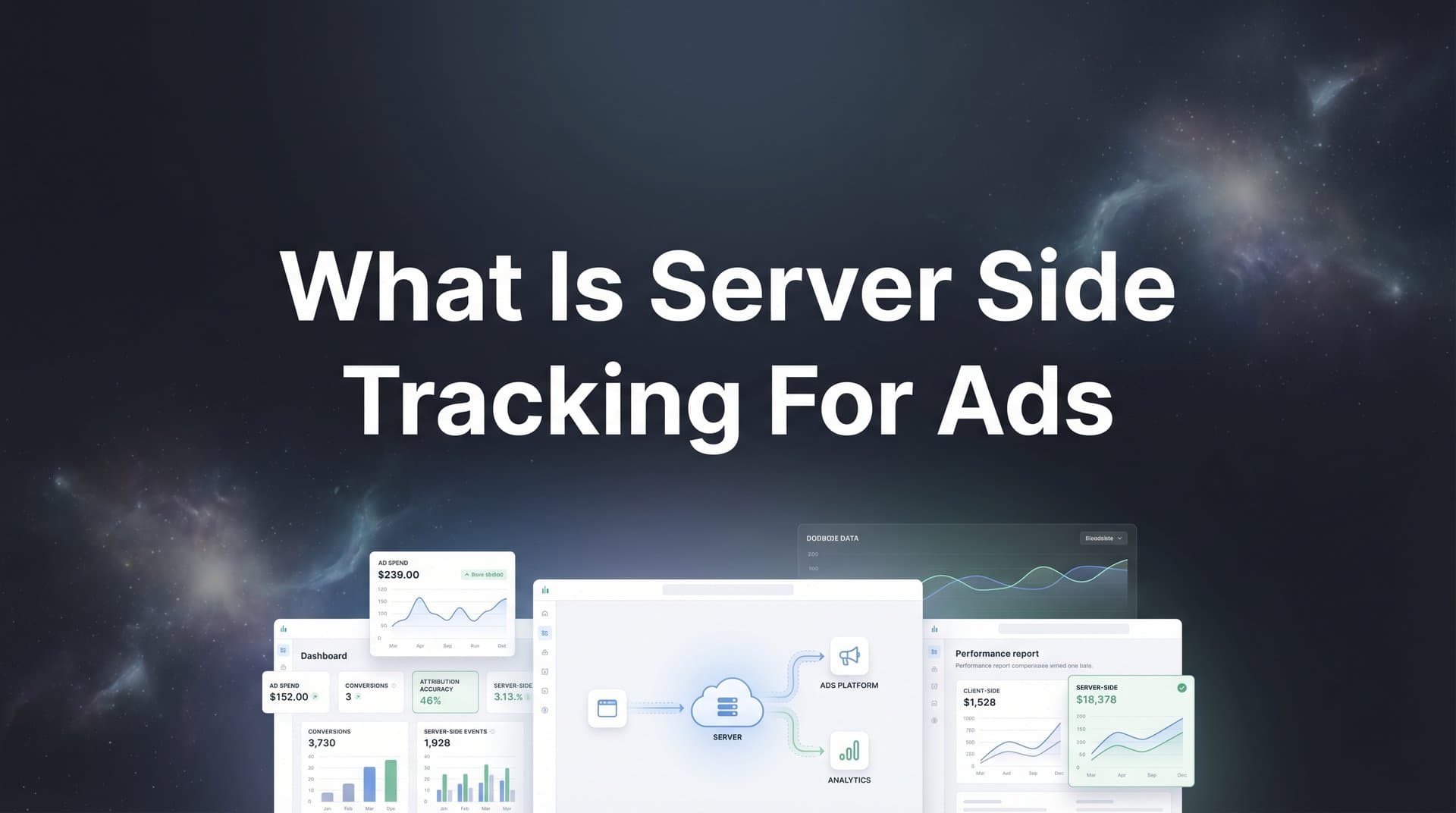
Server side tracking flips the traditional model on its head. Instead of relying on JavaScript code executing in a user's browser, data flows from your website to your own server first. Your server then sends that conversion data to ad platforms through direct API connections.
Think of it like this: browser-based tracking is like shouting across a crowded room and hoping the right person hears you. Server side tracking is like walking directly to that person and handing them a written message. One method depends on conditions outside your control. The other guarantees delivery.
Here's how the data flow works in practice. A user clicks your Meta ad and lands on your website. When they complete a purchase, your website sends that conversion event to your server. Your server processes the event, enriches it with additional context like customer lifetime value or product category, then transmits it directly to Meta's Conversions API. The same process can happen simultaneously for Google Ads API, TikTok Events API, and any other platform you're using.
The key difference is control. Your server sits between the user action and the ad platform, which means you decide exactly what data gets sent, when it gets sent, and how it's formatted. Browser restrictions, cookie blockers, and ad blockers can't interfere with this server-to-server communication.
What types of events can you track server-side? Everything you currently track with pixels, plus more. Standard e-commerce events like purchases, add-to-carts, and checkouts. Lead generation events like form submissions and demo requests. Custom events specific to your business model, like subscription upgrades or content downloads. You define what matters for your campaigns, and your server ensures that data reaches your ad platforms reliably. Learn more about server side event tracking to understand the full scope of possibilities.
The technical implementation varies, but the concept remains consistent: move data collection from the unpredictable browser environment to your controlled server environment. This shift doesn't just improve data accuracy. It fundamentally changes what's possible with your advertising measurement and optimization.
Five Key Advantages for Your Ad Campaigns
Complete Conversion Data: Server side tracking captures events that browser-based pixels miss entirely. When someone uses an ad blocker or has tracking disabled, your traditional pixel fails silently. You lose that conversion data forever. With server side tracking, the conversion event still reaches your server because it's triggered by your website's backend code, not browser JavaScript. Your ad platforms receive accurate conversion counts, which means your campaign dashboards finally match your actual business results.
This completeness matters more than you might think. If you're only seeing 60% of your actual conversions due to tracking limitations, your cost-per-acquisition calculations are wrong. You might pause campaigns that are actually profitable or scale campaigns that aren't performing as well as they appear. Complete data leads to correct decisions. Discover why server side tracking is more accurate than traditional methods.
Better Ad Platform Optimization: Meta's algorithm, Google's Smart Bidding, and similar machine learning systems need accurate conversion data to function effectively. When you feed them incomplete information, they optimize toward the wrong patterns. They might target users similar to the 40% of converters you can track while ignoring characteristics of the 60% you can't.
Server side tracking solves this by ensuring ad platforms see the full picture of who converts. The algorithms can identify genuine patterns across your entire customer base, not just the portion visible through browser tracking. This typically results in better audience targeting, more efficient bidding, and improved campaign performance over time as the platforms learn from complete datasets.
Enhanced Data Control: With browser-based tracking, you're limited to what the pixel can capture in that moment. Server side tracking lets you enrich conversion events with data from your CRM, database, or other systems before sending to ad platforms. You can include customer lifetime value, product margins, subscription tier, or any metric that matters for your business.
This enrichment enables smarter optimization. Instead of optimizing for any conversion, you can optimize for high-value conversions. Instead of treating all customers equally, you can signal to ad platforms which customer types drive the most revenue. Your server becomes a data hub that combines real-time user actions with business context. Explore the full range of server side tracking benefits for advertisers.
Cross-Platform Consistency: When you're running campaigns across Meta, Google, TikTok, and other platforms, browser-based tracking often shows different conversion counts on each platform. This happens because each pixel fires independently and may be blocked differently depending on user settings and browser behavior.
Server side tracking creates a single source of truth. Your server sends the same conversion event to all platforms simultaneously through their respective APIs. Everyone sees the same data, which makes cross-platform attribution and budget allocation decisions far more straightforward.
Future-Proof Foundation: Privacy regulations continue to evolve. Browser restrictions keep tightening. First-party data tracking for ads on your own server is the most resilient approach to these changes. You own the infrastructure, control the data flow, and can adapt to new requirements without depending on third-party cookies or browser permissions.
As the digital advertising landscape shifts toward privacy-first measurement, server side tracking positions you to maintain accurate data regardless of what changes come next. It's not just solving today's tracking problems. It's building infrastructure that works in tomorrow's privacy-focused ecosystem.
Implementation Approaches: DIY vs. Platform Solutions
You have two main paths for implementing server side tracking: build it yourself using native platform tools, or use an attribution platform that handles the technical complexity for you. Each approach has distinct tradeoffs worth understanding before you commit.
The DIY route typically involves Google Tag Manager Server-Side for managing tags and direct integration with platform APIs like Meta's Conversions API. You'll set up a server container, configure event forwarding, ensure proper event matching with parameters like email hashes and phone numbers, and maintain the infrastructure as platforms update their requirements. Check out our server side tracking implementation guide for detailed steps.
This manual approach gives you complete control and avoids additional software costs. But it comes with real challenges. The technical complexity is significant. You need developers who understand server architecture, API authentication, event schema requirements, and data formatting standards for each ad platform. A misconfigured implementation can send incomplete data or fail silently, which defeats the entire purpose.
Ongoing maintenance adds another layer of complexity. When Meta updates their Conversions API requirements or Google changes their event parameters, you need to update your implementation. When you add a new ad platform, you need to build another integration. When something breaks, you need to diagnose whether the issue is with your server, your website code, or the platform API. Understanding the server side tracking setup challenges can help you prepare.
Testing and validation become critical with DIY implementations. How do you know your server is sending accurate data to ad platforms? You'll need to build monitoring systems, compare server-sent events against platform dashboards, and constantly verify that conversion matching is working correctly.
Attribution platforms like Cometly take a different approach. They provide pre-built server side tracking infrastructure that connects to your website and ad platforms automatically. You install their tracking code once, configure which events to track, and the platform handles data collection, enrichment, formatting, and transmission to all your ad platforms through their respective APIs.
The advantage is simplicity and reliability. The platform maintains integrations as ad platforms update requirements. It ensures proper event matching by automatically hashing and formatting user identifiers. It provides validation tools to confirm data is flowing correctly. And it combines server side tracking with attribution modeling in a single system, so you're not just collecting data but interpreting what it means for your campaigns.
This approach trades some control for significant time savings and reduced technical burden. You're not managing server infrastructure or debugging API connections. You're focusing on campaign strategy while the platform handles the data infrastructure.
The choice depends on your team's technical capabilities, the complexity of your tracking needs, and how much time you want to invest in building versus buying. For most marketing teams, especially those running campaigns across multiple platforms, a platform solution eliminates months of development work and ongoing maintenance headaches. Compare your options with our server side tracking tools compared analysis.
Making Server Side Tracking Work With Your Attribution Strategy
Server side tracking and attribution are two sides of the same coin. Tracking captures the data. Attribution interprets what that data means for your marketing decisions. Neither works effectively without the other.
Here's the connection: server side conversion tracking provides complete, accurate event data across the entire customer journey. Attribution models use that data to determine which touchpoints deserve credit for conversions. When your tracking has gaps due to browser restrictions, your attribution models are making decisions based on incomplete information. It's like trying to solve a puzzle with half the pieces missing.
With server side tracking feeding complete data into your attribution system, you can finally see the full customer journey. Someone might click a Facebook ad, visit your site, leave without converting, see a Google retargeting ad three days later, click it, and then purchase. Browser-based tracking might miss the initial Facebook visit due to cookie restrictions, giving Google all the credit. Server side tracking captures both touchpoints, enabling your attribution model to assign credit accurately.
This matters enormously for budget allocation. If you're using last-click attribution and your tracking only sees the final touchpoint, you'll over-invest in bottom-of-funnel tactics and under-invest in awareness campaigns that start customer journeys. Multi-touch attribution models like linear, time decay, or position-based can only work when you have visibility into multiple touchpoints. Server side tracking makes that visibility possible.
The real power comes when you combine server tracking with CRM data. Your server can enrich conversion events with revenue information, customer lifetime value, product margins, or any metric stored in your database. This transforms attribution from counting conversions to measuring actual business impact.
Instead of optimizing for conversions that might be worth ten dollars or ten thousand dollars, you can optimize for revenue. Instead of treating all customers equally, you can identify which channels drive high-value customers versus one-time buyers. Your attribution reports shift from "this campaign drove 50 conversions" to "this campaign drove $47,000 in revenue with an average customer value of $940."
Practical implementation tip: start with standard conversion tracking through server side methods, validate that data is flowing correctly to your ad platforms, then layer in revenue and value metrics. This progressive approach ensures you have accurate foundational data before adding complexity. For detailed guidance, read our how to set up server side tracking walkthrough.
The combination of complete server-tracked data and sophisticated attribution modeling gives you something most marketers don't have: confidence in your marketing decisions. You know which channels actually drive results, which campaigns deserve more budget, and which tactics aren't pulling their weight. That clarity is the difference between guessing and knowing.
The Path Forward for Data-Driven Marketers
Server side tracking isn't just a technical upgrade to your measurement stack. It represents a fundamental shift in how marketers can maintain control over their advertising data in an increasingly privacy-focused digital landscape.
The days of relying solely on browser-based pixels are over. Privacy restrictions will continue to evolve, not reverse. Browsers will add more protections. Users will demand greater control over their data. And marketers who cling to outdated tracking methods will watch their data quality deteriorate while competitors gain clearer insights.
Moving your data collection to server-based infrastructure solves the immediate problems created by iOS updates, cookie restrictions, and ad blockers. But more importantly, it positions you for whatever changes come next. You own the data pipeline. You control what gets measured and how it's transmitted. And you can adapt to new requirements without depending on third-party tracking technologies that are increasingly unreliable.
The marketers who thrive in this new environment will be those who invest in first-party data infrastructure now. They'll capture complete conversion data while competitors see fragments. They'll feed accurate information to ad platform algorithms while others optimize on guesswork. And they'll make budget decisions based on real attribution insights rather than incomplete dashboards.
This isn't about keeping up with the latest marketing trend. It's about maintaining the data foundation that makes effective advertising possible. Without accurate tracking, you're flying blind. With server side tracking integrated into a comprehensive attribution strategy, you finally see the full picture of what's driving your results.
Ready to elevate your marketing game with precision and confidence? Discover how Cometly's AI-driven recommendations can transform your ad strategy. Get your free demo today and start capturing every touchpoint to maximize your conversions.



