Your Facebook Ads Manager shows 50 conversions this month. Your CRM shows 87. Google Analytics reports 62. Meanwhile, your actual revenue tells yet another story—and none of these numbers match.
This isn't a technical glitch. It's the new reality of digital marketing in 2026.
iOS privacy updates have blocked tracking for millions of users. Browser restrictions limit how long cookies survive. Ad blockers intercept pixels before they fire. The client-side tracking infrastructure that marketers relied on for years is crumbling, taking data accuracy with it.
Server-side event tracking represents the fundamental shift that's solving this crisis. Instead of relying on browsers to send conversion data to ad platforms, server-side tracking sends that data directly from your server—bypassing browser restrictions entirely. Forward-thinking marketing teams are already making this transition, reclaiming the data accuracy they need to scale campaigns with confidence.
This guide breaks down exactly what server-side event tracking is, why it's becoming essential for paid advertising success, and how to implement it effectively for your marketing stack.
The Mechanics Behind Server-Side Event Tracking
Server-side event tracking fundamentally changes where your marketing data originates and how it reaches advertising platforms.
Traditional client-side tracking relies on JavaScript code (pixels) that runs in a user's browser. When someone completes a purchase on your site, the pixel fires, sending conversion data from their browser to Meta, Google, or whichever platform you're tracking. The browser acts as the messenger, transmitting event data directly to ad platforms.
Server-side tracking removes the browser from this equation entirely. Instead of browser-based pixels sending data, your server captures user actions and sends conversion events directly to advertising platforms through server-to-server API connections. The data never touches the user's browser.
Here's how a typical server-side tracking flow works in practice:
A visitor clicks your Facebook ad and lands on your product page. They browse, add items to cart, and complete checkout. Your website's backend server captures these events as they happen—page views, add to cart actions, purchase completion. Your server then packages this event data with relevant user identifiers (email, phone number, IP address) and sends it directly to Meta's Conversions API via a secure server-to-server connection.
The critical difference: this entire process happens between servers. The user's browser, their privacy settings, and any ad blockers they're running have zero impact on whether the conversion data reaches Meta successfully.
Think of it like mail delivery. Client-side tracking is like asking each customer to mail you a postcard confirming their purchase—some will, many won't, and postal services (browsers) might block delivery. Server-side tracking is like your point-of-sale system automatically recording every transaction in your own database, then sending that confirmed data directly to your business partners. You control the entire process.
Most marketing teams implementing server-side tracking use a hybrid approach: they keep their existing pixels running while adding server-side connections. This redundancy ensures maximum data capture. When both the pixel and server-side tracking send the same conversion, platforms use deduplication logic to count it only once, giving you the accuracy benefits without inflating your numbers.
The technical implementation requires your server to communicate with advertising platform APIs. Whether you're sending data to Meta's Conversions API, Google's Enhanced Conversions, or TikTok's Events API, the pattern remains consistent: your server acts as the source of truth, transmitting verified conversion data directly to platforms that need it for optimization.
Why Client-Side Tracking Is Failing Marketers
The tracking infrastructure that powered digital advertising for over a decade has hit a breaking point. Three converging forces have made browser-based pixel tracking increasingly unreliable.
Apple's App Tracking Transparency framework, introduced with iOS 14.5 in 2021, fundamentally changed mobile tracking. Every app must now ask users for explicit permission before tracking their activity across other apps and websites. The result? Approximately 75% of iOS users opt out of tracking when prompted. For marketers running campaigns targeting iPhone users, this means the majority of conversions happening on iOS devices simply disappear from your reporting.
The impact extends beyond just missing data. When ad platforms don't receive conversion signals from iOS users, their machine learning algorithms optimize with incomplete information. Facebook's algorithm might think a campaign targeting young professionals isn't converting, when in reality, those conversions are happening—they're just invisible because iOS users opted out of tracking.
Browser privacy features compound this challenge. Safari's Intelligent Tracking Prevention (ITP) limits first-party cookie lifespans to just seven days for sites users interact with, and 24 hours for sites they don't. Firefox's Enhanced Tracking Protection (ETP) blocks third-party cookies entirely by default. Even Chrome, despite delaying its third-party cookie deprecation timeline, has implemented tracking restrictions that affect how long user data persists.
What this means practically: a user clicks your ad on Monday, browses your site, then returns on Friday to make a purchase. With ITP restrictions, that conversion might not connect back to your original ad click. Your Facebook campaign shows zero conversions, even though it directly influenced the sale. You're flying blind, making budget decisions based on incomplete attribution data.
Ad blockers represent the third layer of tracking disruption. Browser extensions like uBlock Origin and Ghostery actively prevent tracking pixels from loading or firing. Studies indicate that 25-30% of desktop users run ad blockers. When these users convert, client-side pixels never fire—the conversion happens, your revenue increases, but your ad platform has no idea that campaign drove results.
The cumulative effect creates a dangerous scenario for marketing teams. You're spending budget on campaigns that appear underperforming in your analytics, when they're actually driving conversions that simply aren't being captured. Meanwhile, you might be over-investing in channels that look successful but are only appearing that way because their traffic happens to convert through browsers that allow tracking.
This isn't a temporary problem that better pixel implementation will solve. Privacy restrictions are expanding, not contracting. Browser vendors are competing on privacy features. Regulatory frameworks like GDPR and CCPA continue tightening data collection requirements. Client-side tracking isn't just unreliable—it's becoming obsolete for serious marketing operations. The industry is moving toward cookieless tracking solutions that don't depend on browser cooperation.
Key Benefits That Drive Better Marketing Decisions
Server-side event tracking delivers three core advantages that directly impact your ability to scale campaigns profitably.
Capture conversions that client-side tracking misses. When your server sends conversion data directly to ad platforms, iOS privacy settings become irrelevant. The user's choice to opt out of app tracking doesn't prevent your server from reporting that a purchase occurred. Browser restrictions on cookie lifespans don't matter when your server maintains the connection between ad clicks and conversions in your own database. Ad blockers can't intercept server-to-server API calls.
The practical result: your conversion data becomes dramatically more complete. Marketing teams implementing server-side tracking typically discover they were missing 20-40% of their actual conversions in platform reporting. That's not just a reporting problem—it's an optimization problem. When you can see the full picture of which campaigns drive results, you make fundamentally different budget allocation decisions.
Feed better data to ad platform algorithms. This might be the most valuable benefit for marketers actively scaling paid campaigns. Ad platforms like Meta and Google use machine learning to optimize delivery—they analyze which users convert and automatically adjust targeting and bidding to find more people like them. But machine learning is only as good as the data it receives.
When platforms receive incomplete conversion data due to tracking limitations, their algorithms optimize toward the wrong signals. They might conclude that certain audience segments don't convert, when those segments are actually converting—the conversions just aren't being reported. Server-side tracking solves this by ensuring platforms receive accurate, complete conversion signals.
The optimization improvements compound over time. Better conversion data means better lookalike audiences. More accurate attribution means smarter automated bidding. Complete event data enables platforms to identify patterns and opportunities their algorithms would otherwise miss. You're not just fixing your reporting—you're giving ad platforms the information they need to spend your budget more effectively. Following best practices for tracking conversions accurately becomes essential for maximizing these benefits.
Future-proof your tracking infrastructure. Privacy restrictions aren't static. Browser vendors continue rolling out new tracking protections. Regulatory frameworks expand. Device manufacturers add privacy features. Client-side tracking will only become more limited over time.
Server-side tracking positions you ahead of these changes. Because the data flows from your server—which you control—you're not dependent on browser capabilities or user privacy settings. As restrictions tighten, your tracking accuracy remains consistent while competitors relying solely on pixels see their data quality deteriorate further.
This stability matters for long-term strategy. When you trust your conversion data, you can confidently test new channels, experiment with creative approaches, and scale what works. Unreliable tracking creates hesitation—you're never quite sure whether poor performance reflects actual campaign issues or just tracking gaps. Server-side tracking removes that uncertainty.
For marketing teams managing significant ad spend, these benefits translate directly to ROI. More accurate conversion data means you stop under-investing in campaigns that are actually working. Better platform optimization means your cost per acquisition improves as algorithms learn from complete data. Future-proofing means you're building on infrastructure that won't break as privacy restrictions evolve.
Server-Side Tracking in Action: Platform-Specific Applications
Major advertising platforms have built server-side solutions that work alongside their existing pixel-based tracking. Understanding how each platform implements this helps you maximize data accuracy across your marketing stack.
Meta Conversions API (CAPI) enables you to send conversion events from your server directly to Meta. It's designed to work in parallel with the Meta Pixel—not replace it. When both the pixel and CAPI send the same conversion, Meta's deduplication logic uses event identifiers to count it only once, giving you the coverage benefits of both methods without inflating your numbers.
The power of CAPI lies in match rates. When you send conversion events server-side, you can include customer information parameters like email addresses (hashed), phone numbers (hashed), and other identifiers that help Meta connect the conversion to a specific user profile. Higher match rates mean Meta's algorithm can more accurately attribute conversions and build better lookalike audiences. Marketing teams implementing CAPI alongside pixels typically see match rates improve from 60-70% (pixel only) to 85-95% (pixel plus CAPI).
Google Ads Enhanced Conversions takes a similar approach for Google's advertising ecosystem. You send hashed customer data (email, phone, address) alongside conversion events, allowing Google to match conversions to signed-in Google accounts even when cookie-based tracking fails. This works through Google Tag Manager Server-Side or direct API integration. Understanding the differences between Google Analytics vs server-side tracking helps you determine the right approach for your setup.
Google Tag Manager Server-Side deserves special mention because it centralizes server-side tracking across multiple platforms. Instead of implementing separate server-side integrations for each ad platform, you set up a GTM Server container that receives events from your website or app, then distributes them to Google Ads, Google Analytics, and potentially other platforms. This architecture reduces implementation complexity while maintaining the accuracy benefits of server-side tracking.
TikTok Events API follows the same pattern—server-to-server event transmission that supplements browser-based tracking. For brands advertising on TikTok, this becomes particularly valuable given the platform's younger, mobile-first audience that's more likely to have iOS privacy protections enabled. Marketing teams should explore the best tools for tracking TikTok ads to maximize their campaign performance.
The common thread across all these platform-specific implementations: they're designed to complement, not replace, existing pixels. The hybrid approach maximizes coverage. Browser-based pixels capture events when they can, server-side tracking fills the gaps when pixels fail, and deduplication prevents double-counting.
Attribution platforms like Cometly take this further by connecting your CRM events directly to ad platforms while also providing multi-touch attribution insights. Instead of implementing separate server-side integrations for each ad platform, you connect your data sources to Cometly once. The platform then handles server-side event transmission to Meta, Google, and other platforms automatically, while simultaneously tracking the full customer journey across every touchpoint. This approach combines the accuracy benefits of server-side tracking with the strategic insights of proper attribution modeling.
Implementation Essentials: What You Need to Get Started
Implementing server-side event tracking requires planning, but the technical requirements are straightforward once you understand the components involved.
Server infrastructure: You need a server environment capable of receiving event data from your website or app and making API calls to advertising platforms. This could be your existing web server, a dedicated tracking server, or a cloud function setup (AWS Lambda, Google Cloud Functions, etc.). The server must handle event volume reliably—if it goes down, you lose tracking data.
API access to ad platforms: Each advertising platform you want to send server-side events to requires API credentials and proper configuration. For Meta Conversions API, you need a Pixel ID, Access Token, and Test Event Code for validation. For Google Enhanced Conversions, you need conversion action IDs and proper authentication. Setting up these credentials involves working through each platform's business settings and developer tools.
Event mapping: You must define which user actions on your site constitute trackable events and how they map to platform-specific event names. A "purchase completed" action in your database needs to translate to a "Purchase" event for Meta, a conversion action for Google, and potentially different event names for other platforms. This mapping logic lives in your server-side code and determines what data gets sent where.
Most marketing teams choose between two implementation paths based on their technical resources and complexity needs.
Direct API integration: Your development team builds custom code that captures events from your website or app and sends them to advertising platform APIs. This approach offers maximum control and customization but requires ongoing developer resources for maintenance, updates, and troubleshooting. It makes sense for companies with strong engineering teams who want precise control over data flow.
Attribution platform implementation: Platforms like Cometly handle the server-side connections automatically. You integrate once with the attribution platform, which then manages API connections to Meta, Google, and other ad platforms. This approach reduces technical complexity significantly and adds the benefit of unified attribution reporting across all channels. It's ideal for marketing teams who want server-side tracking benefits without dedicating developer resources to building and maintaining custom integrations. A proper first-party data tracking setup ensures you're capturing the right information from the start.
Regardless of implementation path, three technical considerations determine success:
Event deduplication: When you're running both pixels and server-side tracking, you must prevent the same conversion from being counted twice. This requires sending matching event IDs with both the pixel-fired event and the server-sent event. Platforms use these IDs to recognize duplicates and count each conversion only once. Getting deduplication wrong inflates your conversion numbers and ruins campaign optimization.
Data matching parameters: The more customer information you include with server-side events (hashed email, phone, address, etc.), the better platforms can match conversions to user profiles. This improves match rates, which directly impacts how well ad algorithms can optimize. You need systems in place to capture this information securely and hash it properly before transmission. Leveraging first-party data tracking becomes critical for building these customer profiles.
Testing your setup: Before going live, use platform test event tools to verify that events are being received correctly with proper parameters. Meta provides a Test Events feature in Events Manager. Google offers conversion tracking validation tools. Testing prevents you from discovering implementation issues weeks later when you realize conversion data hasn't been flowing correctly.
Putting It All Together: Your Server-Side Tracking Roadmap
The shift from client-side to server-side tracking isn't optional anymore—it's essential infrastructure for modern marketing operations. Browser restrictions and privacy updates have made pixel-based tracking too unreliable for teams managing serious ad budgets.
Server-side event tracking solves the core problem: it ensures advertising platforms receive accurate, complete conversion data regardless of browser settings, iOS privacy choices, or ad blocker usage. This accuracy cascades into better optimization, smarter budget allocation, and confident scaling decisions. You're no longer guessing whether campaigns are underperforming or just under-tracked.
The implementation complexity varies based on your technical resources and marketing stack, but the strategic value remains consistent. Whether you build direct API integrations or leverage an attribution platform to handle server-side connections, you're future-proofing your tracking infrastructure against continued privacy restrictions while immediately improving data quality. Exploring different attribution tracking methods helps you understand which approach fits your business model.
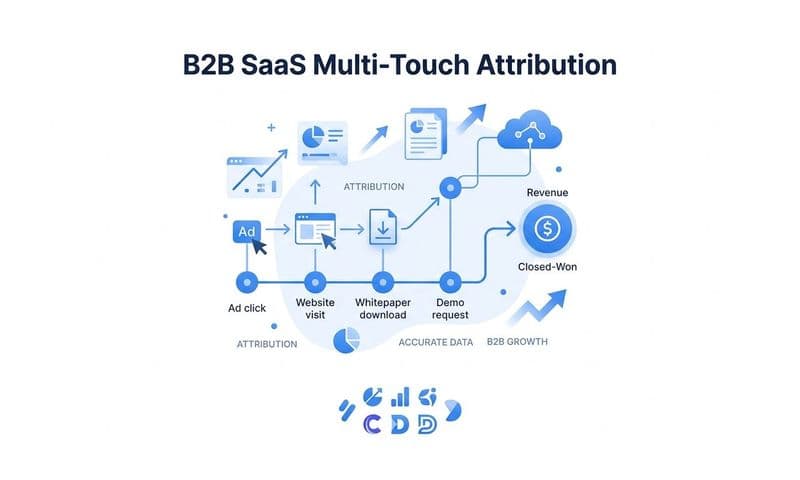
For marketing teams running multi-platform campaigns, the combination of server-side tracking and proper attribution modeling creates a powerful advantage. You capture every touchpoint in the customer journey, feed enriched conversion data back to ad platforms for better optimization, and gain clear visibility into which channels and campaigns actually drive revenue.
Ready to elevate your marketing game with precision and confidence? Discover how Cometly's AI-driven recommendations can transform your ad strategy—Get your free demo today and start capturing every touchpoint to maximize your conversions.