Your Facebook Ads Manager shows 50 conversions. Your Google Analytics dashboard reports 35. Your CRM says you closed 28 deals. Which number is real? If you're running paid campaigns in 2026, you've probably stared at this exact mismatch and wondered where your marketing data went wrong.
The truth is, it's not you—it's the system. Third-party cookies are disappearing. Privacy regulations are tightening. Ad platforms are receiving less data than ever before. And marketers are left making million-dollar budget decisions based on incomplete information.
First party data tracking changes this equation entirely. Instead of relying on browser cookies that users can block or regulations can restrict, you're collecting information directly from your own digital properties—with user consent and complete transparency. It's the difference between guessing which ads work and knowing exactly which campaigns drive revenue.
This guide will walk you through everything you need to understand about first party data tracking: what it actually is, why it's become essential for advertising performance, and how to implement it effectively so you can make confident marketing decisions again.
The Data You Own: Understanding First Party Data Tracking
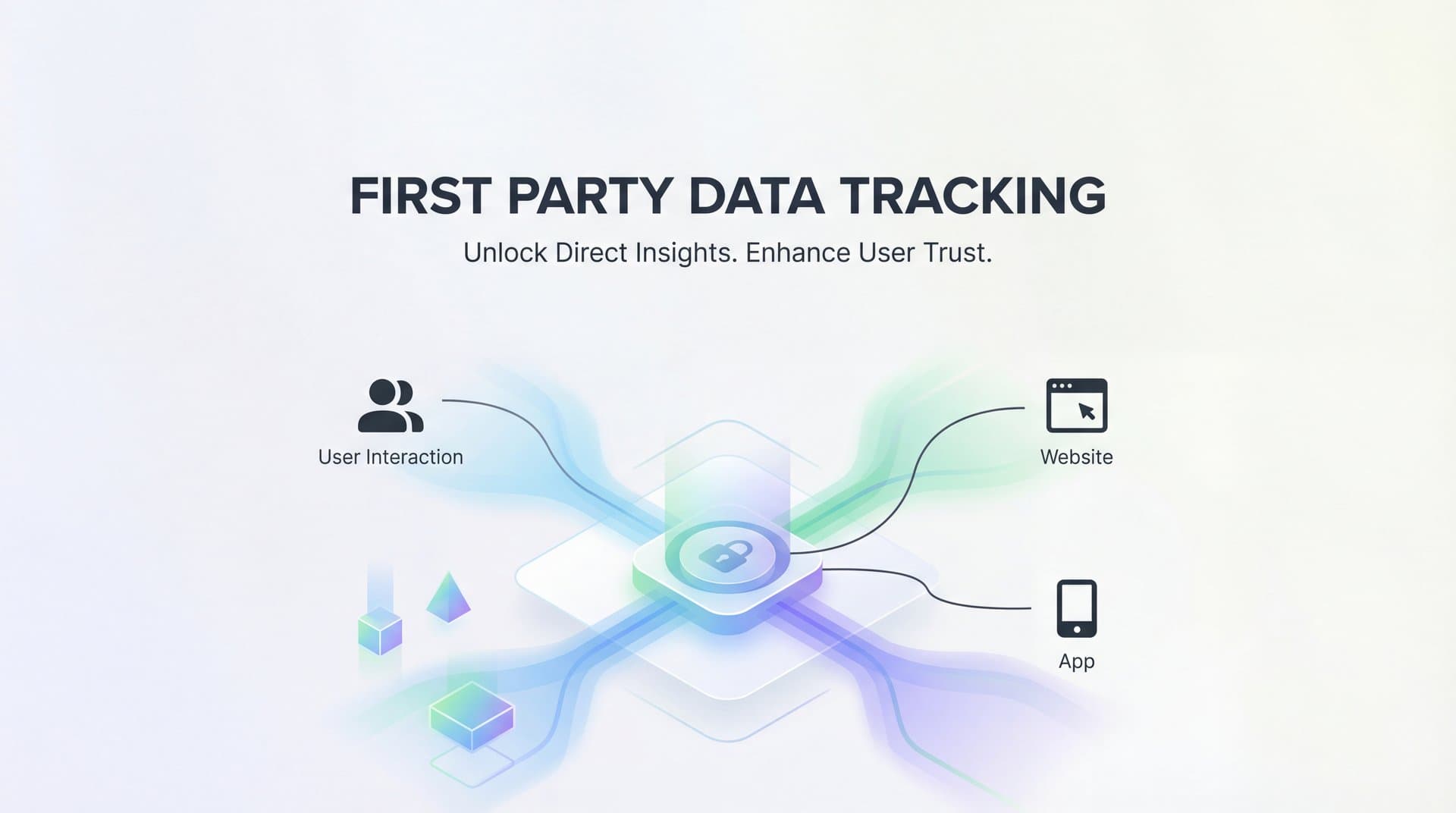
First party data tracking means collecting information directly from your own digital properties—your website, mobile app, or CRM—with explicit user consent. When someone visits your site, fills out a form, makes a purchase, or interacts with your content, you're capturing that behavior firsthand. No intermediaries. No third-party vendors. Just direct observation of how people engage with your business.
Think of it like running your own research study instead of buying someone else's findings. You control what you measure, how you measure it, and what you do with the results.
This stands in sharp contrast to third-party data, which comes from external sources you don't control. Third-party cookies, for example, track users across multiple websites to build behavioral profiles. When you visit a news site and later see ads for products you browsed elsewhere, that's third-party tracking in action. The cookie follows you around the web, collecting data for advertisers who never interacted with you directly.
The problem? Users can block these cookies. Browsers can restrict them. And increasingly, they do both.
First party data comes in three main varieties, each revealing different aspects of customer behavior. Behavioral data captures how people interact with your digital properties—page views, button clicks, time spent on specific content, navigation patterns. This tells you what interests your audience and where they get stuck in your funnel.
Transactional data tracks the actions that matter most to your business: purchases, subscription signups, demo requests, downloads. These events represent actual conversions, not just interest. When someone moves from browsing to buying, that transaction becomes part of your first party dataset.
Declared data is information users explicitly provide: form submissions, survey responses, account preferences, communication opt-ins. This type of data is closely related to zero party data, which reflects stated intent rather than inferred behavior. When someone tells you they're interested in enterprise solutions or prefers email over SMS, you don't have to guess—you know.
The key advantage of first party data is accuracy. You're not relying on probabilistic matching or device graphs to connect the dots. You're observing actual behavior from identified users who chose to engage with your business. That directness creates a foundation for attribution and optimization that third-party data simply can't match.
Why Third-Party Tracking Is Failing Marketers
In April 2021, Apple released iOS 14.5 and changed digital advertising overnight. The App Tracking Transparency framework required apps to ask users for permission before tracking their activity across other companies' apps and websites. When given the choice, many users opted out. Suddenly, advertisers who relied on the Facebook pixel and similar tools lost visibility into significant portions of their mobile traffic.
The impact was immediate and measurable. Campaigns that previously showed clear attribution from ad click to conversion now reported incomplete data. The seven-day attribution window shrank to one day for users who declined tracking. Marketers who had been optimizing based on detailed conversion data were suddenly flying blind.
But iOS wasn't the only problem. Browser restrictions have been tightening for years, each update making third-party tracking less reliable. Understanding the difference between first party and third party cookies is essential for navigating this landscape.
Safari introduced Intelligent Tracking Prevention in 2017, progressively limiting how long cookies could persist and how they could be used for cross-site tracking. Firefox followed with Enhanced Tracking Protection, blocking third-party cookies by default for all users. Even Chrome, which generates revenue from advertising, announced plans to phase out third-party cookies—though Google has delayed the timeline multiple times as the industry scrambles for alternatives.
These changes weren't coordinated attacks on advertising. They were responses to legitimate privacy concerns and regulatory pressure. Users wanted more control over their data. Regulators demanded transparency. Browsers adapted to meet both needs.
For marketers, the result is what's often called the attribution gap—the difference between what actually happened and what your tracking can see. When someone clicks your Facebook ad on their iPhone, browses your site in Safari, and converts three days later on their desktop, traditional tracking methods struggle to connect those dots. Learning how to fix attribution discrepancies becomes critical for accurate measurement.
This gap doesn't just affect reporting. It fundamentally breaks campaign optimization. When ad platforms don't receive accurate conversion data, their algorithms can't learn which audiences, creatives, and placements actually work. You end up optimizing for clicks or impressions instead of revenue because the platform can't see the revenue.
The marketers who recognized this shift early started building first party data infrastructure. Those who waited are now playing catch-up, trying to restore visibility into campaigns that have been running on incomplete data for months or years.
How First Party Data Tracking Actually Works
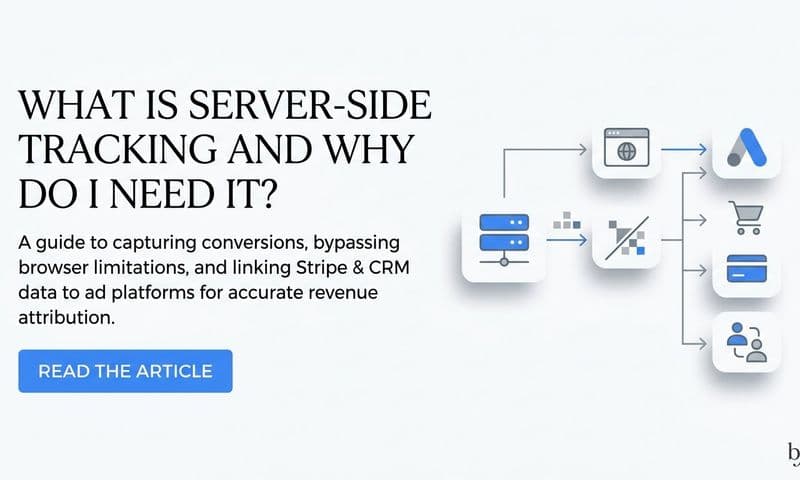
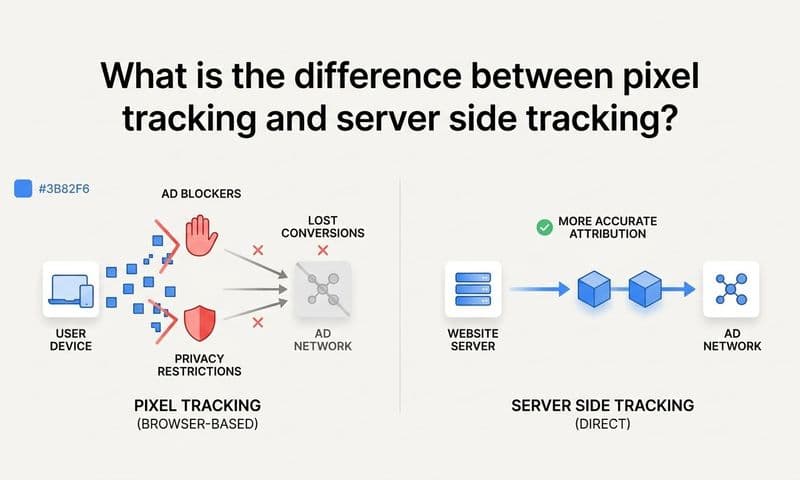
Server-side tracking represents a fundamental shift in how marketing data flows from your business to ad platforms. Instead of relying on browser-based pixels that can be blocked or restricted, server-side tracking sends data directly from your server to the platforms you advertise on. The user's browser never enters the equation for the most critical conversion events.
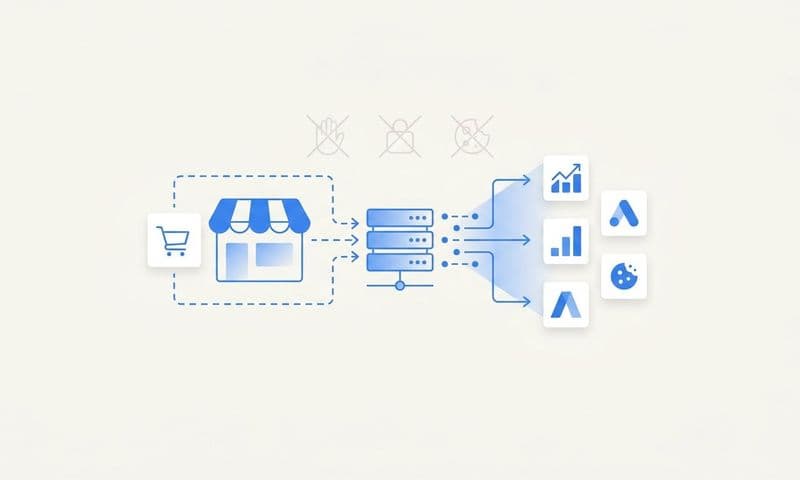
Here's how it works in practice. When someone visits your website and takes an action—say, completing a purchase—your server records that event. Then, using APIs provided by ad platforms, your server sends the conversion data directly to Facebook, Google, TikTok, or wherever you're running campaigns. This happens in real time, without depending on cookies or client-side scripts that browsers might block.
The advantage is reliability. Browser restrictions don't matter because the browser isn't involved in the data transmission. Ad blockers can't interfere. Cookie expiration isn't a concern. You're creating a direct pipeline from your source of truth—your server, which knows exactly what happened—to the platforms that need that information to optimize your campaigns.
But server-side tracking alone isn't enough. You need to connect the entire customer journey, linking ad clicks to website behavior to CRM events. This is where first party data activation becomes powerful.
When someone clicks your ad, you need to capture that initial touchpoint and associate it with a unique identifier. As they browse your site, that identifier follows them through each page view, form submission, and product interaction. Understanding how tracking pixels work helps you capture these initial touchpoints effectively.
This journey mapping extends beyond the website. When a lead enters your CRM, gets nurtured through email sequences, and eventually closes as a customer, those offline events become part of the attribution story. First party data tracking connects digital touchpoints to business outcomes, giving you a complete view of what drives revenue.
Real-time data collection is another critical component. Traditional analytics tools often sample data or process it in batches, creating delays between when events happen and when you can act on them. First party tracking captures touchpoints as they occur, streaming data to your analytics platform and ad accounts without lag.
This immediacy matters for optimization. When you're testing new ad creative and conversions start rolling in, real-time data lets you identify winners quickly and scale them before budget runs out. When a campaign stops performing, you can pause it immediately rather than burning through spend while waiting for delayed reports to update.
The Business Impact: Better Data, Better Ad Performance
Attribution accuracy transforms from guesswork into confidence when you implement first party data tracking. Instead of seeing that 50 people converted and wondering which campaigns actually drove those conversions, you can trace each sale back to specific ads, keywords, and touchpoints. This clarity changes how you allocate budget.
Consider a scenario where your Facebook campaigns show a 2x return on ad spend in the Ads Manager, but your actual revenue data suggests closer to 4x. That discrepancy exists because the Ads Manager can't see conversions that happen outside its tracking window or when cookies are blocked. Implementing proper Facebook attribution tracking closes that gap by feeding accurate conversion data back to the platform, revealing the true performance of your campaigns.
The impact extends beyond just knowing what worked. When ad platforms receive complete, accurate conversion data, their optimization algorithms improve dramatically. Facebook's algorithm, for example, needs conversion signals to learn which users are most likely to take your desired action. When you're only sending 60% of your actual conversions because of tracking limitations, the algorithm optimizes based on incomplete information.
Feed it 100% of your conversions through first party data tracking, and the algorithm can identify patterns it previously missed. It finds lookalike audiences that actually convert. It serves ads to users who are genuinely interested. It adjusts bids based on real likelihood to purchase rather than probabilistic guesses.
Google Ads works the same way. The platform's Smart Bidding strategies rely on conversion data to automatically adjust bids in real time. When you're missing conversions from iOS users or Safari browsers, Smart Bidding optimizes based on a skewed dataset. Restore those missing conversions with server-side tracking, and the bidding algorithm suddenly has the information it needs to perform as intended.
This leads directly to smarter budget allocation. When you know with confidence that Campaign A drives three times more revenue than Campaign B, the decision to shift budget becomes obvious. Leveraging data-driven attribution helps you see that mobile traffic converts at a higher rate than desktop despite lower reported conversions in your analytics, allowing you to adjust your strategy accordingly.
Many marketers find that first party data tracking reveals campaigns they had written off as underperforming were actually their best performers—the conversions just weren't being attributed correctly. Others discover that channels they thought were driving results were actually getting credit for conversions that originated elsewhere. Both scenarios lead to better decisions and improved return on ad spend.
Implementing First Party Data Tracking: Key Components
Website tracking setup begins with pixel tracking implementation, but it doesn't end there. You need both client-side pixels for immediate data capture and server-side connections for reliable conversion tracking. The client-side pixel fires when someone lands on your site, capturing initial touchpoint data and setting first party cookies that persist across sessions.
Then comes the server-side component. This requires configuring your server to send conversion events directly to ad platforms using their Conversions API (for Meta), Enhanced Conversions (for Google), or equivalent server-side tracking tools. You'll need to pass key information with each event: the conversion type, value, timestamp, and user identifiers that allow platforms to match the conversion back to the original ad click.
The technical implementation varies by platform, but the principle remains consistent: capture data on your server where it can't be blocked, then transmit it reliably to the platforms that need it for optimization.
CRM integration takes first party data tracking beyond website interactions. When a lead fills out a form on your site, that initial conversion is valuable. But the real business outcome happens later—when they book a demo, become a customer, upgrade their plan, or refer a colleague. Implementing customer attribution tracking ensures these lifecycle events are properly connected to their original sources.
Connecting your CRM to your attribution system allows you to track the complete customer journey from first click to closed deal. You can see which campaigns generate leads that actually close, not just leads that fill out forms. This distinction matters enormously for B2B marketers and anyone with a longer sales cycle.
The integration typically involves syncing customer records between your CRM and your analytics platform, then mapping CRM events to conversion types that ad platforms recognize. When a deal closes in your CRM, that event gets sent back to the ad platforms as a high-value conversion, teaching their algorithms which ads drive actual revenue.
Conversion sync is the final piece—sending enriched first party data back to ad platforms to improve their targeting and optimization. This goes beyond just reporting conversions. You're feeding additional context that helps platforms understand what makes a valuable customer.
For example, instead of just sending "Purchase" as a conversion event, you can include the purchase value, product category, customer lifetime value prediction, or whether this is a first-time or repeat customer. This enriched data gives ad platform algorithms more signals to work with, improving their ability to find similar high-value customers.
Putting It All Together: Your First Party Data Strategy
Start with your highest-value conversion events and work backward. Don't try to track everything at once. Identify the three to five events that most directly indicate business success—completed purchases, qualified leads, demo bookings, subscription signups—and ensure you're capturing those accurately with first party data tracking.
Once those core events are flowing reliably to your ad platforms, you can expand to track additional touchpoints. But prioritizing the conversions that actually drive revenue ensures you're optimizing for outcomes that matter, not just activity that's easy to measure.
Data quality beats data quantity every time. It's better to track 100% of your actual conversions accurately than to track 200 events with 50% accuracy. Focus on ensuring the data you send to ad platforms is clean, deduplicated, and correctly attributed. When platforms receive reliable conversion signals, their algorithms perform better than when they're flooded with noisy data.
This means validating that conversions aren't being double-counted when both client-side and server-side tracking fire. It means filtering out test transactions and internal traffic. It means ensuring user identifiers match correctly so platforms can attribute conversions to the right ad clicks. Developing a comprehensive first party data strategy helps you address these challenges systematically.
Use first party data to feed ad platform AI and improve campaign performance continuously. The goal isn't just accurate reporting—it's better optimization. When your server-side tracking sends complete conversion data back to Meta, Google, and TikTok, their machine learning systems can identify patterns and optimize toward the outcomes you care about.
This creates a virtuous cycle. Better data leads to better targeting. Better targeting leads to more conversions. More conversions provide more data to refine targeting further. Marketers who implement first party data tracking effectively often see immediate improvements in cost per acquisition and return on ad spend as platform algorithms finally receive the information they need to perform optimally.
The Foundation for Confident Marketing Decisions
First party data tracking isn't just a technical workaround for browser restrictions and privacy regulations. It's a fundamental shift toward more accurate, reliable marketing measurement. When you own your data collection infrastructure and capture customer behavior directly from your digital properties, you gain clarity that third-party tracking could never provide.
The marketers who adopt first party tracking today are building a competitive advantage that compounds over time. While competitors struggle with incomplete attribution and suboptimal campaign performance, you'll be making decisions based on complete customer journey data. You'll know which campaigns actually drive revenue. You'll feed ad platforms the conversion signals they need to optimize effectively. And you'll scale your marketing with confidence rather than guesswork.
The transition requires some technical implementation, but the payoff is immediate and ongoing. Every conversion you capture accurately is a data point that improves your attribution models and teaches ad platform algorithms what success looks like. Every touchpoint you track is another piece of the customer journey puzzle that helps you understand what drives results.
Ready to elevate your marketing game with precision and confidence? Discover how Cometly's AI-driven recommendations can transform your ad strategy—Get your free demo today and start capturing every touchpoint to maximize your conversions.