
First Party Data Activation: The Complete Guide to Turning Customer Data Into Revenue
Your marketing platform shows 50,000 website visitors last month. Your CRM lists 12,000 email subscribers. Your analytics dashboard displays hundreds of data points about customer behavior. But here's the question that matters: what did you actually do with all that information?
Most businesses collect massive amounts of customer data but struggle to activate it effectively. They have the raw materials but lack the systems to transform data into automated, personalized customer experiences that drive revenue. This gap between data collection and data activation represents one of the biggest missed opportunities in modern marketing.
First party data activation bridges this gap by creating systematic processes that turn customer information into targeted actions across your marketing channels. Instead of manually reviewing reports and making campaign decisions, activation platforms automatically trigger personalized messages, adjust ad targeting, and optimize customer journeys based on real-time behavioral signals.
This guide explains how first party data activation works, why it matters more than ever in a privacy-first marketing landscape, and how to implement activation strategies that generate measurable business results.
Decoding First Party Data Activation
First party data activation transforms raw customer information into automated marketing actions. While most businesses focus on collecting and analyzing data, activation takes the next critical step: using that data to automatically trigger personalized experiences across every customer touchpoint.
The distinction matters because data without activation is just information sitting in a database. A customer who abandons their cart generates a data point. Activation turns that data point into an automated email sequence, a retargeting ad with the specific products they viewed, and a personalized website experience when they return.
The Three Pillars of Strategic Activation
Effective activation requires three components working together: data enrichment, intelligent segmentation, and automated orchestration. Most platforms handle one or two of these layers, but true activation demands all three operating in harmony.
Data Enrichment: This layer adds behavioral context, timing patterns, and predictive scores to raw customer data. Instead of just knowing someone visited your website, enrichment adds how long they stayed, which pages they viewed in sequence, whether they've visited before, and how their behavior compares to customers who eventually converted. This context transforms basic tracking into actionable intelligence.
Intelligent Segmentation: Enriched data gets organized into dynamic audience segments that automatically update as customer behavior changes. These segments go beyond simple demographic categories to include behavioral triggers, engagement levels, purchase intent signals, and lifecycle stages. A customer might simultaneously belong to segments like "high-intent prospects," "email engaged," and "abandoned cart - last 24 hours."
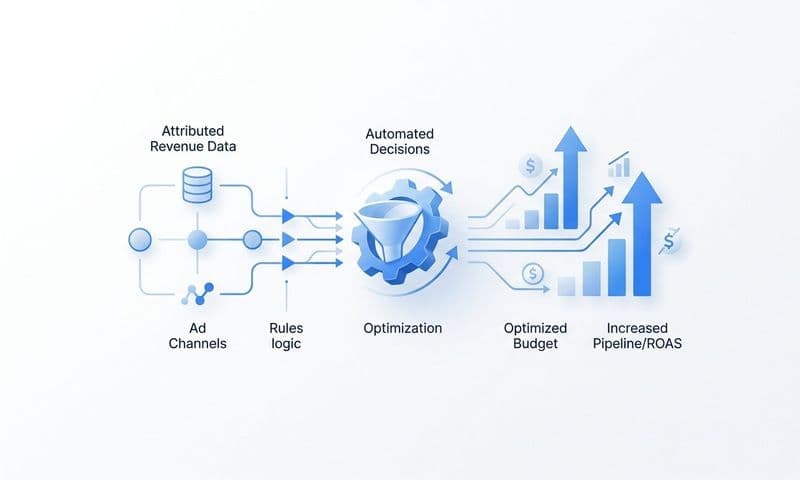
Automated Orchestration: This final layer connects segments to specific marketing actions across channels. When a customer enters a high-intent segment, orchestration automatically adjusts their ad targeting, triggers personalized email sequences, updates their website experience, and notifies sales teams. The system operates continuously without manual intervention.
Why Activation Outperforms Traditional Analytics
Traditional analytics platforms show you what happened. Activation platforms make things happen based on what your data reveals. This shift from reactive analysis to proactive automation fundamentally changes how marketing teams operate.
Consider two companies with identical customer data. Company A uses traditional analytics to review weekly reports and manually adjust campaigns. Company B uses activation to automatically respond to customer behavior in real-time. When a high-value prospect shows purchase intent signals, Company A discovers this insight during their next review meeting. Company B's activation system has already adjusted ad spend, triggered personalized outreach, and optimized the customer's website experience.
The speed advantage compounds over time. While Company A makes decisions based on week-old data, Company B continuously optimizes based on current behavior. This responsiveness directly impacts conversion rates, customer lifetime value, and marketing efficiency.
The Business Case for First Party Data Activation
First party data activation delivers measurable improvements across three critical business metrics: customer acquisition efficiency, conversion rates, and customer lifetime value. These improvements stem from the system's ability to deliver the right message to the right person at precisely the right moment.
Acquisition Efficiency Through Intelligent Targeting
Activation platforms reduce customer acquisition costs by ensuring ad spend focuses on prospects most likely to convert. Instead of broad demographic targeting, these systems use behavioral signals and engagement patterns to identify high-intent prospects and automatically adjust bidding strategies.
A B2B software company implementing first party data activation saw their cost per qualified lead drop 43% within the first quarter. The system identified that prospects who viewed their pricing page and case studies within a 48-hour window had an 8x higher conversion rate than average visitors. Activation automatically increased ad spend for prospects matching this pattern while reducing spend on lower-intent segments.
This precision extends beyond initial targeting. As prospects engage with content, the activation system continuously refines their segment membership and adjusts messaging accordingly. A prospect who initially showed interest in basic features but later viewed enterprise documentation automatically receives updated targeting that reflects their evolving needs.
Conversion Rate Improvements Through Personalization
Generic marketing messages convert at baseline rates. Personalized experiences based on actual behavior convert significantly higher. Activation platforms enable this personalization at scale by automatically tailoring content, offers, and timing to individual customer contexts.
The impact shows up across every conversion point. Email open rates increase when send times align with individual engagement patterns. Landing page conversion rates improve when content dynamically adjusts to match the visitor's previous interactions. Checkout completion rates rise when the system identifies and addresses specific friction points for different customer segments.
An e-commerce retailer using activation to personalize product recommendations based on browsing behavior and purchase history saw average order values increase 27%. The system didn't just show popular products—it identified patterns in how customers discovered and purchased items, then replicated those successful paths for similar shoppers.
Customer Lifetime Value Through Retention Optimization
Acquiring customers is expensive. Activation platforms maximize the return on that investment by identifying retention risks early and automatically triggering intervention strategies. The system monitors engagement patterns, usage trends, and behavioral signals that predict churn, then activates retention campaigns before customers disengage.
A subscription software company reduced churn by 31% after implementing activation-driven retention strategies. The system identified that customers who didn't complete specific onboarding steps within their first week had a 4x higher churn rate. Activation automatically triggered personalized onboarding sequences, assigned customer success resources, and adjusted in-app messaging for at-risk users.
The lifetime value impact extends beyond preventing churn. Activation systems also identify expansion opportunities by recognizing usage patterns that indicate readiness for upgrades or additional products. These insights trigger targeted campaigns at precisely the moment when customers are most receptive to expansion offers.
Building Your First Party Data Activation Infrastructure
Effective activation requires more than just purchasing software. You need clean data sources, properly configured integrations, and clearly defined activation rules that align with your business objectives. Most implementation failures stem from rushing into automation before establishing these foundations.
Data Foundation Requirements
Activation systems are only as effective as the data they process. Before implementing activation, audit your current data collection to ensure you're capturing the behavioral signals that actually predict customer actions. Many businesses collect extensive demographic data but miss the behavioral triggers that drive conversion decisions.
Start by identifying the customer actions that correlate with your desired outcomes. For e-commerce businesses, this might include product page views, cart additions, and email engagement. For B2B companies, it could be content downloads, pricing page visits, and demo requests. The goal is to track behaviors that indicate purchase intent, not just general website activity.
Data quality matters as much as data quantity. Activation systems make automated decisions based on the information they receive. Incomplete customer records, duplicate entries, and inconsistent tracking create activation errors that damage customer experiences. Implementing data analytics and marketing practices ensures your foundation supports accurate activation.
Integration Architecture
First party data activation requires seamless connections between your data sources and marketing execution platforms. The activation system needs to receive behavioral signals in real-time and trigger actions across email platforms, ad networks, CRM systems, and website personalization tools.
Most businesses underestimate the integration complexity. A typical activation infrastructure connects 8-12 different platforms, each with its own API requirements, data formats, and rate limits. Planning your integration architecture before implementation prevents the technical debt that slows activation rollouts.
Prioritize bidirectional integrations that both send data to and receive data from your activation platform. This allows the system to trigger actions in external platforms while also importing results back to refine future activation decisions. Understanding how to fix attribution discrepancies in data becomes critical when connecting multiple platforms.
Activation Rule Development
The rules that govern your activation system determine which customer behaviors trigger which marketing actions. Effective rules balance responsiveness with restraint—acting quickly on meaningful signals while avoiding over-communication that damages customer relationships.
Start with high-confidence scenarios where the connection between behavior and desired action is clear. A customer who abandons a cart should receive a recovery email. A prospect who views pricing three times in one week should trigger sales notification. These straightforward rules generate immediate value while you develop more sophisticated activation strategies.
As you gain experience, layer in more nuanced rules that consider multiple behavioral signals, timing factors, and customer history. Advanced activation might trigger different messages based on whether a cart abandonment happened during business hours or late at night, whether the customer has abandoned carts before, and what products were in the cart.
Advanced Activation Strategies That Drive Results
Basic activation handles straightforward scenarios like cart abandonment and welcome sequences. Advanced activation leverages predictive modeling, cross-channel orchestration, and dynamic content optimization to create sophisticated customer experiences that adapt in real-time.
Predictive Intent Modeling
Instead of waiting for explicit conversion signals, predictive activation identifies prospects showing early-stage purchase intent based on subtle behavioral patterns. The system analyzes how previous customers behaved before converting, then identifies current prospects following similar paths.
A financial services company used predictive activation to identify prospects likely to request quotes within the next 48 hours. By analyzing patterns in content consumption, time on site, and page sequences, their model achieved 73% accuracy in predicting near-term conversion intent. This allowed them to prioritize sales outreach and adjust ad spend before prospects explicitly raised their hands.
Implementing predictive models requires sufficient historical data to identify meaningful patterns. Most businesses need at least 6-12 months of behavioral data and several hundred conversions before predictive modeling generates reliable results. Using enterprise marketing data analytics software helps process the volume of data required for accurate predictions.
Cross-Channel Orchestration
Advanced activation coordinates customer experiences across every touchpoint, ensuring consistent messaging while optimizing channel selection based on individual preferences. The system tracks which channels each customer engages with most and automatically adjusts communication strategies accordingly.
This orchestration prevents the common problem of channel conflict, where customers receive contradictory messages from different marketing systems. Instead of your email platform, ad network, and sales team operating independently, activation ensures they work together toward unified customer objectives.
A retail brand implementing cross-channel orchestration increased conversion rates 38% by ensuring customers never saw the same promotion across multiple channels simultaneously. The system tracked which offers each customer had seen and through which channels, then automatically varied messaging to maintain novelty while reinforcing key value propositions.
Dynamic Content Optimization
Rather than creating static customer segments, advanced activation continuously adjusts content based on real-time behavioral signals. A prospect might see different website content, email messaging, and ad creative depending on their most recent interactions, even if those interactions happened minutes ago.
This dynamic approach requires robust content libraries and clear rules for content selection. The activation system needs multiple versions of key messages, each optimized for different customer contexts, along with logic for determining which version best matches each individual's current situation.
An online education platform used dynamic content optimization to personalize course recommendations based on browsing behavior, previous purchases, and engagement patterns. Instead of showing the same featured courses to everyone, their activation system displayed content aligned with each visitor's demonstrated interests and learning goals. This approach increased course enrollment rates by 44% compared to their previous static recommendation engine.
Measuring Activation Performance
First party data activation generates value across multiple dimensions, making measurement more complex than tracking single-channel campaign performance. Effective measurement requires both macro-level business metrics and micro-level activation analytics that reveal which specific rules and segments drive results.
Business Impact Metrics
Start with the outcomes that matter to your business: customer acquisition costs, conversion rates, average order values, customer lifetime value, and churn rates. These metrics reveal whether activation is achieving its fundamental purpose of improving business performance.
Compare these metrics before and after activation implementation, but account for external factors that might influence results. Seasonal variations, market conditions, and changes in ad spend can all impact performance independent of activation effectiveness. The most reliable measurement approach uses control groups that don't receive activated experiences, allowing direct comparison between activated and non-activated customer segments.
A SaaS company measured activation impact by randomly assigning 20% of new signups to a control group that received standard onboarding while the remaining 80% received activation-driven personalized experiences. After six months, the activated group showed 34% higher trial-to-paid conversion rates and 28% better retention, providing clear evidence of activation's business impact. Comparing results with google analytics vs attribution platform data helped validate these findings.
Activation System Analytics
Beyond business outcomes, monitor how your activation system itself performs. Track metrics like rule trigger rates, segment population sizes, message delivery rates, and integration reliability. These operational metrics help identify technical issues and optimization opportunities.
Pay particular attention to rules that trigger frequently but generate low engagement. These represent activation logic that needs refinement. Similarly, identify segments that show high engagement but low conversion—these audiences might need different offers or messaging strategies rather than just more frequent communication.
An e-commerce retailer discovered that their cart abandonment activation rule triggered 3,000 times daily but only generated 180 recoveries. By analyzing which abandoned carts actually converted, they refined their rule to focus on carts above a certain value threshold and customers with previous purchase history. This reduced trigger volume by 60% while increasing recovery rates by 40%.
Continuous Optimization Framework
Activation performance improves over time as you refine rules, expand data sources, and develop more sophisticated segmentation strategies. Establish a regular optimization cadence that reviews performance data, identifies improvement opportunities, and implements refinements.
Most successful activation programs follow a quarterly optimization cycle. Each quarter, they analyze which activation rules generated the best results, which segments showed the highest engagement, and which customer behaviors most strongly predicted desired outcomes. These insights inform the next round of activation development.
Document your optimization decisions and their results. Over time, this creates an institutional knowledge base that accelerates future improvements. New team members can review what strategies worked, what failed, and why certain approaches were chosen. Building expertise in marketing analytics certificate programs can help team members develop the skills needed for effective optimization.
Common Activation Pitfalls and How to Avoid Them
Most first party data activation implementations encounter predictable challenges. Understanding these common pitfalls helps you avoid them or address them quickly when they emerge.
Over-Automation Without Strategy
The biggest activation mistake is automating everything without clear strategic objectives. Teams get excited about automation capabilities and create dozens of activation rules without considering whether those rules actually serve business goals or customer needs.
This approach generates activation fatigue—customers receive so many automated messages that they tune out entirely. Email unsubscribe rates increase, ad engagement drops, and the activation system becomes a source of customer annoyance rather than value.
Avoid this by starting with a small number of high-impact activation scenarios. Implement cart abandonment recovery, welcome sequences for new customers, and re-engagement campaigns for inactive users. Master these fundamental use cases before expanding into more sophisticated activation strategies. Leveraging enterprise conversion analytics tools helps identify which scenarios deliver the most value.
Insufficient Data Quality Controls
Activation systems amplify data quality problems. A small percentage of incorrect customer records becomes a significant issue when those records trigger automated marketing actions. Customers receive irrelevant messages, offers don't align with their actual interests, and the personalization that should improve experiences actually damages them.
Implement data validation rules before activation goes live. Verify that customer records include required fields, behavioral data is tracking correctly, and integration connections are reliably transmitting information. Regular data audits catch quality issues before they impact customer experiences.
A B2B company discovered their activation system was triggering enterprise sales outreach to small business prospects because their company size data was incomplete. By implementing validation rules that required verified company size before triggering high-touch sales activation, they eliminated wasted sales resources and improved prospect experiences.
Ignoring Channel Preferences
Not all customers want to engage through the same channels. Some prefer email, others respond better to SMS, and many want minimal communication regardless of channel. Activation systems that ignore these preferences create negative experiences that drive customers away.
Track channel engagement at the individual level and adjust activation strategies accordingly. If a customer never opens emails but consistently engages with SMS messages, shift their activation to SMS-heavy strategies. If someone consistently ignores all outbound communication, reduce activation frequency or pause automated outreach entirely.
Implement preference centers that let customers explicitly control their activation experiences. Allow them to choose communication frequency, select preferred channels, and indicate which types of messages they want to receive. This transparency builds trust while providing valuable data that improves activation effectiveness.
The Future of First Party Data Activation
First party data activation continues evolving as privacy regulations tighten, AI capabilities expand, and customer expectations for personalization increase. Understanding these trends helps you build activation infrastructure that remains effective as the landscape changes.
Privacy-First Activation Strategies
Increasing privacy regulations and the deprecation of third-party cookies make first party data activation more valuable than ever. Businesses that own direct customer relationships and collect consented first party data have sustainable competitive advantages over those dependent on third-party data sources.
This shift requires transparent data practices that build customer trust. Clearly communicate what data you collect, how you use it, and what value customers receive in exchange. Customers increasingly accept data collection when they understand the personalization benefits they receive.
Forward-thinking businesses are implementing privacy-preserving activation techniques that deliver personalization without exposing individual customer data. These approaches use aggregated insights and cohort-based targeting rather than individual-level tracking, maintaining effectiveness while respecting privacy concerns. Understanding enterprise sales analytics software capabilities helps implement these privacy-first approaches.
AI-Enhanced Activation Intelligence
Artificial intelligence is transforming activation from rule-based automation to intelligent systems that learn from results and continuously optimize themselves. Instead of manually creating activation rules, AI models identify patterns in customer behavior and automatically generate activation strategies based on what actually drives conversions.
These AI-enhanced systems handle complexity that overwhelms manual rule creation. They consider hundreds of behavioral signals simultaneously, identify subtle patterns that humans miss, and adjust strategies in real-time as customer behavior changes. The result is activation that becomes more effective over time without constant manual optimization.
Early adopters of AI-enhanced activation report significant improvements over traditional rule-based approaches. One retail brand saw conversion rates increase 52% after implementing AI-driven activation that automatically identified optimal timing, messaging, and channel selection for each customer based on their individual behavior patterns and similar customer outcomes.
Unified Customer Experience Platforms
The future of activation involves unified platforms that manage customer data, analytics, and activation in a single system. These platforms eliminate the integration complexity that currently slows activation implementations while providing more sophisticated capabilities than point solutions.
This consolidation makes activation accessible to smaller businesses that previously lacked the technical resources to implement complex activation infrastructure. Instead of connecting multiple platforms and managing numerous integrations, businesses can implement comprehensive activation strategies through unified systems that handle data collection, analysis, and execution.
The trend toward unification also improves activation effectiveness by eliminating data silos and integration delays. When customer data, analytics, and activation live in the same platform, the system can respond to behavioral signals instantly rather than waiting for data to sync across multiple systems. Tools like enterprise conversion path analytics tools are evolving to provide these unified capabilities.
Taking Action: Your First Party Data Activation Roadmap
Implementing first party data activation doesn't require a complete marketing infrastructure overhaul. Start with focused initiatives that generate quick wins, then expand your activation capabilities as you gain experience and demonstrate results.
Phase 1: Foundation Building (Weeks 1-4)
Begin by auditing your current data collection and identifying gaps in behavioral tracking. Ensure you're capturing the customer actions that actually predict conversions, not just general website analytics. Implement tracking for key behaviors like product views, content downloads, pricing page visits, and email engagement.
Next, evaluate your current marketing technology stack and identify integration requirements. Document which platforms need to connect to your activation system and what data needs to flow between them. This planning prevents technical surprises during implementation.
Finally, select 2-3 high-impact activation scenarios to implement first. Cart abandonment, welcome sequences, and re-engagement campaigns are proven starting points that generate measurable results quickly. Define success metrics for each scenario before implementation begins.
Phase 2: Initial Implementation (Weeks 5-8)
Implement your chosen activation scenarios, starting with the simplest use case. Build the necessary integrations, create activation rules, and develop the content required for automated messaging. Test thoroughly before activating for your full customer base.
Start with a small percentage of your audience to validate that activation works as intended. Monitor results daily during the first week, watching for technical issues, unexpected customer responses, or performance problems. Gradually expand to your full audience as you gain confidence in system reliability.
Document everything during implementation. Record your activation rules, integration configurations, and content strategies. This documentation becomes invaluable as you expand activation and onboard new team members.
Phase 3: Optimization and Expansion (Weeks 9-16)
After your initial activation scenarios run for at least two weeks, analyze performance data to identify optimization opportunities. Look for rules that trigger frequently but generate low engagement, segments that show high engagement but low conversion, and customer behaviors that correlate with desired outcomes but aren't currently triggering activation.
Implement refinements based on these insights, then monitor whether changes improve results. This optimization cycle should become a regular practice, with monthly reviews of activation performance and quarterly strategic assessments.
As your initial scenarios mature, expand into more sophisticated activation strategies. Add predictive modeling, implement cross-channel orchestration, and develop dynamic content optimization. Each expansion should build on lessons learned from previous implementations.
Conclusion: From Data Collection to Revenue Generation
First party data activation transforms how businesses use customer information. Instead of collecting data for analysis and reporting, activation turns every customer interaction into an opportunity for automated, personalized engagement that drives measurable business results.
The businesses winning in today's privacy-first, customer-centric marketing environment are those that have mastered activation. They've built the infrastructure to collect meaningful behavioral data, developed the systems to activate that data across channels, and created the optimization processes that continuously improve activation effectiveness.
The opportunity is clear: customers expect personalized experiences, privacy regulations favor first party data strategies, and activation technology has matured to the point where sophisticated automation is accessible to businesses of all sizes. The question isn't whether to implement first party data activation—it's how quickly you can build the capabilities that turn your customer data into your most valuable competitive advantage.
Start with focused initiatives that generate quick wins. Build the foundation properly with clean data and reliable integrations. Optimize continuously based on results. And remember that activation is a journey, not a destination. The businesses that commit to ongoing improvement and expansion of their activation capabilities will see compounding returns as their systems become more sophisticated and effective over time.
Ready to elevate your marketing game with precision and confidence? Discover how Cometly's AI-driven recommendations can transform your ad strategy—**Get your free demo** today and start capturing every touchpoint to maximize your conversions.